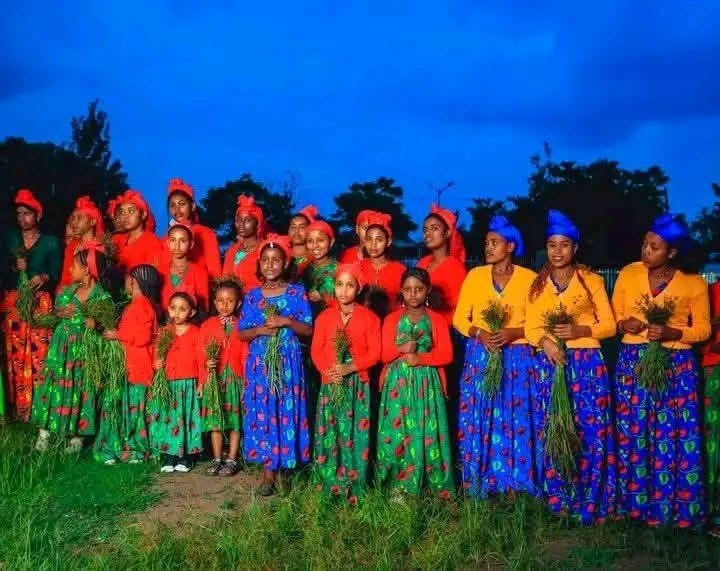
Young Women’s Shinooyyee Ritual Marks the Transition from Winter to Spring with Blessings, Song, and Community Unity
By Maatii Sabaa
Across the vast landscapes of Oromia, the changing of seasons has always been marked by rich cultural traditions that connect the Oromo people to their land, their heritage, and their community. As the harsh winter months give way to the renewal of spring (Birraa), the Oromo people celebrate this transition through a series of sacred rituals and ceremonies.
Among these, the Qunnii Buqqifannaa ceremony holds a special place—a tradition performed by young unmarried women (Shamarran) as part of the larger Shinooyyee celebration. This beautiful ritual marks the end of winter and the joyful arrival of spring, symbolizing renewal, hope, and the continuity of Oromo culture.
Understanding Shinooyyee: The Celebration of Spring
Shinooyyee is one of the most vibrant and significant cultural celebrations in Oromo tradition. It marks the transition from the rainy, cold season of Ganna (winter) to the warmer, blooming season of Birraa (spring). This transition is not merely a change in weather—it is a spiritual and cultural moment of renewal.
During Shinooyyee, young unmarried women (Shaammarranii/Shamarran) gather in groups and go from house to house, singing traditional songs, expressing their joy, and receiving blessings and gifts from elders and community members. The celebration is a time of happiness, community bonding, and cultural pride.
The Shinooyyee tradition embodies several important cultural values:
- Community Unity: The celebration brings together families, neighbours, and entire communities in shared joy and purpose.
- Respect for Elders: The young women seek the blessings of elders, reinforcing the importance of intergenerational relationships.
- Cultural Continuity: Through songs, rituals, and traditions, the younger generations learn about their heritage and their responsibilities to their community.
- Gratitude and Hope: The celebration expresses gratitude for the past season and hope for the abundance of the coming spring.
The Qunnii Buqqifannaa Ceremony: A Sacred Ritual
Within the larger Shinooyyee celebration, the Qunnii Buqqifannaa ceremony is one of the most important and sacred rituals. Qunnii refers to a special type of grass or plant (marga jiidhaa) that grows during the rainy season and has cultural and practical significance.
The Qunnii Buqqifannaa ceremony involves the following elements:
Preparation and Gathering
As the end of winter approaches, young unmarried women begin preparing for the ceremony. They gather in groups, often organized by their neighbourhood or community, and coordinate the activities for the celebration.
The Breaking and Preparation of Qunnii
The central ritual of the ceremony is the Buqqisaa—the breaking or preparation of the Qunnii plant. The women collect the Qunnii, which grows abundantly during the rainy season, and prepare it for use in the ceremony.
The Qunnii plant is significant for several reasons:
- It represents the abundance of the rainy season
- It has a pleasant fragrance that is pleasing to the senses
- It has practical uses, including as a natural perfume
- It symbolizes the renewal and growth associated with spring
Songs, Dance, and Community Procession
The women, carrying the prepared Qunnii, go from house to house in their community, singing traditional songs and dancing. The songs, known as Faaruu Shinooyyee or Abaabilee, celebrate the arrival of spring and express joy and gratitude.
Receiving Blessings and Gifts
At each household, the women are received warmly by the elders and community members. They receive blessings, prayers, and sometimes small gifts or food. The elders offer prayers for the young women’s well-being, prosperity, and future.
Passing the Qunnii Forward
The Qunnii that has been prepared is passed from house to house, symbolizing the sharing of blessings and the continuity of community bonds.

The Role of Young Men in the Celebration
While the Qunnii Buqqifannaa ceremony is primarily focused on young women, young unmarried men also participate in the broader Shinooyyee celebration. They accompany the women in their processions, participating in the songs and dances while respecting the cultural protocols of the ceremony.
The participation of young men reflects the collective nature of Oromo culture, where celebrations and rituals are shared by the entire community. It also provides opportunities for young men and women to interact in culturally appropriate ways, strengthening social bonds and community cohesion.
Cultural Significance and Meaning
The Qunnii Buqqifannaa ceremony carries deep cultural and spiritual meaning for the Oromo people:
1. Renewal and Rebirth
The transition from winter to spring represents renewal and rebirth. The Qunnii, which grows during the rainy season, symbolizes this renewal and the promise of abundance.
2. Gratitude and Thanksgiving
The ceremony is an act of thanksgiving—giving thanks for the rains, the harvest, and the continuity of life.
3. Community and Unity
The tradition of going from house to house reinforces community bonds and collective responsibility. It reminds the Oromo people that they are part of a larger community, connected by shared traditions and values.
4. Respect for Elders
By seeking the blessings of elders, the young women demonstrate respect for those who came before them. This reinforces the importance of intergenerational relationships and the passing down of cultural knowledge.
5. Identity and Pride
The celebration of Shinooyyee and the Qunnii Buqqifannaa ceremony is an expression of Oromo identity and cultural pride. In a world where many indigenous traditions are at risk of being lost, these celebrations are vital for preserving Oromo culture for future generations.
The Role of Cultural Institutions
The revival and preservation of traditions like Shinooyyee and Qunnii Buqqifannaa have received increasing attention in recent years. Cultural institutions, community organizations, and government bodies have recognized the importance of preserving and promoting Oromo cultural heritage.
The Oromo people’s cultural heritage is increasingly being recognized and celebrated through festivals, cultural events, and educational programs. These efforts help to reconnect the younger generation with their roots and ensure that these beautiful traditions are not lost to time.
As the statement from the community emphasizes: “Mootummaan jijjiiramaa hojiilee Misooma Aadaatiif xiyyeeffannaa kenneen Aadaan keenya bakka isaatti deebi’ee Haaromaa kan jiruufi duudhaa ganamaatti deebisuu keessatti injifannoowwan argamaniiru.” —The government, through its renewed focus on cultural development activities, has achieved successes in restoring and revitalizing our traditions.
Conclusion: Honouring Tradition, Building the Future
The Qunnii Buqqifannaa ceremony and the broader Shinooyyee celebration are more than just cultural events—they are expressions of Oromo identity, resilience, and continuity. They connect the present generation to their ancestors, reinforce community bonds, and provide a foundation for the future.
As the Oromo people continue to navigate the challenges of the modern world, these traditions serve as anchors—reminders of who they are, where they come from, and the values that unite them as a people.
Sirni Qunnii Buqqifannaa haa jabaattu!
Ayyaanni Birraa nuun haa jegu!
Shinooyyee haa jabaattu!
This feature article is dedicated to all the young Oromo women who carry the spirit of Shinooyyee in their hearts, and to the communities who are working to preserve and revitalize this beautiful tradition for future generations.

