ገዳዮቹ እምነት ሊከፍላቸው ይችላል ብለው ሲያስቡ፣ እነሱ አንድ ስም መረጡ፡ ኦሮሞ።

በኦሮሞ የጋራ ትውስታ ውስጥ፣ ከ1966 እስከ 2016 ድረስ ግማሽ ምዕተ ዓመት የሚሸፍኑ ሦስት ጊዜያት ተደጋግመው ይነገራሉ፣ ይዘፈናሉ፣ በድንጋይ ላይ ይቀረጻሉ። በተለያዩ ዘመናት፣ በተለያዩ ቦታዎች፣ ከተለያዩ ትውልዶች ተሳታፊዎች ጋር ተከስተዋል። ሆኖም የውስጣቸው አመክንዮ በሚያስደንቅ ሁኔታ ተመሳሳይ ነው፡ የውጭ ኃይሎች የኦሮሞን አንድነት በሃይማኖታዊ ማንነት ለመከፋፈል በሚሞክሩ ቁጥር፣ ሁልጊዜ አንድ ሰው ተነስቶ በሕይወቱ “Maqaa amantaan gargar hin baanu” ማለትም “ስሙ በእምነት አይከፈልም” በማለት ያረጋግጣል።
ከአርሲ ወደ ሺኒጋ፣ ከዚያም ወደ ቢሾፍቱ፣ ሦስቱ ቦታዎች የደም ቀይ ክር ይፈጥራሉ፣ የተጨቆነ ሕዝብ “መከፋፈልን እምቢ ማለት” የማንነቱ ዋና አካል አድርጎ እንዴት እንደሠራ ይነግራሉ።
አርሲ፡ የአንድ ስም ትንሣኤ
በ1966 ኢትዮጵያ፣ “ኦሮሞ” የሚለውን ቃል በአደባባይ መጠቀም ራሱ አደገኛ ፈተና ነበር። የግዛቱ ትረካ ማሽን ስሙን ከይፋዊ ንግግር አጥፍቶ በንቀት መጠሪያዎች ተክቶት ነበር። በዚህ ዘመን ነበር አሕመድ ታቂ ሼክ መሐመድ ራሺድ የሚባል እስላማዊ ምሁር የታሪክን አቅጣጫ የሚቀይር ውሳኔ ያደረገው።
ታቂ፣ በኋላ “ሁንዴ” (ማለትም ሥር ወይም መሠረት) በመባል የሚታወቀው፣ በሐረርጌ ከእስላማዊ ምሁራን ቤተሰብ ተወለደ። ከልጅነቱ ጀምሮ ቁርአንን፣ ሐዲስን እና የኦሮሞን ታሪክ አጠና። በሃያ ዓመቱ መጀመሪያ ላይ ስኬታማ ነጋዴ ነበር፣ ነገር ግን በእውነት የገለጸው ከጄኔራል ታደሰ ብሩ፣ የመጫ-ቱላማ ራስን መርዳት ማኅበር መስራች ጋር መገናኘቱ ነበር። ታደሰ በገላምሶ በቤት እስር ከተያዘ በኋላ፣ ታቂ ከእሱ ጋር ተዋወቀ እና በወቅቱ እንደ መናፍቅነት የሚታይ ሃሳብ ማሰራጨት ጀመረ፡ ኦሮሞ መሆን እርግማን አይደለም፣ ነገር ግን ሊወደድ የሚገባ በጎነት ነው።
በ1966፣ ታቂ እና ኤለሞ ቂልቱ—ከሶሪያ የተመለሰ ሌላ አብዮታዊ—በጉባ ኮሪቻ ተራሮች የታጠቀ ትግል ጀመሩ። ይህ የዘመናዊው የኦሮሞ ብሔራዊ ነፃ አውጪ ንቅናቄ መነሻ ነበር። ድርጅታቸው ሃይማኖታዊ ገደብ አልነበረውም፣ የኑፋቄ ቅድመ ሁኔታ አልነበረውም። ሙስሊም ምሁራን እና ክርስቲያን ተዋጊዎች በአንድ ባንዲራ ስር ተዋጉ።
መስከረም 6፣ 1974 ታቂ እና ኤለሞ በሒሮ ተገደሉ። ነገር ግን የአንድ ስም ትንሣኤ ወደ ኋላ የማይመለስ ሆኖ ነበር። ዘፋኙ አሊ ብራ፣ በአቡበከር ሙሳ እርዳታ፣ የታቂን ትውስታ “Yaa Hundee Bareedaa” (ውብ ሁንዴ) በሙዚቃ አስቀመጠ። ዘፈኑ በሬዲዮ ተሰማ፣ በሠርግ ላይ ተዘፈነ፣ በቀብር ላይ ተንጫጫ። የታቂ “ሥር” በኦሮሞ የጅምላ ንቃተ ህሊና ጥልቅ ንጣፍ ውስጥ ሰመጠ—በሙስሊሞች፣ ክርስቲያኖች እና ዋቄፈታ በጋራ የተያዘ ንቃተ ህሊና።
ሺኒጋ፡ በጉድጓድ ጠርዝ ላይ መለያየትን እምቢ ማለት
1966 ዘሩን ከዘራ፣ 1980 በጣም አሳዛኝ አበባው ነበር።
ኤፕሪል 15፣ 1980 አሥራ አንድ የኦሮሞ ነፃ አውጪ ግንባር ከፍተኛ መሪዎች በሺኒጋ (በኦጋዴን ክልል) በሶማሊያ ሚሊሻ ተደባደቡ። ይህ ድንገተኛ ግጭት አልነበረም—በሕይወት ተያዙ። ሚሊሻው ትልቅ ጉድጓድ ቆፈረ፣ ከዚያም በጣም ገዳይ ነው ብለው ያሰቡትን አደረጉ፡ እስረኞቹን በሃይማኖት ከፈሉ።
“እናንተ ታያላችሁ፣” አንድ አዛዥ ለታሰሩት እስረኞች እንደተናገረው ተዘግቧል፣ “አብራችሁ ተዋጋችሁ። ግን ተለያይታችሁ ትሞታላችሁ። እያንዳንዱ ወደ ጉድጓዱ ከመውደቁ በፊት ለራሱ አምላክ ይጸልይ።”
ገዳዮቹ ፍርሃትን ጠበቁ። የመጨረሻ ሥርዓትን ለማግኘት መጣደፍን ጠበቁ። የኦሮሞ ዓላማ ውሸት ነው የሚያረጋግጥ ትንሽ ስብራትን ጠበቁ።
የተቀበሉት መልስ ከጃል መገርሳ ባሪ፣ የወቅቱ የኦሮሞ ነፃ አውጪ ግንባር ሰብሳቢ መጣ። ካህን አልጠየቀም፣ ሼክ አልጠየቀም። ወደ እኩዮቹ ዞሮ በኋላ ስፍር ቁጥር የሌለው ጊዜ የተደገመውን ቃል ተናገረ፡
“Maqaa amantaan gargar hin baanu። ስሙን በሃይማኖት አንከፍልም። ጉድጓዱን አስፋ ወይም አብረን ጣለን። እኛ በመጀመሪያ ኦሮሞ ነን።”
አሥራ አንድ ሰዎች—ሰብሳቢ ባሪሶ ዋቤ፣ ምክትል ሰብሳቢ ገዳ ገመዳ፣ አባ ሺኪ፣ ዶሪ ባሪ፣ ፈርመታ፣ ፋፋም ዶዮ፣ ኢላና ካቻሌ፣ ዳዳቾ ቦሩ፣ ዳዳቾ ሙራታ፣ ማሪ ገላን—ክንዶቻቸው አብረው ታስረው፣ ወደ ፊት ሄዱ። በኦሮሞ የቃል ወግ መሠረት፣ ገዳ ገመዳ ወደ ገዳዮቹ ዞሮ ፈገግ አለ፡ “ጸሎታችንን ማየት ትፈልጋላችሁ? ይህን ተመልከቱ።”
ይህ ቀን በታሪክ ተጻፈ። እንደ እልቂት አይደለም፣ ነገር ግን እንደ መሐላ።
ቢሾፍቱ፡ የሌላ ትውልድ ምርጫ
ሠላሳ ስድስት ዓመታት በኋላ፣ ተመሳሳይ ትዕይንት በተመሳሳይ አመክንዮ ተከሰተ።
2016፣ ቢሾፍቱ-ሐርሳዲ። አዲስ የኦሮሞ ተቃውሞ ማዕበል በክልሉ ተስፋፋ፣ “የአዲስ አበባ እና አካባቢው ኦሮሚያ ማስተር ፕላን” በመባል በሚታወቀው—የኦሮሞን መሬት ለመቀላቀል ሙከራ ተደርጎ በሰፊው የሚታየው—ተነሳሽነት። “ቄሮ” በመባል የሚታወቁ ወጣት አክቲቪስቶች በከተማ ጎዳናዎች እና በገጠር መንገዶች የፀጥታ ኃይሎችን ገጠሙ።
በቢሾፍቱ፣ የኦሮሞ ወጣቶች ቡድን ተከበበ። በተሰራጩ ዘገባዎች መሠረት፣ የፀጥታ ኃይሎች እንደገና ሃይማኖታዊ ማንነትን ለመበዝበዝ ሞክረዋል—ሙስሊሞችን ከክርስቲያኖች ለይተዋል፣ አንዳንዶች የኦሮሞ ማንነታቸውን አስክደው ሕይወታቸውን እንዲያገኙ አሳመኑ። ውጤቱ እንደገና እምቢ ማለት ነበር።
አብረው ሞቱ፣ በአንድ ቦታ ተቀበሩ። ስሞቻቸው በኦሮሞ ማህበራዊ ሚዲያ፣ በግጥም እና በዘፈን ተደጋግመው ተጠሩ። “የማንነት አምዶች” ሆኑ።
የኦሮሞ አክቲቪስቶች ይህን ክስተት “ለኦሮሞ ማንነት መሞት፣ በሃይማኖት ለመከፋፈል እምቢ ማለት” ብለው ገለጹት። በሺኒጋ ሠላሳ ስድስት ዓመታት በፊት የተነገሩት ቃላት በቢሾፍቱ በአዲስ ትውልድ በአካል እንደገና ተነገሩ።
ይህ ለምን አስፈላጊ ነው
እነዚህ ሦስት ክስተቶች—አርሲ፣ ሺኒጋ፣ ቢሾፍቱ—ግልጽ ንድፍ ይፈጥራሉ። ሃይማኖት በኦሮሞ ማኅበረሰብ ውስጥ እውነተኛ የልዩነት መስመር ነው። የአርሲ ኦሮሞዎች በአብዛኛው ሙስሊም ናቸው፣ በከፊል በአሥራ ዘጠነኛው ክፍለ ዘመን እስልምናን ከአማራ ኦርቶዶክስ ቅኝ ግዛት ለመከላከል የባህል ምሽግ አድርገው ስለመረጡ። የኦርቶዶክስ ቤተክርስቲያን በኦሮሞ ግዛቶች ውስጥ ያላት ሚና ከቅኝ ግዛት ጋር በጥብቅ የተሳሰረ ነበር፡ ካህናት ከሜነሊክ ጄኔራሎች ጋር አብረው መጡ፣ እልቂቶችን “ባረኩ”፣ ከዚያም መሬት እና ገባሮች ተቀበሉ። ስለዚህ በኦሮሞ ማኅበረሰብ ውስጥ የሃይማኖት ልዩነት ትንሽ ጉዳይ አይደለም—የቅኝ ግዛት ሁከት ታሪክን ሙሉ ክብደት ይይዛል።
በዚህ ምክንያት ነው የውጭ ኃይሎች ይህን ስብራት ለመበዝበዝ ተደጋግመው የሞከሩት። የ1980 ሶማሊያ ሚሊሻ ሞከረ። የ2016 የፀጥታ ኃይሎች ሞከሩ። በየጊዜው፣ ተሸነፉ።
ነገር ግን የተሸነፉበት ምክንያት ሃይማኖታዊ ልዩነቶች ስላልነበሩ አይደለም። ምክንያቱ የኦሮሞ ብሔርተኝነት፣ በጣም ወሳኝ በሆኑ ሰዎቹ ውስጥ፣ ሃይማኖትን የሚያልፍ ቅድሚያ ማዳበሩ ነው፡ እኛ በመጀመሪያ ኦሮሞ ነን። ይህ እምነትን መካድ አይደለም፣ ነገር ግን ቅደም ተከተልን ማጥበቅ ነው። የጭቆና ዋና አመክንዮ ሕልውናህን መካድ ሲሆን፣ ያንን ጭቆና የበለጠ ውጤታማ የሚያደርግ ማንኛውም የውስጥ ክፍፍል ክዳታ ነው።
በሺኒጋ ያሉት አሥራ አንዱ “የሙስሊም ሰማዕታት” እና “የክርስቲያን ሰማዕታት” አልሆኑም። አንድ ነገር ሆኑ፡ የኦሮሞ ሰማዕታት። የቢሾፍቱ ወጣቶችም እንዲሁ።
“Seenaa keenya keessatti barayyuu cululuqee jiraata”
እነሱን ለመቅበር የፈለጉት ሰዎች አንድ መሠረታዊ ነገር አልተረዱም፡ መከፋፈልን እምቢ የሚል ሕዝብ ከሞት የሚበልጥ ነገር አግኝቷል። በሺኒጋ ያለው ጉድጓድ የኦሮሞን አንድነት አልጨረሰም—የአንድነት ሐውልት ሆነ። በቢሾፍቱ የተደገመው ታሪክ ይደጋገማል ብሎ አላረጋገጠም—ትውስታ ይኖራል ብሎ አረጋገጠ።
ታቂ እና ኤለሞ በ1966 መሣሪያ ከያዙበት ጊዜ ጀምሮ፣ በ1980 አሥራ አንድ ሰዎች ክንድ ለክንድ ተያይዘው ወደ ጉድጓዱ ጠርዝ ወደ ሄዱበት ከሰዓት በኋላ፣ እስከ 2016 የቢሾፍቱ ጎዳናዎች፣ በሁሉም ውስጥ የሚያልፈው ረቂቅ መፈክር አይደለም፣ ነገር ግን ተጨባጭ፣ ሊፈተሽ የሚችል ቃል ኪዳን ነው፡ ሌሎች በውስጣችሁ ያሉትን ልዩነቶች ተጠቅመው ሊገድሉዎት ሲሞክሩ፣ በምትጋሩት ነገር ራሳችሁን መግለጽ ትመርጣላችሁ።
ይህ ምርጫ ታውቋል። ተዘፍኗል። በትውልድ ትውልድ በሕይወት እንደገና ተኖሯል።
“Seenaa keenya keessatti barayyuu cululuqee jiraata”—በታሪካችን ውስጥ፣ ለዘላለም ይኖራል፣ ያበራል።
Oromiyaa: Naannoo Kuusaa Bulchiinsaa Haaraa Ja’a fi Bulchitoota Isaanii
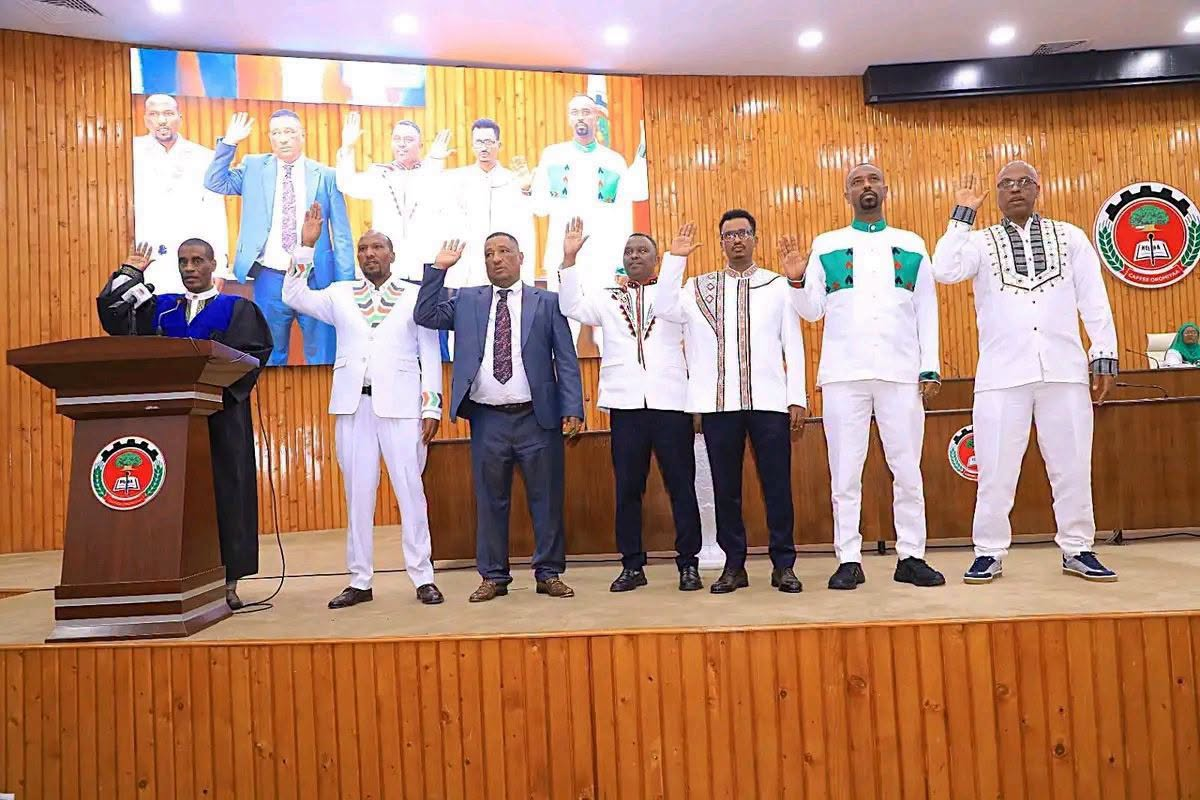
Naannoon Oromiyaa, guddicha fi baay’ee ummataa Itoophiyaa, gara moodeela bulchiinsa kuusaatti ce’aa jirti; naannoo tokkoon tokkoon isaa I/Pirezidaantii Itoophiyaa ta’ee tajaajila
(ONA, Finfinnee)— Oromiyaa, naannoo federaalaa Itoophiyaa keessaa guddicha fi baay’ee ummataa, guutummaatti haaraa ta’uu qophaa’aa jirti. Akka karoora haaraa raggaasifameetti, naannoon kun kuusaa bulchiinsa “ja’a”tti qoodamtee, kuusaan tokkoon tokkoon isaa I/Pirezidaantii Itoophiyaa ta’ee, naannoo isaa keessa jiran walitti qindeessa.
Karoorri kun yeroo jalqabaa Caffee Oromiyaa magaalaa Adaamaatti walgahii isaa gaggeesse irratti raggaasifame. Pirezidaantiin Oromiyaa, Obbo Shimallis Abdiisaa, filannoo isaa irratti milkaa’ee, I/Pirezidaantii ja’a filate; Caffeenis hundi isaanii raggaasise.
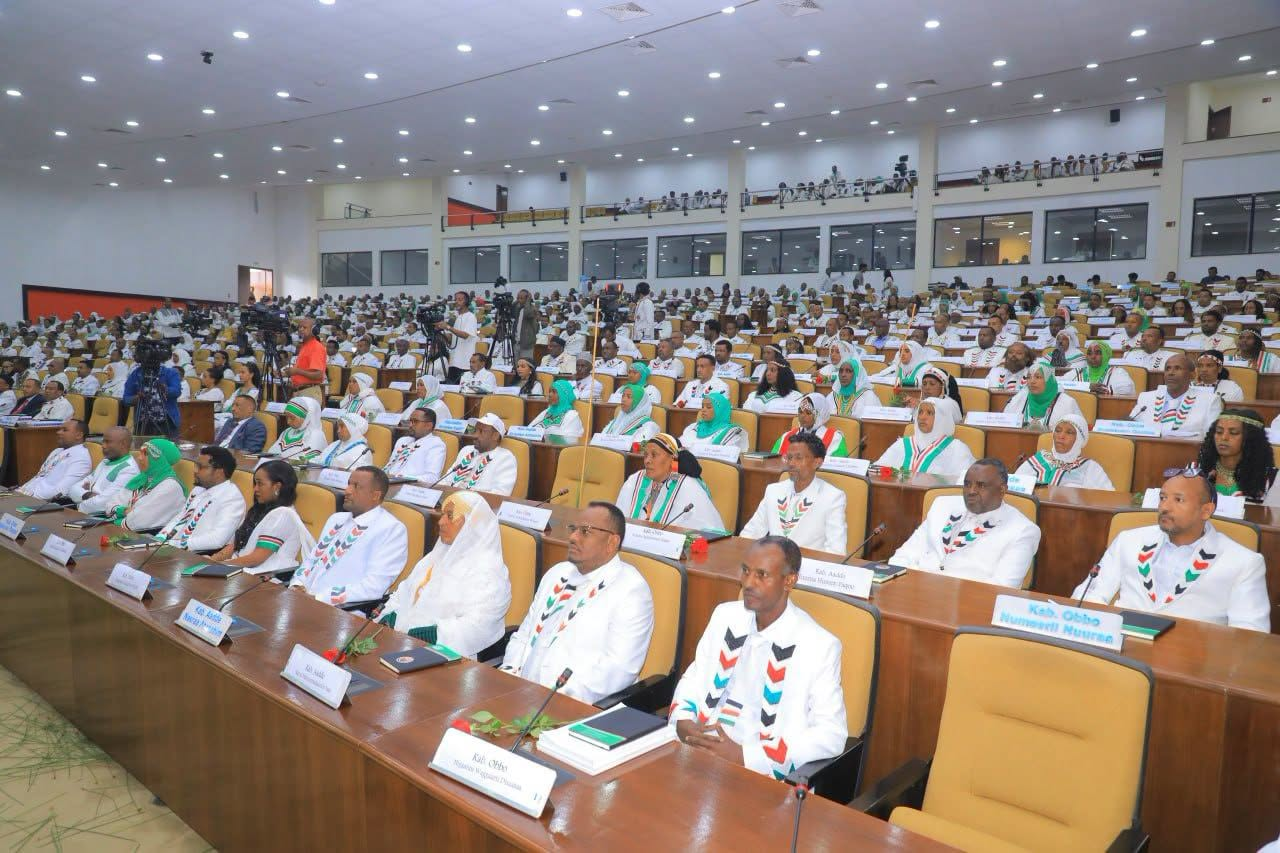
Kuusaa Ja’a fi Bulchitoota Isaanii
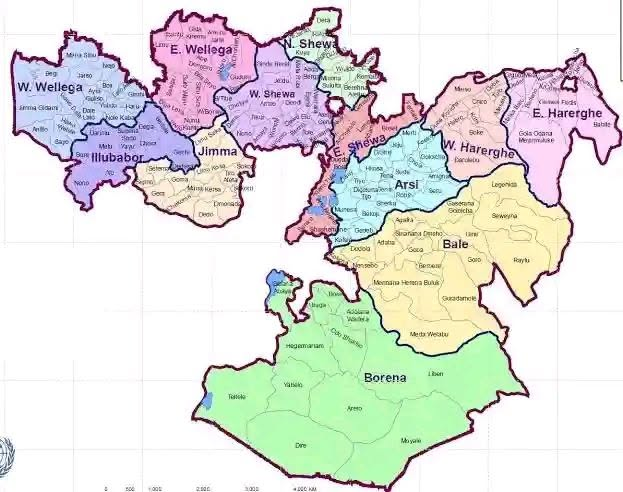
Akka karoora raggaasifametti, Oromiyaan kuusaa bulchiinsa ja’a kanneen armaan gadiitti qoodamti:
1. Oromiyaa Bahaa (Naannoo 2) — Bulchaa Obbo Abdurrahmaan Abdellaa
Naannoo Harargee Dhihaa fi Harargee Bahaa bulcha. Naannoon kunneen Oromiyaa bahaatti argamu, naannoo Somaalee fi naannoo Hararii wajjin daangaa qabu.
2. Oromiyaa Kibba-Bahaa (Naannoo 4) — Bulchaa Obbo Ahmed Idriis
Naannoo Arsii, Baalee, Arsii Dhihaa fi Baalee Bahaa bulcha. Kuusaan kun sulula Rift Valley keessa jira, paarkii biyya Baalee akka qabeenya uumamaa barbaachisaa ta’etti of keessatti qabata.
3. Oromiyaa Kibbaa (Naannoo 4) — Bulchaa Obbo Ahmed Haajii
Naannoo Gujii, Gujii Dhihaa, Borenaa fi Borenaa Bahaa bulcha. Naannoon kunneen Keeniyaa wajjin daangaa qabu, hojiin isaanii inni guddaan horsiisee bulaa fi daldala daangaa ce’uuti.
4. Oromiyaa Dhihaa (Naannoo 4) — Bulchaa Obbo Melaakuu Melaakuu
Naannoo Wallagga Bahaa, Wallagga Dhihaa, Kallam Wallaggaa fi Horroo Guduruu Wallaggaa bulcha. Naannoon kun naannoo buna oomishuun Itoophiyaa keessatti beekamaa ta’e keessaa tokko.
5. Oromiyaa Kibba-Dhihaa (Naannoo 3) — Bulchaa Dr. Rashaad Kamaal
Naannoo Iluu Abbaa Boor, Buunoo Baddallee fi Jimmaa bulcha. Jimmaan magaalaa buna Itoophiyaa jedhamtee beekamti, naannoon kun qabeenya qonnaa fi bosonaa badhaadhaa qaba.
6. Oromiyaa Giddu-galeessaa (Naannoo 4) — Bulchaa Dr. Mangistuu Baqqalaa
Naannoo Shawaa Bahaa, Shawaa Kaabaa, Shawaa Kibba-Dhihaa fi Shawaa Dhihaa bulcha. Kuusaan kun magaalaa guddaa Finfinnee naanna’ee jira, magaalaa Adaamaa akka magaalaa guddaatti of keessatti qabata.
Seenaa fi Mormii
Sana booda, kun yeroo jijjiirama siyaasaa Itoophiyaa keessatti mudaa’uun dhufee jira. Odeeffannoon ni argisiisa, Paartiin Badhaadhinaa (Prosperity Party) haaromsa “kuusaa” federaalaa biyya guutuutti yaadaa jiraachuu danda’a; karoorri kuusaa ja’a Oromiyaa immoo karoora guddaa sana keessaa tokko ta’uu danda’a.
Deeggartoonni ni jedhu, naannoo guddaa gara gitaa bulchiinsa xiqqaatti qooduun mootummaa ummataatti dhiheessuu, hojii bulchiinsaa fooyyessuu fi tajaajila hawaasaa fooyyessuu danda’a. Oromiyaan bal’ina 353,600 km² fi ummata miiliyoona 27 ol qabdi; bulchiinsi sadarkaa tokkoo dhuguma rakkoo guddaa qaba.
Garuu, yaadni mormiiis akkasuma cimaa dha. Xiinxaltoonni tokko tokko ni jedhu, haaromsi kun kaayyoo siyaasaa qabaachuu danda’a — Oromiyaa akka qaama siyaasaa tokkootti walitti qabamuu fi dandeettii mari’achuu ishee hir’isuudhaan. Yaadni tokko tokko “humna siyaasaa Oromoo sirnaan hir’isuu” jedhee ibse.
Warra mirga namoomaa ilaalanis ni yaadu, naannoo tokko tokko Oromiyaa keessatti haala nagaa tasgabbaa’aa hin taane keessatti haaromsa bulchiinsa guddaa akkasii raawwachiisuun dhiphina naannoo cimsuu danda’a.
Itti Aanu
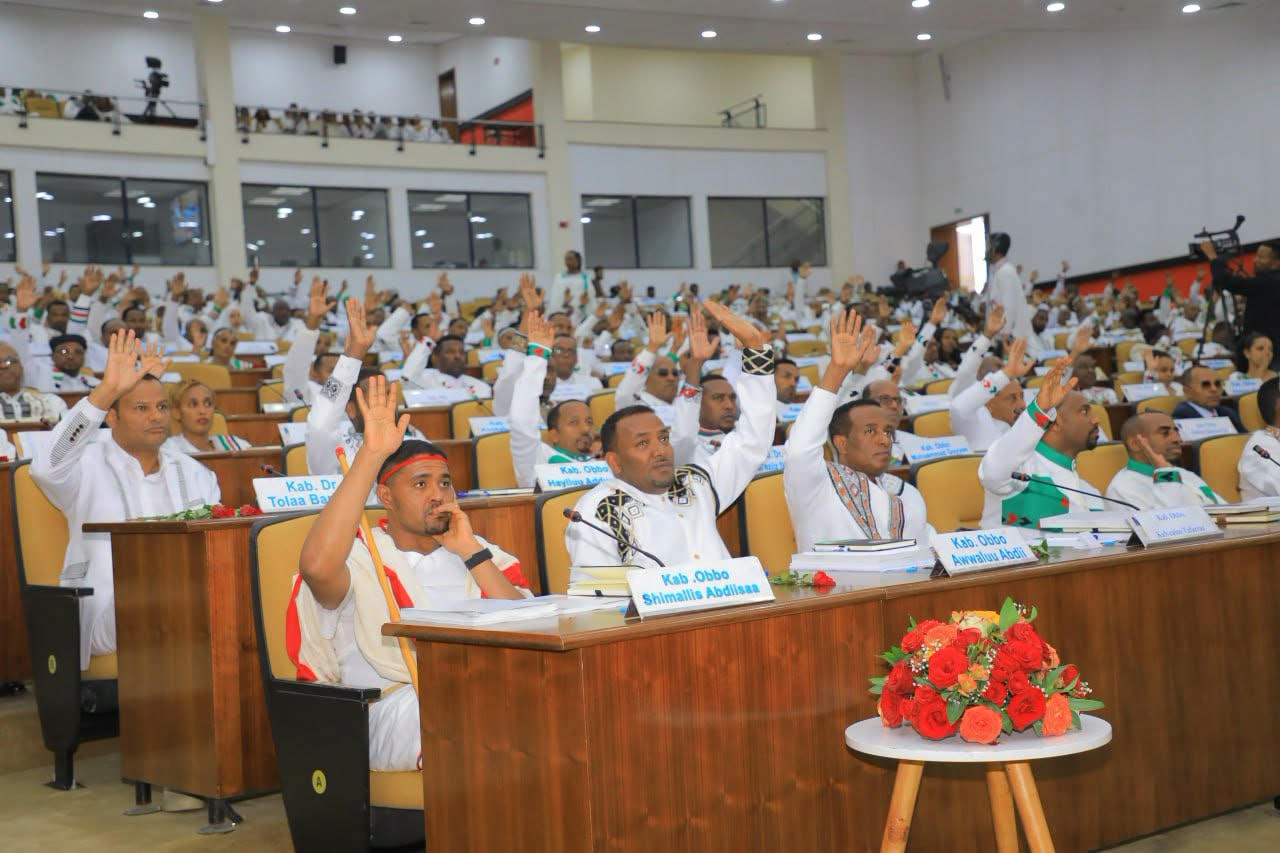
I/Pirezidaantoonni ja’a amma bakka bu’aniiru, kuusaa tokkoon tokkoon isaaf qaama qindeessaa ijaaruu jalqabuu ni eegamu. Garuu, qoodinsa aangoo addaa, karoora maallaqaa fi hariiroo naannoo sadarkaa jiran wajjin ifa ta’uu qaba.
Walgahii Caffee irratti, Obbo Shimallis akka ibsetti, bara haaraa keessatti “bu’aalee misoomaa cimsuu fi haaromsa dhaqqabsiisuun” akka itti fufu, garuu waa’ee qaama mormii haaromsa bulchiinsaa sanaa bal’inaan hin ibsine.
Oromiyaaf — taphattoota siyaasaa Itoophiyaa keessatti bakka guddaa qabdu — haaromsi bulchiinsaa cal’isaa kun, tarreeffama filannoo tokkoo irraa fagoo ta’ee dhiibbaa guddaa qabaachuu danda’a.
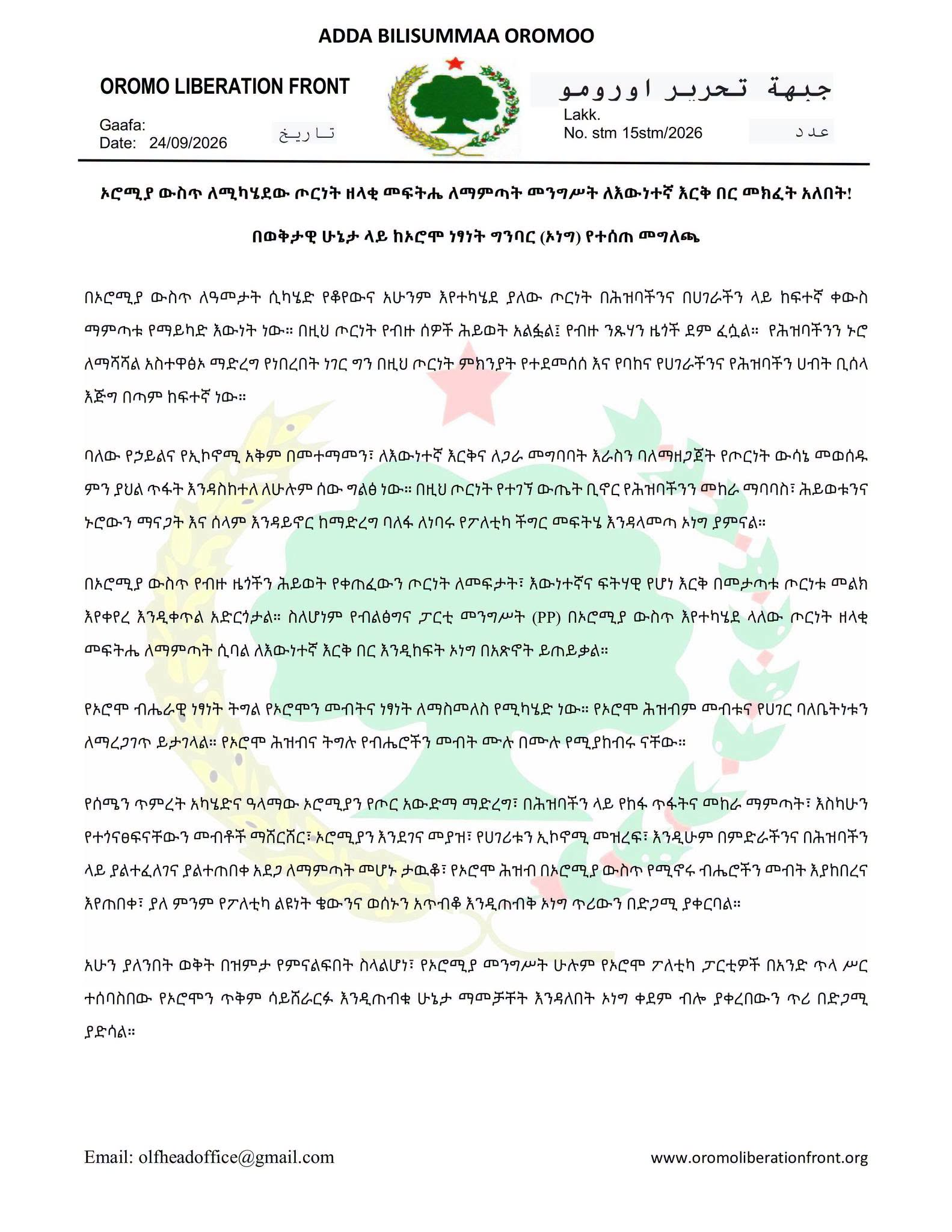
ኦነግ፡ በኦሮሚያ ውስጥ ለሚካሄደው ጦርነት ዘላቂ መፍትሔ ለማምጣት መንግሥት ለእውነተኛ እርቅ በር መክፈት አለበት!
ፊንፊኔ፣ መስከረም 14 ቀን 2019 ዓ.ም — የኦሮሞ ነፃነት ግንባር (ኦነግ) በወቅታዊ ሁኔታ ላይ መግለጫ አውጥቶ፣ በኦሮሚያ ውስጥ ለዓመታት ሲካሄድ የቆየውን ጦርነት ለማስቆም እና ዘላቂ መፍትሔ ለማምጣት የብልፅግና ፓርቲ መንግሥት ለእውነተኛ እርቅ በር እንዲከፍት በአጽኖት ጠይቋል።
የጦርነቱ አስከፊ ውጤት
መግለጫው እንደሚያስረዳው፣ በኦሮሚያ ውስጥ ለዓመታት ሲካሄድ የቆየውና አሁንም እየተካሄደ ያለው ጦርነት በሕዝባችንና በሀገራችን ላይ ከፍተኛ ቀውስ ማምጣቱ የማይካድ እውነት ነው። በዚህ ጦርነት የብዙ ሰዎች ሕይወት አልፏል፤ የብዙ ንጹሃን ዜጎች ደም ፈሷል።
የሕዝባችንን ኑሮ ለማሻሻል አስተዋፅኦ ማድረግ የነበረበት ነገር ግን በዚህ ጦርነት ምክንያት የተደመሰሰ እና የባከና የሀገራችንና የሕዝባችን ሀብት ቢሰላ እጅግ በጣም ከፍተኛ ነው።
የተሳሳተ የጦርነት ውሳኔ
ኦነግ እንዳስታወቀው፣ ባለው የኃይልና የኢኮኖሚ አቅም በመተማመን፣ ለእውነተኛ እርቅና ለጋራ መግባባት እራስን ባለማዘጋጀት የጦርነት ውሳኔ መወሰዱ ምን ያህል ጥፋት እንዳስከተለ ለሁሉም ሰው ግልፅ ነው። በዚህ ጦርነት የተገኘ ውጤት ቢኖር የሕዝባችንን መከራ ማባባስ፣ ሕይወቱንና ኑሮውን ማናጋት እና ሰላም እንዳይኖር ከማድረግ ባለፈ ለነባሩ የፖለቲካ ችግር መፍትሄ እንዳላመጣ ኦነግ ያምናል።
ለእውነተኛ እርቅ ጥሪ
በኦሮሚያ ውስጥ የብዙ ዜጎችን ሕይወት የቀጠፈውን ጦርነት ለመፍታት፣ እውነተኛና ፍትሃዊ የሆነ እርቅ በመታጣቱ ጦርነቱ መልክ እየቀየረ እንዲቀጥል አድርጎታል። ስለሆነም የብልፅግና ፓርቲ መንግሥት (PP) በኦሮሚያ ውስጥ እየተካሄደ ላለው ጦርነት ዘላቂ መፍትሔ ለማምጣት ሲባል ለእውነተኛ እርቅ በር እንዲከፍት ኦነግ በአጽኖት ይጠይቃል።
የኦሮሞ ትግል እና የብሔሮች መብት
የኦሮሞ ብሔራዊ ነፃነት ትግል የኦሮሞን መብትና ነፃነት ለማስመለስ የሚካሄድ ነው። የኦሮሞ ሕዝብም መብቱና የሀገር ባለቤትነቱን ለማረጋገጥ ይታገላል። የኦሮሞ ሕዝብና ትግሉ የብሔሮችን መብት ሙሉ በሙሉ የሚያከብሩ ናቸው።
የሰሜን ጥምረት አደጋ
ኦነግ እንዳስጠነቀቀው፣ የሰሜን ጥምረት አካሄድና ዓላማው ኦሮሚያን የጦር አውድማ ማድረግ፣ በሕዝባችን ላይ የከፋ ጥፋትና መከራ ማምጣት፣ እስካሁን የተጎናፀፍናቸውን መብቶች ማሸርሸር፣ ኦሮሚያን እንደገና መያዝ፣ የሀገሪቱን ኢኮኖሚ መዝረፍ፣ እንዲሁም በምድራችንና በሕዝባችን ላይ ያልተፈለገና ያልተጠበቀ አደጋ ለማምጣት መሆኑ ታዉቆ፣ የኦሮሞ ሕዝብ በኦሮሚያ ውስጥ የሚኖሩ ብሔሮችን መብት እያከበረና እየጠበቀ፣ ያለ ምንም የፖለቲካ ልዩነት ቄውንና ወሰኑን አጥብቆ እንዲጠብቅ ኦነግ ጥሪውን በድጋሚ ያቀርባል።
የአንድነት ጥሪ
አሁን ያለንበት ወቅት በዝምታ የምናልፍበት ስላልሆነ፣ የኦሮሚያ መንግሥት ሁሉም የኦሮሞ ፖለቲካ ፓርቲዎች በአንድ ጥላ ሥር ተሰባስበው የኦሮሞን ጥቅም ሳይሸራርፉ እንዲጠብቁ ሁኔታ ማመቻቸት እንዳለበት ኦነግ ቀደም ብሎ ያቀረበውን ጥሪ በድጋሚ ያድሳል።
የፖለቲካ እስረኞች ጉዳይ
ጦርነት መፍትሔ እንደማያመጣ ሁሉ፣ ሰዎችን በፖለቲካ አመለካከታቸውና በፓርቲ ደጋፊነታቸው ምክንያት ወንጀለኛ ማድረግና ማሰር መፍትሔ የሚያመጣ ስላልሆነ፣ ሁሉም የፖለቲካ እስረኞች እንዲፈቱ መንግሥትን በድጋሚ እናሳስባለን።
ለኦሮሞ ጥቅም እንታገላለን እያሉ…
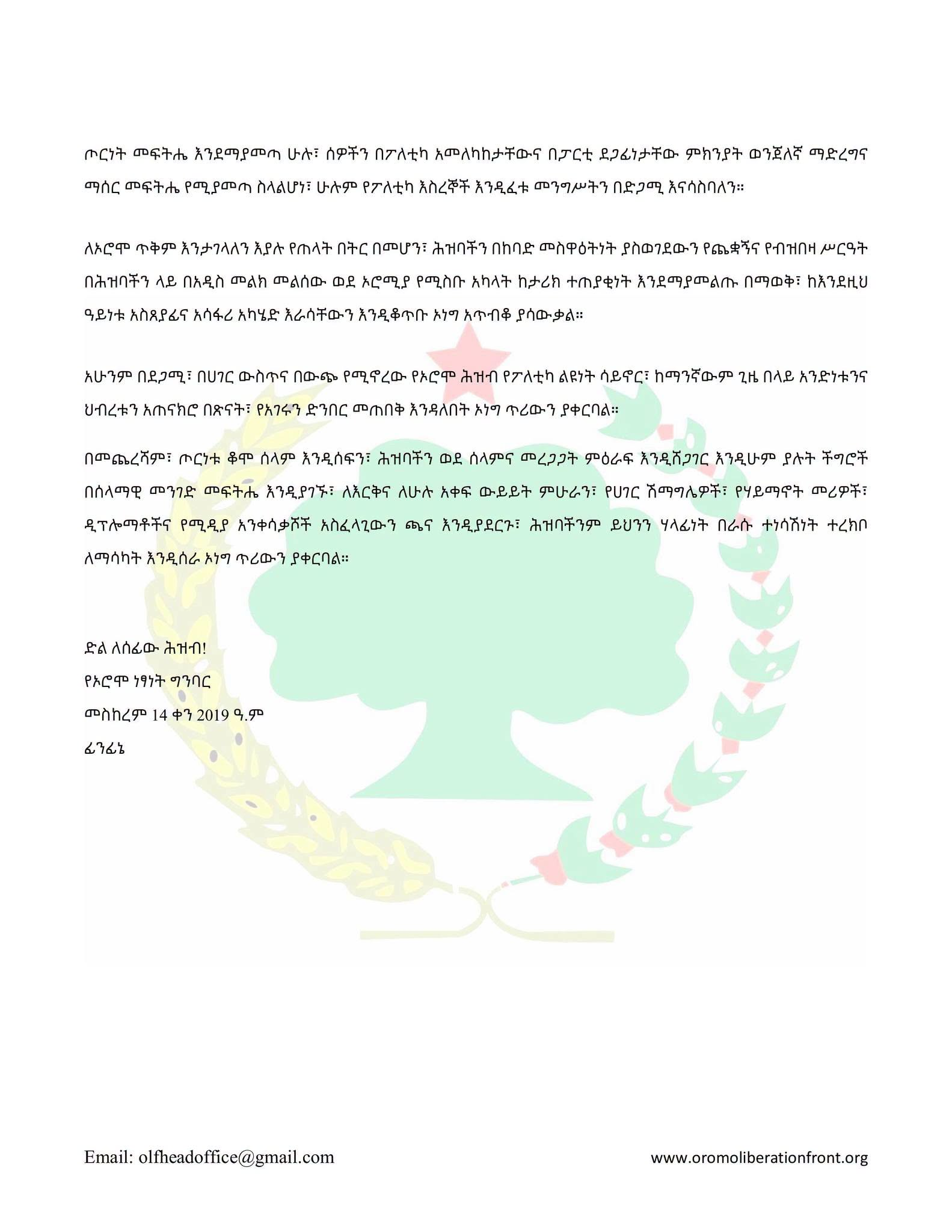
ለኦሮሞ ጥቅም እንታገላለን እያሉ የጠላት በትር በመሆን፣ ሕዝባችን በከባድ መስዋዕትነት ያስወገደውን የጨቋኝና የብዝበዛ ሥርዓት በሕዝባችን ላይ በአዲስ መልክ መልሰው ወደ ኦሮሚያ የሚስቡ አካላት ከታሪክ ተጠያቂነት እንደማያመልጡ በማወቅ፣ ከእንደዚህ ዓይነቱ አስጸያፊና አሳፋሪ አካሄድ እራሳቸውን እንዲቆጥቡ ኦነግ አጥብቆ ያሳውቃል።
የመጨረሻ ጥሪ
በመጨረሻም፣ ጦርነቱ ቆሞ ሰላም እንዲሰፍን፣ ሕዝባችን ወደ ሰላምና መረጋጋት ምዕራፍ እንዲሸጋገር እንዲሁም ያሉት ችግሮች በሰላማዊ መንገድ መፍትሔ እንዲያገኙ፣ ለእርቅና ለሁሉ አቀፍ ውይይት ምሁራን፣ የሀገር ሽማግሌዎች፣ የሃይማኖት መሪዎች፣ ዲፕሎማቶችና የሚዲያ አንቀሳቃሾች አስፈላጊውን ጫና እንዲያደርጉ፣ ሕዝባችንም ይህንን ሃላፊነት በራሱ ተነሳሽነት ተረክቦ ለማሳካት እንዲሰራ ኦነግ ጥሪውን ያቀርባል።
ድል ለሰፊው ሕዝብ!
ምንጭ፡ የኦሮሞ ነፃነት ግንባር (ኦነግ)
ABO: Lola Oromiyaa Keessatti Furmaata Waaraa Argamsiisuuf Mootummaan Araara Dhugaaf Balbala Banuu Qaba!
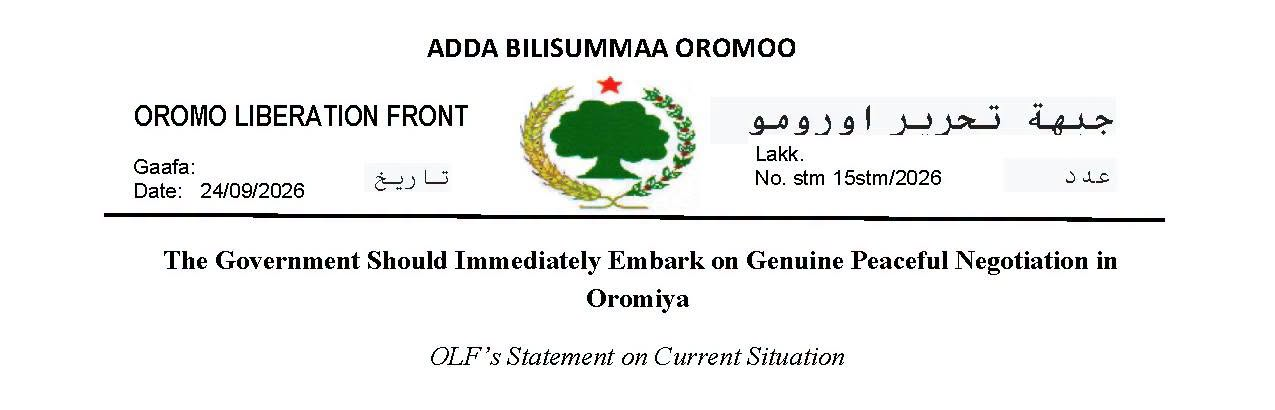
Finfinnee, Fulbaana 24, 2026 — Adda Bilisummaa Oromoo (ABO) haala yeroo ammaa irratti ibsa adda baasaa baastee, lola Oromiyaa keessaatti furmaata waaraa argamsiisuuf mootummaan Paartii Badhaadhinaa (PP) araara dhugaaf balbala banuu akka qabu gadi jabeessee gaafatte.
Ibsi ABO, Fulbaana 24, 2026 Finfinneerraa bahe, lolli Oromiyaa keessatti waggootaaf geggeeffamaa ture gaaga’ama olaanaa ummataa fi biyya keenya irratti fiduun isaa dhugaa hin haalamne ta’uu ibse. Lola kanaan lubbuu namoota hedduutu bade; dhiigni lammiilee qulqulluu baay’eetu dhangala’e. Qabeenyi biyyaa fi ummata keenyaa kan silaa jireenya isaa wayyeessuu keessatti gumaachu lola kanaan barbadaa’ee fi qisaasame yoo shallagame haalaan guddaa dha.
Wal Hubannaa fi Araara Dhugaa Dhabuu
ABO ibsa isaa keessatti, “Wal hubannaa fi araara dhugaaf of qopheessuu dhabuun, humnaa fi dinagdee jirutti abdatamee murtiin lolatti seename hagam gaaga’ama akka dhaqqabsiise hundaafuu ifaa dha” jette. Lola kanaan bu’aan argame yoo jiraate gidiraa ummata keenyaa hammeessuu, jiruu fi jireenya isaa gaaga’uu fi nageenyi akka dhabamu gochuun ala rakkoo siyaasaa jiruuf furmaata akka hin fidin ABO itti amante.
Furmaata Waaraa: Araara Dhugaa fi Haqa Qabeessa
ABO akka ibsite, lola Oromiyaa keessaa lubbuu lammiilee hedduu galaafate kanatti furmaata barbaaduuf, araarri dhugaa fi haqa qabeessi dhibamuu irraa lolichi bifa jijjiirrataa akka deemu taasisee argama. “Kana waan ta’eef, mootummaan paartii Badhaadhinaa (PP), lola Oromiyaa keessaaf furmaata waaraa argamsiisuuf, araara dhugaaf balbala banuu akka qabu ABOn gadi jabeessee gaafata,” jette.
Qabsoo Bilisummaa Oromoo fi Mirga Sabootaa
Ibsi ABO qabsoon bilisummaa Oromoo mirgaa fi bilisummaa Oromoo deebisuuf kan adeemsisamuu ta’uu, ummatni Oromoos gaaffii mirgaa fi abbaa biyyummaa isaa mirkaneeffachuuf qabsa’uu ibse. “Ummatni Oromoo fi qabsoon isaa mirga sabootaa guutuutti kan kabajanii dha,” jette ABO.
Akeekaa fi Imallii Tumsaa Kaabaa
ABO ibsa isaa keessatti, tumsi Kaabaa imallii fi akeekni isaa Oromiyaa dirree waraanaa taasisuun, dhumaatii kan daranii fi hiraara gara biraa ummata keenyatti fiduu, mirgoota haga ammaa gonfataman sharafuu, Oromiyaa deebisanii dhuunfatuun dinagdee biyyaa saamuu, balaa hin hawwamnee fi hin eegamne dachee keenyaa fi ummata keenyatti fiduuf kan sossohamu ta’uun beekamee, ummatni Oromoo mirga saboota Oromiyaa keessaa kabajaa fi tiksaa, garaagarummaa siyaasaa tokko malee qe’ee fi daangaa isaa jabaatee akka tikfatu ABOn irra deebi’ee dhaame.
Tokkummaa Oromoo: Yaamicha Haaromsaa
“Yeroon amma keessa jirru kan cal’isaan wal bira darban waan hin taaneef, Mootummaan Oromiyaa paartiileen Oromoo hundi gaaddisa tokkotti dhufuun dantaa Oromoo bifa hin sharafamneen akka tiksaniif haala mijeessuu akka qabu ABOn yaamicha amma dura taasise irra deebi’ee haaromsa,” jette ABO.
Hidhaa Siyaasaa fi Araara
ABO ibsa isaa keessatti, “Ilaalcha siyaasaa fi deggertummaa dhaabotaa ykn paartileen nama yakkuun hidhuun akkuma lolli furmaata hin argamsiisin kunis furmaata fidu waan hin qabneef, hidhamtootni siyaasaa hundi akka hiikaman irra deebiin mootummaa hubachiisna,” jette.
Akeekkachiisa Qaamotaa fi Yaamicha Araaraa
ABO qaamotni dantaa Oromoof qabsoofna jechaa ulee diinaa ta’uun sirna cunqursaa fi saaminsaa kaleessa ummatni keenya wareegama guddaa itti kafalee of irraa darbate bifa haaraan deebisanii Oromiyaatti harkisan itti gaafatama seenaa jalaa akka hin baane beekuudhaan, deemsa fokkisaa fi qaanfachiisaa akkanaa irraa akka if qusatan cimsee hubachiiste.
Yaamicha Ummata Oromoof
Ammas irra deebi’uudhaan ummatni Oromoo keessaa fi alaa garaagartummaa siyaasaa tokkoon alatti, kan yeroo kamii caalaatti tokkummaa fi gurmuu isaa jabeeffatuu fi itichuun, daangaa biyya isaa eeggachuu akka qabu ABOn yaamicha isaa dhiheessite.
Yaamicha Furmaata Nagaa
Maayii irratti, lolli dhaabbatee nageenyi akka bu’uuf, ummatni keenya boqonnaa nagaa fi tasgabbiitti akka ce’uuf, dhibdeeleen jiran karaa nagaan furmaata akka argataniif, Araaraa fi Marii hunda galeessaaf, hayyootni, maanguddootnii fi abbootiin amantaa, dippilomaatotnii fi rogeeyyiin miidiyaa dhiibbaa barbaachisu akka taasisan, ummatni keenyas kana ofitti fudhatee milkeessuu irratti akka hojjetu ABOn yaamicha isaa dhiheessite.
Injifannoo Ummata Bal’aaf!
Madda: Adda Bilisummaa Oromoo (ABO)
“ኢትዮጵያ ለሰው ልጅ የምትሰጠውን የመጨረሻ ክብር ሰጥታኛለች — ለሀገሬ ኢትዮጵያ ያልከፈልኩት ነገር የለም”ፊልድ ማርሻል ብርሃኑ ጁላ
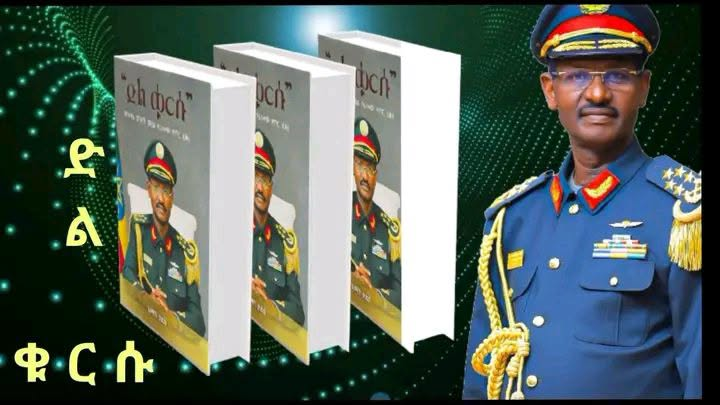
አዲስ አበባ፣ መስከረም 12/2019 (ኢኤንኤ) — የኢትዮጵያ ብሔራዊ መከላከያ ሠራዊት ጠቅላይ ሹም ፊልድ ማርሻል ብርሃኑ ጁላ፣ ኢትዮጵያ ለሰው ልጅ የምትሰጠውን የመጨረሻ ክብር ሰጥታኛለች፤ ለሀገሬም ያልከፈልኩት ነገር የለም ብለዋል።
ፊልድ ማርሻል ብርሃኑ ጁላ ይህን ያሉት ትናንት ማታ “ድል ቁርሱ” በሚል ርዕስ የተጻፈውን የመጽሐፍ መገለጫ ሥነ ሥርዓት ላይ ነው። መጽሐፉ ፊልድ ማርሻል ብርሃኑ ጁላ በሕይወታቸው ውስጥ ያለፉበትን የሕይወት ታሪክና የወታደራዊ ጉዞ ያሳያል።
ፊልድ ማርሻል ብርሃኑ ጁላ በሥነ ሥርዓቱ ላይ መልእክት አስተላልፈው፣ ሀገሬ ክብር ሰጥታኛለች፤ እኔም ለሀገሬ ያልከፈልኩት ነገር የለም፤ በሙሉ ኃይሌ አገለግላለሁ ብለዋል።
“ድል ቁርሱ” የሚል ርዕስ ያለው መጽሐፍ ፊልድ ማርሻል ብርሃኑ ጁላ ካሳለፉት የሕይወት ጉዞ ጀምሮ እስከ ወታደራዊ ጀግንነታቸው ታሪክ ድረስ የያዘ ሲሆን፣ ለዩኒቨርሲቲዎችና ለታሪክ ተመራማሪዎች እንዲሁም ለመከላከያ ሠራዊቱ ጠቃሚ መሆኑን ፊልድ ማርሻል ብርሃኑ ጁላ ገልጸዋል።
የጦር ኃይሉ ጠቅላይ ሹም ፊልድ ማርሻል ብርሃኑ ጁላ፣ የጀግኖችን ታሪክ መጻፍና ለትውልድ ማስተላለፍ መጀመራቸውን፣ የጀግኖችን ስም ማክበር የሀገሪቱን ትውልድ በብዛት እንዲቆም ያደርጋል ብለዋል።
“ድል ቁርሱ” የሚል ርዕስ ያለው መጽሐፍ በ8 ምዕራፎች የተከፈለ ሲሆን 355 ገጽ እንዳለው ተገልጿል። መጽሐፉ ከልጅነታቸው ጀምሮ እስከ ከፍተኛው ደረጃ ድረስ ያለፉበትን ሁኔታ በስፋት ያብራራል።
የመከላከያ ሠራዊት ጀግኖችን የሚመዘግቡ መጻሕፍት የወደፊት ትውልድን ለመገንባት ይረዳሉ ያሉት ፊልድ ማርሻል ብርሃኑ ጁላ፣ ሀገር ለመገንባት ትውልድን ማሳደግ ያስፈልጋል ብለዋል።
ምንጭ፡ የኢትዮጵያ ዜና አገልግሎት (ኢኤንኤ)
“Itoophiyaan dhala namaaf kabaja isa xumuraa kan kennamu naaf laachuun na kabajjeetti; anis Biyya koo Itoophiyaaf waanan waakkadhe tokkollee hin jiru”-Fiildi Maarshaal Birhaanuu Juulaa
Fulbaana 12/2019(ENA):Itoophiyaan dhala namaaf kabaja isa xumuraa kan kennamu naaf laachuun na kabajjeetti;anis Biyya koo Itoophiyaaf waanan waakkadhe tokkollee hin jiru jedhan Itaamaajooriin shuumii walii galaa Raayyaa Ittisa Biyyaa Fiildi Maarshaal Birhaanuu Juulaa.
Fiildi Maarshaal Birhaanuun kana kan jedhan sagantaa eebba kitaaba mata dureen isaa “Dil Qursuu” jedhu, seenaa jireenyaafi imala loltummaa isaan keessa darban irratti xiyyeeffatee barreeffamuun galgala kana eebbifameerrattidha.
Itaamaajoor Shuumii Waliigalaa Humna Waraanaa Fiildi Maarshaal Birhaanuu Juulaan saganticharratti ergaa dabarsaniin biyyi koo na kabajjeettii kaasuun anis biyya koof waaniin qusadhu hin qabu humna koo guutuun nan tajaajila jedhaniiru.
Kitaabni mata dureen isaa ‘Dil Qursuu’ jedhu bu’aa ba’ii jireenya dabarsan wal duraa duubaan hanga seenaa gootummaa isaanii kan qabate yoo tahu Yuunivarsiitiwwaniifi qorattoota seenaa raayyaa ittisa biyyaaf kan fayyadu ta’uu Fiildi Maarshaal Birhaanuun eeraniiru.
Itaamaajoor Shuumiin Waliigalaa Humna Waraanaa Itoophiyaa Fiildi Maarshaal Birhaanuu Juullaan seenaa goototaa barreessuun dhalootaaf olkaa’uu irraa eegalee maqaa gootota leellisuun dhalootni biyya isaaf dhaabbatu akka baay’inaan horatamaa deemus taasisa jechuun hubachiisaniiru.
Kitaabni mata duree “Dil Qursuu” jedhun bu’aa ba’ii jireenyaa Fiildi Maarshaal Birhaanuu Juullaarratti xiyyeeffachuun ijoollummaa isaanii irraa eegalee hanga sadarkaa olaanaa ga’anitti keessa darban bal’inaan kan ibsu yoo tahu boqonnaa 8’tti qoodamuun fuula 355 akka qabu ibsameera.
Kitaabochi Gootota Raayyaa egeree ijaaruuf gargaara kan jedhan Fiildi Maarshaal Birhaanuu Juulaan,biyya ijaaruuf dhaloota ceesisuu kan danda’u ta’uu ibsaniiru.
Field Marshal Birhanu Jula: “Ethiopia Has Honored Me with Its Highest Recognition — I Have Withheld Nothing from My Country”
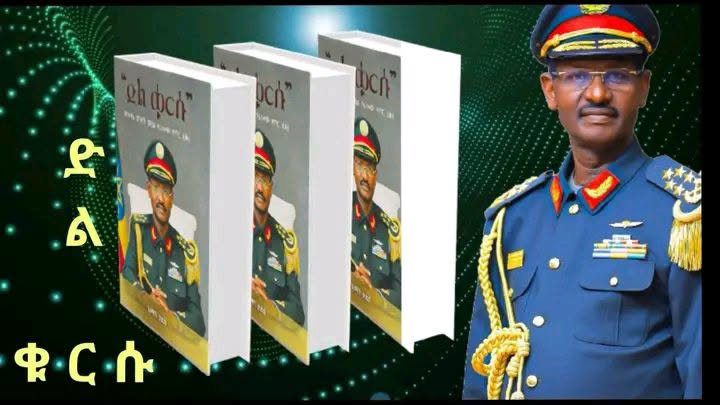
Addis Ababa, September 12, 2019 (ENA) — Field Marshal Birhanu Jula, Chief of the General Staff of the Ethiopian National Defense Force, has declared that Ethiopia has honored him with its highest recognition, and that he has withheld nothing in service to his nation.
“I am honored that Ethiopia has given me the highest honor bestowed upon a person,” Field Marshal Birhanu said. “There is nothing I have withheld for my country Ethiopia.”
The Field Marshal made these remarks during a ceremony held this evening to launch a book titled “Dil Qursuu” (The Unbroken Bond), which focuses on his life story and the military journey he has traversed.
A Life of Service, A Legacy of Courage
The book, written to chronicle the life and military career of Field Marshal Birhanu Jula, was officially inaugurated at the ceremony. It details his journey from childhood through to his rise to the highest ranks of the Ethiopian military, capturing the history of his heroism and dedication to national service.
During the event, Field Marshal Birhanu conveyed a powerful message: “My country has honored me, and I, in turn, have nothing to withhold from my country. I will serve with my full strength.”
The book, he noted, is not only a record of his personal life but also a valuable resource for universities, historians, and researchers studying the Ethiopian National Defense Force.
Preserving History, Inspiring Generations
Field Marshal Birhanu emphasized the importance of documenting the history of heroes for future generations. “Writing the history of heroes and elevating it for generations, and honoring the names of heroes, will inspire the younger generation to stand up for their country in greater numbers,” he said.
He stated that books chronicling the heroes of the Defense Force will help build the future generation. “Building a country requires nurturing a generation,” he affirmed, underscoring the role of historical documentation in shaping national identity and patriotic commitment.
A Detailed Account of an Extraordinary Journey
The book “Dil Qursuu” is divided into 8 chapters and spans 355 pages. It provides a comprehensive account of Field Marshal Birhanu’s life, beginning from his childhood and tracing his path through the various stages of his military career up to his current position at the pinnacle of the Ethiopian defense establishment.
The title “Dil Qursuu” — meaning “The Unbroken Bond” — reflects the enduring connection between the Field Marshal and his nation, a bond that has never been severed despite the many challenges and sacrifices of his military journey.
A Testament to Duty and Patriotism
The launch of this book serves as a testament to the values of duty, sacrifice, and patriotism that Field Marshal Birhanu Jula embodies. His words — “I have withheld nothing from my country” — resonate as a powerful declaration of selfless service, a reminder of the profound commitment required of those who take up arms in defense of their nation.
For Ethiopia, the book is more than a biography. It is a historical document, a teaching tool, and an inspiration for generations to come. It reminds young Ethiopians that heroism is not merely a thing of the past but a living tradition, carried forward by those who serve with honor and dedication.
A Nation’s Gratitude
Field Marshal Birhanu’s statement — “Ethiopia has honored me with its highest recognition” — reflects a reciprocal relationship between the nation and its servants. The honor bestowed upon him is not merely a personal accolade; it represents the gratitude of a nation for a lifetime of service, sacrifice, and unwavering commitment.
As the book “Dil Qursuu” takes its place in the historical record, it stands as both a tribute to one man’s extraordinary journey and a beacon for future generations — a reminder that the bond between a patriot and his country is, indeed, unbroken.
Source: Ethiopian News Agency (ENA)
Oromo Advocacy Group Rejects Pan-Ethiopian Alliance, Citing Historical Erasure and Political Opportunism
ADDIS ABABA — A prominent Oromo advocacy organization has formally rejected the newly formed “Ethiopian Peoples’ Forces Alliance for Survival,” accusing the coalition of failing to acknowledge the historical suffering of the Oromo people and of engaging in political opportunism rather than genuine problem-solving.
In a detailed statement released on 21 September 2026, Advocacy for Oromia outlined its objections to the alliance, which was established on 10/2019 E.C. (Ethiopian Calendar) and claims to represent a broad coalition of Ethiopian peoples against the current government.
The Alliance’s Platform
The Ethiopian Peoples’ Forces Alliance for Survival presents itself as a unified front against what it describes as a regime that has institutionalized national and religious divisions. Its stated objectives include removing the current government through “any means necessary,” establishing a transitional government, ensuring security for all citizens, and rebuilding the economy. The alliance explicitly calls for the right to self-determination for seven major ethnic groups: Oromo, Amhara, Tigray, Afar, Somali, Benishangul-Gumuz, and Gambella.
The alliance’s rhetoric is sweeping: “We have reached a point where we must unite to save ourselves and our country,” reads its preamble, which accuses the current regime of fueling conflicts, engaging in widespread human rights violations, and pushing the country to the brink of disaster.
The Oromo Rejection
Advocacy for Oromia, however, sees the alliance as fundamentally flawed. In its statement, the organization argues that the coalition’s generic language about “immense suffering” and “widespread displacement” deliberately avoids naming the Oromo people as specific victims of systemic oppression.
“The harm includes, but is not limited to, land dispossession, political marginalization, cultural suppression, and economic exploitation under successive Ethiopian regimes—the imperial era, the Derg regime, the EPRDF administration, and continuing under the current government,” the statement reads. “This omission is not accidental; it reflects a deliberate refusal to centre Oromo historical trauma within the alliance’s political framework.”
The advocacy group further accuses the alliance of refusing to accept the reality of systemic oppression inflicted upon the Oromo people by past regimes. Rather than demanding accountability for historical wrongs, the alliance frames the current crisis as a departure from an otherwise acceptable trajectory—a framing that Advocacy for Oromia rejects outright.
A Question of Strategy
At the heart of the dispute lies a fundamental strategic disagreement within Ethiopian opposition politics: whether to prioritize unity against a common enemy or to insist upon historical justice as a precondition for any alliance.
The alliance positions itself as a broad-based coalition, calling for unity among Ethiopia’s diverse ethnic groups to confront a shared adversary. Its document lists self-determination for multiple peoples and declares that “the unity of the Ethiopian peoples is paramount.”
Advocacy for Oromia, however, argues that without acknowledging past wrongs, any coalition risks reproducing the same structural injustices that have historically subjugated the Oromo people. “Formal recognition of Oromo rights within a reformed Ethiopian state is insufficient,” the statement asserts. “What is required is transformative justice that addresses the structural legacy of Oromo dispossession.”
The “Survival” Critique
The advocacy group also takes issue with the alliance’s very name. In the original Oromo statement, Advocacy for Oromia notes that the alliance is called “Survival”—a designation the group argues reveals its limited and inadequate scope.
“The alliance is named ‘Survival,’ which reveals its limited and inadequate scope,” the statement reads. “It is not founded to genuinely resolve the country’s problems, but rather to engage in political maneuvering and gamesmanship.”
This critique suggests that the alliance’s focus on mere survival—bare existence—falls far short of the Oromo struggle for liberation, justice, and systemic transformation.
Political Opportunism Alleged
The most serious charge leveled by Advocacy for Oromia is that the alliance is a vehicle for political opportunism. The group points to the alliance’s inclusion of multiple ethnic groups and its call for armed struggle as evidence of a framework that “superficially accommodates Oromo demands while failing to address the fundamental historical injustice against the Oromo people.”
“This framework offers only formal recognition, not substantive transformation,” the statement argues.
Advocacy for Oromia explicitly rejects any pan-Ethiopian initiative that does not subordinate itself to Oromo nationalist priorities, describing the alliance’s refusal to do so as exposing it “as a vehicle for political opportunism rather than a genuine instrument for liberating the Oromo people.”
An Unresolved Contradiction
The advocacy group also highlights what it sees as a contradiction within the alliance’s logic. The alliance’s stated objective is to remove the current regime—which Advocacy for Oromia notes is itself a product of past systems of Oromo oppression.
“If the alliance succeeds in dismantling the current order, does that not constitute a form of accountability?” the statement asks rhetorically. “Removal without acknowledgment and redress is insufficient. True liberation requires not merely a change of personnel but a reckoning with the structural foundations of Oromo subjugation.”
The Broader Context
The rejection of the alliance reflects long-standing tensions within Ethiopian opposition politics. The Oromo people, Ethiopia’s largest ethnic group, have historically experienced marginalization and dispossession under successive regimes. The emergence of Oromo nationalist movements—both peaceful and armed—has challenged the centralized Ethiopian state, demanding greater autonomy, self-determination, and historical justice.
The Ethiopian Peoples’ Forces Alliance for Survival appears to be an attempt to bridge these divides, bringing together diverse ethnic groups under a common banner. But Advocacy for Oromia’s rejection suggests that such efforts will face significant obstacles, particularly when they require subordinating specific historical grievances to a broader, more generic narrative of national suffering.
The Unanswered Question
The statement from Advocacy for Oromia leaves an important question unresolved: can Oromo liberation be achieved through alliance with other Ethiopian peoples, or does it require a separate, Oromo-centred path?
The group clearly leans toward the latter, but does not fully grapple with the strategic costs of that position—including potential isolation, the difficulty of achieving liberation without allies, and the risk of perpetuating the very divisions that have historically weakened Ethiopian opposition movements.
For now, Advocacy for Oromia’s rejection of the alliance stands as a clear statement of its position: any coalition that does not explicitly centre Oromo historical suffering and commit to its redress cannot be trusted.
Advocacy for Oromia formally rejects the “Ethiopian Peoples’ Forces Alliance for Survival” as an unsuitable vehicle for the liberation and advancement of the Oromo people.
Political Survival or Liberation Struggle? Abbaa Gammachiis’s Uncomfortable Questions for the WBO–Fano Alliance

ADDIS ABABA — In September 2026, when seven Ethiopian armed groups announced the formation of an “Alliance for Survival” in Addis Ababa, the expected euphoria did not materialize within Oromo political circles. Instead, it triggered a profound reckoning.
A widely circulated reflection text attributed to the Oromo political commentator Abbaa Gammachiis — titled “Political Survival or Self-Destruction?” — has become a focal point of that reckoning. Its central question is as blunt as it is uncomfortable: Is the alliance between the Oromo Liberation Army (WBO/OLA) and the Amhara Fano militia a strategic choice in service of Oromo liberation, or a cynical maneuver by organizational leaderships seeking to preserve their own political relevance?
The timing of this reflection is no accident. On September 20, Fano leader Zemene Kassie announced on Tigray TV that seven armed organizations — including the WBO, Fano, and the TPLF — had formed a coordinated front aimed at removing Prime Minister Abiy Ahmed’s government from power. Yet within Oromo communities, the declaration was met not with celebration but with deep suspicion.
A Fundamental Contradiction
Abbaa Gammachiis’s reflection rests on a premise stated and restated throughout: the goal of the Oromo liberation struggle is not to replace one occupant of Menelik Palace with another. It is to achieve self-determination, political freedom, and the genuine restoration of Oromo territorial sovereignty.
“If the only goal were to topple Abiy’s government, then allying with any force could be understandable,” the text argues. “But what happens after? Who guarantees Oromo self-rule? Who ensures that Oromos in Wallagga and Shawa are no longer attacked by Fano?”
This concern has a concrete empirical basis. According to multiple reports, Fano forces have been active in western Wallagga and northern Shawa, where Oromo communities have repeatedly reported attacks, abductions, and property destruction. A European Union Agency for Asylum report from October 2025 documented direct clashes between Fano and the Oromo Liberation Army in the Dera area; a June 2024 skirmish left four civilians dead.
The WBO itself has not been unaware of this. On September 17, 2026 — just three days before the alliance was announced — the WBO issued a statement explicitly demanding that Amhara armed forces “distance themselves from the Wallagga faction,” warning that “association with this small armed faction could carry political consequences.” Three days later, the WBO appeared alongside Fano in the “Alliance for Survival.”
The Gap Between Narrative and Reality
A BBC Amharic and Oromo investigation from August 2025 revealed deeper contradictions. At that time, the outlet “Africa Intelligence” first reported that the WBO and Fano had allegedly reached a ceasefire agreement. But WBO senior commander Jireenyaa Guddataa explicitly denied it to the BBC: “No negotiations ever took place between the WBO and Fano prisoners.” He went further, characterizing Fano’s presence in Oromo areas as that of an enemy: “Fano entered Oromo territory, displaced our people, and the WBO regards it as an enemy.”
Fano denied any agreement as well. Fano National Movement spokesperson Geetaa Asraddaa stated that “no direct or indirect talks, relations, or agreements exist with the WBO.”
A year later, that “nonexistent relationship” was publicly unveiled as a formal alliance. For Oromos paying attention, the shift raises serious questions about decision-making transparency and internal democracy.
A “Cursed Alliance”
Not all WBO-affiliated voices have accepted the pivot. In March 2026, a group claiming to represent “WBO Foreign Affairs” issued a scathing statement branding any alliance with Fano a “cursed alliance.”
The statement leveled several accusations: that the leadership had “abandoned the political program and charter published in 2017,” “chosen to side with Fano and other enemies of the Oromo liberation struggle,” and “chosen closeness with Fano over the defense of Oromos while Oromos are being ethnically cleansed by Fano.”
It concluded: “We call on the Oromo people and the WBO not to choose between two enemies, but to intensify the struggle on both fronts — against Prosperity and against Fano.”
Whether this statement represents a significant internal faction or a minority dissent is difficult to independently verify. But its very existence signals that the Fano alliance is far from a consensus position within the WBO.
The Logic of “Political Survival”
Abbaa Gammachiis’s text ultimately directs its critique toward a more sensitive target: the “political survival” motives of organizational leadership.
The logic is as follows: when an armed organization lacks military breakthroughs or political progress over an extended period, the legitimacy of its leadership gradually erodes. An alliance with another armed force — even one unpopular among the grassroots — can provide leadership with a narrative of “action,” sustain the interest of external funders, and defer internal questions about strategic direction.
“The question is: is this alliance serving the goal of Oromo liberation, or is it serving the survival of the organization and its current leadership?” the text asks.
The sharpness of this critique lies in its refusal to rely on speculation about individual motives. Instead, it points to a structural dilemma: when an armed organization’s decision-making is characterized by information asymmetry with the population it claims to represent, the leadership’s behavioral logic can gradually drift from its proclaimed goals.
Where Are the People?
A recurring theme in Abbaa Gammachiis’s analysis is the “absence of the people.” The text stresses that a strategic pivot of this magnitude — allying with former enemies — should have been thoroughly debated among the Oromo public and WBO’s grassroots membership.
“The WBO is not composed solely of armed fighters,” the text states. “It is built on the foundation of the entire Oromo people — youth, scholars, the diaspora, political parties. To make such a consequential political decision without consulting them is itself a serious problem.”
This critique also touches on a broader dilemma in Oromo politics. Since Abiy’s rise in 2018, Oromo political forces have undergone severe fragmentation and realignment. From the Qeerroo youth movement that propelled Abiy to power, to subsequent disillusionment with Prosperity Party’s centralizing tendencies, to the WBO’s years-long armed struggle in the bush, Oromo political choices have oscillated and struggled among multiple forces.
Against this backdrop, a WBO–Fano alliance — with Fano widely viewed in western Oromo areas as an attacking force against Oromo communities — may deepen Oromo political alienation. If the largest Oromo armed organization chooses to cooperate with what Oromo communities perceive as an enemy, the narrative of “liberation” faces a serious credibility crisis.
What Comes Next?
As of press time, the future trajectory of the “Alliance for Survival” remains uncertain. Analysts broadly note that internal ideological and strategic divisions — particularly the fundamental contradiction between the WBO and Fano over western Oromo territory and community security — may cause it to fracture in the near term.
WBO commander Jaal Marroo told local media in early September that the organizations had “met multiple times” before the eventual announcement. But the frequency of meetings does not conceal substantive disagreements.
Abbaa Gammachiis’s reflection offers no simple answers. It returns instead to a basic question: “Is this alliance for Oromo liberation, or for the survival of the organization and its current leadership? The answer will profoundly shape the Oromo people and the future of their struggle.”
For many Oromos, the fact that this question must even be asked is itself part of the answer.
“Any Alliance with ONA/Shene Is a Betrayal of Our Blood”: Wallagga Amhara Unity Bloc Rejects WBO–Fano Cooperation

ADDIS ABABA — On September 21, 2026, as reports of a formal alliance between the Oromo Liberation Army (WBO/OLA) and the Amhara Fano militia continued to reverberate across Ethiopia, a newly formed Amhara diaspora organization issued a scathing declaration rejecting any cooperation with the Oromo armed group — and warning Fano itself that such a pact would be historically unforgivable.
The statement, released by the Wallagga Amhara Natives Unity Association (የወለጋ አማራ ተወላጆች አንድነት ህብረት) and dated Meskerem 11, 2019 in the Ethiopian calendar (September 21, 2026), is the first organized Amhara response to the emerging WBO–Fano axis from a constituency directly affected by the conflict in Wallagga. Its language is unambiguous: any political, strategic, or tactical collaboration with the Oromo Liberation Front (OLF/ONEG) and its armed wing, commonly known as “Shene,” constitutes complicity in genocide.
The statement arrives at a critical juncture. Just one day earlier, Fano leader Zemene Kassie had announced on Tigray TV the formation of a seven-member “Alliance for Survival” alongside the WBO, the TPLF, and other armed factions, with the stated goal of removing Prime Minister Abiy Ahmed’s government. For Amharas with roots in Wallagga — a region that has witnessed some of the most brutal intercommunal violence of the past several years — the announcement was not a cause for celebration but a call to resistance.
A History of Coexistence, a Present of Atrocity
The declaration opens by invoking a shared past. For generations, it states, Amhara natives of Wallagga — in East Wallagga, West Wallagga, Horo Guduru, and Qellem Wallagga zones — lived alongside their Oromo neighbors “bound by marriage, religion, culture, and social ties, in peace and love.”
That coexistence, the group argues, has been systematically dismantled over the past few decades, and especially in recent years, by what it describes as “the radical Oromo Liberation Front (OLF/ONEG Shene) and affiliated extremist groups.”
The specific allegations are grave and detailed:
- Mass killings: The statement claims that massacres in West, East, Horo Guduru, and Qellem Wallagga zones, as well as in various kebeles, were “primarily carried out by OLF/Shene and its allies,” a finding it says has been documented by human rights organizations and verified internationally.
- Identity-based targeting: Victims were not killed for political or social reasons, the group asserts, but “solely because they were identified as Amhara.”
- Atrocities against the vulnerable: Children, pregnant mothers, the elderly, and the infirm were not spared. The statement describes “horrific acts” in which bodies were dismembered — acts it says make any cooperation with the perpetrators “a trampling of the blood of the dead and complicity in historical injustice.”
- Economic and social destruction: Thousands of farming households were burned; property, livestock, and harvests were looted. Millions were displaced from their birthplaces and forced into “roofless shelters and extreme suffering.” Schools, health stations, and places of worship were destroyed, pushing the community “entirely outside a humane way of life.”
These accounts align with broader patterns documented by international observers. The EU Agency for Asylum’s October 2025 report noted significant civilian displacement and intercommunal violence in western Oromia, though it did not attribute specific massacres to a single perpetrator. The Ethiopian Human Rights Commission has also documented widespread abuses in the region, often without clear attribution amid the fog of armed conflict.
The Wallagga Amhara group, however, places responsibility squarely on the OLF/Shene — a designation that has become increasingly common in Amhara political discourse but remains contested by Oromo advocates who argue it conflates legitimate armed resistance with criminal violence.
The Ideological Core: “The Amhara Is a Settler and an Enemy”
The statement moves beyond documenting atrocities to diagnose their root cause. It identifies the OLF’s “extremist ideology” as being built on a “false and hostile narrative” that “the Amhara is a settler and an enemy.”
This narrative, the group argues, has destroyed “the values of coexistence and peace” that bound Amhara and Oromo communities together for centuries, endangered the possibility of future generations living together, and spread a dangerous cycle of vengeance.
The charge is a familiar one in Amhara political discourse: that Oromo ethnonationalism, as expressed by the OLF and its offshoots, treats Amharas in regions like Wallagga as foreign interlopers who must be expelled or eliminated. Oromo scholars and activists have long disputed this characterization, arguing that Amhara settlement in Wallagga was historically encouraged by imperial governments and that the OLF’s primary grievance is with a centralized state, not with Amhara individuals.
Yet the Wallagga group’s testimony reflects a lived experience that cannot be dismissed as mere propaganda. For Amharas in western Oromia, the past several years have brought displacement, violence, and a pervasive sense of being targeted for their identity — a reality that shapes their reception of any political alliance involving Oromo armed groups.
A Moral Reckoning, Not Just a Political One
The statement’s fourth major argument elevates the objection from political calculation to moral principle. It condemns what it calls “the loss of political and moral principle” — the willingness to pursue political advantage “above human life, justice, and truth.”
“To ignore the lost lives of thousands, the destroyed wealth, and the tears that have flowed,” it reads, “and to cooperate with a murderous group is not to stand for justice but to become an accomplice to the crime.”
This moral framing is significant. It suggests that for the Wallagga Amhara group, the question of WBO–Fano cooperation is not merely about strategic efficacy — whether the alliance can achieve its stated goal of toppling Abiy — but about whether such cooperation is permissible at all, given the WBO’s alleged role in atrocities. The declaration positions itself as a moral red line, not a tactical objection.
It also implicitly challenges the logic of “the enemy of my enemy is my friend” that appears to underpin the “Alliance for Survival.” For the Wallagga Amhara group, the WBO is not a potential partner against a common foe but an existential threat in its own right.
Direct Warnings to Fano and Amhara Political Forces
The statement’s most consequential section is its direct message to Fano and to any Amhara political organization considering collaboration with the WBO.
“Any political organization, association, or coalition claiming to represent the Amhara people,” it warns, “must understand that any negotiation or agreement with these extremist groups is a denial of the people’s blood and bones, will find no acceptance among our people, and will be held accountable by history.”
This is not a call for dialogue. It is an ultimatum: any Amhara force that aligns with the WBO forfeits its claim to represent the Amhara people.
The warning is especially pointed given that Fano itself is not a monolithic organization. The Fano movement encompasses numerous factions with varying degrees of centralization and differing attitudes toward Oromo armed groups. Some Fano commanders in Gojjam and Gondar have focused their operations against the federal government, while those in Wallagga and northern Shawa have been directly engaged in clashes with the WBO. The Wallagga Amhara statement appears designed to strengthen the hand of Fano factions opposed to any WBO deal — and to deter those who might see tactical advantage in such an alliance.
It also implicitly criticizes any Amhara political leadership that would negotiate with the WBO without the consent of affected communities. The statement positions the Wallagga Amhara diaspora as a veto-holding constituency, asserting that its experience of violence gives it the authority to determine what Amhara political forces may and may not do.
A Call for Justice, Not Just Rejection
The declaration is not solely negative. It also lays out a positive program:
- International accountability: It calls for the atrocities against Wallagga Amharas to be investigated by the International Criminal Court (ICC) and independent bodies, with perpetrators and their coordinators brought to justice.
- Return and compensation: It demands that displaced Amharas be allowed to return to their lands “in peace and with full guarantees,” that they receive compensation for destroyed property, and that social services be restored — calling on both the Ethiopian government and the international community to fulfill their responsibilities.
- A call to the Oromo people: In a notable gesture, the statement distinguishes between “the radical few and political merchants” and “our Oromo brothers,” urging Oromo elders, religious leaders, and youth to join in resisting “this destructive force” and to preserve “the brotherhood that has lasted for centuries.”
- A call to the Amhara people and opposition forces: It urges Amhara political organizations to reject any negotiation with “these extremist groups” and warns that such deals will not be accepted by the people.
The dual appeal — rejecting Oromo armed groups while extending a hand to the Oromo people — reflects a strategic distinction common in Amhara political discourse: separating “the people” from “the armed group” and appealing to the former against the latter. Whether this distinction resonates with Oromo audiences, particularly those who view the WBO as a legitimate liberation army, is another matter.
The Broader Implications
The Wallagga Amhara statement is significant on several levels.
First, it demonstrates that the WBO–Fano alliance is not merely an elite-level arrangement but one that will face resistance from constituencies directly affected by the conflict. The Wallagga Amhara diaspora — organized, vocal, and deeply invested in the fate of their homeland — represents a significant obstacle to any durable cooperation between the two armed groups.
Second, it exposes the internal contradictions of the “Alliance for Survival.” The alliance’s stated purpose is to unite armed groups against a common enemy — Abiy’s government. But for many Amharas in Wallagga, the WBO is not a potential ally but the primary perpetrator of violence against their community. The statement effectively asks: How can Fano claim to defend Amhara interests while allying with those accused of massacring Amharas?
Third, it raises questions about the representativeness of the forces negotiating in the “Alliance for Survival.” The Wallagga Amhara group’s assertion that any deal with the WBO lacks popular legitimacy among Amharas suggests that the alliance’s architects may be speaking for themselves rather than for their claimed constituencies.
Fourth, it highlights the intractability of the underlying conflict. The statement does not merely oppose cooperation; it calls for international criminal accountability for the WBO’s alleged atrocities. This is not a position that leaves room for political negotiation. It is a demand for justice that, if pursued, would foreclose any possibility of alliance.
Fifth, it underscores the fragmentation of Amhara political representation. The Wallagga Amhara Unity Association is one of many Amhara diaspora organizations, and its positions may not reflect those of Amhara political forces elsewhere. But its willingness to directly challenge Fano’s strategic direction suggests that the Amhara political landscape is far from unified behind the “Alliance for Survival.”
Conclusion: A Line in the Blood
The Wallagga Amhara Natives Unity Association’s declaration is not a conventional political statement. It is a testimony of grief, a demand for justice, and a warning to those who would trade principle for tactical advantage.
Its core message is stark: for Amharas of Wallagga, the WBO is not a potential partner in a shared struggle against Abiy. It is the force that killed their families, burned their homes, and drove them from their lands. Any Fano leader who shakes hands with the WBO, the statement suggests, shakes hands with the blood of Wallagga’s dead.
Whether this warning will be heeded — by Fano, by other Amhara political forces, or by the architects of the “Alliance for Survival” — remains to be seen. But as Ethiopia’s armed opposition scrambles to form a united front against Addis Ababa, the Wallagga Amhara declaration is a reminder that the deepest divisions may not be between the government and its opponents, but among the opponents themselves.
“Justice for our massacred and displaced kin in Wallagga!” the statement concludes. “The true coexistence and brotherhood of our peoples will prevail!”
For now, those words read less as a prediction than as a prayer — and a warning that the road to any united opposition runs through the blood-soaked fields of western Oromia.

