The Truth Behind the Lens: A Reflection on Activism, Legacy, and Identity

“Dabeessi afaan goota, yoo diina arge hoota.” (A coward speaks like a hero, but flees at the sight of the enemy.)
In the period of transformation, a desire emerged among some activists from the Oromo Liberation Front (ABO) and the Oromo Federalist Congress (KFO) to meet and exchange views. This led to an unusual gathering at the residence of Jawar Mohammed—a meeting that would later become a source of profound reflection for those who attended.
The story of that day, and the subsequent events, reveals a complex narrative about leadership, media representation, and the ownership of a people’s struggle.
The Summons and the Scrutiny
Darajjee Margaa, who at the time had a role in the KFO concerning youth affairs, acted as an intermediary. He was contacted by Jawar Mohammed, who expressed a desire to discuss important matters with several youth from the ABO. Darajjee then extended the invitation to a group of us.
On the appointed day, about 15 of us assembled and went to Jawar’s residence in Bole. The atmosphere was laden with suspicion. Before we entered, we were subjected to a thorough security check. We were disarmed—our phones and even our pens were taken from us. The justification given was the fear that if we recorded the conversation, it could be weaponized against them.
This act of stripping us of our basic belongings set the tone for a meeting that was meant to be a dialogue but felt more like an interrogation. It was the first time most of us had seen Jawar in person. He appeared to us not as the figure we saw on television, but as someone seated in a posture we found peculiar—sitting low like a Somali woman selling jima (khat) at a market.
The Core of the Conversation
Once the formalities were over, Jawar laid out his intentions. He stated that the struggle had moved past the phase of confrontation, and now it was time to work for the people. He urged the youth, whom he acknowledged had paid a heavy price in the struggle, to join him in this new endeavor. He raised a crucial question for debate: Should he found a new political party? Or should he join the existing ABO or KFO? Or should he continue as an activist?
This was the moment for us to speak. I took the opportunity to respond with two critical points:
- The Silence on Atrocities: I questioned Jawar’s moral standing, pointing out that while he spoke of struggle, he remained silent on the fate of Oromo prisoners and massacres. I asked him why he had not raised his voice against the suffering of Oromos. “Why are you silent when Oromos are being imprisoned and killed?”
- The Redundancy of a New Party: I argued that the Oromo people do not need a new party. The existing structures—the ABO and KFO—are sufficient vehicles for the struggle. If he wished to serve the people, he should join one of these existing organizations. “The Oromo people do not need a new party. The ABO and KFO are enough for us.”
The meeting was charged with emotion. Fellow youth, particularly those from Guji, were visibly angry and spoke with deep frustration.
The Interview with Tom Gardner and the “Father of Qeerroo”
Following the meeting, a documentary filmmaker named Tom Gardner from the UK began researching the Oromo youth movement. He interviewed many figures, including Jawar Mohammed, and then approached me for an interview at the Hyatt Regency in Finfinne.
During the interview, Tom asked a series of pivotal questions regarding the emergence of the Qeerroo (Oromo Youth) movement. He wanted to know when I joined and how the movement was organized.
In my response, I clarified that while the youth movement had existed since 2005, it was formalized as the “Qeerroo Bilisummaa Oromoo” (QBO) in 2011. I explained that this structure was established under the umbrella of the ABO, with its leaders reporting to ABO officials. I emphasized that Jawar Mohammed had no role in founding the QBO; his influence came much later, around 2014, and was limited to social media activism.
When Tom Gardner indicated that Jawar had claimed to be the leader of the Qeerroo, I felt it was necessary to correct the record. I urged Tom to interview more youth who had been actively involved in the struggle from 2014 to 2018, assuring him they would confirm that the leadership and direction came from the ABO, not from Jawar.
The Fight for Truth
Later, I learned that Jawar was attempting to claim ownership of the Qeerroo movement. He aimed to position himself as the “Father of Qeerroo” to legitimize his political ambitions and draw youth away from the ABO and KFO. This was a betrayal of the trust of the youth who had sacrificed so much.
The narrative that Jawar was the architect of the Qeerroo movement is a distortion. The QBO was established in 2011 by the ABO, and its legitimacy is rooted in its connection to the Oromo people’s long struggle for freedom, not in the media campaigns of an individual.
A Final Reflection
Jawar Mohammed has used his platform for personal gain. He has surrounded himself with people who flatter him, failing to build a genuine relationship with the courageous youth who have endured imprisonment and the frontlines. In my view, he is like a dog that barks endlessly, but in the end, it is the bite that reveals true intent.
The Oromo struggle is bigger than any single individual. The history of our freedom is written by those who have sacrificed, not by those who seek to rewrite it for their own benefit.
It is my duty to tell this story so that the Oromo people may know the truth about those who seek to lead them.
Abbabach Gobena:The Woman Who Became a Mother to Millions Orphanage and beyond.
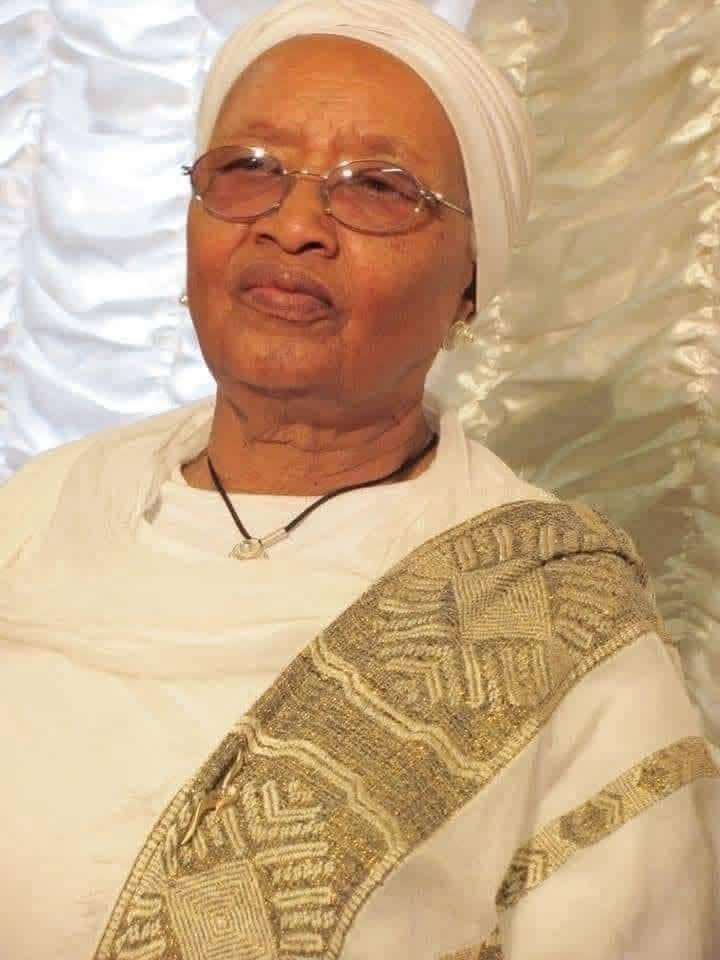
From the pain of famine to a lifetime of compassion — the remarkable journey of the Ethiopian woman known as Africa’s Mother Teresa, who gave hope, dignity, and a future to more than a million orphaned children.
Abbabach Gobena – The Mother Teresa of Africa lost her father during the period of the Italian occupation of Abyssinia/ Ethiopia/. At the age of ten, she was forced into marriage. Refusing to accept a life decided for her, she fled and made her way to Finfine /Addis Ababa/. In the city she struggled to rebuild her life, pursued her education with determination, and eventually secured a stable job.
Abbabach was a woman of deep faith. Her spiritual life guided her actions and shaped her character. She loved God deeply and placed great trust in her faith. During the Derg era, around 1980, she undertook a spiritual pilgrimage to Gishen Mariam, one of Ethiopia’s most sacred religious sites.
After completing the pilgrimage and beginning her journey back to Addis Ababa, she passed through Wollo, which at the time was suffering from a devastating famine. What she witnessed there changed the direction of her life forever.
She saw people dying from hunger. Families had been destroyed by starvation, and countless children had been left without parents. Among the heartbreaking scenes she encountered was a small child trying to breastfeed from his mother who had already died from hunger. The child, unaware of death, was still desperately searching for milk from a lifeless body of his mother.
When Abbabach saw this scene, she was deeply shaken. She could not walk away. Overcome with compassion, she picked up the child and took him with her. At that moment, the only thing she possessed was a small bottle of holy water she had brought from Gishen. Yet despite having almost nothing, she made a life-changing decision. She began caring for children who had lost their parents to famine and hardship.
Abbabach started raising orphaned children with whatever means she could find. She worked tirelessly, taking on different kinds of labor to support them. Within just one year, she had already taken in 21 children.
What began as a single act of compassion gradually grew into a lifelong mission. Over the course of her life, Abbabach Gobena went on to rescue, support, and educate more than 1.5 million children. She helped them grow, receive education, and become self-reliant members of society.
Today, her extraordinary life continues to inspire people across Ethiopia and beyond. In honor of her legacy, a film titled “Adaraa Abbabach” has been produced to tell the story of this remarkable woman who became a mother to millions. Plans are also underway to establish a hospital bearing her name so that her service to humanity may continue in new forms.
The name Abbabach Gobena has become a symbol of compassion, faith, honesty and sacrifice.Yet remembering her name alone is not enough. The greatest tribute to her life is to continue the work she began — caring for the vulnerable, protecting children, and standing with those in need.
This week we renew our commitment to the legacy of Abbabach Gobena. By learning about the work done in her name and contributing in whatever way we can, we carry forward the promise she made through her life.
May God help us succeed in continuing her mission.
Commentary: Of Elders, Apologies, and the Weight of Generational Debt
By Daandii Oromia
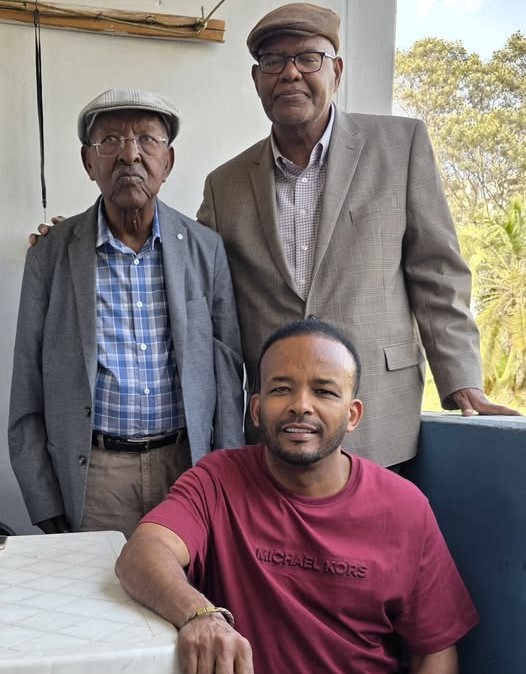
There is a photograph circulating on social media this week. In it, a young man sits at the feet of elders. His head is bowed slightly. The elders regard him with the mixture of suspicion and tenderness that only old men can muster when they look at the young.
The man is Habtamu Lamu. And he has done something remarkable: he has apologised.
“I represent my generation,” he wrote. “I have asked forgiveness from our elders.”
It is a simple act. But in a cultural landscape where elders are too often dismissed as obstacles rather than honoured as anchors, it carries the weight of centuries.
The weight of what was taken
Habtamu’s apology was not generic. It was directed specifically at those who carried the struggle for Oromo liberation through its darkest decades—veterans like the venerable intellectual Leenco Lata and former Oromia President Hasan Ali Waaqayyo.
“Sitting at the feet of elders, I learned many things,” Habtamu wrote. “May God grant them long life.”
One does not need to agree with every political position these men have ever taken to recognise what they represent. They are living archives. They carry within their bones the memory of what was done to the Oromo people, and the memory of what was done by Oromo people in the long march toward dignity.
Leenco Lata, in particular, embodies a certain kind of Oromo intellectual tradition—rigorous, uncompromising, and deeply rooted in the soil of his people’s experience. His writings on Oromo political history are not mere academic exercises; they are acts of preservation, ensuring that a generation born after the struggle understands what came before.
The rejoinder: who owes what to whom?
But no act of public apology goes unanswered in our times. Enter Magaada Boruu, whose response cuts against the grain of Habtamu’s humility.
“We, this generation, have nothing to apologise for,” he wrote. “If anything, we have been imprisoned and tortured ourselves, while they returned to their properties and prospered! Ashqaabbaxuunis hanguma obboo Gingilshaa”
The emojis do not disguise the anger beneath the words. Magaada Boruu speaks for a generation that watched many of the old guard return from exile to reclaim houses and land while young activists filled prisons. He invokes the name of Gingilshaa—the Oromo revolutionary flame—as witness to his claim.
And he is not entirely wrong.
There is a painful asymmetry in the Oromo experience of the past decade. Some elders returned to comfortable retirements. Some young people returned to torture chambers. The revolution devoured its children even as it elevated its patriarchs.
The dialectic of debt
Between Habtamu’s apology and Magaada’s rejection lies the full complexity of Oromo politics today.
Habtamu recognises something true: that generations build upon generations, that no struggle begins in a vacuum, that the young walk paths carved by the old through bush and briar. There is dignity in acknowledging that debt.
Magaada recognises something equally true: that debt can be claimed fraudulently, that suffering is not evenly distributed across generations, that some elders used the young as cannon fodder while securing their own exits. There is justice in demanding accountability.
The danger is that these two truths become mutually exclusive—that the young refuse all honour to the old, or that the old demand all honour from the young without examination of their own compromises.
Sitting at the feet
Habtamu’s photograph captures something worth preserving: a young man choosing to sit rather than to stand, to listen rather than to speak, to honour rather than to dismiss.
In Oromo tradition, the jaarsummaa—the council of elders—is not merely a social institution but a philosophical one. It rests on the understanding that wisdom accumulates slowly, that no single generation possesses all truth, that the young who do not sit at the feet of elders will eventually have no feet to sit at.
But elders, too, have obligations. The feet at which the young sit must be feet that walked toward justice, not away from it. The wisdom imparted must be wisdom tested by experience, not merely authority asserted by age.
The long road
The Oromo struggle has always been a relay race across generations, not a sprint within them. The baton passes from those who fought with the pen (like Leenco Lata), to those who fought with the gun, to those who fight now with keyboards and courage and the willingness to fill prisons.
Each generation stumbles. Each generation falls short. Each generation imagines itself the first to truly understand what is required.
And each generation must decide whether it will honour what came before while building what must come after—or whether it will burn down the past in the name of a future it cannot yet see.
Habtamu has chosen to honour. Magaada has chosen to question.
Perhaps both are necessary. Perhaps the Oromo people need young people who sit at the feet of elders and young people who demand that those elders account for what they did while sitting in comfort.
But in the photograph, the young man sits. The elders look at him. And something passes between them that cannot be captured in Facebook comments or Twitter threads—something older than politics, deeper than grievance, more enduring than any single generation’s anger.
It is simply this: the recognition that we belong to each other across time, that the debt runs both ways, that apology and accountability are not opposites but partners in the long work of becoming a people worthy of our ancestors and our descendants.
May God grant long life to those who carry memory. May God grant courage to those who carry struggle. And may God grant wisdom to all of us who must somehow do both at once.
The views expressed in this commentary are those of the author and do not necessarily reflect the positions of any organisation or institution.
The Dangerous Diversion: Arresting Local Leaders While Security Crumbles
Subtitle: In Ilu Abbaa Boor, a Crackdown on Prosperity Party Officials Coincides with a Deepening Security Crisis.
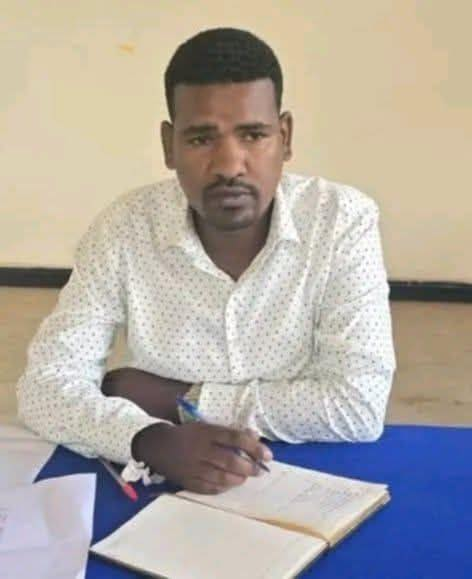
In a move that has sent shockwaves through the local political landscape, Obbo Rashidoo Baalchaa, the head of the Prosperity Party in Ilu Abbaa Boor Zone, along with numerous members of his executive committee, have been arrested on accusations of forming a “clandestine committee.”
This political crackdown unfolds against a backdrop of a severe and deteriorating security situation across the zone. Many districts (aanaas) are currently grappling with profound safety crises. Farmers are unable to tend to their fields, and even essential food crops left for harvest are reportedly being looted. The timing raises urgent questions: Why this focus now?
This pattern is not isolated to Ilu Abbaa Boor. In recent days, similar arrests of district and municipal administrators have been reported in several other zones. The stated justifications vary, with some vaguely linked to alleged associations with “Shane” (the OLA). This strategy of detaining mid-level officials appears to be a growing tactic.
However, this approach rings hollow against the national reality. While a full federal cabinet sits in the capital, and regional presidents operate with apparent normalcy, the relentless arrest of local administrators does not solve the core problem of instability. It often feels like a superficial fix—applying a small bandage to a gaping wound.
Furthermore, the narrative framing these detained individuals as “revolutionary sympathizers” lacks credibility. Many of those targeted are not ideological militants; they are often pragmatic local figures who have, at times, acted as crucial bridges to calm and negotiate with communities. Their removal may not weaken armed groups, but it almost certainly weakens the fragile lines of communication and local governance.
This creates a dangerous paradox: at the very moment when communities most need effective, trusted local leadership to navigate security threats, that leadership is being systematically removed from the equation. The result is not greater state control, but a deepening vacuum where fear and lawlessness thrive.
The people of Ilu Abbaa Boor and similar zones are left with a pressing plea: Do not distract us with political purges while our basic safety is stripped away. Address the root causes of the conflict. Reinforce, do not dismantle, the local structures that can build peace. The security of our homes and farms cannot be sacrificed on the altar of political maneuvering. The bandage is too small, and the wound is too deep.
Remembering Prof. Asmerom Legesse: A Legacy of Oromo Scholarship
By Daandii Ragabaa
A Scholar Immortal: Prof. Asmerom Legesse’s Legacy Lives in the Hearts of a Nation
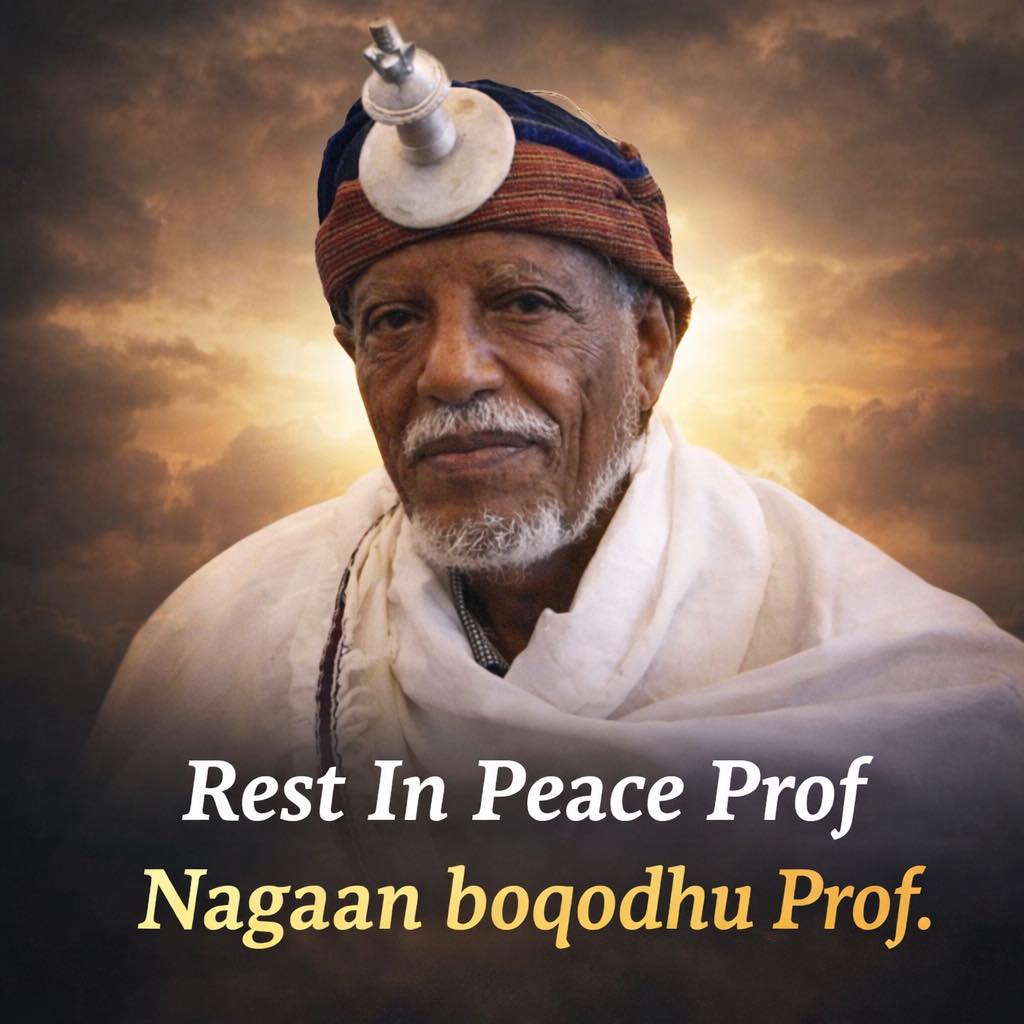
5 February 2026 – Across the globe, from the halls of academia to the living rooms of the diaspora, the Oromo community is united in a chorus of grief and profound gratitude. The passing of Professor Asmerom Legesse at the age of 94 is not merely the loss of a preeminent scholar; it is, as countless tributes attest, the departure of a cherished friend, a fearless intellectual warrior, and an adopted son whose life’s work became the definitive voice for Oromo history and democratic heritage.
The outpouring of personal reflections paints a vivid portrait of a man whose impact was both global and deeply intimate. Olaansaa Waaqumaa recalls a brief conversation seven years ago, where the professor’s conviction was unwavering. “Yes! It is absolutely possible,” he declared when asked if the Gadaa system could serve as a modern administrative framework. “The scholars and new generation must take this mantle, think critically about it, and bridge it with modern governance,” he advised, passing the torch to future generations.
This personal mentorship extended through his work. Scholar Luba Cheru notes how Professor Legesse’s 1973 seminal text, Gada: Three Approaches to the Study of African Society, became an indispensable guide for her own decade-long research on the Irreecha festival. She reflects, “I never met him in person, but his work filled my mind.”
Ituu T. Soorii frames his legacy as an act of courageous resistance against historical erasure. “When the Ethiopian empire tried to erase Oromo existence, Professor Asmarom rose with courage to proclaim the undeniable truth,” they write, adding a poignant vision: “One day, in a free Oromiyaa, his statues will rise—not out of charity, but out of eternal gratitude.” Similarly, Habtamu Tesfaye Gemechu had earlier praised him as the scholar who shattered the conspiracy to obscure Oromo history, “revealing the naked truth of the Oromo to the world.”
Echoing this sentiment, Dejene Bikila calls him a “monumental figure” who served as a “bridge connecting the ancient wisdom of the Oromo people to the modern world.” This notion of the professor as a bridge is powerfully affirmed by Yadesa Bojia, who poses a defining question: “Did you ever meet an anthropologist… whose integrity was so deeply shaped by the culture and heritage he studied that the people he wrote about came to see him as one of their own? That is the story of Professor Asmerom Legesse.”
Formal institutions have also affirmed his unparalleled role. The Oromo Studies Association (OSA), which hosted him as a keynote speaker, stated his work “fundamentally reshaped the global understanding of African democracy.” Advocacy for Oromia and The Oromia Culture and Tourism Bureau hailed him as a “steadfast guardian” of Oromo culture, whose research was vital for UNESCO’s 2016 inscription of the Gadaa system as Intangible Cultural Heritage.
Binimos Shemalis reiterates that his “groundbreaking and foundational work… moved [Oromo studies] beyond colonial-era misrepresentations.” Scholar Tokuma Chala Sarbesa details how his book Oromo Democracy: An Indigenous African Political System proved the Gadaa system was a sophisticated framework of law, power, and public participation, providing a “strong foundation for the Oromo people’s struggle for identity, freedom, and democracy.”
The most recent and significant political tribute came from Shimelis Abdisa, President of the Oromia Regional State, who stated, “The loss of a scholar like Prof. Asmarom Legesse is a great damage to our people. His voice has been a lasting institution among our people.” He affirmed that the professor’s seminal work proved democratic governance originated within the Oromo people long before it was sought from elsewhere.
Amidst the grief, voices like Leencoo Miidhaqsaa Badhaadhaa offer a philosophical perspective, noting the professor lived a full 94 years and achieved greatness in life. “He died a good death,” they write, suggesting the community should honor him not just with sorrow, but by learning from and adopting his teachings.
As Seenaa G-D Jimjimo eloquently summarizes, “His scholarship leaves behind not just a legacy for one community, but a gift to humanity.” While the physical presence of this “real giant,” as Anwar Kelil calls him, is gone, the consensus is clear: the intellectual and moral bridge he built is unshakable. His legacy, as Barii Milkeessaa simply states, ensures that while “the world has lost a great scholar… the Oromo people have lost a great sibling.”
Asmerom Legesse: Champion of Oromo History and Gadaa System
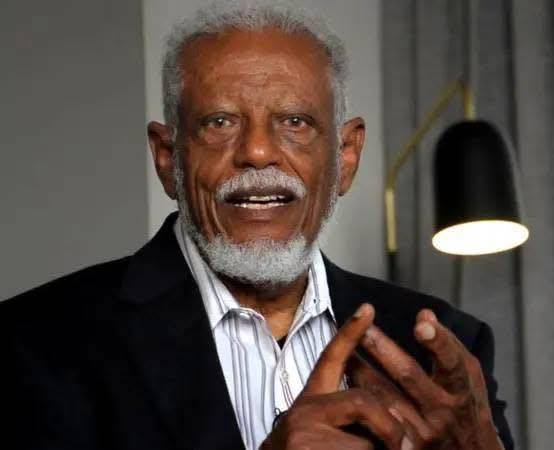
We are deeply saddened by the passing of Abbaa Gadaa Professor Asmerom Legesse, a towering African intellectual whose scholarship stands among the most consequential contributions to Oromo history and African political thought.
Abbaa Gadaa Professor Asmerom Legesse, an Eritrean social anthropologist trained at Harvard University and later a distinguished professor at institutions including Boston University, Northwestern University, Swarthmore College, and Yale University, devoted rare rigor and integrity to African knowledge systems. Yet his true stature was not defined by titles, but by the seriousness with which he treated the Oromo Gadaa system.
At a time when African societies were routinely dismissed as lacking political sophistication, he refused to reduce Gadaa to “custom” or folklore. Through disciplined research and cultural immersion, he framed Gadaa as an indigenous constitutional order—built on rotating generational leadership, codified law (seera), institutional checks and balances, accountability, and collective sovereignty.
His landmark work, Gadaa: Three Approaches to the Study of African Society (1973), introduced the world to the depth and coherence of Oromo political organization. Decades later, Oromo Democracy: An Indigenous African Political System (2000) further clarified Gadaa as an egalitarian democratic system whose institutional logic long predates modern Western models. These works remain core references for understanding Oromo governance and for challenging enduring stereotypes about African political thought.
Abbaa Gadaa Professor Asmerom Legesse understood what many still refuse to acknowledge: Oromo history is not marginal, not invented, and not secondary to anyone else’s narrative. It is a complete intellectual tradition—deserving serious documentation, protection, and transmission. By recording Gadaa with scholarly precision, he did more than study Oromo society; he defended it against erasure and misrepresentation.
For this reason, Oromo communities came to hold him in special esteem, symbolically recognizing him as an “Abbaa Gadaa”—a guardian of truth and a custodian of a threatened heritage. Beyond Oromo studies, he wrote on Eritrean refugees, and wider questions of displacement, power, and justice in the Horn of Africa, embodying the responsibilities of a public intellectual.
We at OROMEDIA express our heartfelt condolences to his family, colleagues, students, and all communities touched by his life and work. We also offer our deep gratitude for the intellectual ground he helped secure for generations of Oromo scholars and citizens. His scholarship did not merely preserve the past; it equipped future generations with evidence and language to assert historical truth.
Rest in power, Abbaa Gadaa Professor Asmerom Legesse. Your work lives on, wherever Gadaa is studied, defended, and lived as a testament to indigenous Oromo democracy and African intellectual greatness.
Oromo Community Mourns a Great Scholar: Asmerom Legesse’s Impact
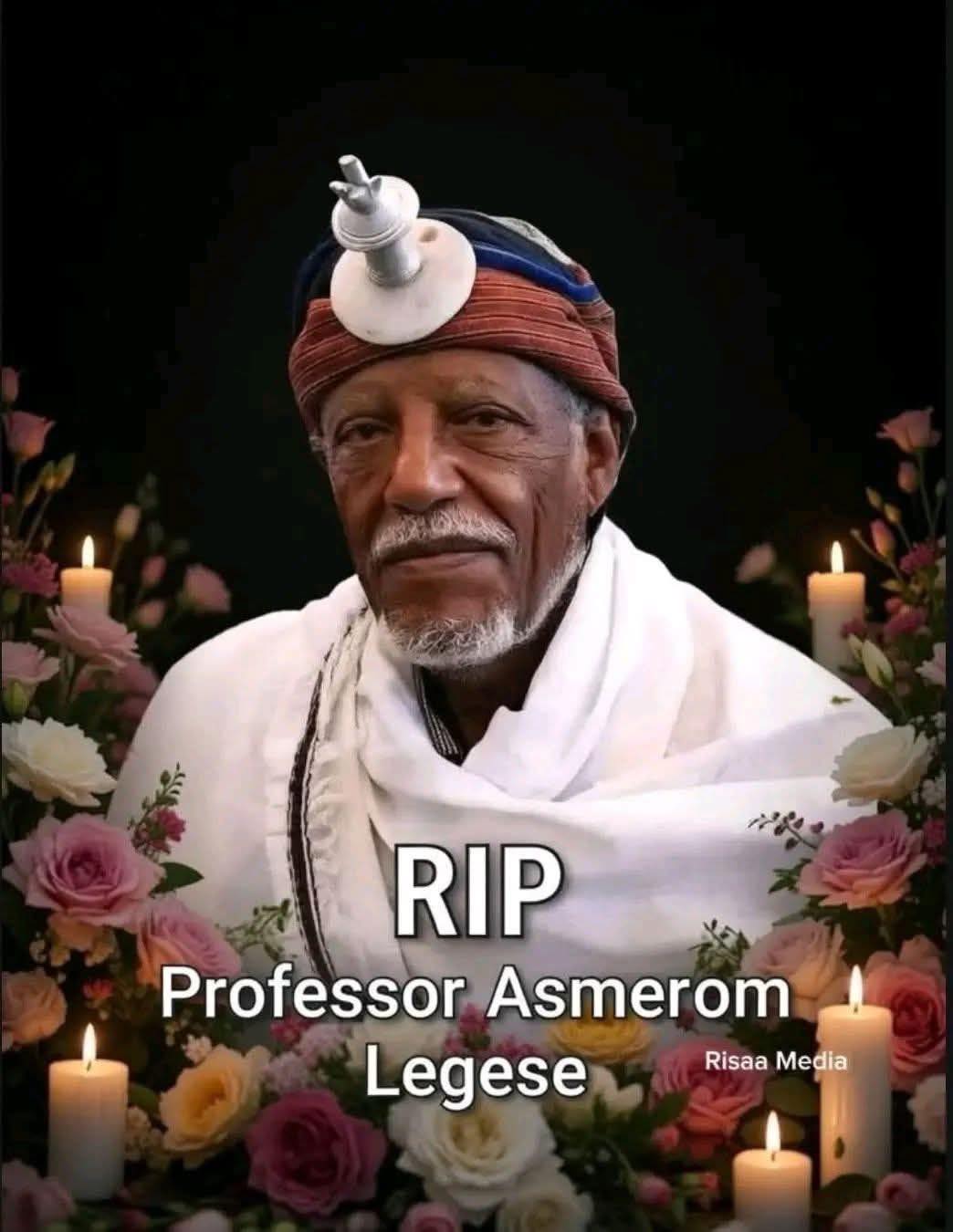
Feature Commentary
A World Mourns an Intellectual Giant: Unified Tributes Honor Professor Asmerom Legesse, Scholar of Oromo Democracy
4 February 2026 – The global Oromo community, alongside academic and cultural institutions, is united in profound grief following the passing of Professor Asmerom Legesse, the preeminent scholar whose life’s work defined the study of the Oromo Gadaa system. Hailed as a “towering scholar,” “global voice,” and “steadfast guardian,” his death has prompted a powerful wave of tributes that collectively affirm his unparalleled role in bringing an indigenous African democratic tradition to the world stage.
Across statements from scholars, activists, and organizations, a consistent narrative emerges: Professor Legesse was far more than an academic. He was a truth-teller, a bridge-builder, and a revolutionary intellectual who dedicated his career to the reclamation and elevation of a system long marginalized by colonial and oppressive narratives.
Scholars and Leaders Reflect on a Transformative Legacy
Prominent voices have emphasized the transformative nature of his work. Scholar Asebe Regassa called him a “pioneer of Gadaa studies,” whose “groundbreaking anthropological work” ensured he will be “remembered forever.” Tayiba Hassen Kayo noted his “unwavering commitment” left an “enduring mark on academia and on the Oromoo people,” ensuring his life’s work “will never be forgotten.”
The personal dimension of his scholarship was highlighted by Israel Fayisa, who poignantly described him as “Eritrean by birth and Oromo by choice,” a scholar treated “like an enemy by many Ethiopianist scholars merely because he dedicated his life to revealing the truth.” This sentiment underscores the courageous stance his research represented.
A Legacy of Global Recognition and Cultural Pride
His work is credited with achieving what once seemed impossible: securing global academic respect for an indigenous African system. As Visit Oromia stated, his research “gave international recognition to one of Africa’s most remarkable indigenous governance systems.” Activist Dereje Hawas pointed out that what defined him was “the seriousness with which he treated African and especially Oromo knowledge systems,” elevating them to their rightful place in global discourse.
Activist and journalist Dhabessa Wakjira captured the core of his academic revolution, writing that Legesse “proved definitively that principles of equality, rotational leadership, checks and balances, and the rule of law were not foreign imports to the continent, but were deeply embedded, living traditions.” This work, as Lelise Dhugaa noted, was foundational to UNESCO’s inscription of the Gadaa system as Intangible Cultural Heritage of Humanity in 2016.
A Community’s Deep Personal Loss
For the Oromo people, the loss is both intellectual and deeply personal. The tribute from Olumaa Qubee expresses this communal grief: “Oromoon fira guddaa tokko dhabe” (“The Oromo people have lost a great sibling”). The call for schools and institutions to be named in his honor within Oromia reflects a desire to anchor his legacy physically in the land of the people he championed.
As tributes from colleagues like Zewdu Lechissa remember the “truly brilliant scholar and a kind soul,” the collective message is one of both mourning and determined continuity. Professor Asmerom Legesse’s pioneering scholarship did not merely document the Gadaa system; it restored a pillar of Oromo identity and gifted the world a timeless model of democracy. His legacy, as echoed by all, will undoubtedly “continue to inspire generations.”
Honoring Ob Mama Argoo: A Pillar of Oromo Community in Seattle

A Pillar in the Diaspora: The Deep Loss of Ob Maammaa Argoo and the Meaning of Home
By Maatii Sabaa
A community’s strength is often measured in its quiet pillars—the individuals who don’t just inhabit a space, but who become synonymous with its heartbeat, its memory, and its sense of home. When such a pillar falls, the tremor is felt across oceans, reaching from a neighborhood in Seattle to the soul of a global nation. The recent, stark announcement from the Oromo community carries this profound weight: “OROMOON har’a nama jabaa tokko dhabne; Keessumattu Oromoon Seattle, Ob Maammaa Argoo dhabnee jirra. Ob Maammaa Argoon Abbaa Margituu Argoo ti.” (Today, the Oromo people have lost a strong one; Especially we, the Oromo of Seattle, have lost Ob Mama Argoo. Ob Mama Argoo is Abbaa Margituu Argoo.)
This is more than an obituary. It is a communal acknowledgment of a foundational fracture. The title “Ob” or “Abbaa” is not given lightly; it denotes fatherhood, leadership, and a gravitas earned through steadfast presence. He was not just a resident of Seattle, but a cornerstone for Oromoon Seattle, a vital node in the vast diaspora network that sustains Oromo culture, politics, and mutual aid far from the physical borders of Oromia.
The loss of such a figure in the diaspora cuts with a unique sharpness. For a community shaped by displacement, struggle, and the constant work of preserving identity in a foreign land, people like Ob Argoo are more than leaders. They are living archives and architects. They are the ones who remember the names and stories of new arrivals. They are the organizers behind cultural festivals that transform a community hall into a pocket of Oromiyaa for an evening. They are the first call in times of crisis—whether it’s navigating a bureaucratic system or mourning a loss back home. They become the embodied answer to the unspoken question: Where is our home here?
Abbaa Margituu Argoo—Father of Margituu Argoo—this final identification roots him in the most sacred of Oromo traditions: lineage and relational identity. Even in announcing his passing, the community defines him by his cherished role as a father, reminding us that the strongest community pillars are always, first, pillars of a family. His strength (“nama jabaa”) was likely not the loud, theatrical kind, but the resilient, reliable strength of a great tree: providing shade, stability, and a point of orientation for all who gathered beneath.
His passing leaves a silence that is both personal and structural. Who will now hold the intricate web of connections with the same familiarity? Who will offer that specific, grounding wisdom that comes from having witnessed decades of the community’s joys and struggles in this particular city? The grief expressed is for the man, undoubtedly, but also for the irreplaceable role he occupied—a role that represents the very glue of diaspora life.
In mourning Ob Maammaa Argoo, the Oromo community of Seattle, and indeed the wider Oromo nation, confronts a poignant truth about diaspora. The greatest assets are not buildings or institutions, but the living human repositories of memory, commitment, and unwavering presence. The work of a community is to build upon the foundation such individuals leave behind, to ensure that the “home” they helped construct does not crumble with their passing.
Today, Seattle feels less like home for many. But in their collective grief and in the powerful, simple act of naming his loss and his title, they perform the very culture he helped sustain. They affirm that an Oromo community exists, that it feels its losses deeply, and that it honors its fathers. Ob Maammaa Argoo’s legacy is not just in what he did, but in the palpable space his absence reveals—a space that testifies to the immense weight of the presence that once filled it. May his roots nourish the generations that follow.
Colonel Gammachuu: The Unyielding Truth Teller of Oromia
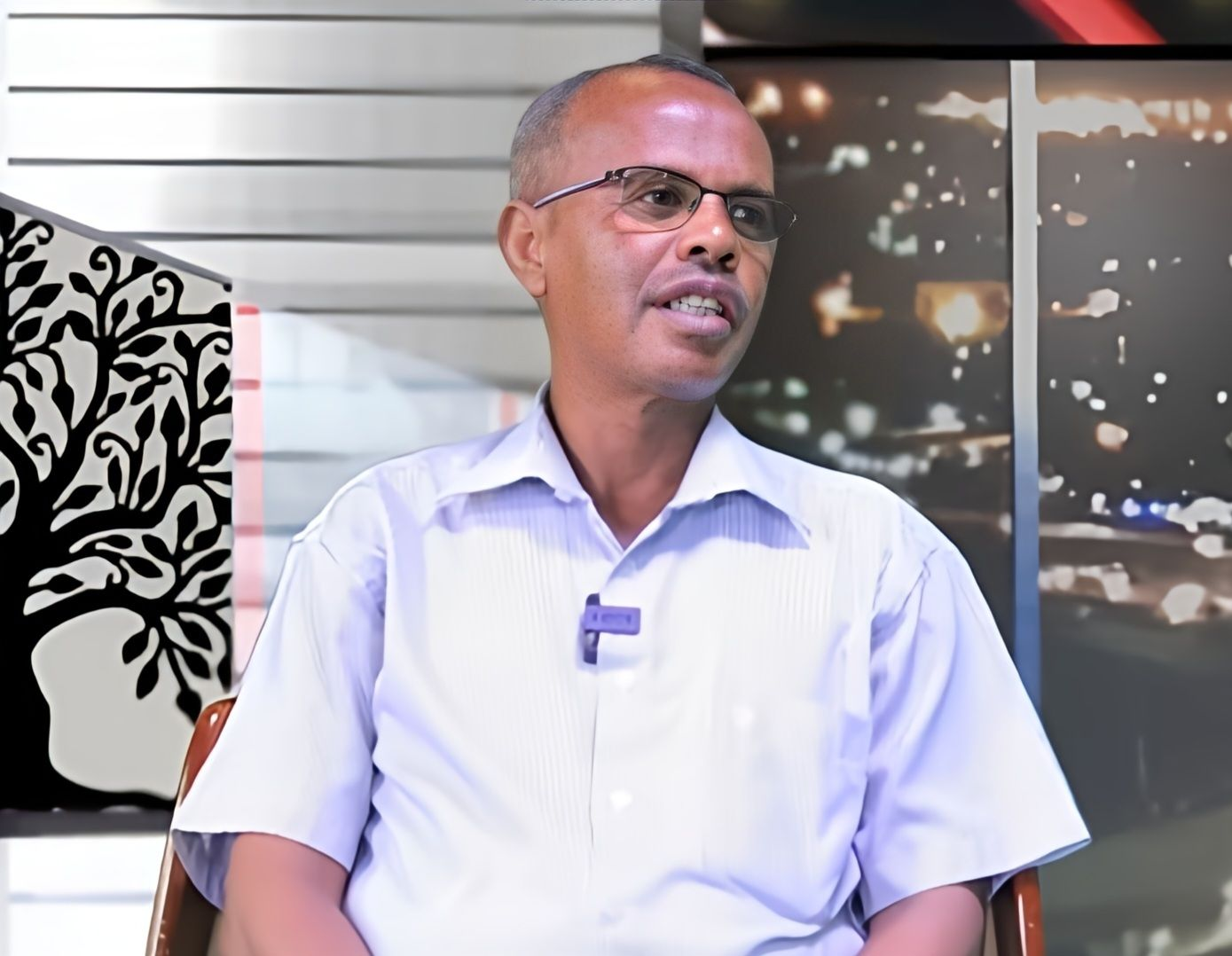
Title: The Unbent Reed: A Commentary on Colonel Gammachuu Ayyaanaa and the Cost of Truth
By Maatii Sabaa
In the suffocating political atmosphere of empires, where silence is often traded for security and allegiances are bartered for comfort, a singular figure stands apart not for the power he wields, but for the truth he refuses to relinquish. Colonel Gammachuu Ayyaanaa, as profiled in a recent and fervent tribute, is presented not merely as a man, but as a phenomenon—an unbent reed in a storm of compromise. He embodies a rare and dangerous archetype: the native son who, understanding the inner workings of the Ethiopian imperial system, chooses not to dine at its table but to speak its crimes aloud.
The commentary paints him with the brush of absolute conviction. He is a man who “knows no malice” and “speaks no falsehood.” This is his foundational identity. In a landscape riddled with coded language and strategic ambiguity, his clarity is itself a revolution. He does not speak truth as a strategy for a better personal life; indeed, his truth-telling guarantees the opposite. As the piece starkly notes, he has “no private life,” existing instead in a state of “lowly livelihood.” The trade-off is explicit: his comfort for his people’s cause. What worries him is not personal hardship, but the “encroachment on the rights of the Oromo people and the violation of Oromia’s borders.”
This is where Gammachuu transcends the typical political or military figure. He is portrayed not as a commander giving orders from a safe remove, but as a “dhaabee”—one who is stationed, rooted, and bearing the brunt. He stands not on a podium, but in the line of fire. His advocacy is particular and painful, giving voice to the displaced communities of Tulama Oromos, whose land and heritage have been erased by force. He channels their specific grief into a universal indictment.
The tribute makes a searing observation about the Oromo community itself, suggesting a troubling tendency to withhold honor from those who most deserve it. It frames Gammachuu as a man whose primary, overriding identity is Oromummaa—Oromo nationhood—which supersedes all clan, regional, or religious affiliations. This unitary focus makes him a stark anomaly in a system, and a society, often fractured by internal divisions the empire readily exploits.
His fearlessness is not born of ignorance, but of profound understanding. Having “analyzed the politics of the Ethiopian Empire,” he comprehends the full weight of its machinery. Yet, this knowledge does not paralyze him with caution; it liberates him with purpose. The system, the commentary asserts, has already declared its verdict on such men, whether they are called “scholars” or “heroes.” In the face of this, Gammachuu speaks with “no fear,” save the fear of failing his unwavering commitment.
The final exhortation—”Nama kana Kunuunsadhu Oromoo!” (Oromo people, support this man!)—is the crucial pivot from admiration to action. It recognizes that such singular courage is not a self-sustaining artifact. It is a flame that must be shielded by the collective will of the people it seeks to illuminate. Colonel Gammachuu Ayyaanaa, as presented, is the unwavering voice. The question implicit in the commentary is whether the people for whom he speaks will become the unshakeable chorus, ensuring that the cost of truth is borne not by one man alone, but shared by a nation determined to hear it. In an age of calculated silence, his story is a piercing reminder that the most potent form of resistance is a life lived in uncompromising alignment with truth, regardless of the price.
Mootuu Ayyaanoo Secondary School: A Legacy of Education and Sacrifice

Legacy in Learning: World Food Prize Laureate Professor Gebisa Ejeta Honors Mother with New School in Hometown
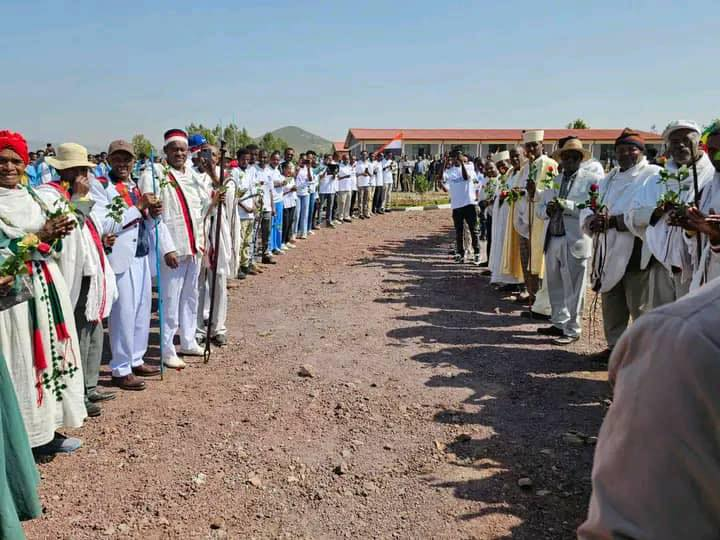
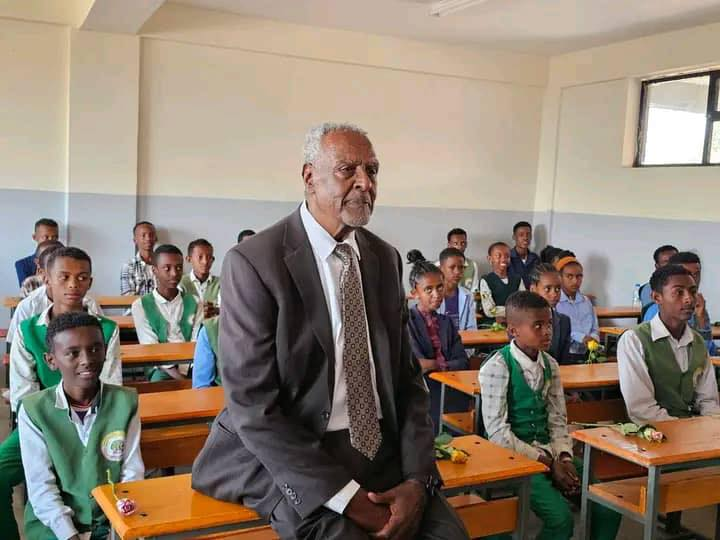
EJERSA LAFO, OROMIA REGION, ETHIOPIA – In a powerful tribute to maternal sacrifice and the roots of education, a newly constructed secondary school in the rural heartland of Ethiopia now bears the name of a mother whose vision changed a family’s destiny. The “Mootuu Ayyaanoo Secondary School,” named in honor of Professor Gebisa Ejeta’s late mother, was officially inaugurated in Ejersa Lafo, West Shewa Zone.
The state-of-the-art facility, built at a cost of over 60 million Ethiopian Birr, stands as a permanent monument to the enduring power of a parent’s belief in education. The school is equipped with modern classrooms, laboratories, and facilities designed to provide quality education for the community.
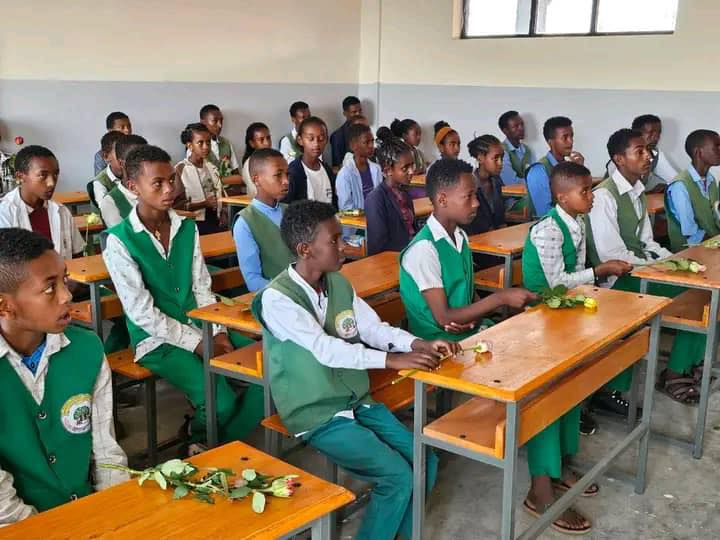
Professor Gebisa Ejeta, a globally renowned plant geneticist and 2009 World Food Prize Laureate, was born in the nearby village of Holonkomii in 1950. In numerous interviews, he has consistently credited his mother, Mootuu Ayyaanoo, as the foundational force behind his academic journey. He has recounted how she sold firewood and walked vast distances to markets to earn the funds necessary for his early schooling, instilling in him the values of perseverance and the transformative power of knowledge.
“It is the deep wish of every child to honor their parents. We are profoundly moved and grateful that this school, a place of learning and future-building, carries our mother’s name,” said Professor Ejeta, reflecting on the inauguration. He and his family have long championed the critical importance of education for rural development.
The school’s inauguration is more than a local event; it is a symbolic closing of a circle. The boy who walked dusty paths from Holonkomii, propelled by his mother’s sacrifices, has become a world-leading scientist whose work on drought-tolerant sorghum has improved food security for millions. Now, his legacy ensures that children from his homeland will walk into a modern school bearing the very name that set him on his path.
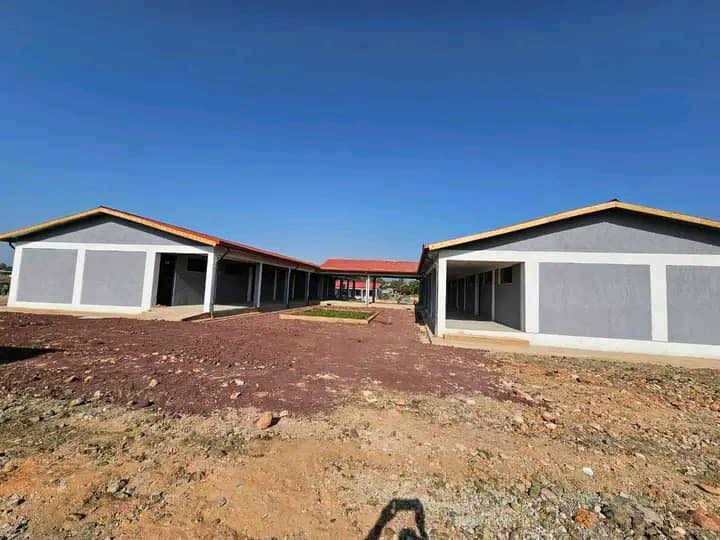
“For us, this is the fulfillment of a long-held hope,” said a community elder during the celebrations. “Professor Gebisa has not forgotten his home. This modern, clean, and high-standard school is a gift that will change generations. We are overjoyed.”
Local residents expressed immense pride and gratitude, highlighting that the “Mootuu Ayyaanoo Secondary School” is a beacon of inspiration. It serves as a constant reminder that from the humblest beginnings—fueled by love, sacrifice, and education—global leaders can emerge.
The naming elegantly weaves together personal history and national progress. It honors a mother’s silent labor while investing directly in Ethiopia’s most vital resource: the educated mind of its youth. As students begin their studies within its walls, they will learn not only from textbooks but from the story embedded in the school’s very name—a story of unwavering belief and the seeds of greatness sown by a mother’s hands.