Abbabach Gobena:The Woman Who Became a Mother to Millions Orphanage and beyond.
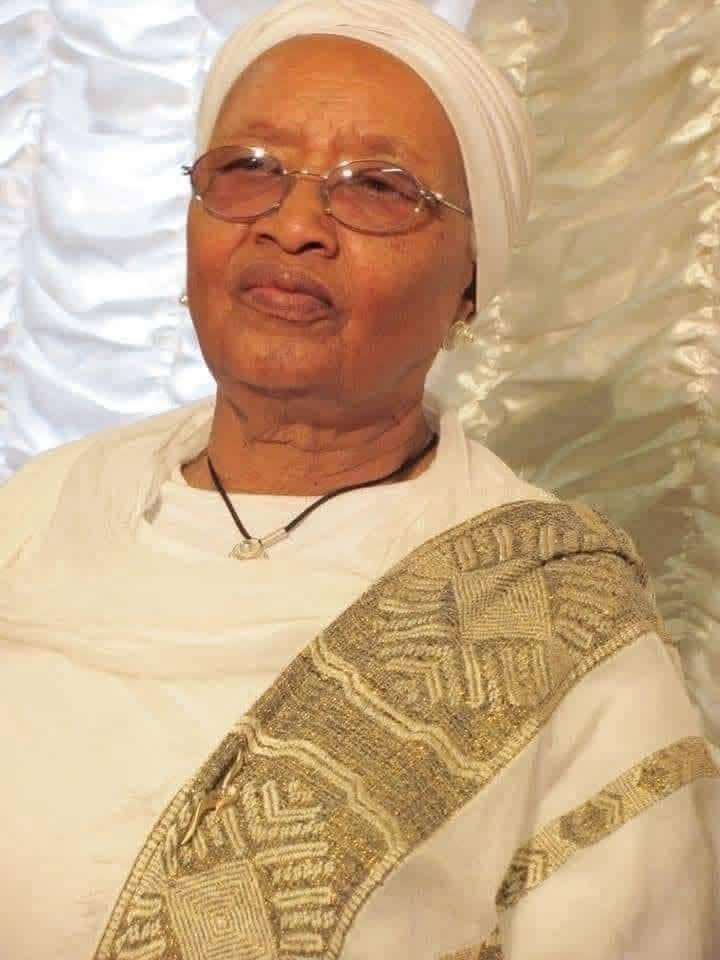
From the pain of famine to a lifetime of compassion — the remarkable journey of the Ethiopian woman known as Africa’s Mother Teresa, who gave hope, dignity, and a future to more than a million orphaned children.
Abbabach Gobena – The Mother Teresa of Africa lost her father during the period of the Italian occupation of Abyssinia/ Ethiopia/. At the age of ten, she was forced into marriage. Refusing to accept a life decided for her, she fled and made her way to Finfine /Addis Ababa/. In the city she struggled to rebuild her life, pursued her education with determination, and eventually secured a stable job.
Abbabach was a woman of deep faith. Her spiritual life guided her actions and shaped her character. She loved God deeply and placed great trust in her faith. During the Derg era, around 1980, she undertook a spiritual pilgrimage to Gishen Mariam, one of Ethiopia’s most sacred religious sites.
After completing the pilgrimage and beginning her journey back to Addis Ababa, she passed through Wollo, which at the time was suffering from a devastating famine. What she witnessed there changed the direction of her life forever.
She saw people dying from hunger. Families had been destroyed by starvation, and countless children had been left without parents. Among the heartbreaking scenes she encountered was a small child trying to breastfeed from his mother who had already died from hunger. The child, unaware of death, was still desperately searching for milk from a lifeless body of his mother.
When Abbabach saw this scene, she was deeply shaken. She could not walk away. Overcome with compassion, she picked up the child and took him with her. At that moment, the only thing she possessed was a small bottle of holy water she had brought from Gishen. Yet despite having almost nothing, she made a life-changing decision. She began caring for children who had lost their parents to famine and hardship.
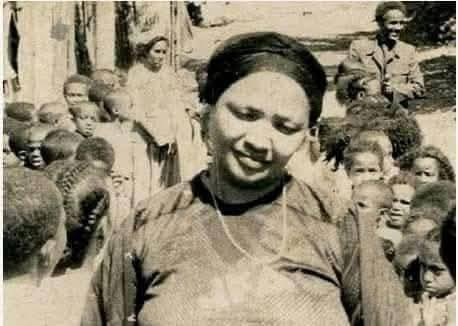
Abbabach started raising orphaned children with whatever means she could find. She worked tirelessly, taking on different kinds of labor to support them. Within just one year, she had already taken in 21 children.
What began as a single act of compassion gradually grew into a lifelong mission. Over the course of her life, Abbabach Gobena went on to rescue, support, and educate more than 1.5 million children. She helped them grow, receive education, and become self-reliant members of society.
Today, her extraordinary life continues to inspire people across Ethiopia and beyond. In honor of her legacy, a film titled “Adaraa Abbabach” has been produced to tell the story of this remarkable woman who became a mother to millions. Plans are also underway to establish a hospital bearing her name so that her service to humanity may continue in new forms.
The name Abbabach Gobena has become a symbol of compassion, faith, honesty and sacrifice.Yet remembering her name alone is not enough. The greatest tribute to her life is to continue the work she began — caring for the vulnerable, protecting children, and standing with those in need.
This week we renew our commitment to the legacy of Abbabach Gobena. By learning about the work done in her name and contributing in whatever way we can, we carry forward the promise she made through her life.
May God help us succeed in continuing her mission.
Honoring the Guardians of the Struggle

Feature Commentary
“Galata Qabsaa’otaa…” – Honor the Warriors. These words resonate as a sacred debt of gratitude within the Oromo community, a recognition of those who risked everything when the price of freedom was ultimate sacrifice.
In the tumultuous years following the fall of the Derg regime, a period of profound uncertainty and danger descended upon Ethiopia. For many Oromo freedom fighters, the dawn of a new era brought not peace, but a brutal twilight. Stripped of legal protection, they became targets—some left to perish from untreated wounds by the roadside, others hunted and thrown into the shadows of prisons. It was a time of severe crisis, a test of collective conscience.
Amidst this pervasive fear in Finfinnee (Addis Ababa), a flicker of humanity refused to be extinguished. A handful of Oromo residents, themselves navigating a treacherous landscape, made a courageous choice. They became protectors, hiding wounded and wanted fighters in plain sight, providing not just shelter but life-saving medicine and care. Their homes became field hospitals; their quiet defiance, a shield against the state’s wrath.
Among these unsung heroes is Obbo Araggaa Qixxataa. Born and raised in Dirree Incinnii, Oromia, he had come to Finfinnee as a businessman, establishing his life for many years in the Birbirsa Goora area. But when history demanded more than commerce, he answered. His residence became a sanctuary, a critical node in a clandestine network of survival. The business acumen that guided his public life was redirected to the covert logistics of preservation—securing medicine, arranging safe passage, sustaining lives that the official order sought to erase. Today, residing in America, his legacy is not measured in capital but in the lives he helped safeguard. Galataa fi Kabaja Oromummaatu isaanif mala! Gratitude and respect for Oromummaa are his rightful due.
This act of remembrance is being formally honored. The organization Oromo Global has undertaken the vital mission of strengthening and recognizing these aging veterans of the struggle. By bestowing acknowledgments like the one upon Obbo Araggaa, they perform a critical act of historical preservation—ensuring that the quiet bravery of the past is not lost to the noise of the present.
The Bottom Line:
The story of Obbo Araggaa Qixxataa is a microcosm of a broader, often unrecorded history. It reminds us that liberation movements are not sustained by soldiers and speeches alone. They are nourished by the shopkeeper who shares his bread, the homeowner who opens her door, and the businessman who uses his resources to heal rather than just to profit. Honoring the warriors also means honoring their guardians.
As organizations like Oromo Global step forward to say “Galata haa argatan”—let them receive thanks—they are piecing together a fuller, more human tapestry of resistance. They affirm that in the economy of gratitude, the currency of courage spent in dark times never depreciates.
Remembering Aayyoo Asinaa Abduramaan: A Legacy of Strength

A Pillar of the Struggle Departs: Mourning the Passing of Aayyoo Asinaa Abduramaan, Mother of Jaal Hundee Daraaraa
The Oromo global community is in mourning following the passing of Aayyoo Asinaa Abduramaan, a revered matriarch and steadfast symbol of resilience, who died today after a prolonged illness. Her departure marks not just a personal loss for her family, but a profound moment of collective grief for a nation that saw in her the unbreakable spirit of Oromo motherhood.
Aayyoo Asinaa was more than a mother; she was an expert in life and a mother of freedom fighters. She lived a life defined by immense sacrifice and unwavering dedication to the cause of Oromo liberation. While her own children dedicated their lives to the struggle, she bore the heaviest of burdens, suffering the ultimate loss and enduring hardship without complaint.
She was the mother of Jaal Hundee Daraaraa (MGS_ABO), a freedom fighter of the Oromo Liberation Front (OLF). In the pursuit of Oromia’s freedom, she gave her sons, experiencing both the pain of their loss and the suffering of those who returned bearing the scars of battle. She endured these trials with a heart that remained a source of strength for others, even as her own body and spirit carried wounds that never fully healed.
A Personal Testament to Her Strength
A community member who witnessed her fortitude firsthand shared a poignant memory: “I saw Aayyoo Asinaa for the first time in 2018 when OLF leadership returned to the country. During a public event in Ghindhir town, as leaders addressed the crowd in the South-East region, she saw Jaal Hundee Daraaraa. Remembering her son, lost in the struggle for so many years, she collapsed in tears. It was a heartbreaking scene. She was a consoler of others, a mother of fighters, and a heroine who displayed exceptional grace for Oromia. Her passing leaves a deep ache in our hearts.”
Her life story embodies the quiet, often overlooked, heroism of mothers in liberation movements—those who send their children to the front lines and must find a way to live with the consequences, becoming pillars for their communities while nursing private grief.
A Legacy of Sacrifice and Strength
Aayyoo Asinaa Abduramaan’s legacy is one of profound sacrifice and unyielding dignity. She navigated a path of personal tragedy without allowing bitterness to overshadow her love for her people and their cause. Her life was a testament to the Oromo proverb that true strength is often found in silent endurance.
The community now rallies around her remaining family, offering prayers for strength and unity. “May God grant her mercy,” the statement concluded. “May He provide patience, solace, and resilience to Jaal Hundee and the rest of the family.”
As news of her passing spreads under the hashtag #AayyooAsinaaAbduramaan, social media is filling with tributes, honoring a woman whose name will be remembered alongside the freedom fighters she raised and supported—a true Aayyoo (revered mother) of the nation.
Rest in Power, Aayyoo Asinaa. Your struggle is now your eternal peace.

