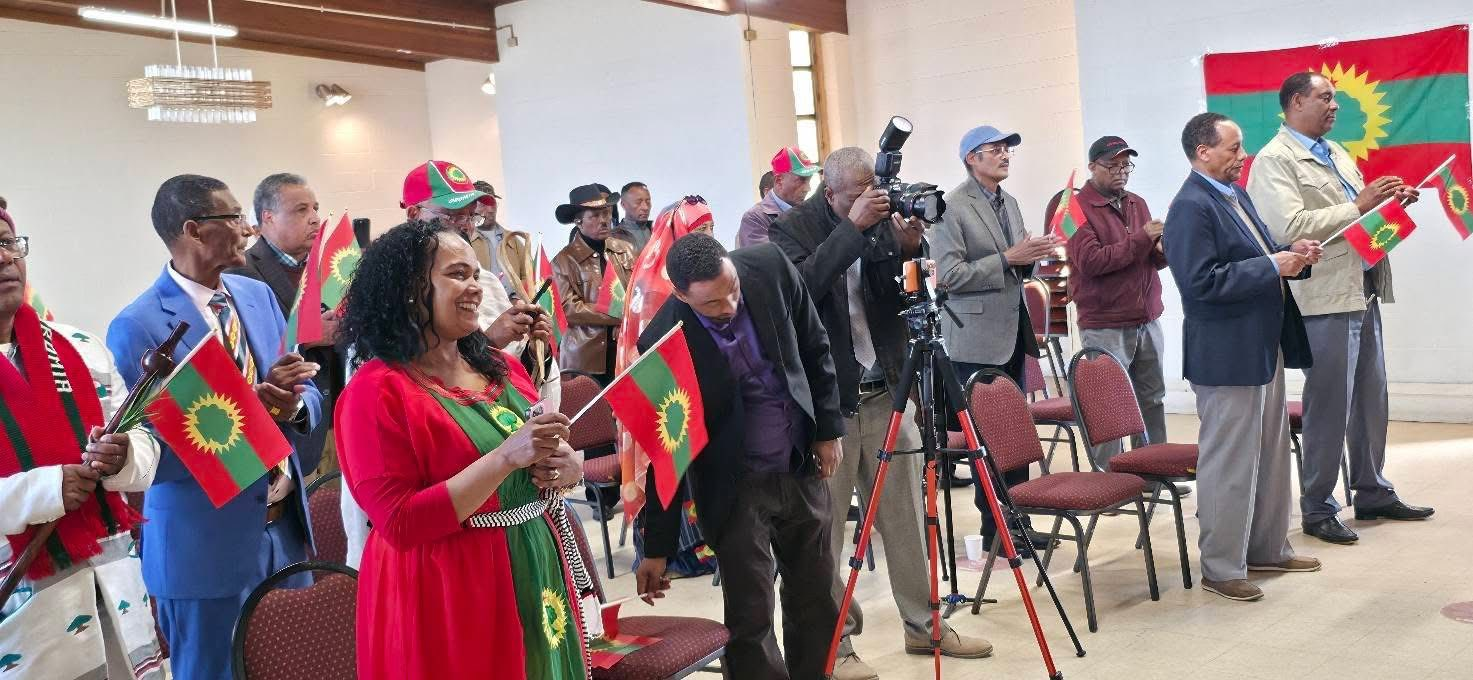
St. Paul, Minnesota — On a spring day in April 2026, the city of St. Paul became a distant but powerful outpost of Oromo heritage. Hundreds gathered under a canopy of the Oromo national flag for a “beautiful and warm” ceremony to mark Guyyaa Gootota Oromoo (Oromo Heroes’ Day), a global day of remembrance for those who sacrificed everything for the liberation of the Oromo people.
A Day of Remembrance and Cultural Pride
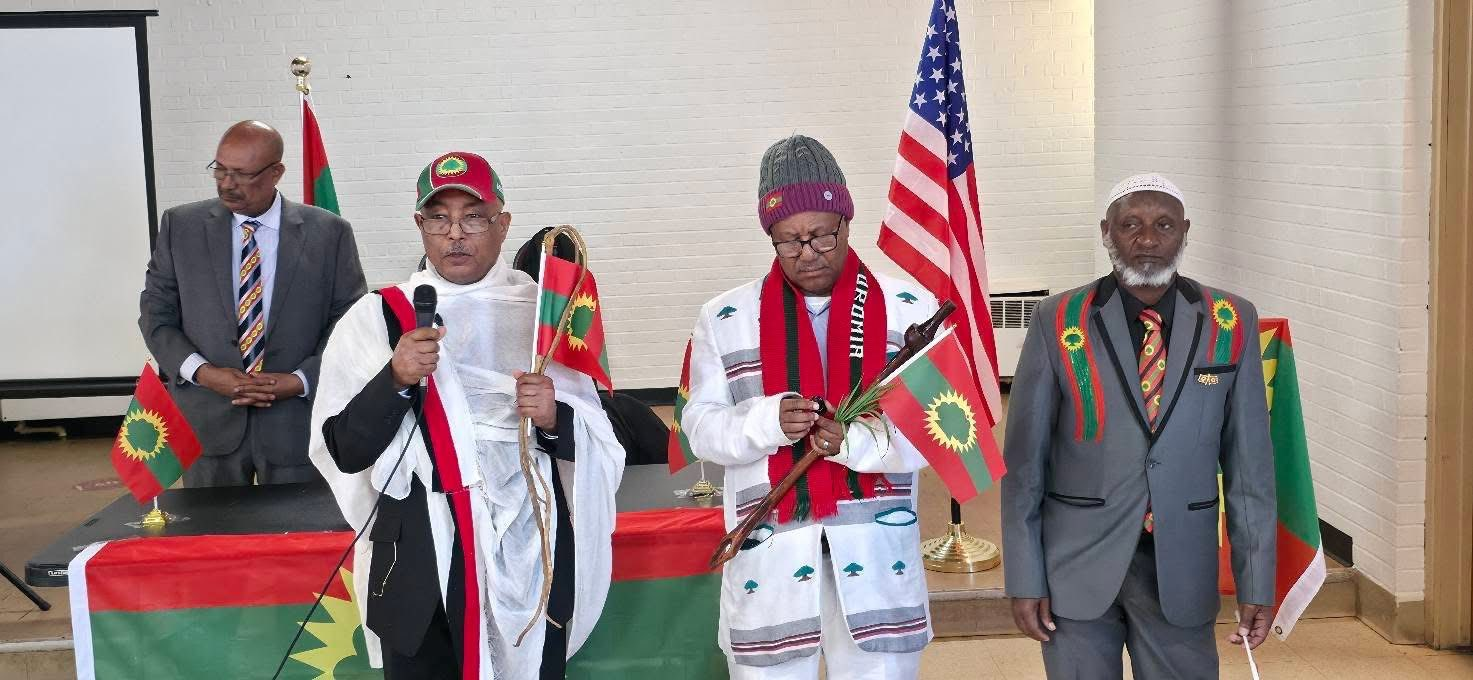
The ceremony was held in a hall adorned with Oromo cultural motifs, where attendees dressed in traditional attire like the iconic qooccoo scarf and callee garments, creating a space that was both deeply emotional and defiantly proud.
The centerpiece was the dungoo yaadannoo (“pillar of remembrance”), a memorial dedicated to fallen patriots. As a moment of silence was observed and the names of known martyrs were read, many wept openly, while parents held their children close, whispering in Afaan Oromo: “Isaan kun sababiin ati bilisaan jiraattu” (“They are the reason you live free”).
Voices from the Past and Present
The ceremony bridged generations through a series of powerful rituals and speeches:
· Elders’ Blessings: Custodians of Oromo tradition stepped forward to offer blessings, raising their hands to invoke Waaqa (God) to protect the Oromo people and grant paradise to the fallen martyrs.
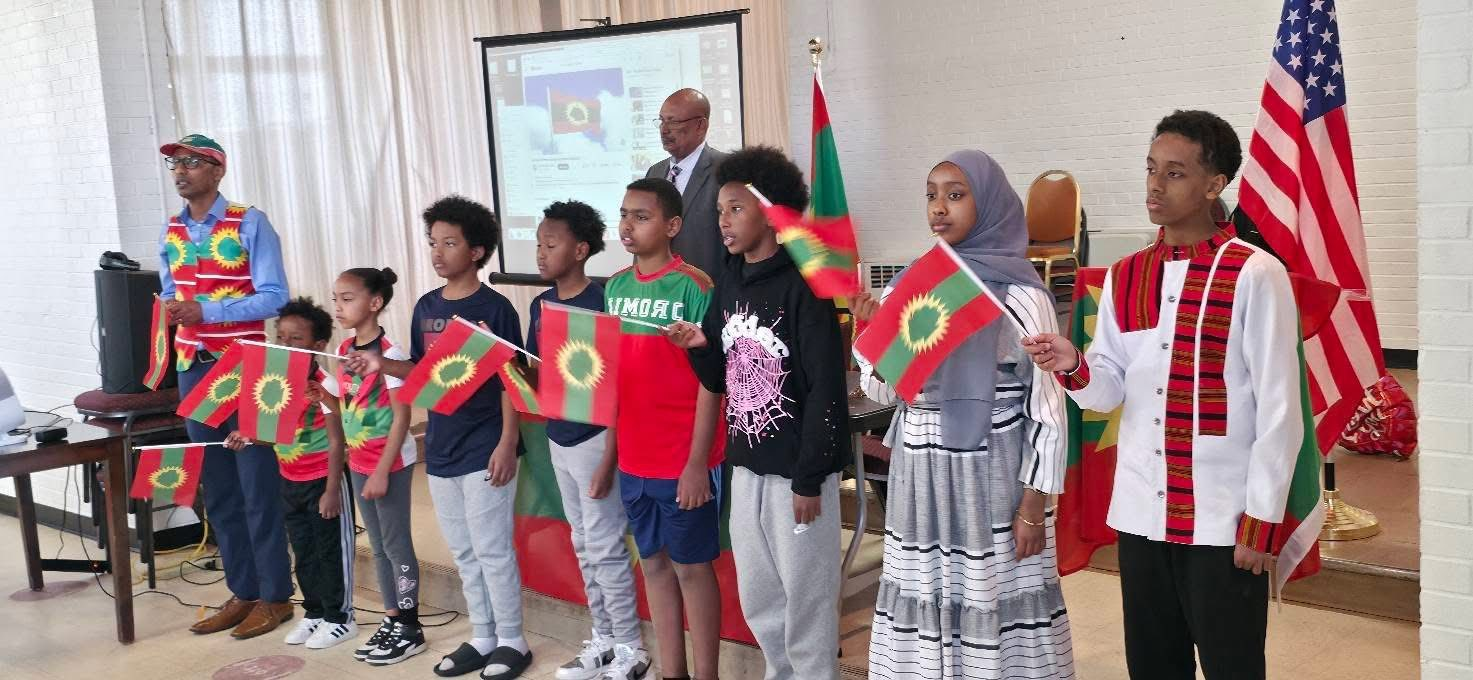
· Songs of Struggle: One of the most moving moments came when Oromo children, some as young as five, took the stage. Clutching small flags, they sang patriotic songs with voices that were both innocent and powerful.
· A Unified Message: Speakers traced a continuum of Oromo resistance—from the Gadaa system, through armed struggles, to the Qeerroo protests and up to the present day. A young activist born in Minnesota declared: “Ani Oromiyaa hin argine. Garuu onneen koo Oromiyaa keessa jiraata” (“I have never seen Oromia. But my heart lives in Oromia”), to which the crowd responded: “Qabsoo itti fufuu!” (“To continue the struggle!”).
The Flag as a Symbol of Identity
The Oromo flag was omnipresent. For decades, it was banned in Ethiopia—carrying it could lead to arrest or death. In St. Paul, it flew freely, with each color carrying deep meaning: red for the blood of martyrs, green for the fertile land of Oromia, and the yellow sun representing the Gadaa system’s justice. As one participant put it: “We are Oromo. We have a flag. We have a history. We have a future. And we will never abandon any of them.”
The Diaspora’s Role: Carrying the Struggle Forward
Minnesota is home to one of the largest Oromo populations in the United States, and the St. Paul event was a testament to the diaspora’s enduring commitment. For the community, GGO Day is not merely a ritual; it is a tool for preserving identity, building unity, and inspiring action.
The ceremony was ultimately described by participants as “haala miidhagaa fi hoo’aan kabajame”—conducted in a beautiful and warm manner. It was not a protest or a rally, but a celebration of survival and a declaration that the Oromo people remain proud and resilient. As the Oromo flag flew high in St. Paul, a message echoed from the diaspora to the homeland: the struggle lives on.