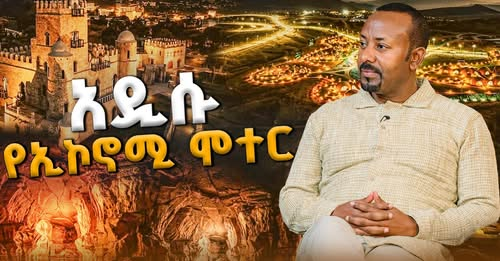
Prime Minister Abiy Ahmed has issued a national call to replace “sternness” with “smiles and respect,” positioning hospitality as the key to unlocking Ethiopia’s vast tourism potential.
Ethiopia is a land of ancient wonders—the rock-hewn churches of Lalibela, the obelisks of Axum, the castles of Gondar, and the breathtaking landscapes of the Simien Mountains. Yet for decades, the country’s immense tourism potential remained largely untapped. Infrastructure was inadequate, destinations were limited, and visitors often left after a brief tour of a few well-known sites .
That narrative is now changing. Through a comprehensive Homegrown Economic Reform Agenda, the Ethiopian government has identified tourism as one of the five key pillars of national economic transformation . But according to Prime Minister Abiy Ahmed (PhD), the success of this vision depends not just on infrastructure—but on a fundamental shift in national mindset.
“One visa, a world within!”
This is the vision the Prime Minister has articulated for Ethiopia’s tourism future. And at its heart lies a simple but powerful call: replace “sternness” with “smiles and respect.”
The Five Pillars: Tourism as an Economic Engine
Ethiopia’s economic reform agenda is a comprehensive, multi-sector strategy designed to develop agriculture, manufacturing, mining, tourism, and the digital economy simultaneously . Tourism was selected for profound reasons: the sector possesses a unique capacity to generate extensive employment, secure foreign currency, and portray the true image of the country on the global stage .
The results are already visible. In the first nine months of the recent budget year alone, Ethiopia attracted 1.2 million foreign tourists, generating over $2.6 billion in revenue . The capital, Addis Ababa, hosted approximately 150 international and continental events in just six months—a 50% increase compared to the previous year—injecting 155 billion Birr into the economy .
But these numbers represent more than statistics. They reflect a deliberate, strategic effort to transform Ethiopia’s tourism landscape.
A New Face for Ethiopian Tourism
The transformation has been driven by landmark initiatives: Dine for Sheger, Dine for the Nation, and Dine for a Generation. These projects have fundamentally reshaped the nation’s tourism map .
Dine for Sheger transformed the heart of Addis Ababa through the development of Unity Park, Sheger Park, and Entoto Park—creating green spaces and recreational hubs where none existed before. The Addis Ababa Riverbank Development Project, spanning 50 kilometers and encompassing eight rivers, has converted polluted, hazardous areas into lush recreational spaces .
Dine for the Nation developed destinations like Halala Kela, Chebera Churchura, and Wenchi, blending natural beauty with historical footprints. Dine for the Generation continued this momentum with modern destinations such as Gorgora, Dembi, Shebelle, and Lake Logo .
Beyond new destinations, the government has focused on restoring Ethiopia’s historical heritage. The Castle of Fasilides in Gondar, which had suffered neglect for a century, has undergone sophisticated restoration that will preserve it for the next 50 to 60 years . The rock-hewn churches of Lalibela are undergoing delicate restoration guided by international experts. The Sof Omar Cave, previously inaccessible due to infrastructure deficits, has been transformed to ensure a seamless tourist experience .
The message from the Prime Minister is clear: “We are restorers and protectors of heritages, not destroyers” .
The Call for Service Excellence
Yet infrastructure alone is not enough. As the Prime Minister has emphasized, natural and historical assets must be matched by service excellence . This is where the call for “smiles and respect” becomes crucial.
For years, a culture of “sternness”—what some have called kostaranet—has been a significant barrier to tourism growth. Visitors arriving at airports, using taxis, or checking into hotels have sometimes encountered indifference or even hostility. This cultural disconnect has undermined the hospitality that Ethiopia is historically known for.
The Prime Minister has called for a national shift, urging citizens to greet visitors with warmth and professionalism starting from the moment they arrive at the airport . This is not merely about being polite—it is about economic necessity.
The Role of Transport Workers
One of the first interactions visitors have with Ethiopia is with transport workers—taxi drivers, bus operators, and airport transfers. The Prime Minister has stressed that these individuals are, in effect, “national ambassadors.” They have the power to shape a visitor’s entire perception of the country .
Drivers are expected to:
- Reflect Ethiopia’s great tradition of hospitality in practice
- Charge fair prices
- Serve with integrity and honesty
- Recognize their role as ambassadors for the nation
Hospitality and Accommodation
The Prime Minister has also called upon hotels and tourism service providers to deliver quality, internationally competitive service to guests . Beyond welcoming guests, hotels are expected to promote local products and strengthen economic linkages by showcasing Ethiopian goods to visitors.
Tour industry professionals have noted that the greatest success lies in completing the service chain. While beautiful sites existed in the past, they were often bypassed due to a lack of suitable accommodations. Now, international-standard lodges and resorts allow tourists to stay longer and enjoy their visit without haste .
The Diaspora: Ambassadors of a New Ethiopia
The diaspora community has a special role to play. The Prime Minister has called on Ethiopians abroad to take the lead in presenting the true and beautiful Ethiopia to the world—rather than allowing negative narratives to dominate .
Previously, diaspora members returning home often worried about finding quality destinations to take their families. The Prime Minister has declared that this concern is now fully resolved. Attractive destinations are being built across the country, and the diaspora is expected to use its resources and knowledge for national image building .
The government has actively encouraged this engagement. Ethiopian Airlines has offered 15-20% discounts on airfare and hotel accommodation for second-generation Ethiopians returning to their homeland, along with free one-day tours of Addis Ababa for the first 100 participants . The “Leave Your Legacy” program has brought numerous diaspora members to Ethiopia for Green Legacy initiatives, renovation projects, and educational programs .
Every Citizen’s Responsibility
The Prime Minister has emphasized that tourism success is not solely the responsibility of government or service providers—it belongs to every citizen. All Ethiopians have a role to play in :
- Protecting natural treasures
- Maintaining national parks and green spaces
- Strengthening peace and unity
- Presenting a welcoming face to the world
Ethiopia’s Growing International Recognition
The results of these efforts are being noticed internationally. The President of the Pan-African Tourism Board (PATB), Mariam Lesian, has recognized Ethiopia as a leading model for tourism development in Africa, citing rapid growth, rich cultural heritage, and expanding infrastructure as key drivers of continental influence .
Lesian highlighted Ethiopia’s unique attractions—from its globally renowned coffee heritage to its landscapes, museums, parks, and lakes—as strong draws for visitors .
“When you come to Ethiopia, you get that appetite to come again because there are so many things to see,” she said. “It’s peaceful, it’s clean and the people are very friendly” .
She also credited Ethiopian Airlines as a strategic pillar in Ethiopia’s tourism expansion, describing the carrier as a major force in positioning the country as a gateway to Africa .
A Message of Unity and Hope
The Prime Minister’s call for “smiles and respect” is also a broader message about national identity. Drawing on a cultural comparison, he described Ethiopia as being like the people of Wollo—immensely hospitable when approached with love, yet invincible when faced with aggression .
“Ethiopia has a deep-rooted culture of extending its hand in a smile and welcoming others with honor,” he said. “Conflict hinders development and prosperity; it prolongs our journey” .
This message resonates beyond tourism. It speaks to the kind of nation Ethiopia aspires to be: open, welcoming, and united. As the Prime Minister has said, “Let’s show them why Ethiopia is known for its unmatched hospitality. Let’s make them feel at home, greet them with respect, and embrace them with love” .
The Path Forward
The transformation of Ethiopia’s tourism sector is well underway. From the restoration of ancient heritage sites to the creation of world-class modern destinations, the physical infrastructure is being built . But the final ingredient is the one that only the Ethiopian people can provide: a culture of service, warmth, and genuine hospitality.
The Prime Minister’s message is clear: tourism growth can only continue sustainably when every citizen—not just the government—fulfils their national responsibility. Transport workers, hotel staff, tour operators, diaspora members, and ordinary citizens all have a role to play.
“Together, let’s work to further increase the contribution of the tourism industry to national growth.”
This is the message—a call for a national movement to position Ethiopia as Africa’s premier destination through professional and competent hospitality . It is a vision where ancient history meets modern service, where the warmth of the Ethiopian people becomes as legendary as their heritage.
And it all begins with a smile.
The era of limited destinations is over. Ethiopia now offers a wealth of experiences—historical wonders, natural beauty, modern comfort, and most importantly, a people ready to welcome the world with open arms.

