ADDIS ABABA — As the ink dries on the “Alliance for Survival” — the seven-member armed coalition announced on September 20, 2026, with the stated aim of toppling Prime Minister Abiy Ahmed’s government — a new and deeply consequential challenge has emerged from within Oromo legal and intellectual circles. In a searing position paper, the Oromo Lawyers Group has declared the alliance between the Oromo Liberation Army (WBO/OLA), the Fano militia, and the Tigray People’s Liberation Front (TPLF) not merely strategically unsound but a fundamental betrayal of the Oromo people’s historical struggle.
The document, titled “Why the Coalition Formed to Topple the Prosperity Government (ONEG/WBO, TPLF, Fano) Cannot Succeed: Ideological Conflicts, the Oromo People’s Painful Questions, and the Dangers Facing the Struggle,” represents one of the most systematic and unsparing critiques yet produced by an Oromo professional body against the WBO leadership’s strategic direction.
Its conclusion is unequivocal: the WBO, by allying with forces that deny Addis Ababa’s Oromo character and by negotiating in secret without popular mandate, has forfeited its claim to represent the Oromo people — and risks repeating the catastrophic mistakes of 1991.
Three Armies, Three Irreconcilable Goals
The Lawyers Group’s central analytical claim is that the WBO, Fano, and TPLF may share a common enemy, but they do not share a common cause. Their ideological foundations, historical grievances, and political objectives are not merely different but actively contradictory.
The WBO’s stated purpose, the document notes, is to assert Oromo national sovereignty and land rights — including over Addis Ababa (Finfinnee), which Oromo nationalists regard as the historic heart of Oromo territory. Yet the organization’s leadership, the paper charges, has pursued “a secretive approach” with the TPLF and Fano that is “fundamentally opposed” to this objective.
Fano, by contrast, is described as a movement built on “the old and outdated extremist view of ‘one country, one faith.'” More pointedly, the document accuses Fano of actively propagating the position that “Addis Ababa (Finfinnee) is not Oromo” and of building military capacity in Oromia — particularly in Wallagga — to advance this objective. This, the Lawyers Group asserts, has made Fano “more than 99% rejected” by the Oromo public and by Oromo political thought.
The TPLF, meanwhile, is characterized in even harsher terms. The document reminds its readers that the TPLF, despite having no border with Oromia, “came from Tigray and controlled the center of Oromia for 27 years,” during which it “killed, displaced, tortured, and looted the wealth of the Oromo people.” The TPLF knows, the paper argues, that it cannot return to Addis Ababa and reassert dominance over Oromos due to its historical crimes. Its strategy, therefore, is to use the WBO “as a ladder” — a vehicle to return to power and resume economic exploitation.
The implication is stark: the WBO is not a partner in this alliance but a tool. And the Oromo people, the document insists, “clearly understand this.”
The Internal Dangers: Division and Illegitimacy
The Lawyers Group warns that the alliance has already created “high internal danger” within the WBO. Members who oppose the leadership’s secretive approach, it argues, may follow the path seen during the TPLF’s internal splits — abandoning the struggle or surrendering to the government. The document frames this not as a hypothetical risk but as an unfolding process.
More fundamentally, it contends that the Oromo people’s rejection of the alliance is overwhelming — “more than 95%” — and that a military effort lacking popular base and acceptance is doomed to ultimate failure.
This claim of near-universal Oromo rejection cannot be independently verified. Oromo public opinion is neither monolithic nor easily measurable under current conditions. But the Lawyers Group’s assertion reflects a broader sentiment that has surfaced repeatedly in Oromo diaspora discourse since the alliance was announced: that the WBO’s leadership has acted without consulting the very population it claims to represent.
“Trampling the Blood of Martyrs”
The document’s most emotionally charged section addresses what it calls “the betrayal of blood and sacrifice.”
It invokes the thousands of Oromo youth — the Qeerroo generation — who, it says, “shed their blood and broke their bones” for the cause of making Addis Ababa the “heartland of the Oromo people.” To now ally with forces that say “Addis Ababa is not Oromo” and attempt to enter the capital alongside them, the Lawyers Group argues, is “to trample the blood of those martyrs and to render their lives meaningless.”
The document further charges that the alliance “reopens the wounds of history” by embracing the TPLF — the same force that, for 27 years, “persecuted, killed, displaced, and looted” Oromos — and paving its way back to Addis Ababa. This, it says, inflicts “another indelible wound on the hearts of Oromo mothers.”
And it accuses the WBO leadership of preparing to “surrender the Oromo people’s historical rights” — national self-determination, cultural autonomy, and land ownership — in exchange for the promise of “power first,” negotiated with “extremist Fano forces.”
Unanswered Questions at the Heart of the Alliance
The Lawyers Group identifies what it considers the fatal flaw in the “Alliance for Survival”: the absence of any agreement on the most fundamental questions of political transition.
If the Prosperity government falls, the document asks, how will power be divided in the transitional government? What system of governance will be established? Who will lead the transition? And what will be the fate and ownership of Addis Ababa?
“To say, without answering these fundamental questions and without signing a clear agreement, that ‘after we topple the regime, the people will decide,'” the document states, “is to deceive the people.”
This is a direct challenge to statements reportedly made by WBO commander Jaal Marroo and other spokespeople, who have suggested that the post-Abiy political order will be determined by the people. The Lawyers Group argues that history — specifically, the experience of 1991 — demonstrates precisely the opposite: that the force controlling Addis Ababa after a regime’s collapse determines the transition, not the public.
The Lessons of 1991
The document’s historical section is its most pointed warning.
In 1991, when the Derg regime fell and a transitional government was formed, “it was not the people who decided everything, but the TPLF, which controlled Addis Ababa.” The TPLF, the Lawyers Group reminds its readers, “controlled the transitional government and imposed its will on the people by force.”
The implication for today is unmistakable: if the WBO, Fano, and TPLF succeed in toppling Abiy and enter Addis Ababa together, the post-conflict order will not be determined by the Oromo people — it will be determined by whichever armed force controls the capital. And given the TPLF’s historical dominance and Fano’s hostility to Oromo claims on Addis Ababa, the Oromo people are likely to find themselves once again marginalized, if not actively repressed.
The document calls the WBO’s promise of post-collapse popular sovereignty “100% false” — a deliberate deception designed to pacify a population that would otherwise reject the alliance outright.
The Oromo People’s Painful Questions
Perhaps the most powerful section of the Lawyers Group’s paper is its catalog of questions that it says the Oromo people are asking — questions that the WBO leadership has not answered.
First, why did the WBO reject peace talks? The document notes that when a group of Oromo lawyers and intellectuals proposed negotiations with the government, and the government expressed willingness to talk, it was the WBO that rejected dialogue and reconciliation. “The people are asking you every day,” the paper states, “‘Solve your political problem with the regime through peace and negotiation.’ Why did you choose to ally with Fano and TPLF — forces that are not the desire or purpose of the Oromo people — instead of accepting reconciliation when the government was ready to talk?”
Second, why the secrecy and deception? The WBO, the document notes, has publicly denied relations with the Tigray diaspora/TPLF while simultaneously acknowledging relations with domestic armed forces. “How can you form a military alliance with these forces without a written, verified agreement signed before trustworthy and neutral observers?” the paper asks. “Why have you not fulfilled your leadership duty to inform the people?”
Third, who will lead the transitional government? “When you negotiated with these forces,” the document asks, “did you agree on who — which person or entity — will lead the transitional government if the current system falls? Or did you leave this critical issue to be decided after the collapse?”
Fourth, what if 1991 repeats itself? The document poses a series of hypothetical but historically grounded scenarios: If these forces — the same TPLF that conspired with Eritrean forces against the OLF in 1991 — repeat that conspiracy and attack you, what will you do? If, after seizing the center of power, they declare “one country” and “Addis Ababa is not Oromo” and open war against you, will you return to the bush and continue the struggle, or will you abandon it and go home? Or will you open a civil war within Addis Ababa and violently confront the transitional government?
Fifth, why was a written agreement not signed in advance? “If you say, ‘We will form an alliance and topple the regime,’ why did you initiate military activity without signing and publicizing this alliance on paper, before witnesses?”
Sixth, why deceive the people with false promises? “History — the 1991 experience — clearly shows that when a regime falls, it is not the people who seize power, but the military group with weapons in hand. Why, then, was it necessary to deceive and confuse the people with the false promise that ‘after the regime’s collapse, the people will decide’?”
The Demand: Transparency, Apology, Withdrawal
The Lawyers Group does not merely criticize. It issues a set of urgent demands to the WBO leadership.
First, if a clear agreement with these forces has already been signed, it must be fully disclosed to the Oromo people and their representatives.
Second, if the WBO entered this alliance without such an agreement — “out of emotion and conspiracy” — its leaders must appear in public media and apologize to the Oromo people.
Third, the WBO must urgently withdraw from the alliance and clearly restate its position on Addis Ababa and Oromo historical rights.
The document concludes with a warning: “Any secret effort with Fano and TPLF, without a clear agreement on the historical rights of Addis Ababa and Oromia — the very cause for which thousands of Oromo youth have laid down their lives — has reduced the WBO’s credibility and acceptance among the Oromo people to zero. The current approach risks surrendering the Oromo struggle to others. If the position is not corrected, it will be held accountable by history and by the people.”
The Broader Reckoning
The Oromo Lawyers Group’s intervention is significant not only for what it says but for who is saying it. This is not a statement from a rival armed faction or a diaspora opposition group with its own organizational agenda. It is a position paper from a professional body — lawyers, presumably with training in evidence, argumentation, and legal accountability — applying those skills to the WBO’s political strategy.
Its critique is comprehensive: ideological, historical, strategic, and moral. It challenges not just the wisdom of the alliance but its legitimacy. And it does so in the name of the Oromo people — a people the document insists have been neither consulted nor convinced.
The paper also implicitly raises a question that will haunt the WBO long after the current alliance’s fate is decided: What is the relationship between an armed organization and the population it claims to represent? If the WBO can enter a military alliance with forces that deny Oromo claims to Addis Ababa — the central symbolic and territorial demand of the Oromo struggle — without popular mandate, what does “Oromo liberation” actually mean?
For now, the “Alliance for Survival” remains intact on paper. But the Oromo Lawyers Group’s intervention suggests that its real battle may not be against Abiy’s government, but against the skepticism, alienation, and outright opposition of the very people it claims to be fighting for.
The WBO has not yet responded publicly to the Lawyers Group’s demands. Whether it will — and how — may determine whether the alliance becomes a turning point in the Oromo struggle or the moment it began to unravel.
A Crisis of Violence, Displacement, and Broken Peace Efforts
By Our Senior Correspondent
The Oromia region, Ethiopia’s most populous state and the heartland of the Oromo people, continues to be ravaged by a protracted and brutal conflict between the federal government and the Oromo Liberation Army (OLA). Since the group split from the Oromo Liberation Front (OLF) in 2018 and took up arms, the region has been mired in a cycle of violence that shows no signs of abating .
What began as an insurgency has evolved into a complex security crisis characterized by widespread human rights abuses, mass displacement, and failed peace initiatives. As the conflict grinds on, civilians are bearing the heaviest burden, caught between government forces and an increasingly emboldened rebel army.
The Human Cost: Atrocities on Both Sides
The conflict in Oromia has been marked by shocking violence against civilians. According to a 2026 Amnesty International report, both the OLA and government forces have been implicated in grave human rights violations . The report documented multiple instances of conflict-related sexual violence (CRSV), including gang rape and sexual slavery, perpetrated against women and girls in Oromia .
In one documented case, a 12-year-old survivor described being raped twice daily for an extended period . Another survivor recounted being subjected to sexual abuse for three weeks alongside her child . The report highlighted that women with family members in government forces were explicitly targeted as reprisals by OLA fighters, with attacks lasting days or even weeks carried out by armed actors in rotation .
Amnesty International concluded that these “repeated abuses are not only horrific but may amount to war crimes” .
The Casualty Count: A Toll on Civilians
The violence has also resulted in significant civilian casualties. In June 2026, attacks in the Arsi Zone, specifically in the Aseko area, left dozens of civilians dead . A medical worker reported counting 56 dead and 50 wounded from attacks on multiple localities between May 31 and June 3 . Witnesses described OLA militants “using their rifles to hunt and kill residents” .
The Ethiopian Human Rights Commission (EHRC) linked the OLA to deadly attacks in East Arsi Zone, which resulted in civilian deaths, large-scale displacement, and widespread destruction of property, including the burning of a church and damage to a mosque . However, the OLA has consistently denied involvement, accusing authorities of orchestrating communal tensions and attempting to shift responsibility for the violence .
Failed Peace Efforts
Despite multiple attempts to resolve the conflict through dialogue, peace remains elusive. In April 2026, talks between the government and the OLA in Dar es Salaam ended without agreement . Prime Minister Abiy Ahmed’s national security adviser attributed the failure to “the obstructive approach and unrealistic demands of the other party” . The OLA, in turn, accused the government of being “only interested in co-optation of the leadership of the OLA rather than beginning to address the fundamental problems” underlying Ethiopia’s security and political challenges .
The breakdown of talks has perpetuated the cycle of violence, with both sides accusing each other of bad faith. The OLA had expressed its determination to achieve a “peaceful political settlement,” but the gap between the two parties has proven unbridgeable .
The Fragmented Peace: Surrenders and Splits
The government has pursued a dual-track approach: encouraging fighters to lay down arms while continuing military operations against those who reject peace calls . In December 2024, the Oromia regional government signed a peace agreement with a faction that split from the OLA, led by former central zone commander Yadessa Negassa . More than 800 fighters reportedly surrendered, and several former OLA figures were appointed to senior government positions .
However, the main OLA faction, led by Kumsa Diriba (also known as Jaal Maroo), dismissed the signatories as individuals who had been expelled months earlier over disciplinary issues . The OLA has continued to attack those who surrendered, with the Oromia Peace and Security Bureau alleging that the group targets former fighters who have returned to civilian life .
Expanding Conflict: Coordination with Other Armed Groups
The security situation in Oromia has been further complicated by reports of coordination between the OLA and other armed groups. In June 2026, the Ethiopian National Defense Force (ENDF) claimed that the OLA and Fano fighters coordinated an attempted attack in East Wollega Zone . While the ENDF said the “operation was completely foiled,” the claim suggests a growing convergence of anti-government forces .
The OLA’s strength, estimated at a few thousand in 2018, has grown significantly in recent years, though observers believe it remains insufficiently organized to pose a serious threat to the federal government . Nevertheless, the group has carried out multiple deadly attacks, contributing to widespread insecurity and instability .
Conclusion: A Region in Crisis
The conflict between the Ethiopian government and the OLA has exacted a devastating toll on the people of Oromia. Civilians have been subjected to sexual violence, summary killings, torture, and mass displacement . The conflict has also exacerbated ethnic tensions, particularly between Oromos and Amharas, with retaliatory attacks leading to further bloodshed .
Efforts to bring the conflict to an end through peace talks have failed, and the government’s strategy of co-opting splinter factions has done little to weaken the main OLA insurgency. As the violence continues, the humanitarian crisis in Oromia deepens, with millions of children out of school and health facilities damaged or destroyed .
The international community has largely remained silent, but as Amnesty International has noted, “when sexual violence amid conflict is not acknowledged or prosecuted, it enables more violence and abuse” . Without a genuine commitment to addressing the root causes of the conflict—marginalization, political exclusion, and historical grievances—the cycle of violence in Oromia is likely to continue.
This feature article is dedicated to the people of Oromia who continue to suffer the consequences of this devastating conflict.
Residents Report Compulsory Recruitment in Sheger, East Hararghe, and East Bale Zones
By Oromia News Agency
(ONA, Finfinne, 14 August 2026)-As Ethiopia grapples with escalating security tensions across multiple regions, reports have emerged of a resurgence of forced military conscription in various parts of Oromia. Residents from the Sheger City area surrounding Finfinne (Addis Ababa), as well as the East Hararghe and East Bale zones, have described a renewed campaign of compulsory recruitment that is instilling fear and uncertainty in communities already strained by conflict.
According to eyewitness accounts, young men are being taken against their will by security forces, while in some cases, families have been ordered to pay money for their sons’ release from forced military service.
The Recruitment Campaign
Residents from the Sheger City area, which encircles the capital, have reported that military recruiters have been conducting door-to-door operations, rounding up young men without prior notice or consent. In many instances, those taken are not given the opportunity to object or appeal.
“Youths are being loaded onto trucks and taken away without any explanation,” one resident told Oromia News Agency, speaking on condition of anonymity. “They do not ask whether you are willing to serve. They just come and take you.”
In some areas, families have allegedly been given a choice: pay a “release fee” to have their sons returned, or accept that they will be conscripted into military service. The exact amounts being demanded remain unclear, but residents have expressed outrage at the practice, which they describe as extortion.
East Hararghe and East Bale: Expanding Operations
The forced recruitment is not confined to the capital’s periphery. Reports from East Hararghe Zone and East Bale Zone indicate that conscription operations are also underway in these areas. Witnesses have described a similar pattern: security forces arriving in villages, taking young men, and transporting them to undisclosed military training camps.
“The government says it needs soldiers to protect the country,” a local elder from East Hararghe said. “But why are they taking our children by force? Why not give them a choice? We are already suffering from the conflict. This only makes things worse.”
The renewed conscription comes at a time when Ethiopia’s security situation has become increasingly fragile, with multiple regions experiencing violence and instability.
A Nation in Crisis
The resurgence of forced military recruitment is unfolding against a backdrop of deepening security challenges across the country. The crisis is multi-faceted, with several distinct conflicts and tensions converging:
1. Renewed Tensions Between the Federal Government and Tigray (TPLF)
After years of devastating war and a fragile peace agreement, relations between the federal government and the Tigray People’s Liberation Front (TPLF) have once again soured. The two sides have exchanged accusations of violations, and tensions in the northern region are rising. The prospect of renewed conflict has forced the federal government to bolster its military capacity, contributing to the demand for fresh recruits.
2. Ongoing Conflict in the Amhara Region
The Amhara region remains engulfed in an armed confrontation between federal forces and the Fano militia. The conflict, rooted in disputes over territorial control, political representation, and the federal structure, has led to widespread displacement and human rights concerns. The continued fighting has drained military resources, further driving the need for personnel.
3. Instability in the Benishangul-Gumuz Region
The Benishangul-Gumuz region continues to experience instability, with armed groups and ethnic tensions threatening the safety of local populations. The region’s proximity to the Ethiopian-Sudanese border and its strategic importance have made it a focal point of military operations.
4. The Unrelenting OLA Conflict
The conflict between the federal government and the Oromo Liberation Army (OLA) continues unabated. In June 2026, attacks in the Arsi Zone, specifically in the Aseko area, left dozens of civilians dead. The Ethiopian Human Rights Commission (EHRC) linked the OLA to the attacks, reporting civilian deaths, displacement, the burning of a church, and damage to a mosque. The OLA has consistently denied involvement, accusing authorities of orchestrating communal tensions and attempting to shift responsibility for the violence
Experts Warn of Long-Term Consequences
Analysts and security experts who spoke to Oromia News Agency have expressed deep concern over the resurgence of forced conscription. They argue that compelling young people to fight, especially against their will, is not only a violation of fundamental human rights but also a strategy that is unlikely to succeed.
“Forcing young people into war is a sign of desperation, not strength,” said one analyst. “When soldiers are unwilling, they are less effective, less disciplined, and more likely to desert. This approach will not resolve Ethiopia’s security challenges—it will only deepen the trauma and resentment felt by communities.”
Experts also warn that forced conscription in Oromia could exacerbate the already tense relationship between the federal government and the Oromo people. Many Oromos view the Ethiopian state with suspicion, seeing its military operations as instruments of oppression rather than protection. Compulsory recruitment is likely to reinforce that perception and fuel further resistance.
A Call for Alternatives
While acknowledging the need for national defense, civil society groups and human rights advocates have called for a more transparent and voluntary approach to military recruitment. They argue that the state should invest in professionalizing the military, improving pay and conditions, and offering incentives for voluntary service.
“Force is not the answer,” said a human rights advocate. “The government should engage communities, build trust, and create opportunities for young people to serve their country voluntarily. Forcing them into uniform only creates more enemies than it creates soldiers.”
The Human Cost
Behind the political and strategic calculations are real human stories. Families across Oromia are living in fear—fear of losing their sons to a war they do not understand, fear of being forced to pay bribes to secure their children’s release, and fear of the long-term consequences of being associated with the military.
One mother from the Sheger area described her anguish: “My son is 19 years old. He was taken last week. We have not heard from him since. We do not know where he is or if he is alive. They told us to pay money, but we do not have it. What are we supposed to do?”
Conclusion: A Dangerous Path
The resurgence of forced military conscription in Oromia is a troubling development that reflects the deepening crisis facing Ethiopia. As the country navigates a complex web of conflicts, the temptation to resort to coercive measures is understandable but dangerous.
For Ethiopia’s young people—and for the nation’s future—the path of forced recruitment is a dead end. It undermines the legitimacy of the state, deepens communal grievances, and fails to build the cohesive and motivated military force needed to secure the country’s long-term peace.
The government must listen to the voices of the affected communities and pursue alternatives that respect human dignity and build trust. Without such a shift, the cycle of conflict and suffering is likely to continue.
How Active, Adaptive, and Agenda-Setting Engagement Is Reshaping Ethiopia’s Global Standing
By Oromia News Agency
In a world of rapid geopolitical shifts and emerging multipolar dynamics, Ethiopia is charting a bold and distinctive foreign policy course. Prime Minister Abiy Ahmed (PhD) has outlined a clear vision for the nation’s international engagement, anchored in what can be described as four fundamental pillars of Medemer diplomacy—a philosophy of synergy, collaboration, and proactive engagement .
As Africa’s second most populous nation and host of the African Union headquarters, Ethiopia is leveraging its strategic position to move from being a passive observer of global events to an active agenda-setter on the world stage . The four principles guiding this transformation are Active Diplomacy, Alternative Partnership Networks, Adaptive Diplomacy, and Agenda-Setting Diplomacy.
1. Active Diplomacy: Engagement Over Isolation
The first principle, Active Diplomacy, reflects Ethiopia’s commitment to being a proactive participant in global affairs rather than a bystander. Prime Minister Abiy has emphasized that in an era of rapid international change, Ethiopia cannot afford to remain passive . The nation must instead be an engaged, dynamic, and agenda-setting actor on the world stage.
This active approach draws from the broader “Medemer” philosophy—a concept of synergy and collaboration that has already yielded tangible results, including the Green Legacy Initiative, the Summer Wheat Program, and the expansion of Ethiopian Airlines as a continental connector . By actively participating in international forums and shaping narratives rather than simply responding to them, Ethiopia is positioning itself to defend its interests with clarity and conviction.
2. Alternative Partnership Networks: Diversifying Alliances
The second pillar, Alternative Partnership Networks, represents a strategic shift from over-reliance on traditional partners to building a broader, more resilient web of international relationships. Rather than depending on a limited number of countries, Ethiopia is expanding its diplomatic footprint across diverse regions .
This approach is particularly significant in the context of Ethiopia’s contested neighbourhood. Strained relations with Eritrea, ongoing rivalry with Egypt over the Nile and the Grand Ethiopian Renaissance Dam (GERD), and Ethiopia’s pursuit of Red Sea access have all intensified in recent years . The competing regional interests of the UAE, Israel, Saudi Arabia, and Türkiye, combined with a more transactional United States and China’s subtle but persistent influence, have reshaped the environment in which Ethiopia must operate .
By cultivating a diverse network of reliable partners, Ethiopia aims to build friendships that endure through challenges, tensions, and celebrations alike—ensuring it has allies who stand by it in both difficult and prosperous times.
3. Adaptive Diplomacy: Flexibility in a Changing World
The third principle, Adaptive Diplomacy, acknowledges the fluid and ever-evolving nature of international politics. As global power balances shift, new powers emerge, and the rules of engagement evolve, Ethiopia’s foreign policy must remain flexible and responsive .
This adaptive approach rejects rigid adherence to predetermined positions in favour of a pragmatic, context-sensitive engagement that prioritises Ethiopia’s national interests . It reflects a recognition that in a multipolar world, states must constantly adapt their strategies to navigate between competing great-power interests . By remaining flexible, Ethiopia can seize opportunities and mitigate risks as they arise, ensuring its foreign policy remains relevant and effective.
4. Agenda-Setting Diplomacy: From Follower to Leader
The fourth and perhaps most ambitious pillar, Agenda-Setting Diplomacy, positions Ethiopia as a proactive force capable of bringing critical African and global issues to the international table. Instead of merely accepting and executing agendas set by others, Ethiopia aims to shape the conversations that matter to it and to the continent .
This principle was recently articulated by Prime Minister Abiy when he proposed a “4-pillar bricks of unity” for the Africa-Caribbean (AFRICA-CARICOM) relationship—a framework built on agriculture and innovation, collaboration, culture and leadership, and knowledge and health . By putting forward such frameworks, Ethiopia is demonstrating its capacity to lead and its commitment to advancing not only its own interests but also those of the broader African continent.
This shift from agenda-receiver to agenda-creator is arguably the defining feature of Ethiopia’s evolving foreign policy. It represents a confident, assertive nation ready to take its rightful place as a leading voice on the African and global stage.
Conclusion: A New Chapter in Ethiopian Diplomacy
Ethiopia’s foreign policy, guided by the four pillars of Active, Alternative, Adaptive, and Agenda-Setting Diplomacy, reflects a nation in transformation. It is a policy that embraces the complexities of a contested neighbourhood, leverages Ethiopia’s unique position as a regional anchor state, and seeks to build a prosperous future through strategic international engagement .
As Prime Minister Abiy Ahmed’s Prosperity Party prepares for a new governmental term, the commitment to these principles—rooted in the broader philosophy of Medemer—will likely continue to shape Ethiopia’s international relations . In a world of shifting alliances and emerging challenges, Ethiopia is making clear that it intends to be not just a participant in global affairs, but a shaper of them.
Ethiopia Prevails!
Medemer haa jabaattu!
This feature article is dedicated to all those committed to building a prosperous, engaged, and respected Ethiopia on the global stage.
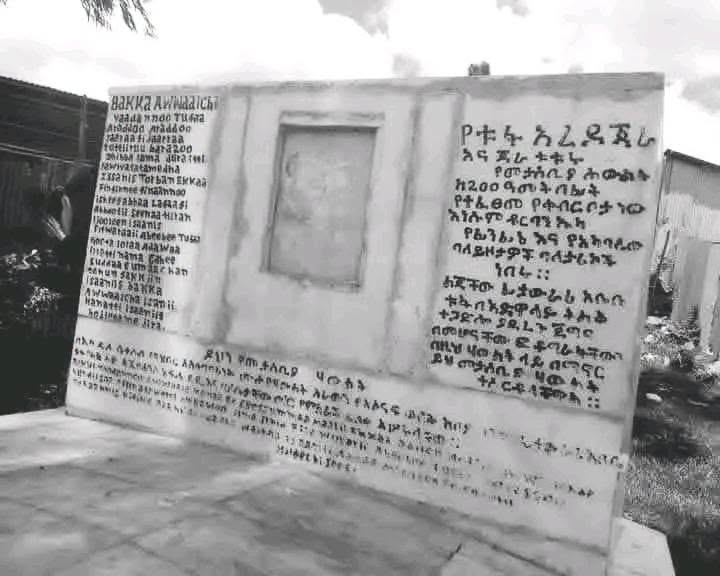
The Unwavering Spirit of General Garasuu Dhukii and the Eternal Struggle for Oromo Liberation
By Daandii Ragabaa
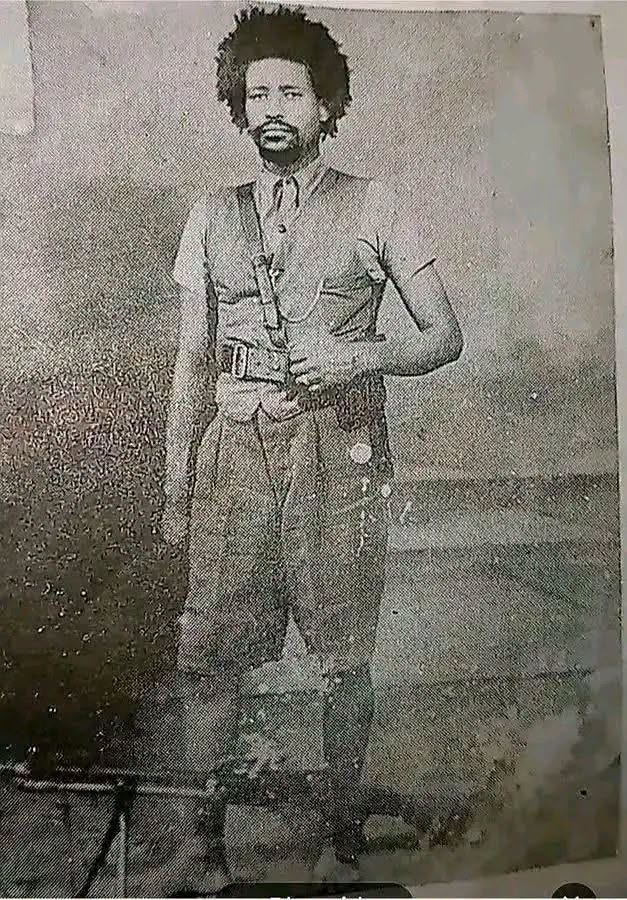
In the annals of Oromo history, few figures embody the spirit of sacrifice and unwavering dedication to the cause of freedom as profoundly as General Garasuu Dhukii. A man forged in the crucible of war, he stood as a pillar of resistance against colonial subjugation, his life intertwined with the struggle for Oromo self-determination.
His story, however, is not merely one of military might, but of a man whose deepest pain was not for his own fate, but for the future of his people and their ancestral capital. His dying wish echoes through the ages, a stark reminder of the burden carried by those who fight for justice.
The Weight of a General’s Resolve
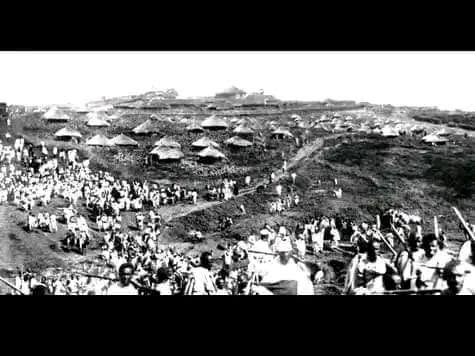
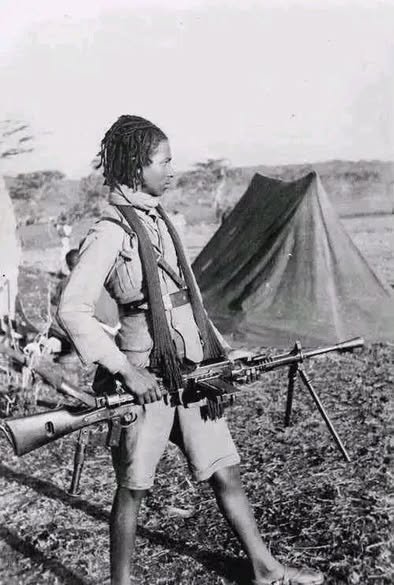
General Garasuu Dhukii was a symbol of Oromo resistance during the fierce battles against the Italian colonial forces. On the frontlines, where the fighting was most brutal, the general found himself trapped in a harrowing situation. He had done all he could, given his all for the cause. As he later confided, the heaviest burden was not the fear of death in battle, but the thought of dying while his homeland remained unfree.
In his final moments, he is remembered for a profound reflection, etched into the memory of those who knew him. He declared, “I have done all that I should do. If I die, it is not my time that grieves me. But what truly grieves me is the thought that Finfinne, the land of my people, will remain unfree.” These were not the words of a coward, but the lament of a leader for whom victory was measured not in personal glory, but in the liberation of his people’s heartland.
This sentiment captures the essence of the Oromo struggle: the fight for Finfinne is not a matter of political maneuvering but a fight for identity, dignity, and historical justice.
Finfinne: The Eternal Heart of the Struggle
Finfinne is not just a city of political and economic power. It is the “eye” of the Oromo people, the axis around which their history and destiny revolve. From the legendary heroes of the past, like General Garasuu Dhukii, to the modern-day Qeerroo youth, Finfinne stands as an unyielding symbol.
The general’s reflections echo a truth that has been carried through the generations: “The eye does not tolerate an obstruction.”
For the Oromo people, Finfinne is that eye, and the struggles of the past have made it clear that its people will never accept a future where they are not masters of their own land. The recent history of resistance in Finfinne is a testament to this unwavering spirit, proving that the fight for liberation is a continuous legacy passed down through generations.
A Legacy That Lives On
The sacrifice of General Garasuu Dhukii is a poignant testament to the resilience of the Oromo nation. He, like countless others, understood that his personal survival was secondary to the collective destiny of his people. His grief, recorded for history, is not just a memory but a call to action, a reminder that the battle for Finfinne’s soul is a long and arduous one that requires the commitment of all.
His death serves as a powerful message to the world and to the Oromo people themselves: that the spirit of resistance, kindled in the hearts of heroes like him, remains alight. The realization that a hero’s greatest regret was not his own mortal end, but the continued subjugation of his homeland, continues to fuel the struggle for Oromo liberation.
Conclusion: A Grief That Inspires
General Garasuu Dhukii gave his life for a cause he believed in, but his legacy lives on in the countless Oromos who continue to demand justice and freedom. His dying words are a profound reflection of the Oromo struggle: a fight not for land alone, but for the very soul of a nation.
The battle for Finfinne continues. But the general’s grief will never be in vain as long as the Oromo people remember his sacrifice and carry the torch of resistance forward.