Sagaleen Bilisummaa Oromoo: Sagalee Hincallisne, Hinjilbeeffanne

**Barreessaa: Daandii Ragabaa
Seenaa qabsoo Oromoo keessatti, miidiyaan bakka guddaa qaba. Garuu miidiyaa keessaa, sagaleen qulqulluun kan sababa jaalalaa fi amantaa sabaatiif sagalee baasu kan qabsoo Oromoo irratti gahee addaa buusu qaba. Kunis *Sagaleen Bilisummaa Oromoo* (The Voice of Oromo Freedom) ti.
Sagaleen Bilisummaa Oromoo kan jalqaba bara 1980 fi 1990 keessatti raadiyoodhaan akka “Sagalee Oromoo” ykn “Voice of Oromo Liberation” jedhamee waamamu ture . Yeroo Dergii jiraatu, yeroo afaan Oromoo dubbachuun balaadha ture, yeroo gaazexni wayita qabametti, yeroo namni Oromoo fedhii isaa ibsuuf lafa hin argamne, *Sagaleen Bilisummaa Oromoo* akka ifa ta’e.
Innis bara dheeraaf akka “madda odeeffannoo” tajaajile. Qabsooftota Oromoof, maatiifi firoota isaaniif, fi ummata Oromoo bal’ina isaatiif akka mirkanaa’ina ta’e.
Qabsoo Bilisummaa Oromoo Humneessuu
Gaheen jalqabaa *Sagaleen Bilisummaa Oromoo* tajaajile: humneessuu qabsoo Bilisummaa Oromooti.
Yeroo ummata Oromoo arrabsaa fi cunqursaa jala turan, Sagaleen Bilisummaa Oromoo gabaasa qabsoo irratti, gootota Oromoo irratti, fi milkaa’insa qabsoo Oromoo irratti odeeffannoo dhugaa tamsaasa ture.
Karaa gaggaarii itti qabsoo humneesse:
– **Odeeffannoo dhugaa raabsu:** Mootummaan cinaatti waan tamsaasu utuu hin ta’in, qabsooftota fi ummata Oromoo waa’ee qabsoo dhugaa akka beekan godhe.
– **Gootota fi qabsooftota jajjabeessu:** Yeroo qabsooftonni Oromoo abdii kutatan, sagaleen kun ergaa abdii fi jajjabina isaaniif tamsaasa ture.
– **Walitti qabuuf gargaaruu:** Oromoonni dhuunfaa, miti. Qabsoo Oromoo kan jaalatu hundi tokko akka ta’an beeku. *Sagaleen Bilisummaa Oromoo* Oromoota gamtaa ta’aniif chaanaala ta’e.
Akka seenaatti, sagaleen kun “jajjaboo callisuu hin dandeenye” ta’ee tajaajile. Mootummaan yeroo baayyee sagalee kana cufuu yaalu, carraaqqii balleessuuf godhu. Garuu hin milkaa’ine. Sagaleen kun ammallee jira. Ammallee ni dhaga’ama.
Ummata Oromoo Dammaqsuu
Gaheen lammaffaa *Sagaleen Bilisummaa Oromoo* tajaajile: dammaqsuu ummata Oromooti.
Yeroo dheeraaf, ummata Oromoo akka “hin beekne”, akka “hin hubanne”, fi akka “hin dammaqne” godhame. Mootummaan adda addaa ofii isaaniif tola Oromoo callisuu fi abjuu isaanii dhoksanii turan.
*Sagaleen Bilisummaa Oromoo* dammaqsiisa.
Akkamitti dammaqsiisa?
– **Seenaa Oromoo ibsu:** Barumsi mootummaa seena Oromoo dhoksa; Sagaleen Bilisummaa Oromoo ibsa.
– **Faarfannaa fi walaloo Oromoo tamsaasu:** Yeroo namni Oromoo faarfannaa isaa dhaga’u, onneen isaa ni ‘socho’a. Yeroo walaloo dhaga’u, fedhiin isaa ni ka’a.
– **Eenyummaa Oromoo mirkaneessu:** Ati Oromoo. Ani Oromoo. Nuti Oromoo. Waan kana sagaleen kun iyyuu fi haasa’uu isaatiin, ummanni Oromoo ofii isaa beekuu jalqaba.
Akka fakkeenyaatti, sagaleen kun wallee Oromoo, sirboota aadaa Oromoo, fi oduu durii Oromoo tamsaasa. Kuni Oromoota dargaggoota magaalaa fi alaatti jiran waliin hidha. Isaanis “ani Oromoo” jechuun itti waamama.
Yeroo ummanni Oromoo dammaqu, inni ofii isaa beeka. Yeroo of beeku, mirga isaaf dhaabbachuu danda’a. Yeroo mirga isaatiif dhaabbachuu danda’e, bilisummaan isaa ni dhufa.
Kaayyoo Bilisummaa Oromoo Bekeesisuu
Gaheen sadaffaa *Sagaleen Bilisummaa Oromoo* tajaajile: kaayyoo Bilisummaa Oromoo beeksisuu ti.
Kaayyoon kun maal? Bilisummaan Oromoo maal jechuudha?
*Sagaleen Bilisummaa Oromoo* deebisa:
– Bilisummaan Oromoo mirqa Oromoo keessaa isa tokkoffaadha.
– Bilisummaan Oromoo tajaajila mootummaa namaaf kennu qofa miti; inni ofiin Oromoo akka mataa isaa muree buluu danda’u.
– Bilisummaan Oromoo akka Oromootti jiraachuudha – kabaja, ulfina, fi bilisummaan.
Yeroo mootummaan Bilisummaa Oromoo “balali” ykn “tajaajila hin mirkanaa’in” jechuun carraaqqii balleessuu yaalu, *Sagaleen Bilisummaa Oromoo* amanamummaa isaatiin dhaabbata.
Yeroo hundatti kan beeksisu:
– Gootota Oromoo fira keenya akka ta’an
– Qabsoon Oromoo kaayyoon isaa akka qabu
– Bilisummaan Oromoo abjuu miti; dhugaa ta’uu danda’a
Sagaleen kun akka “dungoo” ta’ee fageenya ifa baasa. Akka “barii” ta’ee waaree barii oolma.
Gaheen Dabalataa: Walabummaa fi Amanamummaa
Gaheen dabalataa *Sagaleen Bilisummaa Oromoo* tajaajile: walabummaa fi amanamummaa (trust).
Yeroo miidiyaan mootummaa yeroo baayyee “wandaba” waliin beekamu, *Sagaleen Bilisummaa Oromoo* amanamaa ta’uuf carraaqa. Innis:
– Waan dhugaa ta’e qofa tamsaasa
– Odeeffannoo osoo hin cinaatti hiikni
– Sababa garee addaa, miti, sababa Oromoo hundaa
Kanaaf, ummanni Oromoo yeroo sagalee kana dhaga’u, amanama. Yeroo amanamuu, ni fayyadam. Yeroo fayyadamuu, qabsoo Oromoo ni jajjabeessa.
Rakkoo fi Cimina
*Sagaleen Bilisummaa Oromoo* karaa salphaa hin deeme. Mootummaan yeroo adda addaa:
– Sagalee kana cufuu yaale
– Raadiyoo irratti jamming (dhaabu) hojjete
– Ogeeyyii sagalee kanaa qabuu ykn balleessuu yaale
Garuu, sagaleen kun cimina qaba. Yeroo mootummaan karaa tokko cufu, karaa biraa bana. Yeroo ogeessi tokko qabamu, kan biraa ni ka’a.
*Sagaleen Bilisummaa Oromoo* hin callisne. Garaan isaa hin duune.
Haala Ammaa
Yeroo ammaa, *Sagaleen Bilisummaa Oromoo* akka raadiyoo, akka weebsaayitii, fi akka tajaajila dijitaalaa jira. Oromoonni addunyaa maraa, miiliyoonaan, isa dhaggeeffatu.
Innis ammallee:
– Qabsoo humneessa
– Ummata dammaqsa
– Kaayyoo Bilisummaa Oromoo beeksisa
Maaluma duri ture, ammallee isa.
Ibsa Dhuma
*Sagaleen Bilisummaa Oromoo* sagalee qofa miti. Innis waadaa ummata Oromoo gidduu ti. Innis mirkanaa’ina: “Nu Oromoo. Mirga keenya qabna. Bilisummaan keenya ni dhufa.”
Kanaaf, yeroo gaazexaa fi raadiyoon biraa callisaniyyuu, yeroo mootummaan sagalee Oromoo cufuu yaalutti, yeroo mormiin Oromoo cimsiifamutti, *Sagaleen Bilisummaa Oromoo* ni haasa’a.
Innis sagalee ummataa. Innis sagalee qabsoo. Innis sagalee Bilisummaa Oromoo ti.
*Sagalee kana dhaggeeffadhu. Ati Oromoo. Waan kunis kan kee ti.*
—
*Daandii Ragabaa, miidiyaa fi qabsoo Oromoo irratti kan gabaase*
*Sagaleen Bilisummaa Oromoo – yeroo tokko irratti, ammallee ni jira.*
ገዳ የኢትዮጵያ ሥልጣኔ
—
የገዳ ስርዓት የኦሮሞ ህዝብ ከመሠረታቸውና ካዳበራቸው ሁሉን አቀፍ የአስተዳደር ስርዓቶች መካከል ከፍተኛው ነው ማለት ይቻላል፡፡ የገዳ ሥርዓት የወንዶች የዕድሜ መደብ መሠረት አድርጎ የኦሮሞ ሕዝብ በመንግሥተ ሕዝብ (ዴሞክራሲ) ወግ የሚተዳደርበት ሥርዓተ ማህበር ነው። ገዳ አንድ ዓይነት ተቋማዊ ሥራ ብቻ የሚከናወንበት ሳይሆን፣ ፈርጀ ብዙና አያሌ ዘርፎችን በውስጡ ያካተተ፣ የኦሮሞን ሁለንተናዊ ሕይወት በሁሉም አቅጣጫ የሚመራ ሥርዓት ነው። በውስጡም የሚከተሉት ተቋማት ይገኛሉ።
ገዳ የተወሰነ ዑደት ያለው ሆኖ፣ በየስምንት ዓመቱ ከአንዱ የገዳ እርከን ወደሚቀጥለው እርከን የሚተላለፍበት እና ሥልጣን በሰላማዊ መንገድ የሚሸጋገሩበት ዴሞክራሲያዊ የአስተዳደር ሥርዓት ነው። እያንዳንዱ የገዳ መደብለተወሰነ ጊዜ (ገዳ) በስልጣን ላይ የሚቆይበት ይህ ስርዓት በመደበኛ የስልጣን ማስተላለፍ ሥነ-ስርዓት የሚጀመርና የሚጠናቀቅ ይሆናል፡፡ የገዳ ስርዓት የርስ በርስ ሚዛናዊ ክትትልና ቁጥጥርን፣ በየስምንት ዓመቱ በተከታታይ የሚደረግ የስልጣን ሽግግር፣ የስልጣን ክፍፍል (በአስፈፃሚ፣ በሕግ አውጭ እና በፍትህ አካላት)፣ ሚዛናዊ ተቀናቃኝ (በአምስት ፓርቲዎች መካከል) እና በከፍተኛ እና ዝቅተኛ መካከል የሥልጣን መጋራት መርሆዎች አሉት፡፡ የአስተዳደራዊ አካላት ስልጣን በአፋኞች እጅ እንዳይወድቅ ይከላከላል፡፡
እንደታዋቂው የኦሮሞ ህዝብ የፖለቲካ ታሪክ ጸሐፊ አስመሮም (1973) ገለጻ ገዳ የፖለቲካዊ፣ ወታደራዊ፣ ኢኮኖሚያዊ እና የአምልኮ ሥርዓቶችን በማካተት በየስምንት ዓመቱ እርስበርሳቸው በሚተካኩ የመደብ (ሉባ) ስርዓት ላይ የተመሠረተ ነው፡፡ ከዚህ አንጻር በየጊዜው የሚካሄዱ ምርጫዎች፣ ተጠያቂነት የሚሰፍንበት አሠራር፣ ሰላማዊ የስልጣን ሽግግር የሚከናወንበት አካሄድ፣ ሀሳብን በነፃነት መግለፅ፣ እንዲሁም መግባባትን ታሳቢ ያደረጉ ረጃጅምና የተዋቀሩ ክርክሮች የማኅበረ-ባህላዊ ሃብቱን (የገዳ ስርዓትን) ዴሞክራሲያዊነት የሚያረጋግጡ ናቸው፡፡ እነዚህ የስርዓቱ ገፅታዎች የኦሮሞ ህዝብን ውስጣዊ አንድነት ከማጠናከር ባለፈ የተለያዩ ባህሎች፣ ሃይማኖቶች እና የፖለቲካ ፍላጎቶች ባሏቸው ህዝቦች መካከል የውይይት ባህልን በማጠናከር ሰላማዊ ግንኙነቶችን አዳብረዋል፡፡
ገዳ የኦሮሞን የዓለም አተያይ፣ ሥነምግባር፣ እሴቶችን እና ደንቦችን በመቅረፅ እንዲሁም የኦሮሞን ህዝብ እርስበእርስ እና ከሌሎች ብሄረሰቦች ጋር በማስተሳሰር ረገድ ወሳኝ አስተዋጽኦ ያበረክታል፡፡ በገዳ ስርዓት ውስጥ ያሉ ተቋማት ማህበራዊ ትስስርና ውህደት ለመፍጠር፣ የጋራመግባባት፣ ግጭቶችን እና አለመግባባቶችን በሰላም ለመፍታት፣ የሰብአዊ መብቶችን ማክበር እንዲሁም ማህበራዊ መረጋጋት እና ዘላቂ የሀብት አያያዝን ለመፍጠር የታቀዱ ናቸው፡፡
የኦሮሞ ህዝብ ከጥንት ጀምሮ ሲጠቀምባቸው የነበሩና አሁንም ግልጋሎት እየሰጡ ያሉ የበርካታ ግጭት ከልካይ ማኅበረ-ባህላዊ ሃብቶች ባለቤት ነው፡፡ የሥርዓቱ መርሆዎች የሁሉም ጎሳዎች፣ የዘር ሐረጎች፣ ክልሎች እና ኮንፌዴሬሽኖች ሚዛናዊ ውክልና፣ የመሪዎች ተጠያቂነት፣ በእርቀሰላም አለመግባባቶችን መፍታት እና መሰረታዊ መብቶች እና ነፃነቶች መከበራቸዉን ያካተቱ ናቸው፡፡ በመሆኑም የገዳ ስርዓት ግጭትን ከመከላከል አንጻር የጎላ ሚና ይጫወታል፡፡ ለምሣሌ “የገዳ ምክር ቤት ከአንድ ባህላዊ ክዋኔ በፊት ወይም በክዋኔው ወቅት የሚፈጠሩ ቀውሶችንና ማንኛውንም ዓይነት ግጭቶችን (ልማዳዊ፣ ፖለቲካዊ፣ ሞራላዊ፣ ህጋዊ ወይም ኢኮኖሚያዊ) ይፈታል” በማለት አስመሮም በጽሁፉ ያብራረል (1973፡ 86)፡፡ በአጠቃላይ እነዚህ ሃብቶች የኦሮሞን ህዝብ እርስበርስ ያጋመዱና ሰላማዊ መስተጋብርን ማጽናት የቻሉ ከመሆናቸውም ባሻገር ከከሌሎች ወንድም ህዝቦችና ጎረቤቶቹ ጋር በሰላም አብሮ መኖር እንዲችል ማህበረ-ባህላዊ ምህዳሩን አመቻችቶለታል፡፡ ከነዚህ መካከል የሚከተሉት ማኅበረ-ባህላዊ ሃብቶች በግጭት ከልካይነታቸው ከፍተኛ አስተዋጽኦ ያበረክታሉ በሚል የተጠቀሱ ናቸው፡፡
የገዳ እርከንና አኗኗር
የገዳ እርከን ማህበራዊ አገልግሎትንና ጠቀሜታን ማእከል በማድረግ የስራ ሀላፊነትና ተጠያቂነትን ለህዝቦች በመስጠት የተዋቀረ ነው፡፡ ይህም በሁለት መልኩ ይመሰረታል፡፡ ይህም አንደኛው አባቶቻቸው ከ40 ዓመት በታች የሆኑት እንደ ተወለዱ የመጀመሪያው ገዳ እርከን ይገባሉ፡፡ ይህም ማለት አባቱ ስልጣን ላይ እያሉ የተወለደ ልጅ ዳባሌ ይገባል፡፡ ይህ ከ40 አመት በኋላ አባ ገዳ የመሆን እድል ያለው ይሆናል፡፡ ሌላው የጃርሳ ልጆች በትውልድ እድሜ እኩል ሳይሆኑ በአንድ ገዳ እርከን ውስጥ የሚገኝ ማለት ነው፡፡ ይህም አባቶቻቸው ከገዳ የወጡ ልጆች ማለት ነው ወይንም፡፡ ይህም እንተወለዱ የሚገቡት እርከናቸው ደግሞ ሌላ እርከን ይሆናል፡፡ በዚህም ምክንያት ከ40 አመት ቀድመው ገዳ ይገባሉ ወይንም ዘግይተው ከገዳ ይወጣሉ በዚህ ምክንያት አባ ገዳ የመሆን እድል ሊያጡ ይችላሉ፡፡ የማህበራዊና የስራ ድርሻ እንደየእድሜ ያቸው ተመሣሣይ ሲሆን የስላጣን ተጠያቂነታቸው ላይ ልዩነት ይኖራቸዋል፡፡ በአጠቃለላይ ስም የእርከን ስሞች እንደሚታወቀው ይከተላሉ፡
1. ደበሌ ከ0—8
2. ጋሜ ከ9-16
3. ፎሌ ከ17-24
4. ራባ ከ25-32
5. ዶሪ ከ33-40
6. ገዳ ከ41-48
7. ዩባ 1 ከ49-56
8. ዩባ 2 ከ57-64
9. ዩባ 3 ከ65-72
10. ዩባ 4 ከ73-80
11. ገዳሞጂ ከ80 በላይ
ማንኛውም የኦሮሞ ወንድ ከተወለደበት ዕለት ጀምሮ በገዳ ሥርዓት ይታቀፋል። ሲታቀፍም ከገዳ መደቦች መካከል የአንዱ አባል በመሆኑ ነው። በጥንቱ የገዳ ሥርዓት የገዳ መደቦች ብዛት ዐሥር ሲሆን፣ ከዐሥሩ የገዳ መደቦች መካከል የመጀመሪያዎቹ አምስት መደቦች የአባቶች ሲሆኑ፣ ቀጣዮቹ የገዳ መደቦች ደግሞ የልጆች ገዳዎች ናቸው። አምስቱ የገዳ መደቦች ዑደት (አንዳንዴ ቡታ ይባላሉ)። እያንዳንዳቸው መጠሪያ ስሞች አሏቸው።
ገዳ ወይንም ገዶማ ከሁሉ እርከኖች እጅግ በጣም ወሳኝ እርከን ነው፡፡ ይህም የፖለቲካና ማህበራነት መሪነትን የሚጨብጡበት ስልጣን ብቻ ሳይሆን የሀገር እጣፈንታ በእጅ ላይ የሚወድቃበት ጊዜ ነው፡፡ ይህ እርከን በጣም ወሣኝና እጅግ አስፈላጊ እርከን ሲሆን የገዳ ትልቁ ስልጣን የሚይዝበት እንዲሁም የእምነት መሪነትም የሚሆንበት ጊዜ ነው፡፡ አባ ገዳ በገዳ ሥርዓት ሕግ ለስምንት ዓመታት ብቻ እንዲያገለግሉ በሕዝብ ተመርጠው ሥልጣን ላይ የሚወጡ ባለሥልጣኖች ወይም የአስተዳደር አብላጫ ቁንጮ ነው።
እያንዳንዱ የገዳ ሥልጣን ዘመን 8 ዓመት ነው። ሥልጣን ላይ የሚቆዩ 5 ገዳዎች አሉ። ስለዚህም የገዳ የሥልጣን ዑደት 40 ዓመት ይሆናል። በሌላ አገላለጽ በ40 ዓመት ዑደት ውስጥ 5 ገዳዎች አሉ ማለት ነው። አንድ ሰው አሁን ሥልጣን ቢይዝ ወይም ሉባ ቢሆን ከዛሬ 40 ዓመት በኋላ ደግሞ የሱ ልጅ ሉባ ይሆናል ማለት ነው። ስለሆነም ገዳ ዐውደ ግዛት ይሰኛል።
መጽሐፉን በ PDF ለማንበብ የምትፈልጉ ካላችሁ ከሥር የሚገኘውን Link በመጫን ማውረድ ትችላላችሁ።
Qabsoo Hin Xumuramne: Leencoo Lataa fi Karaa Dheeraa Bilisummaa Oromoo
Barreessaa: Daandii Ragabaa*
“Mootummaa kana akkuma mootummaa Hayilasillaasee, Dargiifi Wayyaanee lolaa turetti lolla taanaan gaarii hinta’u.”
— Obbo Leencoo Lataa
Jechoonni kun kan dubbataman yeroo ayyaana eebba kitaabaa keessatti, kan jedhaman nama waggoota 50 ol qabsoo Oromoo keessa tureeti. Obbo Leencoo Lataa, nama seenaan qabsoo Oromoo keessatti kan beekamu, hayyuu siyaasaa kan jaarraa walakkaa ol Oromoofi Oromiyaaf qabsaa’ee, kan ABO fi Gaazexaa Bariisaa hundeessan keessaa tokko.
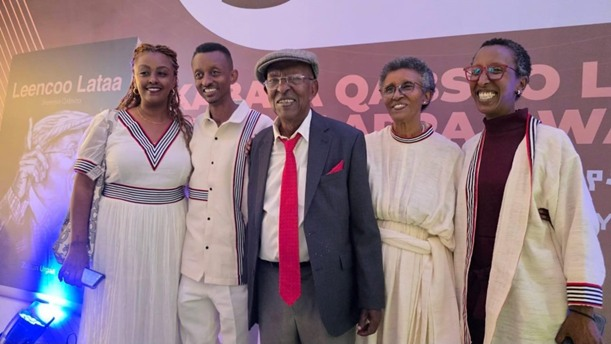
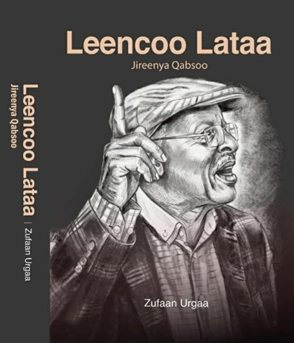
Kitaabni seenaafi imala qabsoo jaarraa walakkaa isaati, “Leencoo Lataa: Jireenya Qabsoo” jedhu, kan barreessituu Zufaan Urgaatiin Afaan Oromoofi Amaariffaan qophaa’e, Dilbata darbe Finfinneetti eebbifame. Kutaalee sadii, boqonnaawwan 11, fi fuulawwan 447 kan qabu, kitaabichi qarshii 1,200n gabaarra oole.
Sirnichatti, namoonni hedduun—hoggantoonni mootummaa federaalaafi naannoo Oromiyaa, miseensonni mana maree, hayyoonni, ambaasaaddaroonni, artistoonni, abbootiin Gadaa, haadholiin Siinqee, maatiifi firoonni Obbo Leencoo—walitti qalaman. Isaanis ilaalcha qabsoo waggoota 50 kan turan, gaaddisa fi ifa, milkaa’inaafi rakkinawwan walitti qaban.
Maatii Qabsoon Hidhe
Obbo Leencoo Lataa Pirofesar Kuwee (Maartaa) Kumsaa waliin bultii dhaabbate. Ijoollee sadii: Huriyaa, Roobaa, fi Goolii. Garuu seenaan maatii kanaa kan akka maatii kaanii miti. Kana keessatti, qabsoon mana keessa seena. Mana keessaa, qabsoon baqaqa.
Huriyaa Leencoo: Yaadannoo Intala Hangafaa
Huriyaan, intala hangafaa, sirratti dubbachuun yaadannoo ishee dhiyaatte. Garaan ni dhaga’ama. Afaaniin baay’ee hin miidhammu:
“Ijoollummaa kootti abbaa koo baay’ee hin yaadadhu. Garuu dhiphina haati koo keessa turte nan yaadadha. Haatiifi abbaan koo bultii dhaabbatanii waggaa sadii keessatti ijoollee sadii horatan.
Abbaan warraashee, jaalli qabsoofi abbaan ijoollee ishee, baay’ee mararfatu, haala hin taaneen manaa bahee dirree qabsoo seene. Yeroo abbaan keenya manaa bahe, haati keenya baay’ee dhiphattee, soofaarra ciiste, imimmaan dhangala’aa, ‘Beenu ka’ii, beenu ka’ii, allaattii koo joobiraa beenu sifaanan bu’aa’ jettee boossu nan yaadadha.
Ani yeroo sana maaliif akka isheen boossu hin beeku. Garuu ishee gaafachuuf yaalaan ture; gaafachuus nan sodaadhan ture.
Abbaan keenya utuu gara dirree qabsoo hin deemin, akka ijoolleetti daa’immee nu waliin taphata ture. Utuu jaalala isaa dhandhamnee hin quufiin, manaa bahee qabsoo seene.
Erga deemee booda, aniifi obboleessi koo, ‘Abbaan keenya eessa jiraa?’ jennee haadha keenya baay’ee rakkisaa turre.
Haati keenya poostarii (suura abbaa keenyaa) girgiddaarratti maxxansitee, ‘Har’arraa kaastanii waa’ee abbaa keessanii na hin gaafatinaa! Abbaan keessan kunooti!’ nuun jette. Nuti garuu carraa arganne hundaan waa’ee abbaa keenyaa haasa’uu barbaannu.
Erga haati keenya nurraa hidhamtee booda, waa’een abbaa keenyaa baay’ee hin dubbatamu ture. Erga isheen mana hidhaatii baatee, baqannee biyyaa baane, Keeniyaa, Naayiroobii geenyee booda, sagalee abbaa keenyaa bilbilaan dhageenye.
Abbaan keenya yeroo sana konfaransii Landan irra jira. Bilbilichi bilbilamee, ‘Ati eenyu?’ jedhee gaafate. Anis, ‘Bineensa naan jedhe,’ nan jedhe. Sagalee abbaa koo ta’uu keessa kootti natti dhaga’ame. Bilbila sana abbaa keenya ture.
Ji’oota sadiif, waa’een isaa mana keessatti baay’ee haasa’amaa ture. Innis utuu nuti gara Kaanaadaa hin deemin, guyyaa lamaaf dhufee nu arge.
Nuti maqaa abbaa keenyaa Yohaannis Lataatti beekna turre. Maqaa Leencoo Lataa jedhu akka haaraatti shaakalaa turre. Maqaan Leencoo jedhu sammuu koo keessatti nama daran dheeraafi guddaa ta’ee natti mul’ata ture.
Oggaa inni konkolaataa keessaa bu’ee nu dubbisu, waanti afaan koo keessaa bahe, ‘Maal atoo baay’ee gabaabaadha!’ jedhu ture.”
Waggaa hedduu booda, ijoolleen abbaa isaanii wajjiin walbaran. Kuni jaalala qabsoo fi jaalala maatii gidduu jiru.
Roobaa Leencoo: Ilmi Dubbata
“Abbaa koo xinnummaa kootti hin beeku. Abbaa koo waliin walitti dhufnee maatii kan taane Kanaadaatti ture. Nuti waliin hin guddanne. Kanaaf, abbaan koo gaaf tokko maatii walitti qabee, ‘Akka abbaa irraa jalqabuurra, hiriyyaa taanee haa jalqabnu’ jedhe.
Suuta obsaan hariiroo keenya cimsee, abbaa gaarii nuu ta’e. Inni nama obsa guddaa qabuufi kutannoo cimaa qabuudha.”
Goolii Leencoo: Intala Addummaan Dubbatti
“Maatiin koo maatii kaanirraa adda ta’uu jireenya koo guutuun beeka. Yeroo ijoollummaa keenyatti, haatiifi abbaan keenya nu bira hin turre. Abbaan keenya bosona, haati keenya ammoo mana hidhaa seenan.
Nuti sadanuu fira biratti guddanne. Erga ofbaraafi guddachaa dhufee booda, maaliif akka haadhaafi abbaa irra adda baane guddanne hubadhe. Haati keenya, ‘Ani ani hatee ykn ajjeesee miti kanan hidhame. Waan Oromummaafan hidhame,’ nuun jechaa turte.
Ergan abbaa keenya barreetti booda, maaliif akka qabsaa’u nutti haasa’aa ture. Haadhaafi abbaa keenya waliin erga guguddannee booda walitti dhufne. Garuu jaalalli nu gidduu jiru, akki itti walbarree, walii obsinee, wal deggarree, wal sirreessinee, wal gorsinee as geenye—anaaf daran adda.”
Pirofesar Kuwee Kumsaa: Qabsoo fi Of Darbuu
Pirofesar Kuween, haadha warraasaa, keessummeef dubbachuun akka jedhan:
“Seenaa qabsoo Obbo Leencoorraa waan xiqqoo gabaabsee haasa’uun barbaada. Yeroo jalqaba qabsootti seennu, akka qabsoon bara dheeraa fudhatuufi dhaloota baay’ee gaaga’u ni beekna turre.
Hacuuccaafi gabrummaan ummata keenya irra ture waggaa 100 ykn 200 qofa utuu hin taane, kan dhaloota dheeraa fudhatedha. Yeroo qabsoo kanatti seenne, ‘utuu lubbuun jirru kana argina’ jennee hin yaadne.
Leencoon haqaaf loluuf jecha, kanaanis sanaanis walitti bu’eera. Aniifi inni qabsaa’aafi qabsooftuutu wal argate. Qabsaa’aan dhugaa ofiisaatiif jiraatee saba isaa hin miidhu.
Qabsaa’aan dhugaa saba isaa tiif dabarsuuf ofii darba. Qabsaa’aan dhugaa ofii kootii darbeen, saba kootiif dabarsa jedhee qabsootti seena. Kaayyoon qabsoo Leencoos ofii darbee saba isaa fi dabarsuudha.
Leencoon nama kaayyoon qabsoo isaa hojiifi gochaan mul’iseedha. Bilisummaa, haqaafi walqixxummaa barbaachaaf hafuura nu keessaa wixxifatutu jira.”
Obbo Leencoo Lataa: Akeekkachiisa fi Ergaa
Obbo Leencoon, erga qabsoo dheeraa booda, sababa isaatiif hamatama, tuffatama, garuu hin dhokatu. Inni akkas jedhe:
“Galanni kan maluuf namoota qabsoo kanarratti wareegaman qofaafi. Nuti warri lubbuudhaan jiru, beekamtii yoo arganne nu ga’a. Seenaa koo keessatti nama dallansiiseeran ta’a. Abaarsi baay’eenis narra gahaa tureera.
Yeroo mootummaa ce’umsaa sana, gaafa Finfinnee seennu, Afaan Oromoo sadarkaa dhabamuurra gahee ture. Afaan Oromoo dhabamnaan ammoo sabichis dhabameera jechuudha.
Yeroo ammaa garuu Oromoon ‘Baala Gizee’ jedhamee hamatama. Hamiin akkasii gaariidha. Kanaan dura akkas jedhamnee hamatamuu dadhabne.
Qabsoon kun bakka irraa ka’eefi waan galmeeffate qaba. Waan ammayyuu irraa hafetu jira. Yoo waan hanqate xiinxallee, guuttachaa yoo deemuu baane, gaarii hin ta’u.
Akkuma mootummoota Hayilasillaasee, Dargiifi Wayyaanee lolaa turetti, kanas lola taanaan gaarii hin ta’u. Haala yeroo wajjin tarsiimoo keenya fooyyessuu qabna.
Qabsoo taasifneen: maaltu galmaa’e? maaltu hir’ate? jennee of gaafachuun, isa hir’ate guuttachaa deemuu malee, zeeroorraa ka’uu hin qabnu.”
Yaadannoo Daandii Ragabaa: Ergaan Kee Maali?
Yeroo Obbo Leencoon “Mootummaa kana akkuma mootummaa Hayilasillaasee, Dargiifi Wayyaanee lolaa turetti lola taanaan gaarii hin ta’u” jedhu, inni hubachiisa: Qabsoon lolaaf loluu miti. Qabsoon, xumuraaf, bilisummaaf, haqaaf, fi namoomni akka maatii jiraachuu danda’an biyya ijaaruuf.
Garuu, akka yaadannoo Daandii Ragabaa, Oromoon har’a sadarkaa qabsoo haaraa keessa jira. Hayilasillaasee fi Derg dabarani. Woyaanes ni dabare. Ammas immoo waggoota 50 booda, mootummaan ammaas “lola taanaan gaarii hin ta’u.” Mee hamma yoom? Mee hamma dhiiga yoom?
Obbo Leencoo akka jedhetti, karaan duubatti, bakka jalqabnee, galmaa’e hubachuudha. Akkasumas waa’ee hanqinaa of gaafachuudha. Waan hanqate guutuu. Garuu zeeroo kaasee bilbiluu fi qabsoo lolaatti deebisuu miti.
Huriyaan abbaa ishee “gabaaba” jette. Roobaan “obsa” fi “kutannoo” dhaha. Goliin “walbaruu, walobsii, waldeeggarsa, walsirreessuu, fi walgorsuu” maatii isaanii adda isaan ta’uu dubbatti. Pirofesar Kuween “qabsaa’aan dhugaa ofiisaatiif jiraatee saba isaa hin miidhu” jetti.
Hooggantoonni, hayyuunni, Gadaan, Siinqeen, artistoonni, ambaasaaddaroonni, fi ummatni walitti qabamanii kitaabicha eebbisan. Garuu eebbi kun kan galmaan ga’uu isa dhugaa eebbisa. Eebbi kun gaaffii: “Ati, karaa kana irraa, maal fudhata?” jedhu gaafata.
Xumura: Qabsoon Itti Fufa
Obbo Leencoo Lataa, tarsiimoo fooyyessuu qabna. Isaan kan dabaraniin, karaa isaanii irratti baruu qabna. Waan milkaa’e ijaaruu. Waan hanqate guutuu. Kana malee, lola lolaaf gadhee.
Kitaabichis, yaadannoo fi dhugaattiin, eebba qofa miti; tokkummaafi akeekkachiisa.
Ammas waan hafe jira. Ijoolleen Leencoo, walitti dhufan. Haatiifi abbaan, erga waggoota booda, walitti dhufan. Oromoon jaalala qabsoo fi jaalala maatii gidduu madaala barbaada. Kuni qabsoo dhugaa.
Ergaa Obbo Leencoo Lataa:
“Haala yeroo wajjin tarsiimoo keenya fooyyessuu qabna. Qabsoo taasifneen maaltu galmaa’e? maaltu hir’ate? jennee of gaafachuun, isa hir’ate guuttachaa deemuu malee, zeeroorraa ka’uu hin qabnu.”
Karaan lola miti. Karaan deeggarsa, tolcha, fi tokkummaa ti. Oromoon duuba hin deebi’u. Garuu duuba ilaaluun, waan qabu hubachuufi waan dhabe guutuu ni danda’a.
Qabsoo Leencoo Lataa, qabsoo Pirofesar Kuwee, qabsoo Huriyaa, Roobaa, fi Goolii—qabsoon kun qabsoo Oromoo ti. Akka dhiiga dhangala’uu dhiisu, lubbuun akka hin badne, fi biyyi akka ijaaramtu.
“Mootummaa kana akkuma mootummaa Hayilasillaasee, Dargiifi Wayyaanee lolaa turetti lola taanaan gaarii hinta’u.”
Lola miti. Tokkummaa. Nagaa. Bilisummaa.
Qabsoon itti fufa.
*Gabaasti kun kan barreeffame dhaabbata ‘Gaazexaa Bariisaa’ irratti Natsaannat Taadsasaatiin guyyaa Caamsaa 5, 2018 maxxanfame irratti hundaa’e. Barreeffama asii olii yaadannoo fi ibsa Daandii Ragabaa ti. Yaanni, haasawiifi dhugaattiin as keessatti dhiyaatu kan abbootii qabsoo Obbo Leencoo Lataa, Pirofesar Kuwee Kumsaa, fi ijoollee isaanii (Huriyaa, Roobaa, fi Goolii Leencoo) irraa dhufe. Daandii Ragabaan akka yaadannoo fi ibsituutti tajaajileera. Maddi bu’uuraa yaadannoo kan Natsaannat Taadsasaa fi Gaazexaa Bariisaa ti.
A People of Dignity: The Path of Dirree Incinnii
By Daandii Ragabaa*
“Uummata safuu fi safeeffannaa qabu.”
A people with dignity and a sense of honor.
These words open a reflection that is at once a meditation and a summons. They speak of a community that has walked alongside the plains of Dirree Incinnii—a place heavy with history, where the Oromo people have gathered to assert their identity, to mourn their wounds, and to chart their collective future.
Hailu Gonfa, whose original post sparked this reflection, writes not as a distant observer but as one who stands within the circle. And Daandii Ragabaa, as commentator, amplifies that voice—calling attention to what has been done, what remains undone, and what must yet be dared.
The Work That Was Begun
The reflection turns first to the recent electoral process. It acknowledges that work was begun. But it does not shy away from naming the shortcomings—the gaps, the failures, the moments when the promise of democratic participation was not fully realized.
Peace. Development. Unity.
These are the pillars upon which the Oromo people have built their aspirations. Yet the reflection insists that these cannot be achieved through mere declarations. They require labor. They require patience. And they require something that cannot be legislated: the warmth of tradition and the binding force of mutual respect.
“Simannaa ho’aa aadaa fi safuu qabun,” the post reads.
With the warm embrace of culture and dignity.
It is a striking phrase. The image is not one of cold legalism or bureaucratic procedure. It is an embrace—a welcome, a recognition that the leaders and representatives of the people are not distant functionaries but kin, bound by the same history and the same hopes.
We thank you, the reflection says, for what you have done for us.
The Wisdom of the Eldest Sons
There is a particular quality attributed to the people of Dirree Incinnii and the eldest sons of the Warra Ammayyaa. They know. They know when. They know what. They know where. They know how.
This is not the arrogance of knowledge without experience. It is the earned wisdom of a people who have learned, through generations of struggle and survival, that action without timing is wasted, that strategy without place is lost, that effort without method is scattered.
The reflection captures this in a cascade of questions that are really affirmations:
Yoom? When?
Maaltu? What?
Eessetti? Where?
Akkamitti? How?
These are not the questions of the confused. They are the questions of the prepared—of a people who have learned to ask everything before they act, because the cost of acting without knowing has been paid too many times already.
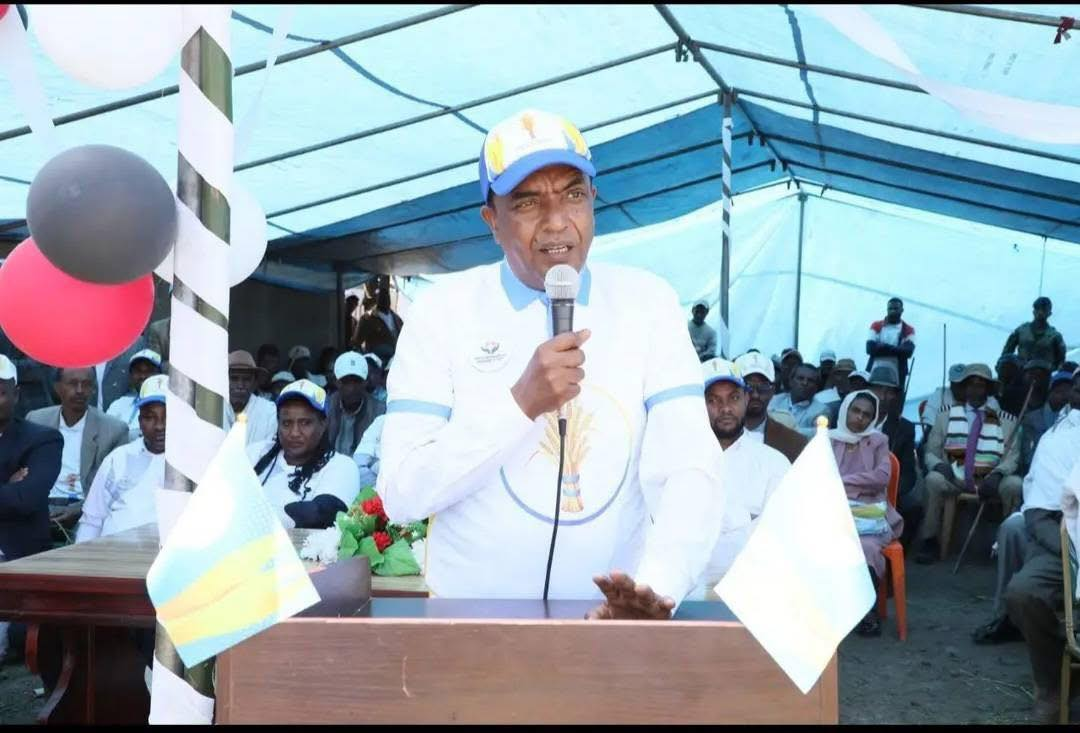
The Gathering of the Community
The heart of the reflection lies in a series of verbs that describe the work of community:
Nyaaraa fi qalbiin wal hubannee — We understood one another with patience and heart.
Afaaniin walitti dubbannee — We spoke to one another directly, mouth to mouth.
Dhaamsa wal bira keewwanne — We conveyed messages to one another, side by side.
There is no translation in these lines. There is only the texture of a people who have refused to allow distance to become division. They have talked. They have listened. They have passed the word from hand to hand, from house to house, from heart to heart.
This is democracy before the ballot box. This is the Gadaa assembly on the grass. This is the chaffe under the tree. It is the ancient Oromo way of making decisions—not through the silence of isolated individuals but through the noise of collective deliberation.
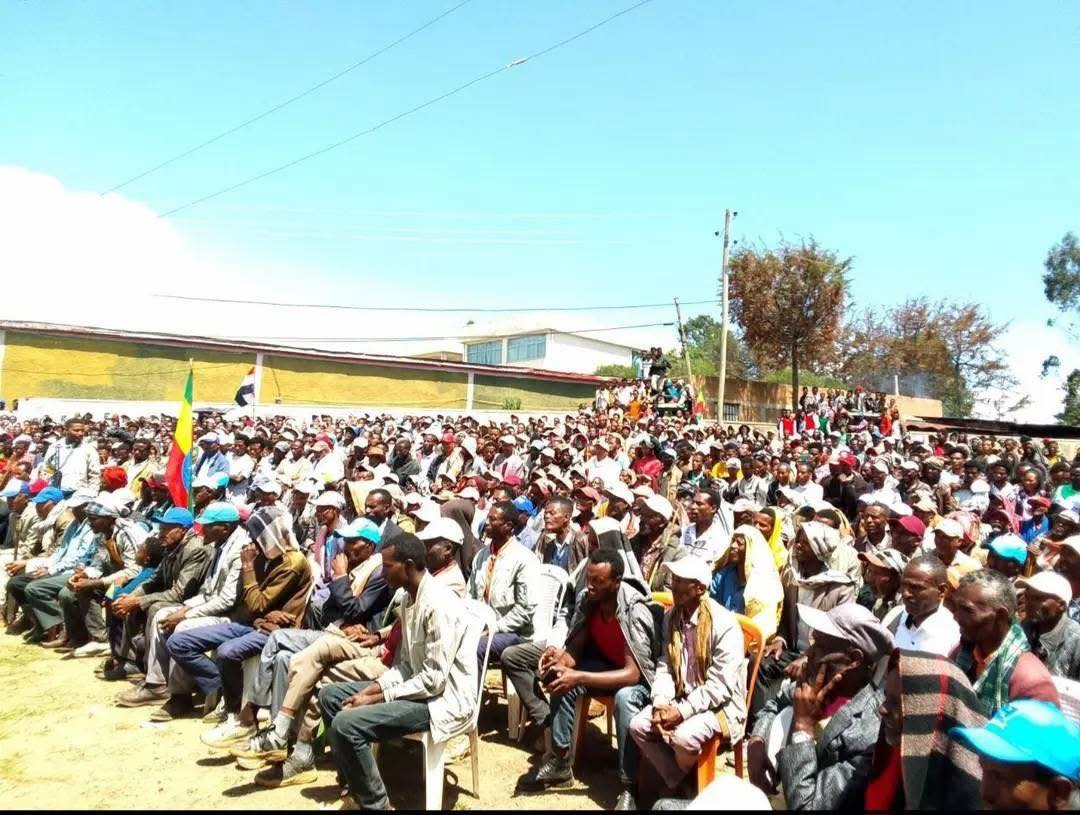
Choosing Wealth or Choosing Peace
The reflection then arrives at a stark choice:
“Badhaadhina filachuun, nagaa, kan jalqabame xumurree waantota aaraa jalqabuu fi tokkummaa sabaa fi biyyaa tiksuun biyya ijaaruudha.”
Choosing wealth, peace, completing what has been begun, beginning things that heal, and protecting the unity of the nation and the country—this is how we build the nation.
The phrasing is deliberate. Wealth is named first—not because it is the highest good, but because it cannot be separated from the other goods. A people without material foundation cannot sustain peace. A people without peace cannot accumulate wealth. A people without unity cannot defend either.
The reflection insists that building a nation is not the work of slogans. It is the work of finishing what was started. It is the work of starting things that do not injure but heal. It is the work of protecting unity—not the false unity of silence, but the hard-won unity of a people who have disagreed and still chosen to stand together.
The Final Affirmation
The post closes with a line that lands like a stone dropped into still water—the ripples spreading outward, unstoppable:
“Biyya wal gargaarree ijaarru malee, biyya wal gargaarree diignu hin qabnu.”
We build a country by helping one another. We do not have a country that we destroy by helping one another.
It is a sentence that turns logic on its head. The usual expectation is that helping one another builds a country, while turning against one another destroys it. But the reflection says something more radical: there is no country that we destroy by helping one another. Because the moment we help one another, we are already building. And the moment we turn against one another, we are no longer in possession of a country—we are only occupying the ruins of one.
The Unspoken Challenge
What makes this reflection powerful is what it does not say directly. It does not name the enemies of unity. It does not catalogue the betrayals. It does not rehearse the litany of wounds.
Instead, it assumes that the people of Dirree Incinnii already know. They know when. They know what. They know where. They know how.
The challenge, then, is not to inform them. It is to remind them. To call them back to the warmth of tradition, to the embrace of dignity, to the work of finishing what was begun.
A People Who Remember
Dirree Incinnii is not just a place. It is a memory. It is the field where the Oromo have gathered in times of celebration and times of mourning. It is the ground that has absorbed the footsteps of ancestors and the tears of the dispossessed. It is the stage upon which the drama of Oromo political life has been performed again and again.
To say that a people walks alongside Dirree Incinnii is to say that they carry that memory with them. They are not lost. They are not scattered. They are not forgetful.
They know.
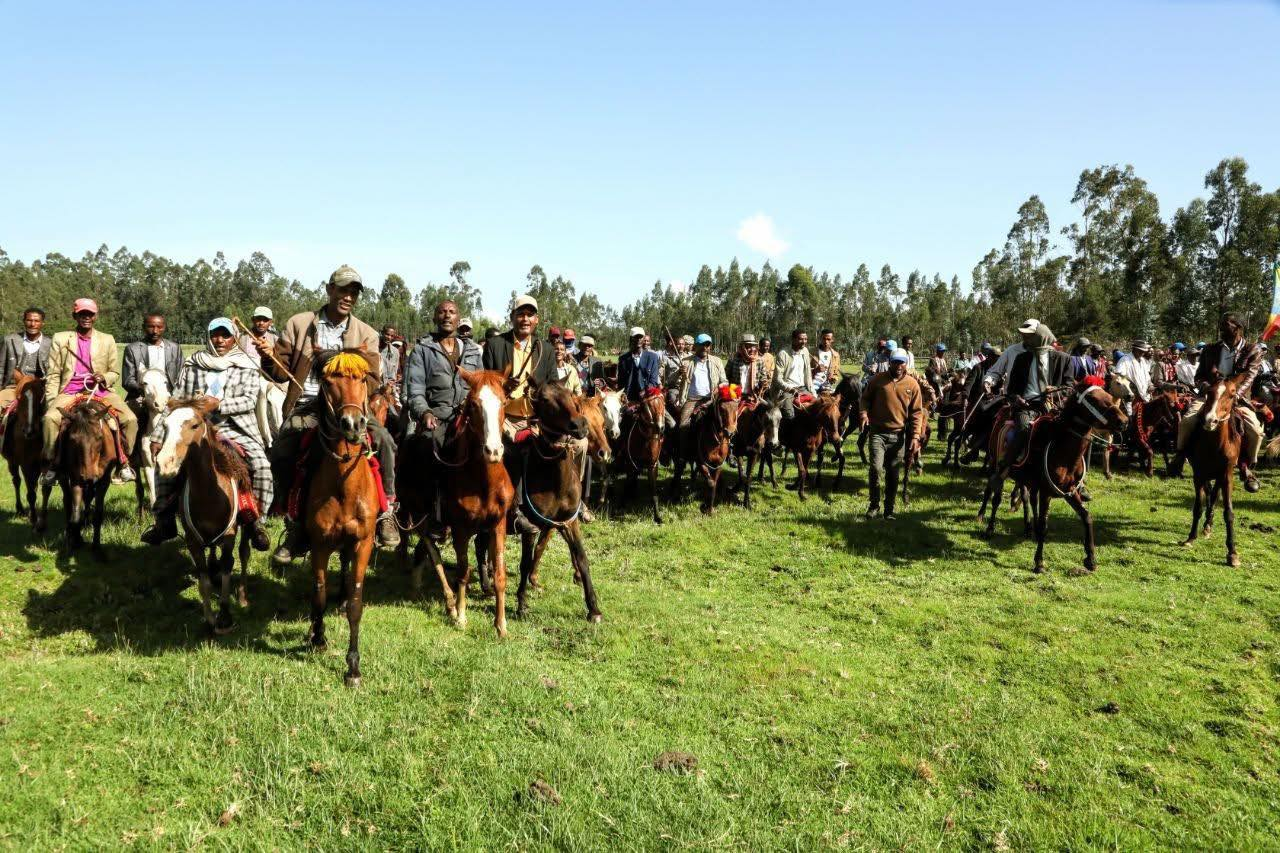
Conclusion: The Work Continues
Hailu Gonfa’s post, as reflected upon by Daandii Ragabaa, is not a victory lap. It is not a eulogy. It is a work report—a sober assessment of what has been achieved, what has been neglected, and what remains to be done.
The electoral process had shortcomings. Peace is fragile. Development is uneven. Unity is tested daily.
But the people of Dirree Incinnii have not despaired. They have gathered. They have spoken. They have understood one another with patience and heart.
And now, they build.
They build by helping one another. Not by destroying one another. Not by allowing the enemy to divide them. Not by forgetting that the warmth of culture and the dignity of honor are the only foundations upon which a nation can stand.
Biyya wal gargaarree ijaarru malee, biyya wal gargaarree diignu hin qabnu.
We build a country by helping one another. We do not have a country that we destroy by helping one another.
May that truth endure. May that work continue. May the people of Dirree Incinnii never forget what they already know.
Yoom? Maaltu? Eessetti? Akkamitti?
When? What? Where? How?
They know. And they build.
*Author’s Note on Attribution: The feature story is based on a social media post written by Hailu Gonfa. Daandii Ragabaa engaged with that post as a commentator, and the present reflection draws substantially from the ideas, themes, and framing originally articulated by Hailu Gonfa. This feature story is offered as a synthesis and expansion of that shared conversation, with full acknowledgment of the original source.
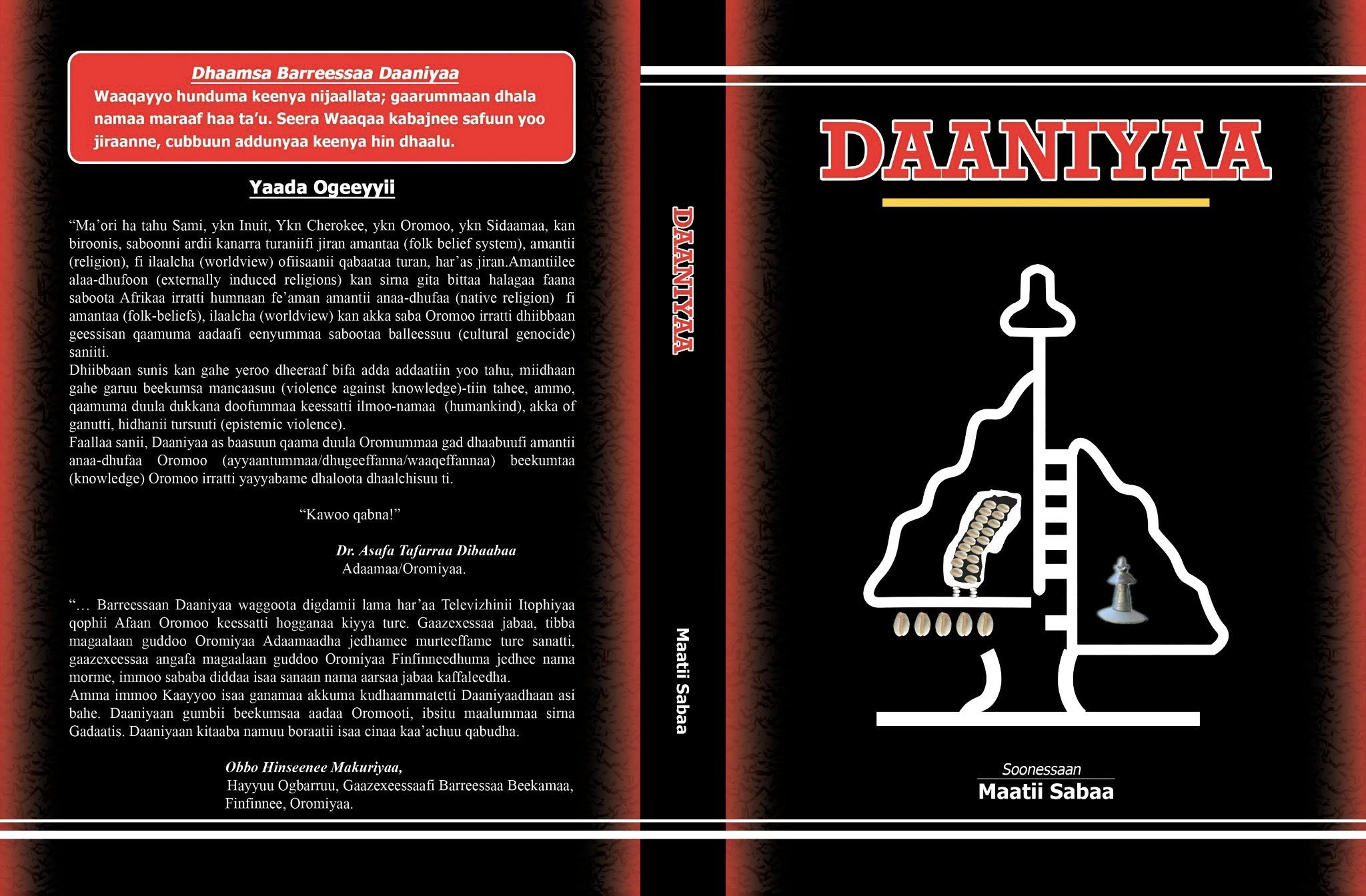
Daaniyaa – The Ancient Soul of Oromia, Now in Your Hands
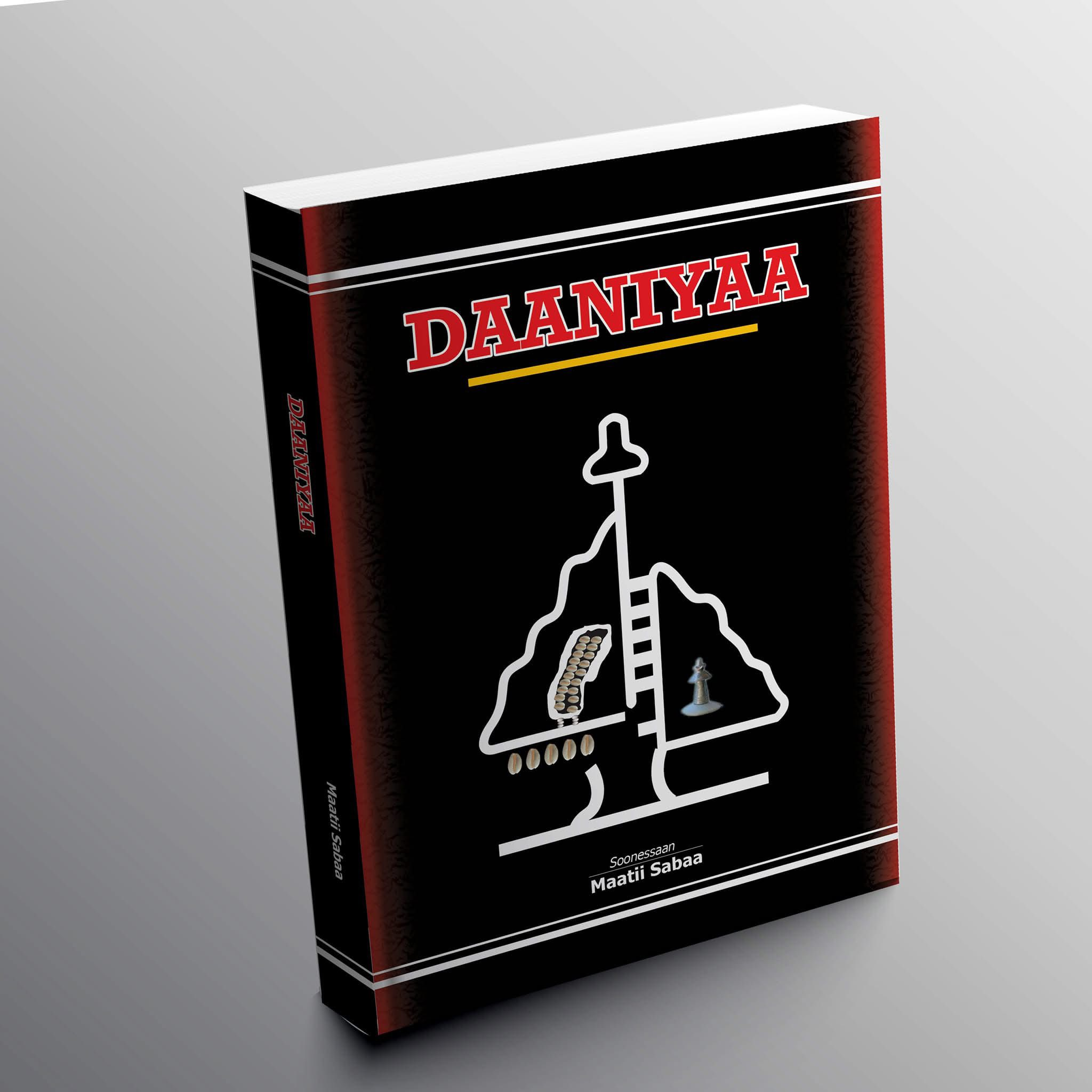
A sacred record of Oromo culture, religion, and identity finally available in hard copy at Elellee Bookstore in Finfinne
By: Daandii Ragabaa
FINFINNE – Every home has its treasures. For some, it is a photograph album. For others, a family heirloom passed down through generations. But for every Oromo family, there is now something more: #Daaniyaa.
This ancient collection – a vital record of Oromo culture, religion, and identity – has finally been released in hard copy. And it is available now at Elellee Bookstore in Finfinne (Addis Ababa).
“Everyone should have a copy of Daaniyaa in their home,” the announcement declares. “More than just a book to be read, it is a heritage to be cherished – a testament to who we are, to be valued as dearly as one’s own family.”
What Is Daaniyaa?
Daaniyaa is not a new book. It is an ancient collection – a compilation of Oromo knowledge, beliefs, practices, and identity that has survived through centuries of oral transmission, through eras of marginalization, through regimes that tried to erase everything Oromo.
It contains:
- Oromo religious traditions – the spiritual worldview of the Oromo people before and alongside external influences.
- Cultural practices – the customs, ceremonies, and social norms that have bound Oromo communities together for generations.
- Identity markers – the stories, genealogies, and historical memories that answer the question: Who are we?
For decades, access to Daaniyaa was limited. Copies were rare. Scholars fought over fragments. Ordinary Oromo families could only hear about it from elders or catch glimpses in academic libraries.
No longer.
More Than a Book – A Heritage
The announcement makes a powerful distinction: Daaniyaa is more than just a book to be read.
A book can be borrowed, returned, and forgotten. A heritage must be cherished – kept close, protected, passed down.
“It is a testament to who we are,” the announcement continues. “To be valued as dearly as one’s own family.”
This is not an exaggeration. For a people whose history has often been written by others – distorted, erased, or weaponized – possessing one’s own cultural record is an act of survival. Daaniyaa is not merely decorative. It is constitutive – part of what makes Oromia Oromia and Oromo Oromo.
The Hard Copy – Finally Available
The release of the hard copy of Daaniyaa is a significant moment. Digital versions have circulated, but there is something irreplaceable about a physical book – especially one of this cultural weight.
- A hard copy can be held. It can be passed from parent to child. It can be placed on a shelf where every visitor sees it. It can be marked, annotated, and treasured.
- A hard copy is permanent. It does not require electricity, internet, or a working device. It endures.
Elellee Bookstore in Finfinne now has Daaniyaa in stock.
How to Get Your Copy
For those who wish to bring this heritage into their homes, the process is simple:
- Location: Elellee Bookstore, Finfinne (Addis Ababa)
- Phone: +251 916 410 66
- Purpose: Call to check availability or to hold a copy for pickup
The announcement urges Oromo families not to delay. Demand is expected to be high.
“A must-have for your collection!”
Why Every Oromo Home Should Have Daaniyaa
Consider what it means to have Daaniyaa in one’s home:
- For children – It is a window into their ancestors’ world, a bridge to a past they might otherwise never know.
- For parents – It is a tool for teaching, a resource for answering the endless questions of curious young minds.
- For elders – It is validation – a confirmation that what they were told as children was not lost, not forgotten, not erased.
- For the diaspora – It is a tether to the homeland, a physical object that carries the weight of identity across oceans and generations.
In a world where Oromo youth are often surrounded by foreign media, foreign values, and foreign languages, Daaniyaa is a counterweight – a reminder that the Oromo have their own civilization, their own wisdom, their own way of being in the world.
A Call to Cherish
The announcement ends with a call that is both simple and profound:
“Everyone should have a copy of Daaniyaa in their home. This ancient collection is a vital record of Oromo culture, religion, and identity. More than just a book to be read, it is a heritage to be cherished – a testament to who we are, to be valued as dearly as one’s own family.”
There is no political slogan here. No protest chant. No anger.
There is only an invitation – to own, to read, to cherish, to pass down.
And for a people who have fought so hard simply to exist, that invitation is revolutionary.
Go Get Your Copy
The hard copy of Daaniyaa is in. It is waiting at Elellee Bookstore in Finfinne. A phone call away.
Do not wait for someone else to buy it for you. Do not assume it will always be available. Do not let another generation grow up without this heritage.
Pick up your phone. Dial +251 916 410 66. Ask for Daaniyaa.
And then, when you hold it in your hands, remember: this is not just a book. This is who you are.
| Item | Detail |
|---|---|
| Name: | Daaniyaa |
| Type: | Ancient collection of Oromo culture, religion, and identity |
| Format: | Hard copy (physical book) |
| Availability: | Now in stock |
| Location: | Elellee Bookstore, Finfinne (Addis Ababa) |
| Phone: | +251 916 410 66 |
| Purpose: | Call to check availability or hold a copy |
| Significance: | “A testament to who we are – to be valued as dearly as one’s own family” |
The Architect of “Land to the Tiller” Passes at 84
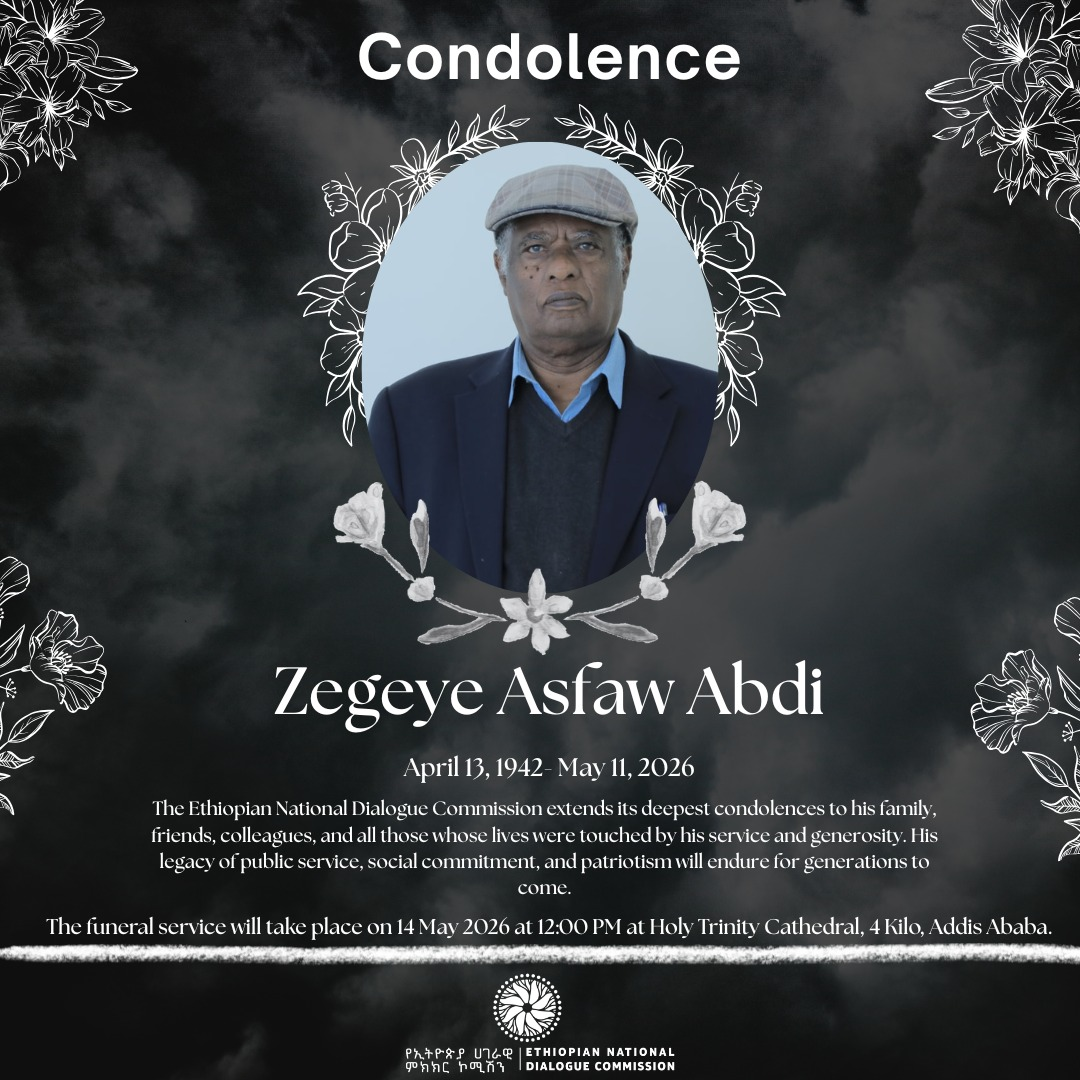
Subhead: Commissioner Zegeye Asfaw Abdi – lawyer, revolutionary, prisoner, minister, and servant of the people – leaves a nation in mourning
By: Daandii Ragabaa
Date: May 13, 2026
Dateline: ADDIS ABABA
LEAD PARAGRAPH
ADDIS ABABA – On May 11, 2026, Ethiopia lost one of its most consequential sons. Commissioner Zegeye Asfaw Abdi, the principal architect of the historic 1975 “Land to the Till er” proclamation, passed away at the age of 84. His death marks the end of an era – and the beginning of a long, collective reckoning with his extraordinary legacy.
Born in 1942 in West Shoa, Zegeye was a man of contradictions who resolved them through a lifetime of service. He was born into the nobility – a balabat, a member of the landowning class. Yet he dedicated his life to taking land from that class and giving it to the landless.
He was a lawyer trained at Haile Selassie I University and the University of Wisconsin–Madison. But his true classroom was the fields of Oromia, where he witnessed the daily humiliation of the gebar (serf) and the golle (tenant).
He was a minister under the Derg, a prisoner under the same regime, and later a minister again under the EPRDF. He served three radically different governments – but never wavered in his commitment to one principle: the land belongs to the tiller.
THE PROCLAMATION THAT CHANGED ETHIOPIA
Zegeye Asfaw will be remembered above all for his instrumental role in crafting the “Land to the Tiller” proclamation of 1975.
Before that proclamation, Ethiopia was a feudal society. In Oromia and the south, millions of farmers worked land they could never own. They paid tribute to landlords. They had no rights. They lived and died as serfs.
The 1975 proclamation changed everything. It transferred ownership from a tiny aristocracy to the millions who worked the soil. It broke feudalism’s backbone. And Zegeye Asfaw was the mastermind behind it.
He did not just sign it. He wrote it. He fought for it. And he paid for it – with ten years of imprisonment without trial, with exile from power, with decades of obscurity.
BEYOND PUBLIC OFFICE – A LIFE OF SERVICE
Zegeye served his country in several senior government positions during the Derg regime: the Ministry of Land Administration, the Ministry of Agriculture and Settlement, the Ministry of Justice, and the Ministry of Labour and Social Affairs.
But he was not a man who only served from the top down.
Through the local NGO Hunde, he worked tirelessly to combat poverty and improve the lives of vulnerable communities. He also founded Busa Gonfa, a microfinance institution focused on empowering rural women and expanding economic opportunities at the grassroots level.
He was equally committed to environmental protection, working closely with farmers and pastoralists on conservation initiatives and sustainable resource management.
THE FINAL CHAPTER – COMMISSIONER OF NATIONAL DIALOGUE
Since February 2021, Zegeye had served as a Commissioner of the Ethiopian National Dialogue Commission. He was in his late seventies when appointed – an age when most have long retired. But Zegeye served until his body would serve no more.
The National Dialogue Commission’s statement of condolence captures his character:
“Throughout his tenure, he distinguished himself through his integrity, diligence, humility, and unwavering commitment to the national dialogue process and the service of his country.”
He was, those who worked with him say, a man who could not be bought, could not be bent, and could not be silenced.
A DEATH THAT IS NOT AN END
Zegeye Asfaw is gone. But what remains?
- Every Ethiopian farmer who owns their land today – that is Zegeye.
- Every rural woman who has received a microfinance loan to start a business – that is Zegeye.
- Every tree planted by a pastoralist community learning sustainable land management – that is Zegeye.
- Every conversation at the National Dialogue Commission seeking common ground – that is Zegeye.
He is not erased. He is distributed – across the fields, the villages, the institutions he built, and the millions of lives he touched without ever meeting them.
FUNERAL ARRANGEMENTS
The funeral service will take place on May 14, 2026 at 12:00 PM at Holy Trinity Cathedral, 4 Kilo, Addis Ababa. He will be laid to rest among Ethiopia’s great patriots – a fitting resting place for a man who never sought honor but earned it in abundance.
A FINAL FAREWELL
The Ethiopian National Dialogue Commission extended its deepest condolences to his family, friends, colleagues, and all those whose lives were touched by his service and generosity.
We add our own:
“Go in peace. May your soul find rest and refreshment in paradise.”
The land you freed remains free. The people you lifted remain standing. And your name – spoken with gratitude by millions you never met – will not be erased.
Rest in power, Zegeye Asfaw Abdi (1942 – May 11, 2026).
| Quick Facts |
|---|
| Name: Commissioner Zegeye Asfaw Abdi |
| Born: 1942, West Shoa |
| Died: May 11, 2026 (age 84) |
| Education: Haile Selassie I University (Law), University of Wisconsin–Madison (Master’s in Law) |
| Key role: Architect of the 1975 “Land to the Tiller” proclamation |
| Government positions: Ministry of Land Administration, Ministry of Agriculture, Ministry of Justice, Ministry of Labour and Social Affairs |
| Post-government service: Founder of NGO Hunde; founder of microfinance institution Busa Gonfa |
| Final position: Commissioner, Ethiopian National Dialogue Commission (Feb 2021 – May 2026) |
| Funeral: May 14, 2026, 12:00 PM, Holy Trinity Cathedral, 4 Kilo, Addis Ababa |
The Life and Loss of Zagayyee Asfaw: An Oromo Champion
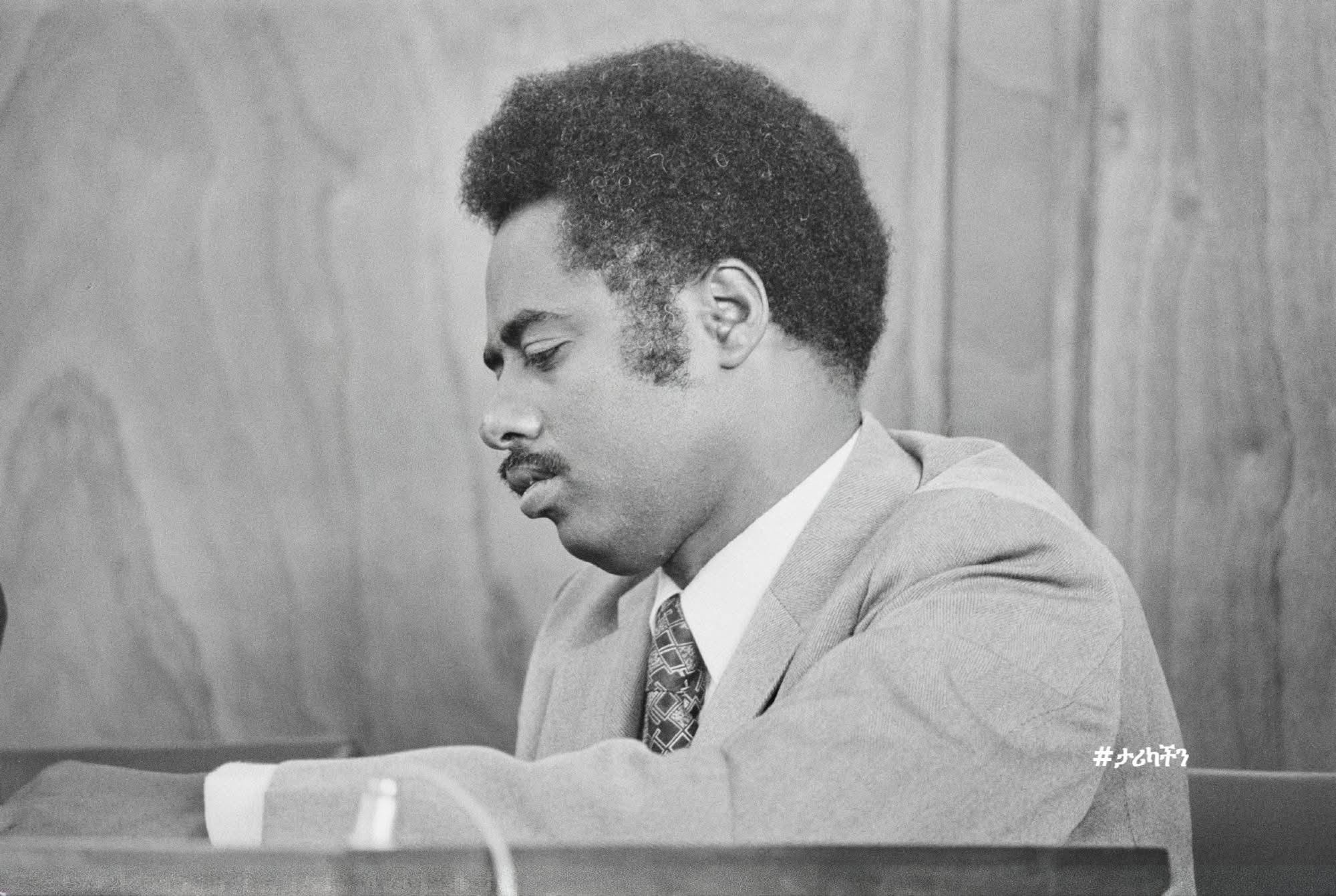
By Daandii Ragabaa
When death takes a public figure, the world writes obituaries filled with achievements, titles, and historical milestones. But when death takes a comrade—a person who shared your childhood dreams and your prison cell—no obituary is enough. Only grief, raw and honest, can speak.
Ibsaa Guutama has lost such a man.
Zagayyee Asfaw, the veteran Oromo leader, the champion of the “land for the tiller” struggle, and the man who authored Ethiopia’s 1975 Land Act, has passed away. Born in April 1942, he lived 84 years of intense political battle, sacrifice, and unwavering commitment to the Oromo people. But for Ibsaa Guutama, Zagayyee was never just a historical figure. He was the boy who sat beside him in class. He was the man who shared his shackles in the dark. He was, above all else, a comrade.
The Kokabe Tsibah Years
Long before the prisons and the politics, there was elementary school. Ibsaa and Zagayyee attended Kokabe Tsibah together—two young boys with no idea that history was waiting to test them. In those days, they learned their multiplication tables, chased each other during recess, and likely never imagined that their names would one day be whispered in underground cells and sung about in liberation anthems.
“Childhood love,” Ibsaa writes, “and the conditions through which we passed shall never be forgotten.”
It is a simple sentence, but it carries an ocean. Childhood friendships are pure because they are untouched by ideology. Zagayyee and Ibsaa did not become friends because of ethnicity or politics. They became friends because they were children. And that purity, Ibsaa insists, survives everything—even decades of war, exile, and loss.
The Maekelawi Bond
But childhood friendship alone does not forge the deepest bonds. Shared suffering does.
At some point in their revolutionary journeys, Ibsaa Guutama and Zagayyee Asfaw found themselves as cellmates in Maa’ikalaawii—the infamous Maekelawi prison in Addis Ababa. For those who know Ethiopian political history, the name alone conjures images of windowless cells, electric shocks, and the systematic breaking of bodies and spirits.
To be a cellmate in Maekelawi is not merely to share a room. It is to share terror. To watch each other be tortured. To whisper hope when hope seems absurd. To make promises to each other’s families if only one of you survives.
Zagayyee and Ibsaa survived. But they never forgot.
“They were not just brothers in ideology,” a comrade who knew both men once said. “They were brothers in blood. That prison leaves marks. And those who go through it together are bound forever.”
The Champion of Land for the Tiller
Beyond the personal loss, Ibsaa Guutama takes care to remind the world who Zagayyee Asfaw was—not just to him, but to history.
Zagayyee was the intellectual and political engine behind the “land for the tiller” struggle, a revolutionary concept that argued that the peasants who worked the land should own it. This idea, radical for its time, directly challenged the centuries-old feudal system in which a tiny imperial elite controlled vast territories while the majority of farmers lived as tenants or laborers.
When the Derg regime seized power in 1974 and issued the 1975 Land Proclamation, the fingerprints of Zagayyee’s philosophy were all over the document. The proclamation nationalized all rural land, abolished the feudal aristocracy, and granted usufruct rights to millions of peasants. For the Oromo people, who had been systematically stripped of their ancestral lands through decades of imperial expansion, it was a seismic shift.
Zagayyee Asfaw did not just witness history. He wrote it—literally.
A Big Loss, Simply Stated
Ibsaa Guutama is not a man given to excessive light. His tribute is short, direct, and devastating.
“For me,” he writes, “he is a big loss.”
There is no attempt to measure the loss in inches or pounds. It is simply big. It fills the room. It weighs on the chest. It is the kind of loss that words cannot shrink because words cannot make it smaller.
Ibsaa then extends his condolences across whatever distance may separate him from Zagayyee’s loved ones. He names them: Tsahay (Zagayyee’s wife), his children Asfawu, Meetii, and Fitih. And then, knowing that grief travels slowly in fragmented communities, he adds: “and all his relatives, friends and comrades if they could access this message.”
It is a poignant acknowledgment of reality. Not everyone will see this tribute. Not everyone will hear the news. But for those who do, Ibsaa wants them to know: you are not alone in your mourning.
What Remains Unsaid
In any friendship as deep as this one, the most important things are never written down. They are the silent understandings. The shared glances. The knowledge that someone else in the world remembers exactly how cold Maekelawi was on certain nights, or exactly what hope sounded like when it was whispered between swollen lips.
Ibsaa Guutama does not need to write those things. They live in him. And now, with Zagayyee gone, they live in him alone.
A Final Salute
Zagayyee Asfaw was born in April 1942. He died in 2026, having spent most of the intervening 84 years fighting for a simple idea: that the person who tills the land should not go hungry; that the person who builds the nation should not be a slave within it.
He was a veteran Oromo leader. He was a champion of the peasant. He was an author of transformative law.
But to Ibsaa Guutama, he was something more elementary, more profound, and more irreplaceable.
He was a friend. A cellmate. A comrade.
And now, a big loss.
Rest, Comrade Zagayyee. The land remembers. And so do those who shared your cell.
Zagayyee Asfaw (April 1942 – 2026)
Childhood friend. Cellmate. Comrade. Champion of the tiller.
May the earth be light upon you.
*This feature story is written by Daandii Ragabaa, based on the personal reflection of Ibsaa Guutama.
Hawaasa Oromoo Melbourne: Ayyaana Irreecha Arfaasaa
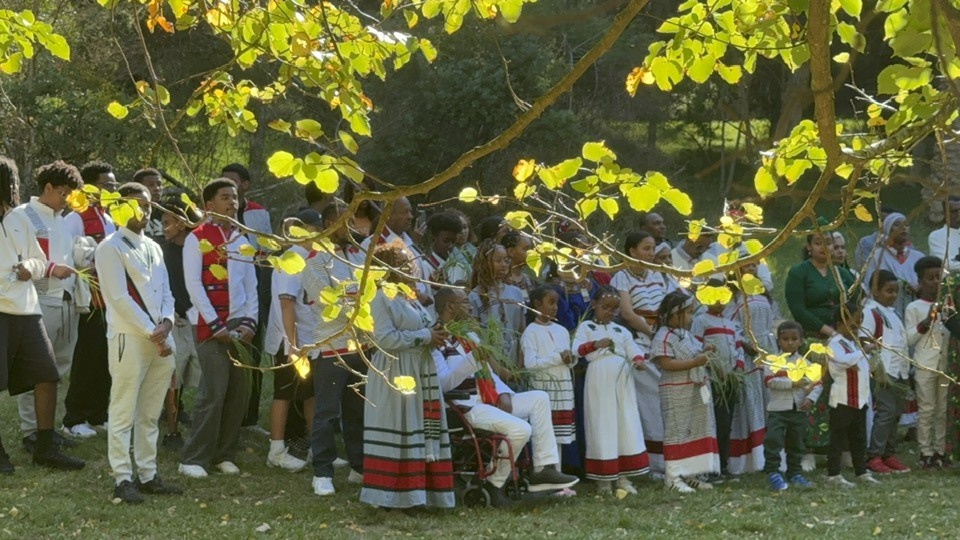
 Hawaasi Oromo Melbourne Irreecha Arfaasaa Miidhaginaan Kabaje – Waamicha Aadaa Damboobummaa fi Naamusa Lammummaa Jabeessuuf
MELBOURNE, Awustiraaliyaa – Hawaasi Oromo Melbourne ayyaana Irreecha Arfaasaa, kan galata fi fooyya’ii, Tulluu Dandenong irratti bifa hoo’aa fi miidhagaan kabajan.
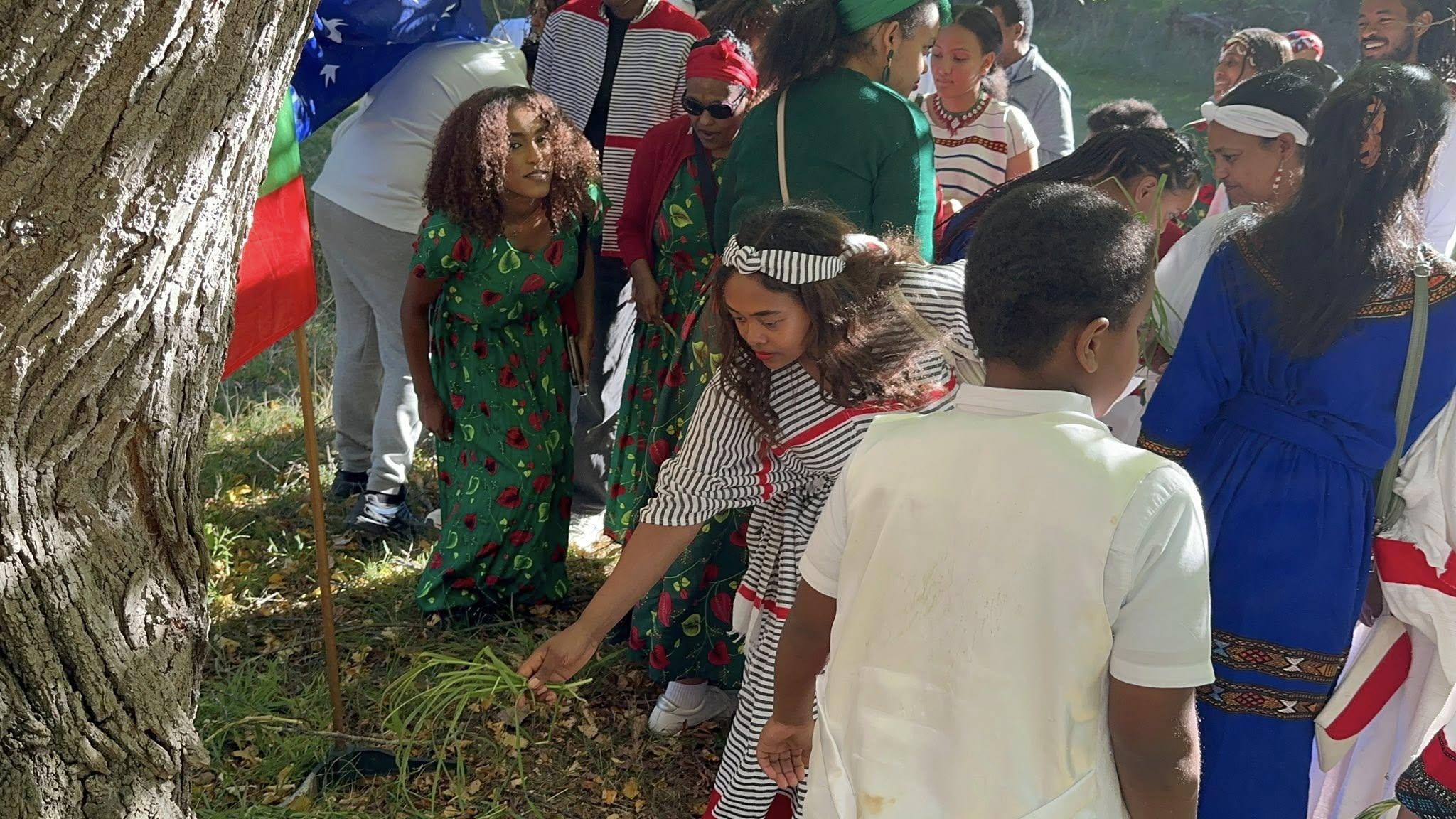
Ayyaanni kun akka aadaa Oromootti eebba maanguddotaan jalqabame. Uffannaa aadaa Oromoon faayamanii fi sirba, faarfannaa, fi sagalee baay’inaan hawaasi Oromoo Melbourne miidhagina aadaa Oromoo addunyaatti agarsiise.
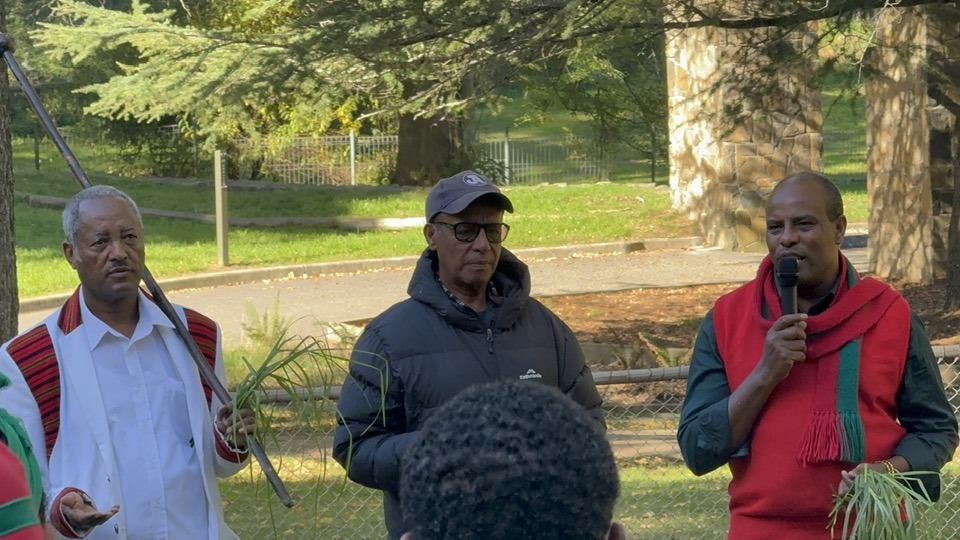
Garuu waggaa kana, ayyaanni kun gochaalee dhoksaa morman. Hirmaatonni ayyaanichaa gochaalee saamichaa, malaanmaltummaa, fi seer-dhalbummaa Oromoo gidduutti biqilaa jiraachuu isaa hubachiisuun hawaasti akka gochaa badaa san morman yaadachiisan.
Akka hawaasi Oromoo gochaalee ukkaamsaa fi saamichaa kana gogsuu fi aadaa damboobummaa, amantaa, fi naamusa lammummaa jabeessuuf akka hojjatan waamichi godhan.
Dubbiin Jaarsolii fi Hawaasaa:
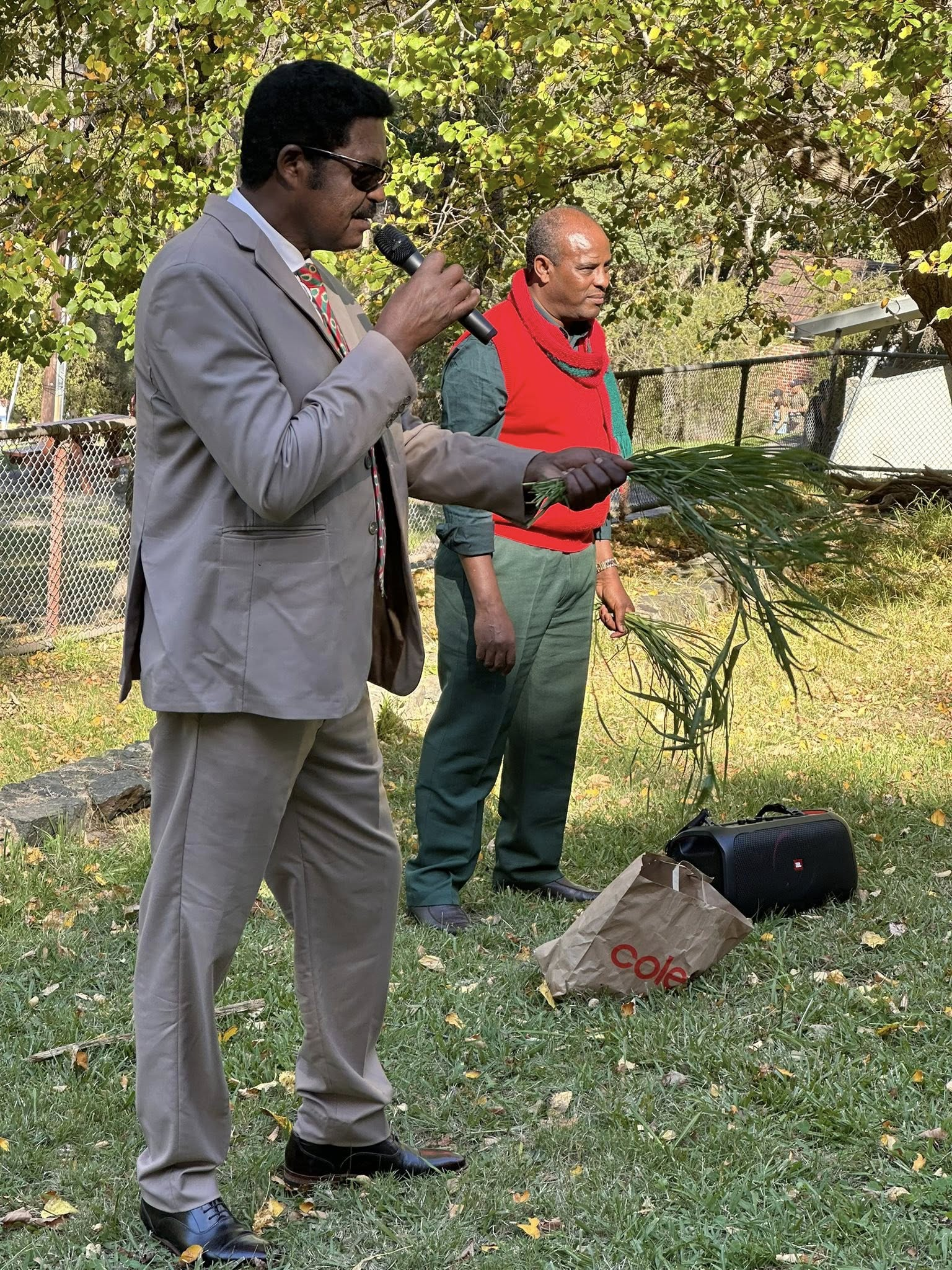
 Obbo Abdataa Homaa wayituma kana dubbii baga nagaan dhuftanii keessatti “Irreechi galata qofa miti; inni yaadachiisa hawaasa Oromoo aadaa isaanii, amantaa isaanii, fi kabaja isaanii deebisanii cimsachuu ti,” jedhan.
Itti dabaluunis, “Yeroo qabsooni Oromoo injifannoo siyaasaa goonfachaa jirutti, murnoota saamichaa, malaanmaltummaa, fi seer-dhalbummaan ummata hiraarsan arguun aadaa ta’uu hin malle. Damboobummaa jabeessuu qabna,” jedhaniiru.
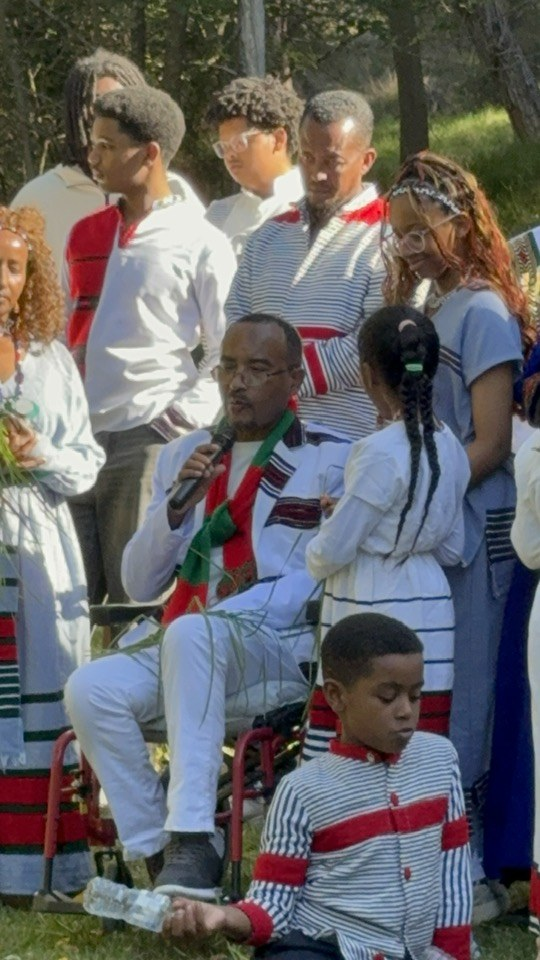
Obbo Dhaabasaa Waaqjiraas wyituma kana dubbii dubbatan keessatti aadaa Oromootti deebi’uun gochaalee fafaa maksuun akka barbaachisu himan.
“Gochaan ukkaamsaa fi saamichaa Oromoo keessatti yeroo ammaa kana mul’achaa jiru akka hin babal’anneef, aadaan damboobummaa fi naamusa lammummaa akka guddatu jabeessinuun akkaan barbaachisaa dha. Walgargaarri fi naatoon waliif qabaachuun bu’uura aadaa Oromooti – kana irratti akka jabaannu gorsa dabarsina.”
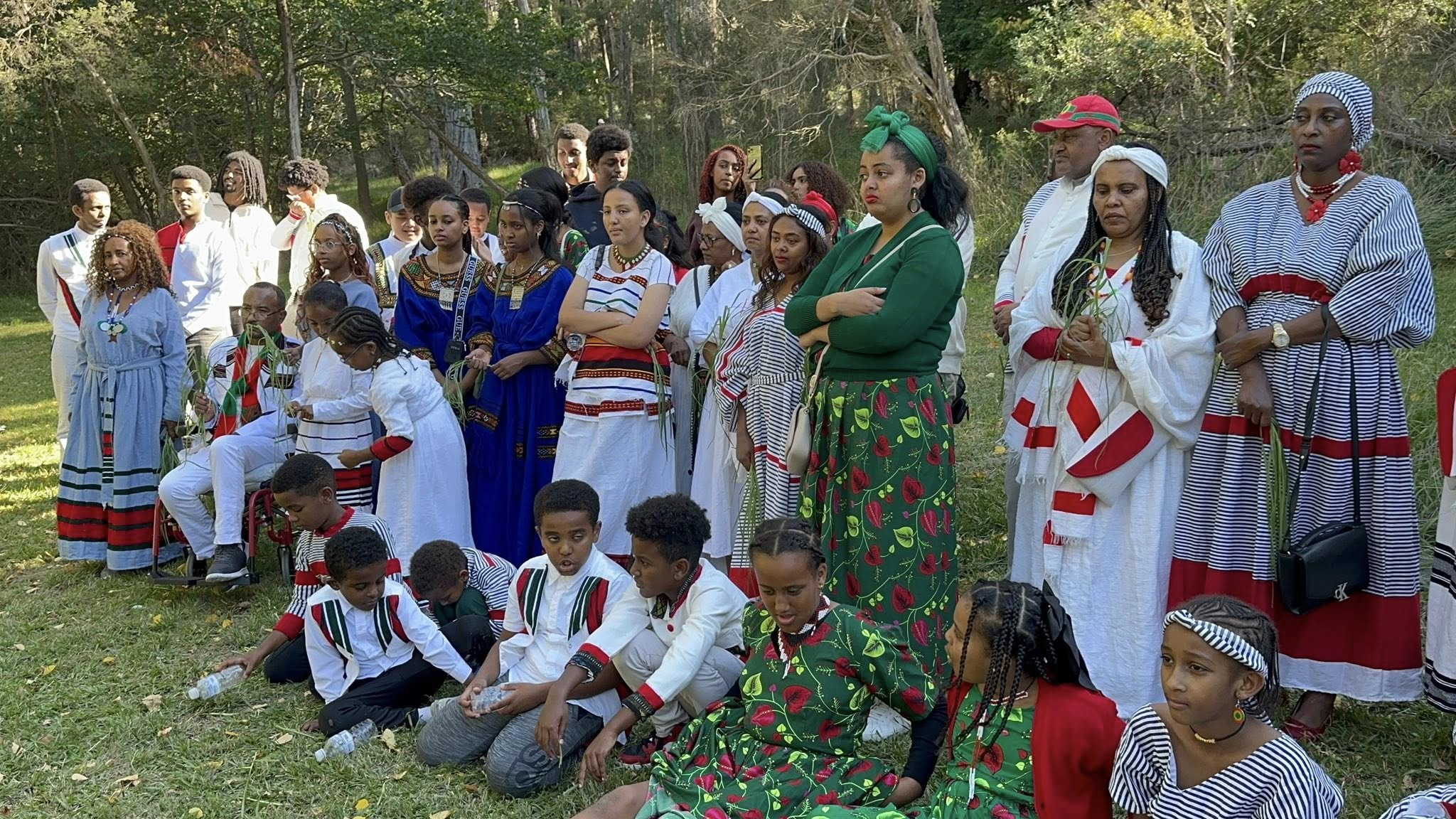
Miseensi hawaasaa, Ob Aliye Geleto, gama isaaniin Irreechaan guyyaa galata qofaa otuu hin taane, mallattoo eenyummaa Oromoo addatti beeksisu waan ta’eef jaalachuu fi kunuunsuun akka barbaachisu dhaaman.
“Irreechi identity dha. Waan Oromoo adda baasee beeksisuu dha. Waan Oromoon walitti qabuu dha. Waan Oromoon eeguu fi guddisuu qabu.”
Miseensi hawaasaa, Ad Lalisee Wadaajoos Irreechi aadaa jaalalaan guddifamuu qabu akka ta’e himan.
“Ergaan kun daa’imman keenyaaf fakkeenya ta’uu qaba. Aadaa keenya jaallanne, amala gaarii agarsiisuu qabna.”
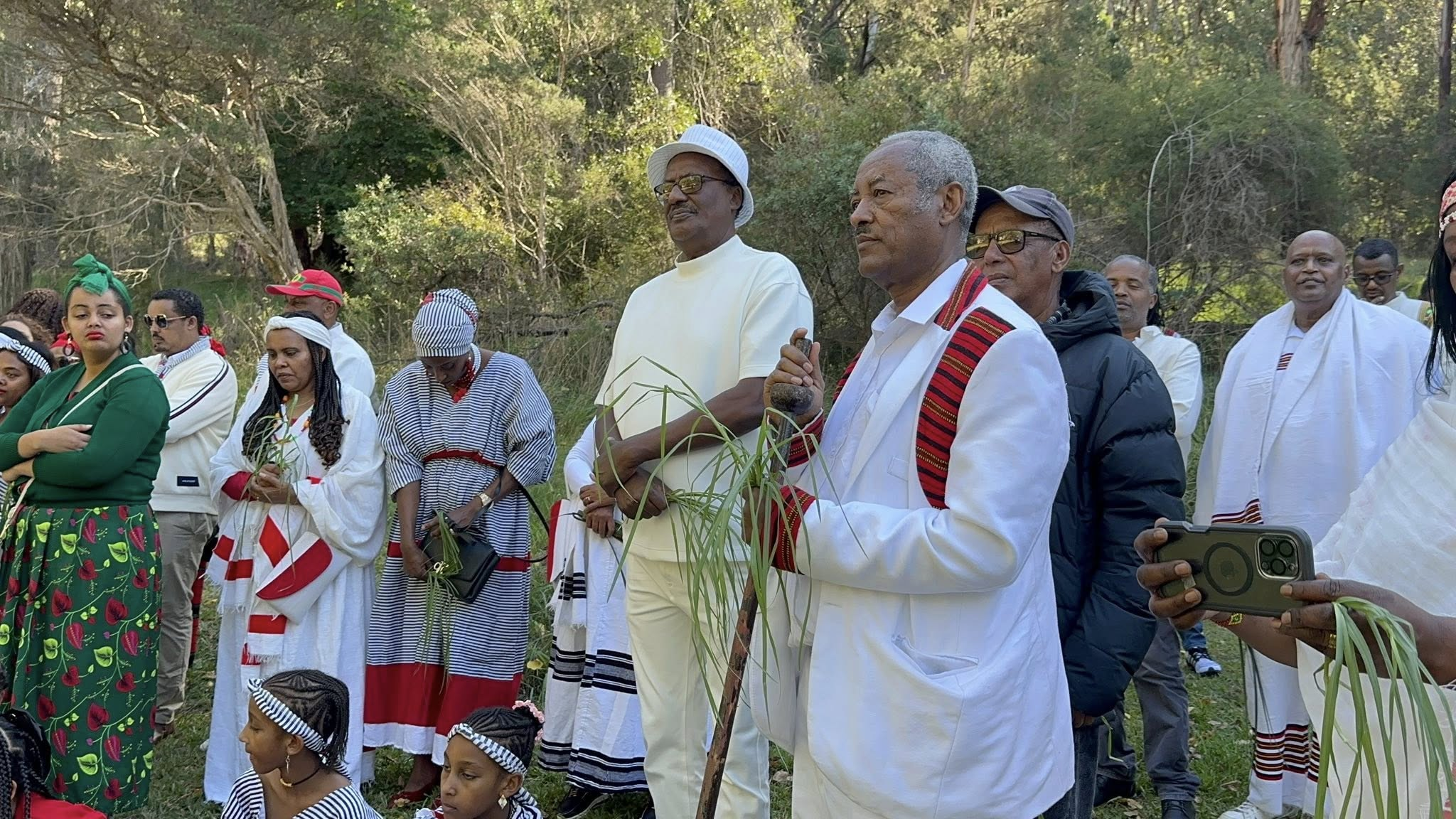
Waamicha dhuma irratti:
 Aadaa keenya kabaji – hattoomina fi soba didaa
Damboobummaa (amantaa aadaa) jabeessi
Naamusa Lammummaa (ulfina lammummaa) cimsi
Walgargaarri fi tokkummaa jabaatti
Naannoo keenya eegi – akka Irreechi nu barsiisu
Lakkaddaa: #IrreechaArfaasaa#MelbourneOromo#Damboobummaa#NaamusaLammummaa#OromoUnity#HawaasiOromo
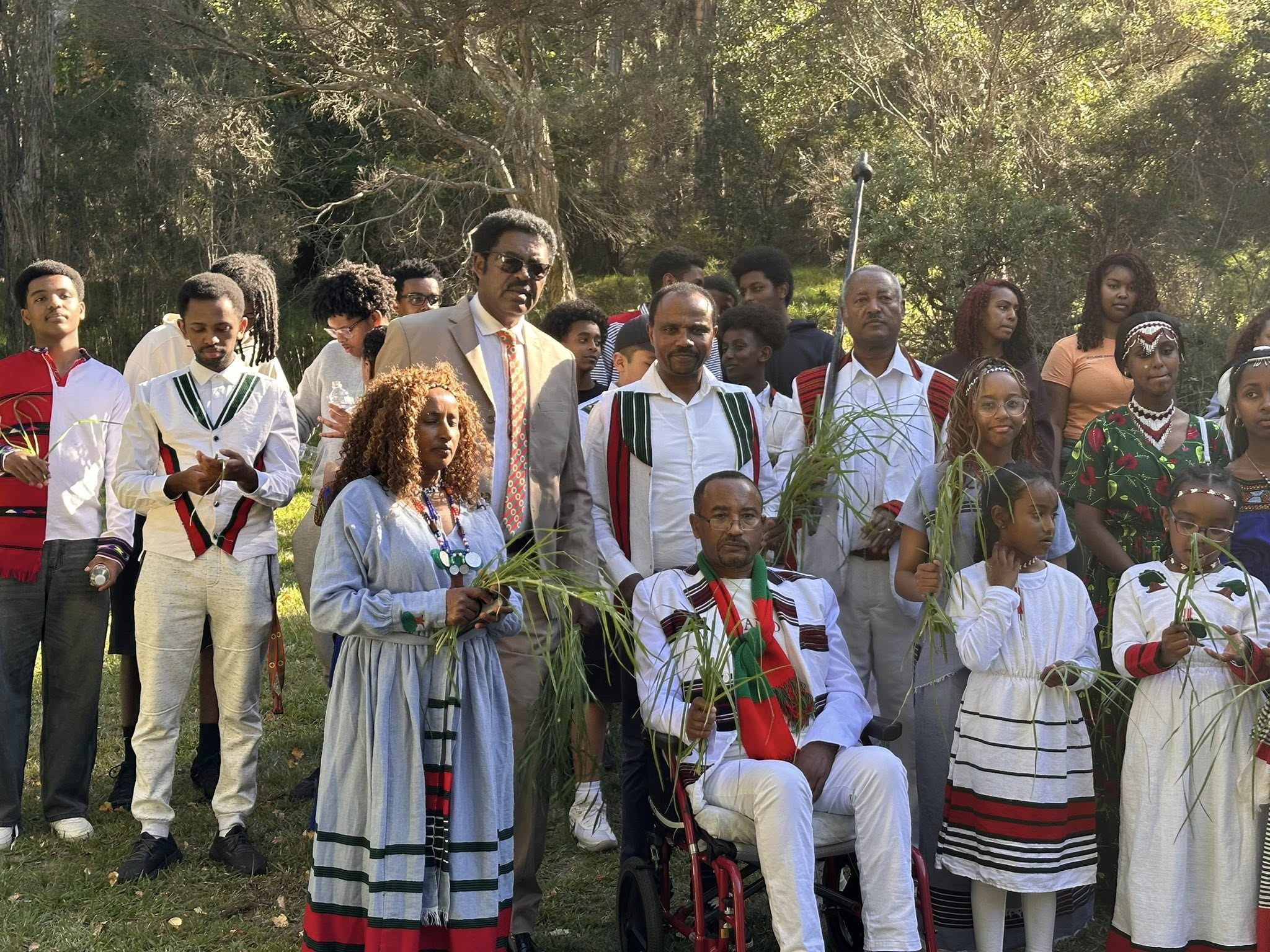
Oromo Heroes’ Day: Celebrating Identity in St. Paul
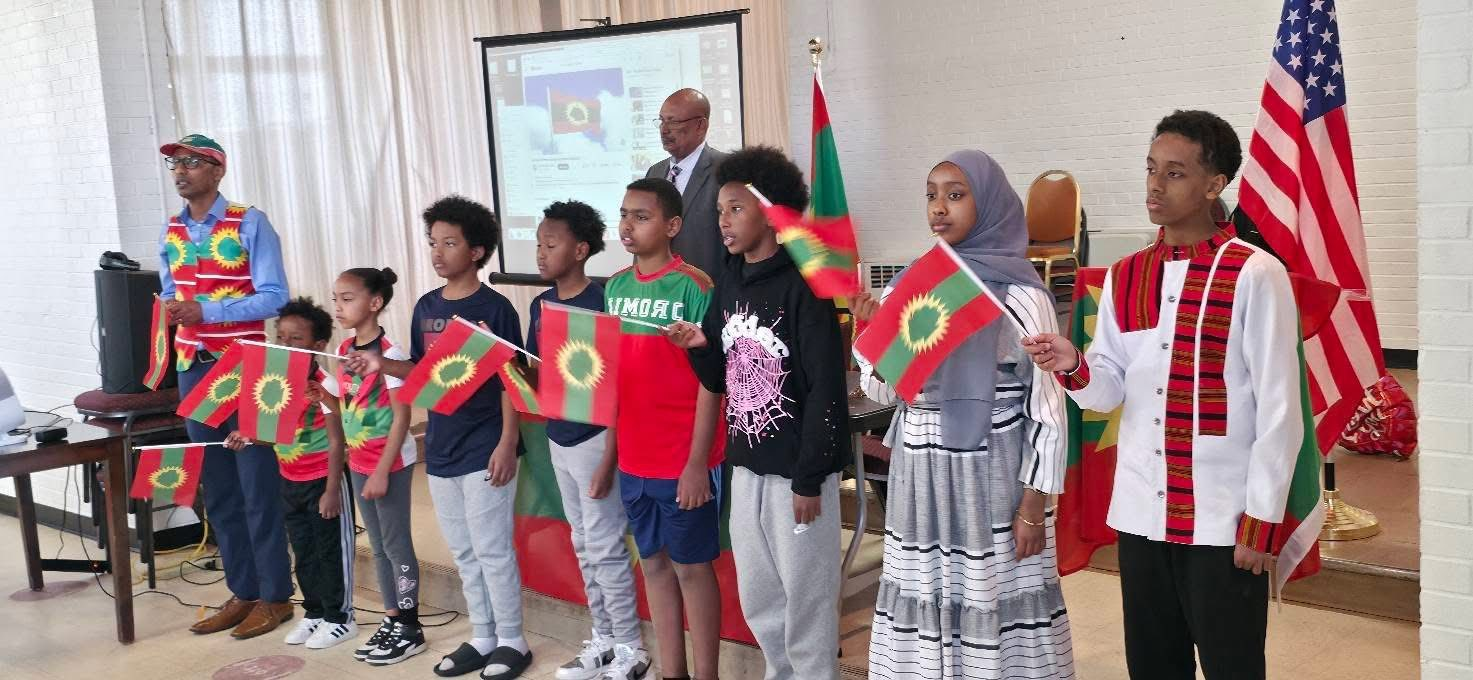
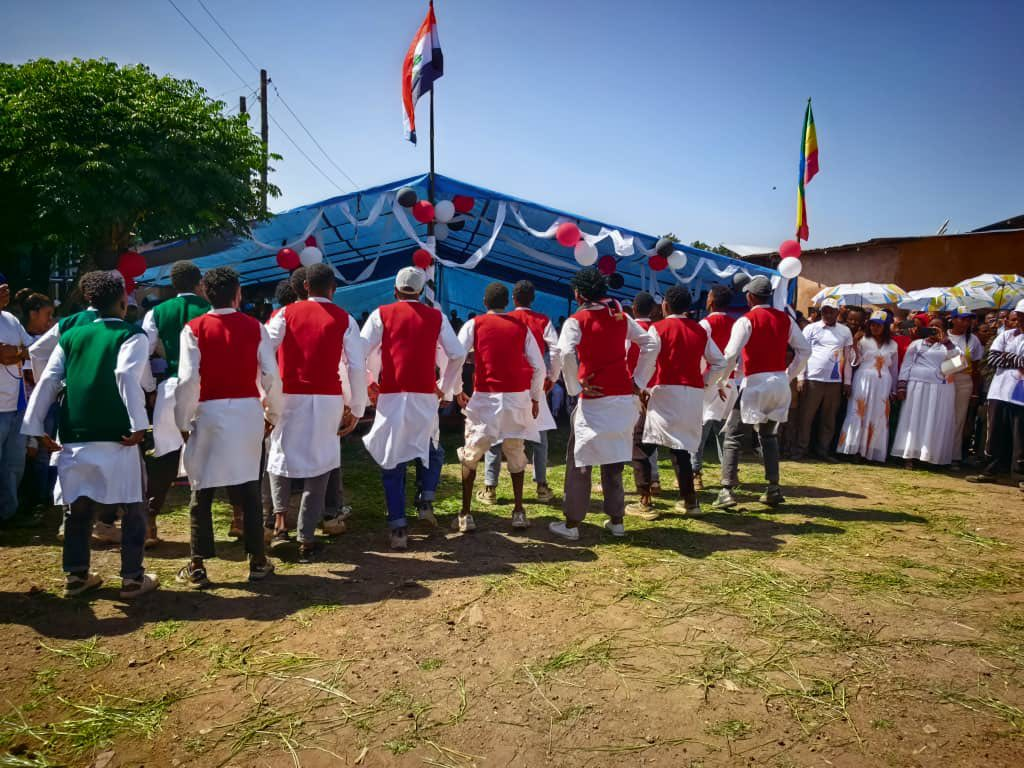
St. Paul, Minnesota — On a spring day in April 2026, the city of St. Paul became a distant but powerful outpost of Oromo heritage. Hundreds gathered under a canopy of the Oromo national flag for a “beautiful and warm” ceremony to mark Guyyaa Gootota Oromoo (Oromo Heroes’ Day), a global day of remembrance for those who sacrificed everything for the liberation of the Oromo people.
A Day of Remembrance and Cultural Pride
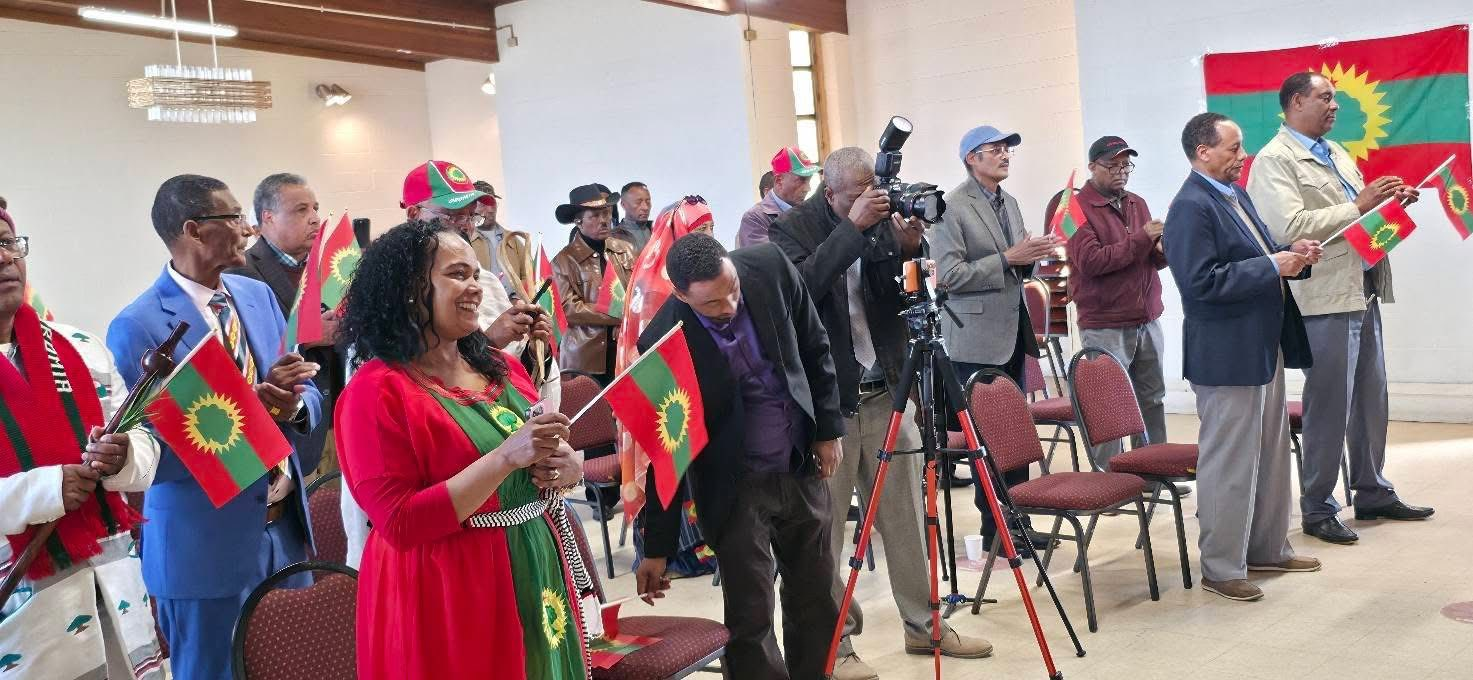
The ceremony was held in a hall adorned with Oromo cultural motifs, where attendees dressed in traditional attire like the iconic qooccoo scarf and callee garments, creating a space that was both deeply emotional and defiantly proud.
The centerpiece was the dungoo yaadannoo (“pillar of remembrance”), a memorial dedicated to fallen patriots. As a moment of silence was observed and the names of known martyrs were read, many wept openly, while parents held their children close, whispering in Afaan Oromo: “Isaan kun sababiin ati bilisaan jiraattu” (“They are the reason you live free”).
Voices from the Past and Present
The ceremony bridged generations through a series of powerful rituals and speeches:
· Elders’ Blessings: Custodians of Oromo tradition stepped forward to offer blessings, raising their hands to invoke Waaqa (God) to protect the Oromo people and grant paradise to the fallen martyrs.
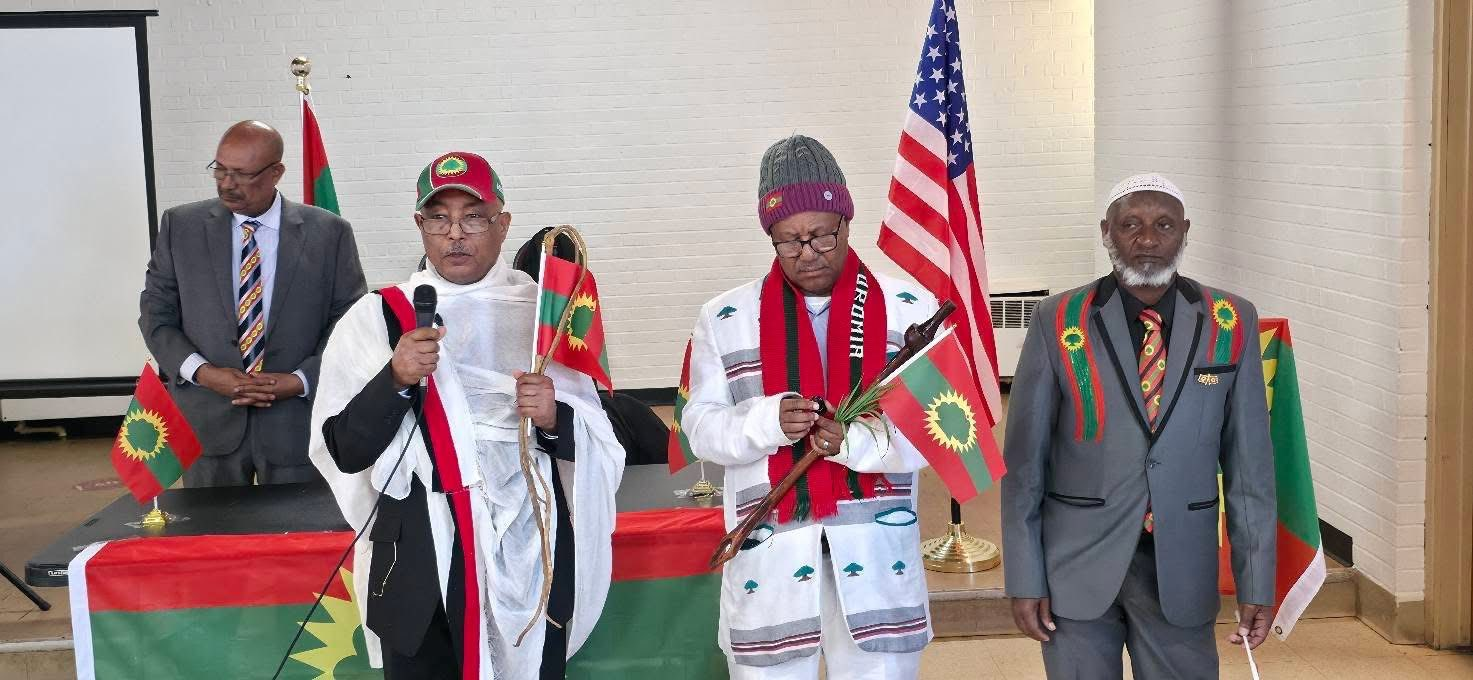
· Songs of Struggle: One of the most moving moments came when Oromo children, some as young as five, took the stage. Clutching small flags, they sang patriotic songs with voices that were both innocent and powerful.
· A Unified Message: Speakers traced a continuum of Oromo resistance—from the Gadaa system, through armed struggles, to the Qeerroo protests and up to the present day. A young activist born in Minnesota declared: “Ani Oromiyaa hin argine. Garuu onneen koo Oromiyaa keessa jiraata” (“I have never seen Oromia. But my heart lives in Oromia”), to which the crowd responded: “Qabsoo itti fufuu!” (“To continue the struggle!”).
The Flag as a Symbol of Identity
The Oromo flag was omnipresent. For decades, it was banned in Ethiopia—carrying it could lead to arrest or death. In St. Paul, it flew freely, with each color carrying deep meaning: red for the blood of martyrs, green for the fertile land of Oromia, and the yellow sun representing the Gadaa system’s justice. As one participant put it: “We are Oromo. We have a flag. We have a history. We have a future. And we will never abandon any of them.”
The Diaspora’s Role: Carrying the Struggle Forward
Minnesota is home to one of the largest Oromo populations in the United States, and the St. Paul event was a testament to the diaspora’s enduring commitment. For the community, GGO Day is not merely a ritual; it is a tool for preserving identity, building unity, and inspiring action.
The ceremony was ultimately described by participants as “haala miidhagaa fi hoo’aan kabajame”—conducted in a beautiful and warm manner. It was not a protest or a rally, but a celebration of survival and a declaration that the Oromo people remain proud and resilient. As the Oromo flag flew high in St. Paul, a message echoed from the diaspora to the homeland: the struggle lives on.
FILE MANDARA (QANYAA) (1873-1954): Gooticha Oromoo Du’a Booji’amuu Caalchise
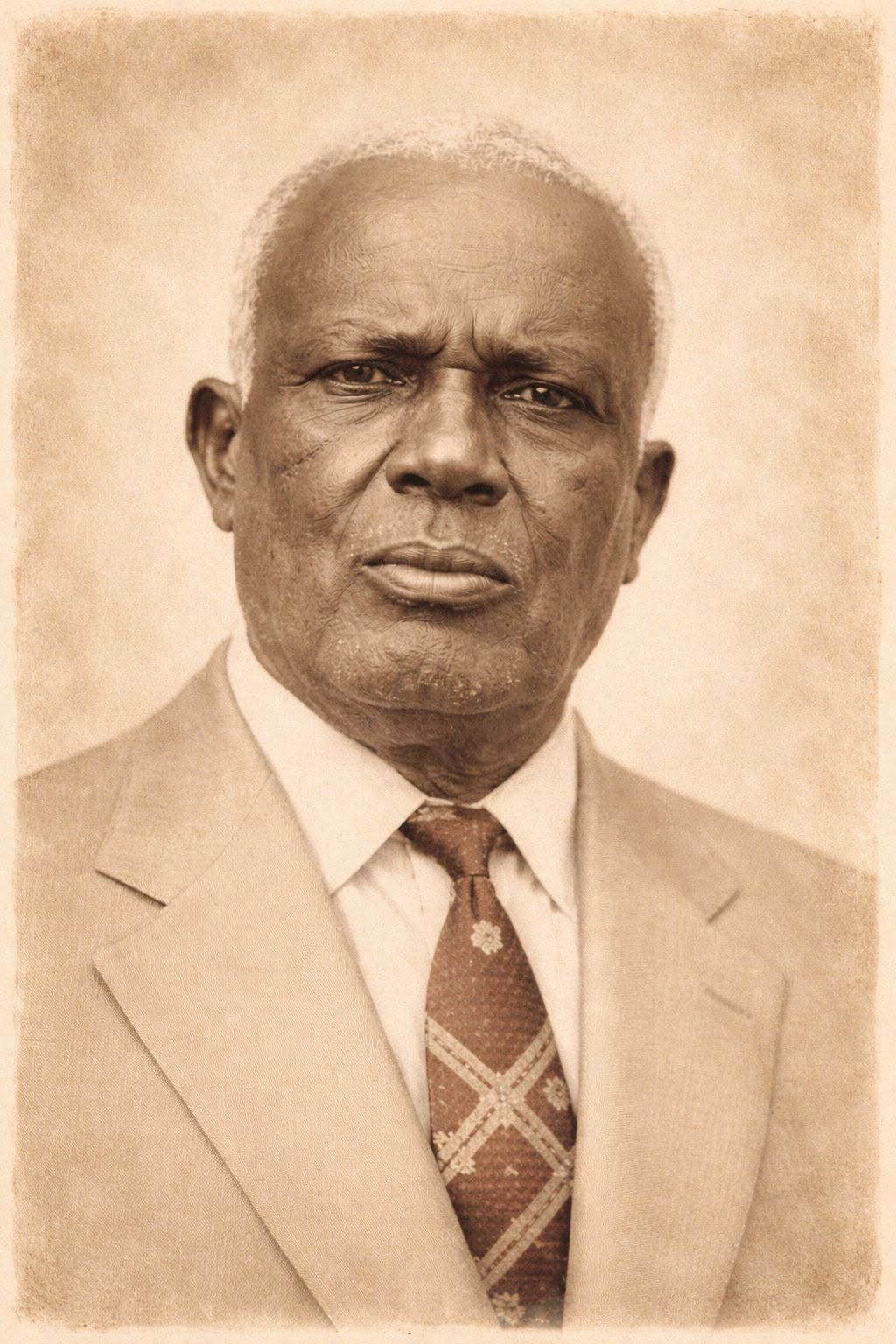
Abbaa lafaa, abbaa duulaa, fi jagna lola Xaaliyaanii irratti lubbuu isaa kenne.
Barreessaa: Seenaa Oromoo | Ebla 2026
SEENSA
File Mandara (Qanyaa) maqaa seenaa Oromoo keessatti kan hin duune. Inni goota, abbaa lafaa, fi abbaa duulaa ture. Bara 1873 Godina Horroo Guduruu Wallaggaatti dhalate. Yeroo lola Xaaliyaanii lammaffaa (1930s) keessatti, inni diina koloneeffattootaaf rooraa ta’e. Du’a booji’amuu caalchise.
Seenaan isaa har’a illee onneewwan Oromoo keessa jiraata.
GORAA 1: Dhaloota fi Ijoollummaa
File Mandara bara 1873, naannoo Laga Miixaa qarqaratti, Aanaa Guduruu keessatti dhalate.
| Maqaa Abbaa | Mandara Guddaa |
|---|---|
| Maqaa Harmee | Yaadatee Aliimaa |
Abbaan isaa Mandara Guddaa abbaa lafaa fi namicha kabajamaa ture. File ijoollummaa isaa irraa eegalee abbaa isaa hordofaa guddate. Akka ilma Oromoo tokkootti, seenaa, duudhaa, safuu, fi aadaa hawaasaa isaa barate.
GORAA 2: Warraa fi Maatii
File yeroo ga’eelaaf ga’e, akka aadaa Oromootti Warqituu Lamuu fuudhe. Isaan irraa ijoollee sadii (dhiira lama, durba tokko) horate.
Sababa abbaa lafaa ta’eef, dubartii lammaffaa fuudhe. Isaan irraa ijoollee lama (dhiira tokko, durba tokko) horate.
Waliigalaa, File abbaa ijoollee shani ture.
GORAA 3: Lola Xaaliyaanii Irratti Hirmaachuu
Bara 1928/29 A.L.I., koloneeffattoonni Xaaliyaanii weerara marsaa lammafaa biyya irratti labsan. File Mandara hin boqonne. Inni abbaa duulaa ta’ee bosona seenee diina mormuuf qophaa’e.
Lola isaa naannoo hedduutti gaggeesse:
| Iddoo | Gahee |
|---|---|
| Guduru | Qabsaa’aa |
| Amuru | Qabsaa’aa |
| Jaartee | Qabsaa’aa |
| Jaardagaa | Qabsaa’aa |
| Giddaa | Qabsaa’aa |
File diina booji’uu qofa osoo hin taane, meeshaalee waraanaa isaanii (qawwee, rasaasa, fi minishirii) baachisa ture. Kunis humna qabsoo isaaniif guddaa ture.
GORAA 4: Hiriyyaa isaa Lammaa Heenii
File Mandara hiriyyaa isaa Lammaa Heenii wajjin walitti dhiyeenya cimaa qaba ture. Lamaanuu gootota garaa guutuu turan. Bara lola keessatti, wal hin dhiisan. Waliin lolan. Waliin du’uu ga’an.
Seenaan isaan lamaanuu walitti fide.
GORAA 5: Lola Dannabaa – Guyyaa Gootummaa
Lola naannoo Jimma Raaree, Guduru Laga Dannabaa jedhamu keessatti gaggeeffame. Kun lola dirree kamittuu caalaa hamaa ture. Diinni Xaaliyaanii lafoofi qilleensaa irraa deeggarsa waraanaa godhee ture.
Haala Lola
File fi Lammaa waliin lolan. Diinni isaan marse. Rasaasaan isaanii fixe. Isaan lamaanuu hubatan: amma diina afaan bu’aniiru.
Loltuun diinaa tokko – matiriyeesii fi qawwee qabaate – gara Filee fiigee dhufe. Inni File booji’uu barbaade.
Filannaa Gootichaa
File booji’amuu hin fedhe. Du’uun isaaf filatama ture.
Obbo Lammaan Heenii rasaasa isa hafte jirtu tokko fudhate. Matiriyeesii diinaa adda keessa dhahe. Awwaara fi ibiddi diina nyaate. Qanyaa Fileen matiriyeesii fi rasaasa hedduu diina irraa booji’e.
Ergasiis, loltoonni isaa diina camaranii harca’an.
“File du’a booji’amuu caalchise. Kun gootummaadha.”
GORAA 6: Faarsa Gootichaa
Lola booda, loltoonni File jiraatan, dhiirummaa inni agarsiise faarsan.
Jechuunis:
“Daggalli dhidhiqatte. Mosoloonii guggubatte. Garuu File hin boqonne. Inni qawwee diinaa qabatee isaanitti deebise.”
Lola Dannabaa guyyaa File Mandara gootummaan isaa ifa ta’e.
GORAA 7: Du’a fi Awwaala
File Mandara lola kana keessatti du’e. Guyyaa du’aa isaa guutummaatti hin beekamu. Garuu awwaalchi isaa Fulbaana 1, 1955 (A.L.I.) gaggeeffame.
Sirni awwaalchaa bakka firoonni isaa itti filatanitti, haala gootaaf maluun gaggeeffame. Kunis kabaja guddaa ta’e.
GORAA 8: Seenaan Oral History Keessatti
Waanti File Mandara adda ta’e isa kana: seenaan isaa kitaabota mootummaa keessatti hin barreessamne. Garuu seenaa afaanii (oral history) keessatti, onneewwan Oromoo keessatti jiraata.
Abbootiin Oromoo seenaa kana daa’immaniif dabarsaniiru. Sababiin isaa: File Oromummaa isaaf du’e. Inni lola koloneeffattoota Xaaliyaanii qofa osoo hin taane, lola namoota Oromiyaa qopheessan hunda morme.
GORAA 9: File Mandara Maal Nuuf Barsise?
| Barsiisa | Hiikkaa |
|---|---|
| Lafti kee duultuuf | Abbaa lafaa ta’uun dirqama qaba |
| Diinni yoo dhufe, hin boqonnina | Ofirraa eegamtuu qaba |
| Booji’amuuf du’a filadhu | Kabajaan waan hundaa caala |
| Hiriyyaa kee hin dhiisina | Lammaa wajjin lole |
| Meeshaa diinaa qabadhu | Isaanumatti deebisi |
File Mandara akka agarsiise: lubbuun qabeenya miti. Kabajaan qabeenya dha.
GORAA 10: Yeroo Amma – File Mandara Har’a
Bara 2026, yeroo Oromoon kunuunsa isaanii argachuuf qabsoo itti fufu, File Mandara fakkeenya.
Inni nu yaadachiisa:
- Qabsoon Oromoo har’a jalqabuu miti
- Dhiigni gootota durii dhangala’eera
- Du’a isaanii akka waan taphatti ilaaluu hin qabnu
- Qabsoon isaan jalqaban nuun xumuruu qaba
“Isaan du’a booji’amuu caalchisan. Nu maal caalchifna?”
XUMURA: Maqaan Jiraata
File Mandara (Qanyaa) bara 1873 dhalate. Bara 1930s keessatti du’e. Garuu maqaan isaa har’a illee jiraata.
Inni lola keessatti hin boqonne.
Inni booji’amuu hin fedhe.
Inni diina isaa wajjin du’uu caalchise.
Inni goota Oromoo.
Awwaalchi isaa fulbaana 1, 1955 gaggeeffame. Isaan firoonni isaa awwaalan. Isaan waliin jechuu danda’an:
“Yeroo lola, abbaan lafaa fi abbaan duulaa ture. Yeroo nagaa, fakkeenya nuuf hafe.”
Har’a, yeroo Oromoon qabsoo bilisummaa isaanii itti fufu, hafuura File Mandaraa nu wajjin jira. Sababiin isaa: inni waan nuti har’a goonuuf du’e.
Inni du’a booji’amuu caalchise. Nu maal caalchifna?
YAADANNOO XUMURA
File Mandara (Qanyaa) – ati abbaa lafaa, abbaa duulaa, fi goota Oromoo.
Ati booji’amuu hin fedhe. Du’a filatte.
Ati diina kee morme. Lafti kee eegde.
Maqaan kee hin du’u. Qabsoo kee hin darbe.
Nu, warri booda dhufne, si galateeffanna.“Fileen du’a booji’amuu caalchise. Kun jechuun: inni diina isaa sodaachise. Inni maqaa isaaf du’e. Inni Oromummaaf du’e.”
Waaqni goota kana haa rahmate.
Seenaan isaa haa jiraatu.
Qabsoon Oromoo galmaan haa gahu.
© 2026 – Gabaasni Seenaa Gooticha Oromoo File Mandara (Qanyaa)
 Oromedia