Liberal Party in Turmoil: Angus Taylor Elected Opposition Leader as Susan Lee Announces Retirement from Politics

By Hayyuu Oromia
Feature News
In a stunning political realignment that has sent shockwaves through Australia’s political landscape, Angus Taylor has been elected as the new leader of the Liberal Party and Opposition, decisively defeating Susan Lee in a 34–17 vote of the Liberal Party room. The result, which hands Taylor a commanding 17-vote margin, marks the first time in the Liberal Party’s history that a woman leader has been ousted and effectively compelled to exit public life altogether.
Ms Lee, who made history as the first female leader of the federal Liberal Party, has announced she will tender her resignation to the Speaker and retire from Parliament entirely—bringing a definitive close to a political career that once held the promise of breaking the nation’s highest glass ceiling.
The Numbers That Shifted
According to sources within the party room who spoke to SBS News on condition of anonymity, Taylor secured 37 votes from the 51-member Liberal Party room—a commanding majority that reflected not merely his own support base but a significant cross-over of former Lee loyalists.
“Some of Susan’s own people crossed the floor in that room,” one senior Liberal source said. “That’s what made the margin so devastating. It wasn’t just that Angus won. It was that her own tent had holes she hadn’t seen coming.”
The 34–17 count among voting members represented not merely a defeat but a collapse. For a sitting leader—particularly one who had broken historical ground—to lose by such a margin signaled deep fractures that had been concealed beneath public displays of unity.
‘I Don’t Know What Comes Next’
Emerging from the party room, Ms Lee appeared composed but visibly somber as she addressed waiting journalists. Her statement was brief, personal, and delivered with the restraint of a politician accustomed to public composure—yet carrying undertones of finality.
“I will be tendering my resignation letter to the Speaker,” she said. “I don’t know what comes next. I intend to spend time with my family—to withdraw entirely from public life.”
There was no pledge to contest again. No hint of a return. No fight for redemption. In a matter of sentences, Australia’s most senior female Liberal parliamentarian signaled the quiet close of a chapter that many had hoped would span years.
Colleagues who spoke with her afterward described a woman at peace with her decision, if not the circumstances that precipitated it.
“She wasn’t angry,” one longtime ally said. “She was tired. There’s a difference between being defeated and being done. Susan was done.”
Taylor’s Challenge: Unity Without Concession
For Angus Taylor, the victory presents both opportunity and immediate pressure. Assuming the leadership of a divided party room requires more than numbers; it demands the ability to heal wounds he did not create but from which he has now benefited.
Taylor’s supporters characterize him as a seasoned economic manager with the gravitas to hold the government to account. His detractors—including some who voted for him—wonder whether the manner of his ascension will haunt his early tenure.
“He didn’t just win. He won because Susan’s people abandoned her,” a Liberal moderate said. “That creates expectations. It creates resentments. And it creates questions about what promises were made behind closed doors.”
Taylor himself has not commented on the internal dynamics of the vote, issuing a brief statement thanking his colleagues and paying tribute to Ms Lee’s “historic leadership and dedicated service to the party and the nation.”
The First Woman Curse?
Ms Lee’s departure renews uncomfortable questions within the Liberal Party about its relationship with women leaders—and the political price they appear to pay for occupying the role.
She is the third woman to lead the federal Liberal partyroom, following the tenures of Julie Bishop, who never led the party to an election and was deposed before contesting one, and Tony Abbott’s single term. But Lee’s case is distinct: she was elected leader, contested an election, and was removed before she could lead the party to a second.
“She did what she was asked to do,” a former staffer reflected. “She stabilised the party. She made them competitive again. And this is how it ends—not with a loss at the ballot box, but with her own colleagues deciding they’d seen enough.”
The contrast with Labor’s treatment of female leaders—Julia Gillard was removed by her party, but contested again and remained in Parliament—has not gone unnoticed. Lee’s immediate and total exit suggests a rupture beyond ordinary leadership defeat.
What Remains
Ms Lee’s departure leaves a vacuum not only in the Liberal Party’s leadership but in its parliamentary ranks. Her seat, considered reasonably safe, will trigger a closely watched by-election that will serve as an early referendum on the Taylor leadership and the government’s standing.
For the Liberal Party, the challenge is immediate: present a coherent alternative to a government seeking re-election, while managing the fallout of removing—and effectively retiring—a leader who broke barriers but could not hold her ground.
For Ms Lee, the future is deliberately undefined. “I don’t know what comes next,” she said. For a woman who spent decades knowing exactly what came next—policy briefings, media appearances, late sittings, electorate events—that uncertainty is itself a form of liberation.
Whether it is also a loss—for her party, for women in politics, for the institution of Parliament itself—will be debated long after she has cleared her office and returned to the private life she has briefly, poignantly claimed as her next act.
Ethiopia’s Strategic Crossroads: When Criticism Blurs the Line Between Government and Nation
By Maatii Sabaa
Feature News
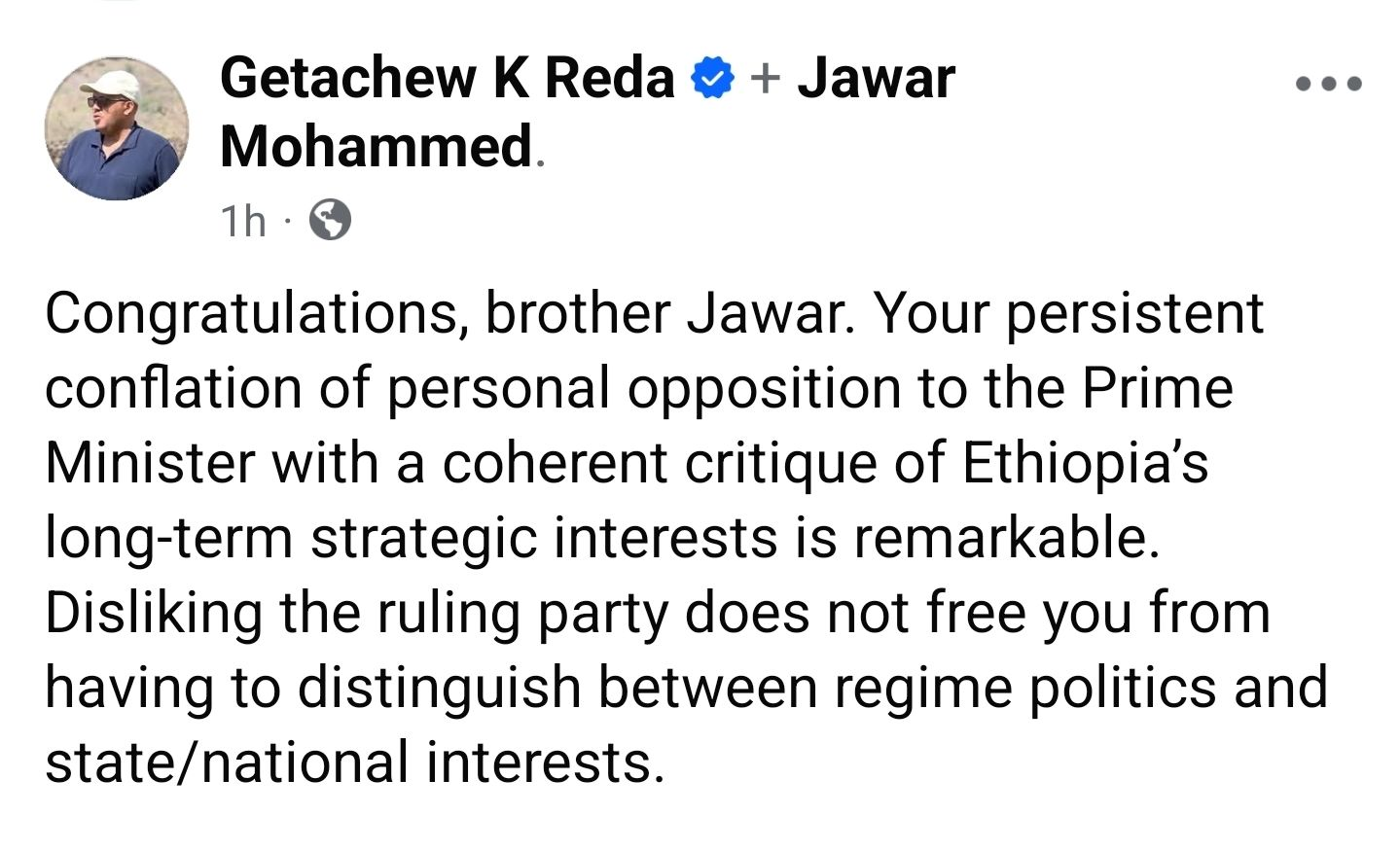
In the high-stakes arena of the Horn of Africa, where geopolitics shifts like tectonic plates beneath ancient soils, a troubling pattern has emerged in Ethiopia’s opposition discourse—one that increasingly conflates personal grievances against a sitting prime minister with the nation’s enduring strategic interests.
Over the past several days, Jawar Mohammed, once a close ally of Prime Minister Abiy Ahmed and now one of his most prominent critics, has launched a series of attacks against Ethiopia’s posture toward the deepening crisis in neighboring Sudan. His criticism, while occasionally resting on isolated facts, appears to systematically strip those facts of their broader strategic context—reducing complex national security calculations to evidence of government incompetence or malice.
The distinction being lost, critics argue, is one upon which stable democracies are built: the difference between the party in power and the state itself.
Facts Without Context: The Strategic Vacuum
Some of the reports circulated by Mohammed and his associates may be factually accurate in their narrowest sense. Ethiopia has indeed sought to protect its strategic interests amid Sudan’s collapse. It has engaged with actors on the ground. It has not adopted the posture of a passive observer.
Yet to present these moves as evidence of strategic folly—without reference to the regional power competition, Ethiopia’s existential stake in Sudanese stability, or the active interventions of other external actors—is to substitute selective outrage for sober analysis.
“The tragedy unfolding in Sudan is indeed exacerbated by foreign intervention,” one regional analyst noted, speaking on condition of anonymity. “But Ethiopia is hardly unique in pursuing its interests. What’s unique is Ethiopia’s vulnerability.”
No country in the region, and perhaps few beyond it, stands to lose more from a permanently destabilized Sudan. Ethiopia shares a 744-kilometer border with its northern neighbor. It hosts hundreds of thousands of Sudanese refugees. Its access to critical trade routes, its management of transboundary water resources, and its exposure to cross-border armed group proliferation are all directly implicated in Sudan’s trajectory.
Egypt and other regional actors are not neutral mediators. They have been actively shaping the conflict’s trajectory to favor preferred belligerents. To suggest that Ethiopia should operate as though this were not the case—or that acknowledging these realities somehow constitutes aggression—reflects what one foreign policy specialist described as “an aversion to the very language of national security.”
The Luxury of Abstraction
Mohammed positions himself as a politician-activist, a hybrid role that in theory could bridge grassroots mobilization and high-level policy engagement. But his recent posture suggests discomfort with the hard currency of statecraft: strategic interest, national security, geopolitical positioning.
In the Horn of Africa—a region defined by proxy competition, transboundary militant threats, and zero-sum maneuvering among rival states—such discomfort is not a virtue. It is a liability.
“States do not have the luxury of moral abstraction when core national interests are at stake,” said a former Ethiopian diplomat who requested anonymity to speak candidly. “You can critique how a government pursues those interests. You can propose alternative strategies. But to pretend that Ethiopia should have no strategy at all—or to frame every strategic move as evidence of malign intent simply because it originates from this prime minister—is not analysis. It’s partisan grievance dressed in policy language.”
The pattern has raised concerns among observers who note that Mohammed, widely believed to harbor ambitions for higher office, appears to be adopting what one analyst termed a “scorched-earth posture” not merely toward the Abiy administration but toward the Ethiopian state itself.
Governments Change. Geography Doesn’t.
This conflation carries implications beyond the immediate policy debates.
Governments are transient. Parties rise and fall. But strategic geography is stubborn. Ethiopia’s long-term national interests—its access to the sea, the security of its borders, the stability of its neighborhood, the viability of its water security arrangements—will outlast any single administration.
A credible political alternative, analysts argue, must demonstrate the capacity to distinguish between the party temporarily in power and the permanent interests of the nation. It must show that it can inherit the state without seeking to dismantle it.
“Thus far, Jawar has shown a near-pathological inability to make that distinction,” said Meheret Ayenew, a political scientist at Addis Ababa University. “The criticism never stops at the government. It bleeds into delegitimization of the state’s very right to defend its interests. That’s not opposition. That’s something else entirely.”
The Accountability Question
To be clear: critique of government policy is not only legitimate but essential. Ethiopia’s approach to the Sudan crisis, like any foreign policy posture, warrants scrutiny. Questions about coordination, consistency, and effectiveness are fair game.
But critique demands an alternative framework. What, precisely, should Ethiopia be doing differently? Should it abandon its engagement in Sudan entirely? Should it defer to Cairo’s preferred outcomes? Should it pretend that its national security is not implicated in the fate of its neighbor?
These questions, conspicuously absent from Mohammed’s recent broadsides, are the ones that distinguish serious opposition from performance.
Beyond the Immediate
The tragedy in Sudan has already claimed thousands of lives and displaced millions. For Ethiopia, the stakes are not abstract. They involve real security threats, real economic costs, and real humanitarian obligations that will persist regardless of who sits in the prime minister’s office in Addis Ababa.
In such moments, the distinction between government and state matters. A political culture that cannot sustain that distinction is one that struggles to produce durable alternatives—only perpetual opposition.
Whether Mohammed and his allies can evolve beyond this posture remains to be seen. But the clock is ticking. The region does not pause for Ethiopia to resolve its internal political debates.
And strategic interests, neglected or denied, have a way of asserting themselves regardless.
The Gavel in Chains: Judges Detained Over Alleged OLA Links in East Hararge
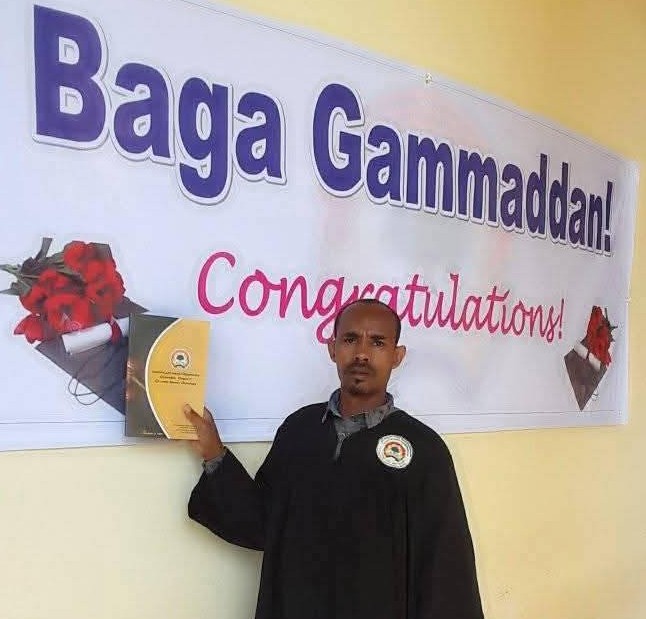
Subtitle: Legal Authorities Arrested as Police Claim Orders “From Above,” Raising Alarms About Judicial Independence.
In a move that strikes at the heart of judicial independence, two judges in East Hararge have been arrested on accusations of having links to the Oromo Liberation Army (OLA). The arrests, carried out by the East Hararge Zonal Police, were justified with a chillingly simple explanation: “The higher body commanded us.”
The detained officials are:
- Judge Mahbuubee Jundaa, a judge serving in the Qarsaa District of East Hararge Zone. He was arrested on Saturday morning.
- Judge Abdallaa Mahammad, a judge at the East Hararge Zone High Court. He was also arrested on Saturday morning.
Both men are currently being held under the custody of the East Hararge Zonal Police Command. The sole public reason given for their detention is the allegation that they “have connections with the OLA.”
The police command’s stated justification—”The higher body commanded us”—raises immediate and profound concerns. It implies an extra-judicial directive, bypassing standard legal procedures and the principle of due process. This phrase suggests that the arrests were not necessarily based on independently investigated evidence presented to a prosecutorial body, but on orders from an unnamed superior authority.
Why This Matters:
- Assault on Judicial Independence: Judges are the cornerstone of the rule of law. Their arrest on seemingly political grounds, without transparent legal process, undermines the very notion of an impartial judiciary. It creates a climate of fear where legal decisions may be influenced by political considerations rather than evidence and law.
- The “Higher Body” Precedent: The invocation of an unnamed superior command sets a dangerous precedent. It effectively places certain individuals or institutions above the law, allowing for detentions without clear accountability or a defined chain of evidence.
- Erosion of Public Trust: When those sworn to uphold the law can be arbitrarily detained, public trust in the entire justice system erodes. Citizens may lose faith in the courts as fair arbiters, which is fundamental for social stability.
- Context of Broader Arrests: These arrests occur amidst a wider pattern of detentions of local and regional officials in Oromia under various allegations. This incident specifically targets the judiciary, marking a significant and alarming escalation.
The legal community, civil society, and all advocates for the rule of law must seek clarity. Who is the “higher body”? What specific, admissible evidence exists to warrant the arrest of these judges? They are entitled to due process, a transparent charge, and the right to a fair hearing—the very rights they were appointed to safeguard for others.
A nation cannot be governed by secret commands. The gavel must not be silenced by the chain.
#FreeTheJudges #EastHararge #JudicialIndependence #RuleOfLaw #Oromia #Ethiopia
The Dangerous Diversion: Arresting Local Leaders While Security Crumbles
Subtitle: In Ilu Abbaa Boor, a Crackdown on Prosperity Party Officials Coincides with a Deepening Security Crisis.
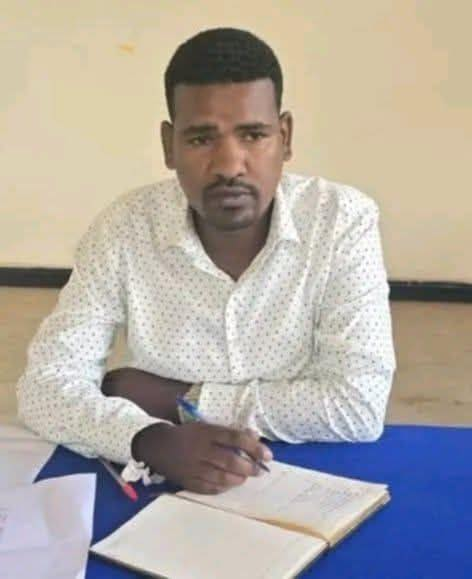
In a move that has sent shockwaves through the local political landscape, Obbo Rashidoo Baalchaa, the head of the Prosperity Party in Ilu Abbaa Boor Zone, along with numerous members of his executive committee, have been arrested on accusations of forming a “clandestine committee.”
This political crackdown unfolds against a backdrop of a severe and deteriorating security situation across the zone. Many districts (aanaas) are currently grappling with profound safety crises. Farmers are unable to tend to their fields, and even essential food crops left for harvest are reportedly being looted. The timing raises urgent questions: Why this focus now?
This pattern is not isolated to Ilu Abbaa Boor. In recent days, similar arrests of district and municipal administrators have been reported in several other zones. The stated justifications vary, with some vaguely linked to alleged associations with “Shane” (the OLA). This strategy of detaining mid-level officials appears to be a growing tactic.
However, this approach rings hollow against the national reality. While a full federal cabinet sits in the capital, and regional presidents operate with apparent normalcy, the relentless arrest of local administrators does not solve the core problem of instability. It often feels like a superficial fix—applying a small bandage to a gaping wound.
Furthermore, the narrative framing these detained individuals as “revolutionary sympathizers” lacks credibility. Many of those targeted are not ideological militants; they are often pragmatic local figures who have, at times, acted as crucial bridges to calm and negotiate with communities. Their removal may not weaken armed groups, but it almost certainly weakens the fragile lines of communication and local governance.
This creates a dangerous paradox: at the very moment when communities most need effective, trusted local leadership to navigate security threats, that leadership is being systematically removed from the equation. The result is not greater state control, but a deepening vacuum where fear and lawlessness thrive.
The people of Ilu Abbaa Boor and similar zones are left with a pressing plea: Do not distract us with political purges while our basic safety is stripped away. Address the root causes of the conflict. Reinforce, do not dismantle, the local structures that can build peace. The security of our homes and farms cannot be sacrificed on the altar of political maneuvering. The bandage is too small, and the wound is too deep.
Challenges to PM Abiy Ahmed: Gedu’s Rebuttal on Tigray War

Senior Official Rebuts PM Abiy’s Claims, Alleges Cover-Up in Eritrean Role During Tigray War
[February 4, 2026] – In a scathing and meticulously detailed open letter to Prime Minister Abiy Ahmed, Gedu Andargachew, a former high-ranking official, has issued a sharp rebuttal to the Prime Minister’s recent parliamentary statements, directly challenging the official narrative of Eritrea’s role in the Tigray war and accusing the administration of evading moral responsibility for the conflict’s atrocities.
The letter, dated January 27, 2015, Ethiopian Calendar, was prompted by the Prime Minister’s mention of Gedu by name during a parliamentary address concerning tensions with Eritrea on January 26, 2015, Ethiopian Calendar. Gedu states that this reference compelled him to “place the matter on the public record, without addition or subtraction,” offering a starkly different account of key wartime events.
Disputing the Official Eritrea Narrative
Gedu’s core contention challenges the timeline presented by the government. He asserts that Eritrean forces fought alongside the Ethiopian National Defense Force (ENDF) from the war’s outset until the Pretoria Agreement was finalized, contradicting the official line that their involvement was brief or contested.
He provides specific military details to support his claim, recalling a moment in the winter of 2013 E.C. (2020/2021 Gregorian) when Tigrayan forces advanced into the Amhara region. “We remember that the Eritrean army came as far as the Debretabor area and fought,” he writes. He further alleges that the ENDF and the Eritrean military conducted joint operations “in a manner resembling a single national army” until the peace deal was made public.
Alleging a Deliberate Cover-Up and Shift of Blame
The letter accuses PM Abiy of a pattern of deflecting responsibility for the war’s devastating human cost. Gedu expresses disappointment that instead of seeking forgiveness from the peoples of Tigray and Ethiopia, the Prime Minister chose to “simply provide explanations” and “try to find another party to blame.”
He argues this approach is not only a moral failure but also dangerous, stating it prevents the necessary lessons from being learned and “makes the recurrence of similar disasters possible.” Gedu directly links a range of national crises—the wars in Tigray and Oromia, alleged atrocities in Amhara, and conflicts in Benishangul-Gumuz—to what he calls the leadership’s “deficiency” and a flawed mindset that “cannot stay in power without conflict and war.”
Denying a Secret Mission to Eritrea
Gedu forcefully denies the Prime Minister’s insinuation that he was sent to Eritrea as a special envoy concerning the Tigray war. He clarifies he was removed from his post as Foreign Minister the day after the conflict began and states, “There has never been a suspicion that this issue was entrusted to me.”
He confirms a single trip to Asmara in early 2013 E.C. but describes a mission with entirely different objectives: to convey gratitude for Eritrea’s joint military cooperation, deliver a victory message regarding coordinated operations, and discuss mutual caution over mounting international “naming and shaming campaigns” related to human rights abuses.
Critically, Gedu claims that when he raised the international community’s demand for Eritrean troop withdrawal, PM Abiy explicitly instructed him not to request that Eritrea pull its forces out. “You warned me, ‘Do not at all ask them to withdraw your army,'” Gedu writes.
Revealing Contemptuous Remarks Toward Tigrayans
In the letter’s most explosive personal allegation, Gedu recounts a private meeting where he advised caution and the rapid establishment of civilian administration in Tigray to prevent future grievances. He claims PM Abiy dismissed these concerns with contemptuous rhetoric.
Gedu quotes the Prime Minister as allegedly stating: “Tigrayans will not rebel from now on; don’t think they can get up and fight seriously… we have crushed them so they cannot rise. Many people tell me ‘the people of Tigray, the people of Tigray’; how are the people of Tigray better than anyone? We have crushed them so they cannot rise. We will hit them even more; because the escape route is difficult, from now on the Tigray we know will not return.”
A Call for Accountability
The letter concludes not with personal grievances, but with a broader indictment of the administration’s governance. Gedu presents his detailed refutation as a necessary corrective to the historical record and an implicit call for a truthful accounting of the war’s origins, conduct, and consequences—an accounting he suggests is being actively avoided by the highest levels of government.
The Prime Minister’s office has not yet issued a public response to the allegations contained in the letter.
For more detail see the official Amharic letter of Gedu Andargachew
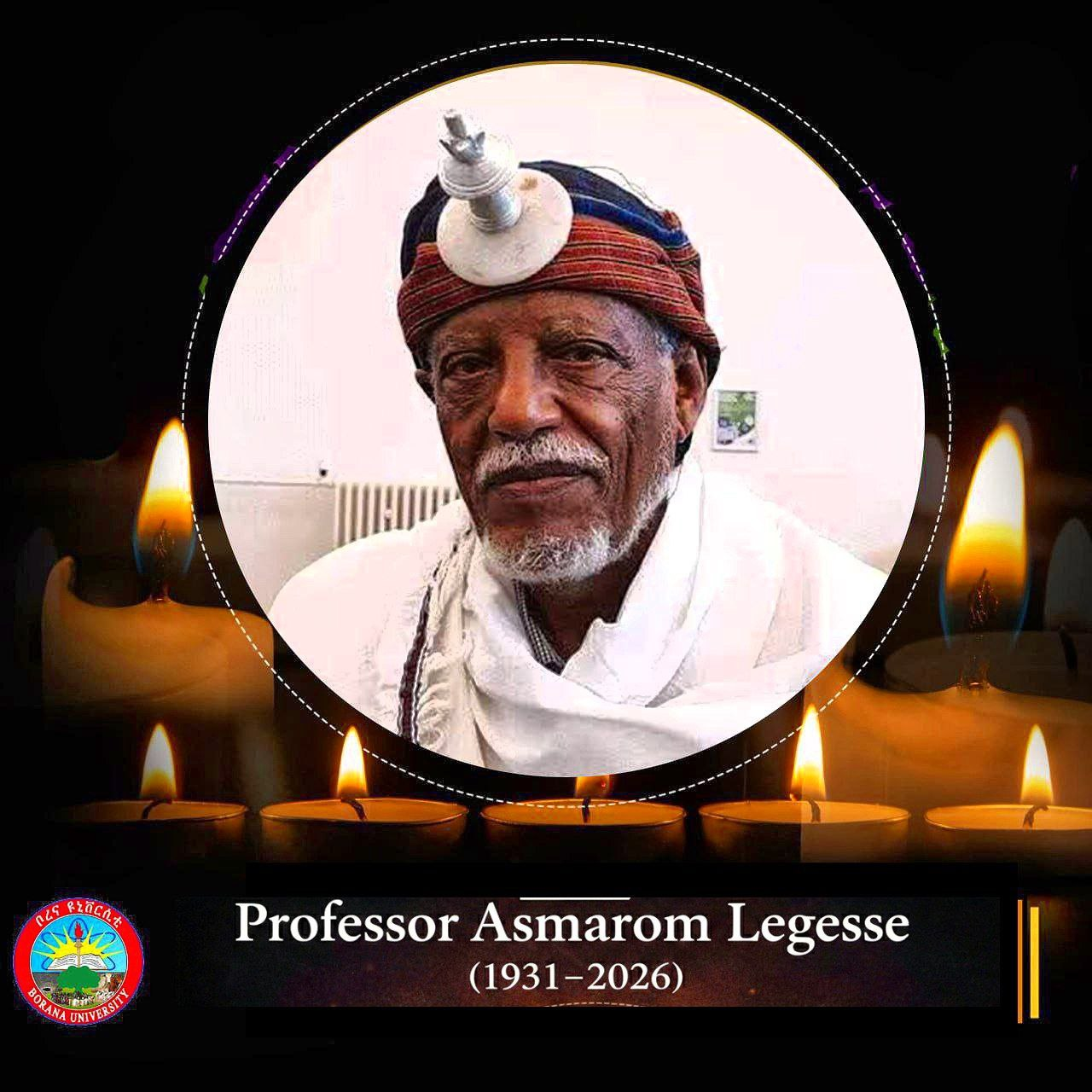
Borana University Mourns a Beacon of Indigenous Knowledge: Professor Asmarom Legesse
Borana University Mourns a Beacon of Indigenous Knowledge: Professor Asmarom Legesse
(Yabelo, Oromia – February 5, 2026) Borana University, an institution deeply embedded in the cultural landscape it studies, today announced its profound sorrow at the passing of Professor Asmarom Legesse, the preeminent anthropologist whose lifelong scholarship fundamentally defined and defended the indigenous democratic traditions of the Oromo people. The University’s tribute honors the scholar not only as an academic giant but as a “goota” (hero) for the Oromo people and for Africa.
In an official statement, the University highlighted Professor Legesse’s “lifelong dedication to understanding the complexities of Ethiopian society—especially the Gadaa system,” crediting him with leaving “an indelible mark on both the academic and cultural landscapes.” This acknowledgment carries special weight from an institution situated in the heart of the Borana community, whose traditions formed the bedrock of the professor’s most celebrated work.
The tribute detailed the pillars of his academic journey: a Harvard education, esteemed faculty positions at Boston University, Northwestern University, and Swarthmore College, and the groundbreaking field research that led to his seminal texts. His 1973 work, “Gada: Three Approaches to the Study of African Society,” was cited as revolutionary for revealing “the innovative solutions indigenous societies developed to tackle the challenges of governance.”
It was his 2000 magnum opus, however, that solidified his legacy as the definitive voice on the subject. In “Oromo Democracy: An Indigenous African Political System,” Professor Legesse meticulously documented a system characterized by eight-year term limits for all leaders, a sophisticated separation of powers, and the Gumi assembly for public review—a structure that presented a centuries-old model of participatory democracy. “His insights challenged prevalent misconceptions about African governance,” the University noted, “showcasing the rich traditions and political innovations of the Oromo community.”
For his unparalleled contributions, he was awarded an honorary Doctor of Letters from Addis Ababa University in 2018.
Perhaps the most powerful element of the University’s statement was its framing of his legacy beyond academia. By “intertwining the mechanics of the Gadaa system with the broader narrative of Oromo history and cosmology,” Professor Legesse was credited with fostering “a profound understanding of Oromo cultural identity.” It is for this work of preservation, interpretation, and transmission that he is declared “a hero—a goota—to the Oromo people and to Africa as a whole.”
Looking forward, Borana University management has called upon its students and faculty to honor his memory through “ongoing research and discourse on indigenous governance systems,” ensuring his foundational work continues to inspire new generations of scholars.
The entire university community extended its deepest condolences to Professor Legesse’s family, friends, and loved ones, mourning the loss of a true champion of Oromo culture and a guiding light in the study of African democracy.
About Borana University:
Located in Yabelo, Borana Zone, Oromia, Borana University is a public university committed to academic excellence, research, and community service, with a focus on promoting and preserving the rich cultural and environmental heritage of the region and beyond.
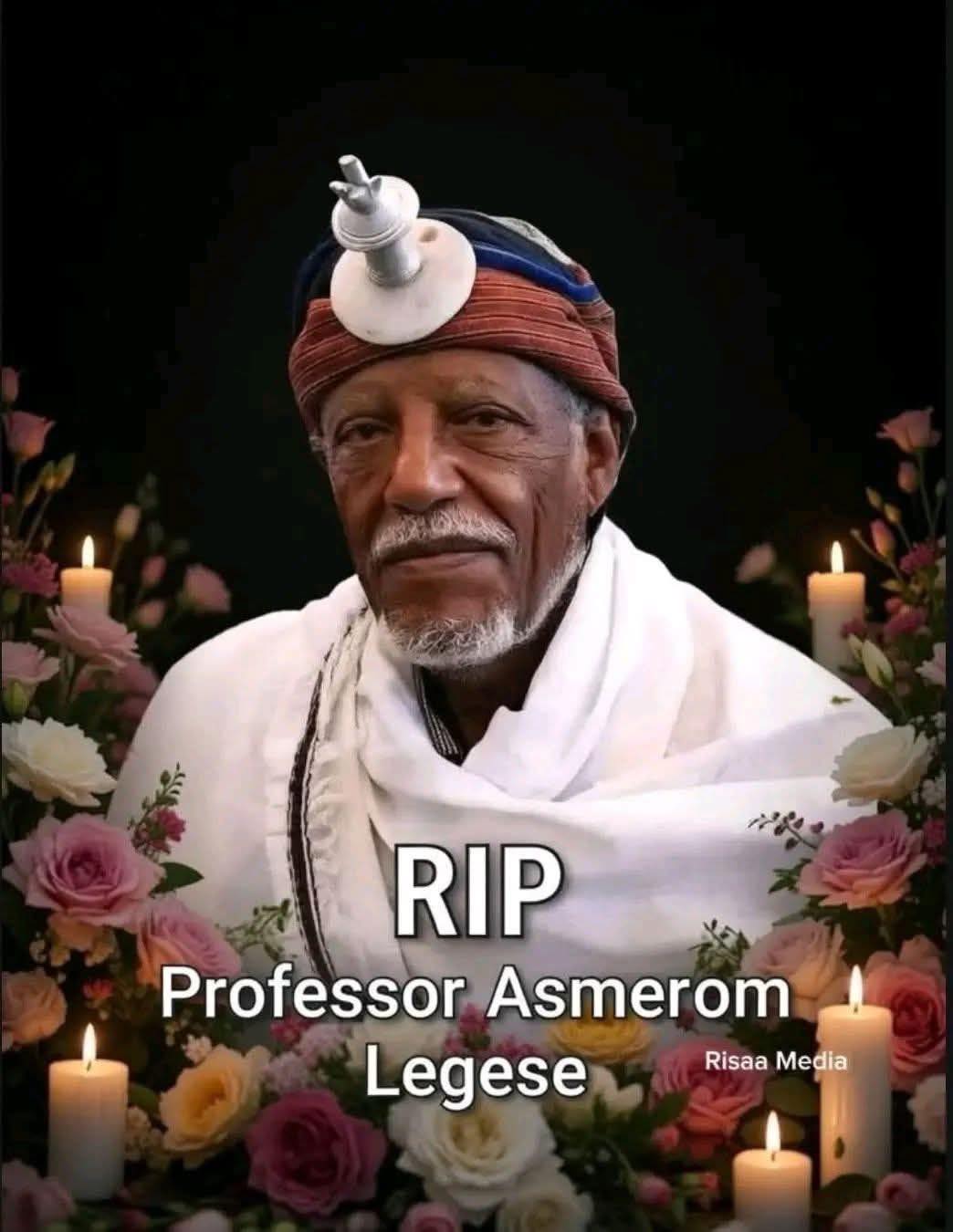
Remembering Prof. Asmerom Legesse: A Legacy of Oromo Scholarship
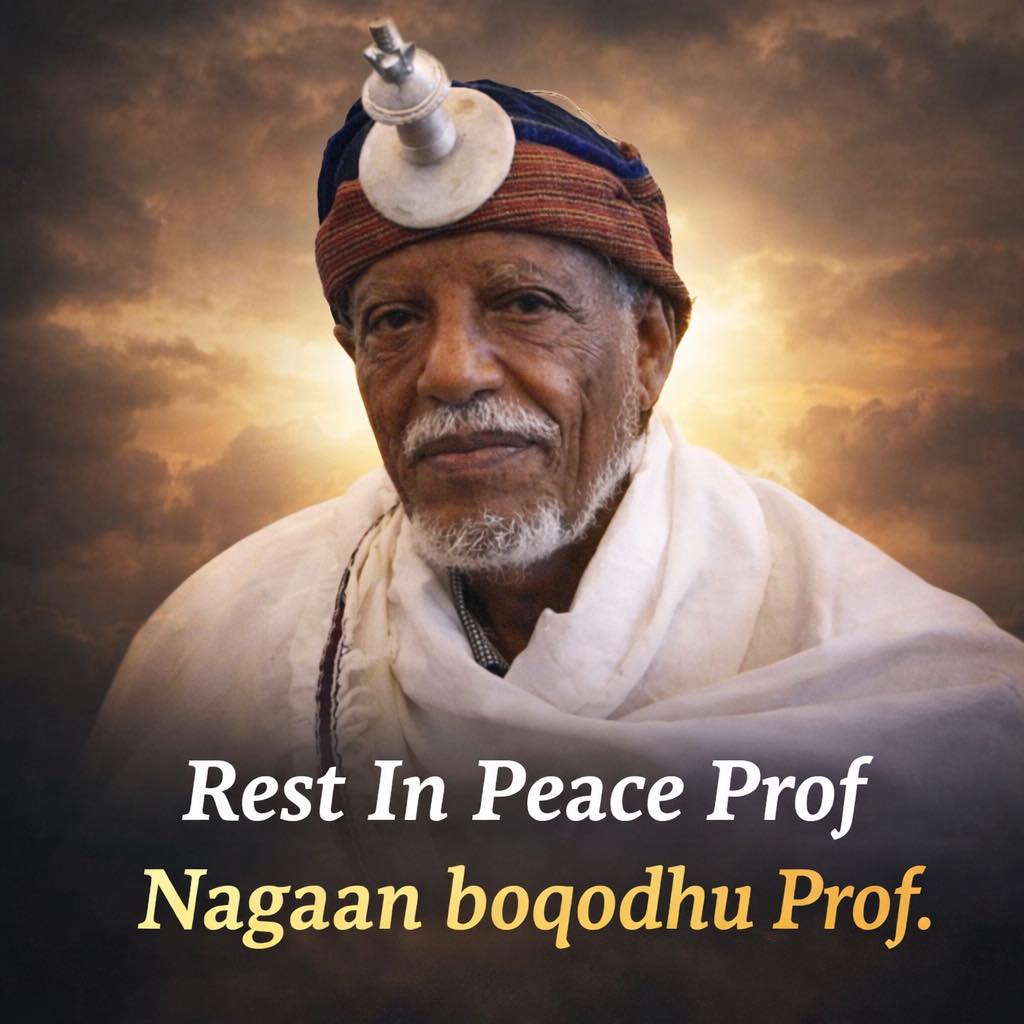
By Daandii Ragabaa
A Scholar Immortal: Prof. Asmerom Legesse’s Legacy Lives in the Hearts of a Nation
5 February 2026 – Across the globe, from the halls of academia to the living rooms of the diaspora, the Oromo community is united in a chorus of grief and profound gratitude. The passing of Professor Asmerom Legesse at the age of 94 is not merely the loss of a preeminent scholar; it is, as countless tributes attest, the departure of a cherished friend, a fearless intellectual warrior, and an adopted son whose life’s work became the definitive voice for Oromo history and democratic heritage.
The outpouring of personal reflections paints a vivid portrait of a man whose impact was both global and deeply intimate. Olaansaa Waaqumaa recalls a brief conversation seven years ago, where the professor’s conviction was unwavering. “Yes! It is absolutely possible,” he declared when asked if the Gadaa system could serve as a modern administrative framework. “The scholars and new generation must take this mantle, think critically about it, and bridge it with modern governance,” he advised, passing the torch to future generations.
This personal mentorship extended through his work. Scholar Luba Cheru notes how Professor Legesse’s 1973 seminal text, Gada: Three Approaches to the Study of African Society, became an indispensable guide for her own decade-long research on the Irreecha festival. She reflects, “I never met him in person, but his work filled my mind.”
Ituu T. Soorii frames his legacy as an act of courageous resistance against historical erasure. “When the Ethiopian empire tried to erase Oromo existence, Professor Asmarom rose with courage to proclaim the undeniable truth,” they write, adding a poignant vision: “One day, in a free Oromiyaa, his statues will rise—not out of charity, but out of eternal gratitude.” Similarly, Habtamu Tesfaye Gemechu had earlier praised him as the scholar who shattered the conspiracy to obscure Oromo history, “revealing the naked truth of the Oromo to the world.”
Echoing this sentiment, Dejene Bikila calls him a “monumental figure” who served as a “bridge connecting the ancient wisdom of the Oromo people to the modern world.” This notion of the professor as a bridge is powerfully affirmed by Yadesa Bojia, who poses a defining question: “Did you ever meet an anthropologist… whose integrity was so deeply shaped by the culture and heritage he studied that the people he wrote about came to see him as one of their own? That is the story of Professor Asmerom Legesse.”
Formal institutions have also affirmed his unparalleled role. The Oromo Studies Association (OSA), which hosted him as a keynote speaker, stated his work “fundamentally reshaped the global understanding of African democracy.” Advocacy for Oromia and The Oromia Culture and Tourism Bureau hailed him as a “steadfast guardian” of Oromo culture, whose research was vital for UNESCO’s 2016 inscription of the Gadaa system as Intangible Cultural Heritage.
Binimos Shemalis reiterates that his “groundbreaking and foundational work… moved [Oromo studies] beyond colonial-era misrepresentations.” Scholar Tokuma Chala Sarbesa details how his book Oromo Democracy: An Indigenous African Political System proved the Gadaa system was a sophisticated framework of law, power, and public participation, providing a “strong foundation for the Oromo people’s struggle for identity, freedom, and democracy.”
The most recent and significant political tribute came from Shimelis Abdisa, President of the Oromia Regional State, who stated, “The loss of a scholar like Prof. Asmarom Legesse is a great damage to our people. His voice has been a lasting institution among our people.” He affirmed that the professor’s seminal work proved democratic governance originated within the Oromo people long before it was sought from elsewhere.
Amidst the grief, voices like Leencoo Miidhaqsaa Badhaadhaa offer a philosophical perspective, noting the professor lived a full 94 years and achieved greatness in life. “He died a good death,” they write, suggesting the community should honor him not just with sorrow, but by learning from and adopting his teachings.
As Seenaa G-D Jimjimo eloquently summarizes, “His scholarship leaves behind not just a legacy for one community, but a gift to humanity.” While the physical presence of this “real giant,” as Anwar Kelil calls him, is gone, the consensus is clear: the intellectual and moral bridge he built is unshakable. His legacy, as Barii Milkeessaa simply states, ensures that while “the world has lost a great scholar… the Oromo people have lost a great sibling.”
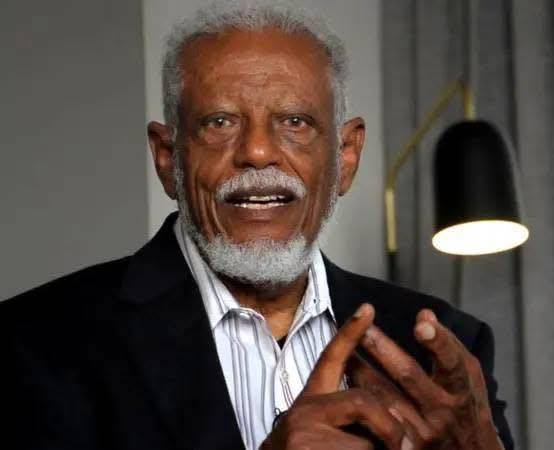
Asmerom Legesse: Champion of Oromo History and Gadaa System
We are deeply saddened by the passing of Abbaa Gadaa Professor Asmerom Legesse, a towering African intellectual whose scholarship stands among the most consequential contributions to Oromo history and African political thought.
Abbaa Gadaa Professor Asmerom Legesse, an Eritrean social anthropologist trained at Harvard University and later a distinguished professor at institutions including Boston University, Northwestern University, Swarthmore College, and Yale University, devoted rare rigor and integrity to African knowledge systems. Yet his true stature was not defined by titles, but by the seriousness with which he treated the Oromo Gadaa system.
At a time when African societies were routinely dismissed as lacking political sophistication, he refused to reduce Gadaa to “custom” or folklore. Through disciplined research and cultural immersion, he framed Gadaa as an indigenous constitutional order—built on rotating generational leadership, codified law (seera), institutional checks and balances, accountability, and collective sovereignty.
His landmark work, Gadaa: Three Approaches to the Study of African Society (1973), introduced the world to the depth and coherence of Oromo political organization. Decades later, Oromo Democracy: An Indigenous African Political System (2000) further clarified Gadaa as an egalitarian democratic system whose institutional logic long predates modern Western models. These works remain core references for understanding Oromo governance and for challenging enduring stereotypes about African political thought.
Abbaa Gadaa Professor Asmerom Legesse understood what many still refuse to acknowledge: Oromo history is not marginal, not invented, and not secondary to anyone else’s narrative. It is a complete intellectual tradition—deserving serious documentation, protection, and transmission. By recording Gadaa with scholarly precision, he did more than study Oromo society; he defended it against erasure and misrepresentation.
For this reason, Oromo communities came to hold him in special esteem, symbolically recognizing him as an “Abbaa Gadaa”—a guardian of truth and a custodian of a threatened heritage. Beyond Oromo studies, he wrote on Eritrean refugees, and wider questions of displacement, power, and justice in the Horn of Africa, embodying the responsibilities of a public intellectual.
We at OROMEDIA express our heartfelt condolences to his family, colleagues, students, and all communities touched by his life and work. We also offer our deep gratitude for the intellectual ground he helped secure for generations of Oromo scholars and citizens. His scholarship did not merely preserve the past; it equipped future generations with evidence and language to assert historical truth.
Rest in power, Abbaa Gadaa Professor Asmerom Legesse. Your work lives on, wherever Gadaa is studied, defended, and lived as a testament to indigenous Oromo democracy and African intellectual greatness.
Oromo Community Mourns a Great Scholar: Asmerom Legesse’s Impact
Feature Commentary
A World Mourns an Intellectual Giant: Unified Tributes Honor Professor Asmerom Legesse, Scholar of Oromo Democracy
4 February 2026 – The global Oromo community, alongside academic and cultural institutions, is united in profound grief following the passing of Professor Asmerom Legesse, the preeminent scholar whose life’s work defined the study of the Oromo Gadaa system. Hailed as a “towering scholar,” “global voice,” and “steadfast guardian,” his death has prompted a powerful wave of tributes that collectively affirm his unparalleled role in bringing an indigenous African democratic tradition to the world stage.
Across statements from scholars, activists, and organizations, a consistent narrative emerges: Professor Legesse was far more than an academic. He was a truth-teller, a bridge-builder, and a revolutionary intellectual who dedicated his career to the reclamation and elevation of a system long marginalized by colonial and oppressive narratives.
Scholars and Leaders Reflect on a Transformative Legacy
Prominent voices have emphasized the transformative nature of his work. Scholar Asebe Regassa called him a “pioneer of Gadaa studies,” whose “groundbreaking anthropological work” ensured he will be “remembered forever.” Tayiba Hassen Kayo noted his “unwavering commitment” left an “enduring mark on academia and on the Oromoo people,” ensuring his life’s work “will never be forgotten.”
The personal dimension of his scholarship was highlighted by Israel Fayisa, who poignantly described him as “Eritrean by birth and Oromo by choice,” a scholar treated “like an enemy by many Ethiopianist scholars merely because he dedicated his life to revealing the truth.” This sentiment underscores the courageous stance his research represented.
A Legacy of Global Recognition and Cultural Pride
His work is credited with achieving what once seemed impossible: securing global academic respect for an indigenous African system. As Visit Oromia stated, his research “gave international recognition to one of Africa’s most remarkable indigenous governance systems.” Activist Dereje Hawas pointed out that what defined him was “the seriousness with which he treated African and especially Oromo knowledge systems,” elevating them to their rightful place in global discourse.
Activist and journalist Dhabessa Wakjira captured the core of his academic revolution, writing that Legesse “proved definitively that principles of equality, rotational leadership, checks and balances, and the rule of law were not foreign imports to the continent, but were deeply embedded, living traditions.” This work, as Lelise Dhugaa noted, was foundational to UNESCO’s inscription of the Gadaa system as Intangible Cultural Heritage of Humanity in 2016.
A Community’s Deep Personal Loss
For the Oromo people, the loss is both intellectual and deeply personal. The tribute from Olumaa Qubee expresses this communal grief: “Oromoon fira guddaa tokko dhabe” (“The Oromo people have lost a great sibling”). The call for schools and institutions to be named in his honor within Oromia reflects a desire to anchor his legacy physically in the land of the people he championed.
As tributes from colleagues like Zewdu Lechissa remember the “truly brilliant scholar and a kind soul,” the collective message is one of both mourning and determined continuity. Professor Asmerom Legesse’s pioneering scholarship did not merely document the Gadaa system; it restored a pillar of Oromo identity and gifted the world a timeless model of democracy. His legacy, as echoed by all, will undoubtedly “continue to inspire generations.”
Professor Asmerom Legesse: A Champion of Oromo Democracy

FOR IMMEDIATE RELEASE
A Guardian of Heritage: Advocacy for Oromia Mourns the Passing of Professor Asmerom Legesse (1931-2026)
(Melbourne, Victoria) – February 5, 2026 – Advocacy for Oromia, with profound respect and deep sorrow, announces the passing of the world-renowned scholar, Professor Asmerom Legesse. We extend our most heartfelt condolences to his family, his colleagues in academia, and to the entire Oromo people, for whom his work held monumental significance.
Professor Legesse was not simply an academic; he was a steadfast guardian and a preeminent global ambassador for the ancient Gadaa system, the sophisticated democratic and socio-political foundation of Oromo society. For more than forty years, he dedicated his intellect and passion to meticulously studying, documenting, and advocating for this profound indigenous system of governance, justice, and balanced social order.
His seminal work, including the definitive text Oromo Democracy: An Indigenous African Political System, transcended mere historical analysis. Professor Legesse’s scholarship performed a vital act of cultural reclamation and global education. It restored dignity to a marginalized history, affirmed the cultural identity of millions, and presented to the international community a powerful, self-originating model of African democracy that predated and paralleled Western constructs.
Born in Asmara in 1931, Professor Legesse’s intellectual journey—from political science at the University of Wisconsin to a doctorate in anthropology from Harvard University, where he later taught—was always directed by a profound sense of purpose. His research provided the rigorous, academic foundation for understanding indigenous African political philosophy.
His passing is felt as a deeply personal loss within our community, reminding us of the interconnected threads of Oromo history and resilience. On a recent visit to Asmara, a delegation from Advocacy for Oromia visited a site of immense historical importance: the church where Abbaa Gammachis and Aster Ganno, giants of faith and resistance, resided while translating the Bible into Afaan Oromo. It was there we learned that the family home of Professor Asmerom Legesse stood adjacent.
This physical proximity stands as a powerful metaphor. It connects the spiritual and linguistic preservation embodied by Abbaa Gammachis with the intellectual and political excavation led by Professor Legesse. They were neighbors not only in geography but in sacred purpose: both dedicated their lives to protecting, promoting, and elucidating the core pillars of Oromo identity against historical forces of erasure.
Professor Legesse’s lifetime of contributions has endowed current and future generations with the intellectual tools to claim their rightful place in global narratives of democracy and governance. For this invaluable and enduring gift, we offer our eternal gratitude.
While we mourn the silence of a towering intellect, we choose to celebrate the immortal legacy he leaves behind—a legacy of knowledge, pride, and empowerment that will continue to guide and inspire.
May his soul rest in eternal peace. May his groundbreaking work continue to illuminate the path toward understanding, justice, and self-determination.
Rest in Power, Professor Asmerom Legesse.
About Advocacy for Oromia:
Advocacy for Oromia is a global network dedicated to promoting awareness, justice, and the rights of the Oromo people. We work to uphold the principles of democracy, human rights, and cultural preservation central to Oromo identity and heritage.

