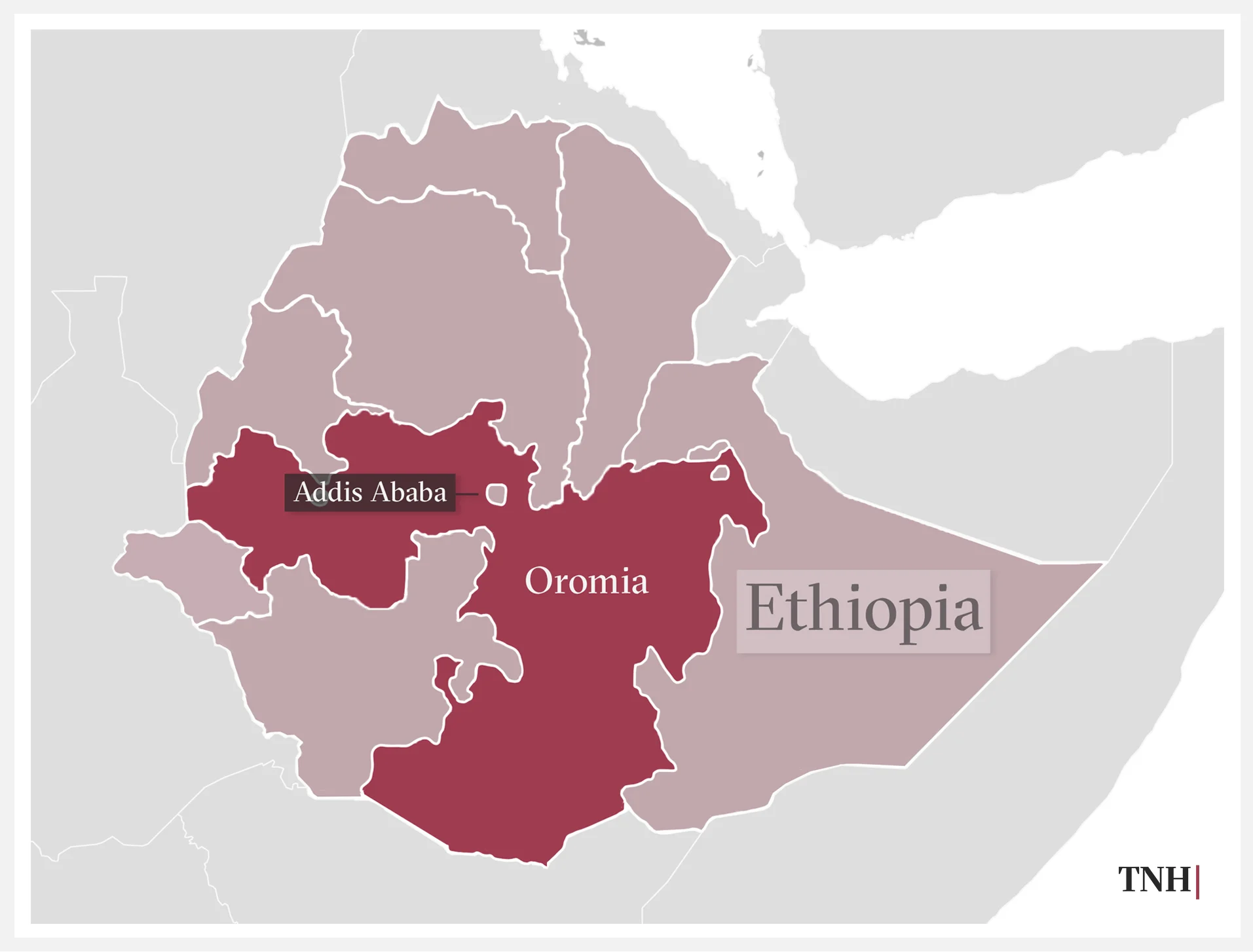
FINFINNE – With less than three months until Ethiopia’s seventh general elections, scheduled for June 1, 2026, the political atmosphere in the Oromia region is becoming increasingly charged. Sources within several zones and districts have revealed to local media that officials from the ruling Prosperity Party (PP) are moving secretly through communities, allegedly instructing party and security bodies to disrupt opposition activities.
According to accounts collected from residents in multiple districts, PP leaders at the zonal and district level are holding undisclosed meetings with security apparatuses. These sources claim that directives have been issued to monitor and crack down on political rivals rather than allowing them to campaign freely.
“People in our districts and zones are not speaking out,” one resident told a local reporter on condition of anonymity. “They told us in secret that directives are being given to party and security offices to work against us. They are using the election as a cover while they try to move through Oromia to stir up trouble and spy on opposition activities.”
The informants specifically identified concerns regarding the Oromo Liberation Front (OLF). Community members expressed that while they have no issue with the OLF contesting elections peacefully, they oppose the idea of the party using the electoral process as a pretext for movement and mobilization across the region under the current circumstances.
“If the OLF wants to compete, let them do so like they do in Addis Ababa, but campaigning inside Oromia is a concern for our party,” a source quoted local PP hardliners as arguing. “But now they are moving through the zones and entering districts. If they are not allowed to compete, it is very worrying. Therefore, we need to follow their movements and take action preemptively.”
These allegations point to a strategy of preemptive disruption, with reports suggesting that regional officials are coordinating with unspecified parties to monitor and counter the opposition’s reach into rural constituencies.
The claims come amid a backdrop of severe political fragmentation and security concerns. Analysts note that the Oromia region, which holds the largest number of parliamentary seats (178 seats in the House of Peoples’ Representatives and 537 in the regional council) , remains a volatile battleground. The Oromo Liberation Army (OLA) insurgency continues in several zones, including East and West Wollega, rendering large areas insecure and complicating logistical preparations for the vote.
Opposition parties have long argued that the playing field is tilted. The Oromo Federalist Congress (OFC) has previously stated that participating in elections while its leaders are imprisoned or under threat would be “politics over the graves of its people” . In a joint statement issued late last year, a coalition of ten opposition parties, including the OLF and OFC, warned that proceeding without “enabling conditions”—such as the release of political prisoners, the reopening of party offices, and guarantees of freedom of movement—would result in a “sham democracy”.
The National Election Board of Ethiopia (NEBE) has cleared over 60 political parties to contest and approved 45 domestic observer groups . However, logistical and security hurdles remain daunting. A recent report by the Ethiopian Human Rights Commission (EHRC) highlighted that freedom of movement is “under siege” in multiple regions, with roadblocks, ambushes, and curfews making it nearly impossible for civilians and candidates to move safely—a prerequisite for any credible election.
“The NEBE must evolve from a mere administrator of rules to a courageous facilitator of political consensus,” wrote Sultan Kassim, an OFC official, in a recent analysis. “An election that is boycotted or only symbolically contested will not resolve Ethiopia’s deep-seated political questions. It will exacerbate them.”.
The residents who spoke out warn that the alleged collusion between party officials and security forces threatens to undermine the will of the Oromo people. “We send a message of brotherhood to everyone holding onto their Oromo identity in the zones and districts,” a resident pleaded. “Do not accept these directives they are giving you. Do not let them drag you into committing a crime against your own people.”
As the June 1 polling date approaches , the credibility of the election hangs in the balance. The combination of active insurgencies, restricted civic space, and deepening distrust between the ruling party and opposition forces suggests that without urgent corrective measures, the 2026 vote may struggle to confer legitimacy or unify the nation.

