By Daandii Ragabaa
When death takes a public figure, the world writes obituaries filled with achievements, titles, and historical milestones. But when death takes a comrade—a person who shared your childhood dreams and your prison cell—no obituary is enough. Only grief, raw and honest, can speak.
Ibsaa Guutama has lost such a man.
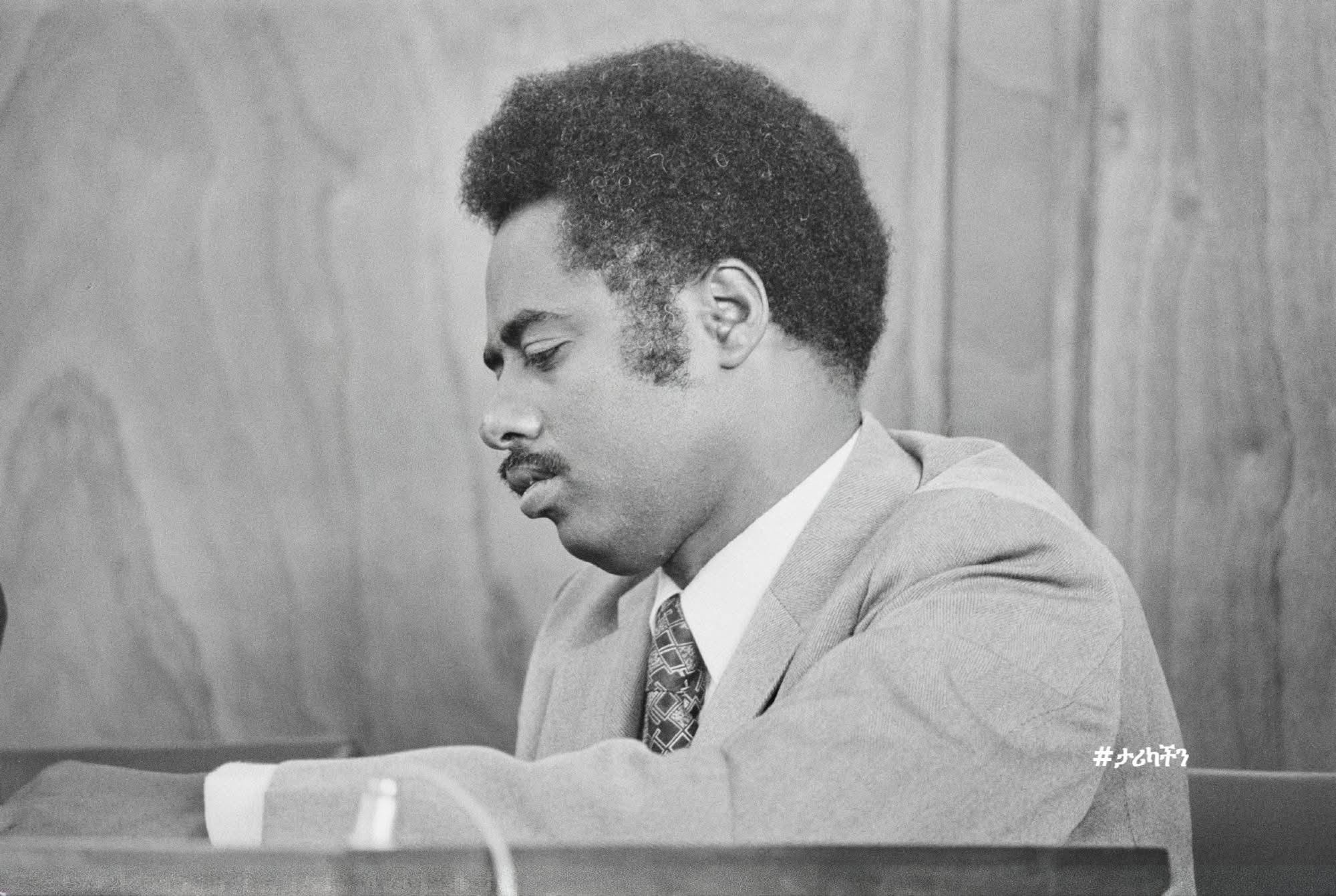
Zagayyee Asfaw, the veteran Oromo leader, the champion of the “land for the tiller” struggle, and the man who authored Ethiopia’s 1975 Land Act, has passed away. Born in April 1942, he lived 84 years of intense political battle, sacrifice, and unwavering commitment to the Oromo people. But for Ibsaa Guutama, Zagayyee was never just a historical figure. He was the boy who sat beside him in class. He was the man who shared his shackles in the dark. He was, above all else, a comrade.
The Kokabe Tsibah Years
Long before the prisons and the politics, there was elementary school. Ibsaa and Zagayyee attended Kokabe Tsibah together—two young boys with no idea that history was waiting to test them. In those days, they learned their multiplication tables, chased each other during recess, and likely never imagined that their names would one day be whispered in underground cells and sung about in liberation anthems.
“Childhood love,” Ibsaa writes, “and the conditions through which we passed shall never be forgotten.”
It is a simple sentence, but it carries an ocean. Childhood friendships are pure because they are untouched by ideology. Zagayyee and Ibsaa did not become friends because of ethnicity or politics. They became friends because they were children. And that purity, Ibsaa insists, survives everything—even decades of war, exile, and loss.
The Maekelawi Bond
But childhood friendship alone does not forge the deepest bonds. Shared suffering does.
At some point in their revolutionary journeys, Ibsaa Guutama and Zagayyee Asfaw found themselves as cellmates in Maa’ikalaawii—the infamous Maekelawi prison in Addis Ababa. For those who know Ethiopian political history, the name alone conjures images of windowless cells, electric shocks, and the systematic breaking of bodies and spirits.
To be a cellmate in Maekelawi is not merely to share a room. It is to share terror. To watch each other be tortured. To whisper hope when hope seems absurd. To make promises to each other’s families if only one of you survives.
Zagayyee and Ibsaa survived. But they never forgot.
“They were not just brothers in ideology,” a comrade who knew both men once said. “They were brothers in blood. That prison leaves marks. And those who go through it together are bound forever.”
The Champion of Land for the Tiller
Beyond the personal loss, Ibsaa Guutama takes care to remind the world who Zagayyee Asfaw was—not just to him, but to history.
Zagayyee was the intellectual and political engine behind the “land for the tiller” struggle, a revolutionary concept that argued that the peasants who worked the land should own it. This idea, radical for its time, directly challenged the centuries-old feudal system in which a tiny imperial elite controlled vast territories while the majority of farmers lived as tenants or laborers.
When the Derg regime seized power in 1974 and issued the 1975 Land Proclamation, the fingerprints of Zagayyee’s philosophy were all over the document. The proclamation nationalized all rural land, abolished the feudal aristocracy, and granted usufruct rights to millions of peasants. For the Oromo people, who had been systematically stripped of their ancestral lands through decades of imperial expansion, it was a seismic shift.
Zagayyee Asfaw did not just witness history. He wrote it—literally.
A Big Loss, Simply Stated
Ibsaa Guutama is not a man given to excessive light. His tribute is short, direct, and devastating.
“For me,” he writes, “he is a big loss.”
There is no attempt to measure the loss in inches or pounds. It is simply big. It fills the room. It weighs on the chest. It is the kind of loss that words cannot shrink because words cannot make it smaller.
Ibsaa then extends his condolences across whatever distance may separate him from Zagayyee’s loved ones. He names them: Tsahay (Zagayyee’s wife), his children Asfawu, Meetii, and Fitih. And then, knowing that grief travels slowly in fragmented communities, he adds: “and all his relatives, friends and comrades if they could access this message.”
It is a poignant acknowledgment of reality. Not everyone will see this tribute. Not everyone will hear the news. But for those who do, Ibsaa wants them to know: you are not alone in your mourning.
What Remains Unsaid
In any friendship as deep as this one, the most important things are never written down. They are the silent understandings. The shared glances. The knowledge that someone else in the world remembers exactly how cold Maekelawi was on certain nights, or exactly what hope sounded like when it was whispered between swollen lips.
Ibsaa Guutama does not need to write those things. They live in him. And now, with Zagayyee gone, they live in him alone.
A Final Salute
Zagayyee Asfaw was born in April 1942. He died in 2026, having spent most of the intervening 84 years fighting for a simple idea: that the person who tills the land should not go hungry; that the person who builds the nation should not be a slave within it.
He was a veteran Oromo leader. He was a champion of the peasant. He was an author of transformative law.
But to Ibsaa Guutama, he was something more elementary, more profound, and more irreplaceable.
He was a friend. A cellmate. A comrade.
And now, a big loss.
Rest, Comrade Zagayyee. The land remembers. And so do those who shared your cell.
Zagayyee Asfaw (April 1942 – 2026)
Childhood friend. Cellmate. Comrade. Champion of the tiller.
May the earth be light upon you.
*This feature story is written by Daandii Ragabaa, based on the personal reflection of Ibsaa Guutama.

