Daaniyaa – The Ancient Soul of Oromia, Now in Your Hands
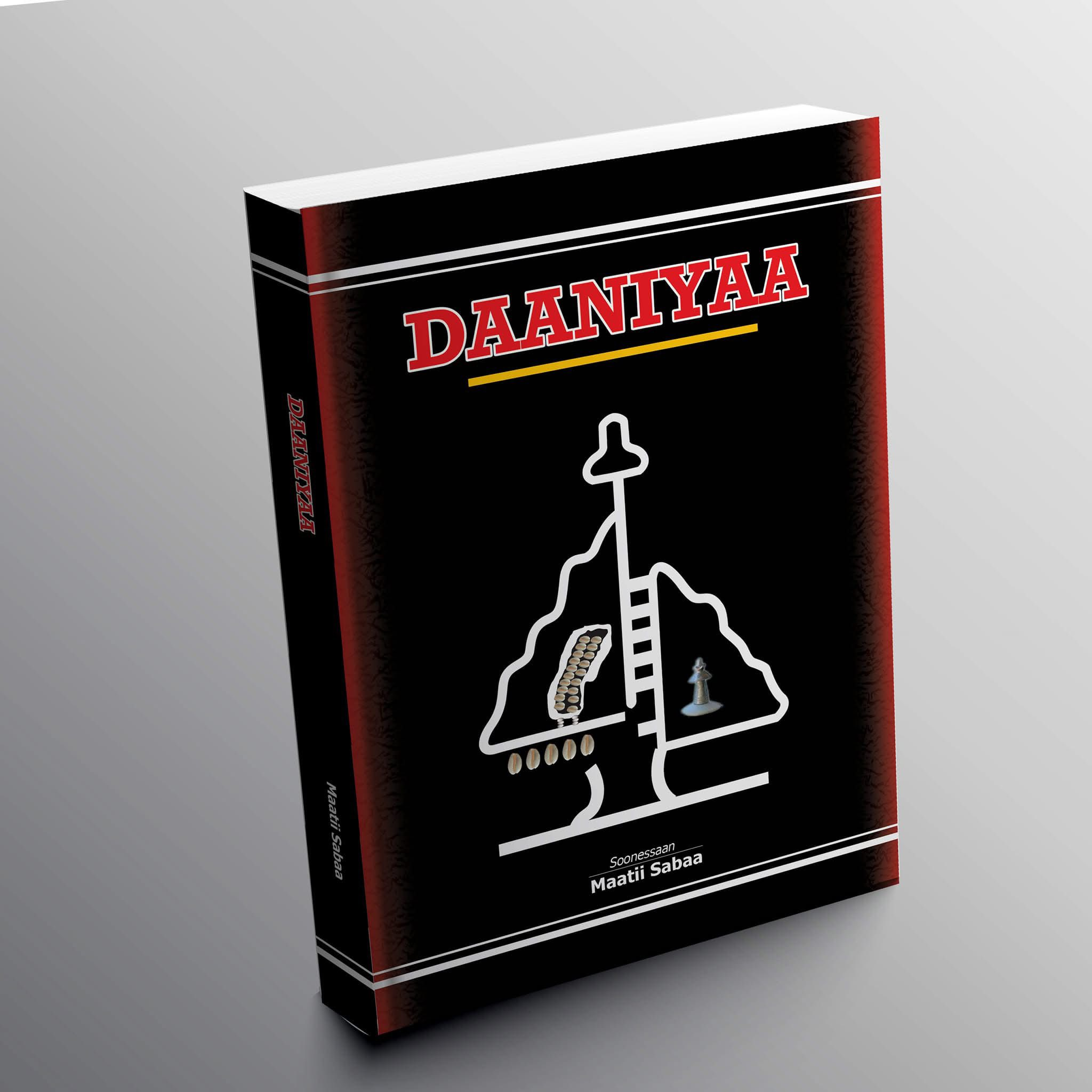
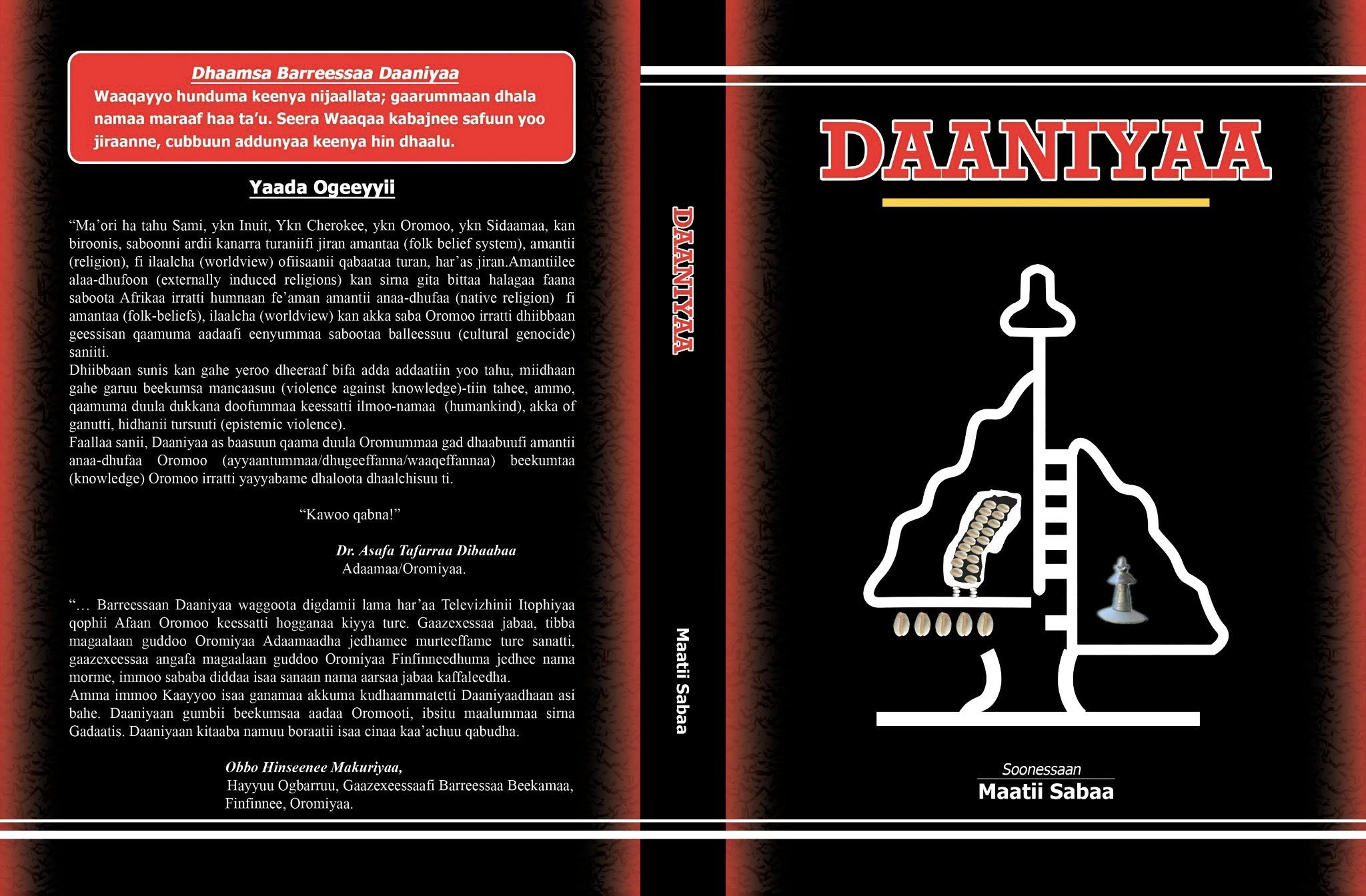
A sacred record of Oromo culture, religion, and identity finally available in hard copy at Elellee Bookstore in Finfinne
By: Daandii Ragabaa
FINFINNE – Every home has its treasures. For some, it is a photograph album. For others, a family heirloom passed down through generations. But for every Oromo family, there is now something more: #Daaniyaa.
This ancient collection – a vital record of Oromo culture, religion, and identity – has finally been released in hard copy. And it is available now at Elellee Bookstore in Finfinne (Addis Ababa).
“Everyone should have a copy of Daaniyaa in their home,” the announcement declares. “More than just a book to be read, it is a heritage to be cherished – a testament to who we are, to be valued as dearly as one’s own family.”
What Is Daaniyaa?
Daaniyaa is not a new book. It is an ancient collection – a compilation of Oromo knowledge, beliefs, practices, and identity that has survived through centuries of oral transmission, through eras of marginalization, through regimes that tried to erase everything Oromo.
It contains:
- Oromo religious traditions – the spiritual worldview of the Oromo people before and alongside external influences.
- Cultural practices – the customs, ceremonies, and social norms that have bound Oromo communities together for generations.
- Identity markers – the stories, genealogies, and historical memories that answer the question: Who are we?
For decades, access to Daaniyaa was limited. Copies were rare. Scholars fought over fragments. Ordinary Oromo families could only hear about it from elders or catch glimpses in academic libraries.
No longer.
More Than a Book – A Heritage
The announcement makes a powerful distinction: Daaniyaa is more than just a book to be read.
A book can be borrowed, returned, and forgotten. A heritage must be cherished – kept close, protected, passed down.
“It is a testament to who we are,” the announcement continues. “To be valued as dearly as one’s own family.”
This is not an exaggeration. For a people whose history has often been written by others – distorted, erased, or weaponized – possessing one’s own cultural record is an act of survival. Daaniyaa is not merely decorative. It is constitutive – part of what makes Oromia Oromia and Oromo Oromo.
The Hard Copy – Finally Available
The release of the hard copy of Daaniyaa is a significant moment. Digital versions have circulated, but there is something irreplaceable about a physical book – especially one of this cultural weight.
- A hard copy can be held. It can be passed from parent to child. It can be placed on a shelf where every visitor sees it. It can be marked, annotated, and treasured.
- A hard copy is permanent. It does not require electricity, internet, or a working device. It endures.
Elellee Bookstore in Finfinne now has Daaniyaa in stock.
How to Get Your Copy
For those who wish to bring this heritage into their homes, the process is simple:
- Location: Elellee Bookstore, Finfinne (Addis Ababa)
- Phone: +251 916 410 66
- Purpose: Call to check availability or to hold a copy for pickup
The announcement urges Oromo families not to delay. Demand is expected to be high.
“A must-have for your collection!”
Why Every Oromo Home Should Have Daaniyaa
Consider what it means to have Daaniyaa in one’s home:
- For children – It is a window into their ancestors’ world, a bridge to a past they might otherwise never know.
- For parents – It is a tool for teaching, a resource for answering the endless questions of curious young minds.
- For elders – It is validation – a confirmation that what they were told as children was not lost, not forgotten, not erased.
- For the diaspora – It is a tether to the homeland, a physical object that carries the weight of identity across oceans and generations.
In a world where Oromo youth are often surrounded by foreign media, foreign values, and foreign languages, Daaniyaa is a counterweight – a reminder that the Oromo have their own civilization, their own wisdom, their own way of being in the world.
A Call to Cherish
The announcement ends with a call that is both simple and profound:
“Everyone should have a copy of Daaniyaa in their home. This ancient collection is a vital record of Oromo culture, religion, and identity. More than just a book to be read, it is a heritage to be cherished – a testament to who we are, to be valued as dearly as one’s own family.”
There is no political slogan here. No protest chant. No anger.
There is only an invitation – to own, to read, to cherish, to pass down.
And for a people who have fought so hard simply to exist, that invitation is revolutionary.
Go Get Your Copy
The hard copy of Daaniyaa is in. It is waiting at Elellee Bookstore in Finfinne. A phone call away.
Do not wait for someone else to buy it for you. Do not assume it will always be available. Do not let another generation grow up without this heritage.
Pick up your phone. Dial +251 916 410 66. Ask for Daaniyaa.
And then, when you hold it in your hands, remember: this is not just a book. This is who you are.
| Item | Detail |
|---|---|
| Name: | Daaniyaa |
| Type: | Ancient collection of Oromo culture, religion, and identity |
| Format: | Hard copy (physical book) |
| Availability: | Now in stock |
| Location: | Elellee Bookstore, Finfinne (Addis Ababa) |
| Phone: | +251 916 410 66 |
| Purpose: | Call to check availability or hold a copy |
| Significance: | “A testament to who we are – to be valued as dearly as one’s own family” |
The Architect of “Land to the Tiller” Passes at 84
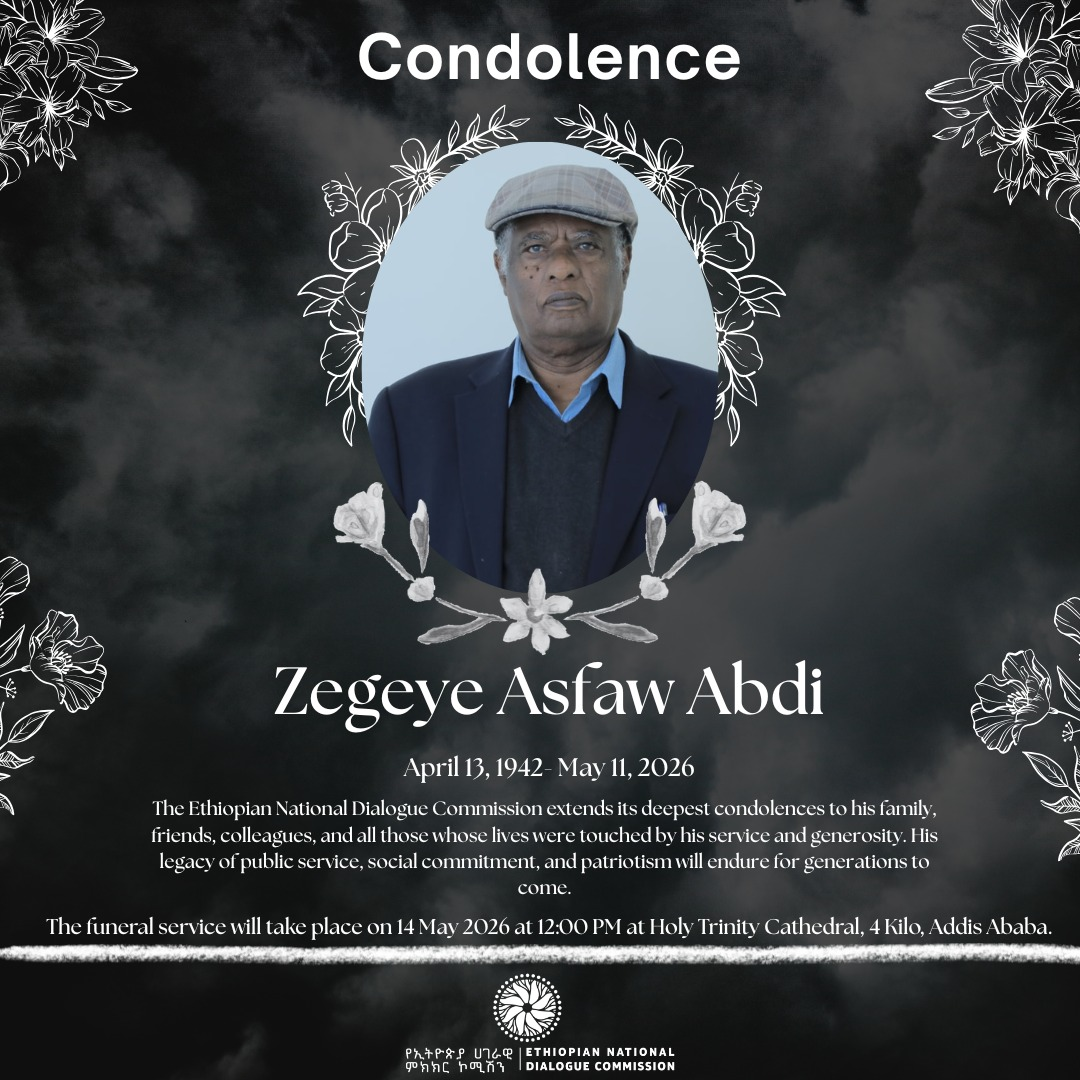
Subhead: Commissioner Zegeye Asfaw Abdi – lawyer, revolutionary, prisoner, minister, and servant of the people – leaves a nation in mourning
By: Daandii Ragabaa
Date: May 13, 2026
Dateline: ADDIS ABABA
LEAD PARAGRAPH
ADDIS ABABA – On May 11, 2026, Ethiopia lost one of its most consequential sons. Commissioner Zegeye Asfaw Abdi, the principal architect of the historic 1975 “Land to the Till er” proclamation, passed away at the age of 84. His death marks the end of an era – and the beginning of a long, collective reckoning with his extraordinary legacy.
Born in 1942 in West Shoa, Zegeye was a man of contradictions who resolved them through a lifetime of service. He was born into the nobility – a balabat, a member of the landowning class. Yet he dedicated his life to taking land from that class and giving it to the landless.
He was a lawyer trained at Haile Selassie I University and the University of Wisconsin–Madison. But his true classroom was the fields of Oromia, where he witnessed the daily humiliation of the gebar (serf) and the golle (tenant).
He was a minister under the Derg, a prisoner under the same regime, and later a minister again under the EPRDF. He served three radically different governments – but never wavered in his commitment to one principle: the land belongs to the tiller.
THE PROCLAMATION THAT CHANGED ETHIOPIA
Zegeye Asfaw will be remembered above all for his instrumental role in crafting the “Land to the Tiller” proclamation of 1975.
Before that proclamation, Ethiopia was a feudal society. In Oromia and the south, millions of farmers worked land they could never own. They paid tribute to landlords. They had no rights. They lived and died as serfs.
The 1975 proclamation changed everything. It transferred ownership from a tiny aristocracy to the millions who worked the soil. It broke feudalism’s backbone. And Zegeye Asfaw was the mastermind behind it.
He did not just sign it. He wrote it. He fought for it. And he paid for it – with ten years of imprisonment without trial, with exile from power, with decades of obscurity.
BEYOND PUBLIC OFFICE – A LIFE OF SERVICE
Zegeye served his country in several senior government positions during the Derg regime: the Ministry of Land Administration, the Ministry of Agriculture and Settlement, the Ministry of Justice, and the Ministry of Labour and Social Affairs.
But he was not a man who only served from the top down.
Through the local NGO Hunde, he worked tirelessly to combat poverty and improve the lives of vulnerable communities. He also founded Busa Gonfa, a microfinance institution focused on empowering rural women and expanding economic opportunities at the grassroots level.
He was equally committed to environmental protection, working closely with farmers and pastoralists on conservation initiatives and sustainable resource management.
THE FINAL CHAPTER – COMMISSIONER OF NATIONAL DIALOGUE
Since February 2021, Zegeye had served as a Commissioner of the Ethiopian National Dialogue Commission. He was in his late seventies when appointed – an age when most have long retired. But Zegeye served until his body would serve no more.
The National Dialogue Commission’s statement of condolence captures his character:
“Throughout his tenure, he distinguished himself through his integrity, diligence, humility, and unwavering commitment to the national dialogue process and the service of his country.”
He was, those who worked with him say, a man who could not be bought, could not be bent, and could not be silenced.
A DEATH THAT IS NOT AN END
Zegeye Asfaw is gone. But what remains?
- Every Ethiopian farmer who owns their land today – that is Zegeye.
- Every rural woman who has received a microfinance loan to start a business – that is Zegeye.
- Every tree planted by a pastoralist community learning sustainable land management – that is Zegeye.
- Every conversation at the National Dialogue Commission seeking common ground – that is Zegeye.
He is not erased. He is distributed – across the fields, the villages, the institutions he built, and the millions of lives he touched without ever meeting them.
FUNERAL ARRANGEMENTS
The funeral service will take place on May 14, 2026 at 12:00 PM at Holy Trinity Cathedral, 4 Kilo, Addis Ababa. He will be laid to rest among Ethiopia’s great patriots – a fitting resting place for a man who never sought honor but earned it in abundance.
A FINAL FAREWELL
The Ethiopian National Dialogue Commission extended its deepest condolences to his family, friends, colleagues, and all those whose lives were touched by his service and generosity.
We add our own:
“Go in peace. May your soul find rest and refreshment in paradise.”
The land you freed remains free. The people you lifted remain standing. And your name – spoken with gratitude by millions you never met – will not be erased.
Rest in power, Zegeye Asfaw Abdi (1942 – May 11, 2026).
| Quick Facts |
|---|
| Name: Commissioner Zegeye Asfaw Abdi |
| Born: 1942, West Shoa |
| Died: May 11, 2026 (age 84) |
| Education: Haile Selassie I University (Law), University of Wisconsin–Madison (Master’s in Law) |
| Key role: Architect of the 1975 “Land to the Tiller” proclamation |
| Government positions: Ministry of Land Administration, Ministry of Agriculture, Ministry of Justice, Ministry of Labour and Social Affairs |
| Post-government service: Founder of NGO Hunde; founder of microfinance institution Busa Gonfa |
| Final position: Commissioner, Ethiopian National Dialogue Commission (Feb 2021 – May 2026) |
| Funeral: May 14, 2026, 12:00 PM, Holy Trinity Cathedral, 4 Kilo, Addis Ababa |

