Burtukan Mideksa’s Memoir: A Political Odyssey
FEATURE NEWS
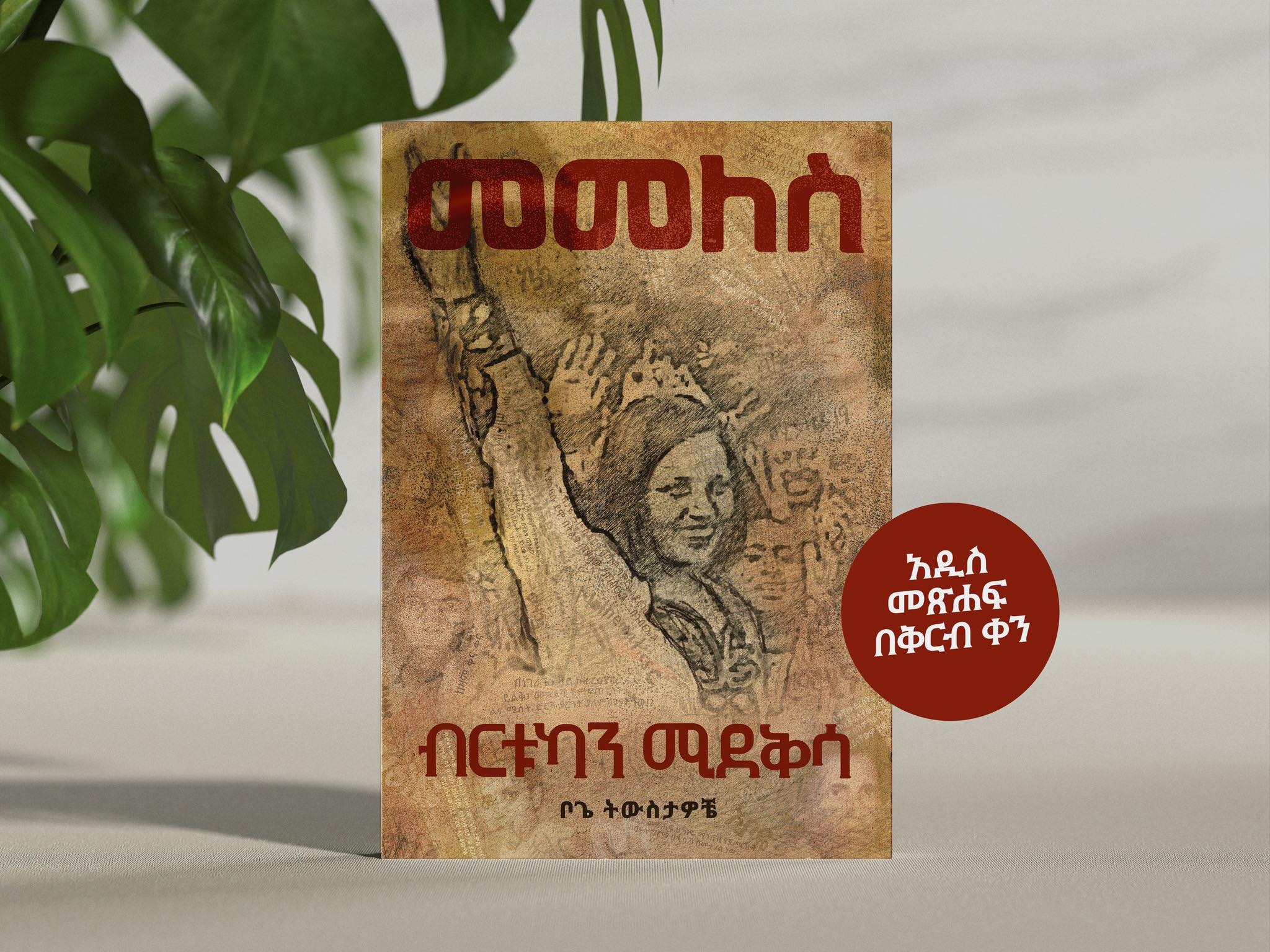
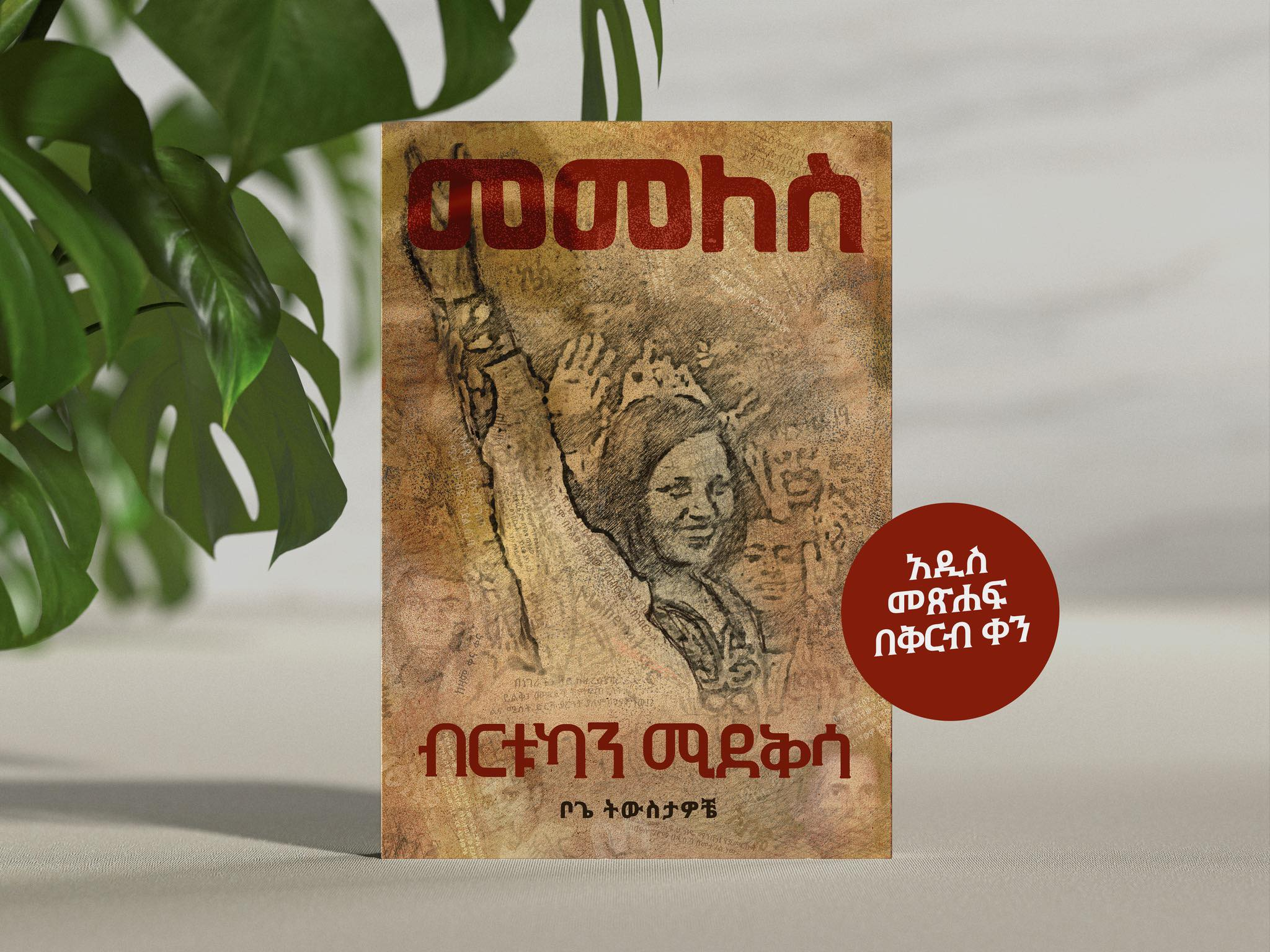
The Return: Burtukan Mideksa’s Memoir Set to Unveil Decades of Political Journey
ADDIS ABABA – One of Ethiopia’s most resilient and influential political figures is set to share her remarkable story in a keenly anticipated autobiography. The life memoir of Burtukan Mideksa, titled “መመለስ” (The Return / The Answer), is scheduled for release in the coming days, promising an intimate account of three turbulent decades at the heart of the nation’s politics.
A symbol of strength for many, especially women and youth, Burtukan—often affectionately called “Birtu Kan” (The Strong One) by her admirers—has navigated a journey few can match. Her forthcoming book chronicles a path that has spanned from the judiciary to political leadership, from exile to the helm of the National Election Board.
A Title with Dual Meaning
The choice of the single-word title “መመለስ” is profoundly evocative. It is a word loaded with dual significance in Amharic, reflecting the dual arcs of her narrative. It can be read as “The Return”—signifying her physical and political comeback to Ethiopia and to the public stage. Simultaneously, it resonates as “The Answer”—suggesting her response to long-standing questions about her role, her struggles, and the nation’s transformative journey. In either interpretation, the title promises a compelling and revealing narrative.
Charting a Nation’s Journey Through One Life
The memoir is expected to trace her unique passage through Ethiopia’s modern history. From her early career as a judge and her bold stance for judicial independence, to her political activism, subsequent imprisonment, and years in exile, Burtukan’s life mirrors the nation’s own struggles with democracy, justice, and change.
Her later return to Ethiopia and her historic appointment as the first woman chairperson of the National Election Board of Ethiopia (NEBE) marked a pivotal chapter, placing her at the center of the country’s most consequential democratic exercises. The book is anticipated to provide an insider’s perspective on these critical moments, detailing both the triumphs and profound challenges faced along the way.
Highly Anticipated by Scholars and Public Alike
The announcement has generated significant excitement among political analysts, historians, and the general public. Many hope the memoir will shed new light on untold stories, private reflections, and the inner workings of Ethiopia’s political evolution over the last 30 years. It is viewed not just as a personal history, but as a vital primary source for understanding contemporary Ethiopia.
A High-Profile Launch
Plans are underway for a high-profile official book launch ceremony this month. Arts TV has been named as the exclusive media partner for the event, ensuring comprehensive coverage and bringing the proceedings to millions of viewers across the nation and the diaspora.
Burtukan Mideksa’s “መመለስ” arrives at a critical juncture, offering a deeply personal lens on Ethiopia’s ongoing quest for stability and democracy. It is poised to be one of the most significant political memoirs of the year, providing answers, prompting reflection, and celebrating the return of a formidable voice to the literary and public sphere.
#BurtukanMideksa #TheReturn #NewBook #Ethiopia #ArtsTV
Reclaiming Oromummaa: The Journey of Oromo Studies

Bringing ‘Oromummaa’ into Focus: Four Decades of Reclaiming an Indigenous Legacy
JANUARY 9, 2026 – As the Oromo Studies Association (OSA) approaches its 40th anniversary, it has released a landmark statement that is part historical reflection, part scholarly triumph, and part urgent defense. The statement, authored by OSA President Dr. Ibrahim Amae Elemo, chronicles a transformative journey: from the systemic erasure of Oromo history to the global recognition of its indigenous democratic systems, and now, to a new wave of attacks targeting the scholars who brought this legacy to light.
Central to this four-decade effort is the concept of Oromummaa—a term embodying the collective values, institutions, and worldview of the Oromo people, the largest ethnic group in Ethiopia. Once dismissed, Oromummaa has been meticulously restored by OSA scholars through research that has redrawn the map of Horn of Africa studies.
From Erasure to Reclamation
The OSA’s founding in the 1980s was a direct response to a void. Prior to its establishment, Oromo heritage was not merely absent from academia and state narratives; it was actively suppressed. As the statement details, a state ideology of “Ethiopianism” promoted Orthodox Christianity, the Amharic language, and Abyssinian culture as the sole legitimate national identity. The Oromo language, Afaan Oromoo, was banned in schools and public life until 1992, and students were punished for speaking it or using Oromo names.
“The national project,” the statement asserts, “was to ‘Ethiopianize’ the peoples of the south and center through enforced cultural unification.” In this process, the Oromo—despite constituting about half of Ethiopia’s population—were portrayed as backward and ahistorical.
OSA’s intervention was revolutionary. Its scholars, many of whom were part of that first generation of students reclaiming their language, engaged in rigorous research that recovered suppressed histories. Through conferences, journals, and collaborative work, they produced a substantial body of knowledge that countered centuries of denigration and “restored collective dignity.”
Reshaping History and Highlighting Indigenous Democracy
A cornerstone of OSA scholarship has been re-examining Ethiopian state formation. Drawing on archives and oral histories, researchers have framed the expansion of the Abyssinian empire in the late 19th century as a colonial project, supported by European powers and marked by violent conquest, dispossession, and the enslavement of independent societies like the Oromo.
More celebratory research has focused on Oromummaa as an indigenous democratic worldview, anchored in three core institutions:
- The Gadaa System: A complex socio-political system featuring an eight-year leadership cycle, checks and balances, and principles of accountability and rule of law. Its global significance was recognized by UNESCO’s inscription on its Intangible Cultural Heritage list.
- Siinqee (Siiqee): A women’s institution that ensures gender balance and social justice.
- The Qaallu: The spiritual authority maintaining harmony between society, nature, and the spiritual realm.
Together, these institutions embody values of democracy, peace (nagaa), and ecological stewardship that OSA argues offer lessons of “global relevance.”
A New Era of Attacks and a Call to Action
This hard-won scholarly recognition is now under threat. The OSA statement warns of “renewed attacks on Oromo scholars and scholarship” from actors seeking to “restore inequitable power relations.”
These attacks have evolved from formal complaints accusing scholars of “hate speech” to coordinated social media campaigns that vilify Oromummaa itself as a dangerous ideology. Internationally respected figures like Professor Asafa Jalata, a pioneering sociologist, have been targeted.
“These attacks do not represent scholarly debate grounded in evidence,” the statement declares. “Rather, they reflect a politicized rejection of any scholarship that challenges centralized authoritarian narratives.” It draws a stark warning: “History demonstrates that vilification of a people’s identity is often a precursor to mass violence.”
In conclusion, the OSA issues a powerful call to the global academic community and the public. It urges the defense of academic freedom and support for Oromo scholarship, framing it not as a niche field but as vital to understanding one of the continent’s oldest continuous democratic traditions. The Oromo legacy, the statement concludes, is a contribution not only of “agricultural and animal bounty” but of a resilient, indigenous democratic way of life whose study is now more critical than ever.
#Oromummaa #OromoStudies #Gadaa #AcademicFreedom #OSA40

Unfinished Liberation: The Oromo People at a Crossroads of Struggle and Resurgence
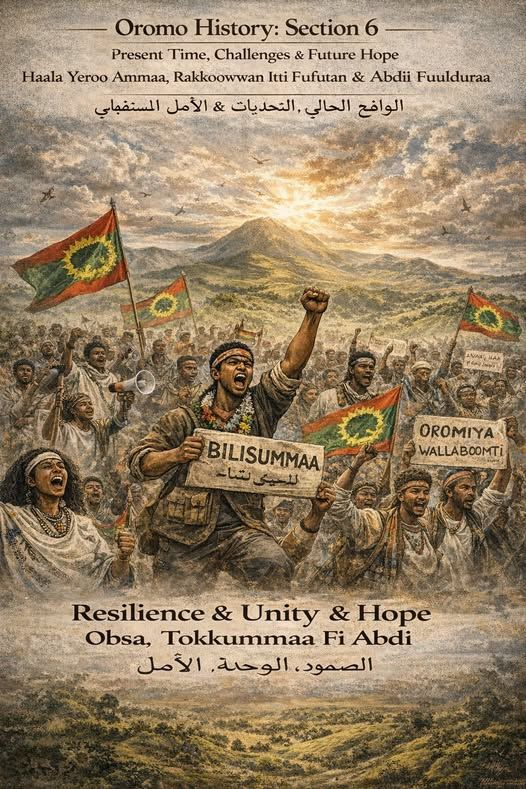
A PRESENT OF PROTEST, A FUTURE OF POSSIBILITY**
The story of the Oromo people, the largest ethnic group in Ethiopia, has long been narrated as a history of resistance against centuries of marginalization. But history is not a closed book. As the community moves through the 21st century, its narrative is one of a profound and tense present—a reality where deep-rooted political challenges coexist with an unprecedented cultural revival, and where the struggle for self-determination is being redefined by a new generation.
This sixth chapter of Oromo history is not about the past; it is a living document, written daily in protests, in songs, in displacement camps, and in the global halls of advocacy.
The Persistent Political Paradox
Demography has not translated into democracy for the Oromo. Constituting an estimated 35-40% of Ethiopia’s population, they remain in a paradoxical position: a numerical majority without commensurate political power. Critical decisions concerning land, security, and resources are still centralized, leaving many Oromos feeling politically sidelined in their own homeland. This structural marginalization is the bedrock of ongoing discontent and the primary catalyst for the powerful protest movements that have shaken the nation over the past decade.
A Landscape of Insecurity and Displacement
The political tension has a human cost. In recent years, several Oromia regions have been plagued by instability. Reports from human rights organizations and media detail cycles of violence involving armed groups and state security forces, leading to civilian casualties, widespread internal displacement, and persistent allegations of rights abuses. Families have been uprooted, farms abandoned, and a pervasive climate of fear has disrupted the social fabric, casting a long shadow over daily life and economic stability.
The Unbreakable Spirit: Cultural Renaissance
Against this challenging backdrop, a powerful counter-narrative flourishes: a cultural renaissance. The Oromo language, *Afaan Oromo*, once suppressed, is now a working language of the Oromia region and is thriving in media, education, and digital spaces. Oromo music, art, and literature are experiencing a golden age, with artists like the late Hachalu Hundessa becoming national icons of resistance and identity. This cultural reawakening is not a retreat but a reclamation—a tool of resilience and a defiant affirmation of existence. Young people, in particular, wear their Oromo identity with a pride that is both personal and political.
The New Architects: Qeerroo and Qarree
The engines of this new chapter are the youth (*Qeerroo*) and women (*Qarree*). The *Qeerroo* movement, a leaderless network of young Oromos, demonstrated its formidable power in the 2014-2018 protests that helped usher in a political transition. Simultaneously, *Qarree*—Oromo women—are moving powerfully from the background to the forefront, organizing, advocating, and demanding a seat at every table, challenging both external oppression and internal patriarchy. Their grassroots activism represents the most dynamic force in contemporary Oromo society.
A Global Struggle with a Peaceful Heart
Oromo activism has consistently emphasized peaceful resistance, even in the face of violence. This principled stance, coupled with the strategic work of a large and mobilized global diaspora, has successfully internationalized the Oromo question. From parliaments in Washington and Brussels to universities worldwide, the call for Oromo rights and self-determination is now part of the global discourse on human rights and federalism in Ethiopia.
Hope Anchored in Unity and Knowledge
The path forward is fraught but illuminated by a clear vision. Community leaders and intellectuals stress that the future hinges on internal unity, a deep understanding of their own history, and an unwavering commitment to peaceful struggle and dialogue. The goal is not just political change but the building of a society where Oromo identity is the foundation for dignity, justice, and shared prosperity.
Conclusion: A Story Still Being Told
This Oromo history confirms that their story is still unfolding. It is a present-tense narrative of simultaneous pain and power, of loss and limitless cultural vitality. The struggle for a truly equitable place within Ethiopia continues, but it is now carried by a generation armed with history, mobilized by technology, and inspired by an unbroken spirit. The Oromo history, as it is written today, remains—above all—a enduring story of survival, resistance, and an undimmed hope for a future of their own making.
Celebrating Oromo Strength: Lessons from D.C. Gathering

Feature Commentary: The Covenant Renewed – How a Washington D.C. Celebration Forged a Blueprint for Continuity
On the surface, the gathering by the Washington D.C. chapter of the Oromo Liberation Front (OLF-Konyaa) was a familiar ritual: the commemoration of Oromo Liberation Army (WBO) Day and the celebration of Amajjii, the Oromo New Year. Yet, within the traditional prayers (eebba), speeches, and shared resolve, a powerful and sophisticated blueprint for the struggle’s future was being articulated—one that skillfully wove together gratitude, clear-eyed assessment, intergenerational blessing, and a philosophy of endurance.
The ceremony, opened by the spiritual invocation of veteran leader Jaal Qaxalee Waaqjiraa, immediately grounded the political in the spiritual. His thanksgiving prayer, “We thank God who, after years of wandering, has brought us here,” was profoundly layered. It acknowledged a journey—a long, arduous “wandering” of exile, displacement, and conflict—while celebrating the “here”: a community intact, organized, and capable of gathering in defiance of that very displacement. It framed the present not as an endpoint, but as a providentially granted platform, creating a sense of both debt and opportunity.
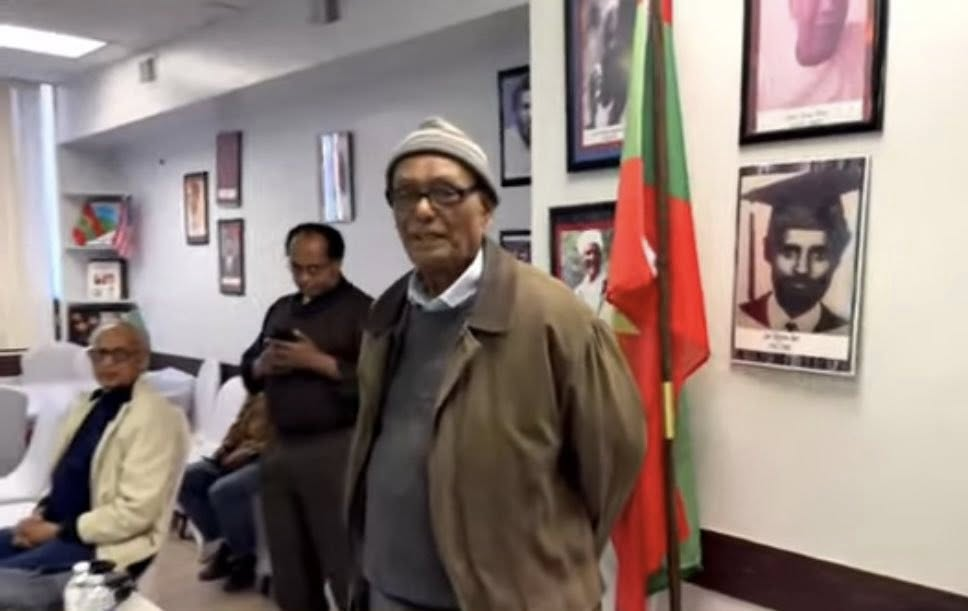
This spiritual framing set the stage for a starkly realistic assessment from chapter chairperson Jaal Bilisummaa Tasgara. By openly detailing “the current situation of the struggle,” he performed a crucial act of transparency. There was no empty triumphalism. Instead, there was a communal acknowledgment of the “complex and difficult” (ulfaataa) reality. This honesty is the bedrock of trust and mature mobilization. It prevents disillusionment and transforms collective understanding from a source of despair into a foundation for strategic perseverance. As he noted, the day was both a “day of mourning and celebration,” a duality that honestly captures the Oromo condition—grieving the fallen while celebrating the unbroken spirit.
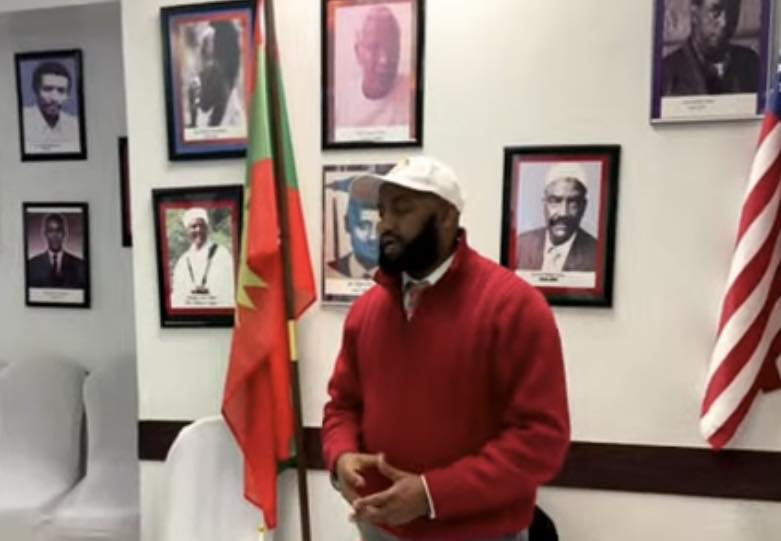
From this realistic ground sprang the core directive: “Our people must become stronger and more resilient.” This was not a vague wish but a clear, operational imperative. The call for jabeenya (strength) and ijaarsa (building/construction) shifts the focus from merely reacting to oppression to proactively building communal, institutional, and personal fortitude. It answers the “how” of continuing in a difficult phase.
The most poignant moment of strategic continuity was the virtual participation of legendary elder Jaal Dhugaasaa Bakakkoo. His Zoom presence was a powerful technological bridge across time. By thanking him for his “guidance and perseverance,” the assembly did more than honor a hero; it ritually drew a line of legitimacy and tactical wisdom from the founding generation directly into the present. It signaled that the current path is not a divergence but an inheritance, blessed by those who laid the first stones.
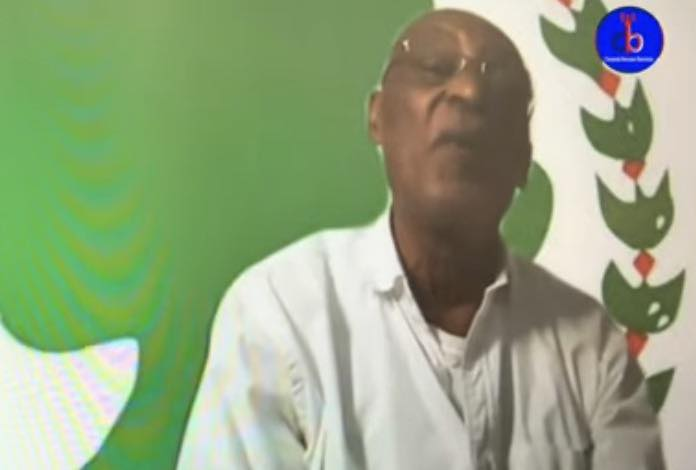
This synthesis of elements reveals a sophisticated political culture. The event masterfully connected:
- Spiritual Legitimacy (Eebba) with Political Analysis.
- Honest Acknowledgment of Hardship with a Call for Proactive Strength.
- Reverence for the Past with a Practical Roadmap for the Future.
The closing reflection, “Our struggle is alive and will continue to be remembered as one with a clear direction and sustainable objective,” is thus not a hopeful slogan but a conclusion drawn from the evening’s architecture. They have defined “alive” not as mere existence, but as the state of being guided, united, building strength, and connected to one’s source.
The Washington D.C. celebration, therefore, was a masterclass in sustaining a liberation movement in the long haul. It moved beyond mere remembrance into the realm of active stewardship. It showed that the covenant of struggle is renewed not by ignoring the present cost, but by confronting it with faith, honesty, unity, and an unwavering commitment to building the resilience needed to see the journey through. The message was clear: the wandering has brought us to this point of clarity. Now, we build, we endure, and we march, strengthened by the very weight of the journey itself.
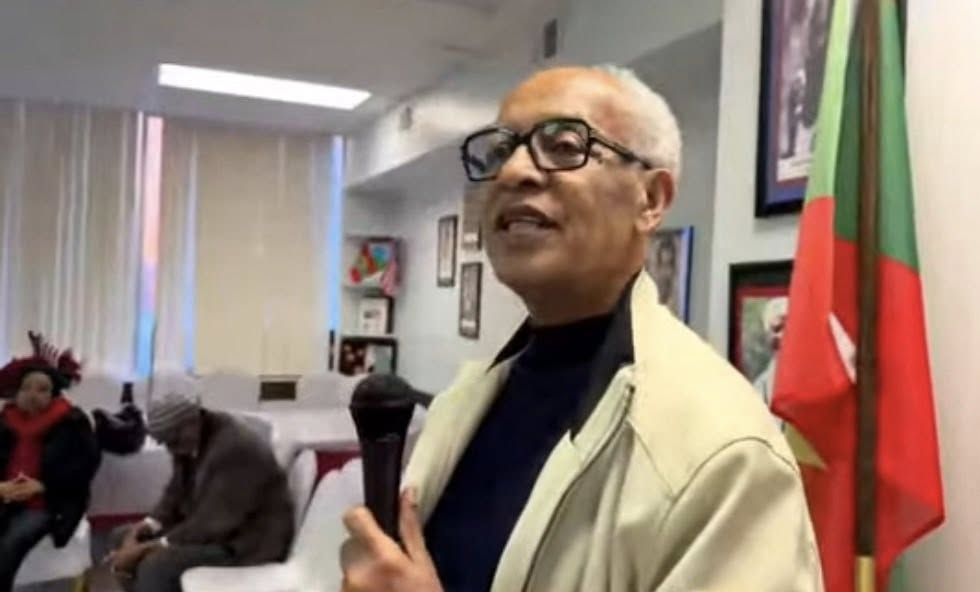
Ilfinash Qannoo: A Symbol of Oromo Resilience
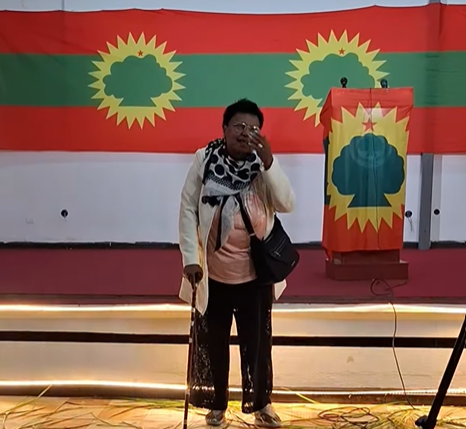
News Feature: The Unbroken Flame – Ilfinash Qannoo Embodies a Lifetime of Struggle and Steadfastness
GULLALLE, OROMIA – In the bustling activity of the Oromo Liberation Front (OLF) headquarters this Amajji 1 celebration, one figure sits with a quiet, palpable gravity. Ilfinash Qannoo, her body bearing the weight of years and the toll of relentless struggle, is a living archive of the Oromo quest for freedom. Too weak to stand, too ill to move independently, she is carried to gatherings, not as an invalid, but as a revered ember of the movement’s enduring fire.
Her presence is a testament, not to frailty, but to an indomitable will. It is the final, physical testament of a life offered completely—uleetti rarraatee—stretched across the altar of the Oromo struggle. Her commitment, born of a profound and unwavering love for the cause, saw her pour her energy into every space she could reach, for as long as she could manage, until her very body could no longer sustain the pace of the fight.
Today, on Oromo World Brotherhood Day (WBO), surrounded by a new generation of activists and leaders at the OLF Gullalle office, Ilfinash Qannoo’s role has transformed from frontline mobilizer to living monument and moral compass. Her journey is a bridge connecting the sacrifices of the past to the responsibilities of the present.
“A Seed That Moves Does Not Rot; The Dead Do Not Rise, So Do Not Fear Them.”
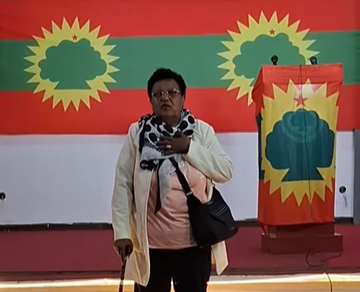
This powerful Oromo proverb, evoked by those who know her story, encapsulates her legacy. Ilfinash Qannoo was never static. She was a “seed” that moved—organizing, advocating, supporting—ensuring the ideas of liberation never stagnated or “rotted” in passivity. Her life’s work was to keep the movement in motion.
Now, her physical stillness speaks volumes. It forces a confrontation with the cost of the struggle and the solemn duty of those who remain. “Do not fear the dead,” the proverb advises, urging the living to act with the courage of those who can no longer stand. In her silent, observant presence, she embodies this charge, a silent reminder that the true threat is not the fallen, but the inaction of those who inherit their dreams.
Her life has been one of radical interdependence—naamaan deeggaramtee—leaning on and being leaned upon by the community she helped build. From providing shelter and intelligence in perilous times to offering counsel and moral support, her strength was always relational, woven into the fabric of the collective struggle.
As officials and well-wishers approach her chair on this day of celebration, they do not offer pity. They offer kabaja—deep respect. They bend to whisper words of gratitude, to seek a silent blessing from her weary eyes. The whispers that surround her are not about illness, but about endurance; not about an ending, but about a transcendent persistence.
“Ulfaadhu, umurii dheeradhu jenna!” – “Be strong, may you have long life!” is the fervent wish expressed for her. It is a wish for the longevity of the spirit she represents: the spirit of self-sacrifice, unconditional love for the cause, and an resilience that refuses to be extinguished.
Ilfinash Qannoo, in her dignified fragility, is more than an individual. She is a symbol. She represents every parent who lost a child, every activist who endured prison, every anonymous supporter who carried the movement forward in shadows. On this Amajji 1, as the Oromo people worldwide celebrate their brotherhood and identity, the image of Ilfinash Qannoo, carried to the heart of the movement’s headquarters, serves as the most profound reminder: that the journey is long, the cost is high, and the flame, once lit by love, must be tended by every generation.
Her silent message echoes in the hall: The seed must keep moving. Do not let it rot. And do not fear—build the future with the courage her life has demanded.
Dhaamsa ABOn Bara 2026: Tokkummaa fi Qabsoo Jabeessuu
Guyyaa Mudde 31, 2025 — Addi Bilisummaa Oromoo (ABO) dhaamsa bara haaraa 2026 isaa dabarsuun, waggaa darbe sirna fi hidhannoo hamaa keessa darbee, qabsoo bilisummaa Oromoo itti fufsiisuuf, tokkummaa fi cimina ummataa waamicha guddaa taasiseera.
Dhaamsi kun, miseensota, hogganoota, deeggartoota ABO fi ummata Oromoo maraaf baga bara haaraa dabarsuun jalqabame, barri haaraas “bara nagaa, milkii, haqaa fi dhugaa” ummataaf akka ta’u abdii guddaa isa keessa qaba.
Hanga ta’us, ABOn hubachiise akka barri 2025 kanatti dhiibbaan siyaasaa fi hidhaa mootummaa Wayyaanee irra gahaa ture, gufuulee hedduu dhaaba fi miseensota isaa irratti geggeeffame. Haala kana keessatti, ABOn akka ibsutti, “sodaa fi bir’annaa tokko malee” hojii siyaasaa geggeessuun itti fufeera. Kunis, waajjira muummee Gullalleen ABO, leenjii haaromsaa miseensotaaf kennuu, fi gumiin sabaa ABO walga’ii dhaabbataa 3ffaa geggeeffachuun hojiilee dandamachaa hojjeteera.
Haala rakkoo kana keessa, dhaabichaan ibsa ulfaataa ummata Oromoo irratti roorroon itti fufuun geggeeffamaa jiru mirkaneessee, akkaataan ajjeechaan maqaan adda addaa, hidhamuun, saamamuun, fi buqqaachisni lammiilee kumootaa Oromiyaa keessatti itti fufuun “ummatni wabii jireenyaa dhabe” jedhee dubbateera.
Dhaabichaan, furmaata kanaaf, “humna Oromoon qabu inni guddaan tokkummaa isaati” jedhee waamicha jabeessaa ummataaf godheera. ABOn waamicha ummatatiin, “sab-boonummaa Oromummaa” jabeessuu, fi “ololoota farrummaa” kan ABO fi qabsoo irratti geggeeffaman irraa of eeguu qofa irratti akka xiyyeeffatan dhaammateera.
Gama siyaasaa biyyattii ilaalchisee, ABOn mormiin isaa sirna PP fi’ila isaa irratti fooyyeessuun, rakkoon siyaasaa fi dinagdee biyyattii “karaa siyaasaa, dinagdee fi hawaasummaan dabalaa jiru” jedhee dubbateera. Kanaaf, ABOn, “qulqullummaan gadi taa’ee qaamota dhimmi ilaalu waliin marii nagaa” geggeeffamuun furmaata argamsiisu irratti yaamicha deebise.
Xumurri dhaamsaa kanaatiin, ABOn ummata Oromoo fi qabsaawoota isaa “irbuu keenya yoom illee haarawaa, abdiin keenyaas guddaa” ta’uu wal irratti abdanna jechuun, qabsoo jabeessuun daandii filannoo biraa hin qabne ta’uu mirkaneessee, barri 2026 bara “ajjeechaa, roorroo fi gidiraan irraa dhaabbatu” akka ta’u abdii guddaa dabarseera.
Dhaamsi ABO kana, fiixaa fi kaka’umsi qabsoo Oromoo itti aanuuf bu’uura cimaa fi waamicha tokkummaa ummataa ta’uun, rakkoo fi dhibee waggaa 2025 keessa mudate irraa ka’uun, qabsoo itti fufuuf yaada gama hundaan qaba.
Karrayyu Community’s Sacred Ritual for Power Transition

Karrayyu Gadaa Council Prepares Historic “Buttaa Qaluun” Rite for Leadership Transition
TARREE KEEDII, OROMIA — In accordance with the sacred eight-year cycles of the Oromo Gadaa system, the Karrayyu community is undertaking profound preparations for the Buttaa Qaluu ceremony—a pivotal ritual that facilitates the peaceful and systematic transfer of power from one Gadaa grade to the next.
Central to this process is the revered Baallii Gadoomaa (the scepter of Gadaa). Per Oromo law, the scepter is transferred every eight years. For the Karrayyu, the incumbent Gadaa council, having held the scepter and led the people for its designated eight-year term, is now charged with preparing the successor grade to assume power.
“The current Gadaa grade, having taken the Baallii Gadoomaa and governed for eight years, must now create the space—the Goobaa or Irreessa—for the next Gadaa set to rise,” explained a senior cultural analyst familiar with the rites. “This act of ‘giving space’ is a core constitutional principle of Gadaa, ensuring balanced, rotational, and non-hereditary leadership.”
The elaborate Buttaa Qaluu ceremony, now being organized at the sacred site of Tarree Keedii, is the formal mechanism for this transition. The term Goobaa itself encompasses the acts of vacating, clearing the path, mentoring, and imparting wisdom to the incoming leaders.
“The Karrayyu use Gadaa’s peaceful and consensual transfer of power as a model for national governance,” the analyst added. “The Goobaa demonstrates how leadership can be relinquished gracefully to ensure continuity and stability.”
Current Council Prepares the Ground
All eyes are now on the Gadaa Michillee council, the current custodians of power. Their critical preparatory duty is to receive the final blessings (Eebbaa) from the Abbaa Bokkuu (the presiding father) at their designated ritual ground (Ardaa).
Following this, they will proceed to the assembly site at Tarree Leedii to take their positions and oversee the meticulous execution of the Goobaa rituals. Their role is to ensure every sacred protocol is followed to legitimize and empower the incoming grade.
This meticulous process underscores the Gadaa system’s enduring sophistication as a indigenous system of democracy, conflict resolution, and constitutional governance. The Buttaa Qaluun ceremony is not merely a cultural event but a living enactment of a social contract that has guided the Oromo people for centuries.
The upcoming rites are expected to draw elders, scholars, and community members from across the region to witness this foundational practice of Oromo democracy in action.
# # #
About the Gadaa System:
Gadaa is the traditional, holistic social system of the Oromo people that governs political, economic, social, and religious life. It is based on an eight-year cyclical timeline, with power rotating democratically among five generational grades. In 2016, UNESCO inscribed the Gadaa system on the Representative List of the Intangible Cultural Heritage of Humanity.
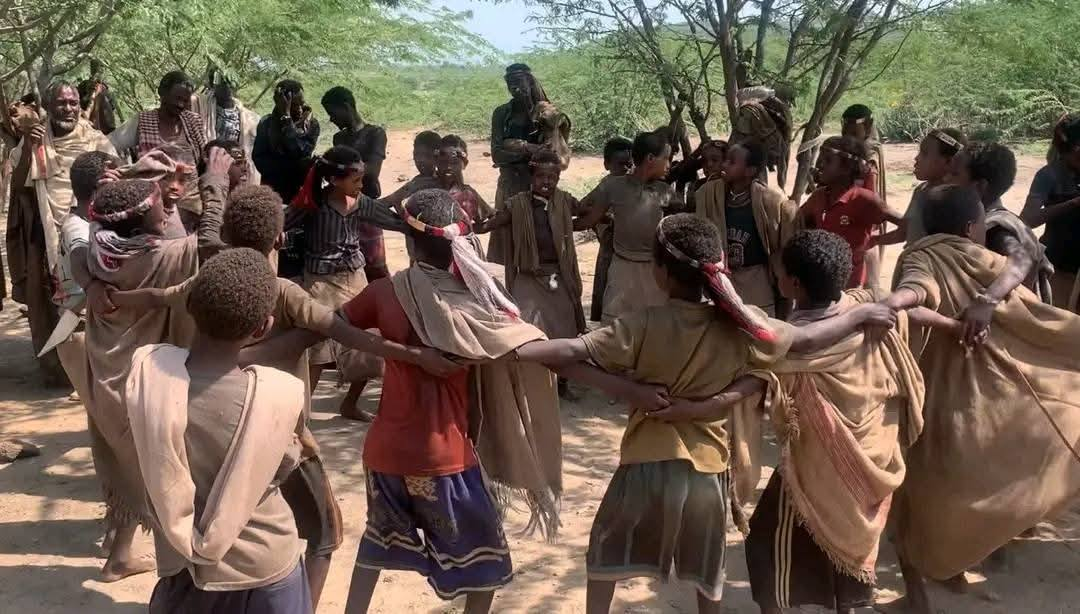
Gadaa Michillee Clan of Karrayyu Commences Historic “Cidha Buttaa” Ceremony
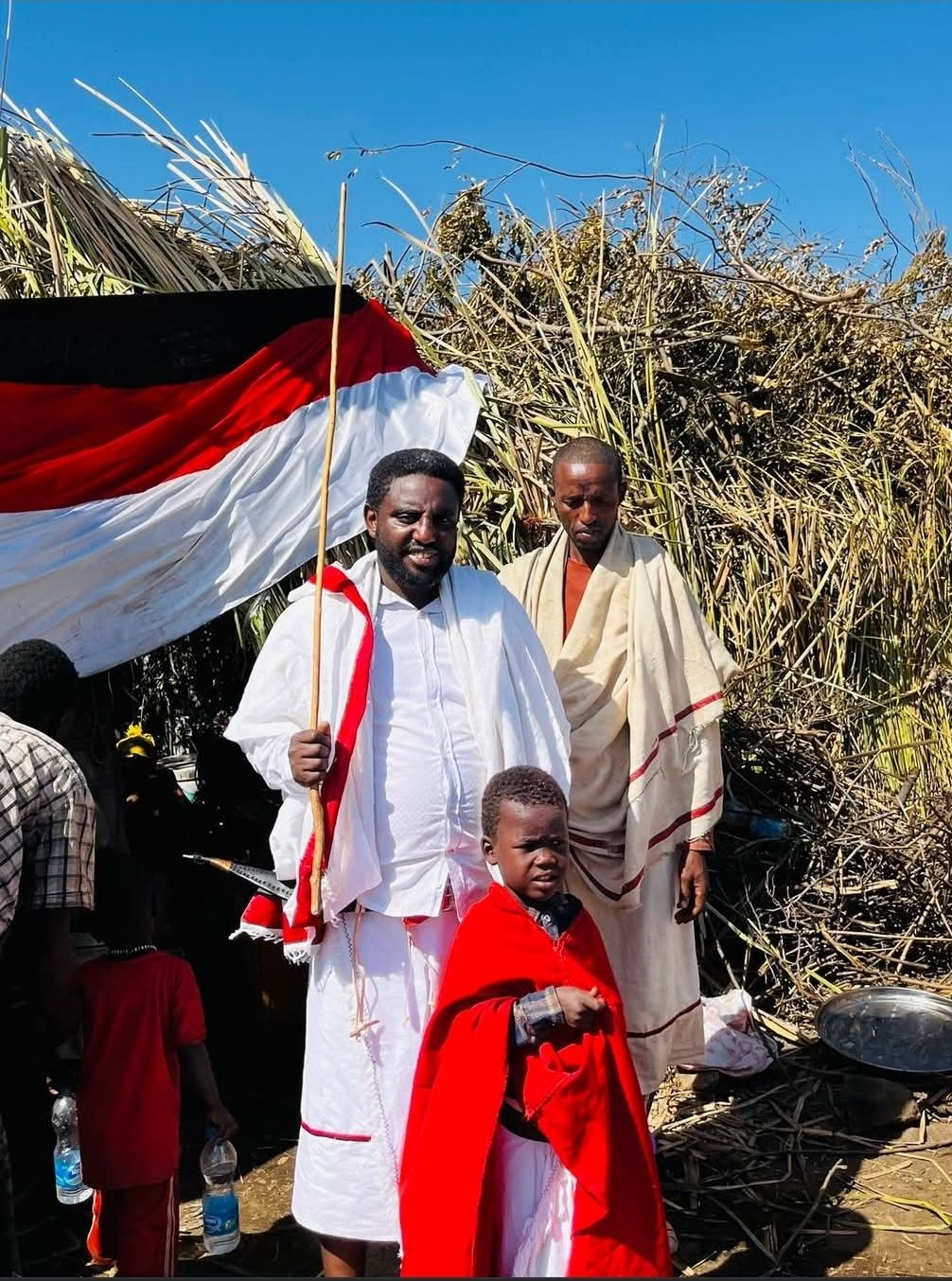
Muddee 26, 2025 — The esteemed Gadaa council of the Michillee clan within the Karrayyu Oromo nation has officially inaugurated the grand Cidha Buttaa ritual at Tarree Leedii, marking the beginning of a profound 12-day cultural and spiritual observance. The ceremony, which began on the 26th of Muddee (December), is set to conclude with major rites on the 26th and 27th.
The Cidha Buttaa is a complex sequence of traditional rites performed in a strict, consecutive order over its duration. The opening days have seen powerful foundational ceremonies:
Day 1 (Muddee 26):
- The Gadaa council members formally took their designated seats (Tarree Leedii).
- The sacred fire at the Abbaa Bokkuu’s (leader’s) hut was ignited.
- Blessing rituals (Eebbaa) were performed.
- A ritual of communion and sharing of ceremonial drink (Qubsuma) was held.
- Camels (Geejjiba) were paraded in a display of honor and strength.
- At Tulluu Huffeenna, a Kataarii tree was erected and burned, with prayers for abundance (Korbeessa Huffeenaa).
- The Raabaa officials conducted rituals involving a ceremonial staff (Dhaddacha) and the planting of a ritual stake (Ardaaga).
Day 2 (Muddee 27):
- A mature bull (Dullacha) was sacrificed at the entrance of the leader’s hut.
- Vigil was kept over the sacred fire and the Ardaaga stake.
From the third to the fifth day (Muddee 28-30), the focus shifted to construction: building the main ritual lodge (Galma), installing the central ritual object (Daasa Keessummaa), and constructing enclosures for cattle and camels.
The period from the fifth to the ninth day (Muddee 30-Amajjii 3) involves spiritual and communal deliberations:
- Pilgrimages to sacred sites like Uman, hills, and valleys.
- Prayers for peace to Waaqa (the Creator).
- A series of assemblies to discuss the preservation and transmission of Gadaa laws, customs, and clan identities.
- Deliberations on environmental stewardship and land protection.
All these preparatory rituals will lead to the climactic ceremonies on the tenth day.
Day 10 (Amajjii 6):
- At dawn, the final preparations (Hiiddii) will be made.
- A special shelter (Bitimaa) will be erected behind the cattle enclosure.
- In the afternoon, the Abbaa Galmaa (ceremony head) will stand before the shelter to formally authorize the appointed ritual actors (Gumaachitoota).
The Cidha Buttaa will then enter its final, most sacred phase on the night of the 6th of January, continuing into the 7th of January.
This elaborate ceremony reaffirms the vitality of the Gadaa system, serving as a critical mechanism for cultural renewal, social cohesion, spiritual blessing, and the intergenerational transfer of authority and knowledge among the Karrayyu Oromo.
The Calculated Return: Rebranding Hassan Ali and the Politics of Historical Amnesia
By Koste Abdiisaa (Political Commentary)

Since last week, a familiar yet troubling political theatre has unfolded on our social media feeds. The return of former Oromia president Mr. Hassan Ali has been met not with sober reflection, but with a coordinated campaign of glorification. The volume and tenor of this noise are not organic; they are a political product. And they demand a critical question: Why the aggressive, sudden need to rewrite a man’s past?
Let us be clear: the return of any individual is, in itself, a neutral event. What is not neutral is the systematic attempt to whitewash a deeply problematic political record against the backdrop of profound, ongoing suffering. Mr. Hassan Ali, like millions of Oromos, was once a vocal critic of the very system he later led. Yet, his presidency under the OPDO—the regional arm of the then-ruling EPRDF—was not a period of liberation. It was a chapter in the same grim story of state-sanctioned violence against the Oromo people.
Historical memory cannot be deleted by a hashtag. It was under the governance structure he led that figures like Nadhii Gammadaa, Dararaa Kafanii, and Jireenyaa Adunyaa were executed or forcibly disappeared. It was a system that normalized imprisonment, exile, and death for countless innocent Oromos. To launch a social media campaign that glosses over this reality is not just revisionism; it is an insult to the victims and their families who still seek justice.
Therefore, the fixation on whether he is being praised misses the point. The urgent questions are strategic and forward-looking:
- Why now? Why has the Prosperity Party (PP) and the Shimelis Abdisa administration chosen this precise moment to facilitate and amplify his return? Is it coincidental that this occurs amid escalating political and security crises in Oromia and other regions?
- What is the political calculus? The PP is not a charitable organization. Its every move is tactical. Is Hassan Ali’s return intended as a distraction, a shiny object to divert public attention from state failures? Is it an attempt to create a semblance of “reconciliation” with a discredited faction to split opposition sentiment? Or, more cynically, is it the first move in grooming him as a “reformed” candidate for a future managed election, providing a veneer of Oromo leadership while serving PP’s centralist agenda?
- Who benefits from the noise? The sheer volume of orchestrated praise serves to drown out these very questions. It aims to replace critical analysis with emotional reception, shifting the narrative from accountability to celebrity.
History offers a clear lesson: the political machinery Hassan Ali once served has never acted without cold, strategic intent. Invitations back into the fold are extended not as acts of grace, but as moves on a chessboard.
My apprehension is not personal. It is political. At this stage of his life, one hopes Mr. Hassan Ali would seek a legacy of truth, not convenience. To become a pawn in a strategy designed to legitimize a system that continues to oppress his own people would be to stand, once more, on the wrong side of history.
Ultimately, the Oromo struggle for justice, self-determination, and dignity is larger than any individual. It will not be derailed by a rebranding campaign or short-term political maneuvering by the PP. The people’s quest for accountability is relentless.
However, for the individual, history offers a space for reflection and correction. The most consequential mistakes are often those we repeat. The real test is whether this return is a step toward genuine atonement and independent voice, or whether it is a political trap—for him, and a painkiller for a government under pressure. Only time will reveal the true diagnosis, but we must not let the noise of the moment silence our critical inquiry. The past is prologue, and ignoring its lessons is a luxury the Oromo nation can no longer afford.
Remembering Aayyoo Asinaa Abduramaan: A Legacy of Strength

A Pillar of the Struggle Departs: Mourning the Passing of Aayyoo Asinaa Abduramaan, Mother of Jaal Hundee Daraaraa
The Oromo global community is in mourning following the passing of Aayyoo Asinaa Abduramaan, a revered matriarch and steadfast symbol of resilience, who died today after a prolonged illness. Her departure marks not just a personal loss for her family, but a profound moment of collective grief for a nation that saw in her the unbreakable spirit of Oromo motherhood.
Aayyoo Asinaa was more than a mother; she was an expert in life and a mother of freedom fighters. She lived a life defined by immense sacrifice and unwavering dedication to the cause of Oromo liberation. While her own children dedicated their lives to the struggle, she bore the heaviest of burdens, suffering the ultimate loss and enduring hardship without complaint.
She was the mother of Jaal Hundee Daraaraa (MGS_ABO), a freedom fighter of the Oromo Liberation Front (OLF). In the pursuit of Oromia’s freedom, she gave her sons, experiencing both the pain of their loss and the suffering of those who returned bearing the scars of battle. She endured these trials with a heart that remained a source of strength for others, even as her own body and spirit carried wounds that never fully healed.
A Personal Testament to Her Strength
A community member who witnessed her fortitude firsthand shared a poignant memory: “I saw Aayyoo Asinaa for the first time in 2018 when OLF leadership returned to the country. During a public event in Ghindhir town, as leaders addressed the crowd in the South-East region, she saw Jaal Hundee Daraaraa. Remembering her son, lost in the struggle for so many years, she collapsed in tears. It was a heartbreaking scene. She was a consoler of others, a mother of fighters, and a heroine who displayed exceptional grace for Oromia. Her passing leaves a deep ache in our hearts.”
Her life story embodies the quiet, often overlooked, heroism of mothers in liberation movements—those who send their children to the front lines and must find a way to live with the consequences, becoming pillars for their communities while nursing private grief.
A Legacy of Sacrifice and Strength
Aayyoo Asinaa Abduramaan’s legacy is one of profound sacrifice and unyielding dignity. She navigated a path of personal tragedy without allowing bitterness to overshadow her love for her people and their cause. Her life was a testament to the Oromo proverb that true strength is often found in silent endurance.
The community now rallies around her remaining family, offering prayers for strength and unity. “May God grant her mercy,” the statement concluded. “May He provide patience, solace, and resilience to Jaal Hundee and the rest of the family.”
As news of her passing spreads under the hashtag #AayyooAsinaaAbduramaan, social media is filling with tributes, honoring a woman whose name will be remembered alongside the freedom fighters she raised and supported—a true Aayyoo (revered mother) of the nation.
Rest in Power, Aayyoo Asinaa. Your struggle is now your eternal peace.
 Oromedia