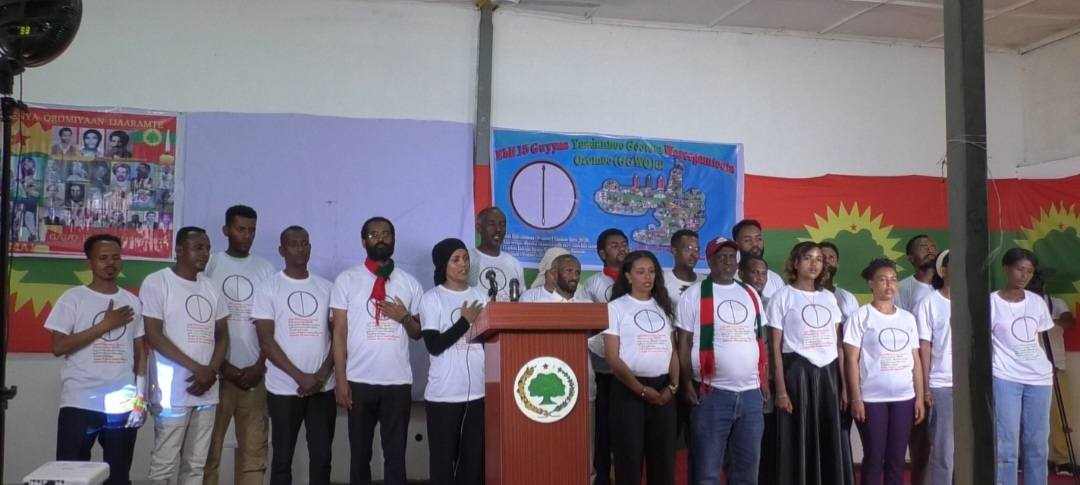
‘We Are Eagles, Not Vultures’: PM Abiy Defends His Government’s Vision
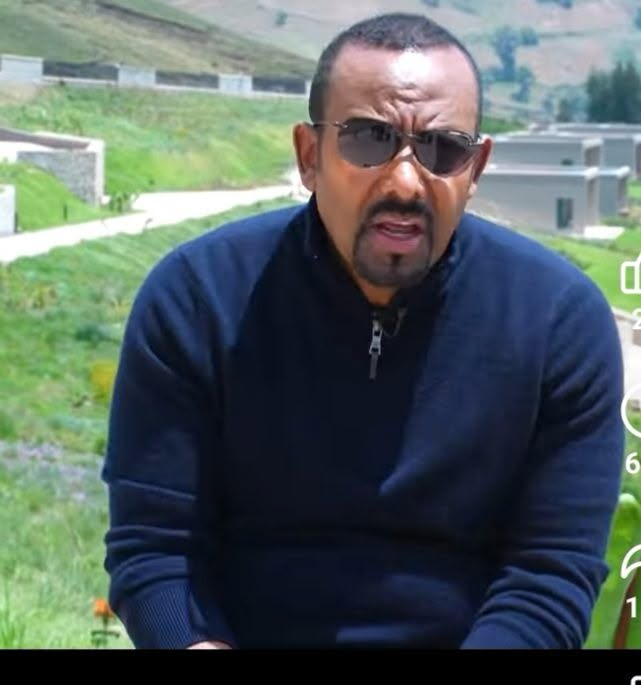
In a striking analogy at the Haro Dendi Lodge inauguration, the Prime Minister contrasts soaring ambition with lowly scavenging.
By Staff Writer | Published: April 2026
FINFINNE (ADDIS ABABA) – April 11, 2018 (E.C.) – Prime Minister Dr. Abiy Ahmed has invoked a powerful ornithological analogy to describe his government’s philosophy, declaring: “We are eagles, not vultures. We leave crying and weeping to the vulture.”
Speaking at the inauguration of the Haro Dendi Lodge construction project in Oromia, the Prime Minister used the contrasting characteristics of two birds to frame his administration’s approach to governance and national development.
The Eagle: A Symbol of Greatness
According to the Prime Minister, the eagle (Risaa) is a bird known for its extraordinary vision and its ability to soar far above all other birds.
“The eagle flies at the highest altitude. It is a symbol of heroism and great capability.”
The eagle’s ability to see from a distance and rise above challenges represents the kind of leadership the Prime Minister says his government embodies – forward-looking, ambitious, and unwilling to be dragged into petty disputes.
The Vulture: A Bird of Scavenging
In contrast, the vulture (Quuroo) was described as a bird that inhabits filthy places, lingers around garbage, and is known for its loud, unpleasant crying.
“Vultures cannot fly at high altitudes. They dwell in filth. We leave crying and weeping to the vulture.”
The Prime Minister’s contrast was clear: while vultures scavenge and lament, eagles rise and achieve.
A Rejection of Victimhood
The analogy carries a clear political message. By declaring “We are eagles, not vultures,” the Prime Minister is rejecting what he characterizes as a culture of complaint and victimhood.
The phrase “iyyaafi boo’icha Quuroof dhiifna” – “we leave crying and weeping to the vulture” – suggests that his government will not be distracted by constant criticism or drawn into cycles of lamentation.
Instead, the Prime Minister signaled that his administration will focus on soaring higher – pushing forward with development projects, infrastructure initiatives, and national progress regardless of the noise from below.
The Occasion: Haro Dendi Lodge
The Prime Minister’s remarks were delivered during the inauguration ceremony of the Haro Dendi Lodge, a tourism development project in Oromia.
The choice of venue was significant. The lodge represents the kind of development that the Prime Minister says defines the “eagle” approach – building, creating, and lifting the nation upward.
The Prime Minister used the occasion to reaffirm that development projects across the country will continue despite challenges.
Context: A Nation at a Crossroads
The Prime Minister’s “eagle vs. vulture” analogy did not emerge in a vacuum. It comes at a time when Ethiopia faces multiple challenges:
| Challenge | Description |
|---|---|
| Political instability | Ongoing conflicts in various regions |
| Economic pressure | Inflation, debt, and foreign currency shortages |
| International criticism | Concerns over human rights and democratic space |
| Internal dissent | Opposition from various political factions |
The Prime Minister’s message appeared aimed at both domestic and international audiences: We will not be pulled down by criticism. We will continue to build.
Mixed Reactions
As with many of the Prime Minister’s rhetorical flourishes, the analogy has drawn both praise and criticism.
Supportive Voices
“We need this kind of leadership. Constant complaining gets us nowhere. Let’s focus on building.”
— Addis Ababa resident
“The eagle analogy is powerful. It’s time to soar.”
— Government supporter
Critical Voices
“Calling legitimate criticism ‘vulture crying’ is a way to dismiss dissent. Democracy requires listening, not just soaring.”
— Political analyst (anonymous)
“Eagles can also be blind to what’s on the ground. The government should not ignore real problems.”
— Civil society observer
A Pattern of Analogies
Prime Minister Abiy Ahmed is known for using vivid analogies to communicate his political message.
| Year | Analogy | Meaning |
|---|---|---|
| 2018 | “The hyena and the crocodile” | Warning against ethnic conflict |
| 2019 | “The rose and the thorn” | Acknowledging progress amid challenges |
| 2020 | “The river and the bridge” | Unity and connection |
| 2024 | “The eagle and the vulture” | Soaring above criticism |
Each analogy has sparked debate, reflecting the Prime Minister’s ability to shape public discourse through accessible imagery.
Development Continues
Beyond the analogy, the Prime Minister used the Haro Dendi ceremony to reiterate that infrastructure and development projects across Ethiopia will continue.
“Development projects being built across the country will continue,” he affirmed.
The Haro Dendi Lodge itself is part of a broader push to expand tourism and hospitality infrastructure in Oromia and beyond.
What the Analogy Reveals
Political observers note that the “eagle vs. vulture” analogy reveals several aspects of the Prime Minister’s worldview:
- Optimism over criticism – He prioritizes forward momentum over responding to detractors.
- Development as proof – He believes that visible projects (roads, lodges, dams) are the best response to critics.
- Rejection of victimhood – He discourages what he sees as a culture of complaint, whether from political opponents or international observers.
- National pride – The eagle, a majestic bird found in Ethiopian highlands, serves as a fitting national symbol.
Conclusion: Soaring or Ignoring?
The Prime Minister’s message is clear: Ethiopia under his leadership is an eagle, not a vulture.
For supporters, this represents a much-needed shift toward optimism, action, and national pride.
For critics, it risks dismissing legitimate grievances as mere “crying and weeping.”
What is not in dispute is the Prime Minister’s continued ability to capture attention with vivid imagery. Whether the nation soars like an eagle or remains grounded by its challenges will be determined not by analogies, but by results.
As the Prime Minister himself might say: The eagle does not explain itself to the vulture. It simply flies higher.
At a glance:
| Bird | Characteristics | Government’s Claim |
|---|---|---|
| Eagle (Risaa) | Soars high, sharp vision, heroic | “We are eagles” |
| Vulture (Quuroo) | Scavenges, dwells in filth, cries loudly | “We leave crying to vultures” |
“We are eagles, not vultures. We leave crying and weeping to the vulture.”
— PM Abiy Ahmed (PhD)
Source: Prime Minister Abiy Ahmed’s remarks at Haro Dendi Lodge inauguration, April 11, 2018 (E.C.)
© 2026 – Ethiopia News | Finfinne
Oromo Martyrs and Heroes Day Marked at ABO Headquarters in Gullalle
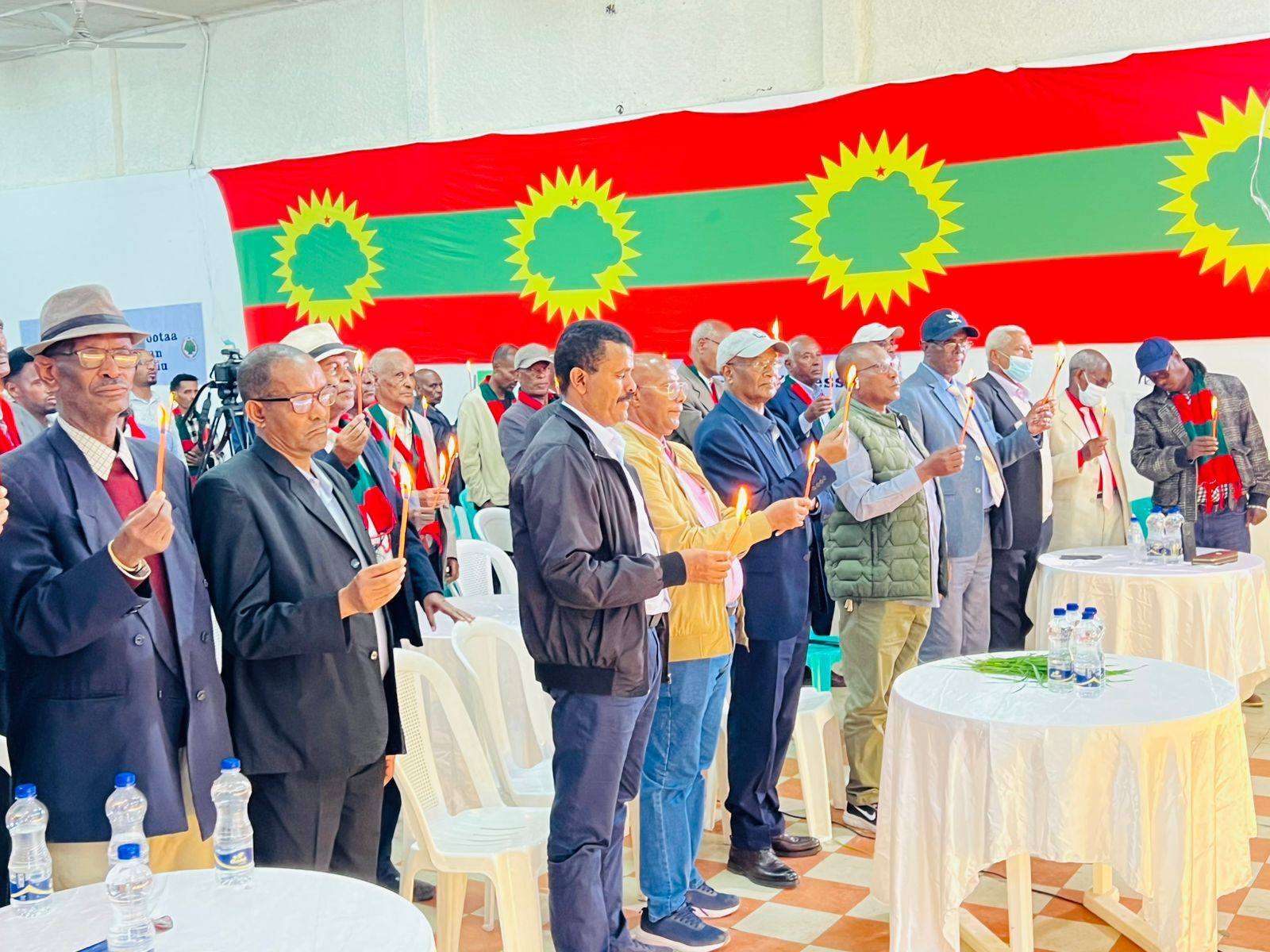
Hundreds gather to honor fallen heroes, raise banned flag, and renew calls for justice and peace on Ebla 15
By Daandii Ragabaa
GULLALLE, FINFINNE – April 15, 2026 (Ebla 15)
GULLALLE – Hundreds of Oromo men, women, and youth gathered today at the Head Office of the ABO (Arsi, Bale, Oromo organization) in the Gullalle district of Addis Ababa to observe Guyyaa Gootota Wareegamtoota Oromoo (Oromo Martyrs and Heroes Day), an annual commemoration held on Ebla 15 (April 15).
The event, which lasted from 9:00 AM to 3:00 PM, included a minute of silence for the fallen, the reading of hundreds of names of martyrs, cultural performances, and the raising of the Oromo flag – a symbol repeatedly banned in public spaces over the years. No violence or security incidents were reported.
The gathering was peaceful but emotionally charged. Attendees included elderly community members, mothers with young children, and large numbers of Qeerroo and Qarree (Oromo youth activists). Organizers described the event as a “people’s holiday” – not sanctioned by any government but observed annually by Oromo communities both inside Ethiopia and in the diaspora.
A banner at the venue read:
“Guyyaa Gootota Wareegamtoota Oromoo – Ebla 15, 2026 – Hin Irraanfatnu. Hin Lolti Dhaabnu.”
(Translation: “Oromo Martyrs and Heroes Day – We will not forget. We will not stop struggling.”)
One of the most powerful moments came when a list of martyrs’ names was read aloud. The names included individuals killed in protests between 2014 and 2026, as well as historical figures from the 19th century. After each name, the crowd responded in unison: “Nu jirra. Hin irraanfatne.” (“We are here. We have not forgotten.”)
An elderly woman, who identified herself only as the mother of a son killed in 2018, held up a faded photograph and told the crowd: “I did not come to speak. I came to show you his face. Do not let his memory die.”
At exactly 12:00 noon, two young women raised the Oromo flag at the ABO compound. The flag – which has been banned at various times in modern Ethiopian history – flew for approximately three hours before being lowered and stored in a wooden box.
Witnesses described an elderly man falling to his knees as the flag rose, weeping and saying: “Forgive us. We are still fighting. We have not given up.”
A senior ABO official, who spoke on condition of anonymity for security reasons, delivered the keynote address. He outlined five core values that he said Oromo martyrs died for:
- Nageenya (Justice / Peace / Well-being)
- Misooma (Development)
- Badhaadhina (Progress)
- Dimokiraasii (Democracy)
- Nagaa (True Peace / Safety)
“These five words are not decorations,” the speaker said. “They are debts. Our heroes paid with their lives. We must pay with our actions.”
The newspaper spoke with several attendees:
Bontu, 23, university student:
“I was not born when many of these heroes died. But I carry their names in my phone. I read them every morning.”
Jirenya, 58, farmer (traveled three hours by bus):
“My brother was killed in 2015. No one was arrested. No one apologized. Today, I am his memory.”
Marga, 19, high school student:
“The next heroes are not dead yet. They are standing right here.”
Hundessa, 72, retired teacher:
“Each year, there are new names. That breaks my heart. But each year, there are also new young faces. That gives me hope.”
Ebla 15 (which corresponds to April 15 in the Gregorian calendar) has become a significant date in Oromo collective memory. While not recognized as an official public holiday by the Ethiopian government, it is widely observed by Oromo communities as a day to honor both historical figures (including 19th-century horseback warriors who fought colonialism) and contemporary martyrs killed in protests and political violence.
The ABO (Arsi, Bale, Oromo – a prominent Oromo civil society and cultural organization) has organized commemorative events on Ebla 15 for several years, though the scale and location have varied due to security constraints.
A visible but low-key security presence was observed in areas surrounding Gullalle throughout the day. No arrests or confrontations were reported. The event ended peacefully at approximately 3:00 PM, after a collective vow in which attendees raised their right hands and recited a pledge to continue the struggle for justice, democracy, and peace.
Organizers declined to provide an official estimate of crowd size, but eyewitnesses placed attendance between 300 and 500 people.
As of press time, the Ethiopian government had not issued an official statement regarding the commemoration.
The ceremony concluded with the Oromo anthem sung by the entire crowd, followed by a slow dispersal. Many attendees lingered to take photographs with the flag and exchange contact information for future organizing.
A young Qeerroo shouted as the crowd began to leave: “Ebla 15 next year – where will we be?”
The crowd responded: “Stronger! More! Free!”