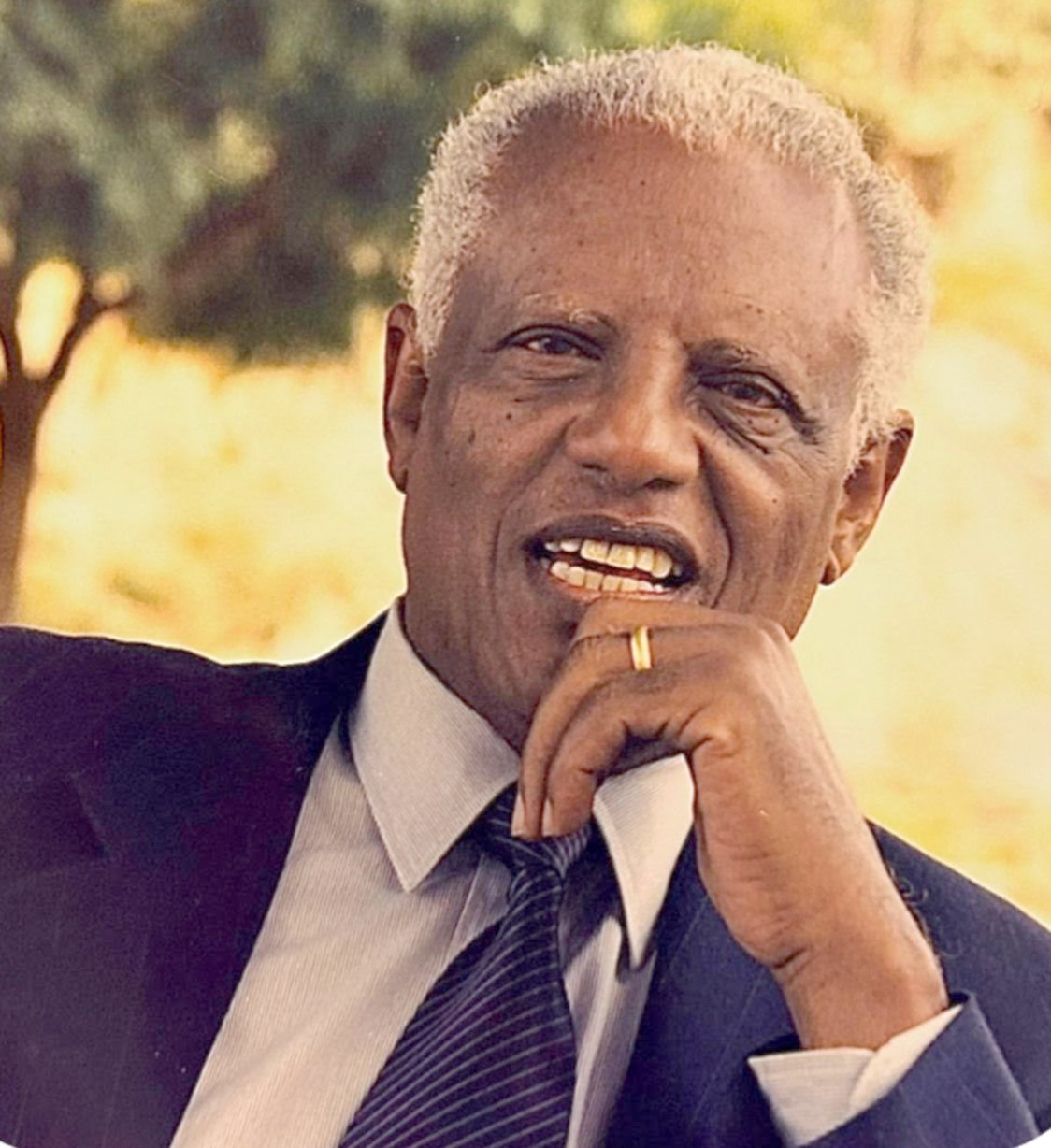
A Scholar Between Two Worlds: Professor Asmerom Legesse Laid to Rest in Asmara
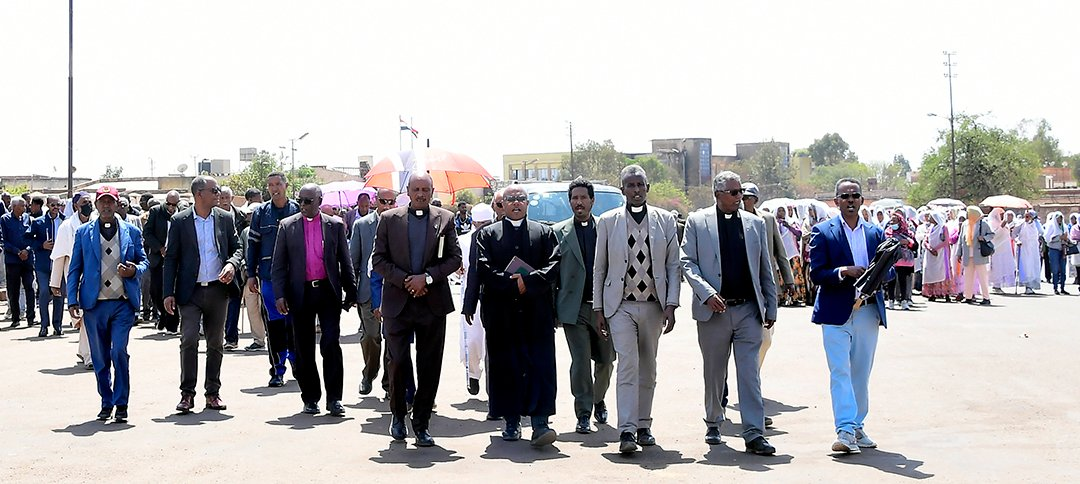
The renowned anthropologist, who bridged Eritrean patriotism with pioneering scholarship on Oromo democracy, was honored at a state funeral after his body was returned from the United States for burial.
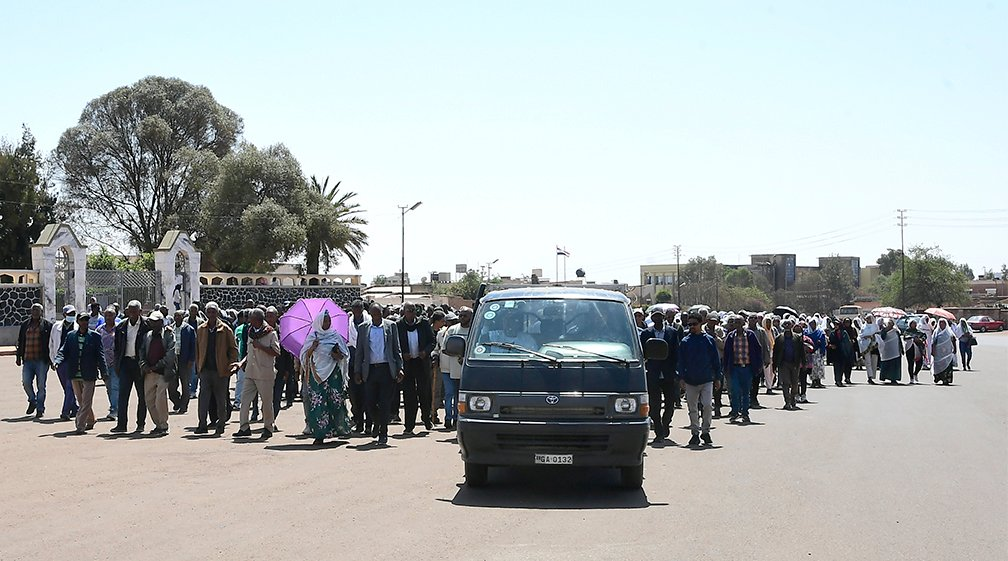
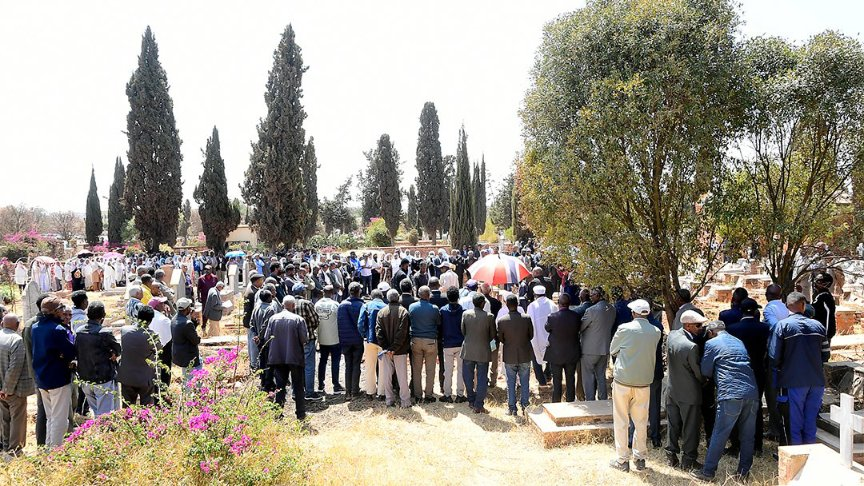
Asmara — A funeral service for Professor Asmerom Legesse was held today at Asmara’s Evangelical Lutheran Church Cemetery, bringing home one of the Horn of Africa’s most distinguished intellectual figures for burial in the land of his birth .
The ceremony was attended by Ministers, senior government and PFDJ officials, religious leaders, and family members, reflecting the high esteem in which Professor Legesse was held by the Eritrean state . His body had been transported from the United States, where he passed away on 31 January at the age of 94 .
The Ministry of Foreign Affairs expressed “deep sorrow” over his passing, conveying condolences to his family and friends in an official statement.
A towering intellectual figure
Professor Asmerom was a prominent and illustrious anthropologist who produced important research during his tenure at some of America’s most prestigious institutions, including Harvard, Boston, Northwestern, and Chicago universities. A Harvard-trained anthropologist, he served as Emeritus Professor of Anthropology at Swarthmore College.
His scholarship spanned more than half a century, during which he conducted extensive field research among the Oromo people of Ethiopia and Kenya, living among Borana and other Oromo communities to understand the intricate workings of the Gadaa system from within .
His seminal 1973 work, Gada: Three Approaches to the Study of African Society, introduced the world to the sophisticated constitutional and democratic principles embedded in the Gadaa system. The book was revolutionary in its methodology and presented Gadaa as a highly developed system of checks and balances, age-set organization, and rotational leadership that had governed Oromo society for centuries.
Nearly three decades later, he published Oromo Democracy: An Indigenous African Political System (2000), which became the most authoritative scholarly work on the subject and was instrumental in UNESCO’s recognition of Gadaa as an Intangible Cultural Heritage of Humanity in 2016.
Two homelands, one legacy
Professor Legesse’s life embodied the complex intertwining of Eritrean and Oromo histories. Born in 1931 in Geza Kenisha, Asmara, he grew up in the same area where the pioneering Oromo scholar Onesimos Nesib had sought refuge and translated the Bible into Afaan Oromoo more than a century earlier. Advocacy for Oromia noted this “physical proximity” as a powerful metaphor, linking the spiritual resilience of those earlier figures with Professor Legesse’s intellectual fortitude in defending Oromo identity.
For the Oromo people, he became known as “Abbaa Gadaa”—a symbolic recognition of his role as a guardian of their threatened heritage. The Oromo Studies Association described him as a “kinsman of the Oromo people” whose work on Oromo customs, history, and culture significantly advanced understanding of political and social systems across Africa.
Defender of Eritrea
Beyond his academic achievements, Professor Legesse served his country and people in various capacities over four decades. From 1984 until independence, he served as Chairman of the U.S. branch of the Eritrean Relief Association, supporting Eritrea’s liberation struggle.
In 1998, he published well-researched documents on atrocities perpetrated by the Ethiopian regime against Eritreans and Ethiopians of Eritrean origin. He also documented and exposed extensive gender-based violence committed by the Ethiopian army during its occupation of various areas, particularly in the Senafe sub-zone during the border war.
In 2015, he played a significant role in countering what Eritrea viewed as attempts to dehumanize the nation through allegations of human rights violations, preparing a critique of the UN Human Rights Commission on Eritrea for a meeting at the House of Lords in the United Kingdom.
A complex political geography
Professor Legesse’s life was not without political complication. In 2017, despite his stature as the world’s leading authority on Gadaa and an invitation to attend a historic Gadaa power transfer ceremony in Borana, the Ethiopian government refused to issue him a visa, citing his Eritrean background . The incident reflected the tragic political tensions that for decades prevented scholarly exchange between the two countries.
Yet his influence on Oromo scholarship remained profound. Ezekiel Gebissa, professor of history and African studies at Kettering University, wrote in a tribute: “For the Oromo people, whose culture Asmarom studied for more than half a century, death is not an ending but a passage from the world of binary reality to the realm of singularity. It is fitting to imagine him joining the ancestors he so often wrote about”.
An enduring legacy
Professor Legesse’s work challenged colonial narratives that had dismissed African governance systems as primitive or lacking in sophistication. The Oromia Culture and Tourism Bureau emphasized that his life’s work preserved the Oromo Gadaa system and documented its practices for future generations, serving as a bridge for knowledge and scholarship.
The Oromo Liberation Front issued a statement describing his passing as a significant loss to the Oromo community. “His research highlighted Gadaa’s principles of equality, leadership rotation, and social cohesion, positioning it as a model of African democracy,” the statement read.
At his funeral in Asmara, the gathering of state officials, religious leaders, and family members honored a man who had walked many paths—from the shearing sheds of his youth to the hallowed halls of Harvard, from the remote airstrips of Farrer to the Gadaa assemblies of Borana. His final manuscript, Gada: Democratic Institutions of the Borana Oromo, is expected to be published posthumously.
“His work did not merely preserve the past,” wrote OROMIA TODAY in a tribute. “It equipped future generations with evidence and language to assert historical truth”.