Condolence Message from the Oromia Culture and Tourism Bureau
The Oromia Culture and Tourism Bureau expresses its profound sorrow and deep sense of loss at the passed away of Professor Asmarom Legesse, an eminent scholar, cultural custodian, and an unwavering servant of the Gada system.
Professor Asmarom devoted his life to the preservation, interpretation, and transmission of the Gadaa system—a living heritage of governance, justice, peace, and social responsibility. Through his scholarship, leadership, and lifelong service, he played an indispensable role in safeguarding the philosophical foundations and moral values that define Oromo identity and humanity at large.
His work bridged generations, linking ancestral wisdom with contemporary knowledge, and ensured that the Gadaa system remains a guiding light for social harmony, equity, and collective responsibility.
Beyond academia, Professor Asmarom stood as a moral compass for his community. He embodied the principles of truth, justice, service, and integrity, and tirelessly worked to nurture unity, dialogue, and cultural continuity. His contributions have left an enduring imprint on cultural institutions, academic circles, and community life, both within Oromiyaa and beyond.
On behalf of the Oromia Culture and Tourism Bureau, we extend our heartfelt condolences to his family, relatives, colleagues, students, and the entire Oromo community who mourn this irreplaceable loss. While his physical presence has departed, his wisdom, teachings, and exemplary life will continue to live on, inspiring generations to uphold the values of Gada and to serve society with dedication and humility.
May the Almighty grant strength and solace to all who grieve his passing.
May his soul rest in eternal peace.
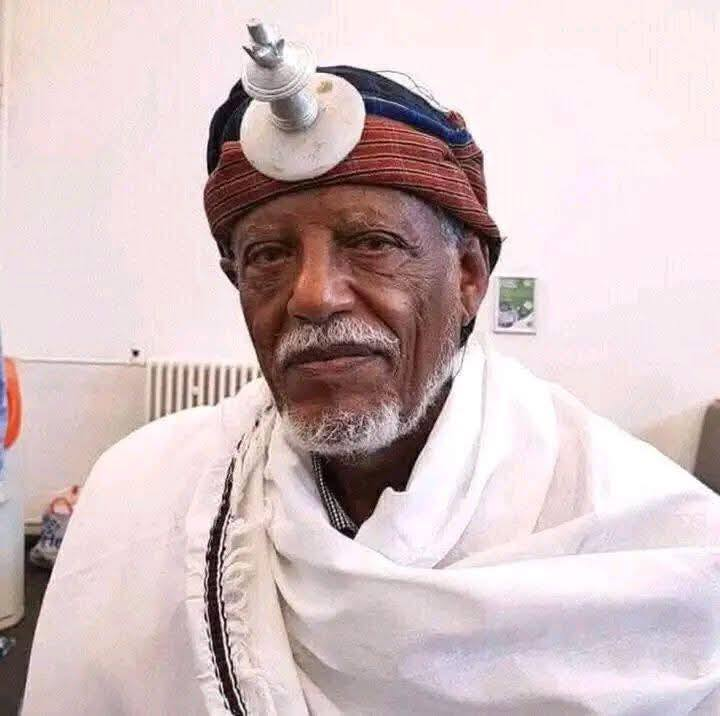
Professor Asmerom Legesse: A Champion of Oromo Democracy

FOR IMMEDIATE RELEASE
A Guardian of Heritage: Advocacy for Oromia Mourns the Passing of Professor Asmerom Legesse (1931-2026)
(Melbourne, Victoria) – February 5, 2026 – Advocacy for Oromia, with profound respect and deep sorrow, announces the passing of the world-renowned scholar, Professor Asmerom Legesse. We extend our most heartfelt condolences to his family, his colleagues in academia, and to the entire Oromo people, for whom his work held monumental significance.
Professor Legesse was not simply an academic; he was a steadfast guardian and a preeminent global ambassador for the ancient Gadaa system, the sophisticated democratic and socio-political foundation of Oromo society. For more than forty years, he dedicated his intellect and passion to meticulously studying, documenting, and advocating for this profound indigenous system of governance, justice, and balanced social order.
His seminal work, including the definitive text Oromo Democracy: An Indigenous African Political System, transcended mere historical analysis. Professor Legesse’s scholarship performed a vital act of cultural reclamation and global education. It restored dignity to a marginalized history, affirmed the cultural identity of millions, and presented to the international community a powerful, self-originating model of African democracy that predated and paralleled Western constructs.
Born in Asmara in 1931, Professor Legesse’s intellectual journey—from political science at the University of Wisconsin to a doctorate in anthropology from Harvard University, where he later taught—was always directed by a profound sense of purpose. His research provided the rigorous, academic foundation for understanding indigenous African political philosophy.
His passing is felt as a deeply personal loss within our community, reminding us of the interconnected threads of Oromo history and resilience. On a recent visit to Asmara, a delegation from Advocacy for Oromia visited a site of immense historical importance: the church where Abbaa Gammachis and Aster Ganno, giants of faith and resistance, resided while translating the Bible into Afaan Oromo. It was there we learned that the family home of Professor Asmerom Legesse stood adjacent.
This physical proximity stands as a powerful metaphor. It connects the spiritual and linguistic preservation embodied by Abbaa Gammachis with the intellectual and political excavation led by Professor Legesse. They were neighbors not only in geography but in sacred purpose: both dedicated their lives to protecting, promoting, and elucidating the core pillars of Oromo identity against historical forces of erasure.
Professor Legesse’s lifetime of contributions has endowed current and future generations with the intellectual tools to claim their rightful place in global narratives of democracy and governance. For this invaluable and enduring gift, we offer our eternal gratitude.
While we mourn the silence of a towering intellect, we choose to celebrate the immortal legacy he leaves behind—a legacy of knowledge, pride, and empowerment that will continue to guide and inspire.
May his soul rest in eternal peace. May his groundbreaking work continue to illuminate the path toward understanding, justice, and self-determination.
Rest in Power, Professor Asmerom Legesse.
About Advocacy for Oromia:
Advocacy for Oromia is a global network dedicated to promoting awareness, justice, and the rights of the Oromo people. We work to uphold the principles of democracy, human rights, and cultural preservation central to Oromo identity and heritage.
Unpacking the Controversies in General Gonfa’s Narrative
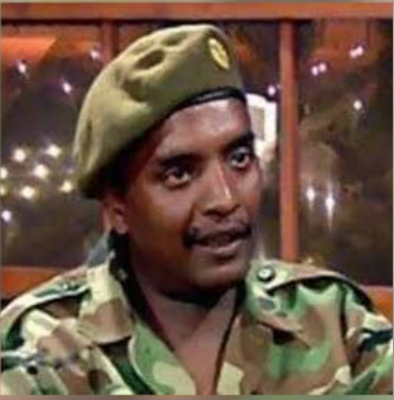
Feature Commentary: Unpacking the Narrative – A Rebuttal to General Hailu Gonfa’s ETV Interview
By Daandii Ragabaa
February 1, 2026
A recent interview given by General Hailu Gonfa, a former high-ranking member of the Oromo Liberation Army (OLA), to Ethiopian state television (ETV) has sent ripples through political and activist circles. Presented as a “tell-all,” the interview was a stark narrative of disillusionment with the OLF/OLA, peppered with allegations of foreign manipulation and internal failure. For the state broadcaster, it was a coup—a former insurgent commander validating state narratives. For many observers, however, it was a performance laden with contradictions and historical revisionism that demands scrutiny, not passive acceptance.
General Gonfa’s core thesis is one of victimhood at the hands of the Eritrean government (Shaebia) and strategic confusion within the OLF/OLA. He paints a picture of being used, misled, and ultimately betrayed. Yet, a closer examination of his own points reveals a narrative more complex and less absolving of his own agency.
1. The Eritrea Conundrum: Pawns or Strategic Partners?
Gonfa claims they went to Eritrea not out of hatred for Ethiopia, but to oppose the system, following the path of Eritreans themselves. He then details a three-month military training at Camp Ashfaray, a period of intense hardship. The critical question he sidesteps is: what did he and his comrades believe they were building towards in Asmara? Did they receive a political program from the OLF leadership? As senior military cadres, did they simply execute orders without understanding the overarching political strategy? His portrayal reduces seasoned officers to naive children, which insults both their intelligence and the gravity of their decision to seek foreign military training.
2. The Phantom “Russian Assignment” and Internal Discord.
He recounts a meeting in Russia where OLF members approached him, but they could not agree on a common agenda for working inside Ethiopia. He claims he was later given a vague, “impossible” national assignment. This raises a fundamental question: if there was such profound disagreement on core strategy before undertaking major actions, why proceed? The attempt to blame subsequent failures on a pre-existing lack of consensus suggests a failure of leadership and collective decision-making, not merely the deceit of others.
3. The “Oromia Republic” Straw Man.
This is perhaps the most disingenuous claim. Gonfa asserts a foundational disagreement over the goal of an “Oromia Republic,” which he labels a “colonial agenda.” He claims this deadlock was irreconcilable. Yet, the public record shows that figures like General Kamal Galchu, in a VOA interview, spoke openly about the possibility of a republic after achieving liberation. Furthermore, the OLF’s own political programs have historically navigated the spectrum between self-determination and possible independence based on a popular referendum. To frame a central, debated political aspiration as a shocking, divisive “colonial” plot is a gross misrepresentation of the struggle’s own intellectual history, likely tailored for his current audience in Addis Ababa.
4, 5 & 7: The Shaebia Scapegoat and the Mystery of Betrayal.
Gonfa dedicates significant time to blaming Eritrea for their imprisonment and manipulating the OLA’s military wing. He describes a mysterious Colonel “Xamee” who allegedly controlled them. This narrative of total Eritrean control sits awkwardly with his other claims of internal OLA agency, such as the alleged refusal of some army units to follow orders in 2018. If the OLA was merely a puppet, how did it exercise such defiance? His testimony about Colonel Abebe (allegedly now a Brigadier General in the OLA) is particularly damaging but presented without context or corroboration. It creates a convenient fog where all failures can be attributed to a shadowy foreign hand, absolving internal leadership of critical misjudgments.
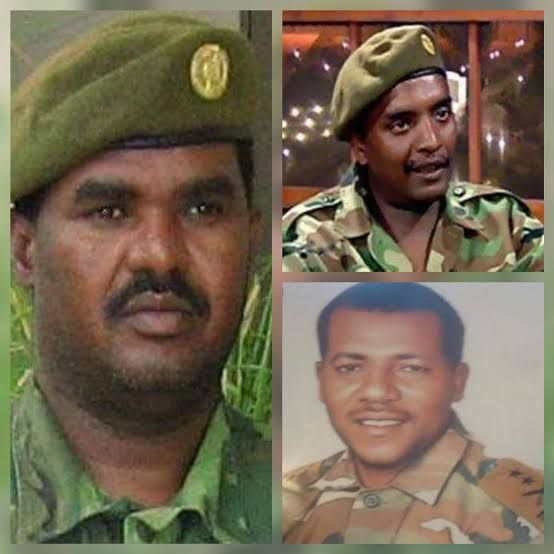
6. The Uncomfortable Transition from Refugee to Parliamentarian.
Gonfa’s personal journey—from an economic refugee with a Swedish passport to a member of parliament—is presented as a triumph of resilience. Yet, it unavoidably invites questions about the pathway from armed opposition to state legitimization. He speaks of the hardships of struggle, but for many watching, the stark contrast between the described suffering and his current official position underscores the complex, often ambiguous, transitions in Ethiopian political life, where former enemies can become state stakeholders.
8 & 9: Rewriting the Homecoming and the Gadaa Model.
He claims that upon returning to Ethiopia, they chose to work on national issues within the political system, respecting the existing OLF leadership. This sanitizes what many saw as a major split and a demobilization. His praise for the “Gadaa model” of conflict resolution, now being adopted in Amhara region, rings hollow. It appears less as a genuine endorsement of traditional systems and more as an endorsement of the federal government’s current policy of co-opting ethnic administrative models, a far cry from the Gadaa system’s principles of sovereignty and self-rule.
Conclusion: A Performance with a Purpose
General Hailu Gonfa’s interview is less a revelation and more a strategic repositioning. It is an effort to construct a personal and political narrative that reconciles a past of armed rebellion with a present of state accommodation. In doing so, it simplifies a multifaceted struggle into a story of foreign deception and internal error, draining it of its political substance and reducing it to a series of personal grievances and bad partnerships.
For the state, it is a useful narrative: the rebels were confused, controlled by Eritrea, and have now seen the light. For the still-active struggle, it is a warning about the power of state platforms to reshape history. For critical observers, it is a reminder that every testimony, especially those given in such loaded circumstances, must be read not just for what is said, but for the silences it cultivates and the interests it serves. The truth of the Oromo struggle, in all its sacrifice, complexity, and ongoing evolution, lies not in this single curated confession, but in the totality of its lived history, which is far messier, more principled, and more enduring than this interview suggests.

