Colonel Gammachuu: The Unyielding Truth Teller of Oromia
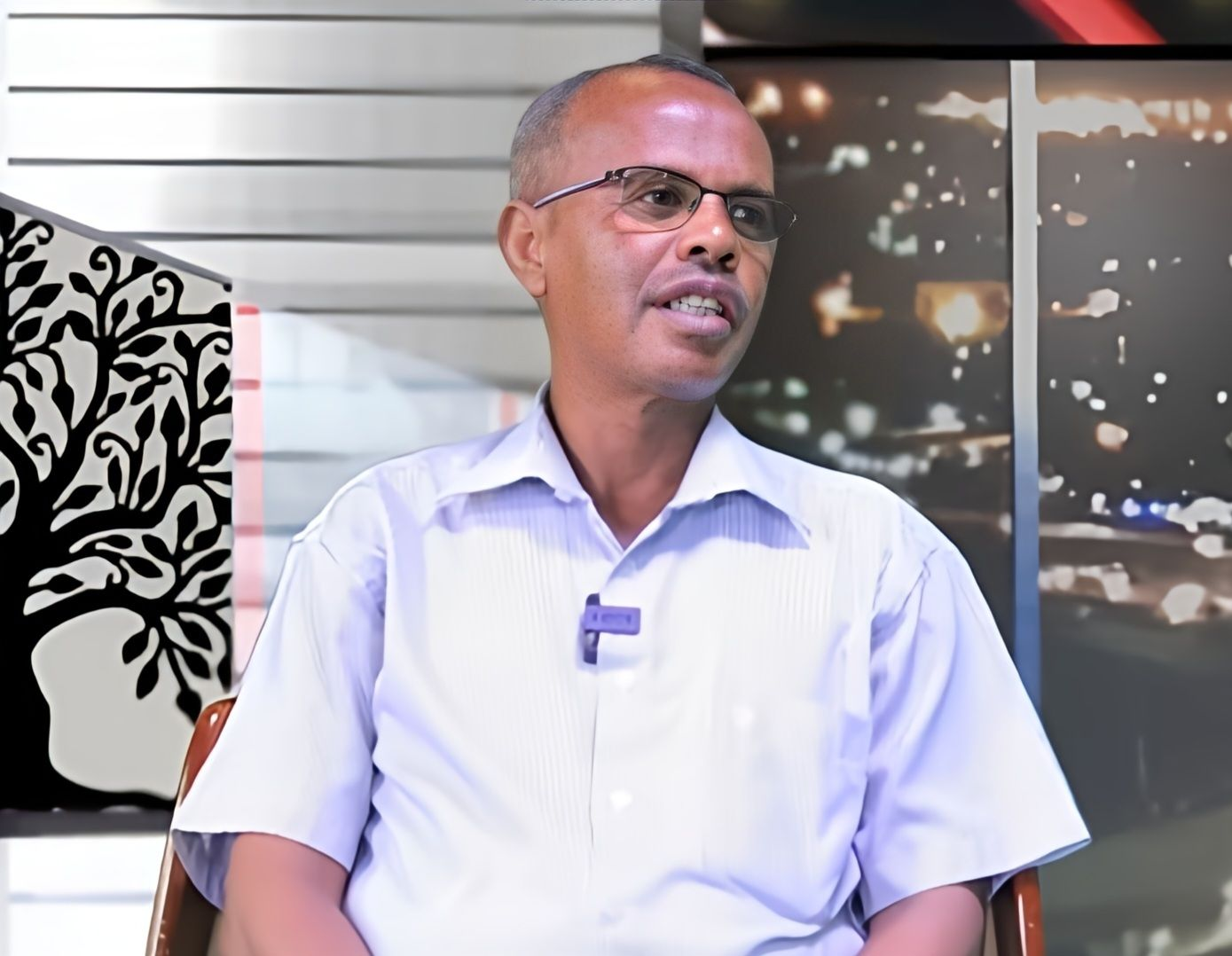
Title: The Unbent Reed: A Commentary on Colonel Gammachuu Ayyaanaa and the Cost of Truth
By Maatii Sabaa
In the suffocating political atmosphere of empires, where silence is often traded for security and allegiances are bartered for comfort, a singular figure stands apart not for the power he wields, but for the truth he refuses to relinquish. Colonel Gammachuu Ayyaanaa, as profiled in a recent and fervent tribute, is presented not merely as a man, but as a phenomenon—an unbent reed in a storm of compromise. He embodies a rare and dangerous archetype: the native son who, understanding the inner workings of the Ethiopian imperial system, chooses not to dine at its table but to speak its crimes aloud.
The commentary paints him with the brush of absolute conviction. He is a man who “knows no malice” and “speaks no falsehood.” This is his foundational identity. In a landscape riddled with coded language and strategic ambiguity, his clarity is itself a revolution. He does not speak truth as a strategy for a better personal life; indeed, his truth-telling guarantees the opposite. As the piece starkly notes, he has “no private life,” existing instead in a state of “lowly livelihood.” The trade-off is explicit: his comfort for his people’s cause. What worries him is not personal hardship, but the “encroachment on the rights of the Oromo people and the violation of Oromia’s borders.”
This is where Gammachuu transcends the typical political or military figure. He is portrayed not as a commander giving orders from a safe remove, but as a “dhaabee”—one who is stationed, rooted, and bearing the brunt. He stands not on a podium, but in the line of fire. His advocacy is particular and painful, giving voice to the displaced communities of Tulama Oromos, whose land and heritage have been erased by force. He channels their specific grief into a universal indictment.
The tribute makes a searing observation about the Oromo community itself, suggesting a troubling tendency to withhold honor from those who most deserve it. It frames Gammachuu as a man whose primary, overriding identity is Oromummaa—Oromo nationhood—which supersedes all clan, regional, or religious affiliations. This unitary focus makes him a stark anomaly in a system, and a society, often fractured by internal divisions the empire readily exploits.
His fearlessness is not born of ignorance, but of profound understanding. Having “analyzed the politics of the Ethiopian Empire,” he comprehends the full weight of its machinery. Yet, this knowledge does not paralyze him with caution; it liberates him with purpose. The system, the commentary asserts, has already declared its verdict on such men, whether they are called “scholars” or “heroes.” In the face of this, Gammachuu speaks with “no fear,” save the fear of failing his unwavering commitment.
The final exhortation—”Nama kana Kunuunsadhu Oromoo!” (Oromo people, support this man!)—is the crucial pivot from admiration to action. It recognizes that such singular courage is not a self-sustaining artifact. It is a flame that must be shielded by the collective will of the people it seeks to illuminate. Colonel Gammachuu Ayyaanaa, as presented, is the unwavering voice. The question implicit in the commentary is whether the people for whom he speaks will become the unshakeable chorus, ensuring that the cost of truth is borne not by one man alone, but shared by a nation determined to hear it. In an age of calculated silence, his story is a piercing reminder that the most potent form of resistance is a life lived in uncompromising alignment with truth, regardless of the price.
Honoring Father Beyene Badhasso: A Legacy of Courage and Humanity

Ethiopian Adventist College Honors a Pillar of Oromo Resistance and Humanity: Father Beyene Badhasso
ADDIS ABABA — In a powerful act of historical reclamation, the Ethiopian Adventist College has officially recognized the legacy of Father Beyene Badhasso, celebrated as one of the Oromo people’s most courageous and transformative figures. The ceremony honored a man who, against immense odds, helped pry open the gates of history for future generations.
The tribute arrives as a poignant reminder of an era when Oromo identity was systematically suppressed—a time when their language was silenced, culture criminalized, and fundamental dignity denied. In this oppressive climate, Father Beyene Badhasso stood where few dared.
With a small band of brave comrades, he confronted the highest authorities of his day, including the Imperial throne itself, to demand a forbidden right: access to education for Oromo children. This defiant act was not without profound cost; Father Beyene paid a “golden price” for his courage, enduring persecution for his advocacy.
“His sacrifice was the seed,” noted one attendee at the recognition event. “The educated Oromo generation of today, our reclaimed language, culture, and standing in the world—these grew from the ground he helped break.”
Beyond his role as a fearless advocate, Father Beyene was revered as a man of deep and practical compassion. Operating a pharmacy, he became a beacon of hope in his community, providing medicine and treatment to hundreds based on need, not payment. In a landscape where poverty was compounded by injustice, he consistently chose mercy over profit, saving countless lives through quiet, unwavering charity.
The college’s decision to honor Father Beyene has resonated deeply within the Oromo community and among scholars of Ethiopian history. Dr. Abraham Dalu and the entire leadership of the Ethiopian Adventist College received heartfelt praise for their “honorable step” in bringing this giant of history into the light of formal academic recognition.
“Thank you for honoring a true giant of our history,” read a statement from community organizers. “Father Beyene didn’t just open a school; he opened the future. Today, we stand tall as Oromo and as Oromia because he stood firm.”
The recognition serves as both a memorial and a mirror, reflecting the enduring power of resilience, education, and humanitarian spirit in the ongoing story of the Oromo people.
# # #
About Father Beyene Badhasso: A seminal Oromo intellectual and activist, Father Beyene is remembered for his pivotal role in the struggle for Oromo educational rights during the mid-20th century and for his lifelong dedication to community healthcare and charity.
Community Mourns Visionary Mentor Guy Moon

NEWS RELEASE: A Community Mourns the Tragic Loss of Visionary Mentor Guy Moon
It is with profound sorrow that we share the news of the tragic passing of Guy Moon, a beloved patriarch, husband, father, and a visionary figure in media and faith communities. Mr. Moon was killed in a traffic collision on Thursday morning.
In a heartfelt statement, his family expressed their deep grief and the profound impact of their loss: “We are overcome with grief to announce the passing of our beloved patriarch, Guy Moon… We feel singularly blessed to have been able to call him dad and husband.” Acknowledging the immense pain, they drew strength from his own legacy, stating they are “emboldened to grieve him with honor and courage with the tools that he equipped us with in his beautiful life.”
The family tentatively plans to celebrate his life on his birthday, February 7th, in the Los Angeles area, with a later gathering in his hometown in Wisconsin. Details will be shared as they become available.
A Legacy of Faith and Mentorship
News of his passing has sent waves of grief through a wide network of friends, colleagues, and those he served. Dhaba Wayessa, a close friend and brother in Christ, shared a moving tribute highlighting Guy Moon’s remarkable spirit.
“I am deeply shocked and heartbroken to hear of the passing of my brother in Christ, Guy Moon… Guy was a man of vision, faith, and generous courage,” Wayessa stated.
He specifically recalled Moon’s transformative initiative in 2011, when he coordinated the LA Media Mission Team and traveled to Ethiopia. There, in collaboration with Sandscribe Communications and Mekane Yesus Seminary, he dedicated himself to serving and mentoring young media students.
“His commitment to equipping others, especially emerging storytellers, left a lasting imprint that continues to bear fruit,” Wayessa added. “His life reflected Christ’s love through action, creativity, and service.”
This mission stands as a testament to Moon’s belief in empowering the next generation, extending his influence far beyond his immediate circle and leaving a global legacy of inspiration and practical skill.
A Call for Prayer and Comfort
As the Moon family and all who knew him navigate this sudden and painful loss, the community is called to surround them with support. Wayessa’s prayer echoes the sentiment of many: “May the Lord surround His family and friends with His peace and comfort, and may the hope of the resurrection sustain all in this time of deep sorrow.”
Guy Moon’s unmistakable legacy of familial love, creative mentorship, and faithful service will be profoundly missed. His memory will continue to inspire those who were fortunate enough to know him and the many young professionals he helped to shape.
The family respectfully requests privacy as they mourn and make arrangements.
Together we remain,
The Moon Family & A Grieving Community

New Year, New Hope: Oromo Youth Demand Freedom

Feature News: A New Year’s Covenant – Oromo Youth Pledge Action to Fulfill “The Price of Freedom”
As the Oromo community worldwide celebrated the dawn of a new year, a powerful and solemn pledge emerged from its youth vanguard, framing the occasion not just as a celebration, but as a moment of collective accounting and renewed commitment.
In a statement reflecting the spirit of the season, representatives of the Oromo youth movement affirmed their core aspirations: “Our hope is for the freedom, dignity, peace, and security of our people.” This declaration, however, was immediately coupled with a stark acknowledgment of responsibility. They stated they stand firmly “under the vanguard of the Qeerroo Bilisummaa Oromoo (QBO), which is led by the OLF,” ready to shoulder the burden required to make that hope a reality.
The most striking element of their message was the concept of a debt to be paid. “To fulfill that hope… we have paid and will continue to pay the necessary price,” the statement read. This “price” is understood as the immense sacrifices—lives lost, freedoms curtailed, and years of struggle—endured by the Oromo people throughout generations of what they term “the darkness of subjugation.”
The message transforms New Year’s optimism into a blueprint for action. It positions the coming year not as a passive waiting period, but as an active campaign to “lead our people from the darkness of subjugation into the light of freedom.” This imagery powerfully defines their political struggle as a journey toward enlightenment and liberation.
The closing acclamations—“Long live the OLF! Victory is for our people!”—root this forward-looking energy in the existing political structure and collective identity. It confirms the QBO’s alignment with the Oromo Liberation Front’s historical mission while placing the agency for the final push squarely on the shoulders of the mobilized youth.
Analysts see this statement as a significant articulation of the movement’s current phase. It moves beyond protest and resistance toward a language of fulfillment and debt settlement. The youth are not just asking for freedom; they are announcing their intention to actively “pay for it” through continued struggle and sacrifice, seeing themselves as the executors of a long-held national promise.
The feature of this news is its encapsulation of a pivotal mindset: the Oromo New Year has become a time to audit the balance sheet of the struggle. The hopes are the credit; the sacrifices are the debit. The message from the youth is clear—they are committed to closing the ledger, whatever the cost, until the account of freedom is settled. The journey from darkness to light, they assert, is a bill they are prepared to pay in full.
Irreechaa: For Peace and Reconciliation

By Girma Mirgisa Reba
Ethiopia is endowed with beautiful diversity and richness of cultures, which are celebrated at different times in the country. In particular, September is a month of festivals, holidays and celebrations around the country, among which, are Meskel festival and Irreechaa festival, thanksgiving of the Oromo people.
It also represents the start of Ethiopian New Year , symbolizing a stimulating time of change, thanksgiving and renewal, with the celebration of a series of cultural and religious festivals throughout the month. It is also a season when the landscape is dressed with the golden color of Ethiopian daisies, locally known as Adey Abeba flower.
Ethiopian New Year signifies a time of renewal, as the rainy season subsides leaving behind lush fields blooming with yellow daisies which adorns homes of many Ethiopians throughout September, and representing the spirit of peace, hope, harmony and love which come along the New Year.
Meskel, a UNESCO-inscribed intangible cultural heritage, is also celebrated by Ethiopian Orthodox Christians on Meskerem 27 and commemoration of the unearthing of the True Cross of Jesus. The Yo Yo Gifata of the Wolaita, Yo Masqalaa of the Gamo, Ya Hode of the Hadiya, Meskel of the Gurage, Hashu Masqala of the Kembata Tembaro, Gofa Gaze Masqalaa, and Mashqare-Kaficho, among others, adorn the month of September in southern part of the country by festivities and joy. It is also a time of attracting more tourists.
Similarly, the week-long Irreechaa cultural festival is observed by the Oromo people at the beginning of spring as a time of peace, reconciliation, unity and thanksgiving and forgiveness. Irreechaa is ‘Thanksgiving Day’ for the Oromo people after the end of the rainy season. It is celebrated for all things that Waqaa ‘God’ has done for people like bringing rain, peace, health, fertility, abundance, and for the beautiful weather they have cherished. In the course of Irreechaa festivals, thanks will be given for the achievements of last year and chanting for the hope and productivity of the future.
The Oromo people consider the winter; rainy season that lasts from June to September as the time of difficulty because the rainy season causes much muddy and the surroundings covered with heavy cloud. The heavy rains are also accompanied by thunder and cold weather. The weather conditions make life inconvenient for human movements. The heavy rains may cause rivers to over floods and family relationships to fall into difficulty. Therefore, the Irreechaa festival is all about rekindling about family connections, hope and joy. Friends and relatives who missed each other and the beautiful nature for a long time due to the rainy seasons long for getting together for the blessings and festival of Irreechaa by the Oromo people. It is also a season where sowed crops will blossom, get ripe and bear fruits.
Irreechaa is celebrated in different localities across Oromia and worldwide where Oromos are living. In particular, the Irreechaa festivity which is taking place at Hora Finfinne and Hora Arsadi in Bishoftu town, is a unique thanksgiving festival which brings together millions of people from all corners of Oromia and the country.
Irreechaa is a time for the Oromo people to celebrate their culture and traditions. People during the festival wear colorful traditional attires as well as sing and dance. It is one of the best festivities of Ethiopia where cultural singing and dancing are common. This grand festival attracts a large number of the Oromo people and people from all parts of the country regardless of age, religion, political affiliations and sex to come together and celebrate the festival with extraordinary love, chanting and unity. It is a time to honor nature and give thanks for the blessings of brotherhood.
The concept of peace and reconciliation are an important and integral part of the daily activities of the Oromo people. The Oromo preach peace and reconciliation and offer blessings during thanksgiving ceremonies of Irreechaa. The worldview of the Oromo is to forge unity, peace and social relations with other people. Peace is achieved when mankind is at peace with God, nature and all creations. According to the sayings of the Oromo“Peace is a gift from God; and peace is better than wealth.” This shows how much the Oromo people value peace.
The Oromo people love and respect their Creator, take care of nature, have a good relationship with God, and take the view that a person who does not have a good relationship with God will not have peace with man and other creatures either.
So, Irreechaa celebration is a manifestation where the whole walks of life practice chanting about peace and reconciliation. And all who participate in the chanting pray for the peace of the Earth, the country, children, elders, wish best for the present life and next generation as well as for livestock and all living things. Thanksgiving Day is where the Oromo people proclaim peace and reconciliation to all without revenge but with pure heart.
Forgiveness is central to the Ireechaa festival. Ireechaa is believed to be of great importance to those people who are able to give forgiveness for their intentional or unintentional grievances with other people.
The day of the festival is believed to be a day of peace, happiness, reconciliation, forgiveness and prosperity. Accordingly, before anyone celebrates Irreechaa, be they individuals or groups, resolving conflicts between them, reconciling, forgiving each other, establishing peace and reconciling with God are the preconditions to be observed. That is why the saying of the Oromo has it: “Yoo namni walitti araarame, Waaqnis namaaf araarama” which means “If a man is reconciled to a man, God is reconciled to man.”
In Irreechaa celebration where Oromo people celebrated this grand festival along with other nations and nationalities of this country. Since recently, not only Oromo people, but also different nations and nationalities in the country are celebrating the event together with their Oromo brothers and sisters. This in turn has been consolidating linkage among the nations and nationalities thereby strengthening the love, unity and harmony among Ethiopians. Such a festival serves as a significant forum to further exchange cultural values among the Ethiopian nations and nationalities.
Since the Gada System has been registered as one of the Intangible International Cultural Heritage by UNESCO, Irreechaa festival is also embraced by the international community at large as part and parcel of an ancient tradition of the Gada system. So, a lot is required from all stakeholders to promote this festival and exploit its tourism potential. It is also important to promote the significance of this grand festival at international level and get registered by UNESCO. The festival should also be celebrated in accordance with its values and assets and pass on to the next generation.
 Oromedia