The Gavel in Chains: Judges Detained Over Alleged OLA Links in East Hararge
Subtitle: Legal Authorities Arrested as Police Claim Orders “From Above,” Raising Alarms About Judicial Independence.
In a move that strikes at the heart of judicial independence, two judges in East Hararge have been arrested on accusations of having links to the Oromo Liberation Army (OLA). The arrests, carried out by the East Hararge Zonal Police, were justified with a chillingly simple explanation: “The higher body commanded us.”
The detained officials are:
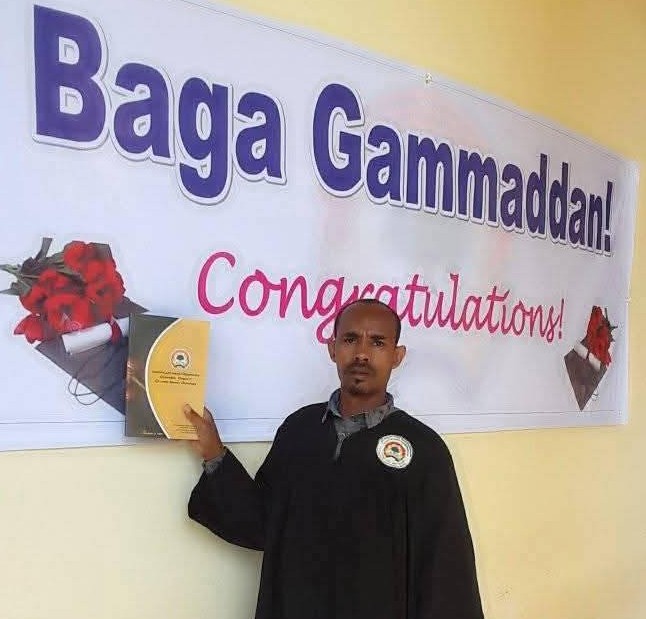
- Judge Mahbuubee Jundaa, a judge serving in the Qarsaa District of East Hararge Zone. He was arrested on Saturday morning.
- Judge Abdallaa Mahammad, a judge at the East Hararge Zone High Court. He was also arrested on Saturday morning.
Both men are currently being held under the custody of the East Hararge Zonal Police Command. The sole public reason given for their detention is the allegation that they “have connections with the OLA.”
The police command’s stated justification—”The higher body commanded us”—raises immediate and profound concerns. It implies an extra-judicial directive, bypassing standard legal procedures and the principle of due process. This phrase suggests that the arrests were not necessarily based on independently investigated evidence presented to a prosecutorial body, but on orders from an unnamed superior authority.
Why This Matters:
- Assault on Judicial Independence: Judges are the cornerstone of the rule of law. Their arrest on seemingly political grounds, without transparent legal process, undermines the very notion of an impartial judiciary. It creates a climate of fear where legal decisions may be influenced by political considerations rather than evidence and law.
- The “Higher Body” Precedent: The invocation of an unnamed superior command sets a dangerous precedent. It effectively places certain individuals or institutions above the law, allowing for detentions without clear accountability or a defined chain of evidence.
- Erosion of Public Trust: When those sworn to uphold the law can be arbitrarily detained, public trust in the entire justice system erodes. Citizens may lose faith in the courts as fair arbiters, which is fundamental for social stability.
- Context of Broader Arrests: These arrests occur amidst a wider pattern of detentions of local and regional officials in Oromia under various allegations. This incident specifically targets the judiciary, marking a significant and alarming escalation.
The legal community, civil society, and all advocates for the rule of law must seek clarity. Who is the “higher body”? What specific, admissible evidence exists to warrant the arrest of these judges? They are entitled to due process, a transparent charge, and the right to a fair hearing—the very rights they were appointed to safeguard for others.
A nation cannot be governed by secret commands. The gavel must not be silenced by the chain.
#FreeTheJudges #EastHararge #JudicialIndependence #RuleOfLaw #Oromia #Ethiopia
The Dangerous Diversion: Arresting Local Leaders While Security Crumbles
Subtitle: In Ilu Abbaa Boor, a Crackdown on Prosperity Party Officials Coincides with a Deepening Security Crisis.
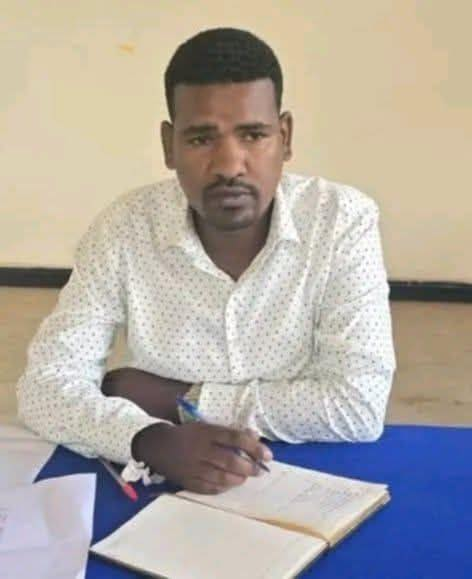
In a move that has sent shockwaves through the local political landscape, Obbo Rashidoo Baalchaa, the head of the Prosperity Party in Ilu Abbaa Boor Zone, along with numerous members of his executive committee, have been arrested on accusations of forming a “clandestine committee.”
This political crackdown unfolds against a backdrop of a severe and deteriorating security situation across the zone. Many districts (aanaas) are currently grappling with profound safety crises. Farmers are unable to tend to their fields, and even essential food crops left for harvest are reportedly being looted. The timing raises urgent questions: Why this focus now?
This pattern is not isolated to Ilu Abbaa Boor. In recent days, similar arrests of district and municipal administrators have been reported in several other zones. The stated justifications vary, with some vaguely linked to alleged associations with “Shane” (the OLA). This strategy of detaining mid-level officials appears to be a growing tactic.
However, this approach rings hollow against the national reality. While a full federal cabinet sits in the capital, and regional presidents operate with apparent normalcy, the relentless arrest of local administrators does not solve the core problem of instability. It often feels like a superficial fix—applying a small bandage to a gaping wound.
Furthermore, the narrative framing these detained individuals as “revolutionary sympathizers” lacks credibility. Many of those targeted are not ideological militants; they are often pragmatic local figures who have, at times, acted as crucial bridges to calm and negotiate with communities. Their removal may not weaken armed groups, but it almost certainly weakens the fragile lines of communication and local governance.
This creates a dangerous paradox: at the very moment when communities most need effective, trusted local leadership to navigate security threats, that leadership is being systematically removed from the equation. The result is not greater state control, but a deepening vacuum where fear and lawlessness thrive.
The people of Ilu Abbaa Boor and similar zones are left with a pressing plea: Do not distract us with political purges while our basic safety is stripped away. Address the root causes of the conflict. Reinforce, do not dismantle, the local structures that can build peace. The security of our homes and farms cannot be sacrificed on the altar of political maneuvering. The bandage is too small, and the wound is too deep.
The Calculated Return: Rebranding Hassan Ali and the Politics of Historical Amnesia
By Koste Abdiisaa (Political Commentary)

Since last week, a familiar yet troubling political theatre has unfolded on our social media feeds. The return of former Oromia president Mr. Hassan Ali has been met not with sober reflection, but with a coordinated campaign of glorification. The volume and tenor of this noise are not organic; they are a political product. And they demand a critical question: Why the aggressive, sudden need to rewrite a man’s past?
Let us be clear: the return of any individual is, in itself, a neutral event. What is not neutral is the systematic attempt to whitewash a deeply problematic political record against the backdrop of profound, ongoing suffering. Mr. Hassan Ali, like millions of Oromos, was once a vocal critic of the very system he later led. Yet, his presidency under the OPDO—the regional arm of the then-ruling EPRDF—was not a period of liberation. It was a chapter in the same grim story of state-sanctioned violence against the Oromo people.
Historical memory cannot be deleted by a hashtag. It was under the governance structure he led that figures like Nadhii Gammadaa, Dararaa Kafanii, and Jireenyaa Adunyaa were executed or forcibly disappeared. It was a system that normalized imprisonment, exile, and death for countless innocent Oromos. To launch a social media campaign that glosses over this reality is not just revisionism; it is an insult to the victims and their families who still seek justice.
Therefore, the fixation on whether he is being praised misses the point. The urgent questions are strategic and forward-looking:
- Why now? Why has the Prosperity Party (PP) and the Shimelis Abdisa administration chosen this precise moment to facilitate and amplify his return? Is it coincidental that this occurs amid escalating political and security crises in Oromia and other regions?
- What is the political calculus? The PP is not a charitable organization. Its every move is tactical. Is Hassan Ali’s return intended as a distraction, a shiny object to divert public attention from state failures? Is it an attempt to create a semblance of “reconciliation” with a discredited faction to split opposition sentiment? Or, more cynically, is it the first move in grooming him as a “reformed” candidate for a future managed election, providing a veneer of Oromo leadership while serving PP’s centralist agenda?
- Who benefits from the noise? The sheer volume of orchestrated praise serves to drown out these very questions. It aims to replace critical analysis with emotional reception, shifting the narrative from accountability to celebrity.
History offers a clear lesson: the political machinery Hassan Ali once served has never acted without cold, strategic intent. Invitations back into the fold are extended not as acts of grace, but as moves on a chessboard.
My apprehension is not personal. It is political. At this stage of his life, one hopes Mr. Hassan Ali would seek a legacy of truth, not convenience. To become a pawn in a strategy designed to legitimize a system that continues to oppress his own people would be to stand, once more, on the wrong side of history.
Ultimately, the Oromo struggle for justice, self-determination, and dignity is larger than any individual. It will not be derailed by a rebranding campaign or short-term political maneuvering by the PP. The people’s quest for accountability is relentless.
However, for the individual, history offers a space for reflection and correction. The most consequential mistakes are often those we repeat. The real test is whether this return is a step toward genuine atonement and independent voice, or whether it is a political trap—for him, and a painkiller for a government under pressure. Only time will reveal the true diagnosis, but we must not let the noise of the moment silence our critical inquiry. The past is prologue, and ignoring its lessons is a luxury the Oromo nation can no longer afford.
OLF Prepares for 7th Round Elections: Key Strategies Revealed
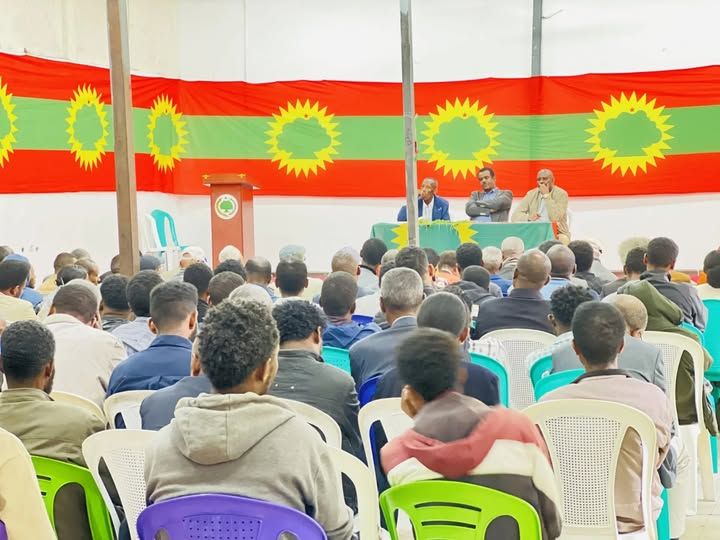
FINFINNE – The Oromo Liberation Front (OLF) is finalizing its preparations for the upcoming 7th round of national elections and is collaborating with the National Election Board to meet all requirements, according to a statement from the party.
The announcement was made by OLF Member Secretary-General Jaal Abdii Raggaasaa during a meeting at the party’s headquarters in Gullalle. He outlined the party’s strategic direction, emphasizing member duties, organizational growth, and the current political landscape.
On Party Building and Member Duties
Jaal Abdii Raggaasaa stressed that every member has a fundamental duty to recruit and mentor new members, beyond their assigned roles. “If the organization is not built, it cannot grow,” he stated, challenging each member to personally recruit at least ten individuals to strengthen the party’s structure.
He connected personal experience to collective success, noting that individuals bring diverse characteristics to the struggle. “From individual to group or union, there are those who take responsibility in the OLF struggle and bring results,” he said.
On Political Vigilance and Internal Security
The Secretary-General issued a stern warning against internal division and espionage. He urged members to report any individuals suspected of spying on the party for the government.
He also condemned members who work in multiple places or factions, describing such behavior as self-destructive. “The Irbuu (oath) is devouring,” he said, warning that those who take an oath of allegiance cannot stand in “two or three places.” He urged introspection, asking members to question their contribution to the collective cause.
On the National Political Context
Jaal Abdii Raggaasaa addressed the ongoing conflict in northern Ethiopia, expressing the participants’ concern that the war could expand into Oromia. He asserted that the OLF would not allow “Northerners to take over the country again,” and would not be a passive observer if any forces attempted to enter Oromia.
Regarding international influence, he pointed out that no one in Africa comes to power without the will of Western governments. However, he added that the OLF does not believe Western governments are currently willing to empower either Tigray or Amhara factions at the expense of Oromia.
He concluded by reaffirming the party’s position: “The OLF is in a good position, and we must fulfill our duty by turning our existence into action. The struggle is to give priority to the people first of all and to work for the interest of the people rather than personal interest.”
The meeting concluded with participants affirming that an “awakened nation is built and the built is united,” underscoring the theme of unity and mobilization.
 Oromedia