Ethiopia’s Strategic Crossroads: When Criticism Blurs the Line Between Government and Nation
By Maatii Sabaa
Feature News
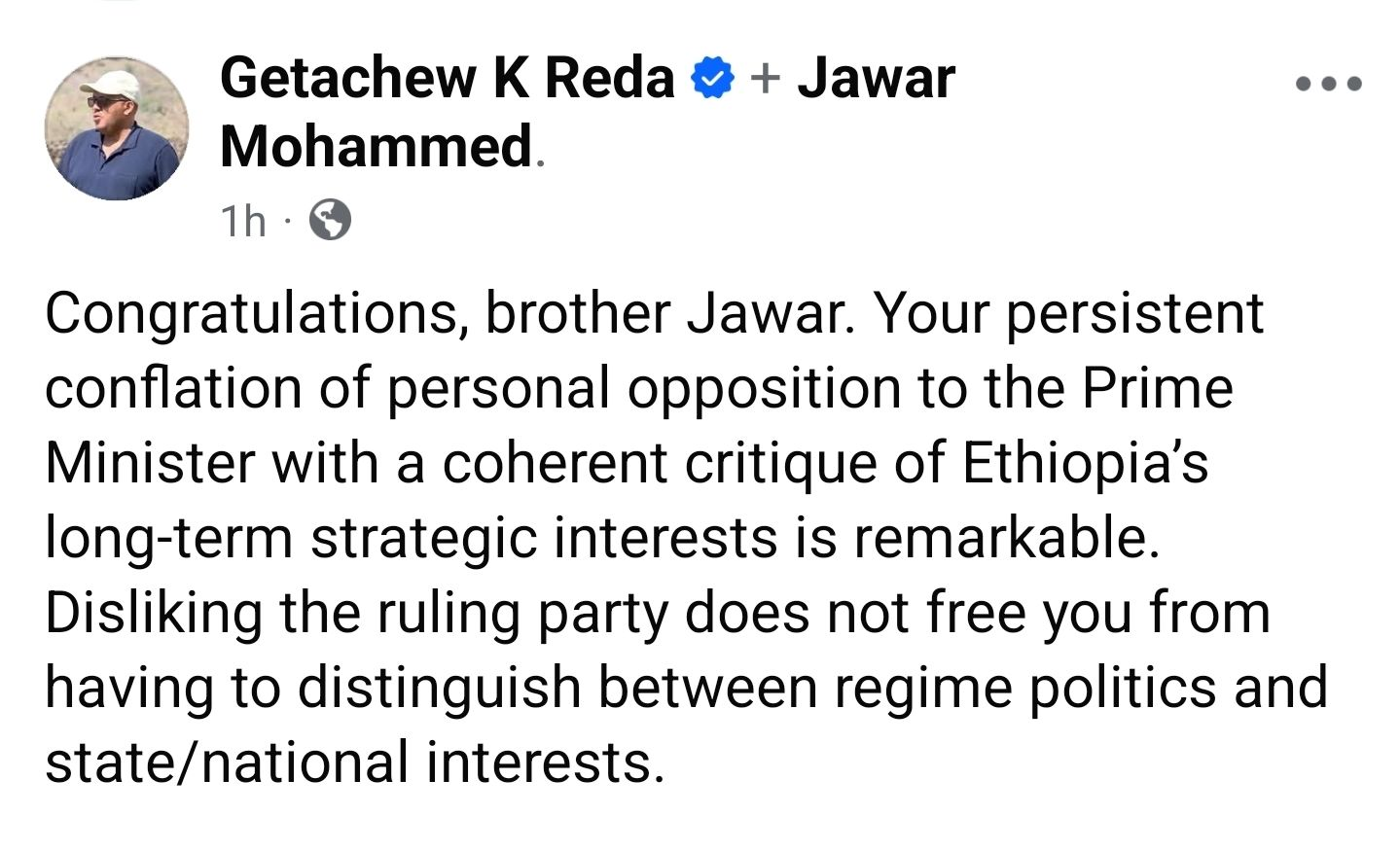
In the high-stakes arena of the Horn of Africa, where geopolitics shifts like tectonic plates beneath ancient soils, a troubling pattern has emerged in Ethiopia’s opposition discourse—one that increasingly conflates personal grievances against a sitting prime minister with the nation’s enduring strategic interests.
Over the past several days, Jawar Mohammed, once a close ally of Prime Minister Abiy Ahmed and now one of his most prominent critics, has launched a series of attacks against Ethiopia’s posture toward the deepening crisis in neighboring Sudan. His criticism, while occasionally resting on isolated facts, appears to systematically strip those facts of their broader strategic context—reducing complex national security calculations to evidence of government incompetence or malice.
The distinction being lost, critics argue, is one upon which stable democracies are built: the difference between the party in power and the state itself.
Facts Without Context: The Strategic Vacuum
Some of the reports circulated by Mohammed and his associates may be factually accurate in their narrowest sense. Ethiopia has indeed sought to protect its strategic interests amid Sudan’s collapse. It has engaged with actors on the ground. It has not adopted the posture of a passive observer.
Yet to present these moves as evidence of strategic folly—without reference to the regional power competition, Ethiopia’s existential stake in Sudanese stability, or the active interventions of other external actors—is to substitute selective outrage for sober analysis.
“The tragedy unfolding in Sudan is indeed exacerbated by foreign intervention,” one regional analyst noted, speaking on condition of anonymity. “But Ethiopia is hardly unique in pursuing its interests. What’s unique is Ethiopia’s vulnerability.”
No country in the region, and perhaps few beyond it, stands to lose more from a permanently destabilized Sudan. Ethiopia shares a 744-kilometer border with its northern neighbor. It hosts hundreds of thousands of Sudanese refugees. Its access to critical trade routes, its management of transboundary water resources, and its exposure to cross-border armed group proliferation are all directly implicated in Sudan’s trajectory.
Egypt and other regional actors are not neutral mediators. They have been actively shaping the conflict’s trajectory to favor preferred belligerents. To suggest that Ethiopia should operate as though this were not the case—or that acknowledging these realities somehow constitutes aggression—reflects what one foreign policy specialist described as “an aversion to the very language of national security.”
The Luxury of Abstraction
Mohammed positions himself as a politician-activist, a hybrid role that in theory could bridge grassroots mobilization and high-level policy engagement. But his recent posture suggests discomfort with the hard currency of statecraft: strategic interest, national security, geopolitical positioning.
In the Horn of Africa—a region defined by proxy competition, transboundary militant threats, and zero-sum maneuvering among rival states—such discomfort is not a virtue. It is a liability.
“States do not have the luxury of moral abstraction when core national interests are at stake,” said a former Ethiopian diplomat who requested anonymity to speak candidly. “You can critique how a government pursues those interests. You can propose alternative strategies. But to pretend that Ethiopia should have no strategy at all—or to frame every strategic move as evidence of malign intent simply because it originates from this prime minister—is not analysis. It’s partisan grievance dressed in policy language.”
The pattern has raised concerns among observers who note that Mohammed, widely believed to harbor ambitions for higher office, appears to be adopting what one analyst termed a “scorched-earth posture” not merely toward the Abiy administration but toward the Ethiopian state itself.
Governments Change. Geography Doesn’t.
This conflation carries implications beyond the immediate policy debates.
Governments are transient. Parties rise and fall. But strategic geography is stubborn. Ethiopia’s long-term national interests—its access to the sea, the security of its borders, the stability of its neighborhood, the viability of its water security arrangements—will outlast any single administration.
A credible political alternative, analysts argue, must demonstrate the capacity to distinguish between the party temporarily in power and the permanent interests of the nation. It must show that it can inherit the state without seeking to dismantle it.
“Thus far, Jawar has shown a near-pathological inability to make that distinction,” said Meheret Ayenew, a political scientist at Addis Ababa University. “The criticism never stops at the government. It bleeds into delegitimization of the state’s very right to defend its interests. That’s not opposition. That’s something else entirely.”
The Accountability Question
To be clear: critique of government policy is not only legitimate but essential. Ethiopia’s approach to the Sudan crisis, like any foreign policy posture, warrants scrutiny. Questions about coordination, consistency, and effectiveness are fair game.
But critique demands an alternative framework. What, precisely, should Ethiopia be doing differently? Should it abandon its engagement in Sudan entirely? Should it defer to Cairo’s preferred outcomes? Should it pretend that its national security is not implicated in the fate of its neighbor?
These questions, conspicuously absent from Mohammed’s recent broadsides, are the ones that distinguish serious opposition from performance.
Beyond the Immediate
The tragedy in Sudan has already claimed thousands of lives and displaced millions. For Ethiopia, the stakes are not abstract. They involve real security threats, real economic costs, and real humanitarian obligations that will persist regardless of who sits in the prime minister’s office in Addis Ababa.
In such moments, the distinction between government and state matters. A political culture that cannot sustain that distinction is one that struggles to produce durable alternatives—only perpetual opposition.
Whether Mohammed and his allies can evolve beyond this posture remains to be seen. But the clock is ticking. The region does not pause for Ethiopia to resolve its internal political debates.
And strategic interests, neglected or denied, have a way of asserting themselves regardless.
Challenges to PM Abiy Ahmed: Gedu’s Rebuttal on Tigray War

Senior Official Rebuts PM Abiy’s Claims, Alleges Cover-Up in Eritrean Role During Tigray War
[February 4, 2026] – In a scathing and meticulously detailed open letter to Prime Minister Abiy Ahmed, Gedu Andargachew, a former high-ranking official, has issued a sharp rebuttal to the Prime Minister’s recent parliamentary statements, directly challenging the official narrative of Eritrea’s role in the Tigray war and accusing the administration of evading moral responsibility for the conflict’s atrocities.
The letter, dated January 27, 2015, Ethiopian Calendar, was prompted by the Prime Minister’s mention of Gedu by name during a parliamentary address concerning tensions with Eritrea on January 26, 2015, Ethiopian Calendar. Gedu states that this reference compelled him to “place the matter on the public record, without addition or subtraction,” offering a starkly different account of key wartime events.
Disputing the Official Eritrea Narrative
Gedu’s core contention challenges the timeline presented by the government. He asserts that Eritrean forces fought alongside the Ethiopian National Defense Force (ENDF) from the war’s outset until the Pretoria Agreement was finalized, contradicting the official line that their involvement was brief or contested.
He provides specific military details to support his claim, recalling a moment in the winter of 2013 E.C. (2020/2021 Gregorian) when Tigrayan forces advanced into the Amhara region. “We remember that the Eritrean army came as far as the Debretabor area and fought,” he writes. He further alleges that the ENDF and the Eritrean military conducted joint operations “in a manner resembling a single national army” until the peace deal was made public.
Alleging a Deliberate Cover-Up and Shift of Blame
The letter accuses PM Abiy of a pattern of deflecting responsibility for the war’s devastating human cost. Gedu expresses disappointment that instead of seeking forgiveness from the peoples of Tigray and Ethiopia, the Prime Minister chose to “simply provide explanations” and “try to find another party to blame.”
He argues this approach is not only a moral failure but also dangerous, stating it prevents the necessary lessons from being learned and “makes the recurrence of similar disasters possible.” Gedu directly links a range of national crises—the wars in Tigray and Oromia, alleged atrocities in Amhara, and conflicts in Benishangul-Gumuz—to what he calls the leadership’s “deficiency” and a flawed mindset that “cannot stay in power without conflict and war.”
Denying a Secret Mission to Eritrea
Gedu forcefully denies the Prime Minister’s insinuation that he was sent to Eritrea as a special envoy concerning the Tigray war. He clarifies he was removed from his post as Foreign Minister the day after the conflict began and states, “There has never been a suspicion that this issue was entrusted to me.”
He confirms a single trip to Asmara in early 2013 E.C. but describes a mission with entirely different objectives: to convey gratitude for Eritrea’s joint military cooperation, deliver a victory message regarding coordinated operations, and discuss mutual caution over mounting international “naming and shaming campaigns” related to human rights abuses.
Critically, Gedu claims that when he raised the international community’s demand for Eritrean troop withdrawal, PM Abiy explicitly instructed him not to request that Eritrea pull its forces out. “You warned me, ‘Do not at all ask them to withdraw your army,'” Gedu writes.
Revealing Contemptuous Remarks Toward Tigrayans
In the letter’s most explosive personal allegation, Gedu recounts a private meeting where he advised caution and the rapid establishment of civilian administration in Tigray to prevent future grievances. He claims PM Abiy dismissed these concerns with contemptuous rhetoric.
Gedu quotes the Prime Minister as allegedly stating: “Tigrayans will not rebel from now on; don’t think they can get up and fight seriously… we have crushed them so they cannot rise. Many people tell me ‘the people of Tigray, the people of Tigray’; how are the people of Tigray better than anyone? We have crushed them so they cannot rise. We will hit them even more; because the escape route is difficult, from now on the Tigray we know will not return.”
A Call for Accountability
The letter concludes not with personal grievances, but with a broader indictment of the administration’s governance. Gedu presents his detailed refutation as a necessary corrective to the historical record and an implicit call for a truthful accounting of the war’s origins, conduct, and consequences—an accounting he suggests is being actively avoided by the highest levels of government.
The Prime Minister’s office has not yet issued a public response to the allegations contained in the letter.
For more detail see the official Amharic letter of Gedu Andargachew
Unpacking the Controversies in General Gonfa’s Narrative
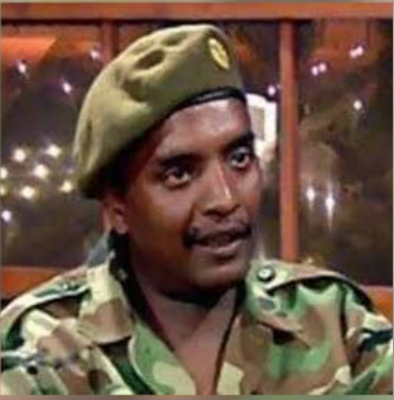
Feature Commentary: Unpacking the Narrative – A Rebuttal to General Hailu Gonfa’s ETV Interview
By Daandii Ragabaa
February 1, 2026
A recent interview given by General Hailu Gonfa, a former high-ranking member of the Oromo Liberation Army (OLA), to Ethiopian state television (ETV) has sent ripples through political and activist circles. Presented as a “tell-all,” the interview was a stark narrative of disillusionment with the OLF/OLA, peppered with allegations of foreign manipulation and internal failure. For the state broadcaster, it was a coup—a former insurgent commander validating state narratives. For many observers, however, it was a performance laden with contradictions and historical revisionism that demands scrutiny, not passive acceptance.
General Gonfa’s core thesis is one of victimhood at the hands of the Eritrean government (Shaebia) and strategic confusion within the OLF/OLA. He paints a picture of being used, misled, and ultimately betrayed. Yet, a closer examination of his own points reveals a narrative more complex and less absolving of his own agency.
1. The Eritrea Conundrum: Pawns or Strategic Partners?
Gonfa claims they went to Eritrea not out of hatred for Ethiopia, but to oppose the system, following the path of Eritreans themselves. He then details a three-month military training at Camp Ashfaray, a period of intense hardship. The critical question he sidesteps is: what did he and his comrades believe they were building towards in Asmara? Did they receive a political program from the OLF leadership? As senior military cadres, did they simply execute orders without understanding the overarching political strategy? His portrayal reduces seasoned officers to naive children, which insults both their intelligence and the gravity of their decision to seek foreign military training.
2. The Phantom “Russian Assignment” and Internal Discord.
He recounts a meeting in Russia where OLF members approached him, but they could not agree on a common agenda for working inside Ethiopia. He claims he was later given a vague, “impossible” national assignment. This raises a fundamental question: if there was such profound disagreement on core strategy before undertaking major actions, why proceed? The attempt to blame subsequent failures on a pre-existing lack of consensus suggests a failure of leadership and collective decision-making, not merely the deceit of others.
3. The “Oromia Republic” Straw Man.
This is perhaps the most disingenuous claim. Gonfa asserts a foundational disagreement over the goal of an “Oromia Republic,” which he labels a “colonial agenda.” He claims this deadlock was irreconcilable. Yet, the public record shows that figures like General Kamal Galchu, in a VOA interview, spoke openly about the possibility of a republic after achieving liberation. Furthermore, the OLF’s own political programs have historically navigated the spectrum between self-determination and possible independence based on a popular referendum. To frame a central, debated political aspiration as a shocking, divisive “colonial” plot is a gross misrepresentation of the struggle’s own intellectual history, likely tailored for his current audience in Addis Ababa.
4, 5 & 7: The Shaebia Scapegoat and the Mystery of Betrayal.
Gonfa dedicates significant time to blaming Eritrea for their imprisonment and manipulating the OLA’s military wing. He describes a mysterious Colonel “Xamee” who allegedly controlled them. This narrative of total Eritrean control sits awkwardly with his other claims of internal OLA agency, such as the alleged refusal of some army units to follow orders in 2018. If the OLA was merely a puppet, how did it exercise such defiance? His testimony about Colonel Abebe (allegedly now a Brigadier General in the OLA) is particularly damaging but presented without context or corroboration. It creates a convenient fog where all failures can be attributed to a shadowy foreign hand, absolving internal leadership of critical misjudgments.
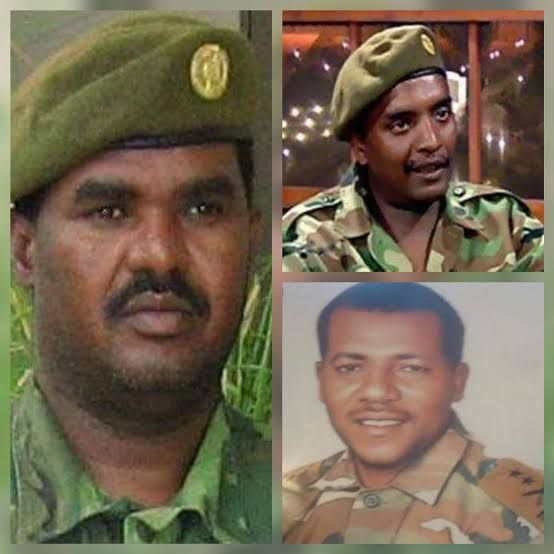
6. The Uncomfortable Transition from Refugee to Parliamentarian.
Gonfa’s personal journey—from an economic refugee with a Swedish passport to a member of parliament—is presented as a triumph of resilience. Yet, it unavoidably invites questions about the pathway from armed opposition to state legitimization. He speaks of the hardships of struggle, but for many watching, the stark contrast between the described suffering and his current official position underscores the complex, often ambiguous, transitions in Ethiopian political life, where former enemies can become state stakeholders.
8 & 9: Rewriting the Homecoming and the Gadaa Model.
He claims that upon returning to Ethiopia, they chose to work on national issues within the political system, respecting the existing OLF leadership. This sanitizes what many saw as a major split and a demobilization. His praise for the “Gadaa model” of conflict resolution, now being adopted in Amhara region, rings hollow. It appears less as a genuine endorsement of traditional systems and more as an endorsement of the federal government’s current policy of co-opting ethnic administrative models, a far cry from the Gadaa system’s principles of sovereignty and self-rule.
Conclusion: A Performance with a Purpose
General Hailu Gonfa’s interview is less a revelation and more a strategic repositioning. It is an effort to construct a personal and political narrative that reconciles a past of armed rebellion with a present of state accommodation. In doing so, it simplifies a multifaceted struggle into a story of foreign deception and internal error, draining it of its political substance and reducing it to a series of personal grievances and bad partnerships.
For the state, it is a useful narrative: the rebels were confused, controlled by Eritrea, and have now seen the light. For the still-active struggle, it is a warning about the power of state platforms to reshape history. For critical observers, it is a reminder that every testimony, especially those given in such loaded circumstances, must be read not just for what is said, but for the silences it cultivates and the interests it serves. The truth of the Oromo struggle, in all its sacrifice, complexity, and ongoing evolution, lies not in this single curated confession, but in the totality of its lived history, which is far messier, more principled, and more enduring than this interview suggests.
Oromo Diaspora Celebrates 46th OLA Anniversary Online
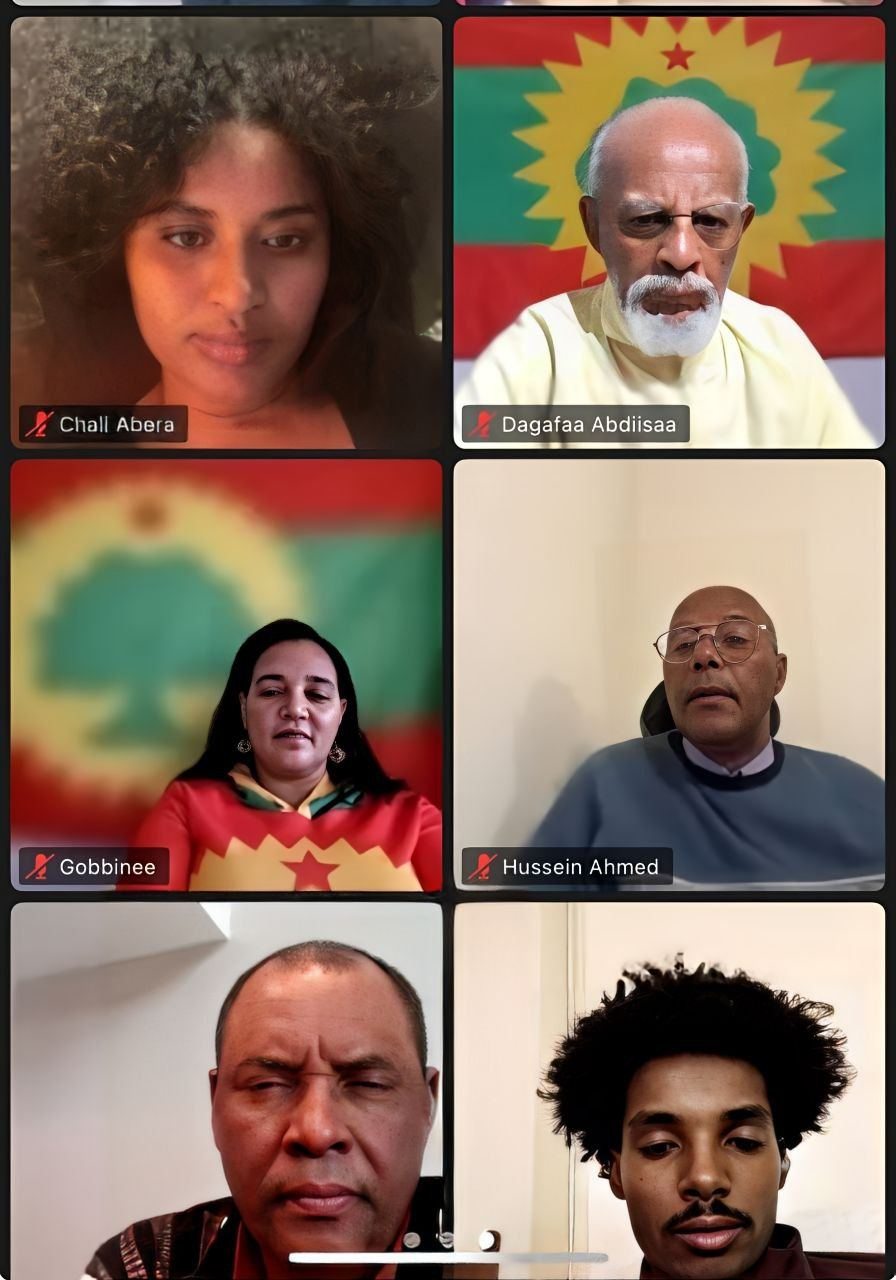
Oromo Diaspora Marks 46th OLA Anniversary and New Year with Virtual Gathering, Honors Foundational Victory
January 2, 2026-In a significant online assembly bridging continents, the global Oromo community gathered on January 2, 2026, for a dual commemoration: the 46th anniversary of the Oromo Liberation Army (OLA/WBO) and the celebration of Ayyaana Amajjii 1, the Oromo New Year. The virtual event, held via Zoom, served as a space for reflection, strategic review, and a powerful reaffirmation of commitment to the liberation struggle.
The gathering provided a platform to assess the achievements and persistent challenges of the Oromo quest for self-determination. Speakers connected the modern struggle directly to its historical roots, with participant Jaal Dhugaasaa Bakakkoo detailing the harsh founding conditions of the OLA. He highlighted a pivotal foundational moment: the first official day of the OLA was celebrated on January 1, 1980, to mark a victory over a major campaign by the then-ruling Darg (Derg) regime. This historical note underscored that the movement was born not in abstraction, but in the crucible of direct combat and early triumph.
The intertwining of the cultural New Year (Ayyaana Amajjii) with the military anniversary was emphasized as a core feature of Oromo resistance, symbolizing the inseparable link between cultural identity and political struggle. Organizers stated that these dates are perennially observed wherever Oromo patriots, members of the Oromo Liberation Front (OLF/ABO), and supporters of the cause are found.
A central and poignant message was directed at the Oromo youth. In his keynote address, Dr. Daggafaa Abdiisaa framed the continuation of the struggle as a sacred duty inherited from past sacrifices, declaring, “The duty to pursue the goal and objective of the OLF rests upon you, the beloved children of the fallen heroes.”
The event concluded with a sense of solemn purpose, honoring the legacy of the last 46 years—from the first victory commemorated in March 1980 to the present-day resistance—while charting a determined course for the future. It reinforced the global diaspora’s role as a pillar of solidarity and historical memory for the ongoing movement in Oromia.
###
Background Notes:
- The Oromo Liberation Army (OLA/WBO) is the armed wing associated with the Oromo Liberation Front (OLF/ABO).
- On January 1, 1980, the Oromo Liberation Army (OLA) celebrated its first formal day to commemorate a hard-fought victory over the Darg regime’s campaigns.
- This day stands as a testament to the early courage and sacrifice that laid the foundation for the ongoing struggle. We remember, honor, and draw strength from the resilience shown from the very beginning.
- Ayyaana Amajjii 1 marks the Oromo New Year based on the traditional Gadaa calendar.
- The OLA’s first commemorative day was March 1, 1980, following a military victory against the Derg (Darg) government.
- The Oromo have been engaged in a long-standing struggle for self-determination within Ethiopia.
The Case for Dual Citizenship in Ethiopia

In our increasingly interconnected world, the Ethiopian diaspora represents a vast reservoir of talent, capital, and cultural richness. To fully harness this potential, the Ethiopian government should formally recognize dual citizenship. This policy shift is a strategic imperative for national development, moving beyond outdated notions of exclusive allegiance to embrace a more inclusive and pragmatic vision of Ethiopian identity.
The current denial of dual citizenship creates an artificial and counterproductive divide. It forces a choice between a new life abroad and a fundamental connection to their homeland, stifling the very contributions the nation needs. The benefits of reform are clear and compelling:
- Economic Growth: Dual citizenship would unlock significant investment. By granting diaspora Ethiopians the full rights and security of citizenship, they would be empowered to invest more confidently in businesses, real estate, and the stock market, directly fueling entrepreneurship and economic growth.
- Knowledge and Cultural Exchange: This policy would fortify the bonds of culture and knowledge. It facilitates the seamless flow of ideas, skills, and heritage, ensuring that future generations remain connected to their roots and actively engaged in Ethiopia’s cultural and intellectual landscape.
- Political Engagement and Unity: Granting dual citizenship integrates the diaspora into the nation’s democratic fabric. It provides a formal voice in Ethiopia’s future, transforming alienation into engagement and fostering a stronger, more unified global Ethiopian community.
- Global Competitiveness: Ethiopia is currently an outlier. Many nations across Africa and the world actively leverage dual citizenship to engage their diaspora. To compete for global talent and investment, Ethiopia must modernize its citizenship laws and join this progressive trend.
Ultimately, accepting dual citizenship is more than a legal update—it is a profound commitment to inclusivity and progress. It is a recognition that the strength of a nation lies not only within its borders but also in the hands of its global citizens. By embracing its diaspora, Ethiopia can unlock a new chapter of development, unity, and shared prosperity.
The Gada System: A Living Legacy Passed to a New Generation
The Gada system is the proud heritage of the Oromo people. It is a system of bravery and discipline, founded on structured laws, principles, and timelines.
For over a century, the succession of Gada assemblies faced suppression and was pushed to the brink of being lost to the harsh pressures of the time. However, because our people held steadfast to their system and culture, it has not only been revived but has also gained worldwide recognition. As is well known, the Gada system is registered by the United Nations Educational, Scientific and Cultural Organization (UNESCO) as an Intangible Cultural Heritage of Humanity.
The Guji Oromo have played an exceptional role in preserving this system to the present day. For the Guji, Gada is not just for the leaders; the entire community forms the foundation of this system. As evidence, since 1424 [2012 EC], the Guji have recorded every Abbaa Gada who has led them through successive generations, without significant error or omission. In that year, following established tradition, they gathered at Me’ee Bokkoo for the transfer of power (Baallii), establishing laws and conducting various rituals and ceremonies.
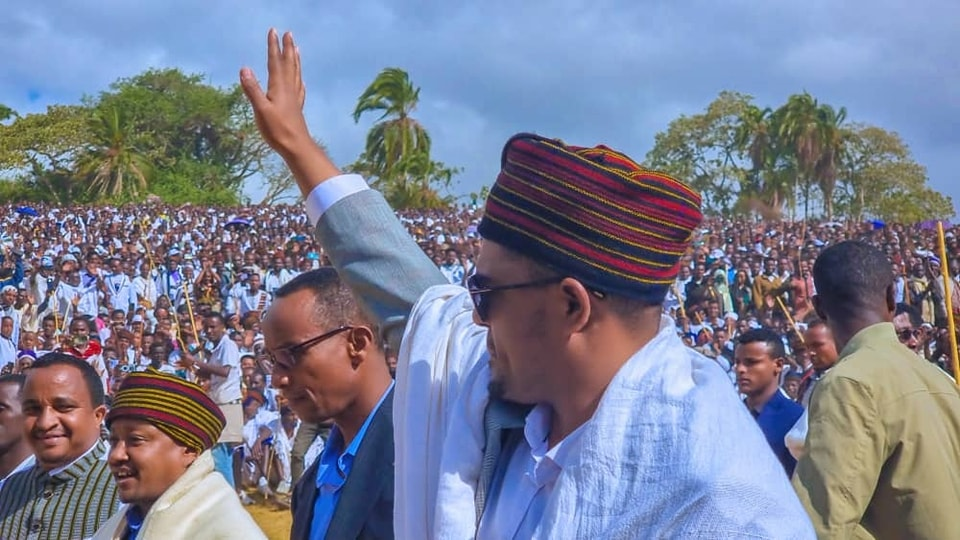
In accordance with Oromo law and tradition, the assembly sat continuously at Me’ee Bokkoo for the past seven days. They established and proclaimed the nine articles of “The Wayyooma Waaqaa Lafaa and the Bulii Olii of Sons and Daughters.” This assembly has a father. Its father is Abbaa Gadaa Jiloo Maandhoo. He was the 74th Haaganaa, or General Abbaa Gadaa, of the Guji.
The process for the 75th Baallii transfer has been completed. Abbaa Gadaa Jiloo Maandhoo has concluded his term and received his honor (daraaraa). He was celebrated with the verse:
“Hoo’aa mi’ii gadaa tiyyaa
Hoo’aa itittuu gadaa tiyyaa
Hoo’aa areera gadaa tiyyaa
Hoo’aa daraaraa gadaa tiyyaa”
(Farewell, the council of my Gada; / Farewell, the foundation of my Gada; / Farewell, the legacy of my Gada; / Farewell, the honor of my Gada.)
The Gada power has moved from Gadaa Harmuufa to Gadaa Roobalee. Abbaa Gadaa Jaarsoo Dhugoo has received the Baallii! The former Abbaa Gadaa, Jiloo Maandhoo, has become an elder! The door has been closed! The door is now closed!
This is how the Oromo people have brought the Gada system to this day. As a member of this generation, witnessing the Gada assembly at Me’ee Bokkoo and the peaceful transfer of power for the 75th time filled me with immense joy.
The core mission of our Reformist Government is to restore the Oromo people to their culture and identity. Consequently, we are focusing significant effort on revitalizing it for the benefit of our society. The Gada system is being integrated into the educational curriculum, taught from primary school levels. At the higher education level, we are encouraging research leading to Master’s and PhD degrees.
Furthermore, we are working to re-establish and institutionalize Gada values. By drawing from its philosophy, we have established the Cultural Court of Law to ensure restorative justice. We have institutionalized community service to strengthen social bonds.
To foster mutual support and responsibility, we have re-established the Buusaa Gonofaa system. Going a step further, we are providing nutritious meals to schoolchildren, building a healthy future generation. We are establishing the Gaachana Sirnaa (Security Institutions) to ensure public safety. In the future, these civic institutions will continue to expand their reach and efficiency.
Me’ee Bokkoo is a sacred site. For generations, it has been a center for legislative debate and judicial verdicts. Because it is where the Gada assembly convenes for the transfer of power, it is the parliamentary center for the Guji Oromo. It is a place of respect and cleanliness. This is why the Guji invoke the name of Me’ee Bokkoo when they pray to Waaqaa.
In this spirit, the Oromia Regional Government announces that the ceremony for the 76th Baallii transfer will be preceded by the construction of a grand amphitheater at Me’ee Bokkoo, as a cultural center.
I extend my congratulations—baga geessan—to the Guji people and all Oromo people, for successfully reaching the 75th Gada transfer at Me’ee Bokkoo. My hope and vision for the coming years is that it will be a time when our culture flourishes and our identity is fully restored.
Gadaan quufaa gabbina (The Gada of Quufa is prosperity);
Gadaan Roobalee misa (The Gada of Roobalee is honey).
Horaa Bulaa; Deebanaa! (The Hora of Bulaa shall return!)
President of the Oromia Regional Government
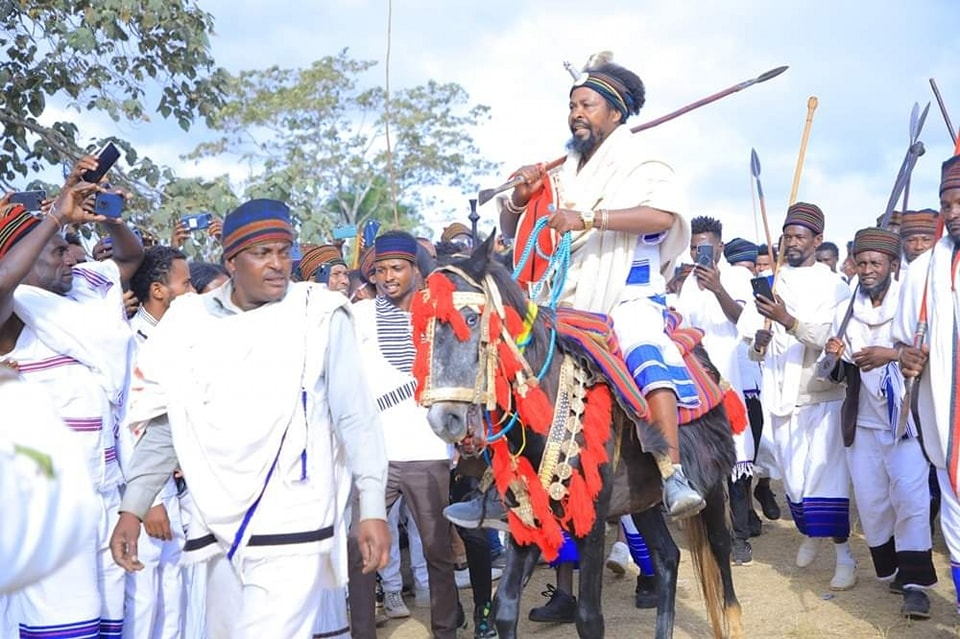
Ethiopian Opposition Calls for Fair 2026 Election Conditions
Press Release: Ethiopian Opposition Parties Outline Fundamental Preconditions for a Credible 2026 Election
Addis Ababa, November 12, 2025 – The undersigned coalition of Ethiopian opposition parties has closely monitored the National Electoral Board of Ethiopia’s (NEBE) preliminary activities concerning the 2026 General Election.
While we acknowledge this as a procedural step, we state unequivocally: in the complete absence of a democratic foundation in Ethiopia today, and without a guaranteed conducive environment, this exercise is a hollow and meaningless endeavor.
Historically, Ethiopian elections have been political performances designed to legitimize an authoritarian system. They have been neither free nor fair, their results neither credible nor publicly accepted. Consequently, they have exacerbated conflict and instability rather than resolving the nation’s profound political crises. A genuine election must be an expression of citizens’ democratic rights, not a tool for rulers to consolidate power.
Therefore, for the 2026 election to represent a genuine step toward lasting peace and a decisive break from this past, we insist that creating a conducive environment is not optional, but an absolute prerequisite. Before any discussion of an electoral calendar can begin, the Ethiopian government must take immediate and concrete action on the following non-negotiable foundational conditions:
1. An Inclusive National Dialogue and Political Settlement
The government must immediately initiate a comprehensive political dialogue with all opposition parties, including those in exile and armed struggle, to agree on a shared roadmap for a genuine democratic transition. An election held without prior national consensus on the nation’s existential issues will only deepen the crisis and cannot produce a legitimate outcome.
2. An End to Armed Conflict and Guaranteed Security
The devastating wars in Oromia, Amhara, Tigray, Afar, and beyond must be brought to a swift, permanent, and verifiable end. Peace and security are the bedrock of any credible election. All parties, candidates, voters, and observers must be able to operate freely and safely across the entire country.
3. The Unconditional Opening of Political Space
The government must immediately and unconditionally release all political prisoners. Hundreds of illegally shuttered opposition party offices must be reopened, and the systematic harassment and intimidation of political opponents must cease. Participating in an election while our leaders are imprisoned and our offices are closed is not a credible democratic process.
4. Fundamental Institutional and Legal Reforms
We question the capacity and independence of the NEBE and demand its reconstitution—from the board level to polling station staff—through a transparent, consensus-based process with full political party participation. The electoral law must be fundamentally amended to ensure a fair, inclusive, and proportional system, including the removal of the restrictive support signature requirement.
5. Guaranteed Neutrality of State Institutions
A legally binding agreement must ensure the tangible neutrality of all security forces (defense, police, intelligence) and the judiciary. These institutions must serve the constitution and the nation, not the ruling party. A secure environment where citizens can vote without fear is non-negotiable.
6. Unfettered Press Freedom
The persecution of journalists must end, and all legal barriers stifling independent media must be removed. All local and international media must have equal access to information and polling stations, and face no restrictions on dissemination.
7. Robust Observation by Domestic and International Monitors
The government must legally guarantee the unhindered participation of credible domestic and international observers throughout the entire electoral process. The NEBE’s deployment of unvetted “domestic observers” is insufficient and will not guarantee credibility.
A Call for Verification and Unity
To ensure these are not empty words, the fulfillment of these conditions must be verified by independent international actors, including the African Union (AU), European Union (EU), and United Nations (UN). Public trust must be built through reliable agreements among all electoral stakeholders.
We therefore issue a collective call to the government and ruling party to immediately begin fulfilling these preconditions.
We also call upon all genuine democratic political parties, civic organizations, media, and the people of Ethiopia to unite in demanding this democratic foundation. The 2026 election can only be historic if we first build the ground upon which it can stand. Our mission for unity cannot be postponed.
Finally, we call upon Ethiopia’s international partners and friendly nations to stand with the Ethiopian people in this struggle to build a democratic system, thereby rendering a great service to our nation and its future.
Unity is Strength! A United Struggle Will Prevail!
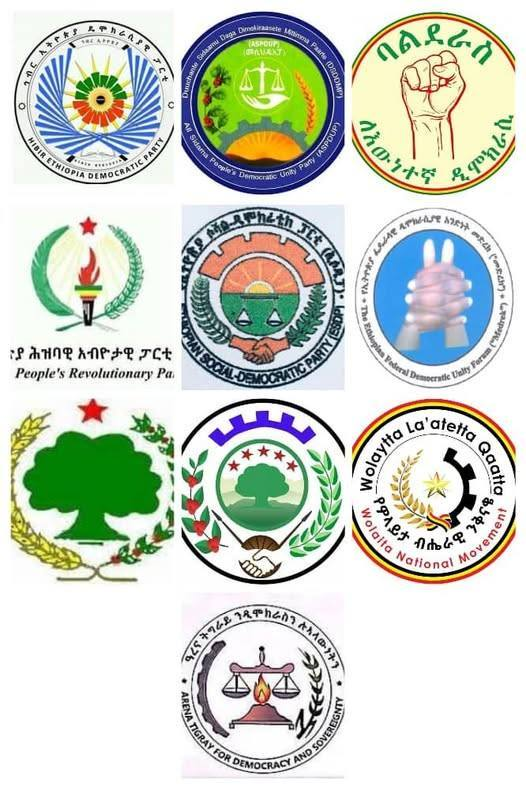
List of Signatory Parties:
- Hibir Ethiopia Democratic Party (Hibir Ethiopia)
- All Sidama People’s Democratic Unity Party (ASPDUP)
- Balderas for Genuine Democracy (Balderas)
- Ethiopian People’s Revolutionary Party (EPRP)
- Ethiopian Social Democratic Party (ESDP)
- Ethiopian Political Parties Joint Forum (MEDREK)
- Oromo Liberation Front (OLF)
- Oromo Federalist Congress (OFC)
- Wolaytta National Movement (WNM)
- Arena Tigray for Democracy and Sovereignty (Arena Tigray)
November 12, 2025, Addis Ababa, Ethiopia
What problems could Ethiopia’s push for sea access, which it champions as a national cause, create for the region?
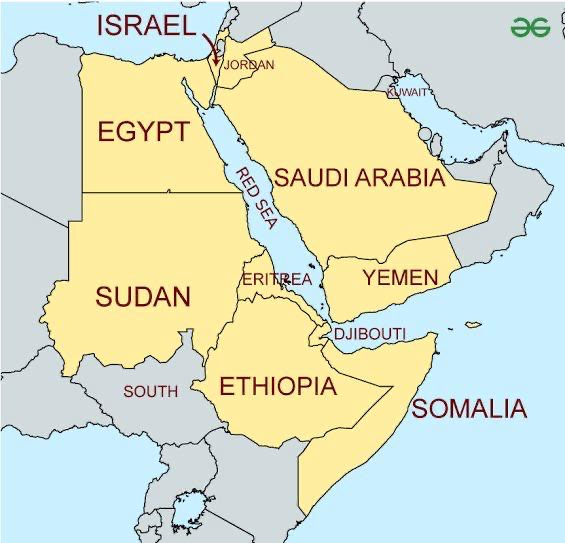
This is a well-framed question that gets to the heart of a complex geopolitical issue. Ethiopia’s push for sea access, while driven by its own economic and historical imperatives, has the potential to create significant problems for the Horn of Africa region.
Here is a breakdown of the potential problems, categorized for clarity:
1. Direct Bilateral Tensions and Conflict
The most immediate risk is the escalation of disputes with neighboring countries.
· With Eritrea: Any assertion of a “right” to sea access is likely to be interpreted by Eritrea as a direct threat to its hard-won sovereignty and its ports of Assab and Massawa. This could:
· Re-ignite the dormant border conflict and military tensions.
· Scupper any chance of normalizing relations, keeping the region in a perpetual state of cold war.
· With Somalia: Any potential deal for port access or a lease in the Somali region (e.g., Somaliland) that bypasses the fragile Federal Government in Mogadishu would:
· Be seen as a violation of Somali sovereignty and territorial integrity.
· Severely undermine the federal government’s authority and fuel nationalist sentiment.
· Potentially destabilize the delicate political balance within Somalia, empowering extremist groups like Al-Shabaab, who could use it as a rallying cry.
2. Regional Destabilization and Shifting Alliances
Ethiopia’s actions could force a realignment of regional alliances, creating new fault lines.
· The Somaliland Precedent: A formal deal with the breakaway region of Somaliland would be a seismic event. It would:
· Effectively recognize Somaliland’s independence, shattering the African Union’s long-standing principle of upholding colonial-era borders (uti possidetis).
· Inflame secessionist tensions across the entire continent, setting a dangerous precedent.
· Force other regional powers (Egypt, UAE, Turkey) to take sides, potentially creating a proxy conflict.
· Red Sea Militarization: The Red Sea is already a strategic chokehold with heavy international naval presence. A desperate or assertive Ethiopian push could lead to:
· An arms build-up along coastlines as neighboring countries seek to secure their assets.
· Increased interest and intervention from non-African powers (e.g., Iran, Turkey, Gulf States) seeking to leverage the dispute for their own strategic advantage.
3. Economic and Trade Disruptions
The Horn of Africa is a critical node for global trade.
· Port Politics and Leverage: Neighboring countries like Djibouti (which hosts a major Ethiopian military base and handles ~95% of its trade) could use Ethiopia’s desperation as leverage.
· They could raise port fees or restrict access during diplomatic spats, holding the Ethiopian economy hostage.
· Disruption of Critical Sea Lanes: Any significant military conflict or sustained political instability in the region risks disrupting traffic through the Bab el-Mandeb strait, a vital passage for global shipping and energy supplies. This would have immediate international economic consequences.
4. Undermining Regional Diplomacy and Norms
Ethiopia’s approach challenges foundational principles of regional cooperation.
· Erosion of IGAD and AU Authority: By pursuing a unilateral, assertive path, Ethiopia undermines the regional bodies (IGAD, African Union) that are meant to mediate such disputes. It signals that might-makes-right is preferable to diplomatic negotiation.
· Breakdown of Trust: For decades, regional cooperation has been built on fragile trust. A forceful Ethiopian campaign to secure a port would shatter that trust, making future collaboration on shared challenges (climate change, terrorism, water management) extremely difficult.
Conclusion
In summary, Ethiopia’s championing of sea access as a national cause is not just a bilateral trade issue; it is a potential regional catalyst. It threatens to:
· Re-open old wounds with Eritrea.
· Dismember a sovereign state in Somalia.
· Shatter a foundational continental norm on border integrity.
· Trigger a new round of arms races and proxy conflicts in the strategically vital Horn of Africa.
While Ethiopia’s economic arguments have merit, the manner in which it pursues this goal will determine whether it becomes a driver of development or a source of profound and lasting regional instability.
The ‘Without Me’ Mentality and Ethiopia’s Crisis

Examining the Broader Causes of Instability in Ethiopia
===============================
The core argument, as articulated by Sena Jimjimo, founder of OLLAA, is that a lack of internal consensus and a toxic culture of “without me” thinking within Oromo political factions pose a significant danger to Ethiopia.
She contends that this mindset has led to a situation where:
Truth is Sacrificed for Unity: Oromo fighters avoid difficult truths with each other to maintain a superficial unity.
Individual Ambition Over Collective Good: The belief that liberation can only be achieved through a specific leader or group (“without me”) has been destructive.
Resulting Instability: This failure to build a unified, truth-based movement has ultimately made Ethiopia unsafe.
Counter-Response
While Sena Jimjimo raises valid concerns about the dangers of political fragmentation and individual ambition, her analysis risks misdiagnosing the core problem by focusing on a single group.
A more comprehensive perspective would argue that Ethiopia’s instability stems from a systemic failure to build a genuinely inclusive, multi-ethnic state, not from the internal dynamics of one community.
Here is a counter-response:
Subject: Re: Examining the Broader Causes of Instability in Ethiopia
The challenges facing Ethiopia are complex and cannot be attributed to the internal politics of any single group. While introspection within all political movements is necessary, framing the “Oromo” or “Oromo fighters” as the primary danger is a reductive and counterproductive narrative.
The true source of Ethiopia’s instability is the decades-long, systemic failure to establish a political framework where all ethnic groups feel they have a secure and equitable stake in the nation’s future. The “without me” mentality is not an Oromo-specific issue; it is a symptom of a zero-sum political culture that has been fostered by successive central governments. When communities are historically marginalized and their demands for self-determination are met with violence or empty promises, it inevitably breeds factionalism and a desperate struggle for agency.
Furthermore, the call for “unity” must be critically examined. Too often, calls for national unity have been a pretext for suppressing legitimate grievances and enforcing assimilation. The courage to tell “the truth” that Ms. Jimjimo calls for must apply equally to all sides—including acknowledging the historical injustices that have fueled the very divisions she laments.
Therefore, the path to a safe and stable Ethiopia does not lie in singling out one group, but in addressing the foundational issues: building robust institutions that guarantee justice and equality for all, fostering a culture of genuine political compromise, and creating a shared national identity that respects and celebrates Ethiopia’s rich diversity. The solution requires a collective responsibility from all of Ethiopia’s national political forces, not a critique of one.
President Afwerki’s Disappointing Remarks on Oromummaa

By Zelalem Negassa
The internet is abuzz following President Isaias Afwerki’s recent speech commemorating the 34th anniversary of Eritrea’s independence. While his address touched on a range of global and regional issues, one particular remark struck a deep and troubling chord for me: his dismissal of Oromummaa as part of an externally driven destabilization agenda.
Such a statement reveals either a profound ignorance of Oromo history and identity (which I doubt on his part) or a calculated attempt to delegitimize one of the most significant indigenous movements in the Horn of Africa. As Oromo nationalists, we must collectively and unequivocally reject this distortion and reaffirm both the authenticity and legitimacy of Oromummaa as the rightful expression of our people’s journey toward justice, dignity, and self-determination. Oromo community, scholarly, professional, and civic organizations should raise their voices and ensure that the Eritrean people understand our deep disappointment with their leader’s betrayal. Moreover, President Afwerki’s deliberate or careless conflation of Oromummaa with the ideology of the Prosperity Party (PP) must be corrected without delay. Oromummaa is not a state-sponsored doctrine like MEDEMER. It is a people-rooted identity forged through struggle, not power. Misrepresenting it undermines not only Oromo aspirations but also regional understanding and trust.
President Afwerki’s claim that Oromummaa “does not represent the Oromo people” is not only factually incorrect, it is deeply offensive. More importantly, who gave him the authority to speak on behalf of the Oromo people? This is the same man who hosted the Oromo Liberation Front (OLF) in Eritrea for years, not out of solidarity, but seemingly as a strategic pawn, keeping the movement inactive while waiting for an opportune moment to bargain. That moment came in 2018, when he handed over OLF leaders to the Ethiopian government in a move that many rightly view as a betrayal. Oromummaa is not an invention of foreign powers. It is a homegrown cultural and political consciousness grounded in the Oromo people’s values, language, Gadaa system, and collective memory. It emerged organically as a response to a century of marginalization under successive regimes, and it now serves as a unifying force among Oromos across religion, region, and generation.
His comments have already sparked widespread responses from Oromo voices, including outlets like Oromia Dispatch and scholars such as Dr. Mebratu Kelecha, who have rightfully condemned the characterization and challenged other problematic claims in his speech. These responses reflect a growing awareness within the Oromo public of the importance of defending our narrative and confronting external efforts to distort it.
To President Afwerki, I would offer this reminder: once, Eritreans too were told they were not a real people, that their language was an invention. That their struggle for independence was orchestrated by foreign hands (Ya Arab kitrenyoch). They were mocked, dismissed, and delegitimized. History proved those voices wrong.
It will do so again, this time, with respect to Oromummaa. No amount of propaganda, denial, or geopolitical spin can silence a people who have found their voice, reclaimed their history, and are determined to shape their future.
 Oromedia