More Than a Gathering: Lammii gathering of Buundhaa in Boji Becomes a Hub for Oromo Cultural Revival
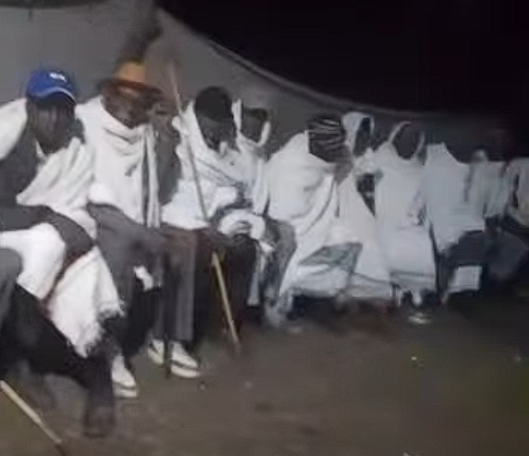
Subtitle: Lammii gathering of Buundhaa from Across the Region Unite on the Pitch, Spark Community Dialogue on Aadaa and Safuu
BOJI, OROMIA — The sound of cheering fans and bouncing footballs has become a powerful call to unity in the rural landscape of Boji. Here, at the Ambo Ejersa gathering, a simple cultural gathering event has blossomed into a profound social gathering, uniting Oromo generations from various parts of the country and reigniting vital conversations about cultural heritage and values.
The generation gathering has successfully drawn teams that map the Oromo heartland: local generation from Boji are competing alongside their brothers from Itaya, Ambo, Meexxii, Maatii, Wadesse, and Shanan. This convergence on the lammii pitch represents a significant grassroots effort to strengthen communal bonds that stretch across the region.
“This is truly something that brings joy,” remarked an elderly spectator, Bulo Tadese, his eyes following the energetic play. “In these times, seeing our sons from different corners come together in peace and healthy competition… it warms the heart. Waan haalan nama gammachisudha (It is profoundly joyous).”
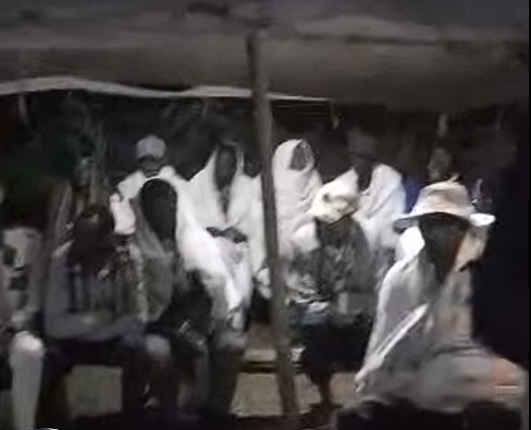
Yet, the true significance of the event extends far beyond the final score. In the shade of trees and under makeshift tents, the community surrounding the gathering is engaging in a parallel, equally important contest: a collective effort to reclaim and revive core Oromo principles.
During breaks and after matches, elders, players, and spectators are gathering for marii boonsaa—meaningful, extended community dialogues. The central focus is the urgent discussion of aadaa (culture/tradition) and safuu (a deep-seated moral and ethical code governing respect and social harmony).
“This lammii gathering of Buundhaa was the spark, but the conversation is the real fire,” said organizer Dhaqaba Gammada. “We play the meeting to bring the generation of Buundhaa together, but we use this gathering to ask important questions: How do we preserve our identity? How do we practice safuu in our daily lives? The energy here shows our people are hungry for this discussion.”
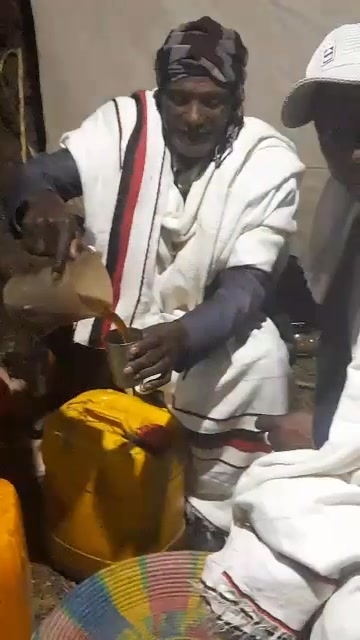
The spontaneous emergence of these dialogues points to a deep-seated community desire to navigate modernity while firmly rooting the younger generation in their cultural foundation. Elders see it as a chance to impart wisdom, while youth see it as a space to understand their heritage in a contemporary context.
The Ambo Ejersa lammii gathering of Buundhaa stands as a powerful example of how lammii gathering can serve as a catalyst for social cohesion and cultural preservation. It demonstrates that the goal is not only to win games but to strengthen the very fabric of the community, ensuring that the values of aadaa and safuu are passed on, debated, and lived.
As the lammii gathering of Buundhaa continues, the message is clear: the most important victory is happening off the field, in the hearts and minds of a people rediscovering the strength of their shared identity.
The Crisis of Dr. Gammachuu Magarsaa in Oromia
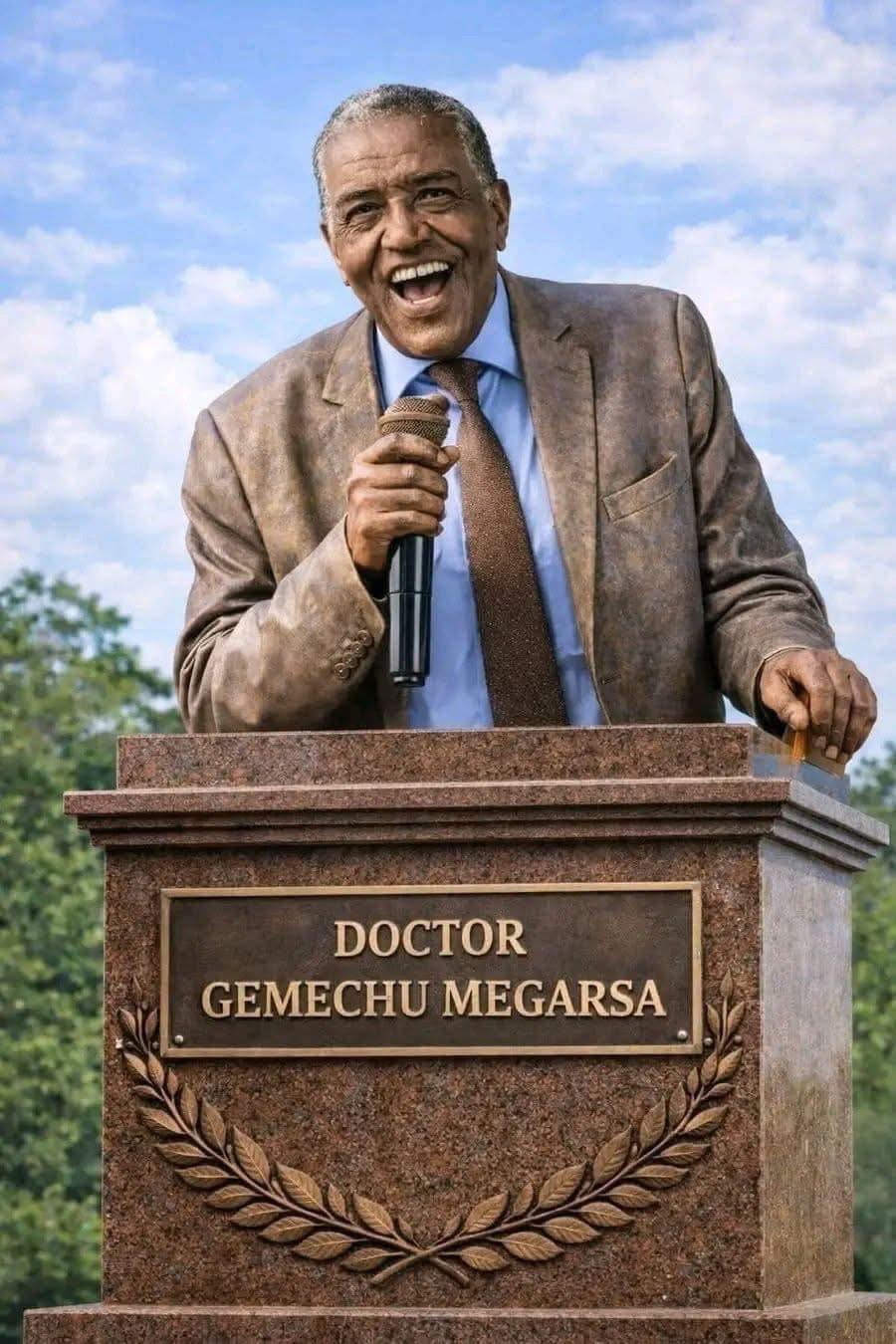
A Scholar in Exile: The Plight of Dr. Gammachuu Magarsaa and a Community’s Anguish
A quiet crisis is unfolding in the heart of Oromia, one that speaks volumes about the precarious state of its intellectuals. Dr. Gammachuu Magarsaa, a revered Oromo scholar, author, and elder, is reportedly in a dire situation, having lost his home and been forced to return to his birthplace in Qeellem Wallagga under difficult circumstances.
The news of Dr. Gammachuu’s troubles first circulated months ago but, as sources lament, “became a topic of discussion and then, while the Oromo community failed to find a solution, it was forgotten and left behind.” The issue was recently brought back to public attention through a poignant interview on Mo’aa Media, where the scholar himself confirmed the severity of his plight.
In the interview, Dr. Gammachuu shared a stark reality. After losing his house—reportedly sold to fund the publication of his scholarly work on Oromo history—he has returned to his ancestral land. “We have returned to our birthplace and are living there, farming our family’s land,” he stated, describing this turn as a significant hardship in his life. He revealed a history of being targeted, mentioning a prior expulsion from Addis Ababa University under the Derg regime.
His current predicament stems from a sacrifice for knowledge: “They sold their house to publish a book about the Oromo people,” he explained of the decision. He expressed frustration that people who know him seem unwilling to acknowledge his struggle, stating, “For the first time, I don’t know how this problem caught up with me, but I also don’t know how to be humiliated by a problem.”
The revelation has sparked profound concern and indignation within the Oromo community, both in Ethiopia and across the diaspora. The case of such an esteemed figure—a PhD holder who has contributed greatly to the preservation of Oromo history and culture—living without a stable home has become a powerful and troubling symbol.
The public reaction is crystallizing around urgent, critical questions directed at the Oromia Regional State government:
- Where is Oromo Wealth? Community members are asking, “The wealthy Oromos, where are they?” The question highlights a perceived disconnect between the region’s economic elite and the welfare of its most valuable intellectual assets.
- What is the Government’s Role? A more direct challenge is posed to the regional leadership: “The government that calls itself the government of the Oromo people spends money on festivals and various things. How is it that Dr. Gammachuu Magarsaa, who has served the country with great distinction, has fallen through the cracks and is not provided a house?”
The situation of Dr. Gammachuu Magarsaa is no longer seen as a personal misfortune but as a test case. It tests the community’s commitment to honoring its elders and scholars, and it tests the regional government’s stated mission to uplift and protect the Oromo nation. His empty study is a silent indictment, and his return to the soil he has spent a lifetime documenting is a powerful, somber metaphor. The Oromo public now watches and waits to see if a solution will be found for one of its own, or if his struggle will remain an unanswered question in the ongoing narrative of Oromo self-determination.
The Legacy of Oromo Founders: Unfinished Business
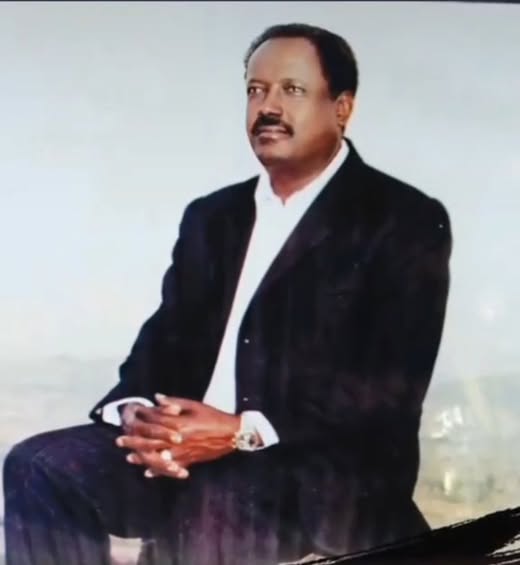
Feature Commentary: The Unclaimed Inheritance – On the Unfinished Debt to Oromoo’s Founders
In the sacred narrative of the Oromo struggle, certain names are whispered with reverence, not merely as historical footnotes, but as living accusations against the present. The story of Hotel Jibaat and Maccaa, and the founding father Ob. Beellamaa Futtaasaa, is one such story. It is not a eulogy for the departed; it is a mirror held up to the community, revealing an unsettling and unresolved question of legacy, debt, and collective conscience.
The tale is stark in its simplicity. When the modern Oromo political struggle was ignited in Ambo, it was men like Ob. Beellamaa Futtaasaa—owners of the Hotel Jibaat and Maccaa—who provided the crucial, tangible infrastructure. Their support was not passive sympathy; it was the active, risky bedrock upon which early organizing was built. Their hotel was not just a business; it was a sanctuary, a meeting hall, a nerve center for the nascent Oromo Liberation Front (OLF). They were, as the text states, “hundeessitoota”—foundational pillars—who stood with the architects of the political dream.
The piercing tragedy, however, lies in the chilling coda to this foundation story: “Today… their descendants are in want.”
This single line unravels a profound moral and social contradiction. The children and grandchildren of those who provided the deeggarsa qabsoo hidhannoo—the support that sustained the struggle in its most fragile, clandestine phase—are now left struggling. Their material inheritance has seemingly evaporated, and the immense social capital of their forefathers’ sacrifice has not translated into security or dignity. The comparison drawn is as painful as it is deliberate: while the children of other heroes (like Ob. Daraaraa) are seen to have flourished, the lineage of Beellamaa Futtaasaa faces neglect.
This is more than a family’s hardship. It is a fracture in the very covenant of the struggle. A movement built on principles of justice, self-determination, and collective upliftment now stands accused of failing its most immediate creditors—the families of its earliest benefactors. The hotel that once housed the dream now symbolically stands empty for its heirs.
The commentary this situation demands is multifaceted:
First, on the Nature of Sacrifice: The story forces a reckoning with what we value in our history. We glorify the martyr on the battlefield and the political theorist, but often forget the enabler—the one who risked property, livelihood, and safety to create the space for the movement to breathe. Their contribution, though less cinematic, was equally vital. By forgetting them, we create a hierarchy of sacrifice that is both unjust and historically myopic.
Second, on the Ethics of Legacy: Every revolutionary movement eventually grapples with the transition from struggle to governance, from resistance to responsibility. A core part of that responsibility is social and historical accountability. Have the structures built by the struggle—whether formal institutions or community networks—developed a mechanism to honor and support the living legacies of its founders? The plight of the Fitaaxaa family suggests a failing grade. It raises the uncomfortable question: does the movement consume its own, leaving the children of its hosts to face the bill?
Third, on Collective Amnesia and Power: There is a dangerous tendency in evolving political movements to become forward-obsessed, to distance themselves from the “old stories” in a rush to claim new ground. But this amnesia is a form of power. It allows new elites to consolidate status while disengaging from the foundational debts that morally bind them. Remembering Beellamaa Fitaaxaa is not nostalgia; it is an act of political hygiene, a check against the corrupting notion that the present leadership owes nothing to the past.
Finally, on the Meaning of Victory: If the ultimate goal of the Qabsoo is nagaa fi bilisummaa—peace and freedom—what does that freedom mean? Surely, it must encompass a community where the descendants of those who poured the foundation are not left destitute. A struggle that cannot care for the children of its first guardians risks winning a hollow prize, a state or a recognition that has lost its moral compass.
The story of Hotel Jibaat and Maccaa is, therefore, an urgent parable. It is a call for the Oromo nation—its leadership, its diaspora, its institutions—to conduct an audit not just of its political strategies, but of its conscience. It is a demand to reclaim that inheritance of collective responsibility.
The physical hotel may be gone, but the debt it represents remains outstanding. Until it is addressed, the struggle’s claim to justice will carry this quiet, haunting contradiction. True victory will not be complete until the heirs of those who housed the revolution are themselves brought in from the cold. The seeds they watered must bear fruit for their own garden as well.
The Unquenchable Flame: Amajjii and the Living Memory of Oromo Resistance
By Dhabessa Wakjira
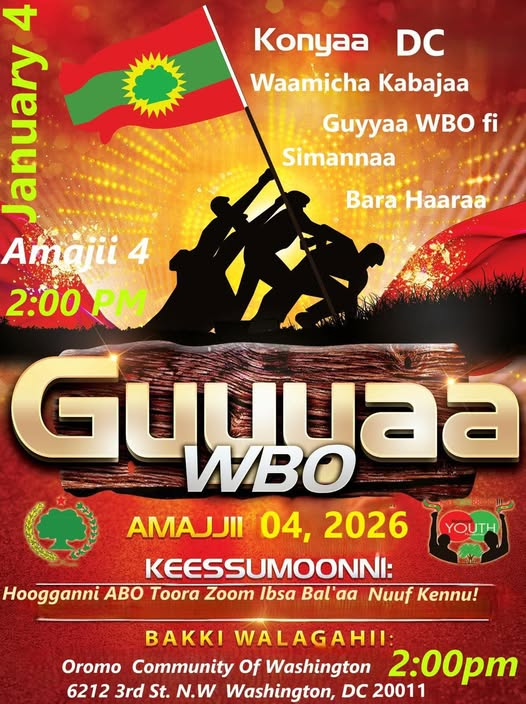
OROMIA – Across the highlands and valleys of Oromia, and within diaspora communities spanning the globe, the Oromo people are preparing to observe Ayyaana Amajjii—a day that is far more than a cultural anniversary. It is a living chronicle of resistance, a solemn vow of continuity, and a beacon of collective identity lit against a backdrop of enduring struggle. As one message proclaims: “AYYAANA AMAJJII BAGA GEESSAN!” – “Happy Amajjii Holiday!”
Celebrated for over 40 years, Amajjii commemorates a pivotal historical moment of defiance. Its roots lie in “a history of resilience in the Oromo freedom struggle and the heroism of Oromo fighters,” a day when a courageous few secured a landmark victory against formidable enemies. This singular event is etched into the Oromo consciousness not merely as a past triumph, but as an eternal wellspring of strength.
“Amajjii is a symbol of the endurance and perseverance that defines our entire struggle,” explains a community historian. “It is a holiday that surpasses all others, a flame we keep alive to illuminate the path to Oromo freedom from within the darkness of oppression.”
This year, the commemoration carries a particularly profound weight. The community gathers in what is described as “a time of difficulty and darkness,” marked by reports of severe hardship, drone strikes, militia violence, and widespread military crackdowns. “This brutal oppression wounds us,” the message states, “but without losing hope, we resist fiercely and honor our Amajjii, learned from our ancestors.”
It is precisely in such moments of intensified pressure, the tradition holds, that the history of Amajjii becomes most vital. The day serves as a crucial space—a sanctuary in time—to reaffirm unity, recommit to the quest for a dignified and egalitarian society, and honor the foundational values of respect and justice. The ceremony itself is a multi-faceted lesson in the Oromo liberation narrative.
The central, unifying ritual is the lighting of the Amajjii bonfire atop the highest hill. This “Xomboorrii Amajjii” is far more than a fire; it is the primary symbol of Oromo freedom. As its flames climb skyward, it is seen as broadcasting a powerful message: a message of true liberty, of emerging from subjugation, of unbreakable hope rising from the ashes of despair, and of light piercing a profound darkness.
“Amajjii is the day we remember the Oromo freedom fighters who sacrificed their lives without hesitation to liberate and protect Oromia and its people,” the commemoration note affirms. This act of remembrance is inextricably linked to the deep Oromo tradition of honoring elders and pioneers—those who preserve culture, offer guidance, and advocate for justice. Amajjii is, in essence, the national-scale enactment of this duty of respect.
The 2026 observance is therefore framed not just as a look backward, but as a strategic reaffirmation for the future. It is a time to “renew our pledge” to continue the struggle, bolstered by the conviction that Oromia will ultimately be a place where rights are asserted and the Oromo nation is honored in its unity and freedom.
From the ancestral hills of Oromia to community centers worldwide, the lighting of the Amajjii fire this year will be a potent, silent, and luminous declaration. It asserts that memory is resistance, that collective ceremony is a form of resilience, and that an unquenchable flame, passed down through generations, continues to light the way forward.
AYYAANA AMAJJII GAARII! – A dignified Amajjii to all!
Oromo Story
The Oromo Story: A Living Tradition of History, Myth, and Memory
An “Oromo story” embodies the vast and vibrant tapestry of oral traditions, historical narratives, and collective experiences of the Oromo people, the largest ethnic group in Eastern Africa. Primarily inhabiting Ethiopia and northern Kenya, the Oromo have preserved their identity through a powerful oral culture, passing down through generations a rich heritage of myths, legends, folktales, and biographies of pivotal figures.
Historical and Cultural Narratives
These stories are deeply rooted in the Oromo experience as pastoralists and agriculturalists, chronicling their history of resilience against marginalization and their enduring efforts to safeguard a unique cultural identity. The narratives weave together epic events like the Great Oromo Migrations, the evolution of the sophisticated Gadaa system of democratic governance, the spiritual beliefs of Waaqeffanna, and the profound rites of passage that mark a lifetime—from birth and marriage to funeral ceremonies.
Exemplar: The Tale of Hawecha the Dreamer
A quintessential story from this tradition is that of Hawecha, a revered prophetess who lived two centuries ago. In an era dominated by male leadership, Hawecha emerged as a central spiritual figure, renowned for her prophetic dreams. Her visions, which foretold wars, famines, and epidemics, remain a celebrated part of Oromo folklore, underscoring the vital role of women’s wisdom and mystical insight. The enduring legacy of Hawecha’s story serves to inspire and guide the community, reflecting core Oromo values of prophecy, collective well-being, and resilience.
Stories of Struggle and Survival
The Oromo narrative tradition also gives voice to profound historical trauma, including the harrowing accounts of Oromo children enslaved in the late 19th century. Preserved in autobiographical records, these stories transform past suffering into a testament of survival, offering critical insight into the unyielding endurance of Oromo identity despite forced displacement and immense hardship.
Enduring Themes in Oromo Stories
Across this diverse body of work, several powerful themes resonate:
· The central importance of community and familial bonds.
· A deep reverence for ancestors, the natural world, and spiritual beliefs.
· Foundational lessons in justice, resilience, and ethical leadership.
· The crucial preservation of language and collective memory through oral tradition.
More than mere tales, Oromo stories are the vital vessels of identity, cultural values, and shared aspirations. They are the living thread that sustains cultural continuity, ensuring the survival of the Oromo spirit through centuries of challenge and change.
Irreechaa Festival: Celebrating Oromo Culture in Melbourne
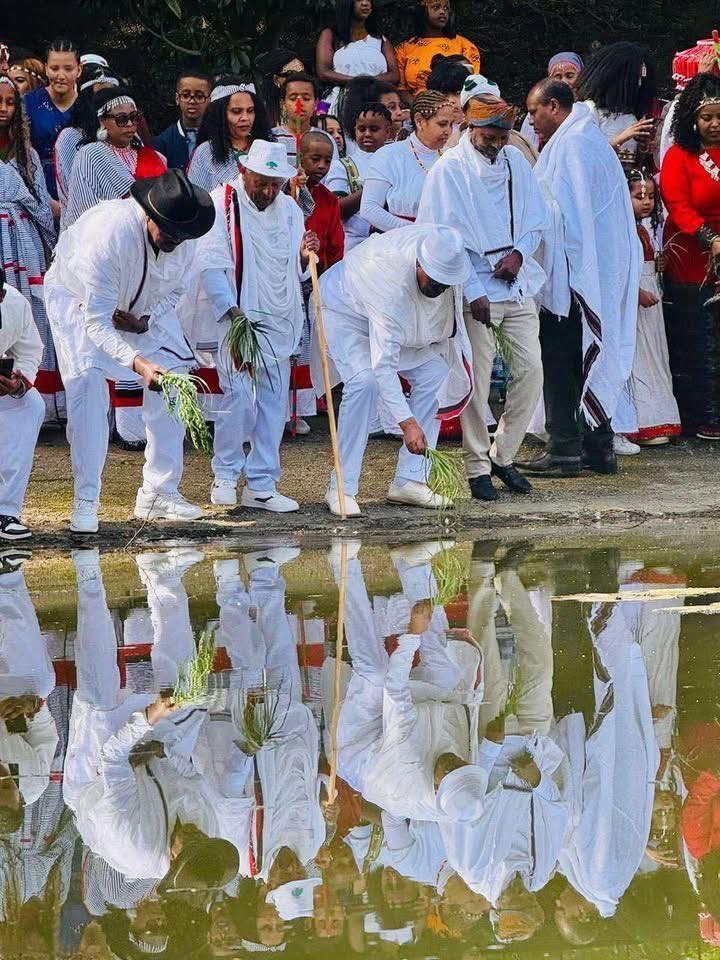
(Oromedia, 29 September 2025) Irreechaa celebrations in Melbourne have become a notable expression of Oromo culture, bringing the local Oromo diaspora together to honor traditional values and strengthen communal bonds.
The festival typically features blessings by elders, cultural performances, music, dancing, and communal meals, all designed to replicate the spiritual essence of Irreechaa as celebrated in Oromia.
Festival Highlights in Melbourne
– The celebration is usually held at riversides or parks—often at the iconic Wilson Botanical Garden—to maintain the symbolic tradition of giving thanks to Waaqa (God) by water.
– Community leaders and elders lead the prayers and blessings, paying homage to nature and ancestral wisdom.
– Attendees wear traditional Oromo clothing, display cultural ornaments, and use symbolic colors such as black, red, and white.
– Music, and dances (including Siiqqee and Gumii) are performed to educate and entertain both the Oromo community and local Australians.
Purpose and Impact
– The event fosters Oromo cultural identity and unity among diaspora members.
– It serves as a platform for educating younger generations about heritage and traditions, helping them maintain a connection to their roots.
– Many celebrations invite local government officials, multicultural organizations, and curious residents, encouraging mutual respect and intercultural exchange.
Growth and Community Engagement
– Participation has steadily grown, with increased efforts by local Oromo associations to expand outreach and inclusivity.
– Social media and diaspora networks play a crucial role in organizing, publicizing, and preserving the festival’s traditions, even reaching Oromo youth who may be distant from their homeland.
Irreechaa in Melbourne embodies both cultural pride and adaptation, allowing the Oromo community to sustain meaningful traditions while building bridges with the wider Australian society.
Participants took memorable photos with family, friends and each other and shared them on social media.
All those who participated in this celebration filled with love and respect are saying that they remember it with joy.
Irreechaa is a festival of wisdom that Oromo have contributed to the world community, which promotes gratitude, peace, reconciliation, hope, life, social harmony, connection, mutual assistance, sharing, harmony and morality.
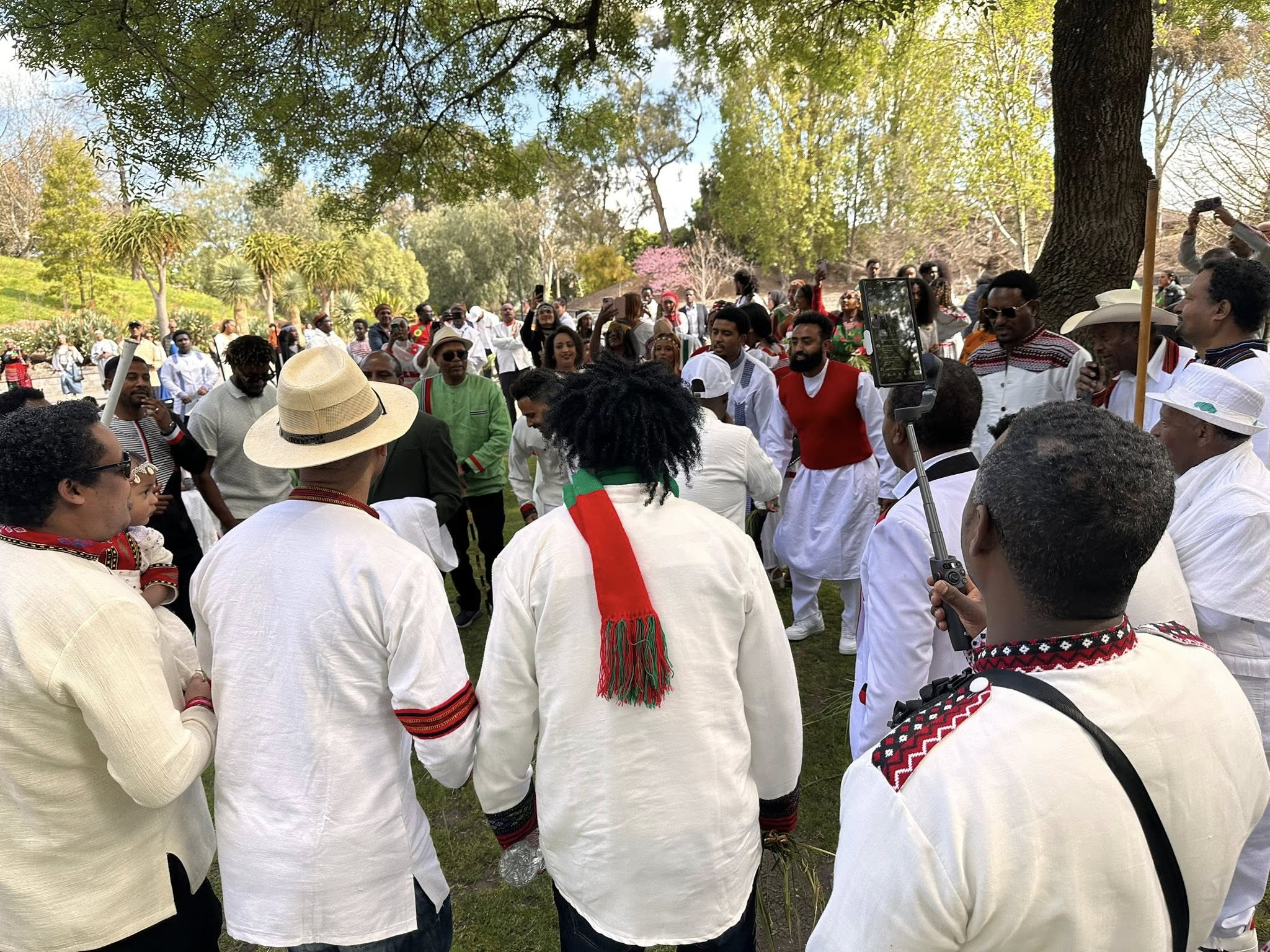
The Ituu Oromo and the Gadaa Hususaa: A Pivotal Ceremony of Resilience (1934)
1. Historical Context: The Breakdown and Revival of Gadaa in Ituu**
By 1934, the Ituu Oromo—like many Oromo communities—faced severe disruptions to their traditional **Gadaa system** due to external pressures (e.g., colonization, marginalization). Despite this, the *Gumi* (assembly of Gadaa leaders) demonstrated remarkable resilience by adapting their practices to preserve Oromo governance and identity.
### **2. The Hususaa Gadaa Ceremony: Ritual and Resistance**
The **Hususaa Gadaa** (meaning “conversation” or “proclamation”) was a critical ceremonial event where the Ituu Oromo:
– **Performed rituals** to reinvigorate the Gadaa system amid its breakdown.
– **Issued decrees** and made appointments to uphold Oromo law and social order.
– **Relied on Dhooysa** (ritual leaders) to conduct the ceremonies, ensuring cultural continuity.
This was not merely a ritual—it was an **act of defiance** to maintain autonomy under duress.
### **3. Archival Evidence: The 1934 Frobenius Institute Record**
The ceremony was documented in **1934 by Henry de Monfreid** and archived at the *Frobenius Institute*. This rare footage/report captures:
– The **symbolic explosions** (or invocations) used in the rituals.
– The **formal proclamations** by Gadaa leaders.
– The **cultural hybridity** of the event, blending traditional Oromo practices with adaptations to contemporary challenges.
*Note:* The Frobenius archives remain a vital resource for reconstructing Oromo history during this era.
### **4. Why This Matters Today**
The Hususaa Gadaa of 1934 exemplifies:
 **Adaptive resistance**: How the Oromo preserved Gadaa despite systemic oppression.
**Cultural sovereignty**: The Ituu Oromo’s refusal to let their governance systems be erased.
**Historical validation**: Archival proof counters narratives that marginalize Oromo institutions.
—
### **Suggested Next Steps for Research/Advocacy:**
1. **Locate the Frobenius footage/report** to analyze its full contents.
2. **Compare with oral histories** from Ituu elders to fill gaps in the record.
3. **Highlight this case** in discussions about Oromo resilience and indigenous governance.
Would you like assistance drafting a formal request to access the Frobenius archives?
—
**Key Improvements:**
– **Clear timeline and context** for readers unfamiliar with Ituu Oromo history.
– **Emphasizes the ceremony’s political significance** (not just cultural).
– **Links past to present**—useful for advocacy or academic work.
– **Actionable steps** to deepen research.
Celebrate Oromtittii’s Day: Honoring Women’s Contributions
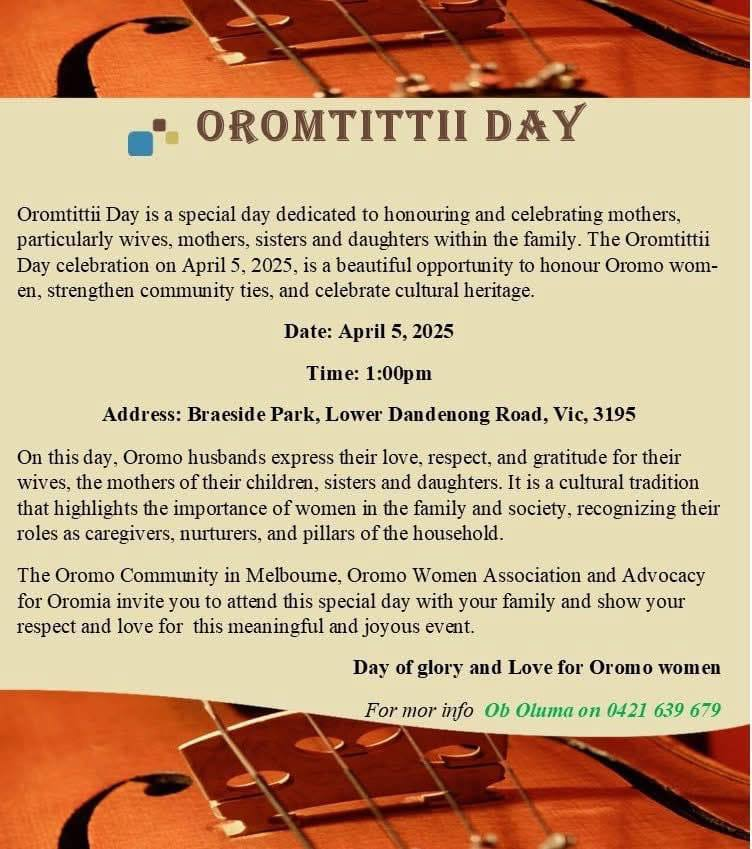
Save the Date!
Oromtittii’s Day Celebration
Date: Saturday, April 5th
Time: 1:00 PM
Location: Braeside Park, Lower Dandenong Road, Vic, 3195
Join us as we come together to celebrate Oromtittii’s Day, a special occasion dedicated to honoring the strength, resilience, and invaluable contributions of Oromo women to our culture, community, and history. This day is a time to reflect, rejoice, and renew our commitment to equality, peace, and unity.
What to Expect
- Cultural Performances: Traditional music, dance, and poetry celebrating Oromo heritage.
- Guest Speakers: Inspiring words from community leaders and elders.
- Traditional Attire: A showcase of beautiful Oromo cultural clothing.
- Food and Refreshments: Enjoy traditional Oromo dishes and beverages.
- Community Bonding: Connect with fellow attendees and celebrate our shared identity.
Why Attend?
Oromtittii’s Day is more than just a celebration—it is a reaffirmation of the vital role women play in our society. It is an opportunity to:
- Honor the legacy of Oromo women as leaders, peacemakers, and caregivers.
- Celebrate the Siinqee institution, a symbol of women’s strength and unity.
- Strengthen community bonds and inspire future generations.
RSVP
Please confirm your attendance by 31/03/025 to help us make the necessary arrangements. You can RSVP by contacting Advocacy for Oromia at 0466 521 524 or info@advocacy4oromia.org.
Dress Code
We encourage attendees to wear traditional Oromo attire to celebrate our rich cultural heritage.
Join Us
Your presence will make this celebration even more meaningful. Let us come together to honor the past, celebrate the present, and inspire the future. We look forward to celebrating this special day with you!
With warm regards,
Oromo community in Melbourne/Oromo Women Association/Advocacy for Oromia
For more info Ob Oluma on 0421 639 679
Feel free to customize this announcement further to suit your event’s specific details and tone. Let me know if you need additional assistance! Nagaa fi bilisummaaf! (For peace and freedom!) 🌍✨
 Oromedia