Asmerom Legesse: Champion of Oromo History and Gadaa System
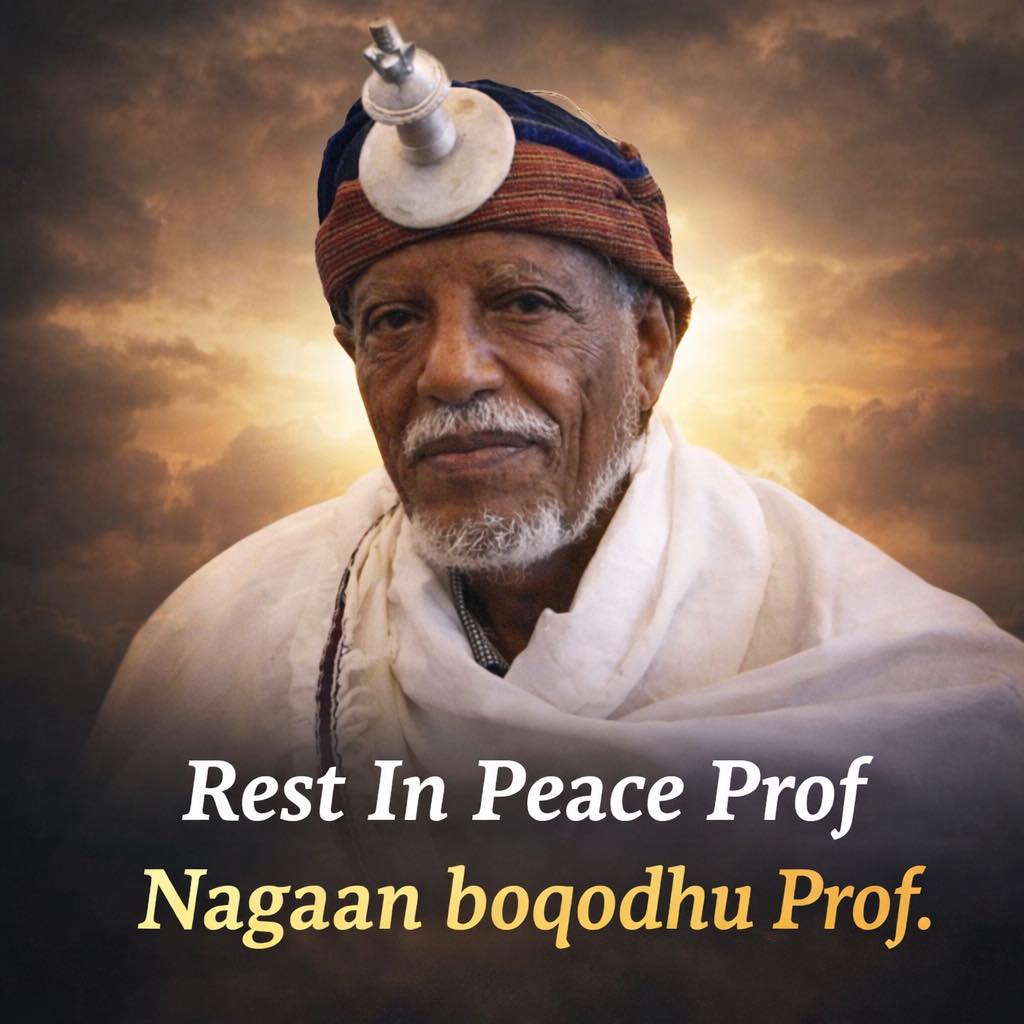
We are deeply saddened by the passing of Abbaa Gadaa Professor Asmerom Legesse, a towering African intellectual whose scholarship stands among the most consequential contributions to Oromo history and African political thought.
Abbaa Gadaa Professor Asmerom Legesse, an Eritrean social anthropologist trained at Harvard University and later a distinguished professor at institutions including Boston University, Northwestern University, Swarthmore College, and Yale University, devoted rare rigor and integrity to African knowledge systems. Yet his true stature was not defined by titles, but by the seriousness with which he treated the Oromo Gadaa system.
At a time when African societies were routinely dismissed as lacking political sophistication, he refused to reduce Gadaa to “custom” or folklore. Through disciplined research and cultural immersion, he framed Gadaa as an indigenous constitutional order—built on rotating generational leadership, codified law (seera), institutional checks and balances, accountability, and collective sovereignty.
His landmark work, Gadaa: Three Approaches to the Study of African Society (1973), introduced the world to the depth and coherence of Oromo political organization. Decades later, Oromo Democracy: An Indigenous African Political System (2000) further clarified Gadaa as an egalitarian democratic system whose institutional logic long predates modern Western models. These works remain core references for understanding Oromo governance and for challenging enduring stereotypes about African political thought.
Abbaa Gadaa Professor Asmerom Legesse understood what many still refuse to acknowledge: Oromo history is not marginal, not invented, and not secondary to anyone else’s narrative. It is a complete intellectual tradition—deserving serious documentation, protection, and transmission. By recording Gadaa with scholarly precision, he did more than study Oromo society; he defended it against erasure and misrepresentation.
For this reason, Oromo communities came to hold him in special esteem, symbolically recognizing him as an “Abbaa Gadaa”—a guardian of truth and a custodian of a threatened heritage. Beyond Oromo studies, he wrote on Eritrean refugees, and wider questions of displacement, power, and justice in the Horn of Africa, embodying the responsibilities of a public intellectual.
We at OROMEDIA express our heartfelt condolences to his family, colleagues, students, and all communities touched by his life and work. We also offer our deep gratitude for the intellectual ground he helped secure for generations of Oromo scholars and citizens. His scholarship did not merely preserve the past; it equipped future generations with evidence and language to assert historical truth.
Rest in power, Abbaa Gadaa Professor Asmerom Legesse. Your work lives on, wherever Gadaa is studied, defended, and lived as a testament to indigenous Oromo democracy and African intellectual greatness.
Oromo Community Mourns a Great Scholar: Asmerom Legesse’s Impact
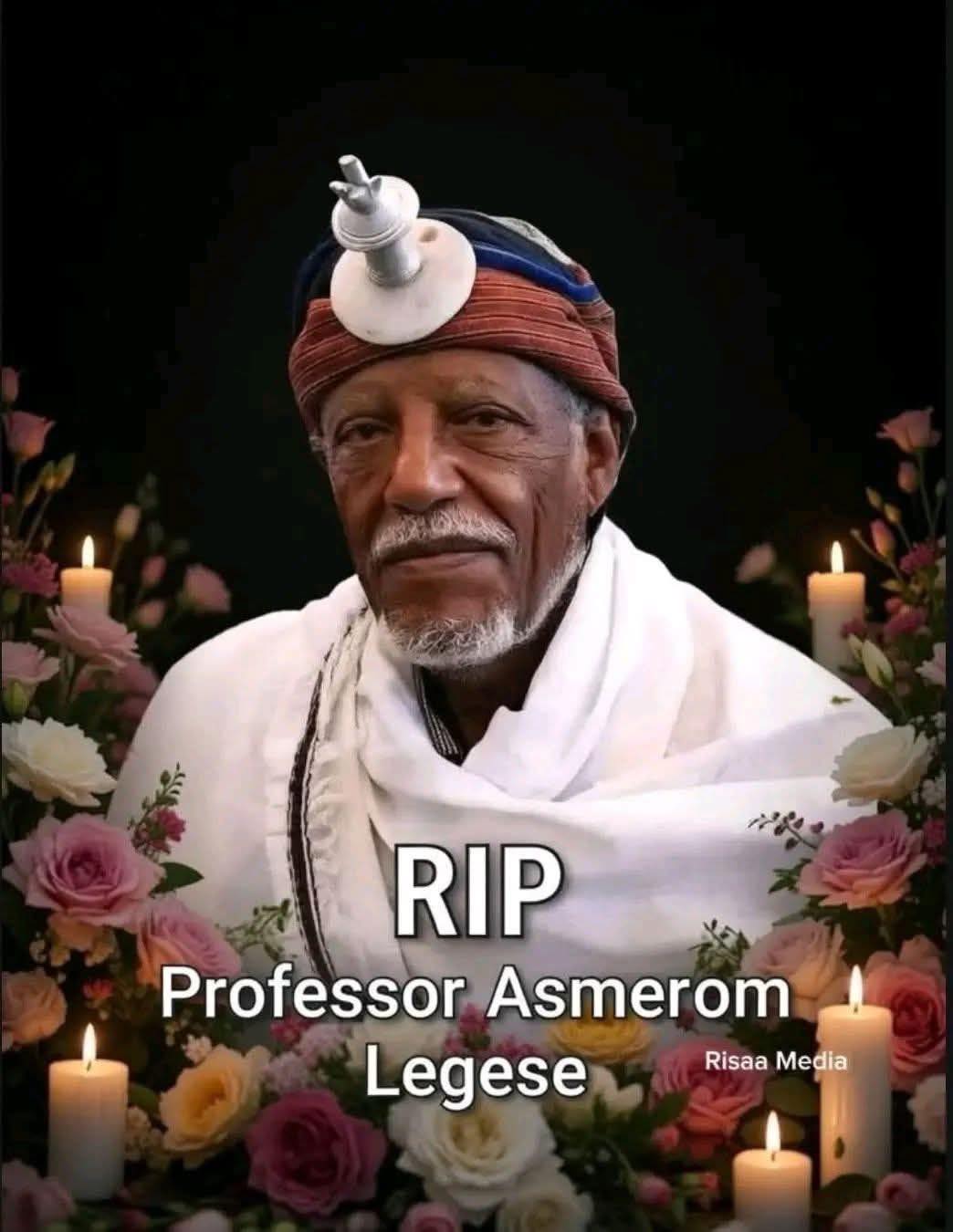
Feature Commentary
A World Mourns an Intellectual Giant: Unified Tributes Honor Professor Asmerom Legesse, Scholar of Oromo Democracy
4 February 2026 – The global Oromo community, alongside academic and cultural institutions, is united in profound grief following the passing of Professor Asmerom Legesse, the preeminent scholar whose life’s work defined the study of the Oromo Gadaa system. Hailed as a “towering scholar,” “global voice,” and “steadfast guardian,” his death has prompted a powerful wave of tributes that collectively affirm his unparalleled role in bringing an indigenous African democratic tradition to the world stage.
Across statements from scholars, activists, and organizations, a consistent narrative emerges: Professor Legesse was far more than an academic. He was a truth-teller, a bridge-builder, and a revolutionary intellectual who dedicated his career to the reclamation and elevation of a system long marginalized by colonial and oppressive narratives.
Scholars and Leaders Reflect on a Transformative Legacy
Prominent voices have emphasized the transformative nature of his work. Scholar Asebe Regassa called him a “pioneer of Gadaa studies,” whose “groundbreaking anthropological work” ensured he will be “remembered forever.” Tayiba Hassen Kayo noted his “unwavering commitment” left an “enduring mark on academia and on the Oromoo people,” ensuring his life’s work “will never be forgotten.”
The personal dimension of his scholarship was highlighted by Israel Fayisa, who poignantly described him as “Eritrean by birth and Oromo by choice,” a scholar treated “like an enemy by many Ethiopianist scholars merely because he dedicated his life to revealing the truth.” This sentiment underscores the courageous stance his research represented.
A Legacy of Global Recognition and Cultural Pride
His work is credited with achieving what once seemed impossible: securing global academic respect for an indigenous African system. As Visit Oromia stated, his research “gave international recognition to one of Africa’s most remarkable indigenous governance systems.” Activist Dereje Hawas pointed out that what defined him was “the seriousness with which he treated African and especially Oromo knowledge systems,” elevating them to their rightful place in global discourse.
Activist and journalist Dhabessa Wakjira captured the core of his academic revolution, writing that Legesse “proved definitively that principles of equality, rotational leadership, checks and balances, and the rule of law were not foreign imports to the continent, but were deeply embedded, living traditions.” This work, as Lelise Dhugaa noted, was foundational to UNESCO’s inscription of the Gadaa system as Intangible Cultural Heritage of Humanity in 2016.
A Community’s Deep Personal Loss
For the Oromo people, the loss is both intellectual and deeply personal. The tribute from Olumaa Qubee expresses this communal grief: “Oromoon fira guddaa tokko dhabe” (“The Oromo people have lost a great sibling”). The call for schools and institutions to be named in his honor within Oromia reflects a desire to anchor his legacy physically in the land of the people he championed.
As tributes from colleagues like Zewdu Lechissa remember the “truly brilliant scholar and a kind soul,” the collective message is one of both mourning and determined continuity. Professor Asmerom Legesse’s pioneering scholarship did not merely document the Gadaa system; it restored a pillar of Oromo identity and gifted the world a timeless model of democracy. His legacy, as echoed by all, will undoubtedly “continue to inspire generations.”
Condolence Message from the Oromia Culture and Tourism Bureau
The Oromia Culture and Tourism Bureau expresses its profound sorrow and deep sense of loss at the passed away of Professor Asmarom Legesse, an eminent scholar, cultural custodian, and an unwavering servant of the Gada system.
Professor Asmarom devoted his life to the preservation, interpretation, and transmission of the Gadaa system—a living heritage of governance, justice, peace, and social responsibility. Through his scholarship, leadership, and lifelong service, he played an indispensable role in safeguarding the philosophical foundations and moral values that define Oromo identity and humanity at large.
His work bridged generations, linking ancestral wisdom with contemporary knowledge, and ensured that the Gadaa system remains a guiding light for social harmony, equity, and collective responsibility.
Beyond academia, Professor Asmarom stood as a moral compass for his community. He embodied the principles of truth, justice, service, and integrity, and tirelessly worked to nurture unity, dialogue, and cultural continuity. His contributions have left an enduring imprint on cultural institutions, academic circles, and community life, both within Oromiyaa and beyond.
On behalf of the Oromia Culture and Tourism Bureau, we extend our heartfelt condolences to his family, relatives, colleagues, students, and the entire Oromo community who mourn this irreplaceable loss. While his physical presence has departed, his wisdom, teachings, and exemplary life will continue to live on, inspiring generations to uphold the values of Gada and to serve society with dedication and humility.
May the Almighty grant strength and solace to all who grieve his passing.
May his soul rest in eternal peace.
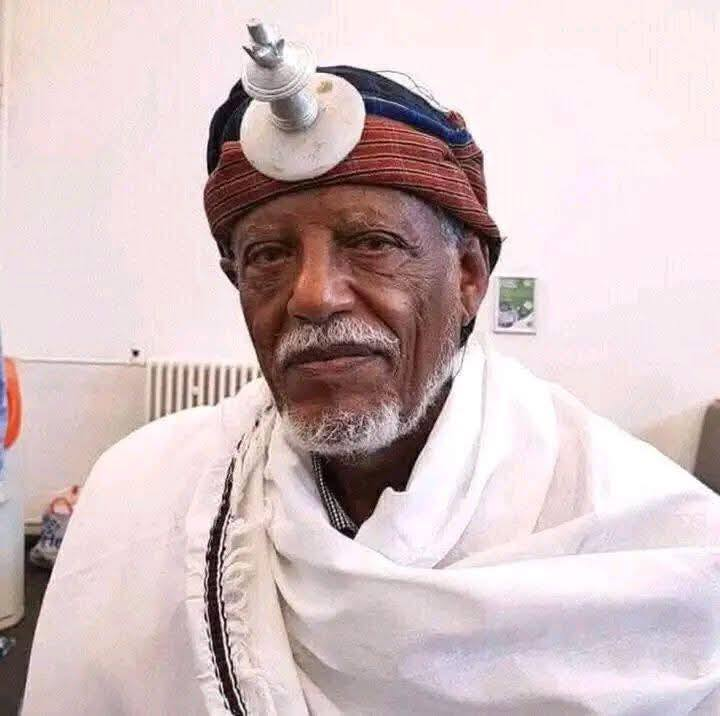
Professor Asmerom Legesse: A Champion of Oromo Democracy

FOR IMMEDIATE RELEASE
A Guardian of Heritage: Advocacy for Oromia Mourns the Passing of Professor Asmerom Legesse (1931-2026)
(Melbourne, Victoria) – February 5, 2026 – Advocacy for Oromia, with profound respect and deep sorrow, announces the passing of the world-renowned scholar, Professor Asmerom Legesse. We extend our most heartfelt condolences to his family, his colleagues in academia, and to the entire Oromo people, for whom his work held monumental significance.
Professor Legesse was not simply an academic; he was a steadfast guardian and a preeminent global ambassador for the ancient Gadaa system, the sophisticated democratic and socio-political foundation of Oromo society. For more than forty years, he dedicated his intellect and passion to meticulously studying, documenting, and advocating for this profound indigenous system of governance, justice, and balanced social order.
His seminal work, including the definitive text Oromo Democracy: An Indigenous African Political System, transcended mere historical analysis. Professor Legesse’s scholarship performed a vital act of cultural reclamation and global education. It restored dignity to a marginalized history, affirmed the cultural identity of millions, and presented to the international community a powerful, self-originating model of African democracy that predated and paralleled Western constructs.
Born in Asmara in 1931, Professor Legesse’s intellectual journey—from political science at the University of Wisconsin to a doctorate in anthropology from Harvard University, where he later taught—was always directed by a profound sense of purpose. His research provided the rigorous, academic foundation for understanding indigenous African political philosophy.
His passing is felt as a deeply personal loss within our community, reminding us of the interconnected threads of Oromo history and resilience. On a recent visit to Asmara, a delegation from Advocacy for Oromia visited a site of immense historical importance: the church where Abbaa Gammachis and Aster Ganno, giants of faith and resistance, resided while translating the Bible into Afaan Oromo. It was there we learned that the family home of Professor Asmerom Legesse stood adjacent.
This physical proximity stands as a powerful metaphor. It connects the spiritual and linguistic preservation embodied by Abbaa Gammachis with the intellectual and political excavation led by Professor Legesse. They were neighbors not only in geography but in sacred purpose: both dedicated their lives to protecting, promoting, and elucidating the core pillars of Oromo identity against historical forces of erasure.
Professor Legesse’s lifetime of contributions has endowed current and future generations with the intellectual tools to claim their rightful place in global narratives of democracy and governance. For this invaluable and enduring gift, we offer our eternal gratitude.
While we mourn the silence of a towering intellect, we choose to celebrate the immortal legacy he leaves behind—a legacy of knowledge, pride, and empowerment that will continue to guide and inspire.
May his soul rest in eternal peace. May his groundbreaking work continue to illuminate the path toward understanding, justice, and self-determination.
Rest in Power, Professor Asmerom Legesse.
About Advocacy for Oromia:
Advocacy for Oromia is a global network dedicated to promoting awareness, justice, and the rights of the Oromo people. We work to uphold the principles of democracy, human rights, and cultural preservation central to Oromo identity and heritage.
 Oromedia