Australia Mourns Bondi Victims with Light and Silence, as Communities Reaffirm Hope
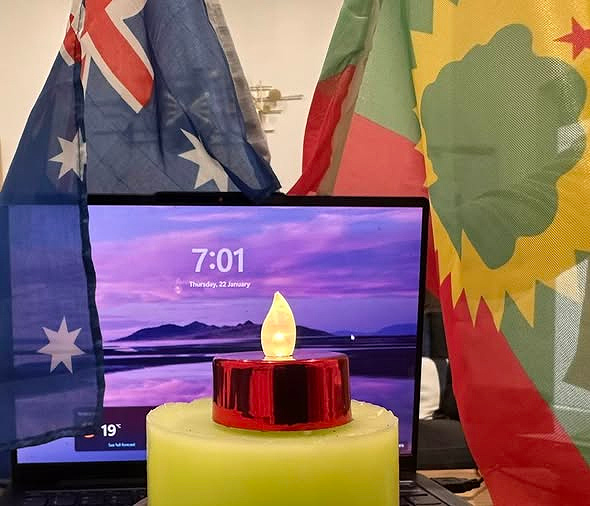
January 22, 2026 | AUSTRALIA – Today, Australia stands still in a sombre moment of national unity, observing a National Day of Mourning for the 15 lives taken in the devastating terrorist attack at Bondi’s Jewish community centre last month.
The Day of Mourning has been declared as a time for collective reflection, with all Australians called upon to join together in grief and solidarity. “It is a day for all Australians to come together to grieve, remember, and stand against antisemitism and hate,” a government statement affirmed.
In a series of formal tributes, flags are being flown at half-mast across federal and Victorian government buildings. As evening falls, iconic landmarks throughout Victoria will be illuminated in white—a powerful visual symbol of resilience, peace, and the collective determination to move forward.
At exactly 7:01 PM, the time the attack unfolded on December 14, 2025, the nation is invited to pause for a minute of silence—a shared moment to remember the innocent victims whose lives and futures were violently cut short.
Personal Acts of Remembrance Echo National Resolve
The official day of mourning is mirrored in the private homes of Australians from all walks of life, where the national tragedy resonates with personal histories of loss and resilience. For some, the act of remembrance is profoundly intertwined with their own experiences.
“At 7:01 PM, my family and I lit memorial candles for a minute of silence,” shared one community member, speaking from Melbourne. Their reflection wove together the national moment with a deeply personal journey: “We found the peace and freedom in Australia that was violated in our homeland, Oromia. Therefore, we condemn any act of hatred. We reiterated our hope that any darkness will be conquered by light.”
This sentiment underscores the profound significance of safety and social cohesion for Australia’s multicultural communities. For many who have sought refuge and stability, the attack strikes at the very promise of sanctuary that Australia represents.
A Nation’s Grief, A Shared Commitment
Today’s observances are more than ritual; they are a national reaffirmation of the values that bind a diverse society together. The minute of silence, the lowered flags, and the glowing white landmarks serve as public pledges against hate, offering a collective response to tragedy through unity and remembrance.
As candles flicker in windows and cities shine with light, the message echoing across the country is clear: from the depths of shared mourning arises a strengthened commitment to ensure that light—and the hope it carries—will always prevail.
Victoria Commemorates National Day of Mourning for Bondi Victims

Feature News: Victoria Joins National Day of Mourning, Illuminating a Path Forward from Bondi Tragedy
MELBOURNE, VIC – Today, Victoria stands in solemn solidarity with the nation, observing a National Day of Mourning to honour the 15 lives lost in the devastating terrorist attack at Bondi Beach’s Jewish community centre on December 14, 2025.
The Victorian Department of Premier and Cabinet has outlined the state’s formal acts of remembrance, framing the day as both a moment for collective grief and a resolute stance against hate. “It is a day for all Australians to come together to grieve, remember, and stand against antisemitism and hate,” the statement read.
Across the state and the country, visual symbols will mark the day’s gravity. Flags will be flown at half-mast at all Commonwealth and Victorian Government buildings—a universal gesture of loss and respect. As dusk falls, the tribute will transform. Major landmark buildings across Victoria’s skyline will be illuminated in white, a deliberate symbol of light, peace, and resilience cutting through the darkness of tragedy. “A symbol of light, as we move forward as a nation,” the government statement noted.
The commemoration will reach its poignant peak at 7:01 PM, the exact time the attack unfolded. Australians are invited nationwide to observe a minute of silence, a shared national pause to remember the 15 innocent victims whose lives and futures were tragically stolen.
The coordinated national response, which includes similar observances from federal and other state authorities, underscores a unified commitment to social cohesion. By designating a National Day of Mourning, officials aim to channel raw community sorrow into a reaffirmation of shared values—condemning antisemitic violence and all forms of bigotry while honoring the victims with dignity.
Today, as buildings glow white and flags hang low, Victoria’s official acts of remembrance serve as a public covenant: to mourn deeply, to remember collectively, and to walk forward together, guided by light.
Australia Observes National Day of Mourning After Bondi Attack

SYDNEY, Thursday, 22 January 2026 – The nation will come to a standstill in quiet reflection today as Australia marks a National Day of Mourning for the 15 innocent lives lost in the tragic anti-semitic attack at Bondi Beach last month.
On 14 December 2025, a devastating act of violence shattered the community of Bondi, targeting its Jewish community centre and leaving a nation in mourning. Today, Thursday, 22 January, is dedicated to honouring the victims, their grieving families, and all communities scarred by the tragedy.
A Nation’s Symbols at Half-Mast
As a mark of solemn respect, the Australian Government has directed all flags across the country, including on government buildings and naval vessels, to be flown at half-mast from sunrise to sunset. The visual gesture represents a nation’s collective grief and solidarity.
The official commemoration will reach its poignant peak this evening. Australians in every state and territory are invited to join in a shared national moment: lighting a candle at 7:01pm AEST—the time the attack unfolded—and observing one minute of silence.
“This simple, powerful act is a symbol of our remembrance and our unity,” a government statement read. “It is a light against the darkness of hate, a silent promise to stand together.”
Community and Coalition Stands in Solidarity
The Federation of Ethnic Communities’ Councils of Australia (FECCA), the peak national body representing Australia’s multicultural communities, issued a powerful statement of solidarity.
“FECCA stands firmly with the Jewish community and all those affected by this horrific act of hate,” the statement said. “We call for unity, compassion, and responsible public discourse in our shared efforts to eradicate anti-Semitism, racism, and all forms of bigotry from our society.”
The call underscores the day’s dual purpose: not only to mourn but to reaffirm a commitment to social cohesion. Vigils and interfaith gatherings are being held in capital cities and towns nationwide, bringing together leaders from diverse faiths and cultural backgrounds in a show of collective resilience.
A Day of Reflection and Resolve
Today is more than a date on the calendar; it is a national pause. It is a day for Australians to reflect on the preciousness of life, the strength found in community, and the enduring values of tolerance and respect that define the nation.
As candles are lit in windows from Bondi to Broome, the message is clear: Australia mourns together, remembers together, and stands determined to ensure that light and unity prevail over hatred and division.
Beyond Protest: The AU’s Somaliland Stance and the Chasm Between Principle and Practice
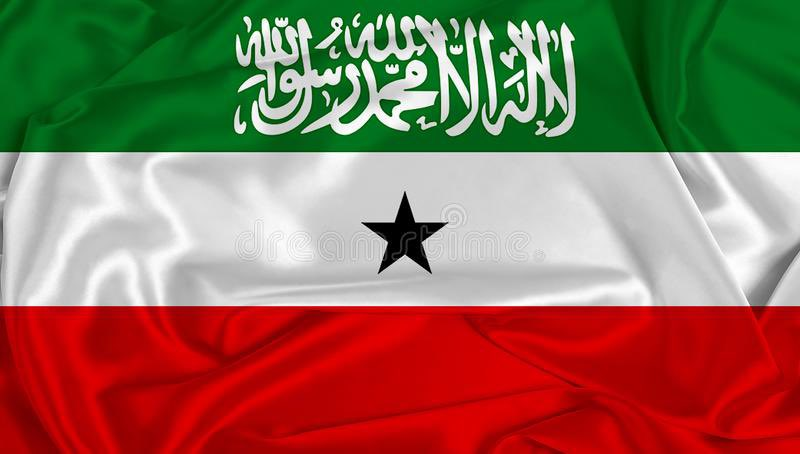
In the intricate chessboard of international diplomacy, the African Union (AU) has made its latest move: a firm rejection of Israel’s recent recognition of Somaliland as a sovereign state. This position is predictable, anchored in the bedrock principle of territorial integrity and the sacrosanctity of colonial borders—a cornerstone of the AU’s founding charter designed to maintain continental stability.
But the announcement lands with a thud of hollow irony across a continent long accustomed to the gulf between declared principle and lived reality. It prompts a weary, yet urgent, question: What, in practice, has the African Union actually implemented that holds real power to shape events on the ground?
The AU’s rejection of Somaliland’s recognition is rooted in a familiar doctrine. It echoes the organization’s long-standing stance that the union of Somalia and Somaliland is inviolable. Yet, this position exists in a parallel universe to the factual, on-the-ground existence of Somaliland for over three decades. Hargeisa has its own government, currency, police force, and democratic elections—all while maintaining a stability that eludes Mogadishu. The AU’s protest, therefore, feels less like a governing policy and more like a ritualistic incantation of a map that ceased to reflect political realities a generation ago.
This dissonance is symptomatic of a deeper institutional paralysis. The AU repeatedly and correctly states that “it is impossible to uphold a government changed by force.” This principle condemns military coups and unconstitutional changes of government. Yet, the practice has not stopped in Africa. From the Sahel to Central Africa, putsches and military takeovers have continued with alarming frequency. The AU’s response—typically suspension from the bloc and stern rhetoric—has proven to be a temporary slap on the wrist, not a deterrent. Coup leaders often eventually negotiate their way to legitimacy or remain in power with minimal long-term consequence from the continental body. The principle is clear; the enforceable mechanism to uphold it is conspicuously absent.
Thus, when the AU protests Israel’s recognition of Somaliland, its voice carries limited weight. The protest is, as critics argue, “worthless except for itself.” It serves to reinforce the AU’s own internal dogma and satisfy diplomatic formalities but does little to alter the evolving situation. It does not help Somalia regain control over its northern territories, nor does it force Somaliland to abandon its quest for recognition. It simply registers a diplomatic complaint that major powers and regional actors may increasingly choose to ignore, as they engage with Somaliland on practical issues of security, trade, and development.
The danger here is not just ineffectiveness, but irrelevance. As global powers and regional neighbors begin to engage Somaliland based on de facto realities rather than de jure fictions, the AU risks becoming a spectator to its own continental affairs. Its protests, unsupported by credible political or economic leverage, become background noise.
The lesson from this episode is stark: the African Union’s authority cannot rest on proclamation alone. It must be built on a capacity for proactive engagement, conflict resolution, and the creation of pathways that address legitimate political aspirations within a framework of continental peace. Endlessly defending a status quo that has already fractured, while being unable to uphold its own rules against power grabs, erodes its credibility.
Until the AU bridges the chasm between its noble principles and its tangible power to enact them, its rejections and condemnations will remain just that—words on paper, echoing in halls far removed from the dynamic, complex, and often defiant realities of the African continent. The challenge is not merely to protest a change on the map, but to develop a credible response to the forces that are redrawing it.
Gadaa Elders, Women Leaders Condemn Ethnic Slurs Against Salaale Oromo Community
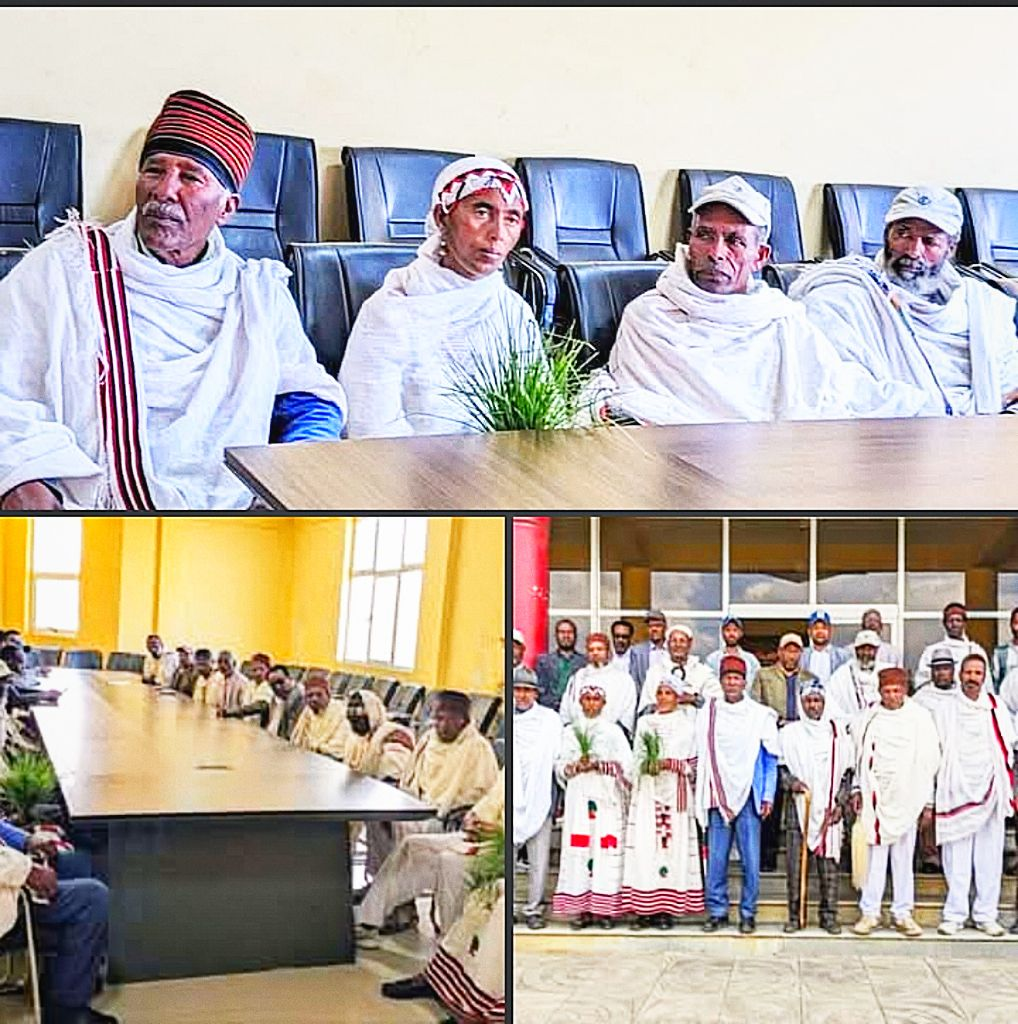
SALAALE, OROMIA — A coalition of traditional and community leaders, including the Abbootii Gadaa (Gadaa Councilors), Haadholee Siinqee (Siinqee Women Leaders), and Jaarsollee Biyyaa (Elders of the Land), has issued a strong condemnation against recent derogatory remarks made about the Salaale Oromo people.
The leaders have denounced a social media broadcast in which an individual named Heenok Girmaa allegedly used offensive language that “attacked the dignity and honor of the Salaale people.” The broadcast, aired on December 13, 2018, on a private media outlet called J.P.S., is described by the leaders as containing “insulting speech and false information” that violates Oromo cultural norms of respect (safuu) and taboo (duudhaa).
In their statement, the traditional authorities emphasized the respected standing of the Salaale community. They highlighted that the Salaale people are known for their “dignity, deep adherence to Oromo culture, and peaceful coexistence.” The community comprises followers of various religions who, they stated, “live together in love and peace, without their faiths causing division.”
The leaders contextualized the Salaale community’s significant contributions to Ethiopia. They noted that Salaale is the homeland of renowned national figures who fought for equality among nations and nationalities, including General Taaddasaa Birruu, Archbishop Luuba Abune Pheexiroos, and heroines like H/mariyaam Gammadaa. It is also the birthplace of global athletics champion Shaambal Abbabaa Biqilaa.
“Like other parts of our country, the Salaale people paid immense sacrifices for the sovereignty of this nation,” the statement reads. “Therefore, the act of defamation by this individual against this community is baseless and far from the truth.”
The condemnation also raises legal and ethical concerns. The leaders argued that in a country governed by law, it is unacceptable for a private individual to broadly insult and belittle a large community. They characterized the slurs as a calculated act driven by a “hidden personal agenda,” not representative of any religious or ethnic position.
Consequently, the Abbootii Gadaa, Haadholee Siinqee, and Jaarsollee Biyyaa have formally called upon the government to intervene. They have requested that the relevant legal authorities take appropriate measures against the broadcaster for launching what they deem a “campaign of hate speech and defamation” against a dignified segment of society. The leaders reaffirmed that such attacks have no place in the community and will not be tolerated.
Homecoming of a Pioneer: The Return of Oromia’s First President

By Daandii Oromia
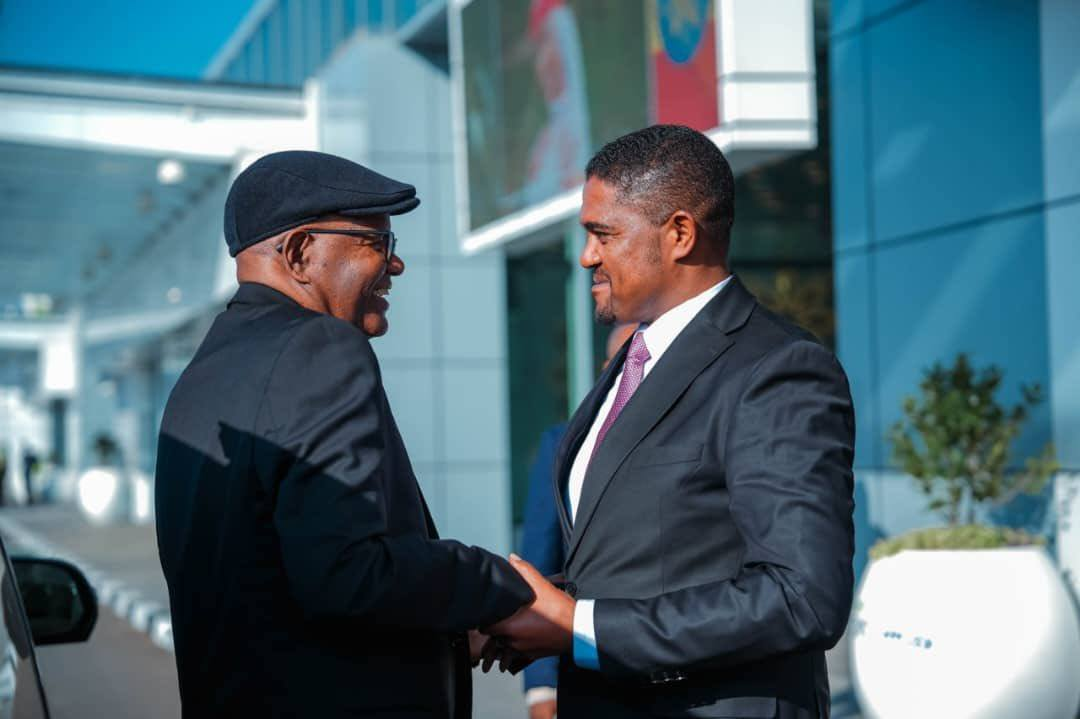
Addis Ababa, Ethiopia — In a moment laden with history and emotion, the first President of the Oromia Regional State, Honorable Mr. Hassan Ali, has returned to his homeland, ending nearly three decades of exile. His arrival marks more than a personal journey; it represents a symbolic closing of a long chapter and a deliberate gesture of reconciliation by the current Oromia leadership.
The official welcome, extended by the sitting President of Oromia, Mr. Shimelis Abdisa, was framed not just in political terms, but in the language of profound respect and historical acknowledgment. “It is with the utmost respect that I welcome Mr. Hassan Ali home with his family after nearly three decades,” President Abdisa stated, setting a tone of deference to a foundational figure of the region’s modern autonomy.

The Architect Returns
Mr. Hassan Ali’s presidency in the 1990s came during a formative and volatile period, following the adoption of Ethiopia’s ethnic federalist constitution. He and his contemporaries were tasked with the monumental challenge of building the nascent Oromia Regional State from the ground up—establishing its institutions, defining its administrative contours, and navigating the complex politics of a post-Derg Ethiopia.
In his remarks, President Abdisa explicitly honored this legacy. “They are the pioneers who laid the foundation for the Oromia Regional State to reach this level,” he said. This recognition serves as a formal validation of the struggles and efforts of the region’s early architects, whose work has often been overshadowed by subsequent political turmoil and exile.

“To See the Government He Established”
Perhaps the most poignant element of President Abdisa’s welcome was his focus on the personal significance of this return for Mr. Hassan Ali. “I want to congratulate him today not only on his safe return home with his families; for being able to see the government he established,” Abdisa noted.
For a leader who departed in the early days of the institution he helped create, this return offers a tangible, living assessment of that foundational work. It is an opportunity to witness the evolution of the state structure he pioneered, now led by a new generation. President Abdisa emphasized the resilience of that foundation: “He not only endures all pressures but also strengthen and expand to serve the people he fought for at the home level.”
A Commitment to Broader Reconciliation
Beyond the personal welcome, the current President used the occasion to make a significant policy-oriented declaration, signaling a potential shift toward greater inclusivity. “On behalf of myself and the Oromia Regional Government, I would like to thank them for their roles at all levels and for their services,” he said, offering official gratitude.
He then extended an olive branch that resonated far beyond the single homecoming: “I would like to take this opportunity to confirm that the Oromia Regional State Government is committed to bringing the children of the people who have been away for various reasons back home according to our ancient traditions.”
This statement frames reconciliation not merely as a political process, but as a cultural and social one, rooted in Oromo traditions of conflict resolution and homecoming (Gumaa and Araara). It proposes a pathway for the return of other exiled figures and diaspora communities, suggesting a future where Oromia’s governance is informed by a wider, more diverse set of its native sons and daughters.
A Symbol for the Future
The return of President Hassan Ali, facilitated by the sitting administration, is a powerful symbol. It bridges historical divides, acknowledges foundational contributions, and tests the waters for broader national dialogue. While the long-term political implications remain to be seen, the event itself has been successfully cast as an act of statesmanship and historical unity.
As Mr. Hassan Ali reacquaints himself with a homeland transformed, his presence invites reflection on Oromia’s journey—from the struggle for self-administration to the complex realities of exercising it. His homecoming, wrapped in official honor and traditional promise, may well be remembered as a pivotal moment in the region’s ongoing story of governance, identity, and reconciliation.

Solidarity Beyond Borders: Oromo Community’s Call for Unity
FOR IMMEDIATE RELEASE
Melbourne’s Oromo Community Stands in Solidarity with Jewish Australians After Bondi Attack
MELBOURNE, VIC – 19 December 2025 – The Oromo Community in Melbourne has issued a powerful statement of solidarity and support for the Australian Jewish community following the horrific antisemitic terror attack on peaceful Chanukah celebrations in Bondi.
The statement expresses the community’s profound grief and unwavering support for the victims, their families, and all those impacted by the tragedy. “Our deepest condolences, sympathy, and love are with the bereaved families, the injured victims, the courageous first responders, and all members of the Jewish and wider Bondi community impacted by this tragedy,” the statement reads.
In a show of national unity, the Oromo community announced it has joined over 200 civil society organisations across Australia in signing a collective statement against hate, representing millions of Australians.
A Call for Unity and Safety
The community’s Chairperson, Mr. Alemayehu Kube, emphasized the shared values of peace and safety. “Love is what fortifies a community, while violence and hatred only destroy,” said Mr. Kube. “There is no place for hatred and violence in any form. We stand shoulder-to-shoulder with the Jewish community, who have an absolute right to feel safe and be safe in our shared country.”
The statement explicitly frames the attack as an assault on the nation’s core principles, calling it “an affront to the tolerance and inclusion that define our national character.” It asserts that the right to safety is universal and “cannot depend on identity, origin, cultural background, age, or gender.”
A Commitment to Action and Reflection
Beyond words of support, the Oromo community has committed to tangible action, stating it is “committed to deep reflection and meaningful action” in the face of such evil. The statement highlights the long-term trauma of such events, especially for children and families, and calls for a collective national response.
“In this difficult moment, we call on all Australians to come together as one united people,” the statement urges. “Our strength has always resided in our diversity—in people of all faiths and cultures, from over 236 backgrounds, standing side by side in empathy and mutual respect.”
The message concludes with a hopeful vision, advocating for a response of compassion over fear and unity over division. “May we support one another, honour those who have been impacted, and continue building an Australia where every person feels safe, valued, and supported—in both body and mind.”
The full statement from the Oromo Community in Melbourne is available for review.
About the Oromo Community in Melbourne: The Oromo Community in Melbourne represents members of the Oromo diaspora in Victoria, fostering cultural preservation, community support, and active civic engagement within Australia’s multicultural society.
Oromo Rights Protest Held in London, Demanding International Action on Ethiopia
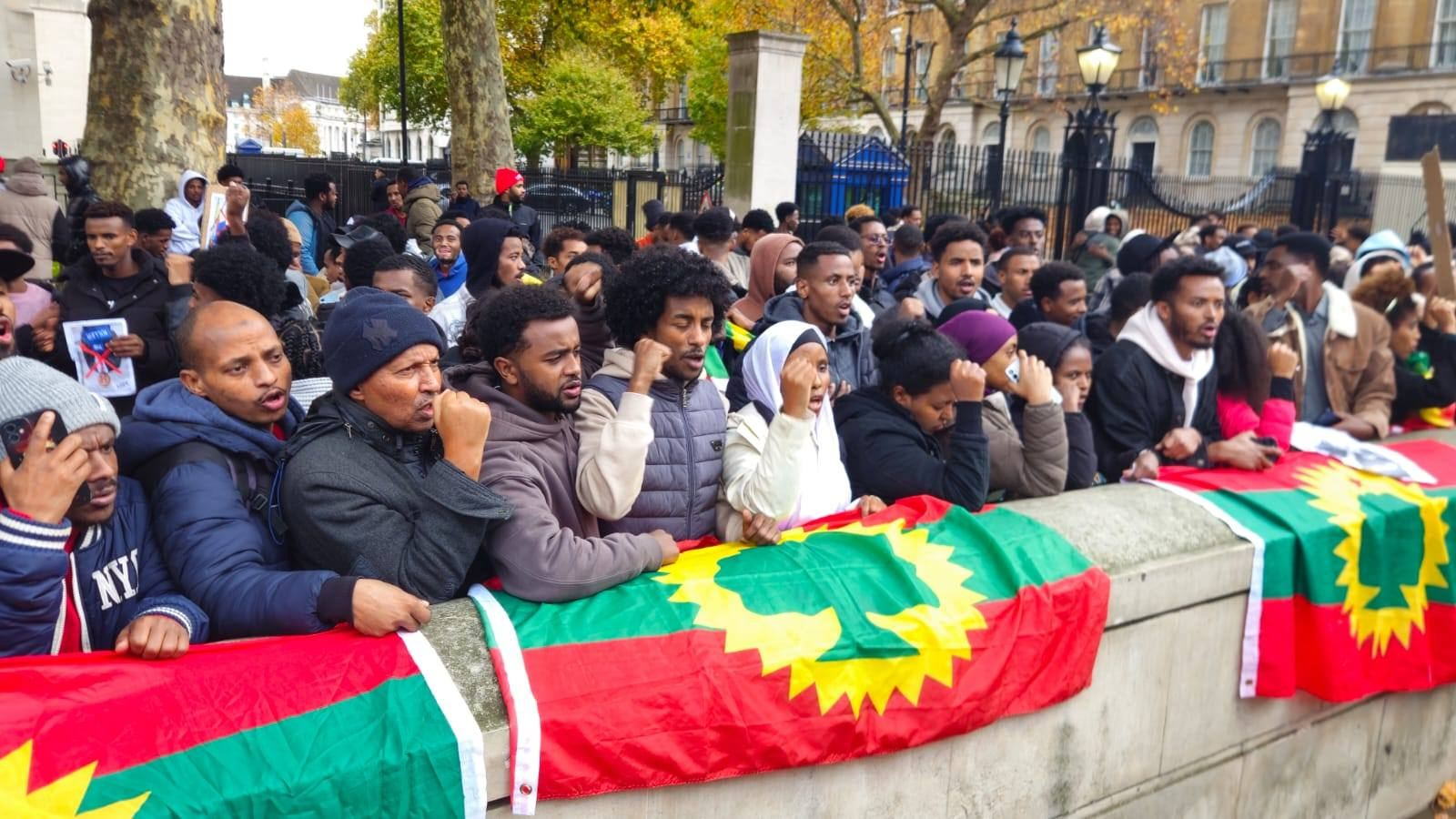
LONDON, UK – December 10, 2025 – A protest organized under the banner “Tumsa Haqa Oromoo” (Support Oromo Rights) was held in London, with participants calling for an end to human rights abuses in Ethiopia and international intervention to halt the ongoing violence in the Oromia region.
According to Dr. Gizaaw Taasisaa, a member of the organizing committee who spoke to OMN, the protest’s key objectives were to condemn the widespread human rights violations and killings targeting the Oromo people, demand an end to the attacks on Oromia’s borders, and urge the global community to take decisive action.
Protesters highlighted that the offensive on Oromia’s borders has enabled militias, particularly the “Fino” in Western and Central Oromia, to carry out mass killings against civilians.
Key Demands Presented
As outlined by Dr. Gizaaw Taasisaa, the demonstrators presented several critical demands to the Ethiopian government:
- Immediately halt the forced conscription of children into the military.
- Cease the killings of Oromo civilians.
- End the genocide and the military operations being conducted across Ethiopia.
- Withdraw all forces from Oromia.
Furthermore, protesters called for justice and accountability, demanding:
- The cases of murdered artists and activists, including Haacaaluu Hundeessaa and Battee Urgeessaa, and all other victims be brought to light.
- The unconditional release of all political prisoners in Ethiopia.
- That Ethiopian officials responsible for crimes be brought before international courts.
Focus on Dirree Dhawaa and International Complicity
The protest also specifically condemned the government’s ongoing attacks in the Somali regional state against Oromia. Dr. Gizaaw Taasisaa emphasized that the city of Dirree Dhawaa is historically, legally, demographically, and geographically part of Oromia.
Finally, the demonstrators called on the UK Government and international financial institutions to suspend all financial and diplomatic support to the Ethiopian government. A formal petition detailing these grievances was also submitted to the UK Foreign Office.

 Oromedia