Feature News: Victoria Joins National Day of Mourning, Illuminating a Path Forward from Bondi Tragedy
MELBOURNE, VIC – Today, Victoria stands in solemn solidarity with the nation, observing a National Day of Mourning to honour the 15 lives lost in the devastating terrorist attack at Bondi Beach’s Jewish community centre on December 14, 2025.
The Victorian Department of Premier and Cabinet has outlined the state’s formal acts of remembrance, framing the day as both a moment for collective grief and a resolute stance against hate. “It is a day for all Australians to come together to grieve, remember, and stand against antisemitism and hate,” the statement read.
Across the state and the country, visual symbols will mark the day’s gravity. Flags will be flown at half-mast at all Commonwealth and Victorian Government buildings—a universal gesture of loss and respect. As dusk falls, the tribute will transform. Major landmark buildings across Victoria’s skyline will be illuminated in white, a deliberate symbol of light, peace, and resilience cutting through the darkness of tragedy. “A symbol of light, as we move forward as a nation,” the government statement noted.
The commemoration will reach its poignant peak at 7:01 PM, the exact time the attack unfolded. Australians are invited nationwide to observe a minute of silence, a shared national pause to remember the 15 innocent victims whose lives and futures were tragically stolen.
The coordinated national response, which includes similar observances from federal and other state authorities, underscores a unified commitment to social cohesion. By designating a National Day of Mourning, officials aim to channel raw community sorrow into a reaffirmation of shared values—condemning antisemitic violence and all forms of bigotry while honoring the victims with dignity.
Today, as buildings glow white and flags hang low, Victoria’s official acts of remembrance serve as a public covenant: to mourn deeply, to remember collectively, and to walk forward together, guided by light.
GREATER DANDENONG, VIC – In a proactive move to strengthen the social fabric of one of Australia’s most diverse regions, three neighbouring councils are joining forces to host a unique community workshop. The City of Greater Dandenong, the City of Casey, and the Shire of Cardinia are calling on local residents to help define and build a shared vision for a stronger, fairer future.
The initiative, a facilitated workshop titled “Defining Social Cohesion,” aims to create a safe space for residents to explore what unity, belonging, and mutual respect mean in their rapidly growing communities today.
Turning Shared Visions into Reality
“Every voice matters,” states the joint announcement, framing the workshop as a foundational step in collaborative community planning. The goal is to move beyond abstract ideals and turn collective aspirations into tangible outcomes. The facilitated discussion will focus not only on defining social cohesion but also on the practical role each resident plays in shaping it.
“Together, we can turn our shared visions into reality,” the councils propose, positioning the event as a grassroots opportunity to directly influence the social landscape of Melbourne’s vibrant southeast.
A Call for Diverse Voices
Participation is specifically limited to residents of the southeast Melbourne area, ensuring the conversation is grounded in local experiences and challenges. With limited spots available, organisers are urging interested community members to register early.
Event Details:
Date: Wednesday, 28 January
Time: 12:30 PM – 3:30 PM
Location: Dandenong Civic Centre – Training Rooms 1 and 2
Registration & Info: Residents are encouraged to register promptly via their local council websites or contact the organising academic partner for questions at tmiletic@unimelb.edu.au.
Building Resilience from the Ground Up
This workshop comes at a time when communities nationwide are reflecting on social harmony and resilience. By facilitating these conversations locally, the councils of Greater Dandenong, Casey, and Cardinia are investing in a community-led model for social planning, recognizing that the strongest cohesion is built from the ground up, one conversation at a time.
The event represents a significant opportunity for residents to become active architects of their community’s future, ensuring the southeast continues to be a place where diversity is not just acknowledged but is the very source of its strength.
DIRRE DHAWAA, OROMIA – In a move set to transform the cultural and academic landscape of eastern Oromia, Dirre Dhawaa University has announced the foundation of a new institution dedicated to musical excellence: the Dr. Alii Birraa Memorial Music School.
The university made the formal announcement via its official Facebook page, outlining plans to establish the school in the legendary artist’s hometown. This initiative is not just about building a structure, but about rooting a center of artistic excellence in the very soil that inspired one of Ethiopia’s most cherished musical voices.
Bridging Institutions for a Harmonious Future
The project is already hitting the right notes through a powerful collaboration. Experts and lecturers from the renowned Yared Music School at Addis Ababa University are providing crucial initial support. According to the university, these seasoned academics are traveling to Dirre Dhawaa to share their expertise, helping to design curricula and establish foundational frameworks. This knowledge transfer represents a significant vote of confidence and a bridge between the nation’s premier music academy and this promising new venture.
A key driving force behind this collaborative spirit is Dr. Malaaku Yigzaw, Dean of the Yared Music School. The university confirmed that Dr. Malaaku has formally pledged his institution’s full professional support to ensure the successful establishment of the memorial school.
Honoring a Native Son, Investing in a Region’s Soul
The decision to name the school after the late Kabajaa Artist Alii Birraa is deeply symbolic. Born in the Dirre Dhawaa area, Alii Birraa was a monumental figure in Ethiopian music, celebrated for popularizing the Oromo musical tradition of Biftuu and singing powerfully about love, social issues, and identity. Establishing a music school in his name serves a dual purpose: immortalizing his legacy and actively nurturing the next generation of artists from his region.
President of Dirre Dhawaa University, Magarsaa Qaasim (PhD), emphasized this point, highlighting the area’s rich but often under-recognized artistic heritage. “Dirre Dhawaa is a wellspring of many renowned artists,” President Magarsaa noted, underscoring the school’s mission to cultivate this latent talent formally.
A Conductor’s Baton for Regional Development
The university stated that it is undertaking all necessary preparations for the project and has already begun receiving “favorable support” from various organizations. This suggests the project is resonating beyond academic circles, potentially attracting cultural and developmental partners.
The establishment of the Dr. Alii Birraa Memorial Music School is more than an academic expansion. It is an act of cultural preservation, a tribute to a national icon, and a strategic investment in the creative future of eastern Ethiopia. By transforming the memory of a single great artist into a living institution of learning, Dirre Dhawaa University is ensuring that the region’s melodies will not only be remembered but will continue to evolve, inspire, and educate for generations to come.
The Unstoppable Train of Oromo Struggle: Navigating Detours on the Long Road to Freedom
As the Oromo Liberation Struggle evolves through generations, internal debates and shifting allegiances test its unity while fueling its enduring momentum.
The Oromo struggle for self-determination has never relied on today’s technology or instant communication. Historically, Oromo intellectuals and leaders from all regions – East, West, North, and South – united under the common banner of Oromumma (Oromo national identity). They converged with a shared goal: to liberate the Oromo people and their homeland from subjugation. This foundational mission continues to live on in new generations.
History shows that in any protracted struggle, there are those who win and those who are won over. Individuals who were once active participants or leaders sometimes shift allegiances, abandon the cause, or change sides at critical junctures. Within the Oromo struggle, some who initially fought against the imperial system later shifted to defending the very Ethiopian imperial structure when the Oromo people mobilized to reclaim their inherent right to self-rule. We see those who left the Oromo Liberation Front (OLF) to spend their twilight years propping up the oppressive empire.
When a people’s struggle is long, the commitment of its fighters is tested. Some persevere through the long years, while others, from leadership to the rank-and-file, grow weary. Some withdraw, others are co-opted, and some simply disappear. Yet, the struggle itself does not halt; it regenerates, absorbing new generations and maintaining its forward momentum. This is why it is likened to a train.
A train, once departed, does not stop until it reaches its final destination. Some passengers disembark at stations convenient for them, having traveled as far as they wished. Others may fall off along the tracks. But the train continues, picking up new passengers at every stop, joining them with those who began the journey, all moving together. The struggle operates similarly. If it stalls for a decade, thousands more join its ranks. Thus, even if some OLF leaders or members abandon it, new generations, believing deeply in its cause and ready for sacrifice, will take their place.
The core mission of the OLF is to secure a system of freedom for the Oromo people.
Historical figures like Jaal Dawud Ibsa and Obbo Leencoo Baati once shared a common goal and vision. Their paths, and those of many others, reflect the complex dynamics of a movement navigating the arduous journey toward liberation.
Ethiopian Adventist College Honors a Pillar of Oromo Resistance and Humanity: Father Beyene Badhasso
ADDIS ABABA — In a powerful act of historical reclamation, the Ethiopian Adventist College has officially recognized the legacy of Father Beyene Badhasso, celebrated as one of the Oromo people’s most courageous and transformative figures. The ceremony honored a man who, against immense odds, helped pry open the gates of history for future generations.
The tribute arrives as a poignant reminder of an era when Oromo identity was systematically suppressed—a time when their language was silenced, culture criminalized, and fundamental dignity denied. In this oppressive climate, Father Beyene Badhasso stood where few dared.
With a small band of brave comrades, he confronted the highest authorities of his day, including the Imperial throne itself, to demand a forbidden right: access to education for Oromo children. This defiant act was not without profound cost; Father Beyene paid a “golden price” for his courage, enduring persecution for his advocacy.
“His sacrifice was the seed,” noted one attendee at the recognition event. “The educated Oromo generation of today, our reclaimed language, culture, and standing in the world—these grew from the ground he helped break.”
Beyond his role as a fearless advocate, Father Beyene was revered as a man of deep and practical compassion. Operating a pharmacy, he became a beacon of hope in his community, providing medicine and treatment to hundreds based on need, not payment. In a landscape where poverty was compounded by injustice, he consistently chose mercy over profit, saving countless lives through quiet, unwavering charity.
The college’s decision to honor Father Beyene has resonated deeply within the Oromo community and among scholars of Ethiopian history. Dr. Abraham Dalu and the entire leadership of the Ethiopian Adventist College received heartfelt praise for their “honorable step” in bringing this giant of history into the light of formal academic recognition.
“Thank you for honoring a true giant of our history,” read a statement from community organizers. “Father Beyene didn’t just open a school; he opened the future. Today, we stand tall as Oromo and as Oromia because he stood firm.”
The recognition serves as both a memorial and a mirror, reflecting the enduring power of resilience, education, and humanitarian spirit in the ongoing story of the Oromo people.
# # #
About Father Beyene Badhasso: A seminal Oromo intellectual and activist, Father Beyene is remembered for his pivotal role in the struggle for Oromo educational rights during the mid-20th century and for his lifelong dedication to community healthcare and charity.
Eight Farmers and Landholders Imprisoned in Bishoftu After Defying Eviction Order
BISHOFTU, OROMIA – Eight individuals, primarily farmers and family heads, are currently being held at the Dhaka Booraa detention center in Bishoftu town after reportedly refusing to vacate their homes on an area known as “Aabbuu” land. The group was forcibly evicted and detained after their refusal to leave voluntarily, according to information obtained by the Oromo Media Network (OMN).
The individuals detained are identified as both landowners and tenant farmers, holding legal documentation for the land from either their fathers or previous owners. The list provided by OMN details their circumstances:
Biraanuu Tolosaa: Holds ownership documents certified by a court. Father of 2.
Dammaa Kaasa: A tenant farmer (qotee bultuu).
Zawuduu Juuflaa: Holds court-certified documents granted by his father. Father of 6.
Likkuu Miidhaksa: Holds court-certified ownership documents. Mother of 5.
Shuumii Juuflaa: Holds court-certified documents granted by his father. Father of 6.
Biree Tarruu: Holds court-certified documents granted by his father. Father of 2.
Baalchaa Bashaadaa: Holds court-certified documents granted by his father. Father of 3.
Abarraa Lammeechoo: Holds court-certified documents granted by his father. Is a person with a disability.
Qorichoo Gammachuu: Holds land received from his family. Father of 4.
The case highlights tensions over land rights and eviction procedures. The detainees’ possession of court-certified documents suggesting legal ownership or tenure raises significant questions about the basis of the eviction order and their subsequent arrest.
Officials from the Bishoftu city administration or local police have not yet issued a public statement regarding the specific charges against the group or the legal authority for the eviction at the “Aabbuu” site.
Community sources express concern over the detention of multiple breadwinners and a person with a disability. The incident is expected to amplify ongoing debates about land disputes, due process, and the protection of livelihoods in the region.
This is a developing story. Further updates will follow as more information becomes available from official sources.
Condolence News: The Passing of Dr. Lata Tesfaye Jule
It is with profound sorrow and heavy hearts that we announce the sudden passing of Dr. Lata Tesfaye Jule, former President of Dembi Dollo University and a senior advisor to the Prime Minister of Ethiopia. Dr. Lata passed away in his hotel room at the Hilton Hotel in Virginia, USA, earlier today.
He was in Washington D.C. as part of an official Ethiopian government delegation, having arrived just yesterday. The cause of death is not yet publicly known, pending the results of a hospital examination. His remains are expected to be repatriated to Ethiopia tomorrow, Sunday, through the coordination of the Ethiopian Embassy.
Dr. Lata was also a member of the Ethiopian Parliament. He was widely recognized as a brilliant and accomplished scholar, having earned two doctorate degrees at a young age and playing a pivotal role in the expansion and development of Dembi Dollo University during his presidency.
A colleague who knew him personally from his time in Washington shared these reflections:
“I had the privilege of meeting Dr. Lata closely when he came to Washington D.C. for work. In our time together, I came to understand what a profoundly knowledgeable man he was—a scholar with great dreams. He never stopped learning. He had come to America to pursue his third doctoral degree when his life was tragically cut short in his hotel room, leaving his ambitions unfulfilled. The grief is double when people of such integrity and grand vision are taken from us so soon.”
The news of Dr. Lata’s untimely demise has sent shockwaves through communities in Ethiopia and abroad, prompting an outpouring of grief. Many express a deep sense of loss, mourning a dedicated public servant who worked with humility for his community and a man whose character and expertise transformed many lives.
Our deepest condolences go to his family, friends, colleagues, and all who knew and loved him. May God grant strength and solace to his loved ones during this unimaginably difficult time. May his soul rest in eternal peace.
A ceremony of reconciliation, peace, and renewal marks a profound cultural resurgence for the people of East Shewa.
DIRREEBADHAAS, OROMIA – In a powerful display of cultural and spiritual revival, the Waaqeffannaa community recently conducted the sacred Galma Araaraa (House of Reconciliation/Restoration) ritual within the revered DirreeBadhaas ritual ground. This profound ceremony, described by participants as a monumental sign of reclaiming their ancestral identity, wove together deep spiritual homage, ecological connection, and intergenerational transmission.
The Galma Araaraa was enacted as a multifaceted ritual of restoration. It began with devoted prayers to Waaqa (the Supreme Being) at the site, followed by rituals performed within the surrounding natural landscape (duudhaa gaa’elaa), emphasizing the inseparable bond between the community, their spirituality, and their environment.
A central and hopeful aspect of the gathering was the active involvement and education of the younger generation (dhaloota haaraa), ensuring the continuity of this sacred knowledge and practice. The rituals culminated in community-wide celebrations featuring traditional songs of blessing (qabbanaa) and joyous dances (marabbaa), transforming the site into a vibrant hub of collective expression.
Elders and spiritual leaders present articulated that the Galma Araaraa served a higher purpose than a single event. It was, they stated, a deliberate act of constructing five essential spiritual houses: a House of Peace (galma nagaa), a House of Joy (galma gammachuu), a House of Resolution (galma furmaataa), a House of Motivation (galma dammaqiinsaa), and a House of Unity (galma waloomaa).
“The successful completion of this Galma Araaraa on our ancestral land of Dirree Badhaas is our greatest sign (mul’ata keenya guddaa),” declared one senior Qallu. “It signifies the return of our people to the dignity and fullness of our original identity (eenyummaa duriitti deebisu). This is a journey of spiritual homecoming.”
The event has been hailed by cultural observers as a significant step in the preservation and revitalization of indigenous Oromo spiritual heritage, demonstrating its enduring role in fostering social harmony, environmental stewardship, and cultural pride.
The Return: Burtukan Mideksa’s Memoir Set to Unveil Decades of Political Journey
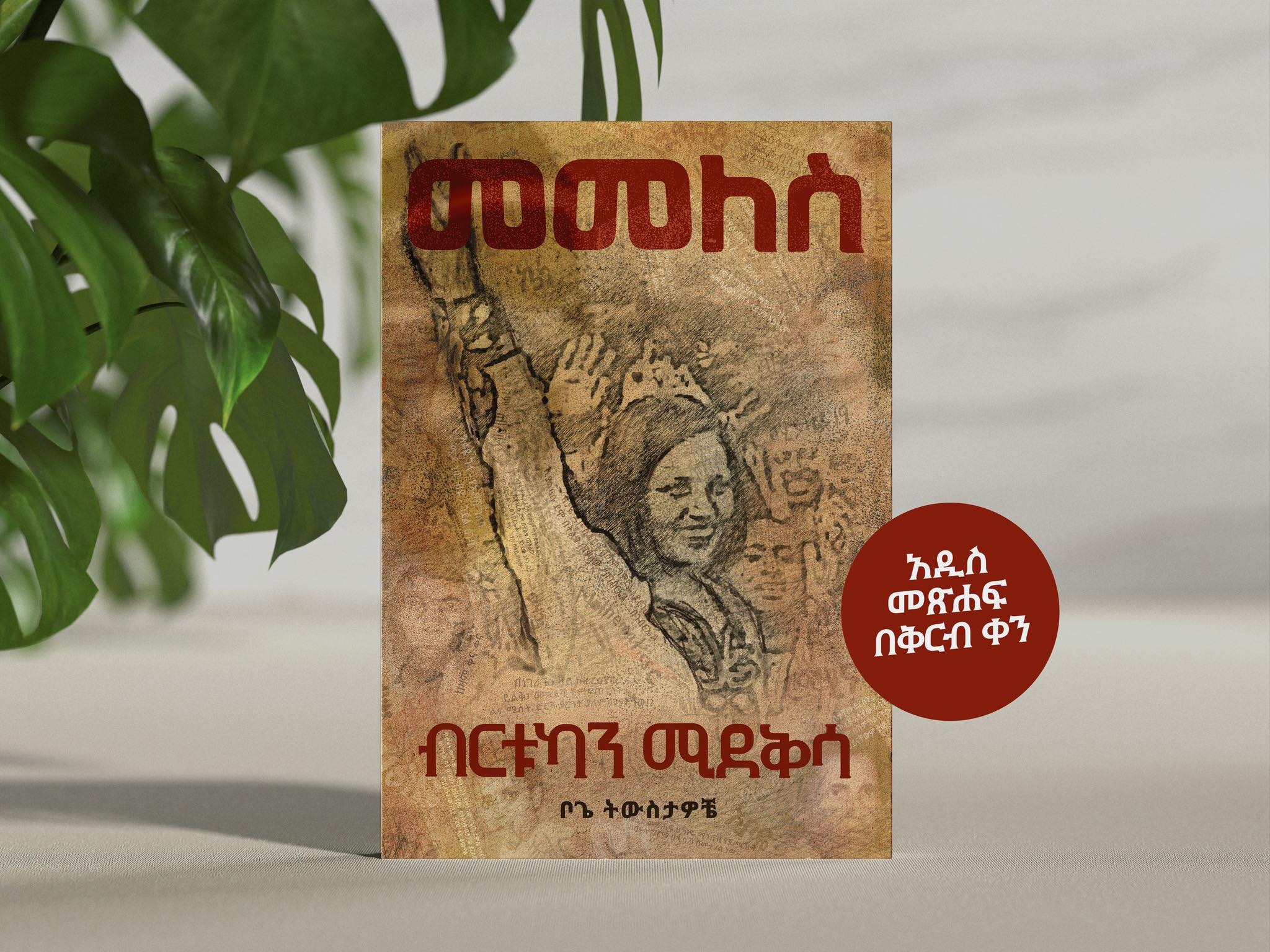
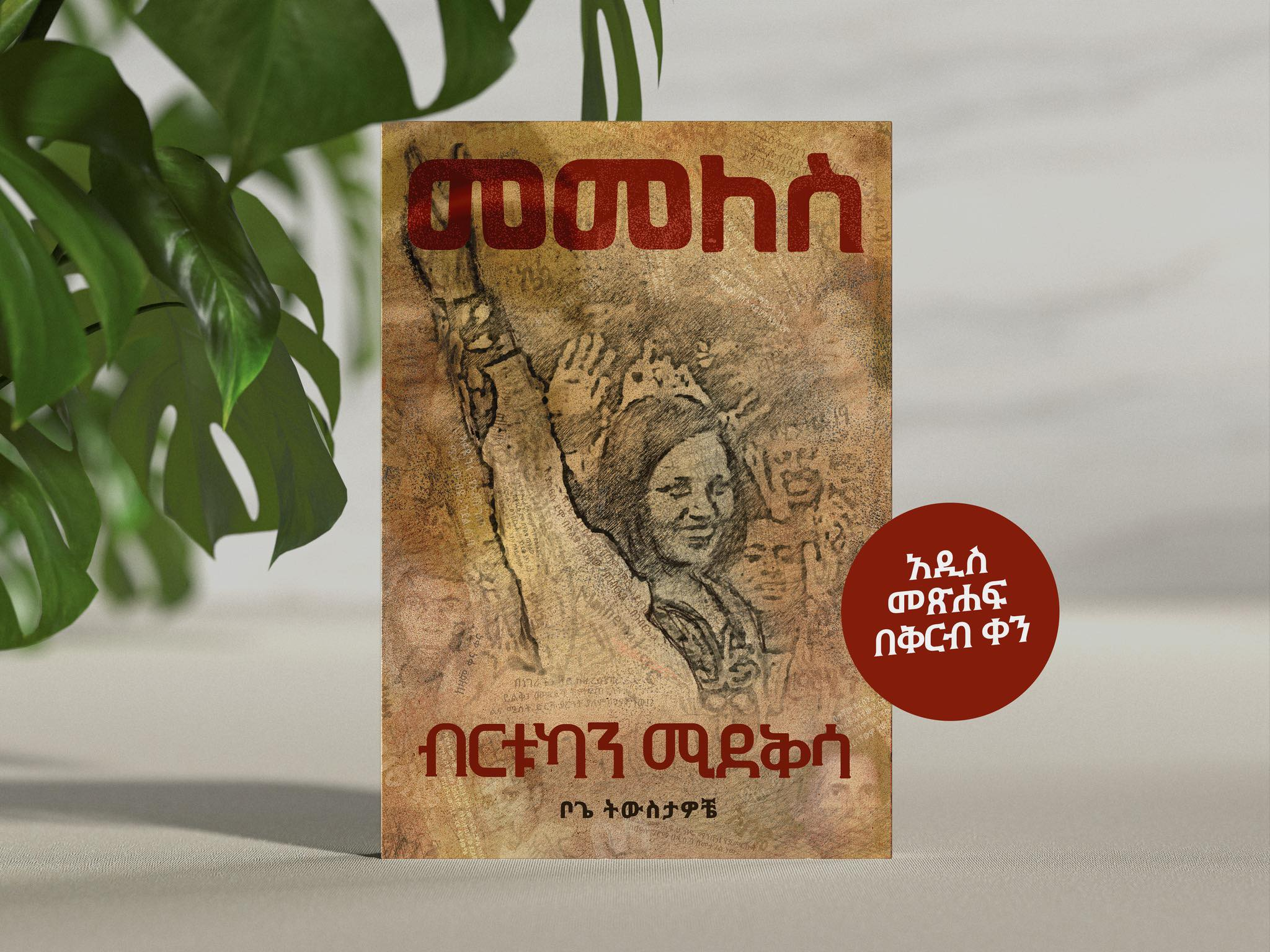
ADDIS ABABA – One of Ethiopia’s most resilient and influential political figures is set to share her remarkable story in a keenly anticipated autobiography. The life memoir of Burtukan Mideksa, titled “መመለስ” (The Return / The Answer), is scheduled for release in the coming days, promising an intimate account of three turbulent decades at the heart of the nation’s politics.
A symbol of strength for many, especially women and youth, Burtukan—often affectionately called “Birtu Kan” (The Strong One) by her admirers—has navigated a journey few can match. Her forthcoming book chronicles a path that has spanned from the judiciary to political leadership, from exile to the helm of the National Election Board.
A Title with Dual Meaning
The choice of the single-word title “መመለስ” is profoundly evocative. It is a word loaded with dual significance in Amharic, reflecting the dual arcs of her narrative. It can be read as “The Return”—signifying her physical and political comeback to Ethiopia and to the public stage. Simultaneously, it resonates as “The Answer”—suggesting her response to long-standing questions about her role, her struggles, and the nation’s transformative journey. In either interpretation, the title promises a compelling and revealing narrative.
Charting a Nation’s Journey Through One Life
The memoir is expected to trace her unique passage through Ethiopia’s modern history. From her early career as a judge and her bold stance for judicial independence, to her political activism, subsequent imprisonment, and years in exile, Burtukan’s life mirrors the nation’s own struggles with democracy, justice, and change.
Her later return to Ethiopia and her historic appointment as the first woman chairperson of the National Election Board of Ethiopia (NEBE) marked a pivotal chapter, placing her at the center of the country’s most consequential democratic exercises. The book is anticipated to provide an insider’s perspective on these critical moments, detailing both the triumphs and profound challenges faced along the way.
Highly Anticipated by Scholars and Public Alike
The announcement has generated significant excitement among political analysts, historians, and the general public. Many hope the memoir will shed new light on untold stories, private reflections, and the inner workings of Ethiopia’s political evolution over the last 30 years. It is viewed not just as a personal history, but as a vital primary source for understanding contemporary Ethiopia.
A High-Profile Launch
Plans are underway for a high-profile official book launch ceremony this month. Arts TV has been named as the exclusive media partner for the event, ensuring comprehensive coverage and bringing the proceedings to millions of viewers across the nation and the diaspora.
Burtukan Mideksa’s “መመለስ” arrives at a critical juncture, offering a deeply personal lens on Ethiopia’s ongoing quest for stability and democracy. It is poised to be one of the most significant political memoirs of the year, providing answers, prompting reflection, and celebrating the return of a formidable voice to the literary and public sphere.
Historic Gathering at Odaa Roobaa: The Heero Council Ascends, Uniting the Five Branches of Arsii
In a landmark ceremony resonating with deep historical significance, the 20 Dhaddachas (Gadaa class leaders) of the Arsii Sikkoo Mandoo generation gathered under the sacred Odaa Roobaa sycamore. From this assembly, the most senior and pivotal leader, the Dhaddacha Heeroo, has formally risen, marking a decisive moment in the restoration and unity of the Arsii Gadaa system.
The ascension of the Dhaddacha Heeroo is the culmination of a major decree passed during the recent Dhaddacha Guutaa (Grand Assembly). This decree, rooted in a call made by the Abbaa Gadaa of all Arsii, Aliyyii Muhaammad-Suruur, mandated the reconstitution of this supreme council. Its purpose is to reunite the five historic branches (Baalli) of the Arsii nation—Birmajii, Bultuma, Bahara, Horata, and Roobalee—whose people are spread across the lands of Baale, Diida’a, Gadab, Albaso, Laangannoo, and Dambal.
A Unifying Vision for a Dispersed People
Abbaa Gadaa Aliyyii Muhaammad-Suruur, during his term of office, has spearheaded efforts to bring the dispersed children of Sikkoo Mandoo back to their rightful place within the Gadaa structure. Strengthening this mission, the recent decrees are a high-level strategy designed to foster unity among the five branches. The plan specifically allocates a dedicated week for the branches to meet, allowing communities separated by distance to see each other, share ideas, and discuss their collective concerns.
A Community’s Determined Effort
The successful execution of this profound ceremony is credited to the exceptional effort and organization of the broader community, particularly the people of Baalee Bahaa and the residents of the historic Laga Hidhaa district. Their deep commitment to the success of this Gadaa event underscores the living, community-driven nature of the institution.
This gathering at Odaa Roobaa transcends ritual. It is a powerful act of political and cultural revitalization, signaling the Arsii Sikkoo Mandoo’s intent to reclaim the cohesion and governance envisioned by their forefathers. As the Heero council takes its place, it reaffirms the core Gadaa principle: “Gadaan ta misaaf mirgaati” — “Gadaa is both a duty and a right.”
The rise of the Heero is not just a return to formality; it is the reassembly of a people’s parliament under their sacred tree, ready to guide their future through the ancient, yet ever-relevant, laws of balance, justice, and collective responsibility.












 Oromedia