Honoring Ob Mama Argoo: A Pillar of Oromo Community in Seattle

A Pillar in the Diaspora: The Deep Loss of Ob Maammaa Argoo and the Meaning of Home
By Maatii Sabaa
A community’s strength is often measured in its quiet pillars—the individuals who don’t just inhabit a space, but who become synonymous with its heartbeat, its memory, and its sense of home. When such a pillar falls, the tremor is felt across oceans, reaching from a neighborhood in Seattle to the soul of a global nation. The recent, stark announcement from the Oromo community carries this profound weight: “OROMOON har’a nama jabaa tokko dhabne; Keessumattu Oromoon Seattle, Ob Maammaa Argoo dhabnee jirra. Ob Maammaa Argoon Abbaa Margituu Argoo ti.” (Today, the Oromo people have lost a strong one; Especially we, the Oromo of Seattle, have lost Ob Mama Argoo. Ob Mama Argoo is Abbaa Margituu Argoo.)
This is more than an obituary. It is a communal acknowledgment of a foundational fracture. The title “Ob” or “Abbaa” is not given lightly; it denotes fatherhood, leadership, and a gravitas earned through steadfast presence. He was not just a resident of Seattle, but a cornerstone for Oromoon Seattle, a vital node in the vast diaspora network that sustains Oromo culture, politics, and mutual aid far from the physical borders of Oromia.
The loss of such a figure in the diaspora cuts with a unique sharpness. For a community shaped by displacement, struggle, and the constant work of preserving identity in a foreign land, people like Ob Argoo are more than leaders. They are living archives and architects. They are the ones who remember the names and stories of new arrivals. They are the organizers behind cultural festivals that transform a community hall into a pocket of Oromiyaa for an evening. They are the first call in times of crisis—whether it’s navigating a bureaucratic system or mourning a loss back home. They become the embodied answer to the unspoken question: Where is our home here?
Abbaa Margituu Argoo—Father of Margituu Argoo—this final identification roots him in the most sacred of Oromo traditions: lineage and relational identity. Even in announcing his passing, the community defines him by his cherished role as a father, reminding us that the strongest community pillars are always, first, pillars of a family. His strength (“nama jabaa”) was likely not the loud, theatrical kind, but the resilient, reliable strength of a great tree: providing shade, stability, and a point of orientation for all who gathered beneath.
His passing leaves a silence that is both personal and structural. Who will now hold the intricate web of connections with the same familiarity? Who will offer that specific, grounding wisdom that comes from having witnessed decades of the community’s joys and struggles in this particular city? The grief expressed is for the man, undoubtedly, but also for the irreplaceable role he occupied—a role that represents the very glue of diaspora life.
In mourning Ob Maammaa Argoo, the Oromo community of Seattle, and indeed the wider Oromo nation, confronts a poignant truth about diaspora. The greatest assets are not buildings or institutions, but the living human repositories of memory, commitment, and unwavering presence. The work of a community is to build upon the foundation such individuals leave behind, to ensure that the “home” they helped construct does not crumble with their passing.
Today, Seattle feels less like home for many. But in their collective grief and in the powerful, simple act of naming his loss and his title, they perform the very culture he helped sustain. They affirm that an Oromo community exists, that it feels its losses deeply, and that it honors its fathers. Ob Maammaa Argoo’s legacy is not just in what he did, but in the palpable space his absence reveals—a space that testifies to the immense weight of the presence that once filled it. May his roots nourish the generations that follow.
Honoring Father Beyene Badhasso: A Legacy of Courage and Humanity

Ethiopian Adventist College Honors a Pillar of Oromo Resistance and Humanity: Father Beyene Badhasso
ADDIS ABABA — In a powerful act of historical reclamation, the Ethiopian Adventist College has officially recognized the legacy of Father Beyene Badhasso, celebrated as one of the Oromo people’s most courageous and transformative figures. The ceremony honored a man who, against immense odds, helped pry open the gates of history for future generations.
The tribute arrives as a poignant reminder of an era when Oromo identity was systematically suppressed—a time when their language was silenced, culture criminalized, and fundamental dignity denied. In this oppressive climate, Father Beyene Badhasso stood where few dared.
With a small band of brave comrades, he confronted the highest authorities of his day, including the Imperial throne itself, to demand a forbidden right: access to education for Oromo children. This defiant act was not without profound cost; Father Beyene paid a “golden price” for his courage, enduring persecution for his advocacy.
“His sacrifice was the seed,” noted one attendee at the recognition event. “The educated Oromo generation of today, our reclaimed language, culture, and standing in the world—these grew from the ground he helped break.”
Beyond his role as a fearless advocate, Father Beyene was revered as a man of deep and practical compassion. Operating a pharmacy, he became a beacon of hope in his community, providing medicine and treatment to hundreds based on need, not payment. In a landscape where poverty was compounded by injustice, he consistently chose mercy over profit, saving countless lives through quiet, unwavering charity.
The college’s decision to honor Father Beyene has resonated deeply within the Oromo community and among scholars of Ethiopian history. Dr. Abraham Dalu and the entire leadership of the Ethiopian Adventist College received heartfelt praise for their “honorable step” in bringing this giant of history into the light of formal academic recognition.
“Thank you for honoring a true giant of our history,” read a statement from community organizers. “Father Beyene didn’t just open a school; he opened the future. Today, we stand tall as Oromo and as Oromia because he stood firm.”
The recognition serves as both a memorial and a mirror, reflecting the enduring power of resilience, education, and humanitarian spirit in the ongoing story of the Oromo people.
# # #
About Father Beyene Badhasso: A seminal Oromo intellectual and activist, Father Beyene is remembered for his pivotal role in the struggle for Oromo educational rights during the mid-20th century and for his lifelong dedication to community healthcare and charity.
Unity and Revival: The Rise of the Heero Council

Historic Gathering at Odaa Roobaa: The Heero Council Ascends, Uniting the Five Branches of Arsii
In a landmark ceremony resonating with deep historical significance, the 20 Dhaddachas (Gadaa class leaders) of the Arsii Sikkoo Mandoo generation gathered under the sacred Odaa Roobaa sycamore. From this assembly, the most senior and pivotal leader, the Dhaddacha Heeroo, has formally risen, marking a decisive moment in the restoration and unity of the Arsii Gadaa system.
The ascension of the Dhaddacha Heeroo is the culmination of a major decree passed during the recent Dhaddacha Guutaa (Grand Assembly). This decree, rooted in a call made by the Abbaa Gadaa of all Arsii, Aliyyii Muhaammad-Suruur, mandated the reconstitution of this supreme council. Its purpose is to reunite the five historic branches (Baalli) of the Arsii nation—Birmajii, Bultuma, Bahara, Horata, and Roobalee—whose people are spread across the lands of Baale, Diida’a, Gadab, Albaso, Laangannoo, and Dambal.

A Unifying Vision for a Dispersed People
Abbaa Gadaa Aliyyii Muhaammad-Suruur, during his term of office, has spearheaded efforts to bring the dispersed children of Sikkoo Mandoo back to their rightful place within the Gadaa structure. Strengthening this mission, the recent decrees are a high-level strategy designed to foster unity among the five branches. The plan specifically allocates a dedicated week for the branches to meet, allowing communities separated by distance to see each other, share ideas, and discuss their collective concerns.

A Community’s Determined Effort
The successful execution of this profound ceremony is credited to the exceptional effort and organization of the broader community, particularly the people of Baalee Bahaa and the residents of the historic Laga Hidhaa district. Their deep commitment to the success of this Gadaa event underscores the living, community-driven nature of the institution.
This gathering at Odaa Roobaa transcends ritual. It is a powerful act of political and cultural revitalization, signaling the Arsii Sikkoo Mandoo’s intent to reclaim the cohesion and governance envisioned by their forefathers. As the Heero council takes its place, it reaffirms the core Gadaa principle: “Gadaan ta misaaf mirgaati” — “Gadaa is both a duty and a right.”
The rise of the Heero is not just a return to formality; it is the reassembly of a people’s parliament under their sacred tree, ready to guide their future through the ancient, yet ever-relevant, laws of balance, justice, and collective responsibility.

Oromo Grievance: The Call for Historical Reckoning

News Feature: The Unfinished Burial – Oromo Grievance and a Call for Reckoning
FINFINNE – In a powerful and poignant declaration circulating within Oromo intellectual and activist circles, a statement titled “Our Grievance” (Dogongora keenya) lays bare a deep-seated historical pain and issues a stark challenge to the community’s present path. Framed not as a political manifesto but as a moral and cultural reckoning, the text articulates three core wounds that continue to fester, preventing collective healing and progress.
The statement’s first grievance cuts to the heart of historical memory. It accuses the Oromo people of having “abandoned the history of yesterday”—specifically, the foundational legacy of the Gadaa system and the sacrifices of those who fought to preserve Oromo identity. This, the authors argue, is a profound act of self-neglect, a failure to honor the very struggles that define the nation.
The second point presents a searing economic and spiritual critique. It states that the community has “failed to understand the value of land or the value of bone.” This evocative phrase unpacks a dual tragedy: the loss of ancestral territory (land) and the dishonoring of martyrs (bone). The text contends that while the physical land was lost, the greater failure lies in not ensuring that the sacrifice of those who died defending it was redeemed through continued, effective struggle. The declaration warns against a cyclical resignation where one generation’s defeat is accepted, hoping the next will simply be born into a new fight, rather than completing the unfinished work of the past.
The most direct and impassioned grievance addresses the legacy of state violence. It lists the targeted losses of “Oromo scholars, teachers, doctors, sheikhs, priests, artists, and Gadaa leaders,” accusing the community of a catastrophic failure: while knowing the perpetrators and witnessing ongoing atrocities, there has been a critical absence of holding them accountable. The text condemns this as both a failure to “settle the score” for crimes against the Oromo elite and, more damningly, a failure to “return and differentiate friend from foe,” suggesting a dangerous ambiguity in the face of oppression.
Analysis: Beyond Grievance, A Call for Cohesion
This “Dogongora” transcends a simple list of complaints. Analysts view it as a crucial internal dialogue, a mirror held up to the Oromo national movement at a complex juncture.
“It is a lamentation, but also a prescription,” says Dr. Lemmi Bula, a historian of Oromo studies. “The authors are diagnosing a crisis of continuity and accountability. The grievance about ‘bone’ versus ‘land’ is particularly profound—it asks whether we have honored the sacrifice of our heroes by building upon it strategically, or merely mourned them while the underlying conditions remain.”
The statement’s circulation comes amid ongoing conflict in the Oromia region and persistent debates over political strategy, representation, and reconciliation within Ethiopia. Its significance lies in its source: it is an introspective critique from within, demanding a higher standard of historical consciousness, strategic clarity, and moral resolve from the community itself.
A Community’s Response
The reaction among Oromo intellectuals and activists has been one of solemn reflection. Many agree the issues raised are fundamental. “It hurts because it is true,” shared activist Fayisa Lelisa. “We are quick to declare our heroes but slow to build the disciplined, unified institutions that would make their sacrifice truly meaningful. This is a wake-up call to move from mourning to a more purposeful honoring.”
There has been no official response from the Ethiopian government, to whom the indirect accusations of violence are aimed. The statement concludes not with a demand of the state, but with a challenge to the Oromo people: to reclaim their history, re-evaluate their struggle, and insist on justice for their fallen, framing these not as optional pursuits but as the essential duties required for true liberation.
As one elder, upon reading the text, summarized: “It is not enough to say we remember. We must build a future that makes the memory of our sacrifices proud.” The “Dogongora” now stands as a watershed document, compelling a nation to confront its deepest pains to chart a more coherent and honorable path forward.
Why Sadaasa 9 (November 9) holds a place of supreme importance in the history of the Oromo struggle for freedom?
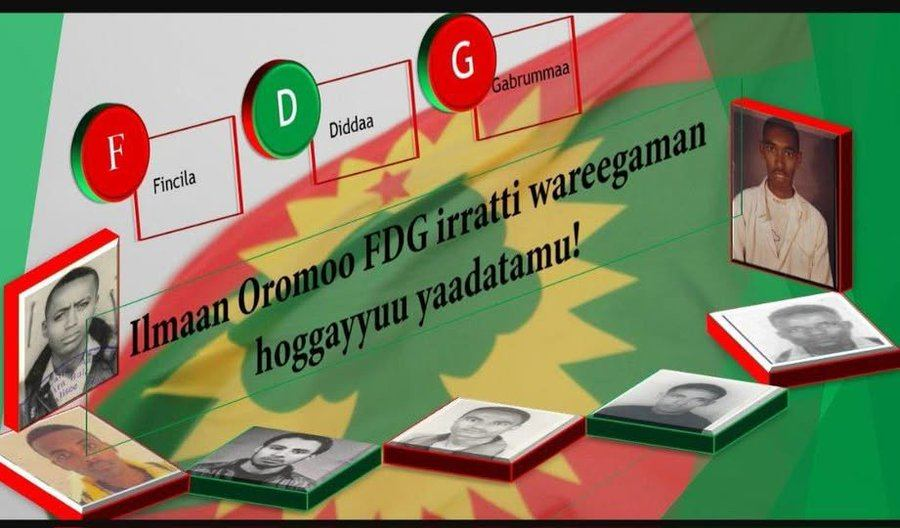
Sadaasa 9 (November 9) holds a place of supreme importance in the modern Oromo struggle for freedom because it marks the beginning of a watershed protest movement that fundamentally transformed the nature of the resistance against the Ethiopian government.
Here is a detailed breakdown of why this date is so significant and is commemorated annually.
1. The Trigger: The “Master Plan” for Addis Ababa
The immediate catalyst was the **2006 Master Plan**, a massive urban expansion scheme by the government that aimed to annex large swathes of Oromia farmland surrounding the capital, Finfinne (Addis Ababa). For the Oromo people, this was not merely a municipal boundary adjustment; it was an **existential threat**. It meant:
* Mass Dispossession: The forced eviction of Oromo farmers from their ancestral land with little to no compensation.
* Cultural Erasure: The further erosion of Oromo identity, sovereignty, and their historical connection to Finfinne.
* Economic Marginalization: The loss of livelihood for millions, turning self-sufficient farmers into a displaced underclass.
The Master Plan was seen as the ultimate symbol of garbummaa (systemic exploitation, subjugation, and denial of Oromo rights) under the Ethiopian state.
2. The Outbreak of the Oromo Protests (Fincila Diddaa Garbummaa – FDG)
In response to this plan, widespread protests erupted spontaneously, primarily led by **Oromo youth (the Qeerroo)**. While discontent had been simmering for decades, **Sadaasa 9, 2015**, marks a pivotal moment when these protests exploded into a coordinated, mass movement.
The protests that began on and around this date were characterized by:
* Mass Mobilization: It was not led by a single political party but was a genuine grassroots uprising involving students, farmers, professionals, and elders across virtually all of Oromia.
* Strategic Non-Violence: Initially, the protests were largely peaceful, involving marches, sit-ins, and the symbolic raising of the Oromo flag.
* A Clear, Unified Message: The protests unified various Oromo grievances—political marginalization, economic exploitation, cultural suppression—under the central demand to cancel the Master Plan and secure Oromo self-rule.
3. The Government’s Brutal Crackdown and Martyrdom
The Ethiopian government’s response was swift and extremely violent. Security forces used live ammunition, mass arrests, torture, and intimidation to crush the protests.
This crackdown had a profound effect:
* Creation of Martyrs: Hundreds, and eventually thousands, of unarmed protesters were killed. Sadaasa 9 became a day to remember these wareegamtoota (martyrs) who gave their lives for the cause.
* International Spotlight: The brutal suppression drew unprecedented international attention from human rights organizations like Amnesty International and Human Rights Watch, global media, and diplomats, putting the Ethiopian government under intense scrutiny.
* Radicalization of the Movement: The violence convinced many Oromos that peaceful protest was futile, further cementing their resolve and transforming the **Qeerroo** into a formidable, disciplined force for change.
4. A Historic Turning Point
The protests that began on Sadaasa 9, 2015, ignited a fire that could not be extinguished. They:
* Shattered the Climate of Fear: For the first time in a generation, the Oromo public massively and openly defied the state.
* Forged a New Generation of Leaders: The **Qeerroo** movement demonstrated immense organizational skill and strategic patience.
* Laid the Groundwork for Political Change: The sustained pressure from these protests over the next three years critically weakened the ruling party and was the primary force that led to the resignation of Prime Minister Hailemariam Desalegn and the rise of Abiy Ahmed in 2018. The **Master Plan was officially canceled** in January 2016 as a direct result of the protests.
—
Summary: Why Sadaasa 9 is Commemorated
In essence, Sadaasa 9 is commemorated because it marks the birth of the Oromo Protest Movement—a decisive, transformative moment in the struggle.
* It is a Day of Remembrance: To honor the courage and sacrifice of the wareegamtootaa (martyrs) who were killed.
* It is a Day of Resistance: It symbolizes the collective rejection of garbummaa and the reclaiming of Oromo identity and agency.
* It is a Day of Resilience: It celebrates the power of a united people to challenge a repressive state and force historic political concessions.
* It is a Foundational Date for Modern Oromo Nationalism: For the Oromo youth and the diaspora, it represents their “1776” or “Sharpeville”—a defining date where their generation took center stage in the fight for their people’s future.
Therefore, Sadaasa 9 is not just a date on the calendar; it is a powerful symbol of sacrifice, unity, and the unyielding pursuit of freedom in the face of overwhelming odds.
Irreechaa: For Peace and Reconciliation

By Girma Mirgisa Reba
Ethiopia is endowed with beautiful diversity and richness of cultures, which are celebrated at different times in the country. In particular, September is a month of festivals, holidays and celebrations around the country, among which, are Meskel festival and Irreechaa festival, thanksgiving of the Oromo people.
It also represents the start of Ethiopian New Year , symbolizing a stimulating time of change, thanksgiving and renewal, with the celebration of a series of cultural and religious festivals throughout the month. It is also a season when the landscape is dressed with the golden color of Ethiopian daisies, locally known as Adey Abeba flower.
Ethiopian New Year signifies a time of renewal, as the rainy season subsides leaving behind lush fields blooming with yellow daisies which adorns homes of many Ethiopians throughout September, and representing the spirit of peace, hope, harmony and love which come along the New Year.
Meskel, a UNESCO-inscribed intangible cultural heritage, is also celebrated by Ethiopian Orthodox Christians on Meskerem 27 and commemoration of the unearthing of the True Cross of Jesus. The Yo Yo Gifata of the Wolaita, Yo Masqalaa of the Gamo, Ya Hode of the Hadiya, Meskel of the Gurage, Hashu Masqala of the Kembata Tembaro, Gofa Gaze Masqalaa, and Mashqare-Kaficho, among others, adorn the month of September in southern part of the country by festivities and joy. It is also a time of attracting more tourists.
Similarly, the week-long Irreechaa cultural festival is observed by the Oromo people at the beginning of spring as a time of peace, reconciliation, unity and thanksgiving and forgiveness. Irreechaa is ‘Thanksgiving Day’ for the Oromo people after the end of the rainy season. It is celebrated for all things that Waqaa ‘God’ has done for people like bringing rain, peace, health, fertility, abundance, and for the beautiful weather they have cherished. In the course of Irreechaa festivals, thanks will be given for the achievements of last year and chanting for the hope and productivity of the future.
The Oromo people consider the winter; rainy season that lasts from June to September as the time of difficulty because the rainy season causes much muddy and the surroundings covered with heavy cloud. The heavy rains are also accompanied by thunder and cold weather. The weather conditions make life inconvenient for human movements. The heavy rains may cause rivers to over floods and family relationships to fall into difficulty. Therefore, the Irreechaa festival is all about rekindling about family connections, hope and joy. Friends and relatives who missed each other and the beautiful nature for a long time due to the rainy seasons long for getting together for the blessings and festival of Irreechaa by the Oromo people. It is also a season where sowed crops will blossom, get ripe and bear fruits.
Irreechaa is celebrated in different localities across Oromia and worldwide where Oromos are living. In particular, the Irreechaa festivity which is taking place at Hora Finfinne and Hora Arsadi in Bishoftu town, is a unique thanksgiving festival which brings together millions of people from all corners of Oromia and the country.
Irreechaa is a time for the Oromo people to celebrate their culture and traditions. People during the festival wear colorful traditional attires as well as sing and dance. It is one of the best festivities of Ethiopia where cultural singing and dancing are common. This grand festival attracts a large number of the Oromo people and people from all parts of the country regardless of age, religion, political affiliations and sex to come together and celebrate the festival with extraordinary love, chanting and unity. It is a time to honor nature and give thanks for the blessings of brotherhood.
The concept of peace and reconciliation are an important and integral part of the daily activities of the Oromo people. The Oromo preach peace and reconciliation and offer blessings during thanksgiving ceremonies of Irreechaa. The worldview of the Oromo is to forge unity, peace and social relations with other people. Peace is achieved when mankind is at peace with God, nature and all creations. According to the sayings of the Oromo“Peace is a gift from God; and peace is better than wealth.” This shows how much the Oromo people value peace.
The Oromo people love and respect their Creator, take care of nature, have a good relationship with God, and take the view that a person who does not have a good relationship with God will not have peace with man and other creatures either.
So, Irreechaa celebration is a manifestation where the whole walks of life practice chanting about peace and reconciliation. And all who participate in the chanting pray for the peace of the Earth, the country, children, elders, wish best for the present life and next generation as well as for livestock and all living things. Thanksgiving Day is where the Oromo people proclaim peace and reconciliation to all without revenge but with pure heart.
Forgiveness is central to the Ireechaa festival. Ireechaa is believed to be of great importance to those people who are able to give forgiveness for their intentional or unintentional grievances with other people.
The day of the festival is believed to be a day of peace, happiness, reconciliation, forgiveness and prosperity. Accordingly, before anyone celebrates Irreechaa, be they individuals or groups, resolving conflicts between them, reconciling, forgiving each other, establishing peace and reconciling with God are the preconditions to be observed. That is why the saying of the Oromo has it: “Yoo namni walitti araarame, Waaqnis namaaf araarama” which means “If a man is reconciled to a man, God is reconciled to man.”
In Irreechaa celebration where Oromo people celebrated this grand festival along with other nations and nationalities of this country. Since recently, not only Oromo people, but also different nations and nationalities in the country are celebrating the event together with their Oromo brothers and sisters. This in turn has been consolidating linkage among the nations and nationalities thereby strengthening the love, unity and harmony among Ethiopians. Such a festival serves as a significant forum to further exchange cultural values among the Ethiopian nations and nationalities.
Since the Gada System has been registered as one of the Intangible International Cultural Heritage by UNESCO, Irreechaa festival is also embraced by the international community at large as part and parcel of an ancient tradition of the Gada system. So, a lot is required from all stakeholders to promote this festival and exploit its tourism potential. It is also important to promote the significance of this grand festival at international level and get registered by UNESCO. The festival should also be celebrated in accordance with its values and assets and pass on to the next generation.
 Oromedia