Eight Farmers and Landholders Imprisoned in Bishoftu After Defying Eviction Order
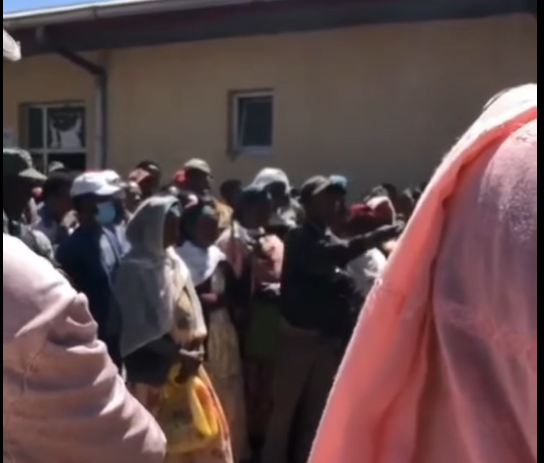
BISHOFTU, OROMIA – Eight individuals, primarily farmers and family heads, are currently being held at the Dhaka Booraa detention center in Bishoftu town after reportedly refusing to vacate their homes on an area known as “Aabbuu” land. The group was forcibly evicted and detained after their refusal to leave voluntarily, according to information obtained by the Oromo Media Network (OMN).
The individuals detained are identified as both landowners and tenant farmers, holding legal documentation for the land from either their fathers or previous owners. The list provided by OMN details their circumstances:
Biraanuu Tolosaa: Holds ownership documents certified by a court. Father of 2.
Dammaa Kaasa: A tenant farmer (qotee bultuu).
Zawuduu Juuflaa: Holds court-certified documents granted by his father. Father of 6.
Likkuu Miidhaksa: Holds court-certified ownership documents. Mother of 5.
Shuumii Juuflaa: Holds court-certified documents granted by his father. Father of 6.
Biree Tarruu: Holds court-certified documents granted by his father. Father of 2.
Baalchaa Bashaadaa: Holds court-certified documents granted by his father. Father of 3.
Abarraa Lammeechoo: Holds court-certified documents granted by his father. Is a person with a disability.
Qorichoo Gammachuu: Holds land received from his family. Father of 4.
The case highlights tensions over land rights and eviction procedures. The detainees’ possession of court-certified documents suggesting legal ownership or tenure raises significant questions about the basis of the eviction order and their subsequent arrest.
Officials from the Bishoftu city administration or local police have not yet issued a public statement regarding the specific charges against the group or the legal authority for the eviction at the “Aabbuu” site.
Community sources express concern over the detention of multiple breadwinners and a person with a disability. The incident is expected to amplify ongoing debates about land disputes, due process, and the protection of livelihoods in the region.
This is a developing story. Further updates will follow as more information becomes available from official sources.
A New Urban Vision for Oromia: How Smart Cities Are Redefining Governance, Service, and Mobility
An In-Depth Analysis of the Transformative Projects in Adama, Gadaa, Bishoftu, and Shaggar
By Maatii Sabaa, Feature Commentary
A quiet revolution in urban planning is unfolding in the heart of Oromia. It’s a vision that moves beyond concrete and asphalt to embed technology, data, and citizen-centric design into the very DNA of its cities. Following a significant directive from President Shimelis Abdisa, the Oromia Regional Government has embarked on an ambitious journey to transform Adama, Gadaa, Bishoftu, and Shaggar into model “smart cities” for Ethiopia and East Africa.
This initiative recognizes a fundamental truth: the success of a modern city is no longer measured solely by its buildings but by the intelligence of its systems—its governance, services, mobility, and environmental sustainability. For too long, our cities have lagged, not just nationally but regionally, in the foundational digital infrastructure that powers 21st-century urban life. This project is a decisive attempt to bridge that gap.
1. Smart Governance: The Backbone of a New System
The transformation begins with governance itself. The regional government understands that overcoming legacy planning, economic, and political hurdles requires, first and foremost, modernizing city leadership and administration.
All four pilot cities have initiated a new, streamlined governance model for smart cities. This involves tech-driven planning processes, digitalized workflows, and participatory monitoring systems. The aim is to foster transparency, accountability, and digital inclusion. For instance, the use of digital technologies is already enhancing community safety and information-sharing protocols.
The Gadaa Special Economic Zone stands out as a test case for autonomous, specialized urban governance. Operating under its own set of bylaws and directives, the Zone manages investment and administrative processes with remarkable agility, including handling its own fiscal instruments like taxes and capital goods imports. This specialized governance model is proving to be a catalyst for rapid development, having already attracted 39 significant local and international investors.
2. Smart Service: The “One-Stop Shop” Revolution
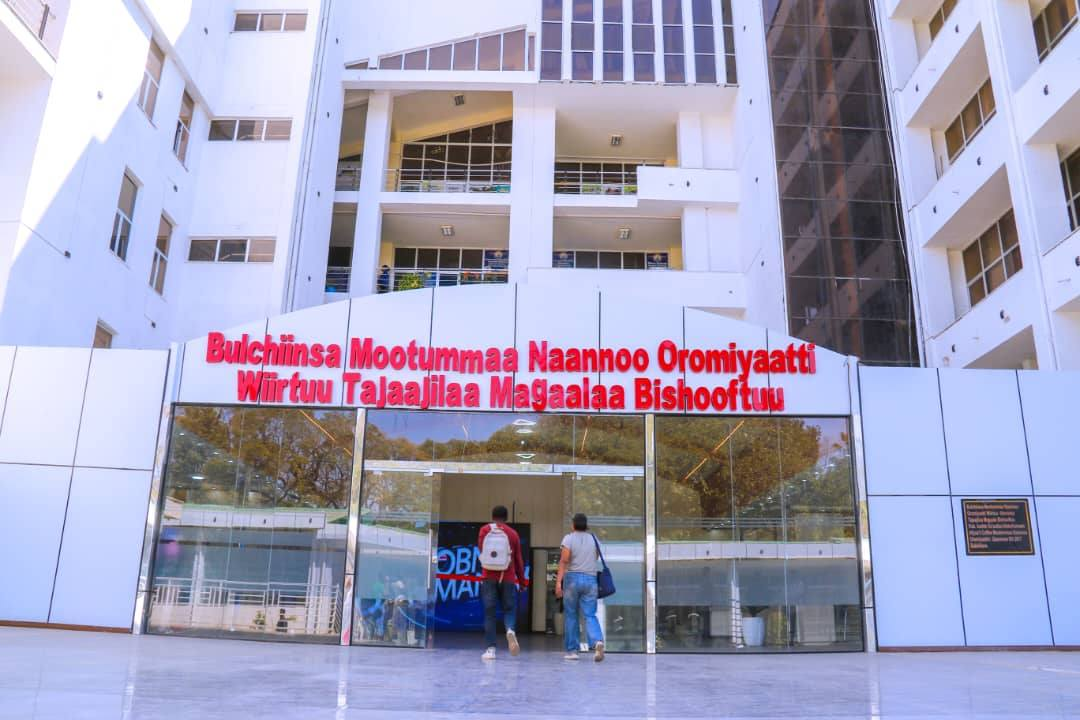
A smart city is only as good as the services it provides. The flagship innovation here is the “WIIRTUU TOKKOffaa” or One-Stop Service Center. This is far more than a convenience; it’s a complete re-engineering of the citizen-government interface.
These centers are architecturally designed and digitally saturated hubs. They eliminate the need for citizens to trek between disparate offices. A citizen can check requirements online, arrive at a welcoming space with amenities, and have their request processed under camera-monitored, streamlined systems. Adama currently offers 138 services, Bishoftu 131, and Shaggar 159 through these centers, with notable improvements in service quality and speed.
Crucially, reform extends to the civil servants. Work environments have been upgraded, and training systems now focus on enhancing skills, efficiency, and a culture of servitude. The vision is expansive: by 2030, aligned with “Digital Ethiopia 2030,” the government aims to digitize all city-level services and extend the one-stop-shop model to the woreda (district) level, bringing government to the people’s doorstep.
3. Smart Mobility: Engineering Connection, Not Just Concrete
The master plans for these cities envision more than roads; they envision integrated, sustainable, and intelligent mobility ecosystems. The focus is on creating multi-modal corridors that facilitate economic flow, are technologically enabled, and offer choices for all citizens.
Each city has a detailed, phased roadmap:
Adama has planned over 425 km of asphalt roads, strategically categorizing them into major corridors (62km), arterial links (39km), and extensive local and collector streets to ensure seamless intra-city and inter-regional connectivity.
Gadaa (the SEZ) is planning approximately 900 km of road network, including an 88 km expressway to link it directly with Bishoftu’s international airport. The plan also includes dedicated bicycle lanes and new bus terminals.
Bishoftu has a comprehensive plan for 1,674 km of roads and rail lines, carefully tiered from high-capacity corridors to local neighborhood streets. Over 55% of the first-phase corridor development is already complete.
Shaggar (Addis Ababa) is undertaking the most extensive overhaul, planning 7,000 km of intelligent asphalt roads. Projects like the Galaan-Galaan corridor and upgrades to major arteries are already underway. Plans even include futuristic options like a cable car system.
The underlying principle for all this infrastructure is integration—of energy lines, universal accessibility, climate resilience, and technology. The future points toward implementing Intelligent Transportation Systems (ITS) to manage traffic in real-time and developing Bus Rapid Transit (BRT) systems. The goal is fluid movement: efficient, uncongested, and safe.
Conclusion: A Holistic Blueprint for the Future
The smart city initiative in Oromia is not a piecemeal tech upgrade. It is a holistic blueprint that interlinks intelligent governance, human-centered service delivery, and sustainable mobility. It acknowledges that a city’s greatness lies in its ability to improve the lives of its inhabitants—their environment, their daily experience, and their connection to opportunity.
The journey has begun with significant early wins in investor confidence and citizen satisfaction metrics. The path ahead is long and requires sustained investment and commitment. However, by placing data, transparency, and citizen needs at the core of urban development, Oromia is not just building smarter cities; it is forging a more responsive, efficient, and inclusive model of urban life for all of Ethiopia. The transformation of Adama, Gadaa, Bishoftu, and Shaggar is a project worth watching, a bold experiment in writing a new chapter for the Ethiopian city.
Feature News: Empowering Victoria’s Multicultural Homes in the Clean Energy Transition
MELBOURNE, VIC – As Victoria accelerates its shift toward renewable energy, one question remains central for many households: how can every family participate in and benefit from electrification? The answer lies not just in technology, but in accessible information and community-led support. Recognising this, the Ethnic Communities’ Council of Victoria (ECCV) is launching a pioneering new project designed to empower multicultural households to make confident, informed decisions about electrifying their homes.
Titled “Empowering Multicultural Communities at Home,” the initiative directly addresses a critical gap in the clean energy transition: ensuring that language barriers, cultural nuances, and access to trusted information do not leave diverse communities behind.
“Every Victorian deserves the opportunity to lower their energy bills and reduce their carbon footprint through home electrification,” a project spokesperson said. “But to do that, people need information that is clear, in their own language, and delivered by those they trust. That’s where this project comes in.”
A Tailored, In-Language Approach
The project will move beyond generic brochures by providing clear, culturally relevant, and in-language information about home electrification and available energy upgrades. This includes everything from understanding efficient electric heating and cooling (reverse-cycle systems) and hot water systems to navigating government rebates and installer qualifications. The goal is to equip people with the knowledge to understand their options and ask the right questions of providers.
“Information is power,” the spokesperson added. “We’re demystifying the process—from what an induction cooktop is really like to use, to how to finance upgrades—so households can make choices that are right for their family and budget.”
Community at the Core
The project’s methodology is deeply community-centric. Key activities will include:
Local Information Sessions & Workshops: Held within community hubs, these sessions will provide practical, hands-on guidance.
Training Community Electrification Leads: ECCV will train and support trusted community members to become local points of knowledge and guidance.
Developing Accessible Multilingual Resources: Creating easy-to-understand guides, checklists, and digital content in multiple languages.
Facilitating Peer-to-Peer Learning: Creating spaces for communities to share experiences, concerns, and successes.
This model ensures information is not only translated but also transcreated—adapted to be meaningful within specific cultural contexts—and delivered through trusted channels.
Navigating the Transition with Confidence
With a focus on practical support, the project aims to do more than just inform; it aims to build confidence. For many families, the upfront cost and complexity of upgrading appliances or installing solar can be daunting. By breaking down the steps, explaining long-term savings, and clarifying available support, the project helps households see a clear pathway forward.
“Our focus is on making sure multicultural communities across Victoria have the information and support they need to navigate this transition with confidence,” the spokesperson emphasised. “This is about equity, ensuring the benefits of a clean energy future—like healthier homes, lower bills, and a safer climate—are shared by all.”
The “Empowering Multicultural Communities at Home” project is set to launch in the coming months, with ECCV beginning outreach to communities across the state. It represents a vital step toward an inclusive and just energy transition for Victoria.
For more information or to express interest in partnering, community organisations are encouraged to contact the Ethnic Communities’ Council of Victoria (ECCV).
Condolence News: The Passing of Dr. Lata Tesfaye Jule
It is with profound sorrow and heavy hearts that we announce the sudden passing of Dr. Lata Tesfaye Jule, former President of Dembi Dollo University and a senior advisor to the Prime Minister of Ethiopia. Dr. Lata passed away in his hotel room at the Hilton Hotel in Virginia, USA, earlier today.
He was in Washington D.C. as part of an official Ethiopian government delegation, having arrived just yesterday. The cause of death is not yet publicly known, pending the results of a hospital examination. His remains are expected to be repatriated to Ethiopia tomorrow, Sunday, through the coordination of the Ethiopian Embassy.
Dr. Lata was also a member of the Ethiopian Parliament. He was widely recognized as a brilliant and accomplished scholar, having earned two doctorate degrees at a young age and playing a pivotal role in the expansion and development of Dembi Dollo University during his presidency.
A colleague who knew him personally from his time in Washington shared these reflections:
“I had the privilege of meeting Dr. Lata closely when he came to Washington D.C. for work. In our time together, I came to understand what a profoundly knowledgeable man he was—a scholar with great dreams. He never stopped learning. He had come to America to pursue his third doctoral degree when his life was tragically cut short in his hotel room, leaving his ambitions unfulfilled. The grief is double when people of such integrity and grand vision are taken from us so soon.”
The news of Dr. Lata’s untimely demise has sent shockwaves through communities in Ethiopia and abroad, prompting an outpouring of grief. Many express a deep sense of loss, mourning a dedicated public servant who worked with humility for his community and a man whose character and expertise transformed many lives.
Our deepest condolences go to his family, friends, colleagues, and all who knew and loved him. May God grant strength and solace to his loved ones during this unimaginably difficult time. May his soul rest in eternal peace.




 Oromedia