World Leaders Extend Congratulations as Somaliland Gains International Recognition
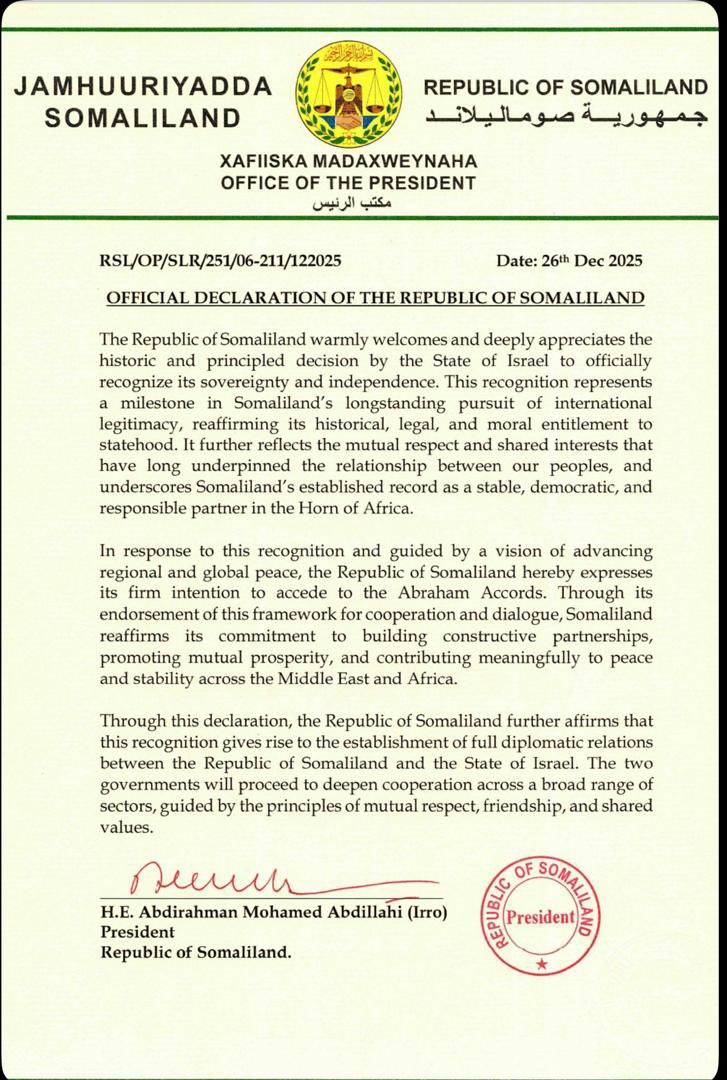
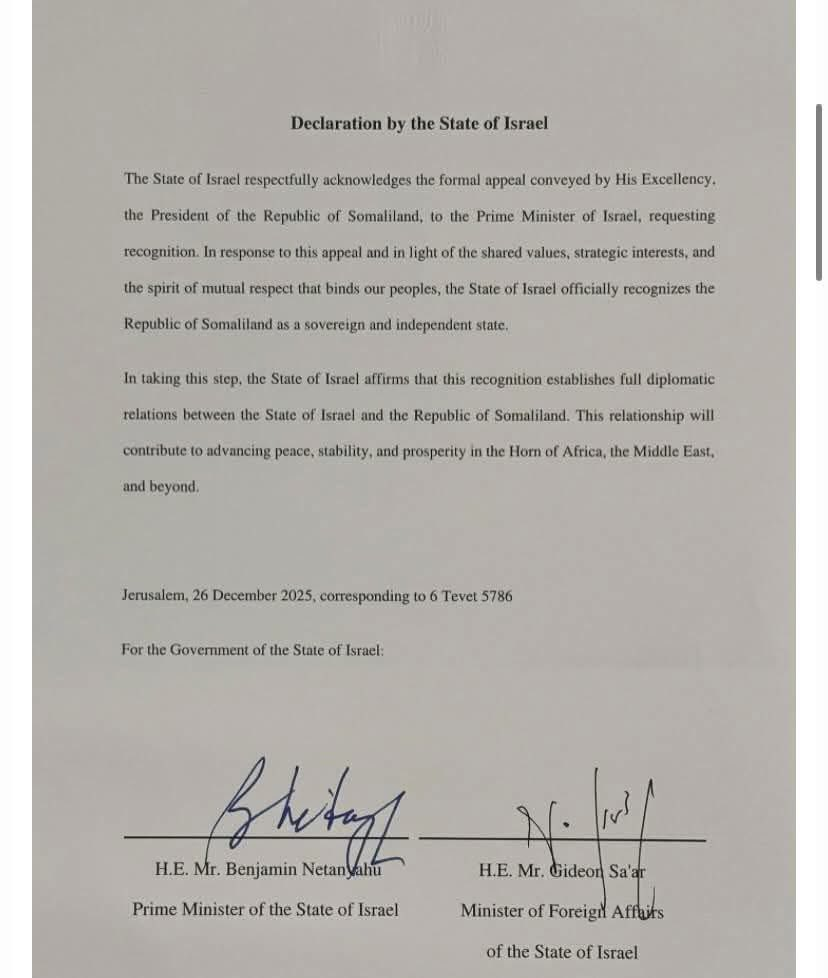
HARGEISA, Somaliland – Following the landmark announcement by Israel recognizing the Republic of Somaliland as a sovereign state, a wave of congratulatory messages has begun to flow in from global supporters and diaspora communities.
In a statement reflecting the sentiments of many long-time advocates, one prominent congratulatory message read: “Congratulations to the People of the Republic of Somaliland! It’s truly heartwarming to see the world is finally listening to your questions!”
This sentiment captures the profound moment for a nation that has functioned as a stable, democratic entity for over three decades since declaring independence from Somalia in 1991, yet has remained in diplomatic limbo without widespread international recognition.
The message underscores a years-long, persistent quest by Somaliland to have its right to self-determination acknowledged on the global stage. Supporters highlight its distinct historical borders as a former British protectorate, its record of peaceful transfers of power, and its role as a bastion of stability in a volatile region.
“This isn’t just about a political decision; it’s a validation of a people’s resilience and their unwavering call for a seat at the table of nations,” said a analyst familiar with Somaliland’s diplomatic efforts. “For years, they have asked, ‘Why not us?’ Today, a significant voice has finally answered.”
While formal recognition from a UN member state like Israel is a monumental breakthrough, observers note the path ahead remains complex. The move is expected to face fierce opposition from the Federal Government of Somalia and requires careful navigation of regional and international diplomacy.
Nevertheless, for the people of Somaliland, this moment is being celebrated as a historic turning point—a sign that their three-decade-long question is finally being heard, and that the door to the international community may be opening.
Gadaa Elders, Women Leaders Condemn Ethnic Slurs Against Salaale Oromo Community
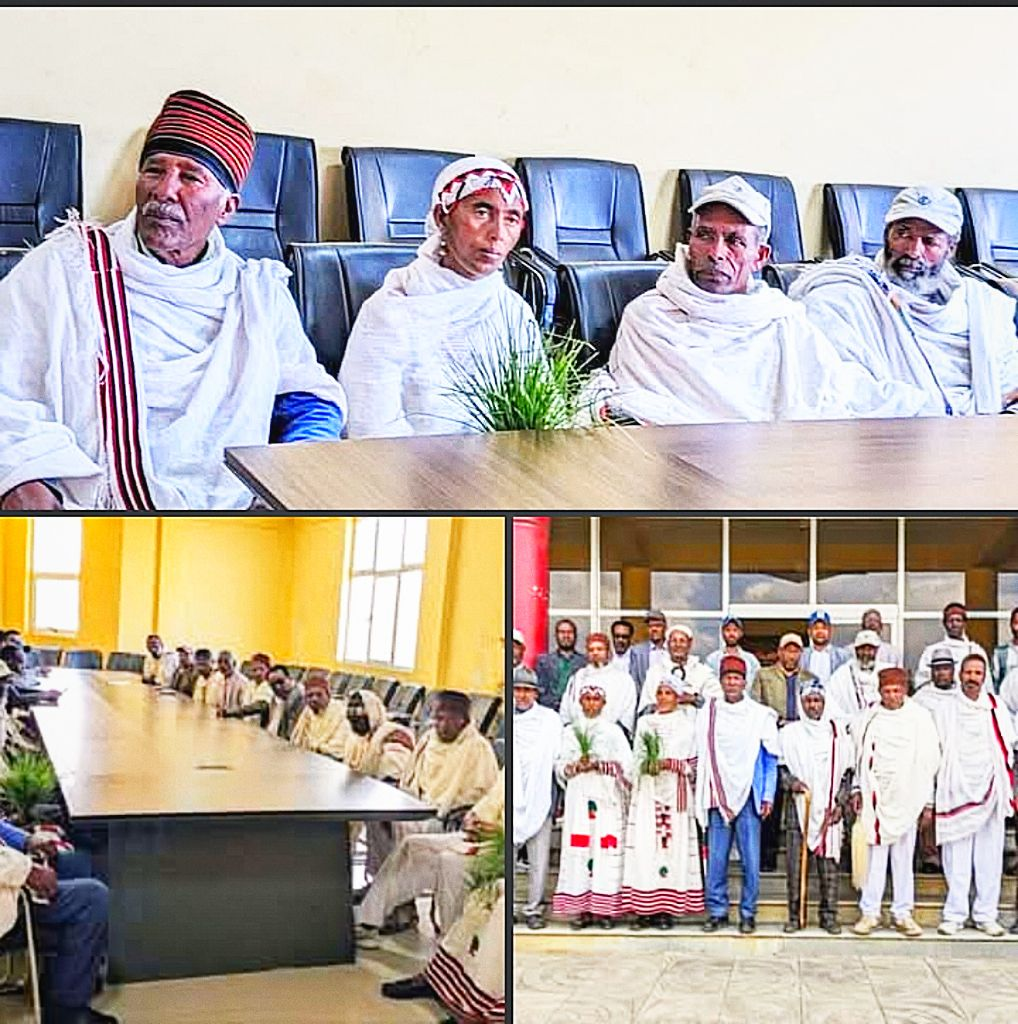
SALAALE, OROMIA — A coalition of traditional and community leaders, including the Abbootii Gadaa (Gadaa Councilors), Haadholee Siinqee (Siinqee Women Leaders), and Jaarsollee Biyyaa (Elders of the Land), has issued a strong condemnation against recent derogatory remarks made about the Salaale Oromo people.
The leaders have denounced a social media broadcast in which an individual named Heenok Girmaa allegedly used offensive language that “attacked the dignity and honor of the Salaale people.” The broadcast, aired on December 13, 2018, on a private media outlet called J.P.S., is described by the leaders as containing “insulting speech and false information” that violates Oromo cultural norms of respect (safuu) and taboo (duudhaa).
In their statement, the traditional authorities emphasized the respected standing of the Salaale community. They highlighted that the Salaale people are known for their “dignity, deep adherence to Oromo culture, and peaceful coexistence.” The community comprises followers of various religions who, they stated, “live together in love and peace, without their faiths causing division.”
The leaders contextualized the Salaale community’s significant contributions to Ethiopia. They noted that Salaale is the homeland of renowned national figures who fought for equality among nations and nationalities, including General Taaddasaa Birruu, Archbishop Luuba Abune Pheexiroos, and heroines like H/mariyaam Gammadaa. It is also the birthplace of global athletics champion Shaambal Abbabaa Biqilaa.
“Like other parts of our country, the Salaale people paid immense sacrifices for the sovereignty of this nation,” the statement reads. “Therefore, the act of defamation by this individual against this community is baseless and far from the truth.”
The condemnation also raises legal and ethical concerns. The leaders argued that in a country governed by law, it is unacceptable for a private individual to broadly insult and belittle a large community. They characterized the slurs as a calculated act driven by a “hidden personal agenda,” not representative of any religious or ethnic position.
Consequently, the Abbootii Gadaa, Haadholee Siinqee, and Jaarsollee Biyyaa have formally called upon the government to intervene. They have requested that the relevant legal authorities take appropriate measures against the broadcaster for launching what they deem a “campaign of hate speech and defamation” against a dignified segment of society. The leaders reaffirmed that such attacks have no place in the community and will not be tolerated.
The Unquenchable Flame: Amajjii and the Living Memory of Oromo Resistance
By Dhabessa Wakjira
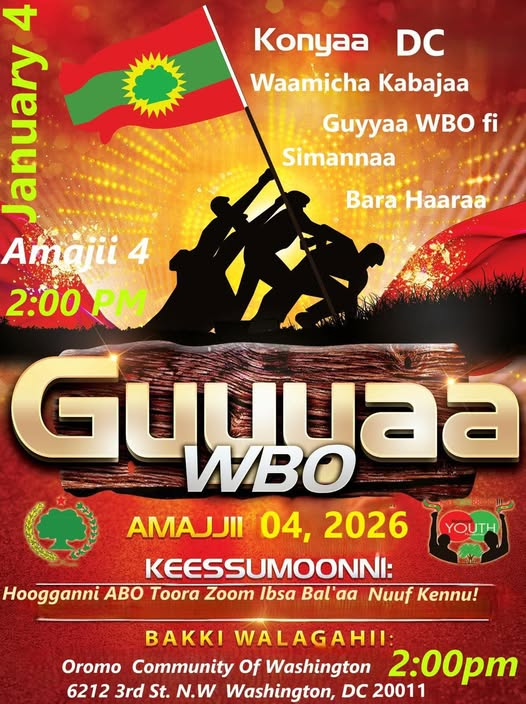
OROMIA – Across the highlands and valleys of Oromia, and within diaspora communities spanning the globe, the Oromo people are preparing to observe Ayyaana Amajjii—a day that is far more than a cultural anniversary. It is a living chronicle of resistance, a solemn vow of continuity, and a beacon of collective identity lit against a backdrop of enduring struggle. As one message proclaims: “AYYAANA AMAJJII BAGA GEESSAN!” – “Happy Amajjii Holiday!”
Celebrated for over 40 years, Amajjii commemorates a pivotal historical moment of defiance. Its roots lie in “a history of resilience in the Oromo freedom struggle and the heroism of Oromo fighters,” a day when a courageous few secured a landmark victory against formidable enemies. This singular event is etched into the Oromo consciousness not merely as a past triumph, but as an eternal wellspring of strength.
“Amajjii is a symbol of the endurance and perseverance that defines our entire struggle,” explains a community historian. “It is a holiday that surpasses all others, a flame we keep alive to illuminate the path to Oromo freedom from within the darkness of oppression.”
This year, the commemoration carries a particularly profound weight. The community gathers in what is described as “a time of difficulty and darkness,” marked by reports of severe hardship, drone strikes, militia violence, and widespread military crackdowns. “This brutal oppression wounds us,” the message states, “but without losing hope, we resist fiercely and honor our Amajjii, learned from our ancestors.”
It is precisely in such moments of intensified pressure, the tradition holds, that the history of Amajjii becomes most vital. The day serves as a crucial space—a sanctuary in time—to reaffirm unity, recommit to the quest for a dignified and egalitarian society, and honor the foundational values of respect and justice. The ceremony itself is a multi-faceted lesson in the Oromo liberation narrative.
The central, unifying ritual is the lighting of the Amajjii bonfire atop the highest hill. This “Xomboorrii Amajjii” is far more than a fire; it is the primary symbol of Oromo freedom. As its flames climb skyward, it is seen as broadcasting a powerful message: a message of true liberty, of emerging from subjugation, of unbreakable hope rising from the ashes of despair, and of light piercing a profound darkness.
“Amajjii is the day we remember the Oromo freedom fighters who sacrificed their lives without hesitation to liberate and protect Oromia and its people,” the commemoration note affirms. This act of remembrance is inextricably linked to the deep Oromo tradition of honoring elders and pioneers—those who preserve culture, offer guidance, and advocate for justice. Amajjii is, in essence, the national-scale enactment of this duty of respect.
The 2026 observance is therefore framed not just as a look backward, but as a strategic reaffirmation for the future. It is a time to “renew our pledge” to continue the struggle, bolstered by the conviction that Oromia will ultimately be a place where rights are asserted and the Oromo nation is honored in its unity and freedom.
From the ancestral hills of Oromia to community centers worldwide, the lighting of the Amajjii fire this year will be a potent, silent, and luminous declaration. It asserts that memory is resistance, that collective ceremony is a form of resilience, and that an unquenchable flame, passed down through generations, continues to light the way forward.
AYYAANA AMAJJII GAARII! – A dignified Amajjii to all!
 Oromedia