Australia Mourns Bondi Victims with Light and Silence, as Communities Reaffirm Hope
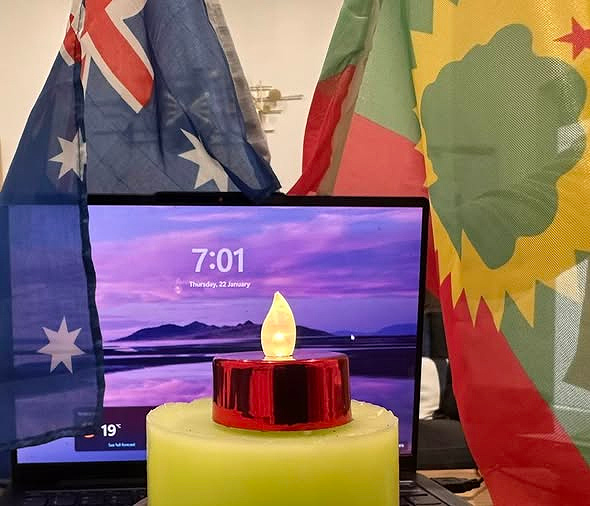
January 22, 2026 | AUSTRALIA – Today, Australia stands still in a sombre moment of national unity, observing a National Day of Mourning for the 15 lives taken in the devastating terrorist attack at Bondi’s Jewish community centre last month.
The Day of Mourning has been declared as a time for collective reflection, with all Australians called upon to join together in grief and solidarity. “It is a day for all Australians to come together to grieve, remember, and stand against antisemitism and hate,” a government statement affirmed.
In a series of formal tributes, flags are being flown at half-mast across federal and Victorian government buildings. As evening falls, iconic landmarks throughout Victoria will be illuminated in white—a powerful visual symbol of resilience, peace, and the collective determination to move forward.
At exactly 7:01 PM, the time the attack unfolded on December 14, 2025, the nation is invited to pause for a minute of silence—a shared moment to remember the innocent victims whose lives and futures were violently cut short.
Personal Acts of Remembrance Echo National Resolve
The official day of mourning is mirrored in the private homes of Australians from all walks of life, where the national tragedy resonates with personal histories of loss and resilience. For some, the act of remembrance is profoundly intertwined with their own experiences.
“At 7:01 PM, my family and I lit memorial candles for a minute of silence,” shared one community member, speaking from Melbourne. Their reflection wove together the national moment with a deeply personal journey: “We found the peace and freedom in Australia that was violated in our homeland, Oromia. Therefore, we condemn any act of hatred. We reiterated our hope that any darkness will be conquered by light.”
This sentiment underscores the profound significance of safety and social cohesion for Australia’s multicultural communities. For many who have sought refuge and stability, the attack strikes at the very promise of sanctuary that Australia represents.
A Nation’s Grief, A Shared Commitment
Today’s observances are more than ritual; they are a national reaffirmation of the values that bind a diverse society together. The minute of silence, the lowered flags, and the glowing white landmarks serve as public pledges against hate, offering a collective response to tragedy through unity and remembrance.
As candles flicker in windows and cities shine with light, the message echoing across the country is clear: from the depths of shared mourning arises a strengthened commitment to ensure that light—and the hope it carries—will always prevail.
Australia Observes National Day of Mourning After Bondi Attack

SYDNEY, Thursday, 22 January 2026 – The nation will come to a standstill in quiet reflection today as Australia marks a National Day of Mourning for the 15 innocent lives lost in the tragic anti-semitic attack at Bondi Beach last month.
On 14 December 2025, a devastating act of violence shattered the community of Bondi, targeting its Jewish community centre and leaving a nation in mourning. Today, Thursday, 22 January, is dedicated to honouring the victims, their grieving families, and all communities scarred by the tragedy.
A Nation’s Symbols at Half-Mast
As a mark of solemn respect, the Australian Government has directed all flags across the country, including on government buildings and naval vessels, to be flown at half-mast from sunrise to sunset. The visual gesture represents a nation’s collective grief and solidarity.
The official commemoration will reach its poignant peak this evening. Australians in every state and territory are invited to join in a shared national moment: lighting a candle at 7:01pm AEST—the time the attack unfolded—and observing one minute of silence.
“This simple, powerful act is a symbol of our remembrance and our unity,” a government statement read. “It is a light against the darkness of hate, a silent promise to stand together.”
Community and Coalition Stands in Solidarity
The Federation of Ethnic Communities’ Councils of Australia (FECCA), the peak national body representing Australia’s multicultural communities, issued a powerful statement of solidarity.
“FECCA stands firmly with the Jewish community and all those affected by this horrific act of hate,” the statement said. “We call for unity, compassion, and responsible public discourse in our shared efforts to eradicate anti-Semitism, racism, and all forms of bigotry from our society.”
The call underscores the day’s dual purpose: not only to mourn but to reaffirm a commitment to social cohesion. Vigils and interfaith gatherings are being held in capital cities and towns nationwide, bringing together leaders from diverse faiths and cultural backgrounds in a show of collective resilience.
A Day of Reflection and Resolve
Today is more than a date on the calendar; it is a national pause. It is a day for Australians to reflect on the preciousness of life, the strength found in community, and the enduring values of tolerance and respect that define the nation.
As candles are lit in windows from Bondi to Broome, the message is clear: Australia mourns together, remembers together, and stands determined to ensure that light and unity prevail over hatred and division.
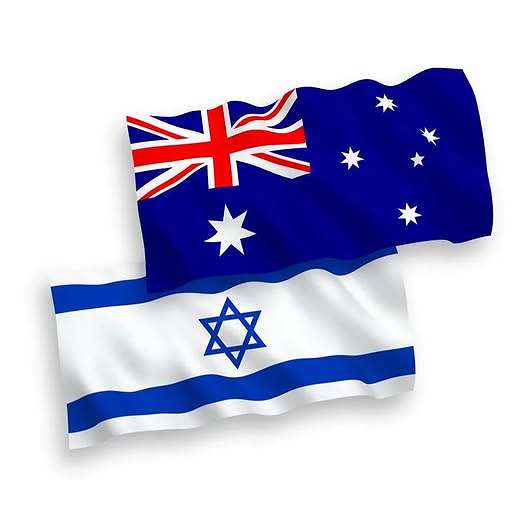
Solidarity Beyond Borders: Oromo Community’s Call for Unity
FOR IMMEDIATE RELEASE
Melbourne’s Oromo Community Stands in Solidarity with Jewish Australians After Bondi Attack
MELBOURNE, VIC – 19 December 2025 – The Oromo Community in Melbourne has issued a powerful statement of solidarity and support for the Australian Jewish community following the horrific antisemitic terror attack on peaceful Chanukah celebrations in Bondi.
The statement expresses the community’s profound grief and unwavering support for the victims, their families, and all those impacted by the tragedy. “Our deepest condolences, sympathy, and love are with the bereaved families, the injured victims, the courageous first responders, and all members of the Jewish and wider Bondi community impacted by this tragedy,” the statement reads.
In a show of national unity, the Oromo community announced it has joined over 200 civil society organisations across Australia in signing a collective statement against hate, representing millions of Australians.
A Call for Unity and Safety
The community’s Chairperson, Mr. Alemayehu Kube, emphasized the shared values of peace and safety. “Love is what fortifies a community, while violence and hatred only destroy,” said Mr. Kube. “There is no place for hatred and violence in any form. We stand shoulder-to-shoulder with the Jewish community, who have an absolute right to feel safe and be safe in our shared country.”
The statement explicitly frames the attack as an assault on the nation’s core principles, calling it “an affront to the tolerance and inclusion that define our national character.” It asserts that the right to safety is universal and “cannot depend on identity, origin, cultural background, age, or gender.”
A Commitment to Action and Reflection
Beyond words of support, the Oromo community has committed to tangible action, stating it is “committed to deep reflection and meaningful action” in the face of such evil. The statement highlights the long-term trauma of such events, especially for children and families, and calls for a collective national response.
“In this difficult moment, we call on all Australians to come together as one united people,” the statement urges. “Our strength has always resided in our diversity—in people of all faiths and cultures, from over 236 backgrounds, standing side by side in empathy and mutual respect.”
The message concludes with a hopeful vision, advocating for a response of compassion over fear and unity over division. “May we support one another, honour those who have been impacted, and continue building an Australia where every person feels safe, valued, and supported—in both body and mind.”
The full statement from the Oromo Community in Melbourne is available for review.
About the Oromo Community in Melbourne: The Oromo Community in Melbourne represents members of the Oromo diaspora in Victoria, fostering cultural preservation, community support, and active civic engagement within Australia’s multicultural society.
Remembering Professor Hamdeessaa Tusoo: A Legacy of Oromo Advocacy
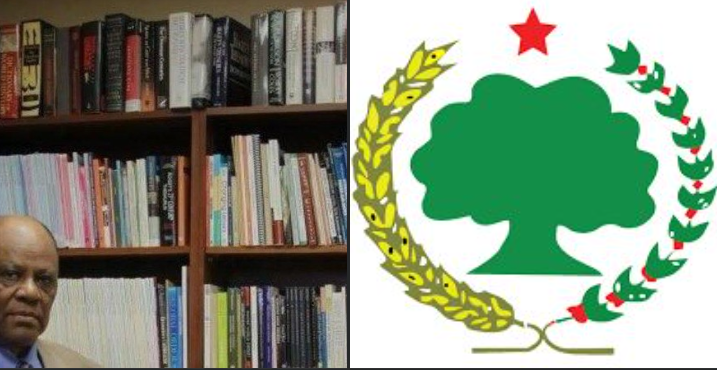
A Message of Condolence from the Oromo Liberation Front (OLF) on the Passing of Professor Hamdeessaa Tusoo
The Oromo Liberation Front (OLF) expresses its profound grief and sorrow upon learning of the passing of the esteemed Oromo scholar, historian, and human rights advocate, Professor Hamdeessaa Tusoo.
Professor Hamdeessaa Tusoo was born and raised in Nageellee Arsi, West Arsi Zone, in the southeastern region of Oromia.
From his youth, Professor Hamdeessaa was a witness to the oppression and resistance of the Oromo people under successive Ethiopian imperial regimes. His personal history reveals that he grew up amidst the struggles of his people, developing from an early age into a resolute individual who refused to be a tool of the enemy’s oppression.
After completing his primary and secondary education, Professor Hamdeessaa pursued advanced studies abroad. He earned a B.A. in History from Avondale College, Australia (1972), an M.A. in Conflict Resolution from Andrews University, USA (1974), and a Ph.D. in Conflict Resolution and Peacebuilding from Michigan State University, USA (1981). His doctoral research focused on conflict resolution, peacebuilding, and the role of Oromo cultural traditions.
Leveraging his academic expertise, he conducted various research projects and served as the Director of International Student Services and Oromo Cultural Affairs at George Mason University (1982–1990), where he engaged deeply with the Oromo diaspora.
His distinguished academic career also included positions as a Professor in the Department of Conflict Resolution at Nova Southeastern University (1998–2004), the Esau Distinguished Visiting Professor of Conflict Resolution at Menno Simons College, University of Winnipeg (2006–2007), and a Professor in the Department of Peace and Conflict Studies at the University of Manitoba (2011–2019).
Among his numerous scholarly publications is the work Creating The Third Force: Indigenous Processes of Peacemaking, which presents the Oromo Gadaa system as a model for other nations.
Professor Hamdeessaa also played a significant role in the Oromo liberation struggle. He collaborated with Oromo activists, both living and deceased—such as Luba Guddinaa Tumsaa, Jaal Baaroo Tumsaa, Professor Muhaammad Hasan, Professor Asaffaa Jaallataa, and others—on matters concerning Oromummaa (Oromo national identity).
Furthermore, he initiated the “Shanachaa Jaarsummaa” (Elders’ Mediation) process (2001–2004) in a long-standing effort to resolve political conflicts within the Oromo liberation movement.
His contributions extended to international advocacy, including his involvement in the “Immigration and Refugee Forum” during the 1980s, which helped secure refugee status for Oromos in the USA, and his participation in the London Peace Conference (1991) aimed at transforming Ethiopia’s political system.
He was also instrumental in founding the Oromo Studies Association (OSA), through which he promoted extensive research and scholarship.
Moreover, as a professor to countless university students, he planted the seeds of peace, human rights, and social change, inspiring many to become advocates and achievers in these fields.
Professor Hamdeessaa Tusoo was an Oromo intellectual born into the Oromo struggle, who matured within it, and strived tirelessly to see the fruits of Oromo liberation. He passed away on November 22, 2025, in Winnipeg, Manitoba, Canada.
The Oromo Liberation Front (OLF) shares in this irreplaceable loss and extends its deepest condolences to his family, relatives, and the entire Oromo nation, wishing them patience and strength.
A fighter falls, but the struggle continues!
Victory to the Masses!
Oromo Liberation Front (OLF)
November 23, 2025
Finfinnee
Oromo Rights Protest Held in London, Demanding International Action on Ethiopia
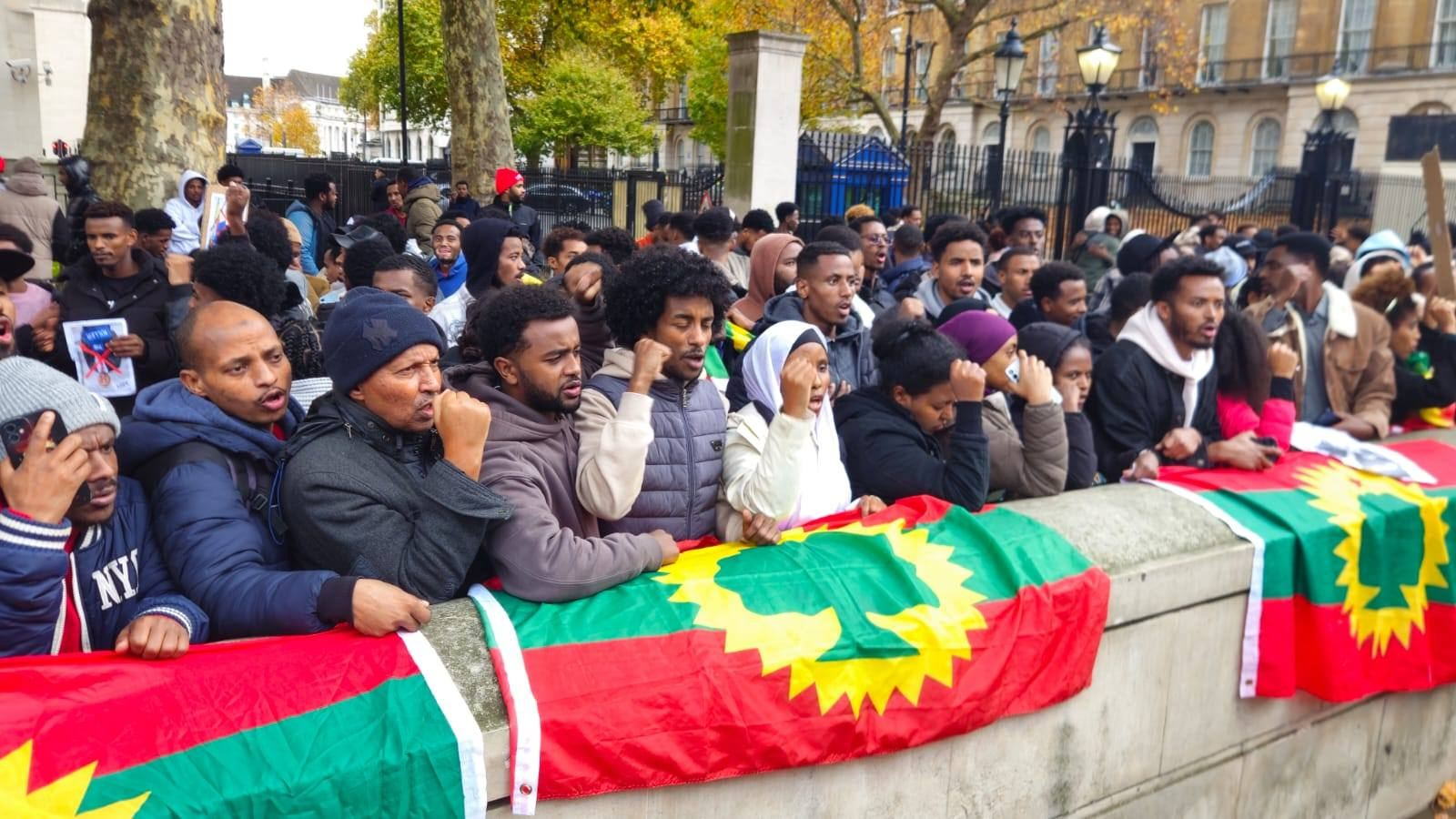
LONDON, UK – December 10, 2025 – A protest organized under the banner “Tumsa Haqa Oromoo” (Support Oromo Rights) was held in London, with participants calling for an end to human rights abuses in Ethiopia and international intervention to halt the ongoing violence in the Oromia region.
According to Dr. Gizaaw Taasisaa, a member of the organizing committee who spoke to OMN, the protest’s key objectives were to condemn the widespread human rights violations and killings targeting the Oromo people, demand an end to the attacks on Oromia’s borders, and urge the global community to take decisive action.
Protesters highlighted that the offensive on Oromia’s borders has enabled militias, particularly the “Fino” in Western and Central Oromia, to carry out mass killings against civilians.
Key Demands Presented
As outlined by Dr. Gizaaw Taasisaa, the demonstrators presented several critical demands to the Ethiopian government:
- Immediately halt the forced conscription of children into the military.
- Cease the killings of Oromo civilians.
- End the genocide and the military operations being conducted across Ethiopia.
- Withdraw all forces from Oromia.
Furthermore, protesters called for justice and accountability, demanding:
- The cases of murdered artists and activists, including Haacaaluu Hundeessaa and Battee Urgeessaa, and all other victims be brought to light.
- The unconditional release of all political prisoners in Ethiopia.
- That Ethiopian officials responsible for crimes be brought before international courts.
Focus on Dirree Dhawaa and International Complicity
The protest also specifically condemned the government’s ongoing attacks in the Somali regional state against Oromia. Dr. Gizaaw Taasisaa emphasized that the city of Dirree Dhawaa is historically, legally, demographically, and geographically part of Oromia.
Finally, the demonstrators called on the UK Government and international financial institutions to suspend all financial and diplomatic support to the Ethiopian government. A formal petition detailing these grievances was also submitted to the UK Foreign Office.

 Oromedia