Seventh General Election: OLF’s Strategic Shift to Politics

Oromo Liberation Front Prepares for Seventh General Election, Announces Strategic Pivot
FINFINNEE – In a significant political announcement, the Oromo Liberation Front (OLF) has declared its readiness to contest in Ethiopia’s upcoming Seventh General Election, scheduled to be held in five months. The party’s announcement signals its intent to transition fully from its historical armed struggle to a peaceful political competition within the nation’s electoral framework.
OLF officials confirmed that the party is undertaking final preparations to meet all the legal and procedural requirements set by the National Election Board of Ethiopia (NEBE) for participation. The statement underscores a pivotal shift: “The OLF, which returned from armed struggle to peaceful political struggle in 2018, announces that it is completing the prerequisites required of it by the NEBE to participate.”
This move represents the most concrete step yet in the party’s often-turbuous journey into mainstream politics since its leadership returned to Ethiopia following the 2018 peace agreement. By affirming it can contest “in places where the National Election Board conducts elections,” the OLF is positioning itself as a nationwide contender, aiming to mobilize its traditional base and beyond.
A Commitment to Democratic Process
A core tenet of the announcement is the party’s stated respect for the will of the Oromo people. “In this Seventh General Election, it is stated that the OLF will respect the vote that its people give it,” the declaration noted. This framing presents the OLF as a democratic entity prepared to accept electoral outcomes, a crucial message for both its supporters and the broader political landscape.
Jaal Jabeessaa Gabbisaa, a party official, emphasized the organization’s commitment, stating, “The OLF will do everything required of it for the Seventh General Election… it is prepared.”
Forging a New Political Identity
The announcement also hints at an internal reorganization and candidate selection process. The OLF indicated it is “placing people who represent it and execute the objectives of the OLF” into candidacy positions. This suggests an effort to build a coherent electoral team that can translate the party’s longstanding objectives into a compelling political platform for the ballot box.
Analysis: A High-Stakes Gambit
The OLF’s participation in the election is a high-stakes endeavor. For the government and international observers, it tests the inclusivity and credibility of Ethiopia’s post-conflict political process. For the OLF, it is a definitive test of its political relevance and organizational capacity in a peaceful, competitive arena.
Success could see the party secure a substantial bloc in parliament, giving it a direct platform to advocate for Oromo interests within the federal system. Failure, or a poor electoral showing, could weaken its influence and spark internal dissent.
The next five months will be critical as the OLF finalizes its registration, campaigns, and navigates the complex electoral environment. Its participation promises to make the Seventh General Election one of the most closely watched and consequential in recent Ethiopian history, a direct measure of whether a historic armed movement can successfully reinvent itself as a potent political force.

Gadaa Assembly: Reviving Oromo Identity and Democracy

Gadaa Assembly in Harar Champions Oromo Identity, Peace, and Pre-Colonial Democracy
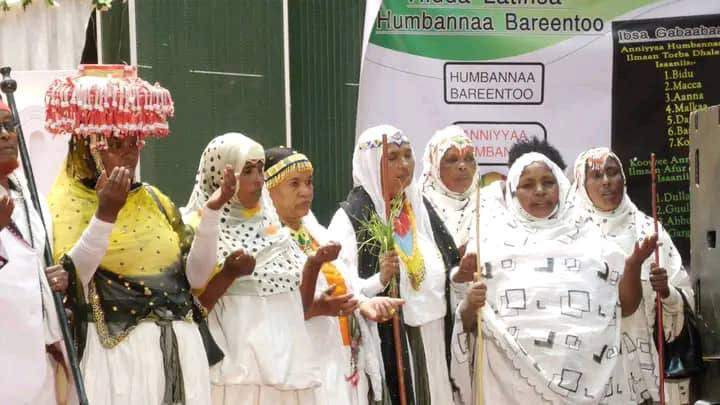
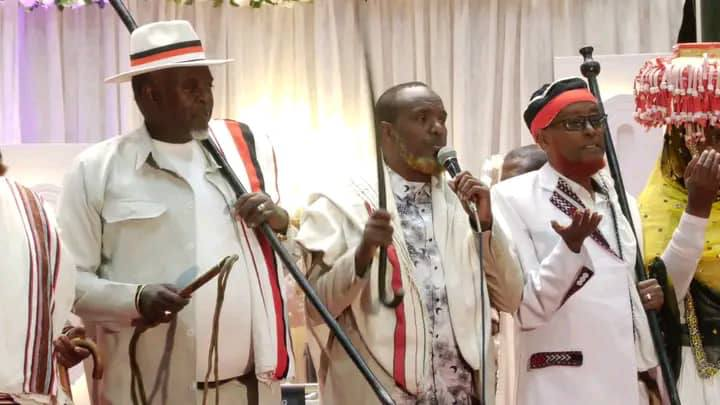
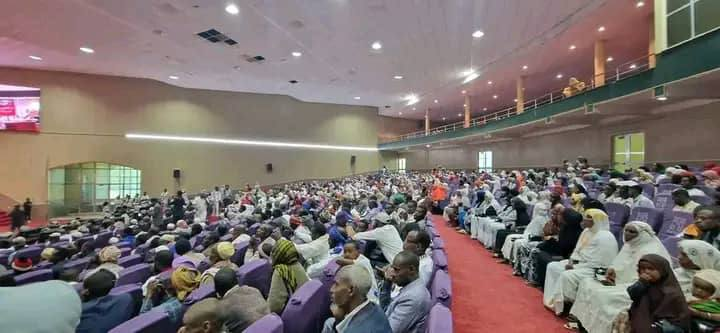
HARAR, OROMIA – In a vibrant display of cultural continuity and unity, the Gumii Gadaa (Gadaa Assembly) of the Humbannaa Bareentoo Oromo generation was held in the historic city of Harar. Convening under the theme “Gadaa is Oromo Identity, Equality, Peace, and Justice,” the assembly brought together diverse Gadaa councils and a broad public audience to reaffirm the enduring values of the indigenous Oromo governance system.
The significant gathering saw the participation of leaders from three major Oromo Gadaa lineages: the Abbootiin Gadaa Humbannaa, Abbootiin Gadaa Afran Qalloo, and Abbootiin Gadaa Ituu. The event served as a powerful platform to discuss Gadaa’s role as a bedrock of social order and a precursor to modern democratic ideals.
Gadaa as a Foundational System of Equality and Governance
Addressing the assembly, Abbaa Gadaa Humbannaa Bareentoo, Gugsaa Ibsaa, articulated the system’s core philosophy. He stated that the Gadaa system is the framework through which all human beings are born equal and should live as equals—a principle embedded in its social and political structures.
“Peace is essential for everyone, and therefore, paramount attention must be given to peace,” Abbaa Gadaa Gugsaa emphasized, highlighting the system’s intrinsic link to stability and social harmony. He further described Gadaa as a system of “development, unity, brotherhood, and love.”
Official Recognition of Historical Contribution
Regional officials acknowledged the profound historical and contemporary relevance of the Gadaa system and the Oromo people.
Mr. Naasir Ahmad, Head of the Harari Regional Culture, Sports, and Tourism Bureau, praised the Humbannaa Bareentoo lineage for playing a distinctive and vital role in the struggle and interests of the Oromo people throughout history.
He also made a striking historical assertion, noting that “the Gadaa system was an example of democracy before the concept of democracy itself [existed in the region].”
Echoing this sentiment, Ms. Sa’aada Abdurahman, Head of the East Hararghe Zone Culture and Tourism Bureau, reminded attendees that the Oromo people have lived for centuries with their own history, language, culture, and self-governing Gadaa system.
She provided a compelling timeline, asserting that “the Oromo people governed themselves with the Gadaa system for over 700 years,” and that this system predates the democracies currently practiced in Western nations by some 200 years.
A Convergence of Leadership and Legacy
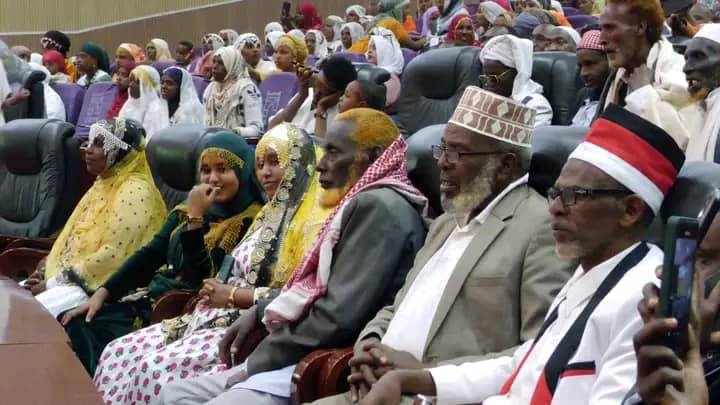
The assembly was attended by senior leadership from the Harari Regional State and East Hararghe Zone, alongside delegations from the three participating Gadaa councils and numerous invited guests.
The convening of this Gadaa assembly in Harar—a city emblematic of Ethiopia’s rich Islamic and cultural heritage—signifies a strengthening cross-cultural recognition of the Oromo system. It reinforces Gadaa not as a relic of the past, but as a living, breathing institution that offers timeless principles of egalitarianism, peaceful coexistence, and cyclical leadership.
By framing Gadaa as both the core of Oromo identity and a pioneering democratic model, the Humbannaa Bareentoo assembly serves as a potent reminder of Ethiopia’s deep and diverse wells of indigenous governance knowledge, now receiving renewed scholarly and official appreciation.
The Legacy of Oromo Founders: Unfinished Business
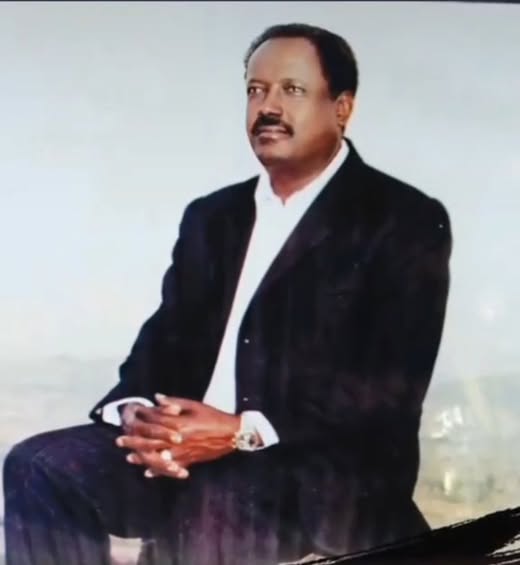
Feature Commentary: The Unclaimed Inheritance – On the Unfinished Debt to Oromoo’s Founders
In the sacred narrative of the Oromo struggle, certain names are whispered with reverence, not merely as historical footnotes, but as living accusations against the present. The story of Hotel Jibaat and Maccaa, and the founding father Ob. Beellamaa Futtaasaa, is one such story. It is not a eulogy for the departed; it is a mirror held up to the community, revealing an unsettling and unresolved question of legacy, debt, and collective conscience.
The tale is stark in its simplicity. When the modern Oromo political struggle was ignited in Ambo, it was men like Ob. Beellamaa Futtaasaa—owners of the Hotel Jibaat and Maccaa—who provided the crucial, tangible infrastructure. Their support was not passive sympathy; it was the active, risky bedrock upon which early organizing was built. Their hotel was not just a business; it was a sanctuary, a meeting hall, a nerve center for the nascent Oromo Liberation Front (OLF). They were, as the text states, “hundeessitoota”—foundational pillars—who stood with the architects of the political dream.
The piercing tragedy, however, lies in the chilling coda to this foundation story: “Today… their descendants are in want.”
This single line unravels a profound moral and social contradiction. The children and grandchildren of those who provided the deeggarsa qabsoo hidhannoo—the support that sustained the struggle in its most fragile, clandestine phase—are now left struggling. Their material inheritance has seemingly evaporated, and the immense social capital of their forefathers’ sacrifice has not translated into security or dignity. The comparison drawn is as painful as it is deliberate: while the children of other heroes (like Ob. Daraaraa) are seen to have flourished, the lineage of Beellamaa Futtaasaa faces neglect.
This is more than a family’s hardship. It is a fracture in the very covenant of the struggle. A movement built on principles of justice, self-determination, and collective upliftment now stands accused of failing its most immediate creditors—the families of its earliest benefactors. The hotel that once housed the dream now symbolically stands empty for its heirs.
The commentary this situation demands is multifaceted:
First, on the Nature of Sacrifice: The story forces a reckoning with what we value in our history. We glorify the martyr on the battlefield and the political theorist, but often forget the enabler—the one who risked property, livelihood, and safety to create the space for the movement to breathe. Their contribution, though less cinematic, was equally vital. By forgetting them, we create a hierarchy of sacrifice that is both unjust and historically myopic.
Second, on the Ethics of Legacy: Every revolutionary movement eventually grapples with the transition from struggle to governance, from resistance to responsibility. A core part of that responsibility is social and historical accountability. Have the structures built by the struggle—whether formal institutions or community networks—developed a mechanism to honor and support the living legacies of its founders? The plight of the Fitaaxaa family suggests a failing grade. It raises the uncomfortable question: does the movement consume its own, leaving the children of its hosts to face the bill?
Third, on Collective Amnesia and Power: There is a dangerous tendency in evolving political movements to become forward-obsessed, to distance themselves from the “old stories” in a rush to claim new ground. But this amnesia is a form of power. It allows new elites to consolidate status while disengaging from the foundational debts that morally bind them. Remembering Beellamaa Fitaaxaa is not nostalgia; it is an act of political hygiene, a check against the corrupting notion that the present leadership owes nothing to the past.
Finally, on the Meaning of Victory: If the ultimate goal of the Qabsoo is nagaa fi bilisummaa—peace and freedom—what does that freedom mean? Surely, it must encompass a community where the descendants of those who poured the foundation are not left destitute. A struggle that cannot care for the children of its first guardians risks winning a hollow prize, a state or a recognition that has lost its moral compass.
The story of Hotel Jibaat and Maccaa is, therefore, an urgent parable. It is a call for the Oromo nation—its leadership, its diaspora, its institutions—to conduct an audit not just of its political strategies, but of its conscience. It is a demand to reclaim that inheritance of collective responsibility.
The physical hotel may be gone, but the debt it represents remains outstanding. Until it is addressed, the struggle’s claim to justice will carry this quiet, haunting contradiction. True victory will not be complete until the heirs of those who housed the revolution are themselves brought in from the cold. The seeds they watered must bear fruit for their own garden as well.
Remembering Obbo Dootii Turaa: A Legacy of Oromo Leadership
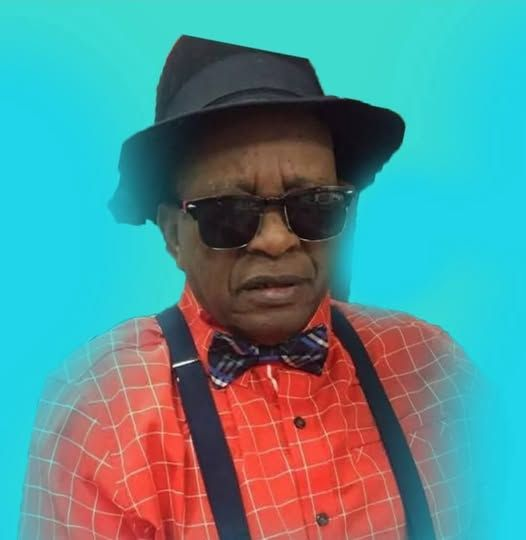
The Oromo Liberation Front (OLF) has announced the passing of the esteemed Oromo freedom fighter and elder, Obbo Dootii Turaa, expressing its profound sorrow at this great loss.
In an official statement, the OLF conveyed that the death of Obbo Dootii Turaa has left them with a sense of deep and immense grief.
Obbo Dootii was born in 1925 in Nageellee Arsi, Arsi West Zone, in the Southeastern part of Oromia. From a young age, he was deeply conscious of his identity. After completing his elementary education, he became a teacher in his home region, serving in Goobee town and later in Maqii, in East Shewa. In this role, he was dedicated to educating his people on various subjects, ensuring they knew their culture and identity, and teaching them about the realities of living under a foreign colonial system.
After moving to Finfinnee (Addis Ababa), he continued his education and, during the reign of Haile Selassie, ventured into business. He built a family home and a business enterprise, and he strategically used the wealth he accumulated to openly support the Oromo struggle for liberation.
He actively participated in the resistance against the feudal regime, taking part in the 1960s student movements and the initial organized resistance. He also supported the Macca and Tuulama Self-Help Association, contributing his professional skills and financial resources in a significant and visible manner.
Furthermore, during a time when few were dedicating themselves to the cause, Obbo Dootii transformed his business into a meeting place for freedom fighters and his family home into a safe house for them. He also provided material support to the Oromo Liberation Army (OLA).
Through his overt and covert work, he collaborated with members and supporters of the OLF, such as the late Luba Guddinaa Tumsaa, Baaroo Tumsaa, Muhee Abdoo, and former OLF High Council member Magarsaa Barii. He was subsequently accused by the oppressive regime of the time and imprisoned for ten years alongside Luba Guddinaa Tumsaa.
Throughout successive Ethiopian regimes—the Haile Selassie monarchy, the Derg, and the TPLF/EPRDF—Obbo Dootii Turaa was repeatedly imprisoned and severely persecuted.
Under the particularly brutal repression of the EPRDF/TPLF/OPDO regime, he was forced into exile, ultimately living as a refugee in the United States.
Obbo Dootii Turaa was a wise Oromo elder, a visionary leader, and a respected authority on Oromo affairs and identity. He remained unwavering in his commitment to Oromo freedom until his final days. He passed away on November 18, 2025, in the United States, at an advanced age after a period of illness.
Remembering Obbo Dootii Turaa: Oromo Freedom Fighter
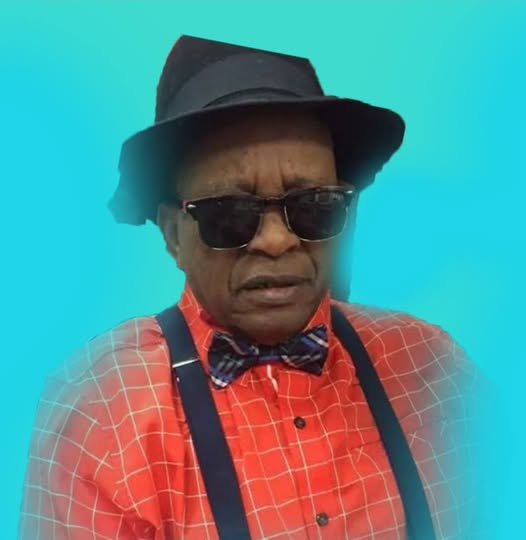
Condolence Statement
On the Passing of Oromo Freedom Fighter and Elder, Obbo Dootii Turaa (1925-2025)
Oromo Liberation Front (OLF)
The Oromo Liberation Front (OLF) expresses its profound and deepest sorrow at the passing of the esteemed Oromo freedom fighter and elder, Obbo Dootii Turaa.
Obbo Dootii was born in 1925 in Nageellee Arsi, Arsi West Zone, in Southeastern Oromia. From a young age, he was deeply conscious of his identity. After completing his elementary education, he became a teacher in his home region, first in Goobee and later in Maqii, in North Shewa. In this role, he was dedicated to educating his people about their culture and history, teaching them about Oromo identity and the realities of living under a colonial system.
After moving to Finfinnee (Addis Ababa), he pursued business during the reign of Haile Selassie. He strategically used the wealth he accumulated to openly support the Oromo struggle for liberation.
He actively participated in the resistance against the feudal regime, taking part in the 1960s student movements and the initial organized resistance, including supporting the Macca and Tuulama Self-Help Association. He was among the few who dedicated their lives to the cause, transforming his business into a meeting place for freedom fighters and his home into a safe house. Furthermore, he provided material support to the Oromo Liberation Army.
Through his overt and covert work, he collaborated with members and supporters of the OLF, such as the late Luba Guddinaa Tumsaa, Jaal Baaroo Tumsaa, Jaal Muhee Abdoo, and former OLF High Council member Jaal Magarsaa Barii. He was subsequently accused by the oppressive regime of the time and imprisoned for ten years alongside Luba Guddinaa Tumsaa.
Throughout successive Ethiopian regimes—the Haile Selassie monarchy, the Derg, and the TPLF/EPRDF—Obbo Dootii Turaa was repeatedly accused, imprisoned, and severely persecuted. Under the particularly brutal repression of the EPRDF/TPLF/OPDO regime, he was forced into exile, ultimately living as a refugee in the United States.
Obbo Dootii Turaa was a wise Oromo elder, a visionary leader, and a respected authority on Oromo affairs and identity. He remained unwavering in his commitment to Oromo freedom until his final days. He passed away on November 18, 2025, in the United States, at an advanced age after a period of illness.
The Oromo Liberation Front (OLF) conveys its heartfelt condolences and shares in the grief of his family, relatives, and the wider Oromo nation. We pray for strength and resilience during this difficult time.
A Fighter Falls, The Struggle Continues!
Victory to the Masses!
Oromo Liberation Front (OLF)
November 18, 2025
Finfinnee
 Oromedia