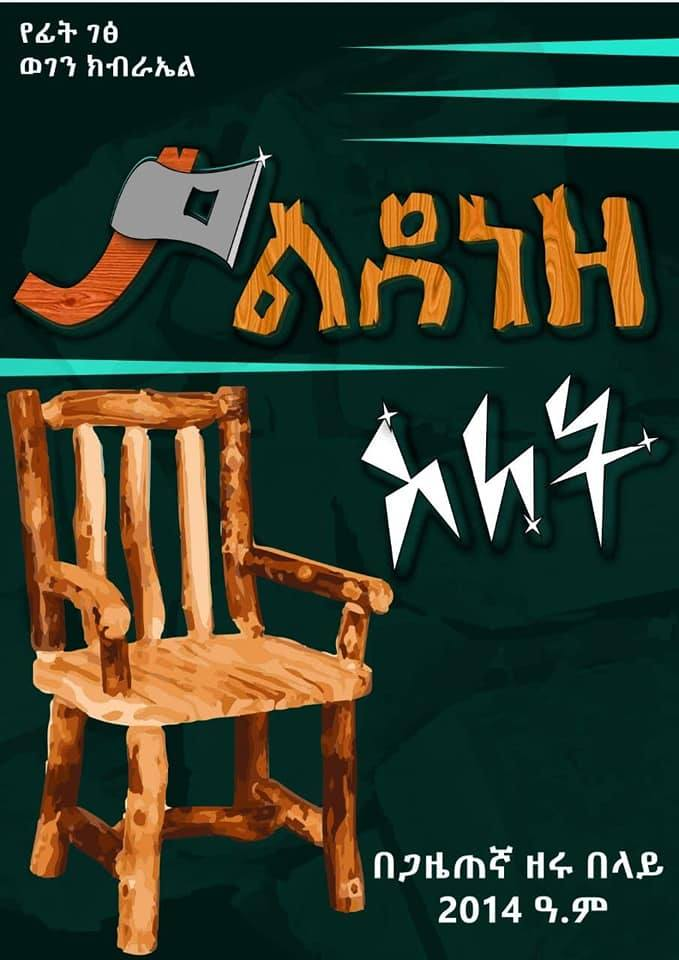
In a searing personal account, the veteran reporter reveals how governments from Meles Zenawi to Abiy Ahmed have manipulated, intimidated, and suppressed independent journalism
ADDIS ABABA — For three decades, Zeru Belay worked inside the belly of the beast. As a reporter, editor, and finally a senior figure at Ethiopian Television, he witnessed firsthand how successive regimes turned the state broadcaster into an instrument of control rather than a source of information. Now, in a lengthy and devastating personal account, he has pulled back the curtain on the systematic manipulation that has defined Ethiopian media for generations .
“Among the institutions the government controls through its officials, extending its hand deep into their operations, state media are at the forefront,” Belay writes. “And Ethiopian Television, which until recently was the only broadcaster, has attracted the most attention from government officials. If I said that Ethiopian Television is the leading institution where officials use their authority to interfere, I would not be exaggerating” .
The Meles Zenawi Era: When a Reporter’s Words Became a Crime
Belay’s account begins with a chilling anecdote from the Meles Zenawi era that illustrates the impossible position of journalists under authoritarian rule .
He was assigned to cover a discussion between Prime Minister Meles Zenawi and Addis Ababa University professors. When Meles made a remark suggesting the professors seemed “stuck in a garrison mentality,” Belay reported it as news. The report aired, and the next day, the country was in an uproar .
Belay was summoned by his manager, Assefa Bekele, and told they needed to visit Berket Simon, a senior official. At the office, Berket was “consumed by rage.” He rushed the assembled media professionals to Meles’s parking garage—a secure area that felt less like a meeting place and more like an interrogation room .
There, surrounded by security, Berket demanded to know why Belay had aired Meles’s remark. When Belay responded, “I don’t understand what mistake I made,” Berket’s anger intensified. “How can you say you don’t understand? You’re making news by snatching words from people’s mouths and you say you don’t understand?”
Belay stood his ground: “Unless I fabricated it myself, what is my mistake? Didn’t Ato Meles say those words?”
Berket then shifted tactics: “The words Ato Meles spoke are not your fabrication. He spoke them correctly. But how did you, as a responsible journalist, fail to consider why he said them?”
The argument continued, with Belay alone defending himself while other journalists and officials remained silent. Finally, Berket asked a question designed to destroy: “How are you different from a blogger?” At the time, bloggers were considered troublemakers by the government .
Belay understood he had reached the edge. “I realized nothing I said would help. If this man falls on me, or I fall on him, I would be the one to break.” He conceded: “I should have considered what you said.”
The resolution was telling. Belay was told a program would be produced presenting Meles’s full remarks. When he submitted the script, Berket reviewed it carefully and approved it. “At least the media will gain credibility,” he said. But Belay had been placed on a blacklist for simply reporting what the Prime Minister said .
The Price of Truth: Threats and Blacklists
Belay’s account reveals that journalists who reported uncomfortable truths paid a price—even when those truths came directly from the mouths of the most powerful officials. His “crime” was not fabrication or distortion, but failing to “consider” why Meles said what he said—in other words, failing to self-censor in advance .
This created an impossible professional environment. Journalists could not simply report what officials said; they had to anticipate how their words might be received, what interpretations might be drawn, and whether reporting the truth would be seen as a betrayal. The journalist’s duty to inform became subordinate to the official’s desire to control narrative and perception .
A Leader Who Protected Journalists: The Solome Tadesa Story
Yet Belay’s account also reveals that even within this oppressive system, some officials protected journalistic integrity at tremendous personal risk .
During a period of student unrest at Addis Ababa University in 1993 E.C. (2000/01 G.C.), Belay and colleague Shelesh Shibru were sent to cover the protests. When they arrived, police initially blocked them, but they persuaded the commander to let them in .
Inside, they found a student who had been beaten and was bleeding. When they tried to document it, some students objected: “We won’t allow you to mock our blood! We know you!” A heated debate divided students—some supporting coverage, others opposing .
Those supporting coverage prevailed, and Belay documented the blood and the damaged dormitory. Returning to the office, they reported to their editor, Solome Tadesa. After viewing the footage, Solomon insisted the blood must air. When Belay and Shibru tried to argue, Solome held firm: “By no means should the blood be omitted, but add doctors’ commentary about the injury”.
The report aired, and the protests spread nationwide—to Alemaya University, Jimma University, and beyond. Then-Minister of Education Genet Zewdie called Solomon with a threatening message: “Because of the blood you showed, all the country’s students have risen. Congratulations.”
Solome’s response was remarkable: “We broadcast the truth. If you want to harm anyone, you can do whatever you want to me—but don’t let anything happen to the journalists.”
Belay reflects: “We had a leader who would defend journalists like that. But they didn’t last.”
Government Interference Without Limit
Belay’s decades of experience at Ethiopian Television newsroom taught him that interference from officials is constant and without limit. As a result, journalists face immense challenges in maintaining their professional independence .
He describes rising through the ranks to become an editor—a role that involves shaping news, ensuring proper packaging, and supervising evening broadcasts. At every level, he witnessed how officials’ interests determined what Ethiopians could see and hear .
The pattern Belay describes is consistent across regimes: journalists who report uncomfortable truths face intimidation, blacklisting, and threats. Those who survive learn to anticipate what officials want—to self-censor before anyone has to tell them. The result is media that serves power rather than the public.
Who Is Zeru Belay?
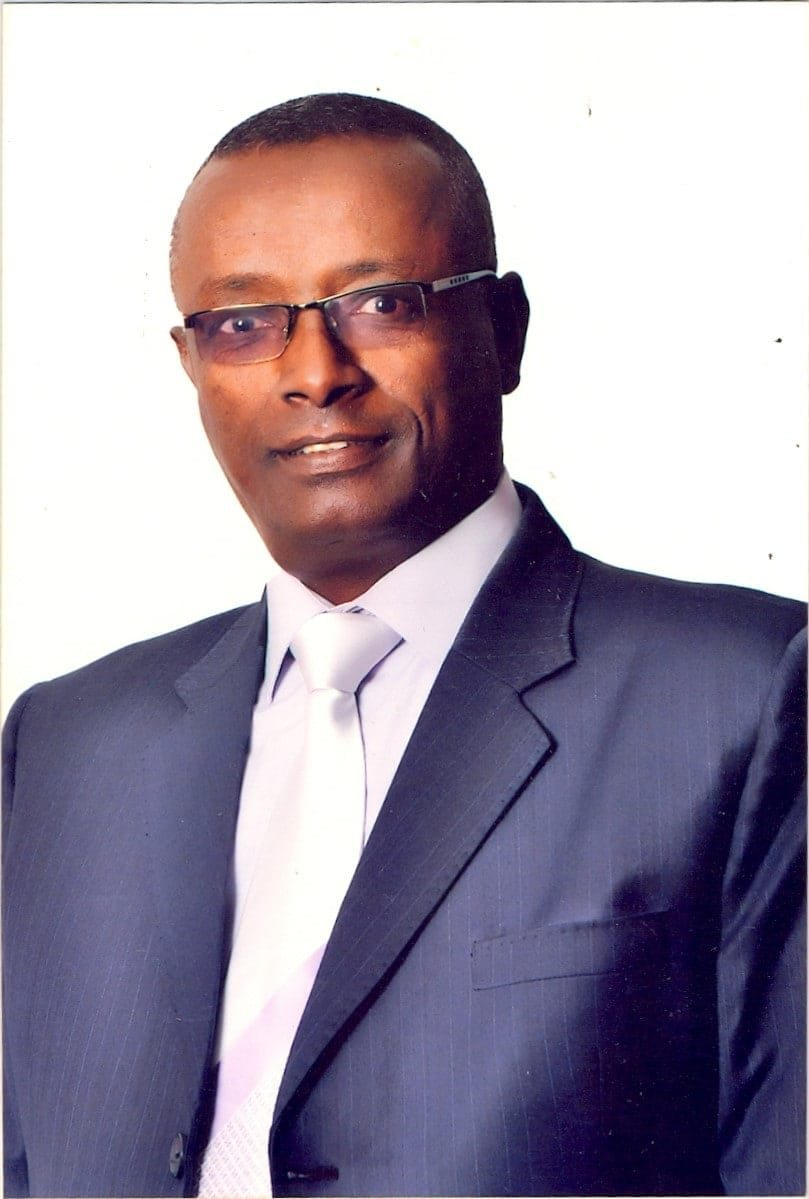
Belay concludes his account with a brief autobiography, grounding his critique in the lived experience of a man who rose from humble beginnings to become one of Ethiopia’s most experienced journalists .
Born in Woreilu, Wollo Province, in the Jama district, in a place called Aley, Belay began his education in Degolo town under a traditional teacher (nebab bet) before attending Degolo Elementary School. He completed junior secondary in Degolo and secondary at Woreilu Comprehensive Secondary School .
When his matriculation results weren’t as expected, he left Wollo for Addis Ababa, where he used tailoring skills learned from his father to earn money selling second-hand clothes on the street. But national military service was announced, disrupting his plans. After trying to avoid conscription, he eventually served, receiving officer training and being commissioned as a lieutenant in the Tigray front, 16th Division, 120th Brigade, in Adigrat .
After four years, he was discharged in Pagume 1981 E.C. (September 1989 G.C.). He then joined EPRDF and worked in security at the transitional conference that established the new government .
Later assigned to Radio Ethiopia, he began his journalism career. Without ever producing a radio program, he was transferred to Ethiopian Television, starting as a reporter. Over 30 years, he has worked across the country, produced numerous reports on transportation problems, traffic accidents, forest and wildlife conservation, agricultural modernization, and many other topics .
He holds a diploma from the former Mass Media Training Institute and a degree in Journalism and Communication from Addis Ababa University, specializing in broadcasting, graduating with good grades. He has also taken short courses in Ethiopia and abroad .
“A Country Without Freedom”
Belay’s account, published under the headline “A Country Without Freedom,” offers a rare insider’s perspective on how Ethiopian media has been systematically captured by political power. From Meles Zenawi’s era through the present, the pattern remains consistent: journalists who tell uncomfortable truths pay a price; those who learn to anticipate official desires survive; and the public is denied the information it needs for genuine democratic participation .
The title encapsulates his verdict on Ethiopia’s political condition: a country without freedom, where even reporting the words of the most powerful can land a journalist on a blacklist, and where those who defend journalistic integrity are eventually pushed out .
Contemporary Relevance
Belay’s historical account resonates powerfully with Ethiopia’s current media landscape. As reported separately, the Ethiopian Media Authority revoked Addis Standard’s license on February 24, 2026, alleging “repeated violations of media ethics, national laws, and the country’s national interests” —the same vague charges that have been used for decades to silence independent voices .
International press freedom organizations have condemned Ethiopia’s escalating repression, with the Committee to Protect Journalists counting 12 journalists behind bars—among the worst in Africa. Ethiopia now ranks 145th out of 180 countries in the 2025 World Press Freedom Index, falling into the “very serious” category .
As Belay’s account makes clear, this is not a new development but the continuation of a long pattern. From Meles Zenawi through Abiy Ahmed, Ethiopian governments have treated media as an instrument of control rather than a public service. Journalists who refuse to comply face intimidation, blacklisting, and imprisonment. The public, deprived of independent information, cannot meaningfully participate in democratic life .
Conclusion: The Struggle Continues
Belay concludes his account by noting that despite 30 years in journalism, navigating countless ups and downs, he continues working. But his testimony stands as both a warning and a call: a warning about how thoroughly state media can be captured by power, and a call for the independent journalism Ethiopia desperately needs .
The stories he tells—of reporters threatened for simply reporting leaders’ words, of editors who defended truth at great personal risk, of officials who manipulated news to serve their interests—reveal a media system that has never been allowed to serve its proper function. Until that changes, Ethiopia will remain, in Belay’s words, “a country without freedom.”
 Oromedia