Calgary’s Oromo Festivities: Heritage and Liberation Celebration

Oromo Community in Calgary Celebrates WBO Day and Amajjii Festival with Cultural Pride
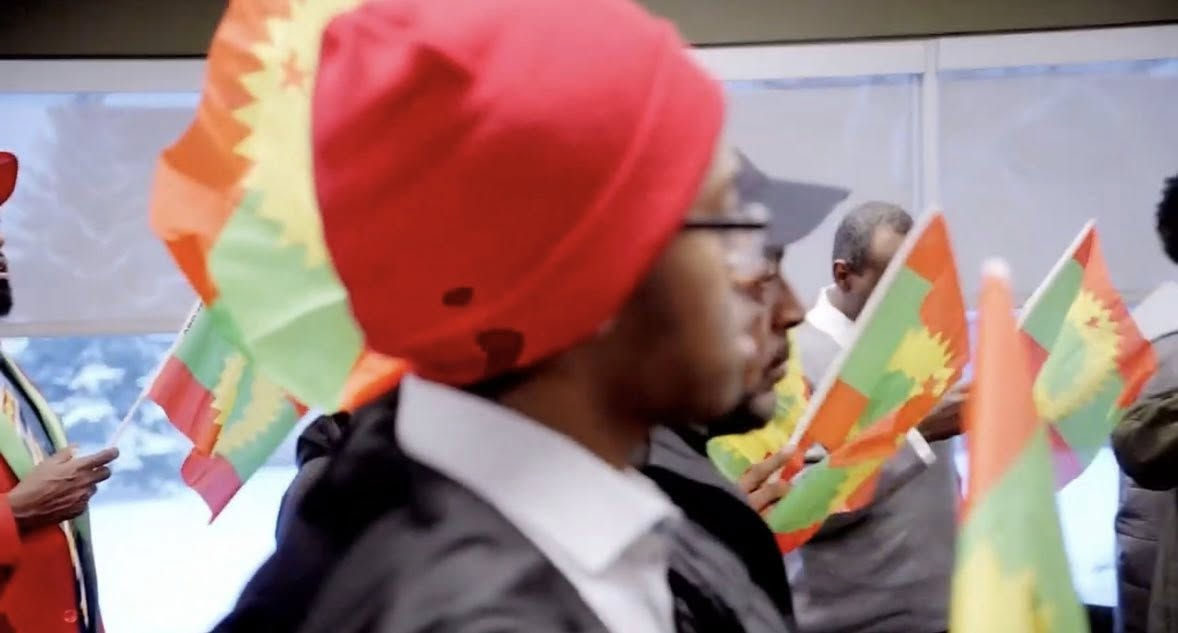
28 January 2026, CALGARY, CANADA – The Oromo community in Calgary gathered this past weekend for a vibrant celebration of WBO Day (Waaqeffannaa, Boorana, and Oromo Heritage) and the traditional Amajjii festival. The event, held with great enthusiasm, served as both a cultural celebration and a reflection on the Oromo liberation struggle.
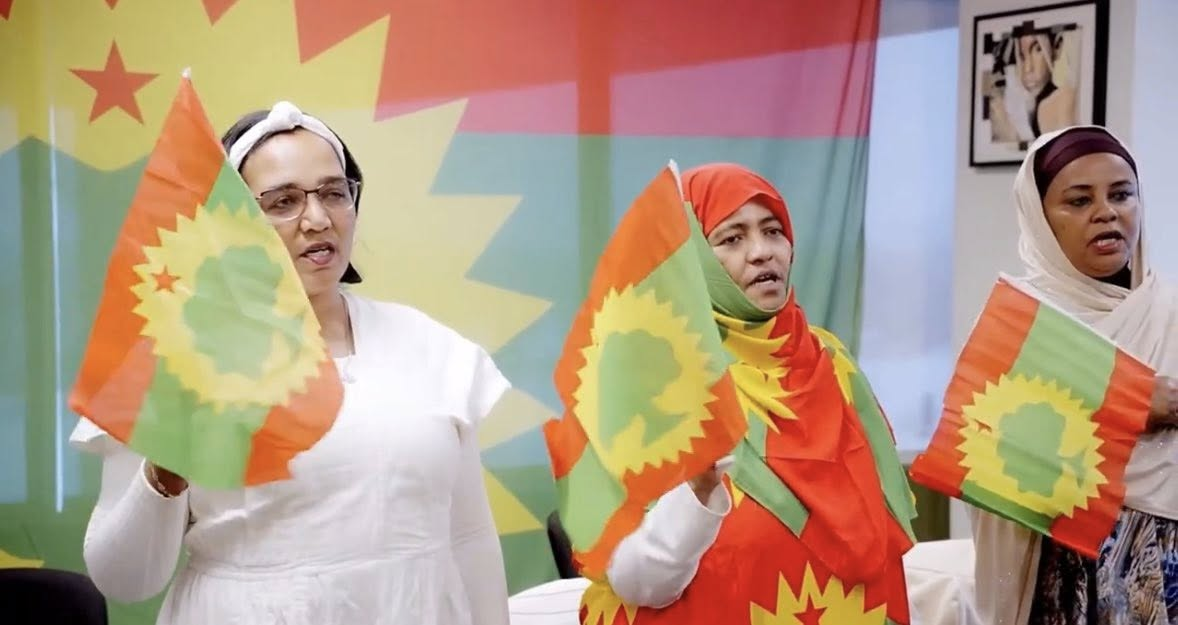
The festivities highlighted the spiritual and cultural significance of Amajjii, celebrated in accordance with the traditions of the Oromo Liberation Front (OLF). Speeches and presentations honored the legacy of past sacrifices in the Oromo freedom struggle, connecting the diaspora to ongoing narratives of resilience.
A powerful moment occurred as the Oromo flag was raised, drawing applause and reverence from the audience. Organizers used the gathering to educate the community about the enduring history and ongoing journey of the Oromo people’s quest for freedom.
“This event is about preserving our identity, honoring our heroes, and uniting our community across borders,” said one of the event’s organizers. “It is a day of both celebration and solemn remembrance.”
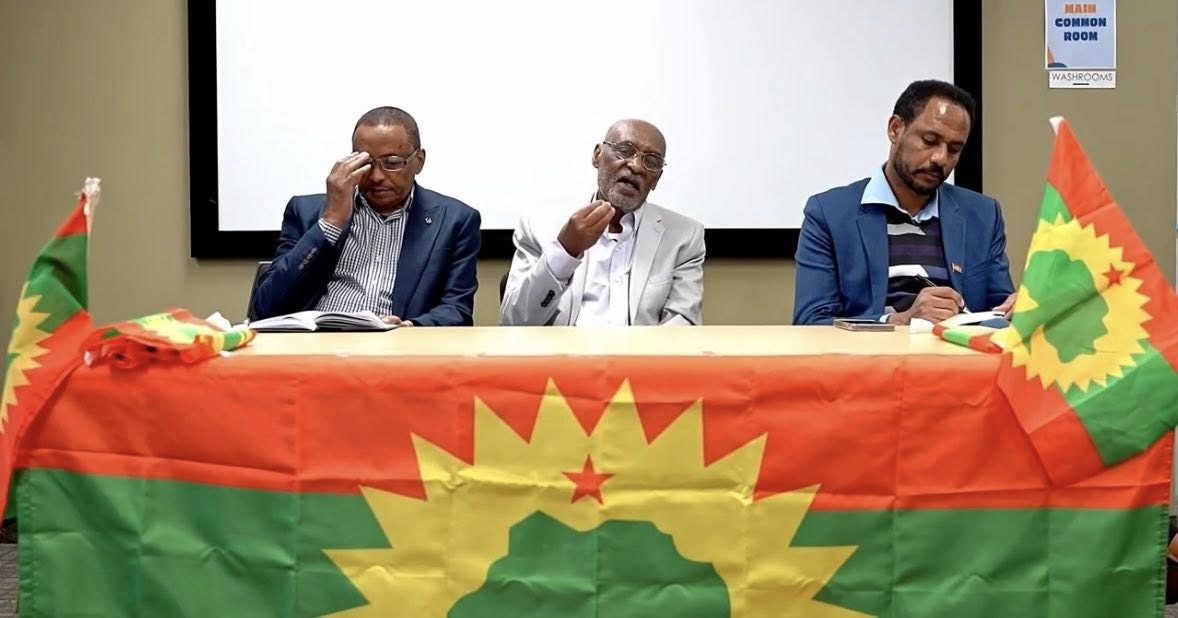
The celebration featured traditional Oromo music, dance, and poetry, transforming the venue in Calgary into a hub of cultural pride and collective memory. The event successfully reinforced cultural bonds for Oromos in diaspora while affirming their support for the cause of self-determination back home.

US-Ethiopia Accord: Unpacking the Anti-Terror Strategy

A Strategic Embrace: Reading Between the Lines of the US-Ethiopia “Anti-Terror” Accord
By Maatii Sabaa
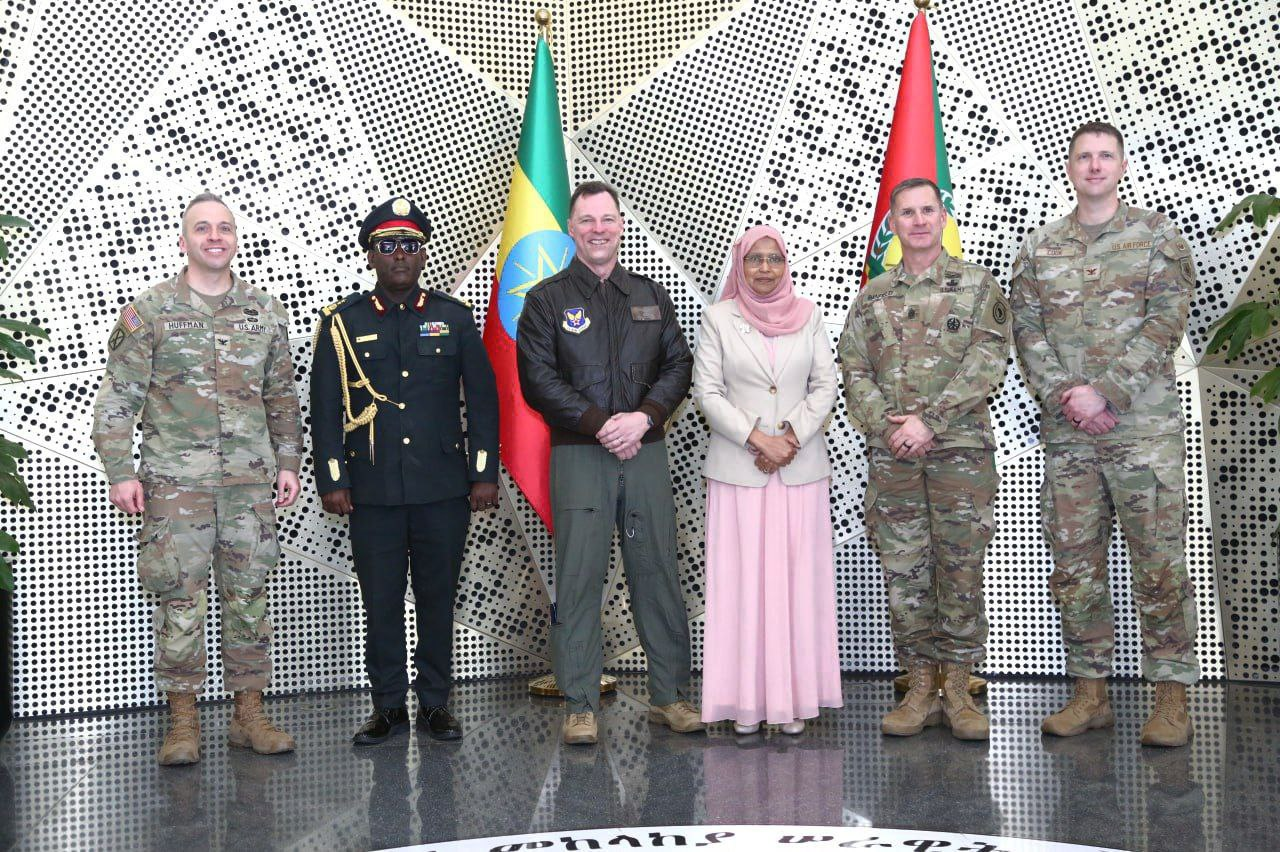
This week, the corridors of power in Addis Ababa hosted a meeting that was, on the surface, all about forward momentum. Ethiopian Defense Minister Engineer Aisha Mohammed received United States Africa Command (USAFRICOM) Commander General Dagvin Anderson, and the subsequent joint statement was a masterclass in diplomatic phraseology. The two nations, we are told, agreed to elevate their “growing diplomatic and military relations into a higher strategic partnership,” reaffirmed a shared commitment to “peace and security,” and—most pointedly—pledged to “jointly combat terrorism to safeguard their respective national interests.”
The language is smooth, strategic, and designed for international news wires. Yet, in the complex geopolitical theater of the Horn of Africa, such declarations are never just ink on paper. They are seismic signals, revealing shifting tectonic plates of influence, ambition, and realpolitik. To understand this meeting, one must read not just the statement, but the subtext, the timing, and the unspoken needs of both parties.
For the United States, represented by the commander of its African military umbrella, the engagement is a calibrated re-engagement. Ethiopia, long a cornerstone of US strategy in the region, experienced a profound rupture in relations following the Tigray War. The meeting signals a deliberate American pivot: from a posture of pressure and sanctions to one of renewed partnership, albeit with a clear, security-first agenda. The framing of “combating terrorism” provides a mutually acceptable chassis for this rebuilt relationship. It allows the US to re-establish critical military-to-military ties, secure influence in a strategically vital nation bordering volatile regions, and counter the deepening foothold of rivals like Russia and China. General Anderson’s presence at the 90th anniversary of the Ethiopian Air Force was not merely ceremonial; it was a symbolic reinvestment in a key institutional partner.
For the Ethiopian government of Prime Minister Abiy Ahmed, the benefits are equally compelling, but stem from a position of seeking consolidation. Emerging from a devastating internal conflict and facing persistent security challenges—from insurgent groups in Oromia to tensions with neighboring Somalia—Addis Ababa craves international legitimacy and material support. A publicized strategic partnership with the world’s preeminent military power serves both ends. It burnishes the government’s diplomatic standing, frames its internal conflicts through the lens of a global “war on terror,” and potentially unlocks access to security assistance, intelligence sharing, and diplomatic cover. The phrase “safeguard their respective national interests” is crucial here; it acknowledges Ethiopia’s sovereign prerogative to define its threats, while America gains a partner in regional stability.
However, the term “terrorism” in this context is a Pandora’s Box. Who defines it? Which groups fall under this banner? The agreement risks providing international sanction for the domestic suppression of political dissent or armed resistance movements, branding them as terrorists in the name of shared security. This has profound implications for human rights and political negotiation within Ethiopia. Critics will argue that such pacts can embolden securitized approaches to complex political problems, prioritizing military solutions over dialogue and reconciliation.
Ultimately, the Addis Ababa meeting is a transaction. The United States gains a relaunched strategic foothold. Ethiopia gains validation and support. The glue binding the deal is a shared, if vaguely defined, enemy: “terrorism.” While the language speaks of peace and partnership, the underlying calculus is one of hard-nosed interest. The test of this new chapter will not be in the warmth of high-level meetings, but in the concrete actions that follow. Will it lead to greater stability and rights-respecting security in Ethiopia, or will it simply militarize a troubled landscape under a new banner of cooperation? The joint statement opens a door; what walks through it will define the true meaning of this strategic embrace.
Honoring Ob Mama Argoo: A Pillar of Oromo Community in Seattle

A Pillar in the Diaspora: The Deep Loss of Ob Maammaa Argoo and the Meaning of Home
By Maatii Sabaa
A community’s strength is often measured in its quiet pillars—the individuals who don’t just inhabit a space, but who become synonymous with its heartbeat, its memory, and its sense of home. When such a pillar falls, the tremor is felt across oceans, reaching from a neighborhood in Seattle to the soul of a global nation. The recent, stark announcement from the Oromo community carries this profound weight: “OROMOON har’a nama jabaa tokko dhabne; Keessumattu Oromoon Seattle, Ob Maammaa Argoo dhabnee jirra. Ob Maammaa Argoon Abbaa Margituu Argoo ti.” (Today, the Oromo people have lost a strong one; Especially we, the Oromo of Seattle, have lost Ob Mama Argoo. Ob Mama Argoo is Abbaa Margituu Argoo.)
This is more than an obituary. It is a communal acknowledgment of a foundational fracture. The title “Ob” or “Abbaa” is not given lightly; it denotes fatherhood, leadership, and a gravitas earned through steadfast presence. He was not just a resident of Seattle, but a cornerstone for Oromoon Seattle, a vital node in the vast diaspora network that sustains Oromo culture, politics, and mutual aid far from the physical borders of Oromia.
The loss of such a figure in the diaspora cuts with a unique sharpness. For a community shaped by displacement, struggle, and the constant work of preserving identity in a foreign land, people like Ob Argoo are more than leaders. They are living archives and architects. They are the ones who remember the names and stories of new arrivals. They are the organizers behind cultural festivals that transform a community hall into a pocket of Oromiyaa for an evening. They are the first call in times of crisis—whether it’s navigating a bureaucratic system or mourning a loss back home. They become the embodied answer to the unspoken question: Where is our home here?
Abbaa Margituu Argoo—Father of Margituu Argoo—this final identification roots him in the most sacred of Oromo traditions: lineage and relational identity. Even in announcing his passing, the community defines him by his cherished role as a father, reminding us that the strongest community pillars are always, first, pillars of a family. His strength (“nama jabaa”) was likely not the loud, theatrical kind, but the resilient, reliable strength of a great tree: providing shade, stability, and a point of orientation for all who gathered beneath.
His passing leaves a silence that is both personal and structural. Who will now hold the intricate web of connections with the same familiarity? Who will offer that specific, grounding wisdom that comes from having witnessed decades of the community’s joys and struggles in this particular city? The grief expressed is for the man, undoubtedly, but also for the irreplaceable role he occupied—a role that represents the very glue of diaspora life.
In mourning Ob Maammaa Argoo, the Oromo community of Seattle, and indeed the wider Oromo nation, confronts a poignant truth about diaspora. The greatest assets are not buildings or institutions, but the living human repositories of memory, commitment, and unwavering presence. The work of a community is to build upon the foundation such individuals leave behind, to ensure that the “home” they helped construct does not crumble with their passing.
Today, Seattle feels less like home for many. But in their collective grief and in the powerful, simple act of naming his loss and his title, they perform the very culture he helped sustain. They affirm that an Oromo community exists, that it feels its losses deeply, and that it honors its fathers. Ob Maammaa Argoo’s legacy is not just in what he did, but in the palpable space his absence reveals—a space that testifies to the immense weight of the presence that once filled it. May his roots nourish the generations that follow.
 Oromedia