Community Mourns Visionary Mentor Guy Moon

NEWS RELEASE: A Community Mourns the Tragic Loss of Visionary Mentor Guy Moon
It is with profound sorrow that we share the news of the tragic passing of Guy Moon, a beloved patriarch, husband, father, and a visionary figure in media and faith communities. Mr. Moon was killed in a traffic collision on Thursday morning.
In a heartfelt statement, his family expressed their deep grief and the profound impact of their loss: “We are overcome with grief to announce the passing of our beloved patriarch, Guy Moon… We feel singularly blessed to have been able to call him dad and husband.” Acknowledging the immense pain, they drew strength from his own legacy, stating they are “emboldened to grieve him with honor and courage with the tools that he equipped us with in his beautiful life.”
The family tentatively plans to celebrate his life on his birthday, February 7th, in the Los Angeles area, with a later gathering in his hometown in Wisconsin. Details will be shared as they become available.
A Legacy of Faith and Mentorship
News of his passing has sent waves of grief through a wide network of friends, colleagues, and those he served. Dhaba Wayessa, a close friend and brother in Christ, shared a moving tribute highlighting Guy Moon’s remarkable spirit.
“I am deeply shocked and heartbroken to hear of the passing of my brother in Christ, Guy Moon… Guy was a man of vision, faith, and generous courage,” Wayessa stated.
He specifically recalled Moon’s transformative initiative in 2011, when he coordinated the LA Media Mission Team and traveled to Ethiopia. There, in collaboration with Sandscribe Communications and Mekane Yesus Seminary, he dedicated himself to serving and mentoring young media students.
“His commitment to equipping others, especially emerging storytellers, left a lasting imprint that continues to bear fruit,” Wayessa added. “His life reflected Christ’s love through action, creativity, and service.”
This mission stands as a testament to Moon’s belief in empowering the next generation, extending his influence far beyond his immediate circle and leaving a global legacy of inspiration and practical skill.
A Call for Prayer and Comfort
As the Moon family and all who knew him navigate this sudden and painful loss, the community is called to surround them with support. Wayessa’s prayer echoes the sentiment of many: “May the Lord surround His family and friends with His peace and comfort, and may the hope of the resurrection sustain all in this time of deep sorrow.”
Guy Moon’s unmistakable legacy of familial love, creative mentorship, and faithful service will be profoundly missed. His memory will continue to inspire those who were fortunate enough to know him and the many young professionals he helped to shape.
The family respectfully requests privacy as they mourn and make arrangements.
Together we remain,
The Moon Family & A Grieving Community

Six Major Decrees from the Historic Gadaa Assembly for Community Renewal

Historic Gadaa Assembly in Baalee Bahaa Enacts Six Major Decrees for Social Renewal
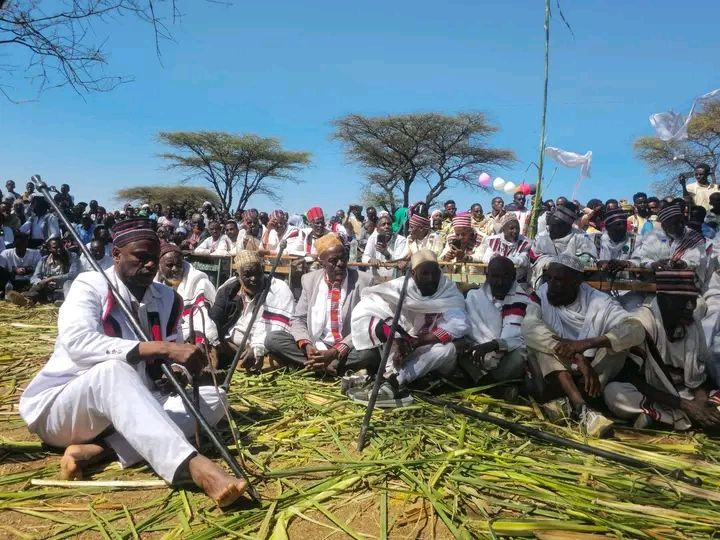
LAGA HIDHAA DHAADDACHA HEEROO, BAALEE BAHAA – A major Gadaa assembly of the Arsii Sikkoo Mandoo generation is currently underway at the historic site of Dhaddacha Heeroo, signaling a significant restoration of its traditional leadership structure and the enactment of sweeping social mandates.
The central act of the assembly is the formal reinstatement of the senior Dhaddacha Heeroo council. This council, comprised of the five senior Luba Gadaa from among the younger Gadaa classes operating under the Odaa Roobaa ritual center, is being restored to its full authority. This move directly implements a prior resolution to reinstate twenty (Dhaddachas) of the Sikkoo Mandoo generation.
With the restoration of this senior council, the assembly has proceeded to deliberate on and proclaim six major decrees (murtiiwwan gurguddoo), addressing critical issues from marriage and culture to security and environmental protection.
The Six Major Decrees of the Assembly:
- Leadership Restoration: Formalizes the return of the Dhaddacha Heeroo council and the reinstatement of the twenty Sikkoo Mandoo Dhaddachas, completing a key structural revival.
- Regulation of Marriage and Heerumaa (Bridewealth): Mandates that gabbarri (a customary fine or compensatory payment) must be settled in cases related to marriage and bridewealth, aiming to standardize and resolve disputes within these customary practices.
- Cultural Revival and Propriety: Calls for the return and strict observance of safuu (moral and ethical codes) and traditional customs (aadaa fi duudhaa), emphasizing a cultural renaissance rooted in ancestral values.
- A Universal Mandate for Peace: Issues a powerful decree on peace (nagaa), stating that all unresolved conflicts must be settled peacefully. It calls upon every individual to heed the call of Gadaa fathers and Siinqee (women’s institution) elders and come forward for reconciliation, placing peace as the foremost communal priority.
- Curbing Illegal Migration: Addresses the concerning trend of youth being trafficked and illegally sent abroad. The decree states this must stop, highlighting the Gadaa system’s role in confronting modern social crises affecting its youth.
- Environmental Protection: Decrees the protection of natural resources (qabeenya uumamaa), specifically ordering that deforestation (biqiltuu) must be halted and managed. This underscores the indigenous ecological stewardship inherent in the Gadaa system.

A Living System Addressing Contemporary Challenges
The convocation of this assembly and the scope of its decrees demonstrate the Gadaa system’s dynamic role as a living governance framework. It is not merely conducting ritual observances but is actively legislating on pressing issues—from safeguarding youth against trafficking to enforcing environmental conservation and mandating universal peace-building.
The reinstatement of the senior council provides the institutional authority to oversee the implementation of these far-reaching decisions. The assembly at Dhaddacha Heeroo thus stands as a potent example of indigenous sovereignty in action, using its restored structures to mandate social, cultural, and environmental order for the Arsii Sikkoo Mandoo community and beyond.
Seventh General Election: OLF’s Strategic Shift to Politics

Oromo Liberation Front Prepares for Seventh General Election, Announces Strategic Pivot
FINFINNEE – In a significant political announcement, the Oromo Liberation Front (OLF) has declared its readiness to contest in Ethiopia’s upcoming Seventh General Election, scheduled to be held in five months. The party’s announcement signals its intent to transition fully from its historical armed struggle to a peaceful political competition within the nation’s electoral framework.
OLF officials confirmed that the party is undertaking final preparations to meet all the legal and procedural requirements set by the National Election Board of Ethiopia (NEBE) for participation. The statement underscores a pivotal shift: “The OLF, which returned from armed struggle to peaceful political struggle in 2018, announces that it is completing the prerequisites required of it by the NEBE to participate.”
This move represents the most concrete step yet in the party’s often-turbuous journey into mainstream politics since its leadership returned to Ethiopia following the 2018 peace agreement. By affirming it can contest “in places where the National Election Board conducts elections,” the OLF is positioning itself as a nationwide contender, aiming to mobilize its traditional base and beyond.
A Commitment to Democratic Process
A core tenet of the announcement is the party’s stated respect for the will of the Oromo people. “In this Seventh General Election, it is stated that the OLF will respect the vote that its people give it,” the declaration noted. This framing presents the OLF as a democratic entity prepared to accept electoral outcomes, a crucial message for both its supporters and the broader political landscape.
Jaal Jabeessaa Gabbisaa, a party official, emphasized the organization’s commitment, stating, “The OLF will do everything required of it for the Seventh General Election… it is prepared.”
Forging a New Political Identity
The announcement also hints at an internal reorganization and candidate selection process. The OLF indicated it is “placing people who represent it and execute the objectives of the OLF” into candidacy positions. This suggests an effort to build a coherent electoral team that can translate the party’s longstanding objectives into a compelling political platform for the ballot box.
Analysis: A High-Stakes Gambit
The OLF’s participation in the election is a high-stakes endeavor. For the government and international observers, it tests the inclusivity and credibility of Ethiopia’s post-conflict political process. For the OLF, it is a definitive test of its political relevance and organizational capacity in a peaceful, competitive arena.
Success could see the party secure a substantial bloc in parliament, giving it a direct platform to advocate for Oromo interests within the federal system. Failure, or a poor electoral showing, could weaken its influence and spark internal dissent.
The next five months will be critical as the OLF finalizes its registration, campaigns, and navigates the complex electoral environment. Its participation promises to make the Seventh General Election one of the most closely watched and consequential in recent Ethiopian history, a direct measure of whether a historic armed movement can successfully reinvent itself as a potent political force.

Gadaa Assembly: Reviving Oromo Identity and Democracy

Gadaa Assembly in Harar Champions Oromo Identity, Peace, and Pre-Colonial Democracy
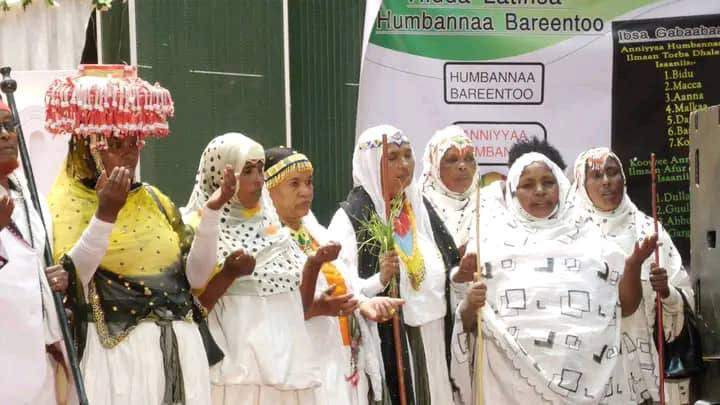
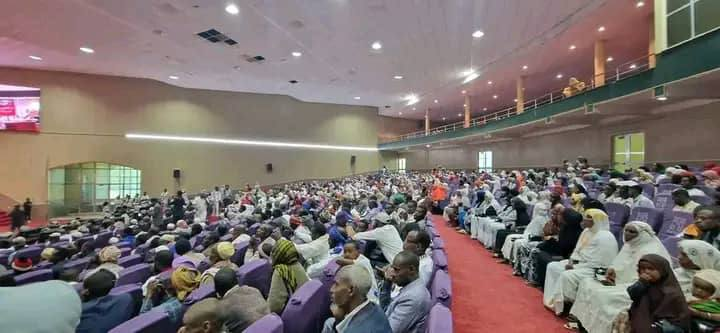
HARAR, OROMIA – In a vibrant display of cultural continuity and unity, the Gumii Gadaa (Gadaa Assembly) of the Humbannaa Bareentoo Oromo generation was held in the historic city of Harar. Convening under the theme “Gadaa is Oromo Identity, Equality, Peace, and Justice,” the assembly brought together diverse Gadaa councils and a broad public audience to reaffirm the enduring values of the indigenous Oromo governance system.
The significant gathering saw the participation of leaders from three major Oromo Gadaa lineages: the Abbootiin Gadaa Humbannaa, Abbootiin Gadaa Afran Qalloo, and Abbootiin Gadaa Ituu. The event served as a powerful platform to discuss Gadaa’s role as a bedrock of social order and a precursor to modern democratic ideals.
Gadaa as a Foundational System of Equality and Governance
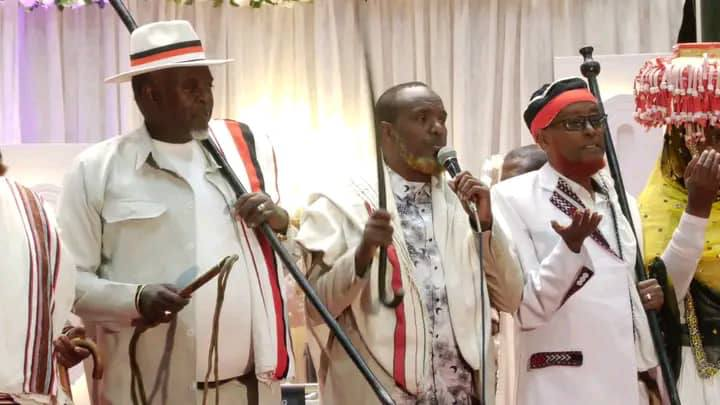
Addressing the assembly, Abbaa Gadaa Humbannaa Bareentoo, Gugsaa Ibsaa, articulated the system’s core philosophy. He stated that the Gadaa system is the framework through which all human beings are born equal and should live as equals—a principle embedded in its social and political structures.
“Peace is essential for everyone, and therefore, paramount attention must be given to peace,” Abbaa Gadaa Gugsaa emphasized, highlighting the system’s intrinsic link to stability and social harmony. He further described Gadaa as a system of “development, unity, brotherhood, and love.”
Official Recognition of Historical Contribution
Regional officials acknowledged the profound historical and contemporary relevance of the Gadaa system and the Oromo people.
Mr. Naasir Ahmad, Head of the Harari Regional Culture, Sports, and Tourism Bureau, praised the Humbannaa Bareentoo lineage for playing a distinctive and vital role in the struggle and interests of the Oromo people throughout history.
He also made a striking historical assertion, noting that “the Gadaa system was an example of democracy before the concept of democracy itself [existed in the region].”
Echoing this sentiment, Ms. Sa’aada Abdurahman, Head of the East Hararghe Zone Culture and Tourism Bureau, reminded attendees that the Oromo people have lived for centuries with their own history, language, culture, and self-governing Gadaa system.
She provided a compelling timeline, asserting that “the Oromo people governed themselves with the Gadaa system for over 700 years,” and that this system predates the democracies currently practiced in Western nations by some 200 years.
A Convergence of Leadership and Legacy
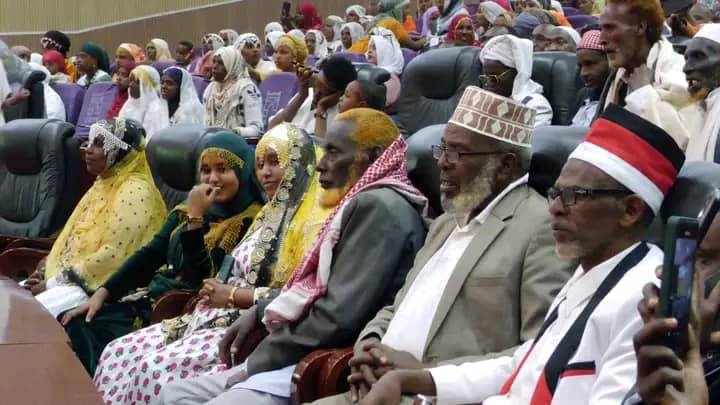
The assembly was attended by senior leadership from the Harari Regional State and East Hararghe Zone, alongside delegations from the three participating Gadaa councils and numerous invited guests.
The convening of this Gadaa assembly in Harar—a city emblematic of Ethiopia’s rich Islamic and cultural heritage—signifies a strengthening cross-cultural recognition of the Oromo system. It reinforces Gadaa not as a relic of the past, but as a living, breathing institution that offers timeless principles of egalitarianism, peaceful coexistence, and cyclical leadership.
By framing Gadaa as both the core of Oromo identity and a pioneering democratic model, the Humbannaa Bareentoo assembly serves as a potent reminder of Ethiopia’s deep and diverse wells of indigenous governance knowledge, now receiving renewed scholarly and official appreciation.
 Oromedia