Soil and Water Conservation: A Path to National Pride

A Green Future Takes Root: Soil and Water Conservation as a Legacy in Shawa Lixaa, Dirree Incinnii district.
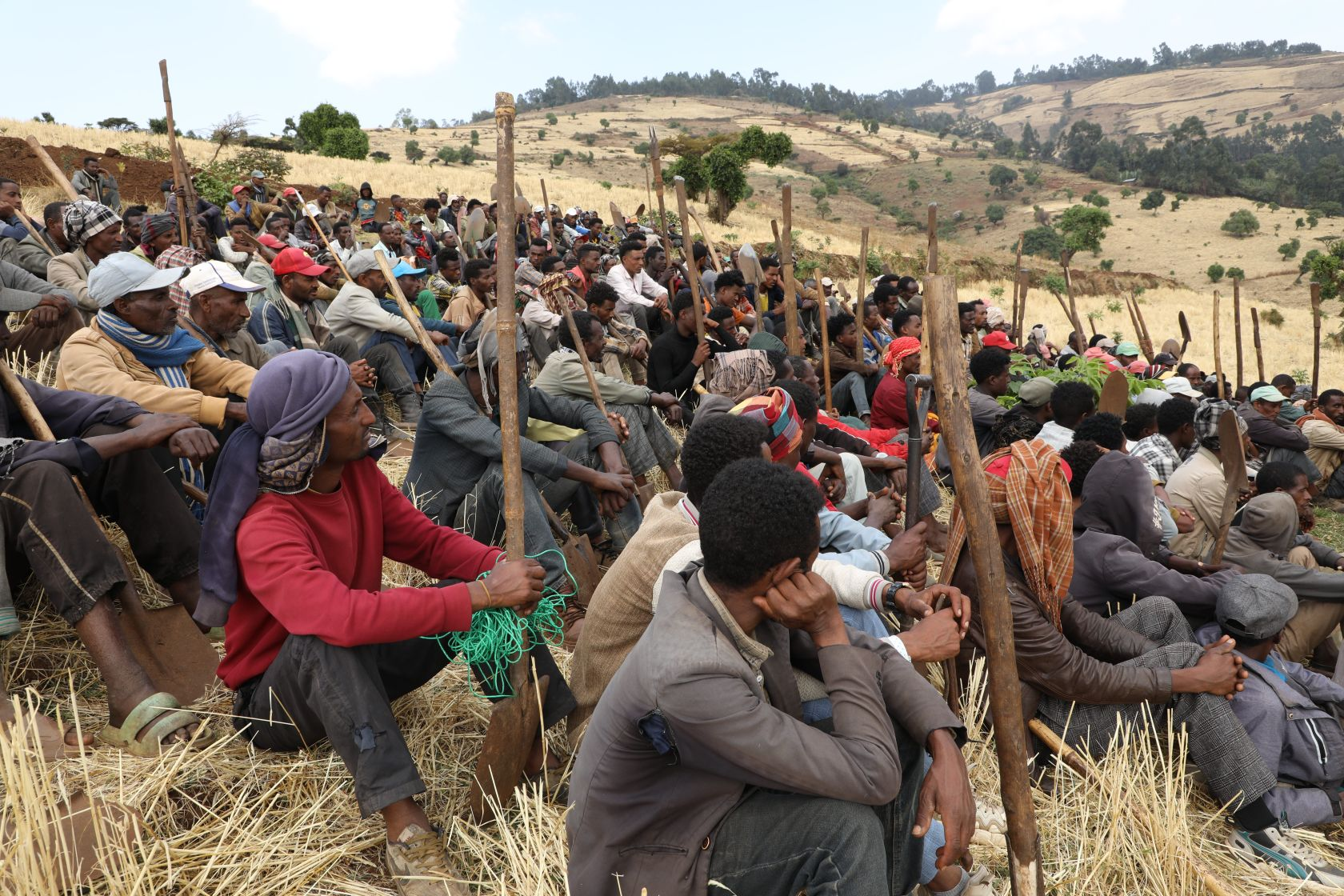
In the heart of Shawa Lixaa, Dirree Incinnii district, a quiet but profound transformation is unfolding. Across multiple villages, a community-led initiative titled “Soil and Water Conservation Campaign for National Pride” has been underway for weeks. This is not a temporary project, but the steady, ongoing work of building a legacy.
The message from local leaders, like Administration and Natural Resources Office Head Obbo Tashoomaa Baqqalaa, is clear and compelling: “We are working to create a clean and fertile country for future generations.” This statement reframes environmental work from a technical chore into a moral and patriotic duty—a gift to the unborn.
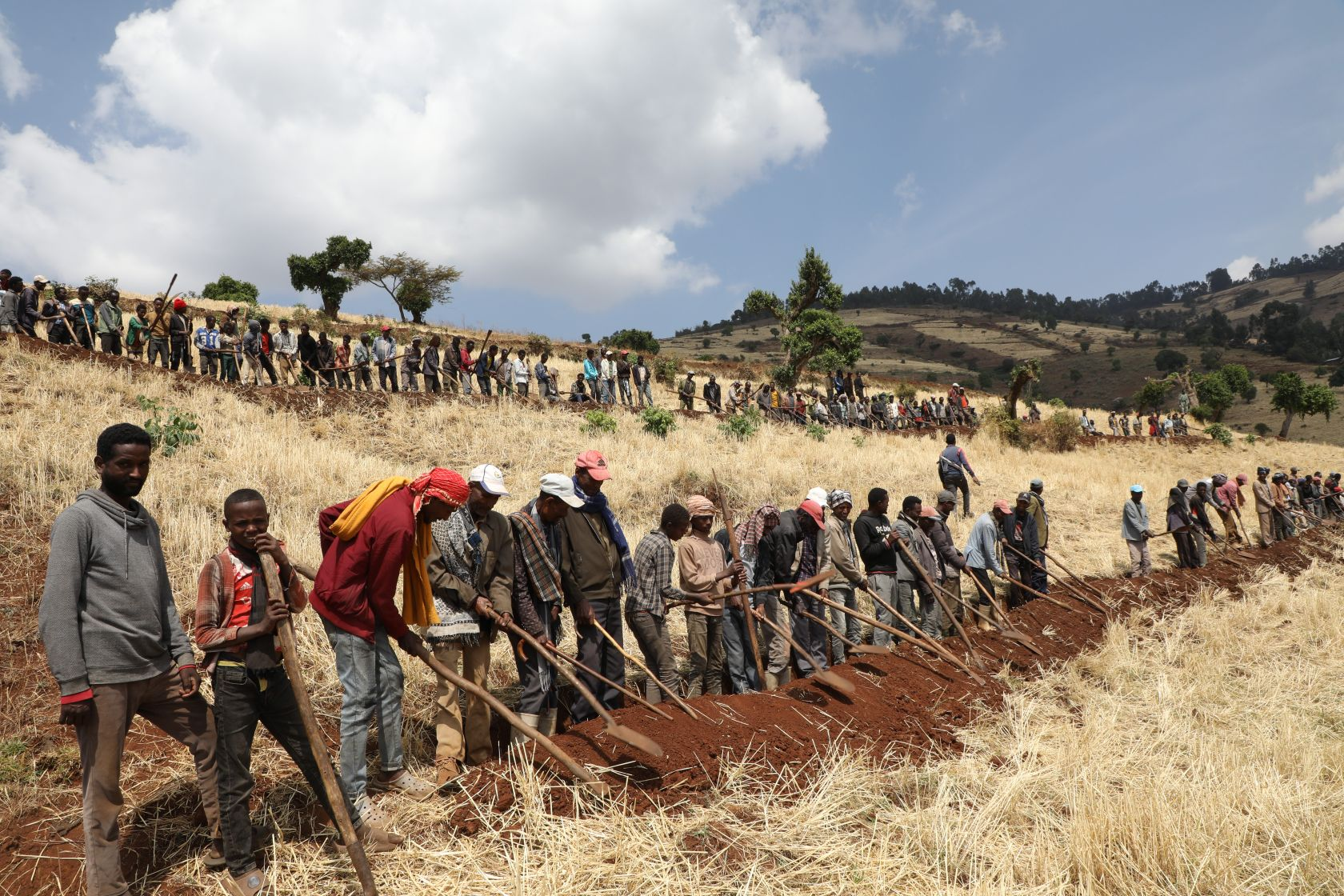
The campaign’s objectives are a masterclass in integrated community development. It aims to:
- Enhance natural resource productivity and quality, turning existing assets into greater wealth.
- Combat soil erosion, directly addressing the creeping threat to Ethiopia’s agricultural backbone.
- Increase soil fertility and water availability, the twin pillars of food security and resilience.
What makes the effort in Dirree Incinnii particularly noteworthy is its stated methodology. Officials emphasize that the work is being carried out “at all levels and in an organized manner.” This suggests a holistic framework that moves beyond scattered plots of land. It implies coordination from household to village to district levels, ensuring the work is sustainable and scalable. The phrase “organized manner” points to planning, training, and community mobilization—the essential ingredients that separate a fleeting effort from a lasting movement.
Furthermore, the commitment to “participate and facilitate participation” reveals a crucial insight. The leadership understands their role is not just to direct, but to enable. True, lasting environmental stewardship cannot be imposed; it must be adopted, owned, and championed by the community itself. By actively facilitating broad-based involvement, the campaign sows the seeds of long-term stewardship alongside the physical conservation structures.
Commentary: Beyond Trenches and Terraces
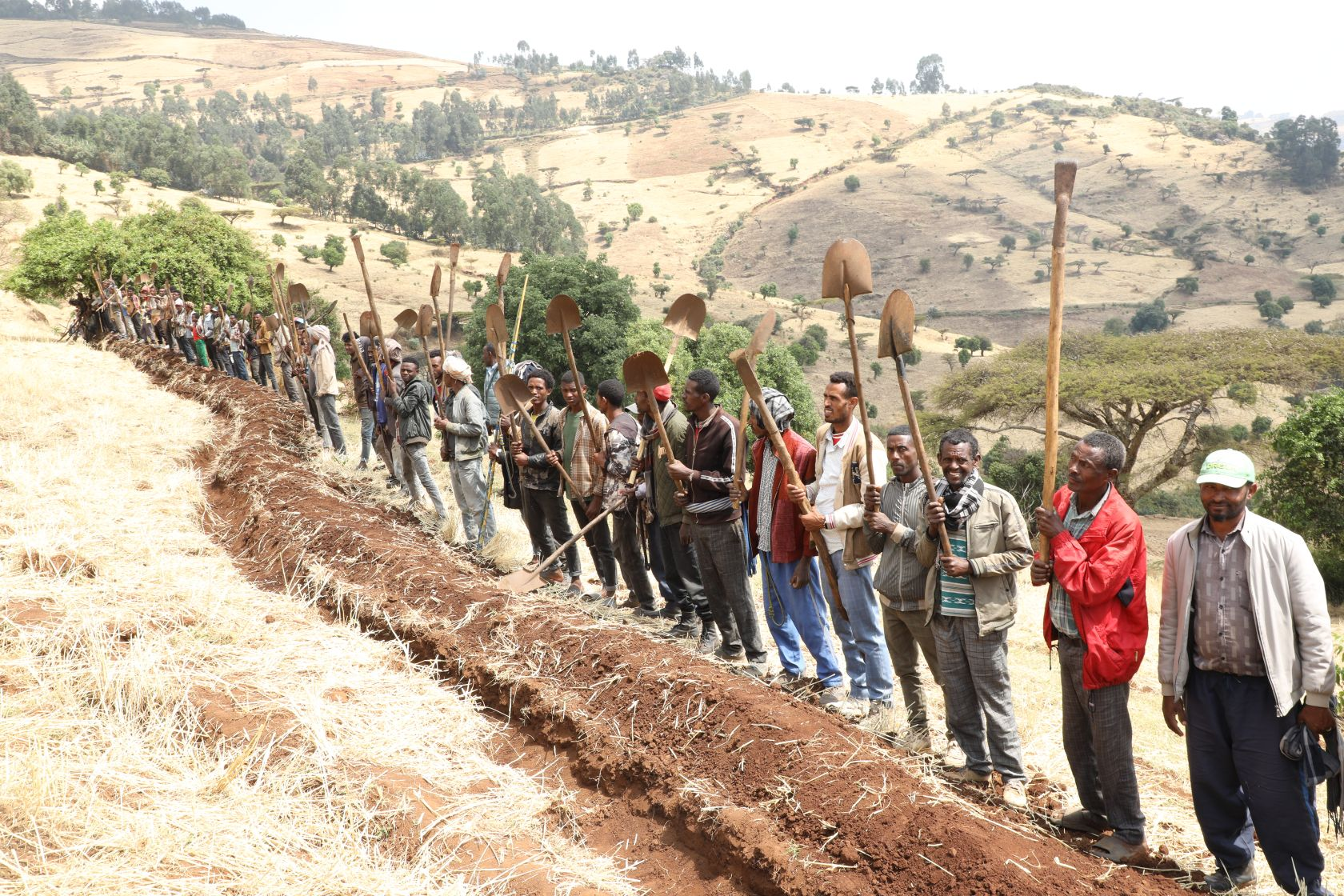
This initiative in Shawa Lixaa represents more than the construction of physical soil bunds (misooma sululaa). It is the construction of a new environmental consciousness.
Firstly, it localizes a global crisis. Climate change and land degradation can feel abstract. By framing the work as creating a “clean and fertile country for our children,” it makes the imperative intimate, urgent, and actionable. It connects the trench dug today to the dinner table of tomorrow.
Secondly, it redefines “national pride.” Too often, national pride is linked solely to history, sport, or military achievement. Here, pride is being cultivated literally in the soil. The health of the land becomes a measure of collective responsibility and a source of dignity. A conserved landscape becomes a badge of honor, a “National Pride” earned through collective sweat and foresight.
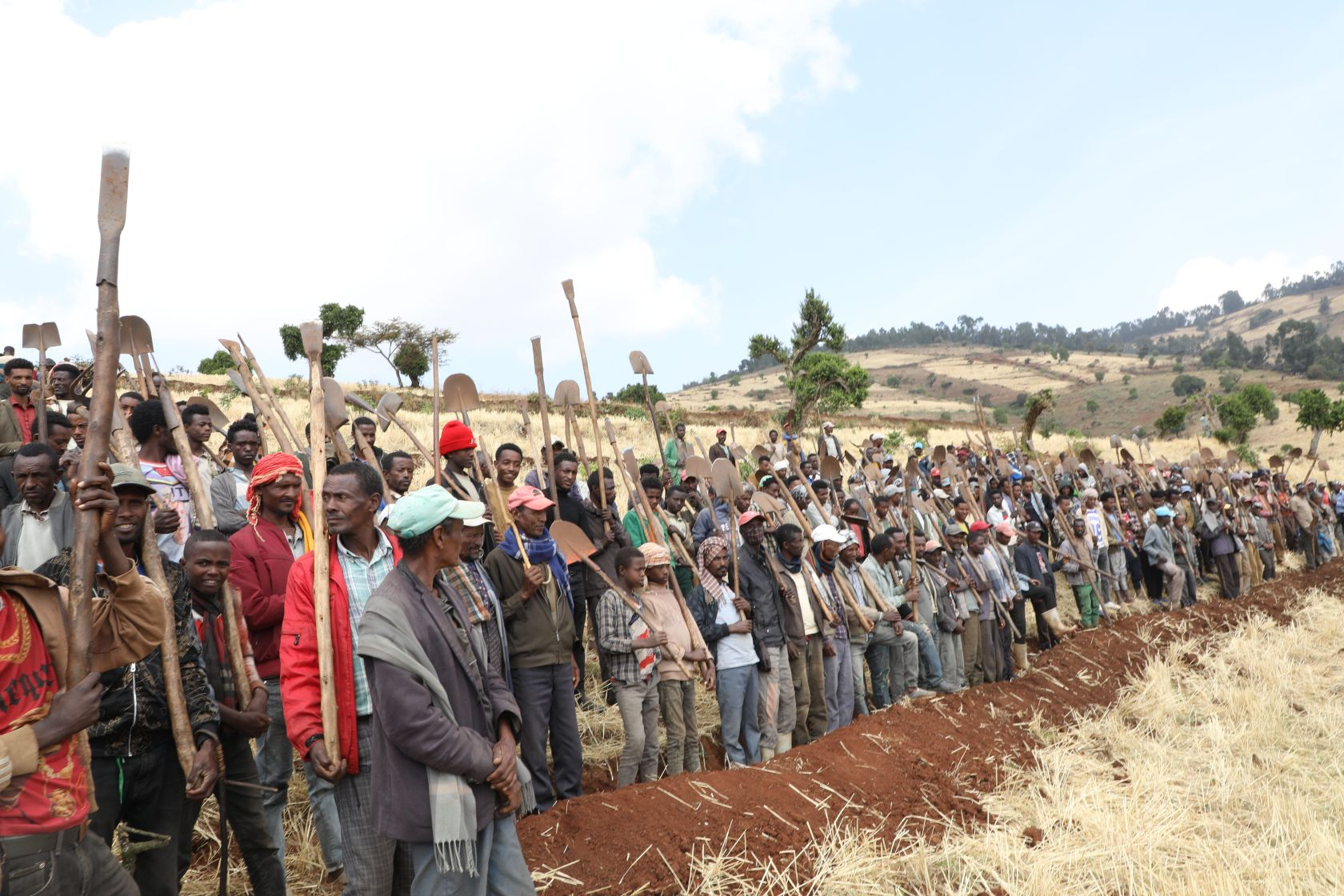
Finally, it presents a model of proactive legacy building. In a world where future generations often inherit problems—pollution, debt, degraded ecosystems—this campaign is an act of intergenerational justice. It is about bequeathing an asset: productive, resilient land.
The challenge, as with all such endeavors, will be continuity. Will the structures be maintained? Will the participatory spirit endure beyond the campaign period? Yet, the foundational vision is precisely right. By tying soil and water conservation directly to national pride, community well-being, and the right of future generations to a fertile home, Obbo Tashoomaa and the people of Dirree Incinnii are not just conserving land. They are cultivating hope, responsibility, and a tangible, green legacy. Their work reminds us that the most profound patriotism can sometimes be found not in grand speeches, but in the quiet, determined act of planting a seed, or building a terrace, for a future one may never see.
Empowering Victoria’s Multicultural Homes in Clean Energy
Feature News: Empowering Victoria’s Multicultural Homes in the Clean Energy Transition
MELBOURNE, VIC – As Victoria accelerates its shift toward renewable energy, one question remains central for many households: how can every family participate in and benefit from electrification? The answer lies not just in technology, but in accessible information and community-led support. Recognising this, the Ethnic Communities’ Council of Victoria (ECCV) is launching a pioneering new project designed to empower multicultural households to make confident, informed decisions about electrifying their homes.
Titled “Empowering Multicultural Communities at Home,” the initiative directly addresses a critical gap in the clean energy transition: ensuring that language barriers, cultural nuances, and access to trusted information do not leave diverse communities behind.
“Every Victorian deserves the opportunity to lower their energy bills and reduce their carbon footprint through home electrification,” a project spokesperson said. “But to do that, people need information that is clear, in their own language, and delivered by those they trust. That’s where this project comes in.”
A Tailored, In-Language Approach
The project will move beyond generic brochures by providing clear, culturally relevant, and in-language information about home electrification and available energy upgrades. This includes everything from understanding efficient electric heating and cooling (reverse-cycle systems) and hot water systems to navigating government rebates and installer qualifications. The goal is to equip people with the knowledge to understand their options and ask the right questions of providers.
“Information is power,” the spokesperson added. “We’re demystifying the process—from what an induction cooktop is really like to use, to how to finance upgrades—so households can make choices that are right for their family and budget.”
Community at the Core
The project’s methodology is deeply community-centric. Key activities will include:
- Local Information Sessions & Workshops: Held within community hubs, these sessions will provide practical, hands-on guidance.
- Training Community Electrification Leads: ECCV will train and support trusted community members to become local points of knowledge and guidance.
- Developing Accessible Multilingual Resources: Creating easy-to-understand guides, checklists, and digital content in multiple languages.
- Facilitating Peer-to-Peer Learning: Creating spaces for communities to share experiences, concerns, and successes.
This model ensures information is not only translated but also transcreated—adapted to be meaningful within specific cultural contexts—and delivered through trusted channels.
Navigating the Transition with Confidence
With a focus on practical support, the project aims to do more than just inform; it aims to build confidence. For many families, the upfront cost and complexity of upgrading appliances or installing solar can be daunting. By breaking down the steps, explaining long-term savings, and clarifying available support, the project helps households see a clear pathway forward.
“Our focus is on making sure multicultural communities across Victoria have the information and support they need to navigate this transition with confidence,” the spokesperson emphasised. “This is about equity, ensuring the benefits of a clean energy future—like healthier homes, lower bills, and a safer climate—are shared by all.”
The “Empowering Multicultural Communities at Home” project is set to launch in the coming months, with ECCV beginning outreach to communities across the state. It represents a vital step toward an inclusive and just energy transition for Victoria.
For more information or to express interest in partnering, community organisations are encouraged to contact the Ethnic Communities’ Council of Victoria (ECCV).
Oromia’s Watershed Development Campaign: A Green Revolution

Oromia Launches Major Two-Month Watershed Development Campaign
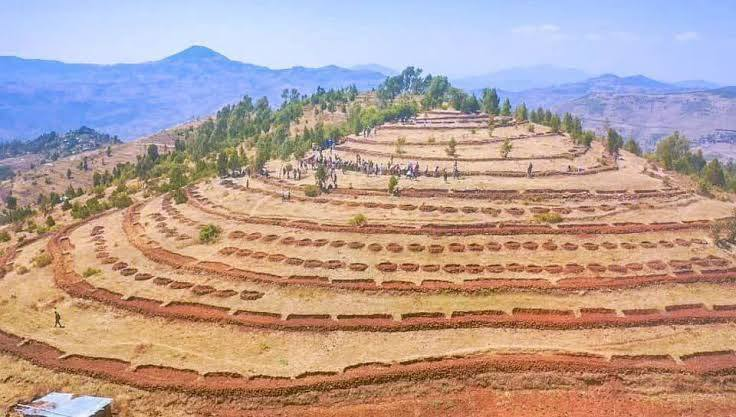
FINFINNE, OROMIA – A large-scale, region-wide watershed development and soil conservation campaign is set to begin tomorrow across all zones of the Oromia region, the regional Agriculture Bureau announced. The intensive, two-month initiative aims to rehabilitate landscapes, boost agricultural productivity, and bolster climate resilience.
According to Mr. Getu Gemechu, Head of the Oromia Agriculture Bureau, the campaign will target over 6,000 specific sites, collectively covering more than 3 million hectares of land. The work will focus on constructing terraces, check dams, and other physical structures to control erosion, alongside extensive tree planting and green development activities.
This year’s campaign builds on what regional officials describe as a track record of success. Mr. Getu pointed out that past watershed and green development projects have already contributed to increasing the region’s forest cover from 17% to 19%. Furthermore, these efforts have successfully reclaimed previously non-arable land, converting it into productive farmland and enhancing overall agricultural output and productivity.
Training and a Focus on Climate Change
To ensure the effectiveness of the massive mobilization, the bureau has conducted various training programs for implementing staff and community participants. Mr. Getu emphasized that the work is strategically aligned with climate change adaptation, noting that “green development activities are being prioritized to mitigate the challenges of climate change.”
A Call for Collective Participation
Launching the campaign under the guiding principle “Watershed Development for National Pride,” Mr. Getu issued a rallying call for widespread participation. “For the success of the watershed development work starting tomorrow in the region, I call on everyone to participate jointly,” he stated.
The initiative represents a critical component of Oromia’s long-term strategy for sustainable land management and food security. By simultaneously combating land degradation, expanding green cover, and creating more arable land, the regional government aims to build ecological and economic resilience for millions of residents whose livelihoods depend on agriculture.
The success of the two-month blitz will depend heavily on the mobilization of local communities, government agencies, and other stakeholders across Ethiopia’s largest regional state.
Reporting by: Sadaat Mohammedsani
 Oromedia