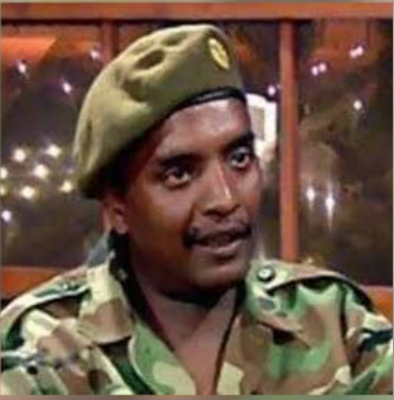
Feature Commentary: Unpacking the Narrative – A Rebuttal to General Hailu Gonfa’s ETV Interview
By Daandii Ragabaa
February 1, 2026
A recent interview given by General Hailu Gonfa, a former high-ranking member of the Oromo Liberation Army (OLA), to Ethiopian state television (ETV) has sent ripples through political and activist circles. Presented as a “tell-all,” the interview was a stark narrative of disillusionment with the OLF/OLA, peppered with allegations of foreign manipulation and internal failure. For the state broadcaster, it was a coup—a former insurgent commander validating state narratives. For many observers, however, it was a performance laden with contradictions and historical revisionism that demands scrutiny, not passive acceptance.
General Gonfa’s core thesis is one of victimhood at the hands of the Eritrean government (Shaebia) and strategic confusion within the OLF/OLA. He paints a picture of being used, misled, and ultimately betrayed. Yet, a closer examination of his own points reveals a narrative more complex and less absolving of his own agency.
1. The Eritrea Conundrum: Pawns or Strategic Partners?
Gonfa claims they went to Eritrea not out of hatred for Ethiopia, but to oppose the system, following the path of Eritreans themselves. He then details a three-month military training at Camp Ashfaray, a period of intense hardship. The critical question he sidesteps is: what did he and his comrades believe they were building towards in Asmara? Did they receive a political program from the OLF leadership? As senior military cadres, did they simply execute orders without understanding the overarching political strategy? His portrayal reduces seasoned officers to naive children, which insults both their intelligence and the gravity of their decision to seek foreign military training.
2. The Phantom “Russian Assignment” and Internal Discord.
He recounts a meeting in Russia where OLF members approached him, but they could not agree on a common agenda for working inside Ethiopia. He claims he was later given a vague, “impossible” national assignment. This raises a fundamental question: if there was such profound disagreement on core strategy before undertaking major actions, why proceed? The attempt to blame subsequent failures on a pre-existing lack of consensus suggests a failure of leadership and collective decision-making, not merely the deceit of others.
3. The “Oromia Republic” Straw Man.
This is perhaps the most disingenuous claim. Gonfa asserts a foundational disagreement over the goal of an “Oromia Republic,” which he labels a “colonial agenda.” He claims this deadlock was irreconcilable. Yet, the public record shows that figures like General Kamal Galchu, in a VOA interview, spoke openly about the possibility of a republic after achieving liberation. Furthermore, the OLF’s own political programs have historically navigated the spectrum between self-determination and possible independence based on a popular referendum. To frame a central, debated political aspiration as a shocking, divisive “colonial” plot is a gross misrepresentation of the struggle’s own intellectual history, likely tailored for his current audience in Addis Ababa.
4, 5 & 7: The Shaebia Scapegoat and the Mystery of Betrayal.
Gonfa dedicates significant time to blaming Eritrea for their imprisonment and manipulating the OLA’s military wing. He describes a mysterious Colonel “Xamee” who allegedly controlled them. This narrative of total Eritrean control sits awkwardly with his other claims of internal OLA agency, such as the alleged refusal of some army units to follow orders in 2018. If the OLA was merely a puppet, how did it exercise such defiance? His testimony about Colonel Abebe (allegedly now a Brigadier General in the OLA) is particularly damaging but presented without context or corroboration. It creates a convenient fog where all failures can be attributed to a shadowy foreign hand, absolving internal leadership of critical misjudgments.
6. The Uncomfortable Transition from Refugee to Parliamentarian.
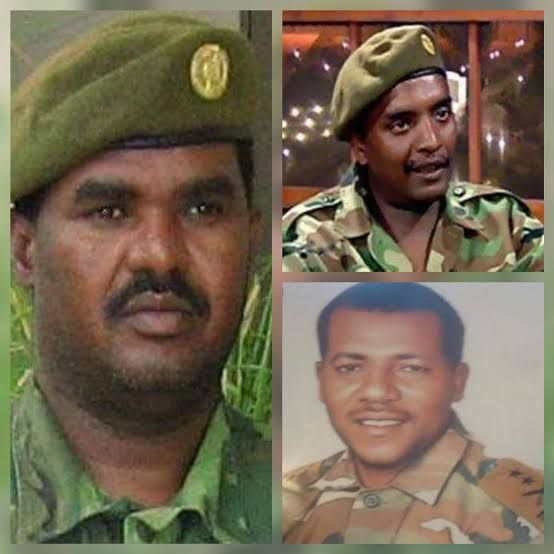
Gonfa’s personal journey—from an economic refugee with a Swedish passport to a member of parliament—is presented as a triumph of resilience. Yet, it unavoidably invites questions about the pathway from armed opposition to state legitimization. He speaks of the hardships of struggle, but for many watching, the stark contrast between the described suffering and his current official position underscores the complex, often ambiguous, transitions in Ethiopian political life, where former enemies can become state stakeholders.
8 & 9: Rewriting the Homecoming and the Gadaa Model.
He claims that upon returning to Ethiopia, they chose to work on national issues within the political system, respecting the existing OLF leadership. This sanitizes what many saw as a major split and a demobilization. His praise for the “Gadaa model” of conflict resolution, now being adopted in Amhara region, rings hollow. It appears less as a genuine endorsement of traditional systems and more as an endorsement of the federal government’s current policy of co-opting ethnic administrative models, a far cry from the Gadaa system’s principles of sovereignty and self-rule.
Conclusion: A Performance with a Purpose
General Hailu Gonfa’s interview is less a revelation and more a strategic repositioning. It is an effort to construct a personal and political narrative that reconciles a past of armed rebellion with a present of state accommodation. In doing so, it simplifies a multifaceted struggle into a story of foreign deception and internal error, draining it of its political substance and reducing it to a series of personal grievances and bad partnerships.
For the state, it is a useful narrative: the rebels were confused, controlled by Eritrea, and have now seen the light. For the still-active struggle, it is a warning about the power of state platforms to reshape history. For critical observers, it is a reminder that every testimony, especially those given in such loaded circumstances, must be read not just for what is said, but for the silences it cultivates and the interests it serves. The truth of the Oromo struggle, in all its sacrifice, complexity, and ongoing evolution, lies not in this single curated confession, but in the totality of its lived history, which is far messier, more principled, and more enduring than this interview suggests.
 Oromedia