
A Strategic Embrace: Reading Between the Lines of the US-Ethiopia “Anti-Terror” Accord
By Maatii Sabaa
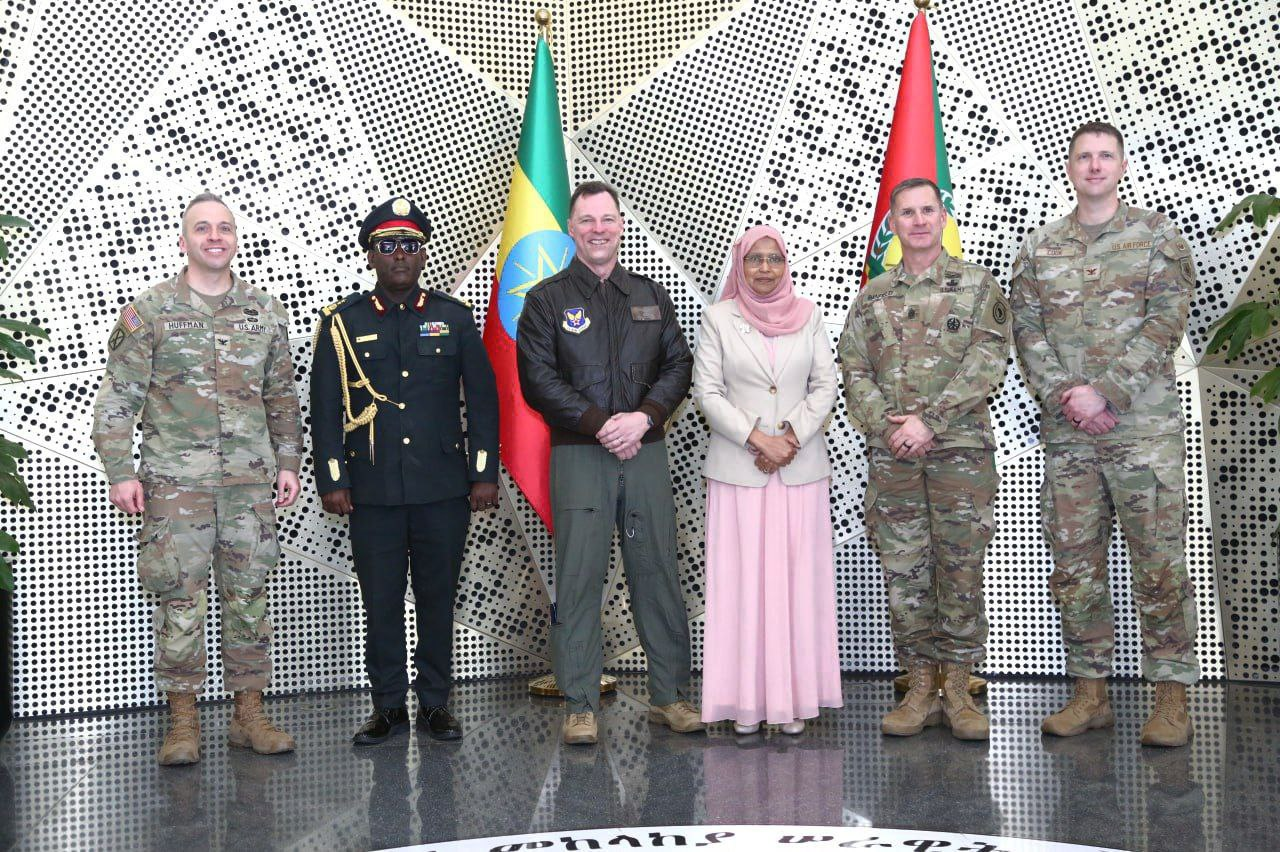
This week, the corridors of power in Addis Ababa hosted a meeting that was, on the surface, all about forward momentum. Ethiopian Defense Minister Engineer Aisha Mohammed received United States Africa Command (USAFRICOM) Commander General Dagvin Anderson, and the subsequent joint statement was a masterclass in diplomatic phraseology. The two nations, we are told, agreed to elevate their “growing diplomatic and military relations into a higher strategic partnership,” reaffirmed a shared commitment to “peace and security,” and—most pointedly—pledged to “jointly combat terrorism to safeguard their respective national interests.”
The language is smooth, strategic, and designed for international news wires. Yet, in the complex geopolitical theater of the Horn of Africa, such declarations are never just ink on paper. They are seismic signals, revealing shifting tectonic plates of influence, ambition, and realpolitik. To understand this meeting, one must read not just the statement, but the subtext, the timing, and the unspoken needs of both parties.
For the United States, represented by the commander of its African military umbrella, the engagement is a calibrated re-engagement. Ethiopia, long a cornerstone of US strategy in the region, experienced a profound rupture in relations following the Tigray War. The meeting signals a deliberate American pivot: from a posture of pressure and sanctions to one of renewed partnership, albeit with a clear, security-first agenda. The framing of “combating terrorism” provides a mutually acceptable chassis for this rebuilt relationship. It allows the US to re-establish critical military-to-military ties, secure influence in a strategically vital nation bordering volatile regions, and counter the deepening foothold of rivals like Russia and China. General Anderson’s presence at the 90th anniversary of the Ethiopian Air Force was not merely ceremonial; it was a symbolic reinvestment in a key institutional partner.
For the Ethiopian government of Prime Minister Abiy Ahmed, the benefits are equally compelling, but stem from a position of seeking consolidation. Emerging from a devastating internal conflict and facing persistent security challenges—from insurgent groups in Oromia to tensions with neighboring Somalia—Addis Ababa craves international legitimacy and material support. A publicized strategic partnership with the world’s preeminent military power serves both ends. It burnishes the government’s diplomatic standing, frames its internal conflicts through the lens of a global “war on terror,” and potentially unlocks access to security assistance, intelligence sharing, and diplomatic cover. The phrase “safeguard their respective national interests” is crucial here; it acknowledges Ethiopia’s sovereign prerogative to define its threats, while America gains a partner in regional stability.
However, the term “terrorism” in this context is a Pandora’s Box. Who defines it? Which groups fall under this banner? The agreement risks providing international sanction for the domestic suppression of political dissent or armed resistance movements, branding them as terrorists in the name of shared security. This has profound implications for human rights and political negotiation within Ethiopia. Critics will argue that such pacts can embolden securitized approaches to complex political problems, prioritizing military solutions over dialogue and reconciliation.
Ultimately, the Addis Ababa meeting is a transaction. The United States gains a relaunched strategic foothold. Ethiopia gains validation and support. The glue binding the deal is a shared, if vaguely defined, enemy: “terrorism.” While the language speaks of peace and partnership, the underlying calculus is one of hard-nosed interest. The test of this new chapter will not be in the warmth of high-level meetings, but in the concrete actions that follow. Will it lead to greater stability and rights-respecting security in Ethiopia, or will it simply militarize a troubled landscape under a new banner of cooperation? The joint statement opens a door; what walks through it will define the true meaning of this strategic embrace.
 Oromedia