Feature Commentary: The Unclaimed Inheritance – On the Unfinished Debt to Oromoo’s Founders
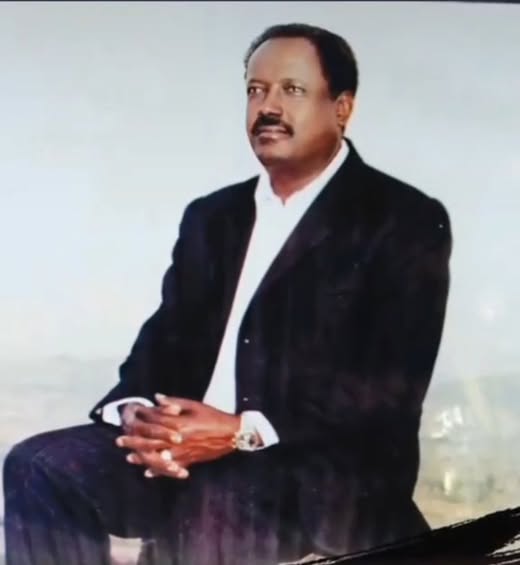
In the sacred narrative of the Oromo struggle, certain names are whispered with reverence, not merely as historical footnotes, but as living accusations against the present. The story of Hotel Jibaat and Maccaa, and the founding father Ob. Beellamaa Futtaasaa, is one such story. It is not a eulogy for the departed; it is a mirror held up to the community, revealing an unsettling and unresolved question of legacy, debt, and collective conscience.
The tale is stark in its simplicity. When the modern Oromo political struggle was ignited in Ambo, it was men like Ob. Beellamaa Futtaasaa—owners of the Hotel Jibaat and Maccaa—who provided the crucial, tangible infrastructure. Their support was not passive sympathy; it was the active, risky bedrock upon which early organizing was built. Their hotel was not just a business; it was a sanctuary, a meeting hall, a nerve center for the nascent Oromo Liberation Front (OLF). They were, as the text states, “hundeessitoota”—foundational pillars—who stood with the architects of the political dream.
The piercing tragedy, however, lies in the chilling coda to this foundation story: “Today… their descendants are in want.”
This single line unravels a profound moral and social contradiction. The children and grandchildren of those who provided the deeggarsa qabsoo hidhannoo—the support that sustained the struggle in its most fragile, clandestine phase—are now left struggling. Their material inheritance has seemingly evaporated, and the immense social capital of their forefathers’ sacrifice has not translated into security or dignity. The comparison drawn is as painful as it is deliberate: while the children of other heroes (like Ob. Daraaraa) are seen to have flourished, the lineage of Beellamaa Futtaasaa faces neglect.
This is more than a family’s hardship. It is a fracture in the very covenant of the struggle. A movement built on principles of justice, self-determination, and collective upliftment now stands accused of failing its most immediate creditors—the families of its earliest benefactors. The hotel that once housed the dream now symbolically stands empty for its heirs.
The commentary this situation demands is multifaceted:
First, on the Nature of Sacrifice: The story forces a reckoning with what we value in our history. We glorify the martyr on the battlefield and the political theorist, but often forget the enabler—the one who risked property, livelihood, and safety to create the space for the movement to breathe. Their contribution, though less cinematic, was equally vital. By forgetting them, we create a hierarchy of sacrifice that is both unjust and historically myopic.
Second, on the Ethics of Legacy: Every revolutionary movement eventually grapples with the transition from struggle to governance, from resistance to responsibility. A core part of that responsibility is social and historical accountability. Have the structures built by the struggle—whether formal institutions or community networks—developed a mechanism to honor and support the living legacies of its founders? The plight of the Fitaaxaa family suggests a failing grade. It raises the uncomfortable question: does the movement consume its own, leaving the children of its hosts to face the bill?
Third, on Collective Amnesia and Power: There is a dangerous tendency in evolving political movements to become forward-obsessed, to distance themselves from the “old stories” in a rush to claim new ground. But this amnesia is a form of power. It allows new elites to consolidate status while disengaging from the foundational debts that morally bind them. Remembering Beellamaa Fitaaxaa is not nostalgia; it is an act of political hygiene, a check against the corrupting notion that the present leadership owes nothing to the past.
Finally, on the Meaning of Victory: If the ultimate goal of the Qabsoo is nagaa fi bilisummaa—peace and freedom—what does that freedom mean? Surely, it must encompass a community where the descendants of those who poured the foundation are not left destitute. A struggle that cannot care for the children of its first guardians risks winning a hollow prize, a state or a recognition that has lost its moral compass.
The story of Hotel Jibaat and Maccaa is, therefore, an urgent parable. It is a call for the Oromo nation—its leadership, its diaspora, its institutions—to conduct an audit not just of its political strategies, but of its conscience. It is a demand to reclaim that inheritance of collective responsibility.
The physical hotel may be gone, but the debt it represents remains outstanding. Until it is addressed, the struggle’s claim to justice will carry this quiet, haunting contradiction. True victory will not be complete until the heirs of those who housed the revolution are themselves brought in from the cold. The seeds they watered must bear fruit for their own garden as well.
 Oromedia