
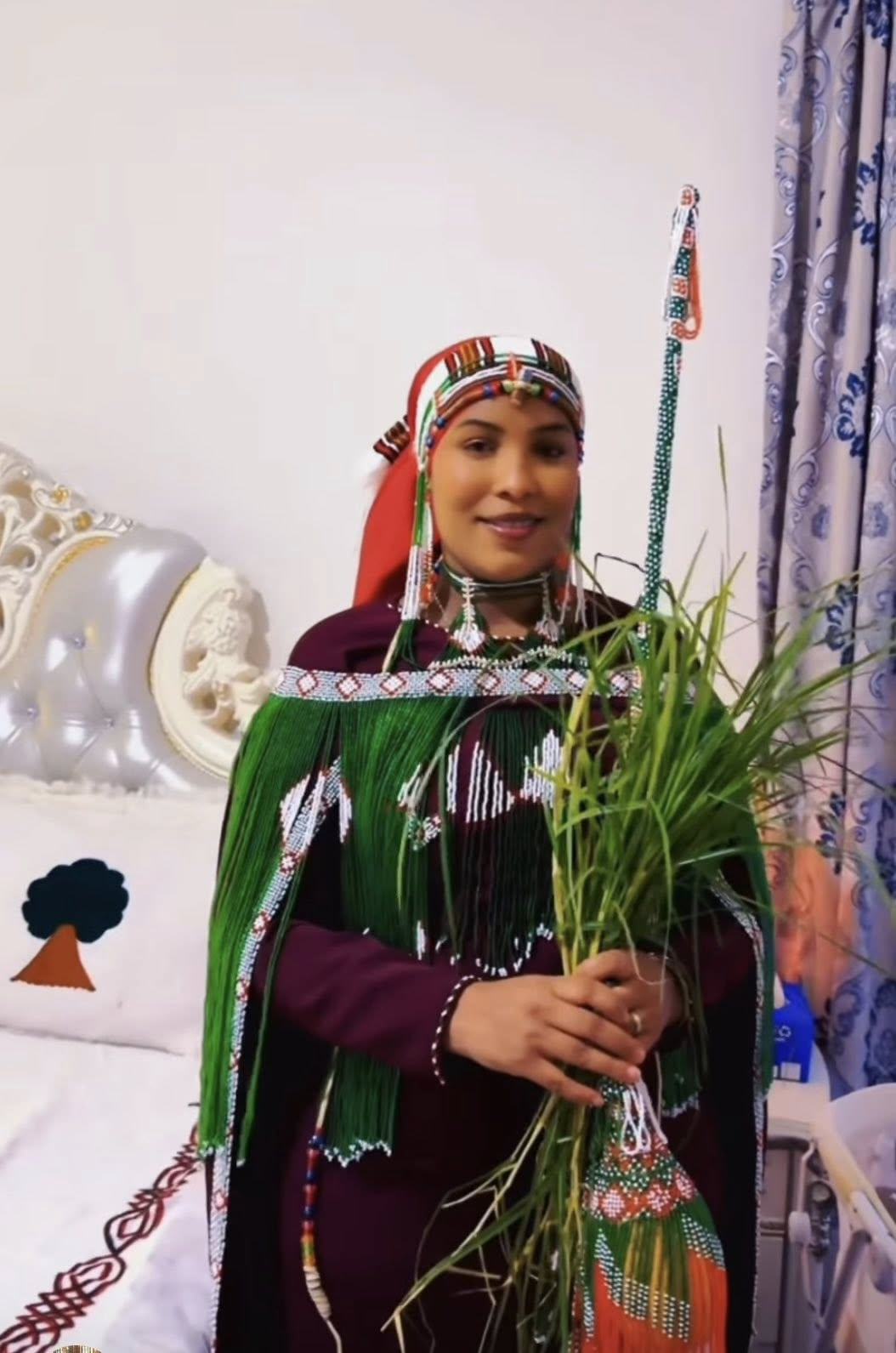
This is the Shanan* of Fayyina Qabatoo. According to custom, it is presented on the day it is first carried in a ceremony of blessing, meant to fortify and empower the bearer.
Shanan* in Oromo culture refers to the five days following childbirth, celebrated as a deeply significant postpartum ritual that highlights communal support, childcare, and the honoring of mothers. This practice reinforces the collective values of the Oromo community and is closely linked to the Gadaa social system and cultural identity.
Key Aspects of Shanan
– Shanan is the five-day period after childbirth during which the mother and family receive blessings, support, and visits from relatives, neighbors, and friends.
– The fifth day marks a special gathering where the community provides emotional encouragement, practical help, and offers marqaa—a nutritious, symbolic food.
– Cultural rituals and prayers are performed to bless the mother and child, expressing wishes for health, prosperity, and strength.
Cultural and Social Significance
– The ritual of Shanan fosters social bonds, celebrates motherhood, and elevates the mother’s status and respect within the community.
– It serves to transmit cultural values and traditions to younger generations and preserves Oromo heritage through communal participation and intergenerational sharing.
– Shanan is both a source of emotional/physical support for the mother and a celebration of new life, collective responsibility, and the resilience of women.
Symbolism and Gadaa Connection
– The number five in Shanan echoes the significance of fives in the Gadaa system, a core sociopolitical framework of the Oromo, and reflects the values of patience and preparation before naming the child.
– The act of honoring the mother on the fifth day carries deep symbolic meaning, linking personal milestones to larger community values and identity.
Shanan in Diaspora Communities
– Oromo communities in the diaspora maintain the Shanan tradition to preserve cultural roots and build solidarity, especially where extended family networks may be absent.
– Shanan strengthens community cohesion and provides a vital sense of belonging for Oromo migrants.
In summary, Shanan is a central ritual in Oromo culture that highlights the importance of collective care, cultural continuity, and the empowerment of women, ensuring that motherhood and childbirth are honored as communal events rather than individual experiences.
The main food prepared for Shanan in Oromo culture is marqaa, a traditional barley-based porridge, accompanied by milk, yogurt, and sometimes butter, all carrying deep symbolic meanings of health, nurturing, and communal blessings for the mother and child.
Main Shanan Foods and Symbolism
– Marqaa: This nourishing porridge made from barley flour and often enriched with spiced butter (dhadhaa) is the central food of the Shanan ceremony. It symbolizes strength, healing, and care, emphasizing the community’s role in supporting the new mother’s physical recovery.
– Milk and Yogurt: Served alongside marqaa, these represent purity, renewal, and the flow of life, mirroring the nurturing role of the mother and the wish for the child’s wellbeing.
– Dhadhaa (Butter): Used in marqaa and served separately, it signifies prosperity, good health, and fertility, and is often used in blessing rituals.
– Genfo: Another hot porridge made with barley or wheat, commonly given to new mothers as it’s believed to restore strength and expedite healing after childbirth.
– Flaxseed, oat, and honey drink: Offered to support breast milk production and relieve postpartum discomfort, symbolizing care and the hope for nutritious sustenance.
– Marmaree and Chuko: These snacks or breads made from wheat or barley, sometimes dipped in butter, add variety and are shared to symbolize hospitality and endurance.
Rituals and Community
– These foods are served communally, highlighting the Oromo value of collectivism, mutual care, and the communal celebration of new life.
– Elders and community members offer marqaa and other foods to the mother and guests, reinforcing prayers and wishes for health, strength, and prosperity.
Shanan food preparation and sharing are not merely about nourishment—they represent the transmission of cultural values, collective support, and the empowerment of women in Oromo society.
 Oromedia