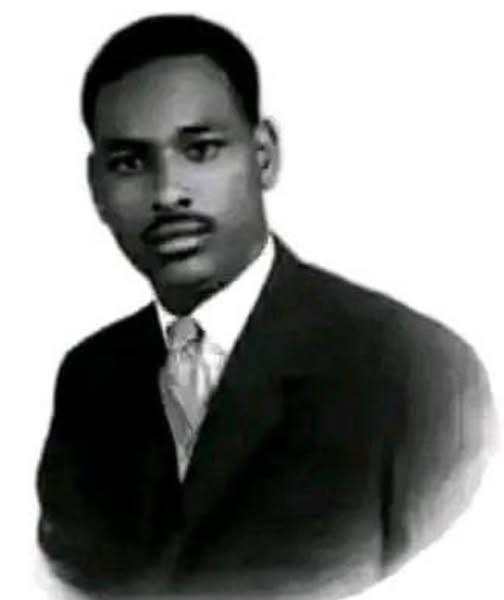
Ayub Abubakar was a trailblazer, one of the first courageous voices to break the silence imposed on the Oromo language by Haile Selassie’s regime, forging a path for Oromo media.
Early Life and Education
Ayub Abubakar was born in 1941 in Chiro, West Hararge, to his mother, Aredo Adam, and his father, Abubakar Mohammed. A bright and active student, he began his primary education in Chiro and continued to secondary school in Harar. He excelled academically and was a standout participant in extracurricular activities, even receiving national awards for his athletic achievements.
Political Awakening and Exile
In August 1959, Ayub traveled to Finfinne (Addis Ababa), where he met General Mengistu Neway. The general was impressed with Ayub and offered him a government position. However, Ayub’s path soon turned toward resistance.
In March 1960, when General Mengistu and his brother Germame Neway attempted a coup against Emperor Haile Selassie, Ayub played a role. After the coup failed, he found himself on the government’s most-wanted list. After a narrow escape from capture in Dire Dawa, he fled to Badesa, where his cousin, Meriam Yesuf, helped him escape to Somalia.
The Voice of a Nation: Oromo Radio in Mogadishu
By 1961, Ayub was in Mogadishu. Somalia, recently independent, was establishing its national institutions. Ayub joined the Somali radio’s Amharic department. Seizing this opportunity, he began inserting small Afan Oromo segments into his programs.
When Emperor Haile Selassie learned that a “prohibited language” was being broadcast, he sent a formal complaint to the Somali government. Confronted by an authority named Getachew Garedew, Ayub cleverly defended his work, stating he was simply broadcasting the Somali government’s message “in the language most Ethiopians understand.” This convincing argument not only saved his program but earned him the support to launch a dedicated Afan Oromo broadcast named “Faraqaa Afan Qottuu”
(The Voice of the Masses).
By 1962, Ayub was producing powerful, in-depth propaganda against the Ethiopian regime. His broadcasts became a major source of frustration and a “huge headache” for Haile Selassie, who repeatedly sent messengers to the Somali government demanding they be stopped.
Martyrdom and Legacy
Tragically, Ayub’s life was cut short. In 1967, in Mogadishu, he was kidnapped by agents of the Haile Selassie regime. His body was found two days later near the Lizo seashore, and he was buried there in Mogadishu. He was just 25 years old.
Ayub Abubakar stands among other foundational heroes like Abubakar Musa, Dr. Sheek Muhammad Rashad Abdullee, Shantam Shubbisaa, Abdii Huseen, and Hindiyaa Ahmed (Shantam Shubbisaa’s wife). Today, Shantam Shubbisaa is the last surviving member of this pioneering group.
The path these heroes paved has led to the global reach of the Oromo language today. May their sacrifice be eternally honored in paradise.
Long live the legacy of our forefathers!
 Oromedia