FEATURE COMMENTARY
Tarree Leedii: The Living Parliament of the Sky and the Case for a Time-Bound Democracy
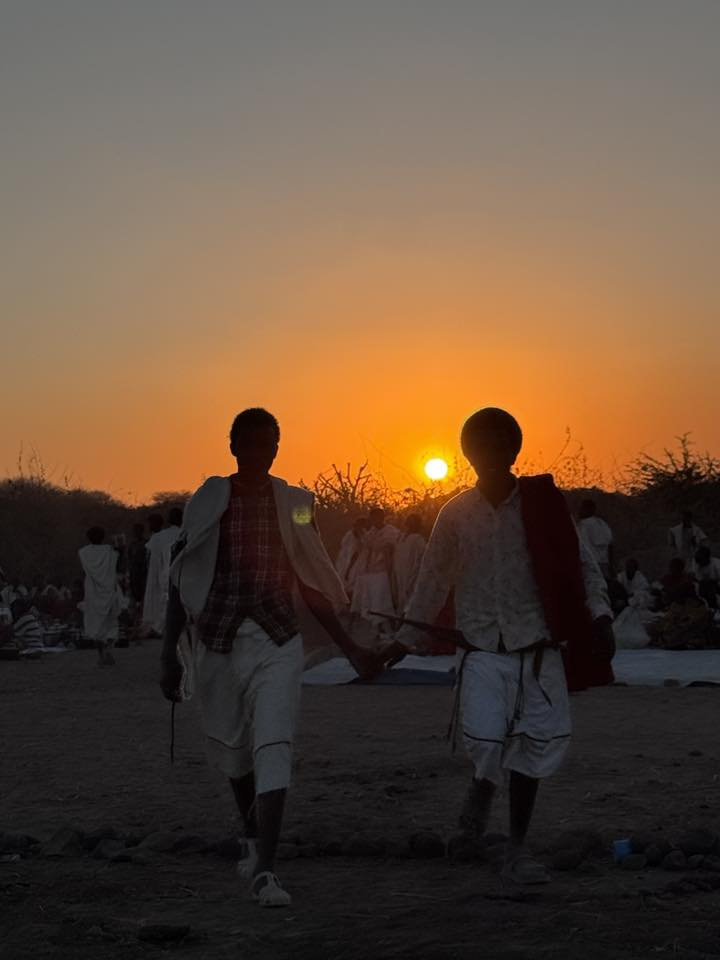
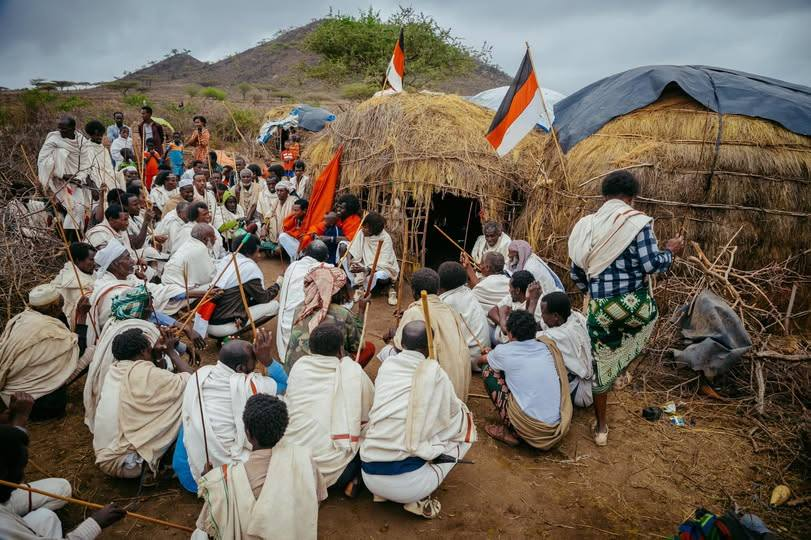
In a world of hurried elections, shifting political winds, and leaders who cling to power, there exists a different model of sovereignty. It does not reside in a capital city of steel and glass, but under the open sky of the Oromia region, on the land known as Tarree Leedii. For more than three centuries, without fail every eight years, the Karrayyuu Oromo have convened their supreme parliament here. This is not a relic of folklore; it is a living, breathing institution—an ongoing and profound argument for a different kind of political life.
The argument of Tarree Leedii is architectural. Its pillars are not stone, but principles. First, that law must emerge from prolonged, collective deliberation in a shared space. This is not the fast-paced, partisan debate of a televised chamber, but a patient, deeply consultative process rooted in consensus. It is a recognition that wisdom for governing a community does not spring from the mind of a single individual, but is woven slowly from the many threads of lived experience, historical memory, and communal need. Meetings happen not behind closed doors, but under the shared sky, a constant reminder that authority is accountable to something vaster than itself.
Second, that leadership is temporary and answerable to cycles larger than any individual. The eight-year Gadaa cycle is not a suggestion; it is an unbreakable rhythm. Power is not a possession to be accumulated, but a mantle to be worn for a prescribed season before being passed on. This temporal limit is a radical safeguard against autocracy, embedding within the political culture the understanding that no person is indispensable to the system. Leadership serves the cycle; the cycle does not serve the leader. It is a governance model synchronized not with political campaigns, but with the patient, generational time of human and ecological life.
Finally, and most profoundly, that the ultimate sovereign is not a person, but the process and the ancestors who instituted it. Herein lies the most powerful contrast with modern nation-states. Sovereignty at Tarree Leedii is vested not in a president, a monarch, or even “the people” as an abstract mass. It is vested in the process itself—the sacred, repeating ritual of coming together, deliberating, and deciding according to a covenant laid down by the forebears. The ancestors are present as the foundational lawmakers, their wisdom encoded in the ceremony. This creates a form of authority that is simultaneously ancient and renewed, stable yet adaptable, binding leaders to a legacy far greater than their own ambitions.
Tarree Leedii, therefore, stands as a quiet but monumental counter-narrative. In an age of democratic anxiety, it demonstrates a system that has ensured peaceful, predictable transitions of power for over 300 years. In an era of short-term political thinking, it is governed by a long-term, cyclical clock. It challenges the very core of our political imagination, asking: What if our systems were designed for renewal rather than retention? What if law was a product of deep, communal dialogue rather than elite negotiation? What if our leaders understood themselves as temporary stewards of an eternal process?
The parliament under the sky does not offer a blueprint for export. Its genius is deeply cultural and place-specific. But its existence is a crucial thought experiment, a proof of concept. It argues, eloquently and without words, that there are other ways to be politically human—ways rooted in time, place, memory, and a humility before the cycles of life. As our own systems show signs of strain, perhaps the most urgent lesson from Tarree Leedii is to listen to these other arguments for political life, whispered not in manifestos, but carried on the wind across a sacred gathering ground.
 Oromedia