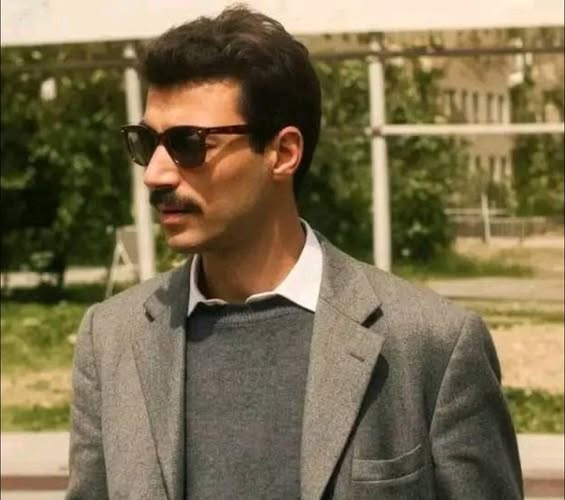
Dr. Haayilee Fidaa Kumaa stands as a monumental figure in the history of the Oromo people, renowned for his foundational role in developing the Oromo national script (Qubee) and for his lifelong dedication to cultural and political liberation.
Pioneering Linguistic Work
Dr. Haayilee’s most enduring legacy is his seminal contribution to the Oromo alphabet. His work began in Europe during the late 1960s and early 1970s, where he conducted pioneering research into Oromo linguistics and orthography.
His groundbreaking 1972 study, published in the theoretical Journal of Ethiopian Studies in Europe under the title “Languages in Ethiopia: Latin or Geez for writing Afaan Oromo,” laid the intellectual foundation for adopting the Latin script. He meticulously adapted the Latin alphabet to accurately represent all the sounds of the Oromo language. His key innovations included:
· Using diacritics and subscript marks to capture unique phonemes.
· Establishing a clear system for distinguishing short and long vowels by using single letters (e.g., a, i) for short vowels and double letters (e.g., aa, ii) for long vowels.
He further elaborated on this system in his influential works, Hirmaata Dubbi Afaan Oromo and the poetry collection ‘Barraa Birran Barie’, which were among the first publications to use his proposed Qubee.
Academic Foundation and Exile
Dr. Haayilee was a brilliant scholar from his early years. He completed his secondary education at General Wingate School and earned his first degree in Geology from Addis Ababa University with a perfect GPA. After graduating, he served as a graduate assistant and lecturer in the Geology department before departing for France for advanced studies.
In Europe, he earned an M.A. in Sociology and a Ph.D. in Anthropology and Philosophy from Le Palais De L’Academie in Paris. During his exile, he was an active member of the Ethiopian Students Union in Europe and a writer for the French Socialist Party.
Political Activism and Sacrifice
Haayilee Fidaa’s commitment to his people was not only academic but also profoundly political. He was a key member of two distinct Oromo nationalist movements:
1. The First Group advocated that the “Oromo Question” was a colonial issue, asserting that the only solution was the complete liberation of Oromia from Abyssinian colonial rule.
2. The Second Group, to which Haayilee belonged, argued for democratizing the Ethiopian state as a solution, while still recognizing the Oromo struggle as a national issue.
Tragically, Dr. Haayilee Fidaa was among the many brilliant Oromo intellectuals who were executed by the Derg regime, cutting short a life dedicated to the empowerment of his people. His assassination was a profound loss, robbing Oromia of a passionate and highly skilled visionary.
Personal Life and Enduring Legacy
Dr. Haayilee was married to Mme Marie, with whom he had two children. His murder by the Ethiopian state was a immense tragedy. However, the intellectual and cultural seeds he planted flourished.
The Oromo national script he helped design and championed was formally adopted at the 1991 National Oromo Conference and is now used universally throughout Oromia. His scholarly work continues to inspire new generations of Oromo researchers, ensuring that his sacrifice and his profound contribution to Oromo identity and literacy will never be forgotten.
 Oromedia