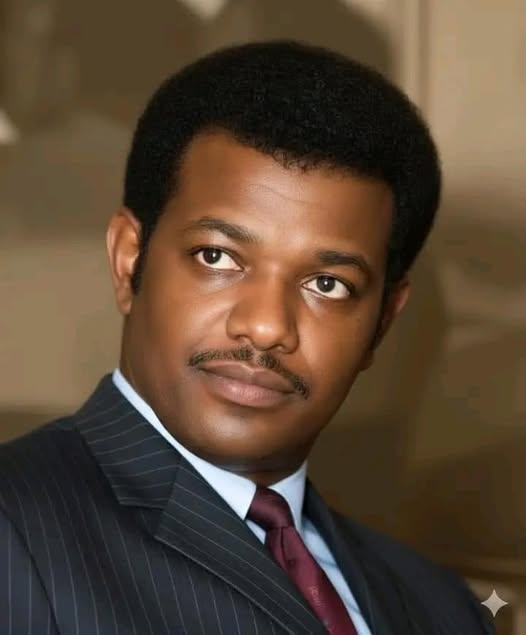
A Biographical Profile: Baroo Tumsaa (1938-1978) – A Founding Pillar of the Oromo Liberation Struggle
Obbo Tumsaa Silgaa, and his children, hold a distinguished place among the heroic figures born from the Oromo people’s second-wave struggle for equality and liberation in the 20th century—a legacy whose final chapter has yet to be written.
Despite facing hardship and the loss of their family in their youth, they transcended personal ambition to dedicate themselves to their nation. They have bequeathed to future generations a historical legacy that will not be forgotten.
Of the four children of Obbo Tumsaa Silgaa and Sii’ee Cirrachoo, Lubi Guddinaa Tumsaa and Baaroo Tumsaa became deeply embedded in the Oromo struggle, a cause built on ideas, blood, and bone.
This writing seeks to illuminate the contributions of this family, with a specific focus on Obbo Baaroo Tumsaa.
Obbo Baaroo Tumsaa was born in 1938 in Boojjii Karkarroo, Western Oromia, and passed away in 1978 in Hararge. Though his physical life was short, his role in the Oromo people’s quest for equality was so profound that his story, like that of a fallen hero whose influence endures, continues to resonate as a living truth.
Alongside his older brother, Lubi Guddinaa Tumsaa, he had a brother named Naggasaa Tumsaa and a sister named Raahel Tumsaa.
Following the passing of their parents during their childhood, Baaroo and his siblings were placed in the care of their eldest brother, Lubi Guddinaa Tumsaa.
After completing their primary education in Naqamte, they pursued secondary school partly in Bishooftu.
As the late Oromo intellectual Obbo Eda’oo Boruu stated in a 2017 radio interview, their educational journey, which began in 1959, took them to various parts of Shewa.
Due to his academic excellence, upon finishing secondary school, Baaroo Tumsaa was admitted to the then Haile Selassie I University (now Addis Ababa University) in the Faculty of Pharmacy, graduating in 1966. Obbo Eda’oo recalled that Baaroo was among a small group of Oromos, like the renowned international Red Cross artist Baqqalaa Galataa, who were admitted based on merit.
The Seeds of Political Awakening
Jaallee Diimaa Noggoo, a fellow struggle compatriot, recalled that Baaroo was among those initially selected to lead the nascent Oromo Liberation Front (OLF), despite others like Diimaa having more formal education at the time. He remembered the early university student movements, sparked by the slogan “Land to the Tiller” (Mareet Laaraashuu), being led by Baaroo.
Dr. Diimaa further explained that Baaroo’s father was a Ciisanyaa (a landless tenant), which fundamentally shaped his perspective and later played a crucial role in his opposition to the Derg’s land policy.
Another comrade, Obbo Leencoo Lataa, noted that while studying at the Arat Killo campus, Baaroo was elected president of the student union. He stated to the BBC that their friendship, though less than a year old before Leencoo left for America, was deep. Upon Leencoo’s return four years later, he found that Baaroo, along with others, had been strengthening the Macca and Tuulama Association (WALDA), a cornerstone of the Oromo rights struggle.
After returning to the country, Baaroo worked in Wanjii. Leencoo stated that Baaroo, with another individual, engaged in clandestine political work, distributing pamphlets like “Oromo Voice Against Tyranny.” They then traveled to Shaggar seeking employment to maintain their cover.
Baaroo was subsequently employed at the Ministry of Community Health, where he was also pursuing his law degree. His research paper for his law studies, titled “Decentralization and Nation Building,” proposed a decentralized Ethiopia where power is devolved to regional states that would manage their own affairs in a federal system. This work is still cited by many political figures as a foundational text.
Dr. Diimaa described Baaroo’s political acumen: “He was a man who understood domestic and international politics.” Obbo Leencoo added, “To be elected in the competitive, often rigged, student union elections required significant political skill, which he demonstrated.”
His comrades emphasize that Baaroo’s greatest skill was his profound understanding of politics and his ability to be a unifier in the struggle.
Dr. Diimaa noted that Baaroo was one of the first two Oromos to graduate in Pharmacy. “One was from Eritrea, the other was him. After graduation, he got a job as a pharmacist in the Ministry of Health. He played a major role in establishing the professional standards for pharmacists in Ethiopia.”
He was also instrumental in developing the country’s pharmaceutical manufacturing and supply policy. He worked to ensure that Oromos who had studied health sciences under missionaries in Oromia and southern regions could obtain pharmacist licenses.
A source familiar with Baaroo’s history stated, “What is astonishing is that out of 425 pharmacy licenses prepared for distribution at that time, 421 were allocated for Oromo graduates, and until its implementation, no one in the government apparatus objected.”
However, after legally obtaining a license and beginning his work, a journalist named Maammoo Wuddine misrepresented his actions, leading to punitive measures against him. This was one of the many sacrifices Baaroo made for his people.
The Clandestine Struggle and the Birth of the OLF
Obbo Leencoo recounted that while working at the ‘Ethiopian Standards’ office, he facilitated Baaroo’s employment there. This provided them ample time to discuss Oromo politics. “The work wasn’t so demanding that it occupied the whole day. We would go to the office in the morning… and spend our time discussing the Oromo struggle. He was a very knowledgeable person, and people would come to him. We would hold discussions and write pamphlets to raise awareness,” Leencoo said. During this time, they were also secretly laying the groundwork for the OLF.
After the fall of Haile Selassie, Baaroo initially served as a member of the ‘Derg’s Commission’ and later in the ‘Provisional Office for Mass Organizational Affairs’ (Hizbi Dirijit). Some interpret this as his early engagement with a form of “Ethiopianism,” from which he later diverged. Leencoo, however, clarified, “Baaroo was secretly working to establish the Oromo Liberation Front. The Oromo struggle was being waged on two fronts at that time. One was overt and accepted, the other was clandestine. Baaroo never believed in that Hizbi Dirijit. He was using it as a tactic.”
Prior to founding the OLF, Baaroo had established a political organization with the peoples of the Southern region called ICAT (Ye Ethiopia Ciqqun Hizbooch Abiyootaawwii Tigil – The United Ethiopian Democratic Forces). Some believe this was a genuine effort to create a platform for marginalized peoples like the Oromos. Others suggest it was a tactical move to use this structure as an underground network to found the OLF.
Obbo Eda’oo Boruu offered a different perspective on ICAT, suggesting it was founded not solely for Oromo interest but was based on a genuine belief in a multinational solution. Sources indicate that many of its members were Oromos, but it also included individuals from Welayta, Afar, Kambata, Sidama, and other groups.
Obbo Leencoo maintained the tactical view: “ICAT was a tool for the OLF, not the other way around. What was done openly was under the name of ICAT, while what was done clandestinely was under the name of the OLF.”
The process of building the OLF was perilous under the Derg. Leencoo explained, “At that time, the MEISON, EPRP, and the Derg were watching each other. MEISON suspected us of being EPRP, the EPRP suspected us of being MEISON, and the Derg targeted both groups. We were caught in the middle.” By 1978, the Derg had banned organizations like Ihaappaa, and MEISON had also turned on them, forcing them to leave the city.
While serving in the Derg’s administration as a cover, Baaroo played an enormously significant role in secretly building the OLF.
He was a major contributor to Bariisaa, the first Afaan Oromoo newspaper, founded by Maahdii Hamiid Muudee. When Maahdii Hamiid was imprisoned after the newspaper’s temporary permit expired, Baaroo and Lubi Guddinaa Tumsaa risked their lives to secure his release.
In 1977, when Bariisaa was banned by the Derg, Baaroo and Leencoo organized a large, historic meeting at the Biheeraawwii Theatre. This was the first time Oromos from all regions across the country were gathered, an event that ignited the flame of Oromo nationalism, a vision Baaroo strongly believed in and worked to solidify.
Dr. Diimaa stated that Baaroo’s two key tasks in the founding of the OLF were uniting people and writing its program. Baaroo Tumsaa, Leencoo Lataa, and Dr. Diimaa Noggoo were the three individuals who drafted the Front’s program.
Leadership, Philosophy, and Legacy
Baaroo was known for building strong relationships with Oromos from all corners of the country, of all faiths and social strata. He maintained connections even with those in exile or studying abroad, such as Haayilee Fidaa.
Obbo Leencoo stated, “He strongly believed that the Oromo liberation force must be founded on the children of Oromos from every region and every religion.” To this end, he worked tirelessly, traveling to places like Walloo and Raayyaa without rest, which earned him a central role in the early leadership of the OLF.
Their comrade, the late Obbo Kabbadaa Qajeelaa, affirmed that Baaroo’s ability to bring together strong individuals was crucial. “From Wollega to the East, from the North to the South, Baaroo played a decisive role in uniting our people. Had Baaroo not existed, had Baaroo not arisen, the question of Oromo rights would not have progressed this far. This is a question that remains in my mind to this day,” Kabbadaa said.
The clandestine project to found the OLF began in 1973-74. The OLF’s political program was written on paper by Baaroo, Leencoo, and Dr. Diimaa Noggoo. According to Leencoo, this program was debated and refined for two years.
Two years later, in a secret meeting, the program and leadership of the OLF—an organization founded by Baaroo and his comrades to fight for the rights of the Oromo people—were ratified, marking a historic milestone for the Oromo people.
The initial leadership elected at that time included Baaroo Tumsaa, Magarsaa Barii, Gadaa Gammadaa, and Abboomaa Mitikkuu.
The program, largely shaped by Baaroo, called for the establishment of “An Independent Democratic Republic of Oromia.” Leencoo stated, “If conditions were favorable, a Union, Confederation, or Federation was not off the table.” The struggle was not only to liberate the subjugated Oromo but also to fight against internal Oromo feudalists and the broader feudal system elsewhere.
The OLF’s program, ratified in 1976, outlined a struggle that would employ both political and armed resistance.
In 1975, during Siad Barre’s invasion of parts of Eastern Oromia and Bale, the OLF leadership engaged in political work. After some successes in defending Oromia, the leaders were forced to leave the city as the political situation deteriorated. Among them, Jaarraa and Mul’is were the first to be martyred.
Gradually, the entire leadership moved to the forest. Baaroo was among the last to do so in 1977, leaving behind his young children and wife in Hararge. Leencoo was the last leader to leave the city and maintained radio contact with the leadership in the forest.
“As long as he was in the forest, Baaroo prepared political trainings in various forms, educated the youth, and oversaw military training,” Leencoo said.
The circumstances of the death of this Oromo and human rights hero remain somewhat unclear.
“I was with him when he was wounded on the first day of the battle in April 1978,” said Leencoo Lataa. “His injury was accidental. It was not related to politics or religion; it was a pure accident. There was no enemy attack at that time, nor was there internal conflict.”
Leencoo explained this to the BBC, despite the pain of recounting the loss of a comrade and an organization.
The OLF’s loss of its founder so early severely weakened it. “We lost many leaders besides Baaroo. Some were killed by Siad Barre’s forces, others were imprisoned. It took us 10 years to produce new leadership,” Leencoo said.
“Baaroo believed in democracy. He believed that democracy would empower the Oromo. He believed that in a democratic Ethiopia, the rights of the Oromo must be respected.” Regarding the question of Oromia, Leencoo stated that Baaroo believed that if Oromia could not be a prosperous member of a democratic Ethiopia, then forming an independent Oromo state was an option. But the non-negotiable principle was democracy.
While the OLF holds a high place in the history of the Oromo rights movement, Baaroo Tumsaa’s role within it was exceptional. His story is inextricably linked with the founding of the organization, which remains a beacon of the Oromo struggle.
“Without Baaroo, the Oromo Liberation Front could not have been born,” said Obbo Leencoo.
“Baaroo was a man you could work with, a man you could trust, a man who fulfilled his promises, a man who never broke an appointment, a man you could call a gentle soul,” said Dr. Diimaa.
Even after graduating from Addis Ababa University and being unemployed, Baaroo was remembered for sharing his meager salary to support others. Many others, like Dr. Diimaa, testify to his extraordinary generosity.
Obbo Eda’oo noted that Baaroo was one of two figures (the other being Obbo Waalallanyi Mokonnini from Walloo) credited with introducing the struggle for ethnic rights into the broader Ethiopian student movement. Baaroo was also distinguished for his presentations on the Oromo and other nationalities in forums promoting “Ethiopianism.”
He was widely known for his vision of uniting Oromos beyond the divisions of religion, river, and region. Some sources suggest he was even ostracized by some for relentlessly promoting this vision.
Personal Life and Family
Baaroo married Aadde Warqinash Bultoo, from a prominent family in central Oromia, the daughter of Obbo Bultoo Ejersaa. Aadde Warqinash is the sister of General Damissee Bultoo. Obbo Eda’oo recalled they studied together in school.
Obbo Leencoo noted that Baaroo’s funeral, held from Finfinnee to Baakkoo at his sister Raahel Tumsaa’s house, was a event that served to unite Oromos.
From his marriage with Aadde Warqinash Bultoo, they had three children: two daughters, Naasisee and Ayeetuu, and a son named Ejersa Baaroo.
The names he chose for his children themselves reveal a deep commitment to preserving Oromo heritage and memory. His first daughter was named after his mother, Naasisee, and his son, Ejersa, was named after his wife’s father.
Today, his wife and their three children all live in North America, in the Atlantic region of the United States.
 Oromedia