Bokkuu and Qaalluu: The Sacred Pillars of Oromo Democracy
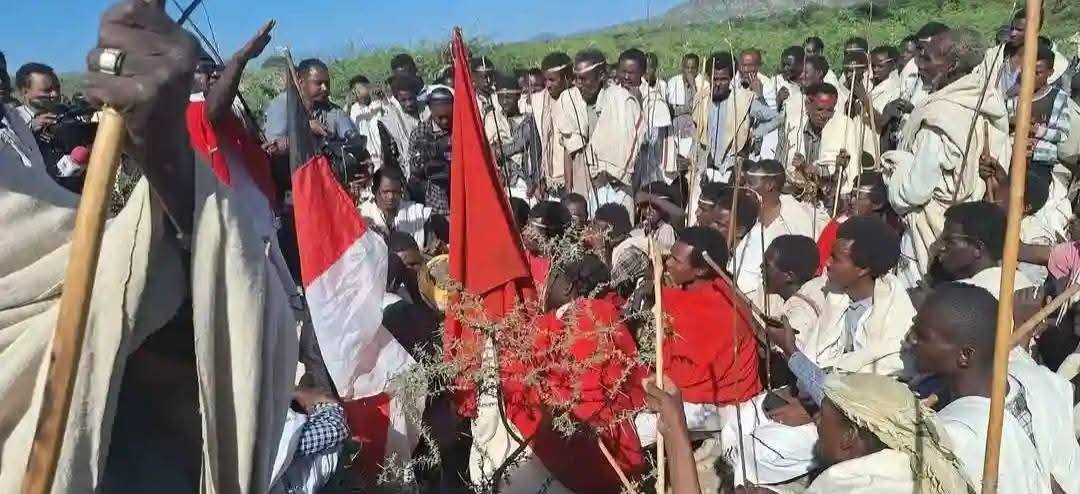
OROMIA — At the heart of the Oromo Gadaa system, an indigenous democratic governance structure recognized by UNESCO as an Intangible Cultural Heritage of Humanity, lies a refined balance of power and spirituality, embodied in two sacred pillars: the Bokkuu and the Qaalluu.
This dual authority forms the cornerstone of a system that has guided Oromo social, political, and spiritual life for centuries. Among the Karrayyuu Oromo, custodians of deeply traditional Gadaa practices, the Holder of the Bokkuu (Abbaa Bokkuu) leads the active Raaba Gadaa council, symbolizing lawful political authority, unity, and temporal governance.
The authority of the Bokkuu is absolute in ceremonial life. No Gadaa ritual—from a temporary ceremonial visit (jila) to a full-scale relocation of the assembly—can commence without its sacred blessing. The scepter is not merely a symbol; it is the source of legitimacy for all communal undertakings.
While the Abbaa Bokkuu governs the political, economic, and social spheres, spiritual authority rests with the Qaalluu. This sacred office is responsible for blessings, prayers for rain and fertility, and invoking peace (nagaa) for the land and people. This clear separation and interdependence of spiritual (Qaalluu) and temporal (Bokkuu) powers ensure a holistic system of checks and balances, preventing the concentration of power and aligning leadership with moral and divine will.
The system also has a built-in mechanism for continuity. In the absence of the Abbaa Bokkuu, leadership is seamlessly entrusted to the Abbaa Sabbataa, who acts as deputy to ensure governance never falters.
Furthermore, Oromo tradition dictates that for any Gadaa ceremony to be valid and declared complete, three indispensable elements must be present: men, women, and cattle. This triad represents the foundational pillars of Oromo society—humanity in its complementary duality, and the cattle that symbolize sustenance, wealth, and the covenant between the people and their environment.
This intricate structure highlights the Gadaa system’s sophistication, where democracy is not a secular political exercise but a sacred covenant involving the entire community, the natural world, and the divine. As modern governance seeks sustainable and inclusive models, the ancient balance of the Bokkuu and Qaalluu offers a timeless lesson in integrated leadership.
 Oromedia