
The Gada System: Africa’s Indigenous Blueprint for Democracy
In a world where the concept of democracy is often narrowly defined by Western models, a complex, centuries-old socio-political system from the Horn of Africa offers a profound and often overlooked perspective. The Gada System of the Oromo people is not merely a cultural artifact; it is a sophisticated, cyclical framework of governance that scholars have called one of humanity’s most astonishing social inventions. This exploration delves into its essence, its democratic principles, and its potential relevance for contemporary political discourse.
Chapter 1: What is Gada? Meaning and Origin
At its root, the term “Gada” is rich with symbolism. Scholar Amin, citing an Oromo elder, traces it to words meaning “shade” or “shelter.” This shade carries three layers: a physical shelter, a place of refuge, and a protective umbrella. It evokes the image of the “Oda” tree, the sacred sycamore under which major communal discussions, conflicts, and laws were historically resolved—a natural parliament providing cover for the people’s collective will.
Anthropologists like Asmarom Legesse and Baxter offer another dimension, translating Gada as “age,” “generation,” or “era.” When Oromos ask, “Gada meeqa?” (How many Gada?), they are inquiring about a cyclical period in their historical timeline. Thus, Gada embodies both a protective political space and a measure of structured time.
Chapter 2: The Gada System – A Complex Socio-Political Structure
The Gada System is far more than a ritual. It is an indigenous system through which the Oromo managed their social, economic, political, and military life. Asmarom Legesse describes it as an integrated system encompassing all these spheres, rooted deeply in Oromo cosmology and law.
Its core is a remarkable generational class system (age-sets) that rotates leadership, responsibility, and authority every eight years. A male Oromo progresses through eleven rigorous stages—from Dabballe (child) to Gamme and Kusa—before reaching the leadership grade of Abba Gada (Father of Gada). This 40-year apprenticeship is a “rite of passage” ensuring leaders are seasoned, tested, and deeply socialized into the system’s ethics long before assuming supreme authority.
A controversial view from scholar Baxter suggests the system lacked direct political power and conflict-resolution capacity. However, this is widely contested. The structured hierarchy and the immense responsibility of the Abba Gada—who governs with a council (Gadaa Council) and an assembly of all adult men (Gumi Gayyo)—demonstrate a clear, sophisticated administrative and judicial authority.
The system also produced intellectual treasures: its own unique calendar and the philosophical foundation of Waaqeffanna (Oromo monotheism). Scholar Bakistari aptly called it a “political philosophy expressed in words and visible in practice.”
Chapter 3: Gada as Democracy: Superiority and Distinction
Scholar Plowden boldly stated, “Among the republican system, Gada is superior.” Asmarom Legesse amplified this, calling it “one of the most astonishing and instructive turns the evolution of human society has taken.”
Its democratic credentials are embedded in its design:
- Cyclical, Term-Limited Power: Leadership rotates every eight years, preventing autocracy and dynastic rule.
- Separation of Powers: The Abba Gada (executive), the Gadaa Council (legislative/judicial), and the Gumi Gayyo (sovereign assembly) provide checks and balances.
- Popular Sovereignty: Leaders are chosen by popular will within the generational class and can be impeached (Buqisu) by the assembly for failing their duties.
- Rule of Law: The system is governed by a comprehensive body of customary law (Seera) and a covenant (Madaa), covering everything from resource management to conflict resolution and environmental protection.
- Grassroots Participation: The system is replicated down to the smallest communal unit (Ganda), ensuring broad-based political engagement.
Chapter 4: Similarities and Differences with Modern Liberal Democracy
Similarities:
Both systems champion popular sovereignty, rule of law, term limits, and assemblies for free debate. The Gada’s Gumi Gayyo functions as a sovereign parliamentary body where every member has the right to speak for or against any proposal.
Key Distinctions:
- Foundational Logic: Modern democracy is largely individual-centric. Gada is communitarian and generationally based, assigning rights and duties based on age-grade progression.
- Socialization for Leadership: Gada’s decades-long, staged training for leadership has no direct equivalent in modern democracies, where career politicians may rise quickly.
- Gender Exclusion: A major critique is that the formal political and military roles are reserved for men, though women wield significant influence through the parallel Siinqee institution. Modern democracies strive (however imperfectly) for gender equality in office.
- Intertwined Spheres: In Gada, religion (Waaqeffanna), politics, and social life are deeply integrated, unlike the principle of secular separation common in many modern states.
- Party Structure: Gada features a unique “party” system of five Gadaa parties (e.g., Birmaji, Melba, Muudana) that cycle through power across two 40-year sequences—a father’s cycle and a son’s cycle. This is an institutionalized rotation of political groups, not competitive elections between policy-based parties.
Chapter 5: The Gada System’s Contemporary Relevance and Potential
The Gada system is not extinct. It is actively practiced by Oromo, Sidama, Wolayta, Konso, and other communities in Ethiopia, as well as by the Maasai and Kikuyu in Kenya and the Nuer in South Sudan.
Its potential for nurturing democracy and peace in the region is significant. Scholar Harbar Liws argues for its creative utilization: “Making creative use of the Gada System… could play a vital role in the correct political life if it is nurtured and permitted to flourish.”
For this to happen, concerted effort is needed:
- Serious, In-Depth Research: To document and analyze its principles for modern application.
- Dialogue Between Keepers and Modern Institutions: Integrating Abba Gadaas and cultural leaders into national and international forums on governance.
- Dynamic Adaptation: Supporting the system’s own internal mechanism for reform, like the Gumi Gayyo assembly, which historically revised laws to meet new challenges.
Conclusion
The Gada System stands as a testament to Africa’s capacity for complex, democratic self-governance long before colonial contact. Its study challenges the hegemony of Western democratic models and offers a unique paradigm built on cyclicality, communal responsibility, and deep socialization. Rather than being viewed as a relic, it should be seen as a vital intellectual resource—a source of indigenous knowledge that, when thoughtfully engaged with, could contribute to building more authentic, stable, and culturally-grounded forms of governance in Ethiopia and beyond. As the article posits, understanding Gada is to understand a powerful, homegrown expression of democracy that has sheltered the Oromo people for generations.
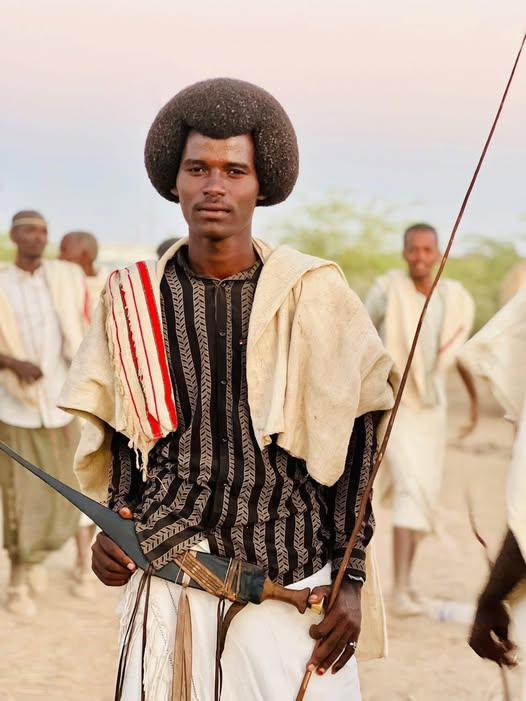
 Oromedia