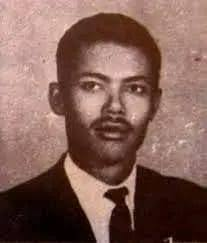
Feature Commentary: The Unsilenced Voice – Colonel Maammoo Mazammir
In the annals of Ethiopia’s turbulent history, certain figures emerge not merely as men, but as embodiments of a people’s stifled aspirations. Colonel Maammoo Mazammir (1929-1969) stands as one such pillar—an Oromo intellectual, military officer, and activist whose life was cut short by a state afraid of the truth he spoke and the future he envisioned. His story is not just a biography; it is a testament to the relentless pursuit of justice in the face of systematic oppression.
From Scholar to Soldier of Conscience
Born in 1929 in Gudar, near Ambo in Shawaa Lixaa, Maammoo Mazammir’s early path pointed toward academic distinction. Excelling in his primary and secondary education, he earned a prestigious scholarship to the Harar Teacher Training College. However, a different calling stirred within him. Driven by a sense of duty that extended beyond the classroom, he entered the Harar Military Academy, graduating with high honors—a testament to the discipline and capability that would later define his activism.
His intellectual journey continued parallel to his military service. By 1962, he had earned an LLB degree from Addis Ababa University. It was within the ferment of the university that his political consciousness crystallized. Learning of the growing mobilization under the Maccaa and Tuulama Association (MTA), an organization aimed at advocating for Oromo rights, Maammoo became a pivotal bridge, channeling the energy of university students toward the broader movement.
The Intellectual Vanguard of the Oromo Cause
Maammoo Mazammir was far more than an organizer; he was a thinker and a communicator. Fluent in Oromo, Amharic, and English, he wielded words as his primary weapon. He understood that a people robbed of their history are easily dominated. To counter the false, Abyssinian-centric narrative of Ethiopian history, he undertook the courageous task of writing an Oromo History (“Seenaa Oromoo”), seeking to restore a suppressed heritage. In a telling act of cultural repression, the manuscript was confiscated and destroyed by security forces upon his arrest.
His vision was profoundly revolutionary. He drafted proposals and a new constitution aimed at dismantling the exploitative neftegna (landlord) system and restoring land to the Oromo peasantry. These ideas struck at the economic heart of the imperial regime’s control, marking him as a dangerous threat.
Furthermore, Maammoo served as a vital link between different strands of resistance. He fostered connections between the MTA and the armed Bale Rebellion, recognizing their shared struggle. His words, echoing the spirit of the Bale fighters, became prophetic: “In human history, a people who rise to fight for their rights and freedom, without fearing death, will always be victorious.”
The Fabricated Crime and Judicial Murder
The imperial regime of Haile Selassie, increasingly paranoid about Oromo mobilization, needed a pretext to decapitate the MTA leadership. Maammoo Mazammir was its prime target. In 1967, he was falsely accused of orchestrating a grenade attack at a cinema in the Somali region—an attack later evidence suggested was likely staged by state security itself.
The charade that followed was a blatant miscarriage of justice. After enduring ten days of severe torture in prison, he was forced to “confess.” Tried on these fabricated charges, he was sentenced to death. The state’s drama, as the commentary notes, was not just for Maammoo but served as a stark warning to all Oromo activists.
The Final Defiance: A Martyr’s Prophecy
Facing his unjust execution on February 28, 1969, Maammoo Mazammir delivered a final, thunderous statement. His last words transformed the execution ground into a podium:
“My blood, which is shed to protect the rights of the Oromo people, is not blood spilled in vain. Let my blood be the water that nourishes and grows the Oromo struggle. Today, you are cutting a branch for destroying the Oromo people, but the nine branches of the Oromo people will flourish. Do not doubt that the Oromo people, with the blood shed today and that which will be shed tomorrow, will secure their rights. But tell the Emperor: I am executed for a crime I did not commit, and his similar fate awaits him from the people of Ethiopia!”
In this moment, he reframed his death from a state punishment into a seed for liberation. His prediction for the Emperor proved tragically accurate within a few years.
Legacy: The Unbroken Chain
Colonel Maammoo Mazammir was executed at the “Alem Bekagn” (“I am told the world is indifferent”) prison. He left behind a wife and two children, a personal tragedy within a national one.
Today, Maammoo Mazammir is remembered as a founding martyr of the modern Oromo political struggle. He represents the critical intersection of intellectual rigor, cultural revival, and political courage. His life underscores a central truth: the most dangerous figure to an authoritarian regime is not merely the rebel with a gun, but the thinker with a pen, a clear vision for justice, and the voice to inspire a nation. His blood, as he foretold, did indeed become water for the tree of Oromo freedom—a tree that continues to grow.
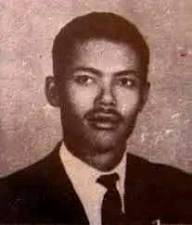
 Oromedia