
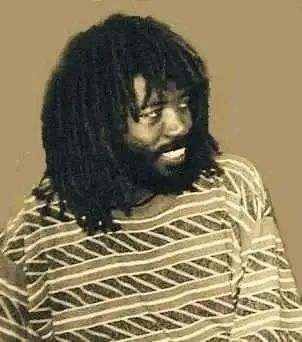
In the quiet hills of Kuyyuu Giccii, Shinoo Meettaa, in the heart of West Shewa, a boy was born in 1960. Named Lagaasaa, the son of Wagii Meettaa and Buzunaash Ayyaana, his life would not follow a quiet pastoral path. Instead, it would become a testament to a singular, unwavering principle: that the liberation of his people, the Oromo, was a cause worth every sacrifice—be it education, family comfort, or life itself. Jaal Lagaasaa Wagii would grow from a student in local schools to a commander etched into the liberation history of Oromia.
From Student to Mechanic: The Foundations of Resilience
Lagaasaa’s early journey was one of determined pursuit. He traversed the landscapes of learning, attending primary school in Bakkamee (grades 1-4), moving to Hinccinniit for his elementary education (grades 5-8), and finally pushing to Finfinnee to pursue grades 10 and 11. Yet, in 1975, with the higher education ladder before him, he made a pivotal turn. He left formal academia to master the tangible skills of mechanics and truck driving. This choice was not a step back, but a step toward self-reliance—a pragmatic foundation for a life that would demand mobility and technical fortitude.
For seven years, he built a livelihood as a trader in Dire Dawa. His work took him deep into Western Oromia, where he moved not just goods, but also absorbed the realities, hopes, and struggles of his people. He married Waynisheet Getahun in June 1987, and they built a family of three daughters: Bilisummaa, Firehiwet, and Nestaannet. He had the makings of a settled, successful life.
The Call That Could Not Be Ignored
But Jaal Lagaasaa harbored a profound love and a deep-seated anxiety for his people. The oppression they faced offered him no peace. In 1990, in an act of supreme sacrifice that defines the revolutionary, he kissed his beloved family goodbye. He turned from the merchant’s path and walked onto the path of the freedom fighter, reporting to the Western Oromia command of the Oromo Liberation Front (OLF).
He was not merely a recruit; he was a committed intellect. In 1991, he completed an intensive 18-month political and military training program and formally became a member of the OLF. Recognizing his sharp mind and loyalty, the party selected him for ideological training in Beelmuuguu that same year. He graduated and was assigned organizational duties in the Begi Zone, where he served until the fall of the Derg regime.
Architect of Liberation in the Western Theater
The post-Derg era saw the OLF enter a government coalition, but the peace was fragile and short-lived. As the OLF was forced out and the new TPLF-led government began its repression, the Oromo Liberation Army (OLA/WBO) was reborn in the forests and mountains. Jaal Lagaasaa was at the heart of this resurgence.
From 1993 onward, his career was a map of the Western Oromo resistance. He fought in cross-border engagements, helped rebuild military structures, and by 1994 was a key figure in the re-established Western Oromia command. He rose steadily through the ranks, from ordinary member to high-ranking military commander, known for his genuine dedication and strategic acumen.
His leadership was forged in the fiercest fires. Between 1998 and 2002, he commanded units during some of the OLA’s most critical and challenging campaigns in West Oromia—in Qeebbe, Dambii Dolloo, Gidami, Begi, and Manki. As the Commander of the OLA’s Western Oromia Caalaa Division under the legendary J/Irreessaa Caalaa, he helped lead a relentless and heroic struggle against a formidable enemy.
Builder of Community in Exile
His service was not confined to the battlefield. In a testament to his multifaceted role, he was sent for specialized training abroad in 1998. Upon his return, he was given a unique nation-building task: to organize the Oromo community in exile. With characteristic diligence, he succeeded in founding the Oromo Community Association in Eritrea in 2000, ensuring the diaspora remained a structured, active part of the national struggle.
A Legacy Cast in Gootummaa
On November 5, 2008, the long struggle of Jaal Lagaasaa Wagii came to an end on the field of battle in Western Oromia. He fell not as a soldier who had simply held a post, but as a commander who had shaped a theater of war, inspired his troops, and served as a critical link between the political vision of the OLF and the military execution of the OLA.
His legacy is one of Gootummaa—heroism characterized by courage, resilience, and an impeccable work ethic. In every duty, from political organizer to community leader to frontline commander, he excelled. He became a towering example—a “great model” for OLF members, officers, leaders, freedom fighters, patriots, and the entire Oromo nation.
Jaal Lagaasaa Wagii’s life was a chain, each link forged from a different metal: the student’s curiosity, the mechanic’s practicality, the merchant’s understanding, the father’s love, the ideologue’s clarity, and the commander’s valor. This unbreakable chain binds him eternally to the history of Oromia’s quest for freedom, a reminder that the path to liberation is walked by those willing to give everything, from the quiet hills of their birth to the rugged mountains of their final stand.
 Oromedia