
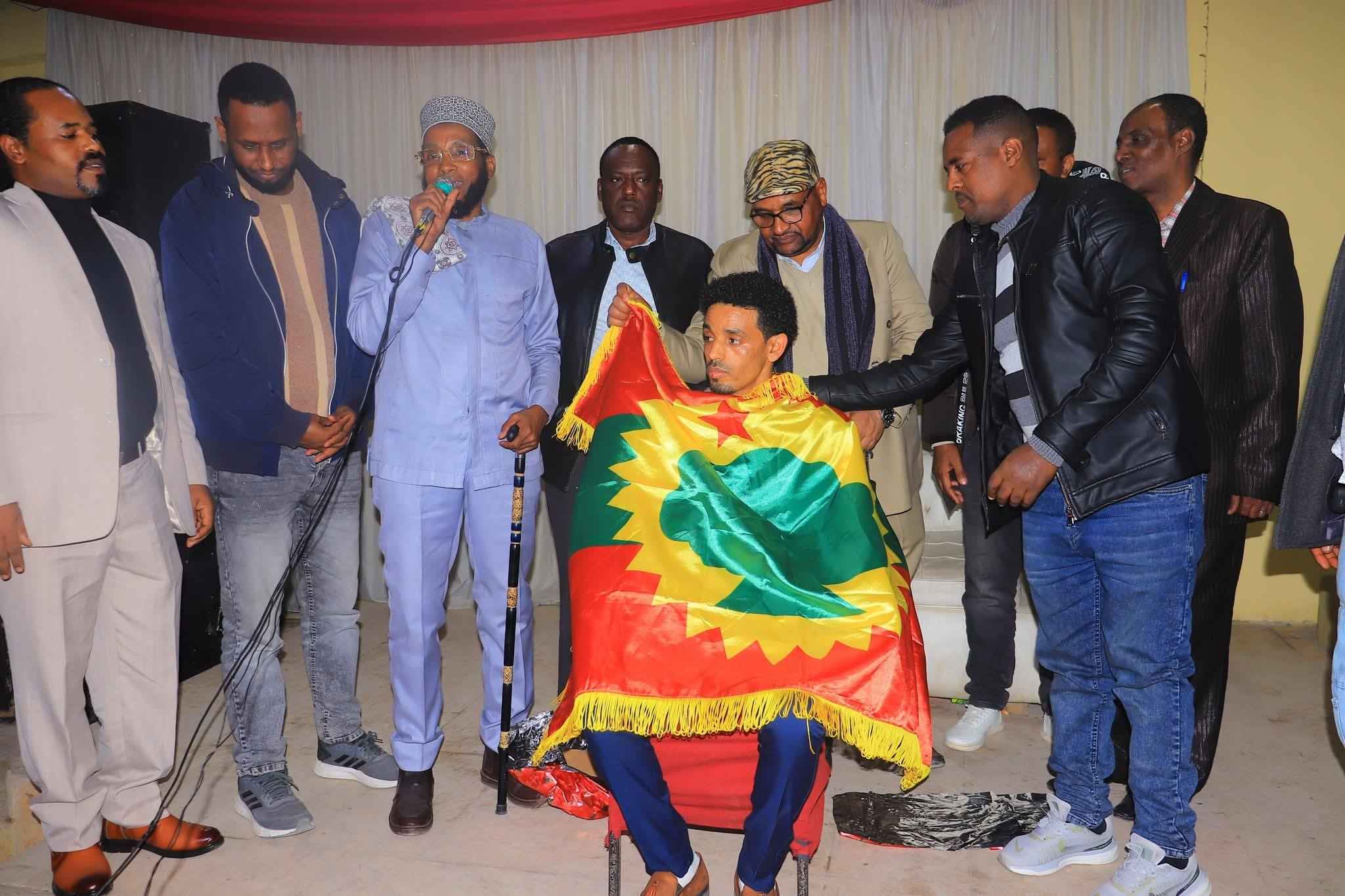
The role of diaspora communities in preserving cultural and political heritage is profound and multifaceted, acting as a critical bridge between a homeland’s past, its contested present, and its envisioned future. The example of the Maccaa-Tuulamaa Association (MTA) celebration in Cairo provides a perfect lens to explore this.
The Multifaceted Role of Diaspora Communities
Diasporas are not passive exiles; they are active, dynamic agents in the life of a nation. Their roles can be categorized into several key functions:
| Role | Mechanism & Impact | Example (Oromo Diaspora) |
|---|---|---|
| 1. Archivers & Conservators | Preserving language, rituals, history, and art forms that may be suppressed or eroding in the homeland. This creates a “backup” of cultural memory. | Teaching Afaan Oromoo in community schools, recording oral histories of elders, celebrating Irreechaa and other festivals abroad. |
| 2. Amplifiers & Advocates | Using their relative safety and access to international platforms (media, NGOs, governments) to raise global awareness about political struggles and human rights issues at home. | Lobbying foreign parliaments, organizing global protests (e.g., #OromoProtests), and using social media to document and decry violence. |
| 3. Innovators & Modernizers | Re-interpreting traditional culture in new contexts, often fusing it with global influences (music, literature, fashion), keeping it relevant for younger generations. | Oromo artists abroad producing hip-hop, spoken word, and visual art that addresses identity, resistance, and modernity. |
| 4. Resource Mobilizers | Providing critical financial, intellectual, and logistical support to communities and causes in the homeland through remittances, skills transfer, and development projects. | Funding schools and clinics in Oromia, sending expertise in law, medicine, and technology to support local institutions. |
| 5. Guardians of Political Legacy | Maintaining the original ideals and historical memory of political movements, often acting as a moral compass or a repository of ideological purity when movements inside the country face compromise or fragmentation. | The Cairo MTA event explicitly serves this function—keeping the foundational history and goals of the Oromo struggle alive and undiluted. |
Historical Context: The Maccaa-Tuulamaa Association (MTA)
The MTA is arguably the most pivotal modern organization in Oromo history, and its legacy is meticulously guarded by the diaspora for good reason.
- Founding & Original Purpose (1963): Established by General Tadesse Birru and other educated elites, the MTA was initially a self-help association. Its stated goals were educational advancement, cultural promotion, and economic cooperation among the Macca and Tuulama sub-groups. However, in the context of the imperial Ethiopian state, which sought to assimilate Oromo identity, this was a profoundly political act of unity and self-assertion.
- The Political Catalyst: The MTA became the incubator for Oromo national consciousness (sabboonummaa). It created the first large-scale network of educated Oromos who began to systematically discuss their collective status, history, and rights. Many founders of the Oromo Liberation Front (OLF) were members or were influenced by the MTA.
- State Repression & Martyrdom (Late 1960s): The Ethiopian government correctly saw the MTA as a threat to its unitary state model. It was brutally suppressed. General Tadesse Birru was imprisoned and later executed in 1975. Other leaders were jailed, tortured, or killed. This martyrdom transformed the MTA from an association into a powerful symbol of early Oromo resistance and sacrifice.
- Diaspora as Custodian: With the MTA banned and its history marginalized within Ethiopia, the task of preserving its true story fell to the diaspora. Annual commemorations like the one in Cairo are acts of corrective historiography. They ensure that the sacrifices of the MTA’s founders are not erased and that its role as the ideological and organizational precursor to the Oromo struggle is remembered.
Dynamics of Other Diaspora Groups: A Comparative View
The Oromo diaspora’s role mirrors and contrasts with other globally significant diasporas:
- The Armenian Diaspora: Often cited as the archetype of a “victim diaspora,” its identity is centrally shaped by the memory of the 1915 Genocide. It has been spectacularly successful in global advocacy, recently achieving formal recognition of the genocide by several powerful nations, demonstrating the long-term political power of sustained diaspora mobilization.
- The Tibetan Diaspora: Led by a unifying spiritual and political figure (the Dalai Lama), it has focused intensely on cultural preservation (language, religion) and soft-power diplomacy, framing its struggle in universal terms of human rights and cultural survival.
- The Irish Diaspora (particularly in the US): Historically provided crucial financial and political support (e.g., through organizations like NORAID) to nationalist movements in Ireland. It shows how diaspora influence can be a double-edged sword, sometimes empowering more radical factions and complicating peace processes.
- The Ukrainian Diaspora (Post-2022): Represents a modern, digitally-enabled diaspora. It has leveraged crowdfunding, social media coordination, and rapid political lobbying in Western capitals to secure unprecedented military and humanitarian aid, fundamentally altering the geopolitical response to the war.
Conclusion: The “Long-Distance Nationalism” of the Oromo Diaspora
The Oromo diaspora, through acts like the MTA commemoration in Cairo, engages in what scholars call “long-distance nationalism.” They maintain a political stake, a cultural connection, and a moral responsibility to a homeland they may rarely visit. They are not mere spectators but co-authors of the nation’s narrative.
Their greatest challenge is navigating the tension between being a guardian of legacy and remaining relevant to the evolving realities on the ground in Oromia. However, as the Cairo event shows, their role as living archives, moral witnesses, and global advocates remains indispensable. They ensure that the light of history is not extinguished, no matter how far from home it must be kept burning.
 Oromedia