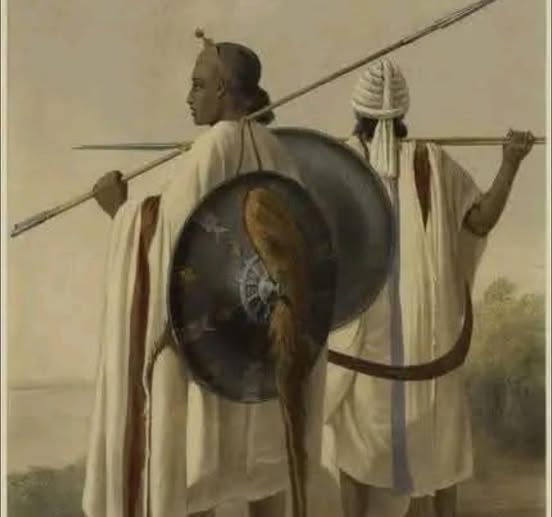
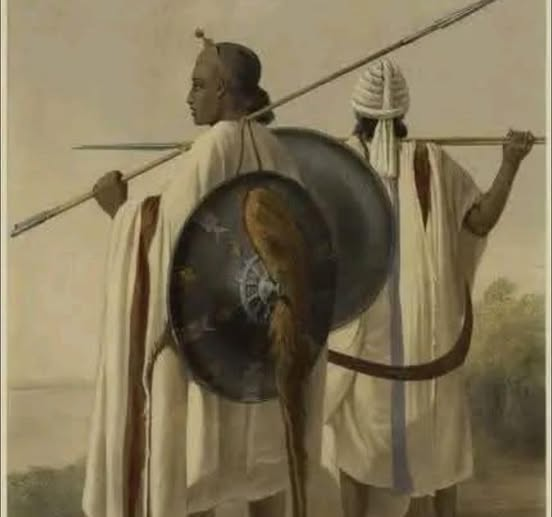
The Sons of Sooddoo: Guardians of the Land and Beacons of Oromo Resistance
In the heart of Oromia, within the expansive folds of the Tulama branch, a name resonates with profound historical and cultural gravity: Sadan Sooddoo – the Three Sooddoo.
The story begins with Tuulamanni, who had three sons: Daaccii, Bachoo, and Jillee. Yet, for many, when the name “Sooddoo” is heard, it immediately evokes the distinct identity of a major Guraghe sub-group. This connection finds its root in a remarkable narrative of kinship and legacy. Sooddoo, the son of Daaccii, himself fathered three sons: Odituu, Ummee (Tum’e), and Liiban. It is these three descendants who are collectively known today as the Sadan Sooddoo.
Their ancestral land, Sooddoo, lies in southwestern Shewa, stretching from the banks of the Awash River in the north to the borders of Arsi and the southern communities. To the north, it neighbors Bachoo and Galaan, and to the west, it shares boundaries with the Waliisoo.
The Sooddoo territory is centered around two pivotal institutions:
· Odaa Nabee: The political and spiritual heart, a place of assembly and decision-making.
· Odaa Kallachaa: The seat of customary law (aadaa seeraa), where laws are deliberated, enacted, and upheld.
Administratively, the Sooddoo region encompasses districts like Daacii, Walisoo, Tolee, Bu’ii, Qarsa Malimaan, and Soddo Daacii, bordered to the south by the Bu’ii district.
A Cradle of Heroes
The Oromo nation has produced countless heroes, and the annals of history are rich with their names: Taddeesee Birruu, Abdiisaa Aagaa, Waaqoo Guutuu, Oliiqaa Dingilii, and many more. These giants were born in various parts of Oromiya. In keeping with this tradition, the Tulama branch, and specifically the descendants of the three Sooddoo, have given rise to a remarkable number of heroic figures.
When Italy invaded Ethiopia, the sons and daughters of Oromia rose with unparalleled bravery to confront the aggressor and defend their homeland. Among those whose names echo through this era of resistance are Abdiisaa Aagaa, General Taddeesaa Birruu, and Oliiqaa Dingilii. A significant number of these Oromo heroes from the Tulama branch trace their lineage directly back to the Sadan Sooddoo.
One name, however, stands out on a national scale: Dajjazmach Balchaa Safoo (Abbaa Nafsoo). An illustrious son of the Sooddoo, he served as governor of the Sidamo and later Harar regions. His legendary courage was displayed during both the First and Second Italian Wars, particularly in the historic battles of Maqale and Aduwa. Faced with the enemy’s return, the elderly Balchaa, then in his seventies, refused to stand idle. He famously declared that he could not bear to see his country invaded and enslaved, taking up arms once more and fighting until his last breath.
The Soil of Sooddoo Nurtures Valor
The legacy of heroism born from Sooddoo soil is not limited to one lineage. Another towering figure is Dajjazmach Baqqalaa Wayyaa Obsees, whose valor is commemorated by a school named in his honor in Finfinnee (Addis Ababa).
Similarly, Dajjazmach G/Mariyaam Gaarii Godaana is celebrated as a fearless hero from the Sooddoo land. In tribute to his great deeds, a high school in Finfinnee—Lise G/Mariyaam—bears his name, ensuring his memory is passed to new generations. It is a poignant footnote that, often, the names of these heroes and their forefathers were deliberately omitted or obscured by the chroniclers of previous regimes—an attempt to erase, but one that has ultimately failed against the persistence of oral and communal memory.
Honorable readers, the list of heroes from the Sadan Sooddoo is long and distinguished. We can also cite names like Dajjazmach Ganamee Badhaanee, Fitawrari Merdassaa Gadaa, Fitawrari Taddesee Ganamame, and Qenyazmach Bayyanee Guddataa Awaash, among countless others.
The Unbroken Legacy
Sooddoo is more than a territory; it is a living testament to Oromo identity. It is a community that resides on its ancestral land, upholds its culture with deep respect, guards its traditions meticulously, and enriches the broader tapestry of the Oromo nation (sanyii Oromoo) and Oromummaa (Oromo nationalism) with an unbroken spirit of resilience and pride. The story of the Sadan Sooddoo is, ultimately, the story of Oromia itself: rooted, resistant, and enduring.
 Oromedia