
FEATURE ARTICLE: LEENCOO LATAA – THE VOICE OF THE OROMO STRUGGLE 🔥
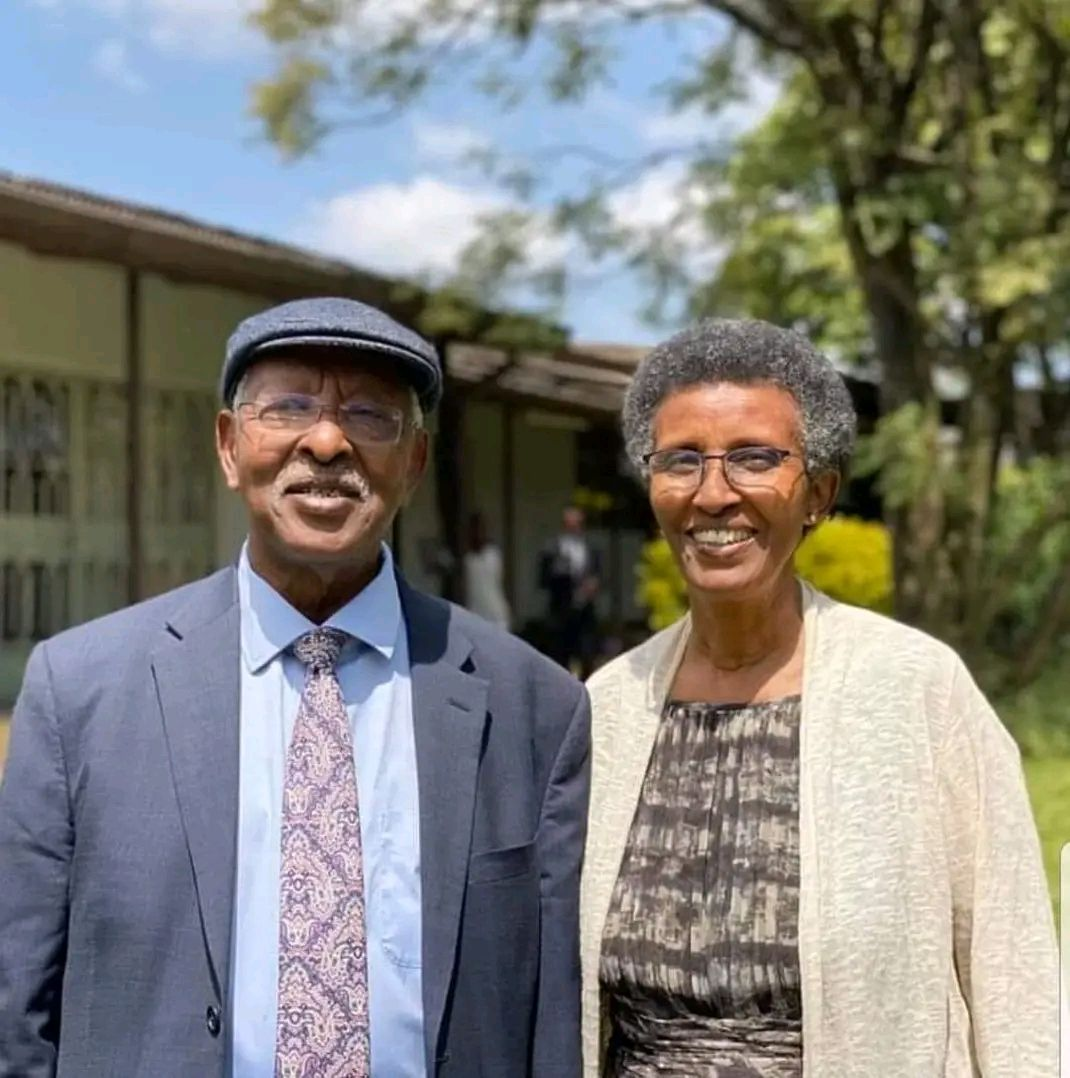
In the long and arduous narrative of the Oromo people’s quest for identity, freedom, and self-determination, the name Leencoo Lataa emerges not just as a political figure, but as a resonant intellectual voice—a thinker, a leader, and a scribe whose life story is deeply entwined with the very soul of the movement. From his humble beginnings in Dambi Dolloo, Western Wallagga, to the halls of international diplomacy and the front lines of ideological struggle, Leencoo has carved out a legacy as a tireless advocate whose weapon has often been the compelling power of truth.
Roots of Resistance: The Making of a Thinker
Born in the 1943, Leencoo’s childhood was shaped by the stark realities of marginalization. Growing up in Oromia, he witnessed firsthand the systemic inequity, cultural suppression, and political disenfranchisement faced by his people. These early sights of injustice, he has noted, were impossible to ignore or accept quietly. They planted a seed of defiance that would define his life’s path. Despite a modest upbringing, he distinguished himself through a fierce intellect and a deep curiosity, traits that propelled him through his early education in Ethiopia.
His academic journey then took him across an ocean to USA, where he enrolled at University of Rochester to study Chemical Engineering in 1966 and graduated in 1970. After graduation, he returned to Ethiopia and worked as Engineer in Metehara Sugar factory for one year. In 1971, he moved to Addis Ababa and help to establish Ethiopian Standards Agency where he worked until 1974. Yet, even immersed in the rigors of a technical foreign education, his mind and heart remained steadfastly fixed on the struggle back home. This duality—the engineer and the revolutionary—would become a hallmark of his approach: analytical, structured, and rooted in a profound understanding of systems, whether chemical or political.
The Intellectual Architect: Maccaa and Tuulama Association
For Leencoo Lataa, history is not mere record but a foundation for the future. He holds the Maccaa and Tuulama Association (MTA) in particularly high regard, viewing it as the crucial intellectual and organizational precursor to the modern Oromo national movement. He articulates its role not as a simple social club, but as a vital framework that consciously worked to reawaken Oromo identity, preserve culture, and assert national rights during a period of intense assimilationist pressure.
His reflections on the MTA underscore a central tenet of his philosophy: today’s struggle is built upon the sacrifices and strategic groundwork of yesterday. He consistently reminds younger generations that the current phase of the Oromo quest is a harvest from seeds sown by earlier intellectuals and organizers, whose stories must be remembered and honored.
From Foundation to Frontline: The Oromo Liberation Struggle
Leencoo Lataa transitioned from an intellectual admirer of past movements to a foundational architect of a contemporary one. He became a key founding member of the Oromo Liberation Front (OLF), an organization that would come to embody the armed and political resistance for Oromo self-determination.
Within the OLF, he served in various high-level political and ideological leadership roles, especially during the critical period of strengthening for the Oromo Liberation Army (OLA). His contribution was never that of a mere combatant; it was, as he framed it, a “struggle of the mind.” He championed the need to articulate the Oromo cause through a clear historical narrative, robust political theory, and an unwavering commitment to speaking truth to power. For Leencoo, the battle was to be fought not only in the field but in the realm of ideas and international consciousness.
A Promise Betrayed: The 1991 Charter and a Dream Deferred
The pivotal year of 1991, which saw the fall of the Derg regime, brought a moment of immense hope. The OLF, alongside other ethno-national groups, helped craft and became a signatory to the 1991 Transitional Charter of Ethiopia. This document promised a new dawn based on the principle of self-determination for the nations within Ethiopia. Leencoo Lataa, like many Oromos, invested a profound hope in this new political arrangement, seeing it as a potential pathway to realizing long-denied aspirations.
This hope, however, curdled into profound disappointment. The promise of the Charter was systematically eroded, and the inclusive vision gave way to a centralized hegemony under the EPRDF. Leencoo’s perspective on this period is one of a “betrayed covenant.” He has powerfully expressed that the collective hope of the Oromo people was not merely overlooked but entirely disrespected, leading to the resumption and intensification of a struggle that many had believed was nearing a peaceful resolution.
Enduring Legacy: The Unsilenced Voice
Today, Leencoo Lataa remains a potent symbol and an active voice. He stands as a living bridge connecting the foundational intellectual resistance of the MTA era, the armed and political struggle of the OLF, and the ongoing, complex quest for justice in the 21st century. His life teaches that the fight for freedom is multidimensional—waged through education, historical awareness, political strategy, and an unbreakable will.
He is more than a former leader; he is Sagalee Qabsoo Oromoo—the enduring Voice of the Oromo Struggle. A voice that continues to analyze, to challenge, and to remind the world that the Oromo question, rooted in a long-denied justice, remains unresolved and demands a rightful answer.
Leencoo Lataa’s journey continues to inspire a generation that carries the torch, armed with the history he helped clarify and the unwavering belief in a free and self-determined future.
 Oromedia