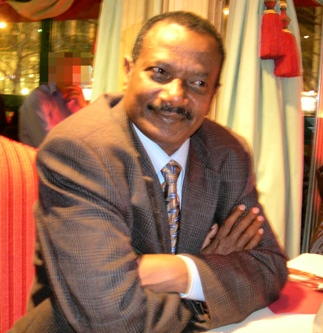
The Unyielding Chair: Dawud Ibsa and the Long Arc of the Oromo Liberation Front
In the world of liberation movements, few figures embody the physical, political, and existential endurance of their cause as completely as Dawud Ibsa Ayana. For decades, his name has been synonymous with the Oromo Liberation Front (OLF), an organization whose history is a mirror to modern Ethiopia’s most turbulent struggles. His life story—from student activist to tortured prisoner, from bush commander to exiled chairman—is not just a biography; it is a living chronicle of the Oromo quest for self-determination.
The recent resurgence of the Oromo struggle in the national consciousness makes revisiting Dawud Ibsa’s journey and his clarion call in a 2006 interview with Les nouvelles d’Addis more than a historical exercise. It is a key to understanding a political stubbornness that has outlasted empires, dictatorships, and federal experiments.
Forged in Fire: From the Red Terror to the Bush
Dawud Ibsa’s path was set early. Born in 1952 in Welega, his time at Haile Selassie I University coincided with the revolutionary ferment of the 1970s. His participation in the Association of Oromo University Students planted him in fertile ground. The OLF, as he explained, was not created in a vacuum but was the “culmination” of earlier movements like the Bale Oromo rebellion and the civic efforts of the Mecha-Tulema Association. It was born from a “frustration of Oromos and the enduring grievance resulting from the subjugation and marginalization.”
His personal life soon collided with the state’s brutality. His wife, journalist Martha Kuwee Kumsa, was imprisoned and tortured. Dawud himself was elected to the OLF Central Committee in 1977 and experienced the Derg’s violence firsthand—imprisonment, torture, and poison. His escape from the notorious Kerchele prison in 1986 to rejoin the armed struggle in western Ethiopia cemented his identity as a survivor and a soldier. By 1991, he was heading the OLF’s military department, a key player in the coalition that toppled the Derg.
The Broken Compact and the Return to Resistance
The pivotal, tragic chapter for the OLF—and for Dawud Ibsa’s political thought—was the brief period from 1991-1992. The OLF entered the Transitional Government as a co-author of the Charter, believing in a new, democratic Ethiopia “owned by all.” This hope, as Dawud makes clear, was shattered. The OLF was pushed out, its leadership forced back into exile or armed resistance. This betrayal defined his worldview: the Ethiopian state, regardless of its governing ideology, remained structurally unwilling to accommodate Oromo aspirations.
In the 2006 interview, his analysis is sharp and weary. He dismisses the elections of the time as a “hollow exercise” for Oromos, pointing out that “14 years is more than enough to show some change.” He meticulously lists failed mediation attempts—by the Carter Center, the U.S. Congress, Germany, Norway—each time blaming the government in Addis for avoiding dialogue. When asked about Prime Minister Meles Zenawi’s 2004 BBC offer to talk, Dawud’s response is a masterclass in skeptical diplomacy: they welcomed it, formalized it through the Norwegians, and watched as “as usual, they avoided it.”
A Vision Beyond the Gun: Democracy, Tolerance, and the “Gada” Foundation
What emerges from the long interview is not the portrait of a narrow separatist, but of a political strategist with a surprisingly inclusive, principled vision. He vehemently rejects the “terrorist” label, defining the OLF’s struggle as strictly against the “repressive organ of the State.” He outlines a secular, tolerant ethos rooted in Oromo reality: “Our population is made up of Muslims, Christians and followers of the traditional Oromo religion… We oppose any form of religious intolerance.”
His ultimate goal, he insists, is not perpetual war but political transformation. He speaks of the OLF’s desire to become a governing party, but only under conditions of genuine democracy: a free press, an independent judiciary, neutral security forces, and a system that truly respects the right to self-determination. He grounds this vision in the Oromo’s own “culture of democracy,” the Gada system, upon which he believes a future egalitarian polity can be built.
The Prophetic Voice and the Unfolding Present
Reading his words from 2006 today is chilling. He describes mass arrests, concentration camps in Senkelle and Dedesa, and a media blackout on Oromia—a script that would be replayed with devastating scale in the following decades. His warning that “Oromo nationalism has reached an irreversible stage” and that dismissing it is “fruitless” proved prescient. The Qeerroo protests of 2014-2018 and the subsequent political upheaval were the realization of the force he described.
Dawud Ibsa’s leadership of the OLF was marked by this unyielding commitment to a core principle: that the Oromo people must be the authors of their own destiny. His life has been a testament to the cost of that demand. Whether one views him as an intransigent obstructionist or the unwavering guardian of a just cause, his story is inextricably linked to the unresolved question at the heart of Ethiopia: Can a state be built that genuinely shares power with its largest nation? Until that question is answered, the long arc of Dawud Ibsa’s struggle—and the movement he led—will continue to shape the nation’s destiny.
As he said with quiet confidence in 2006, a confidence that has echoed through Oromo politics ever since: “We are confident that we will form the next government of Ethiopia.” It was not a prediction of mere electoral victory, but a declaration of an inevitable historical reckoning.
 Oromedia