By Mammo Abb-Kebede
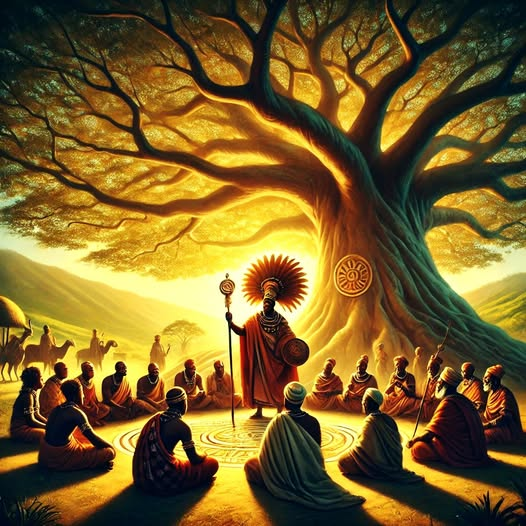
The Oromo people have long been a beacon of resilience, courage, and hope. For centuries, they thrived under the Gadaa system, a democratic governance model that celebrated debate, accountability, and the equitable distribution of power. Yet, the last century and a half has been marked by oppression, division, and the erosion of these cherished principles. Today, as the Oromo struggle stands at a crossroads, the call for unity has never been more urgent—but unity must not come at the cost of democracy. True unity is forged through dialogue, not division; through respect, not repression.
𝐓𝐡𝐞 𝐈𝐥𝐥𝐮𝐬𝐢𝐨𝐧 𝐨𝐟 𝐅𝐨𝐫𝐜𝐞𝐝 𝐔𝐧𝐢𝐭𝐲
In recent years, the rhetoric of unity has dominated Oromo political discourse. Leaders, activists, and intellectuals have repeatedly called for solidarity among Oromo political entities, urging them to set aside their differences for the greater good. While the intention behind these calls is noble, the execution has often fallen short. Too often, “unity” has been used as a veil to silence dissent, suppress minority viewpoints, and consolidate power. This is not unity—it is authoritarianism in disguise.
History is replete with examples of how forced unity can lead to disastrous outcomes. Fascist regimes, for instance, exploited the rhetoric of national unity to justify oppression and violence. The Oromo people cannot afford to repeat these mistakes. Our struggle for freedom and equality must be rooted in democratic principles, not in the suppression of diverse perspectives. True unity is not about conformity; it is about collaboration. It is about recognizing that our strength lies in our ability to engage in constructive disagreement, not in our capacity to impose consensus.
𝐓𝐡𝐞 𝐆𝐚𝐝𝐚𝐚 𝐋𝐞𝐠𝐚𝐜𝐲: 𝐀 𝐁𝐥𝐮𝐞𝐩𝐫𝐢𝐧𝐭 𝐟𝐨𝐫 𝐃𝐞𝐦𝐨𝐜𝐫𝐚𝐜𝐲
The Gadaa system offers a powerful blueprint for how unity can coexist with diversity. Under Gadaa, power was decentralized, and decision-making was a collective process. Legislators were accountable to their constituents, not to a single ruler. Disagreements were not only tolerated but encouraged, as they were seen as essential for correcting mistakes and refining strategies. This system was not perfect, but it was profoundly democratic. It understood that unity is not the absence of conflict but the ability to resolve it constructively.
Today, as we grapple with internal divisions among Oromo political entities—OLF, OFC, OLA—we would do well to revisit the principles of Gadaa. Instead of viewing disagreement as a threat, we must see it as an opportunity. Instead of silencing dissent, we must embrace it. The recent OLF-OFC conference was a step in this direction, but it is only the beginning. We must create spaces where leaders, members, and supporters can engage in open, respectful dialogue, free from the fear of retribution or marginalization.
𝐓𝐡𝐞 𝐂𝐚𝐬𝐞 𝐟𝐨𝐫 𝐃𝐞𝐦𝐨𝐜𝐫𝐚𝐭𝐢𝐜 𝐃𝐞𝐛𝐚𝐭𝐞𝐬
The time has come for Oromo political entities to engage in democratic debates. These debates should not be mere spectacles but platforms for progress. They must be structured to foster mutual understanding, identify common ground, and address differences constructively. Imagine a debate where leaders of OLF, OFC, and OLA come together, not as adversaries, but as partners in a shared struggle. Imagine them presenting their visions, not to win an argument, but to find solutions. Imagine the Oromo people—locally and in the diaspora—watching, listening, and evaluating these visions, empowered to make informed decisions about their future.
Such debates would serve multiple purposes. First, they would demystify the differences among Oromo political entities, helping the public understand the nuances of each group’s vision and strategy. Second, they would foster a culture of accountability, compelling leaders to articulate clear, actionable proposals rather than relying on vague slogans. Third, they would reinforce the importance of democratic principles, demonstrating that unity is not about silencing dissent but about respecting it.
𝐓𝐡𝐞 𝐒𝐭𝐚𝐤𝐞𝐬: 𝐀 𝐅𝐮𝐭𝐮𝐫𝐞 𝐃𝐞𝐟𝐢𝐧𝐞𝐝 𝐛𝐲 𝐃𝐢𝐚𝐥𝐨𝐠𝐮𝐞
The Oromo people’s struggle for freedom has reached a critical juncture. For decades, they have faced relentless oppression, their aspirations constantly thwarted by internal divisions and fragmentation. However, this issue extends far beyond the Oromo people, as their fate is intimately tied to that of Ethiopia as a whole.
A unified Oromo movement, grounded in democratic values, has the potential to revolutionize the Ethiopian political landscape. By presenting a strong, cohesive front, the Oromo people can pressure the government to engage in genuine dialogue, addressing the underlying causes of conflict and paving the way for meaningful reform.
In essence, the future of Ethiopia hangs in the balance, and the Oromo people’s quest for freedom and self-determination is inextricably linked to the country’s broader trajectory. By embracing unity and democratic principles, the Oromo movement can become a powerful catalyst for change, driving Ethiopia towards a more just, equitable, and peaceful future.
But unity cannot be imposed; it must be earned. It must be built on a foundation of mutual respect, constructive disagreement, and a shared commitment to justice. The Oromo people deserve leaders who prioritize their survival over partisan grandstanding, who value dialogue over domination, and who understand that true unity is not the absence of conflict but the ability to resolve it democratically.
𝐓𝐡𝐞 𝐀𝐜𝐭𝐢𝐨𝐧 𝐒𝐭𝐚𝐭𝐞𝐦𝐞𝐧𝐭
The era of fragmentation must end. The moment for meaningful conversation has arrived. Independent Oromo media outlets, civil society, and public figures must come together to organize, host, and produce democratic debates among Oromo political groups. These debates must be inclusive, transparent, and rooted in the values of Gadaa tradition. They must prioritize the needs of the Oromo people over partisan interests, fostering a culture of respect, accountability, and cooperative effort.
Let us choose unity—not the unity of conformity, but the unity of collaboration. Let us choose progress—not through force, but through dialogue. Let us choose the Oromo people—their hopes, their dreams, their future. The path to true unity is not easy, but it is necessary. Together, we can forge a future defined not by division, but by dialogue; not by repression, but by respect; not by forced consensus, but by democratic principles.
 Oromedia